
A staircase built from reclaimed wood or worn pine already has half the farmhouse look built in — the plants just finish the job. I started with a single galvanized bucket of pothos on my own landing two autumns ago, and by winter the whole stairwell had that lived-in, gathered-over-time feel that no amount of new furniture ever quite achieves. Rustic staircase gardens lean on the same materials a real farmhouse would have on hand — tin, rope, reclaimed wood, mason jars — paired with plants that don’t mind a little imperfection. Whether your staircase is open-riser barnwood or a plain painted set of steps, there’s a version of this that fits your space and your actual light. Ready? Let’s explore all 29 of them.
Quick Answer: For a rustic farmhouse staircase garden, pair hardy trailing plants like pothos and ivy with weathered materials — galvanized tin, reclaimed wood, burlap, and rope — instead of polished modern planters. Anchor the base with something substantial like a wheelbarrow or dough bowl, then layer smaller mason-jar or crate plantings up the steps. Start with materials you can source secondhand; farmhouse style is meant to look collected, not bought all at once.
Why a Rustic Staircase Garden Is Worth Your Time
There’s a reason farmhouse style has stayed popular well past its original trend cycle — worn wood, tin, and greenery age well together in a way that sleeker materials don’t. A rustic staircase garden lets you lean into that instead of fighting it, since a few water spots or a slightly dented bucket only add to the look rather than ruin it.
Practically, most of the materials on this list — galvanized tin, reclaimed wood, mason jars, burlap — are inexpensive and often free if you know where to look, which makes this one of the more budget-friendly ways to transform a staircase. A lesser-known fact: galvanized metal planters actually need drainage holes added before use, since most are sold without any, and skipping that step is the single fastest way to rot plant roots.
This approach suits anyone drawn to a slower, collected-over-time aesthetic rather than a matched showroom set, and it’s forgiving for beginners since rustic materials hide small plant-care mistakes better than pristine white pots do.
At a Glance
- Galvanized tin, reclaimed wood, and rope are the core materials that read as “rustic farmhouse” rather than generic
- Most rustic containers need drainage holes drilled before planting — they’re rarely pre-made for it
- Hardy plants like pothos, ivy, and ferns tolerate the mixed light most farmhouse staircases actually get
- Mixing container heights and materials avoids the matched, showroom look this style intentionally avoids
- This garden is meant to be built gradually from secondhand and reclaimed pieces, not purchased all at once
Comparison Table: 29 Rustic Staircase Garden Ideas
| # | Idea | Best Plant/Material | Light Needs | Difficulty | Pet-Safe? |
| 1 | Galvanized buckets on steps | Pothos | Low–medium | Easy | No |
| 2 | Mason jar herb rail garden | Herbs (basil, mint) | Bright | Easy | Yes |
| 3 | Reclaimed wood plant ladder | Mixed trailers | Medium | Moderate | Varies |
| 4 | Vintage wheelbarrow at base | Ferns/ivy | Medium | Moderate | No |
| 5 | Whitewashed terracotta risers | Succulents | Bright | Easy | Mostly yes |
| 6 | Burlap-wrapped planters | Pothos/ivy | Low–medium | Easy | No |
| 7 | Wire egg basket holder | Trailing herbs | Bright | Easy | Yes |
| 8 | Shiplap plant shelf | Mixed | Varies | Moderate | Varies |
| 9 | Ivy on rustic trellis | English ivy | Medium | Moderate | No |
| 10 | Ferns in tin washtub | Boston fern | Medium, humid | Easy | Yes |
| 11 | Dried herb bundles + live plants | Rosemary/thyme | Bright | Easy | Yes |
| 12 | Antique milk crate stand | Snake plant | Low–bright | Easy | No |
| 13 | Rope-hung wooden crates | Pothos | Low–medium | Moderate | No |
| 14 | Rocking chair fern nook | Boston fern | Medium | Moderate | Yes |
| 15 | Chalkboard tags + herb pots | Herbs | Bright | Easy | Yes |
| 16 | Cast iron plant stand | Areca palm | Medium | Easy | Yes |
| 17 | Barn door backdrop, hanging plants | Mixed trailers | Medium | Advanced | Varies |
| 18 | Vintage watering cans as planters | Ivy/succulents | Low–bright | Easy | Varies |
| 19 | Wicker basket liners | Ferns | Medium | Easy | Yes |
| 20 | Split-rail fence plant shelf | Mixed | Varies | Advanced | Varies |
| 21 | Stone crock planters | Snake plant | Low–bright | Easy | No |
| 22 | Braided rope plant hangers | Spider plant | Medium | Moderate | Yes |
| 23 | Farmhouse pendant + trailing plant | Pothos | Low–medium | Moderate | No |
| 24 | Barn wood shelf, succulents | Succulents | Bright | Easy | Mostly yes |
| 25 | Copper pot containers | Ivy | Medium | Easy | No |
| 26 | Vintage step stool display | Mixed small pots | Varies | Easy | Varies |
| 27 | Gingham-lined baskets | Herbs/trailers | Bright–medium | Easy | Varies |
| 28 | Wooden dough bowl planter | Succulents/moss | Bright | Moderate | Yes |
| 29 | String lights + dried wheat + greenery | Pothos + dried wheat | Low–medium | Easy | No |
Main Body — 29 Rustic Staircase Garden Ideas
1. Galvanized Buckets Lining the Steps
Galvanized buckets are the single most recognizable farmhouse container, and lining a few up the steps instantly sets the tone for the whole staircase.
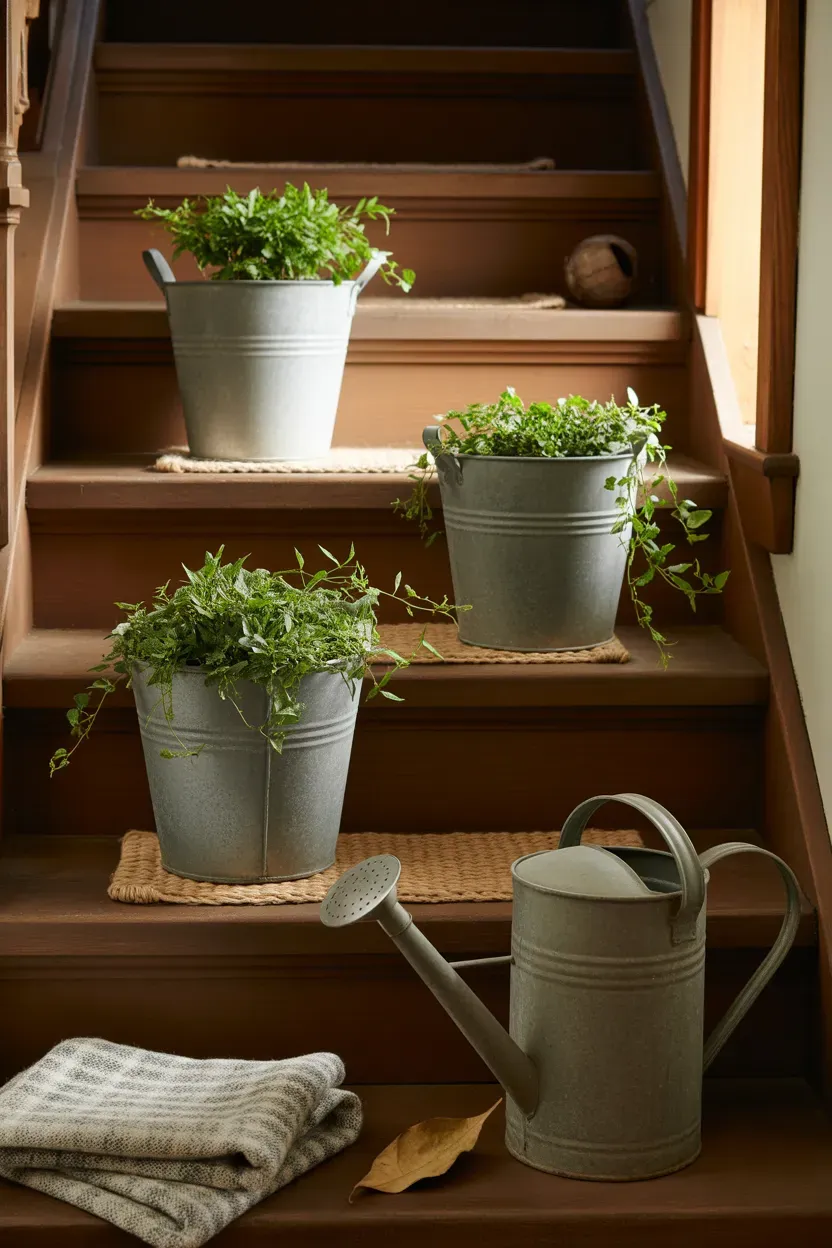
Drill two or three drainage holes in the bottom of each bucket before planting — galvanized tin is sold without any, and skipping this step is what rotted my first bucket planting within six weeks. Line the bottom with an inch of gravel for extra drainage insurance, then plant pothos or ivy, both of which tolerate the mixed light most stairwells get.
Pro Tip: Sand the drilled edges lightly after cutting — raw galvanized edges can rust faster and stain wood steps if left sharp and untreated.
See our galvanized planter drainage guide and the RHS container gardening basics for more. It’s the fastest way to make a plain staircase feel instantly farmhouse.
2. A Mason Jar Herb Garden Along the Stair Rail
Mounting mason jars along the stair rail gives you a working herb garden that’s also decorative, which is about as farmhouse as it gets.
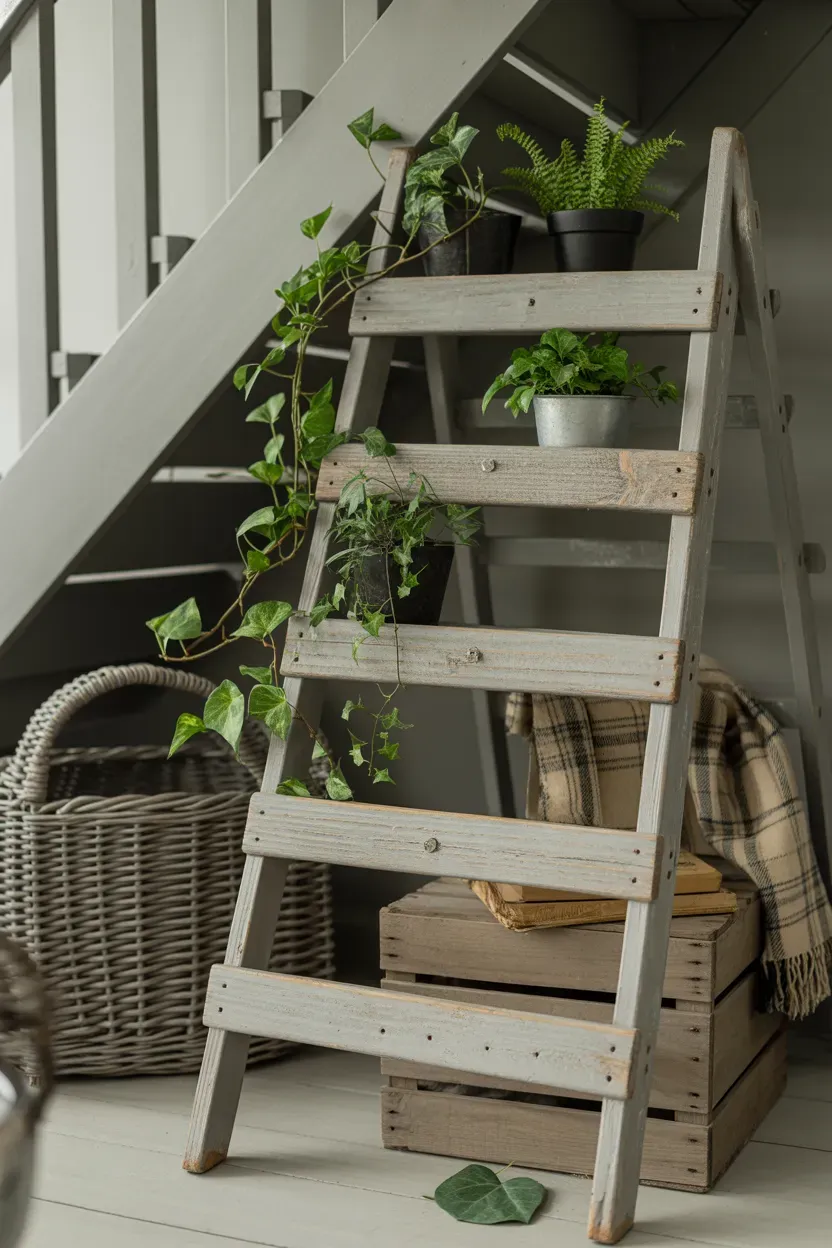
Herbs in mason jars need at least four hours of bright light daily, so this idea only works on a staircase near a good window — mine faded fast the one time I tried it in a dim interior hallway. Change the water weekly if you’re growing herbs hydroponically in the jars, or use a well-draining potting mix with a small drainage layer of pebbles at the bottom if planting in soil.
- Basil and mint root easily from cuttings in water alone
- Rosemary and thyme prefer soil over water-only jars
- Trim herbs regularly to keep growth compact on the rail
Our mason jar herb garden guide and University of Florida Extension’s herb growing notes cover this well. It’s genuinely useful, not just decorative.
3. A Reclaimed Wood Plant Ladder
An old reclaimed wood ladder, left in its weathered state rather than sanded smooth, does more for the farmhouse look than almost anything else on this list.
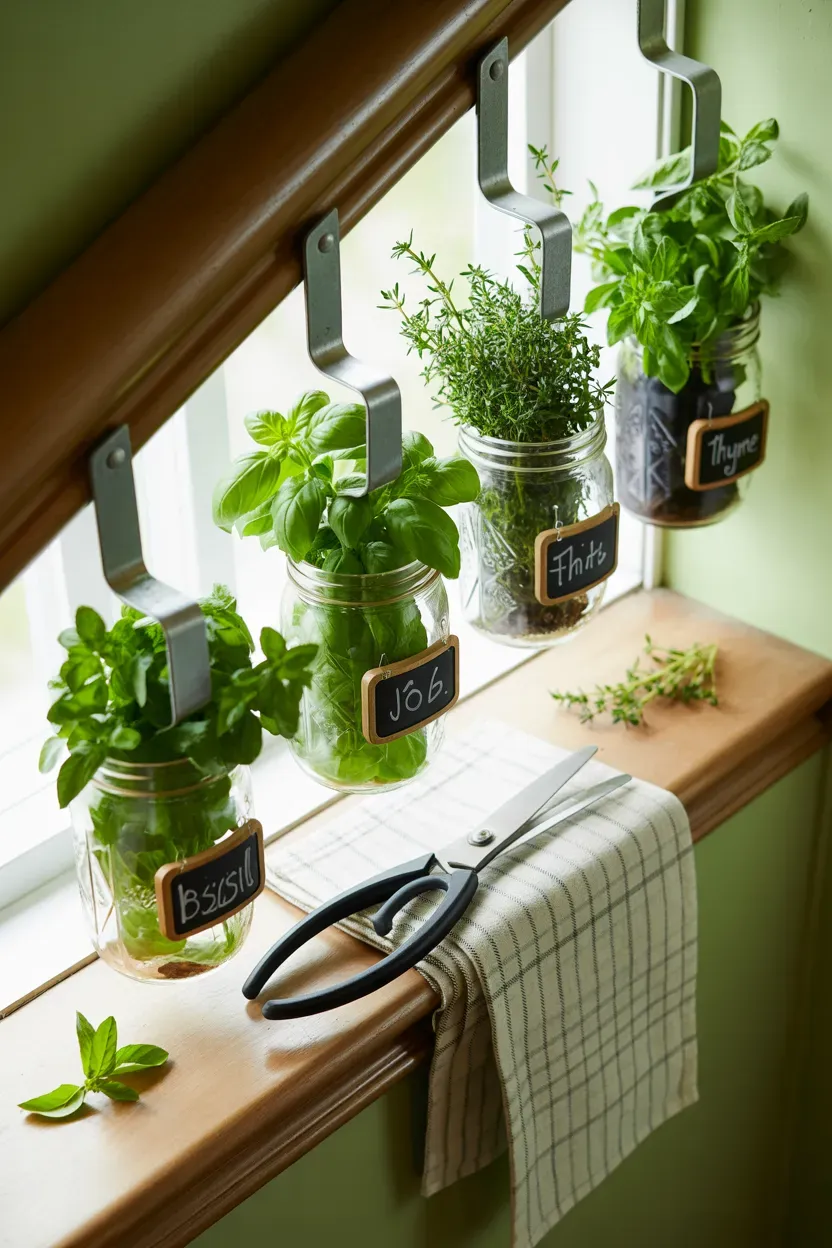
Look specifically for a ladder with visible wear — nail holes, faded paint, uneven grain — since that texture is what sells the reclaimed look; a new ladder distressed artificially rarely reads the same way. Lean it at a slight angle against a load-bearing wall, and add anti-slip pads at the base, which I skipped the first time and regretted when it shifted.
Pro Tip: Seal reclaimed wood with a matte wax rather than polyurethane — wax preserves the weathered look, while poly makes old wood look artificially glossy and new.
Full setup notes are in our reclaimed wood ladder styling guide, and Gardeners’ World has notes on mixing trailing species. It’s an easy weekend project with real payoff.
4. A Vintage Wheelbarrow Planter at the Base
An old metal wheelbarrow parked at the bottom of the stairs, filled with ferns and trailing ivy, makes an unmistakable farmhouse focal point.
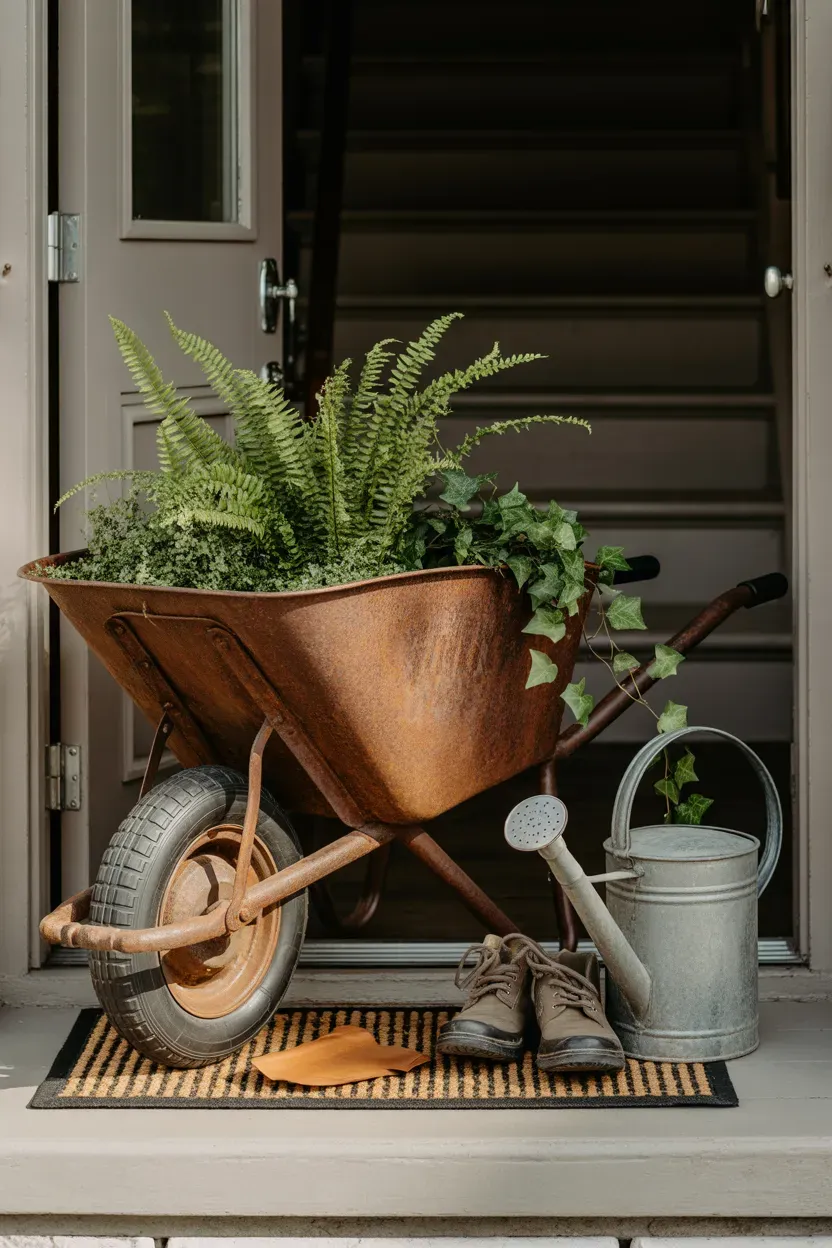
Line the wheelbarrow with a plastic liner or several nursery pots before adding soil — planting directly into a metal basin without one traps water and accelerates rust, which ruined the finish on my first attempt. Ferns and ivy both handle the wheelbarrow’s typically dappled entryway light better than sun-loving plants would.
- Drill or punch drainage holes in the liner, not the wheelbarrow itself
- Elevate the wheelbarrow slightly on bricks to protect flooring from moisture
- Choose a wheelbarrow with a stable, non-tipping base
Our vintage container gardening guide and SFGate’s fern care notes are worth a look. It’s a bold statement piece that takes almost no daily upkeep once set up.
5. Whitewashed Terracotta Pots on the Risers
Whitewashing plain terracotta pots gives them a worn, farmhouse-appropriate finish without the cost of buying specialty ceramics.
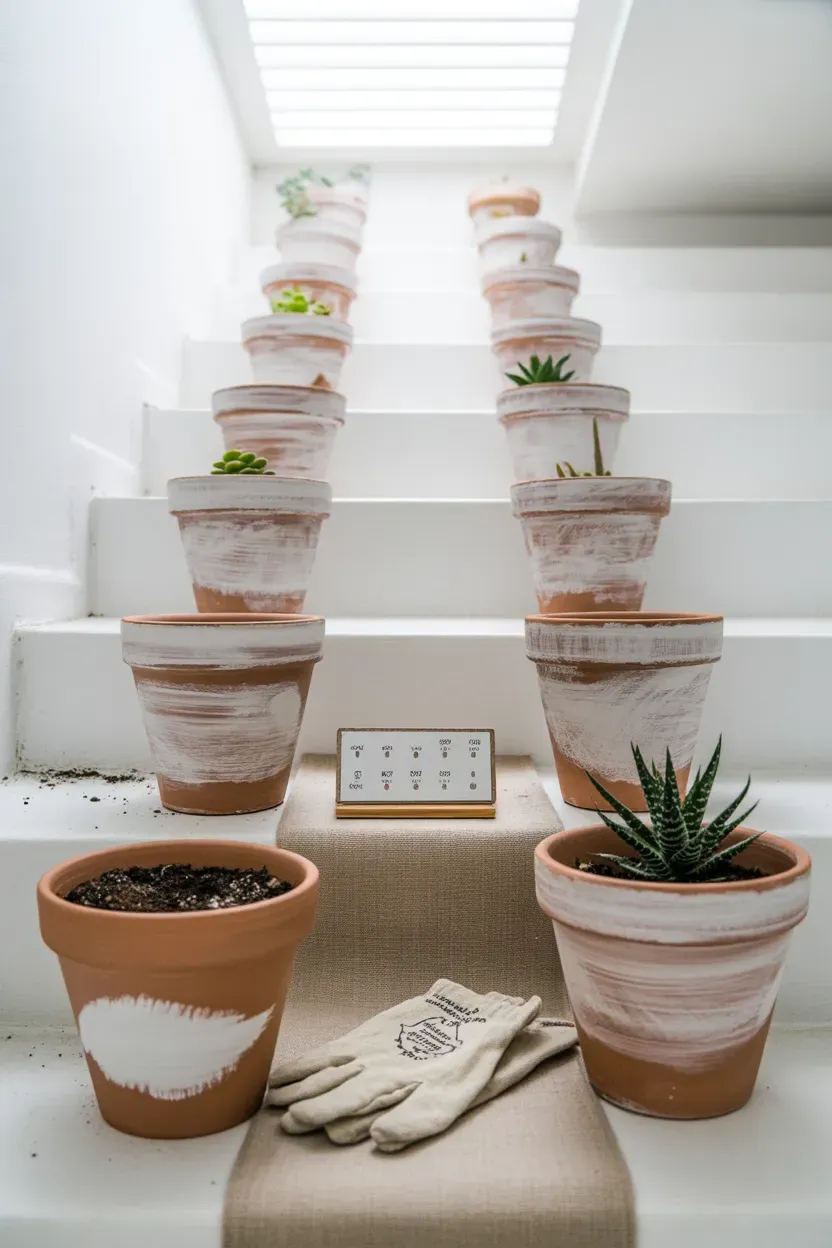
Mix one part white acrylic craft paint with two parts water, brush it on unevenly, then wipe most of it back off with a damp cloth while it’s still wet — the goal is a chalky, worn look, not solid coverage. This idea needs real light, at least four hours of bright or direct sun, since succulents housed in it will stretch and thin quickly without it.
Read our whitewashing terracotta pots guide and check SFGate’s succulent care notes before starting. Skip this one for a dim interior stairwell — the succulents simply won’t hold up.
6. Burlap-Wrapped Planters for Texture
Wrapping plain plastic nursery pots in burlap is one of the cheapest ways to add rustic texture to a staircase without buying new containers.
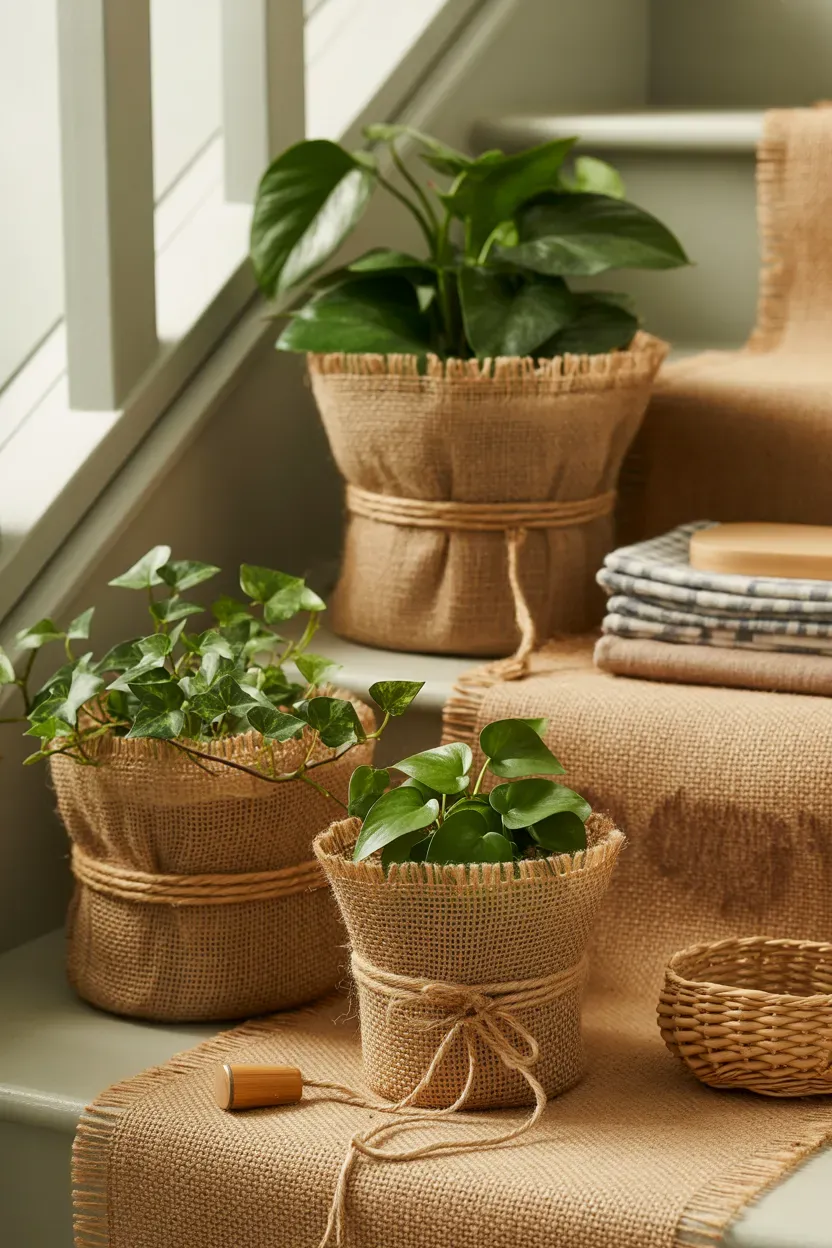
Wrap the burlap loosely enough to allow airflow to the pot beneath, and check soil moisture by lifting the pot rather than relying on the burlap’s surface feel, since burlap can look dry while the soil underneath is still wet — a mix-up that cost me an overwatered pothos early on. Both pothos and ivy tolerate this method well since neither needs frequent repotting.
Pro Tip: Hot glue the burlap seam instead of using visible pins or tape — it holds through regular watering and looks cleaner up close.
Our burlap planter wrap tutorial and Almanac.com have more on budget-friendly plant styling. It’s an easy fix for mismatched nursery pots.
7. A Wire Egg Basket as a Trailing Herb Holder
An old wire egg-gathering basket makes an unexpectedly good holder for a trailing herb pot, and it leans hard into the farmhouse theme.
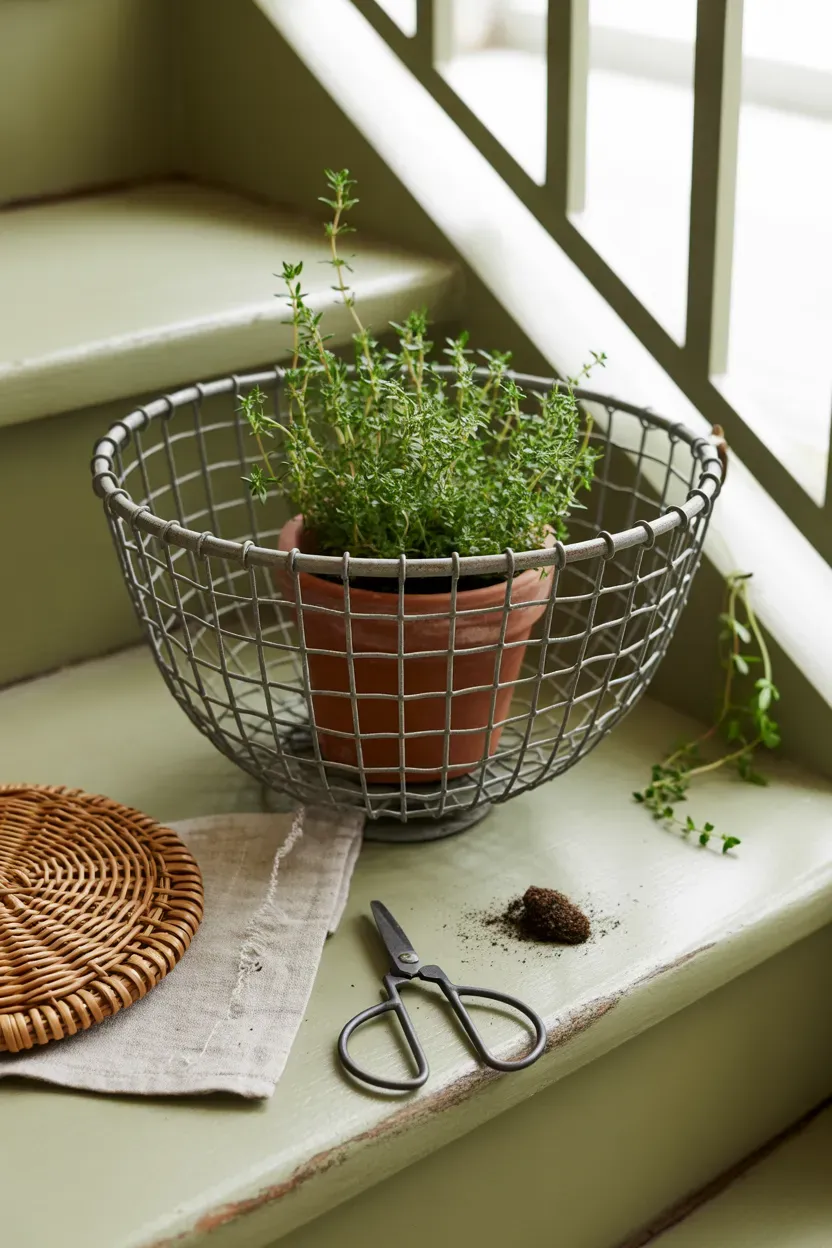
Keep the pot’s own drainage saucer inside the wire basket, since the open mesh does nothing to contain water runoff — I learned this the first time I set a pot straight into the basket and left a ring on the wood step below. Trailing thyme or oregano both work well here and appreciate the bright light most egg baskets end up placed near.
- Choose a basket with sturdy, rust-resistant wire
- Keep the pot slightly smaller than the basket opening for stability
- Trim herbs regularly to keep the trailing habit tidy
Our vintage wire basket styling guide and University of Florida Extension cover herb care well. It’s a small, charming detail that costs almost nothing to source.
8. A Shiplap Plant Shelf Beside the Stairs
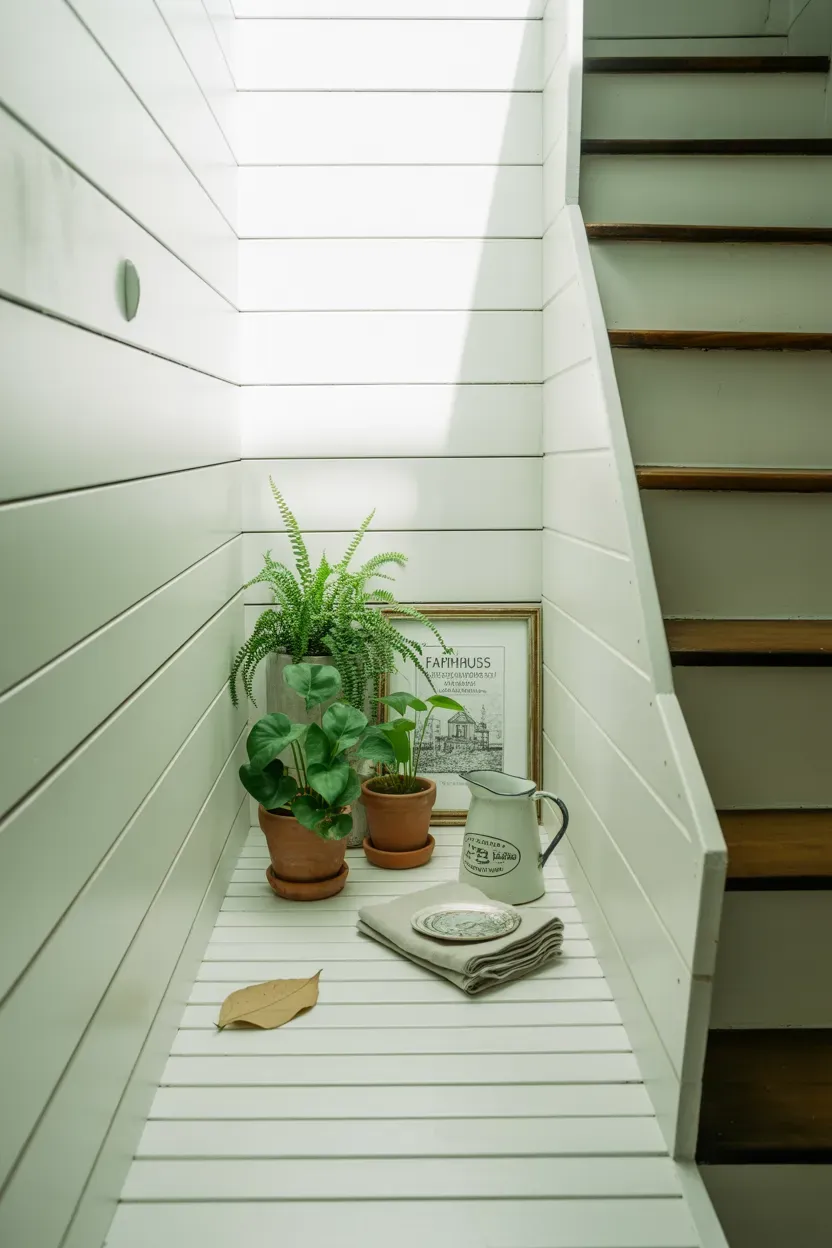
A narrow shiplap shelf mounted beside the staircase brings the same paneling you’d see on a farmhouse wall right up to plant height.
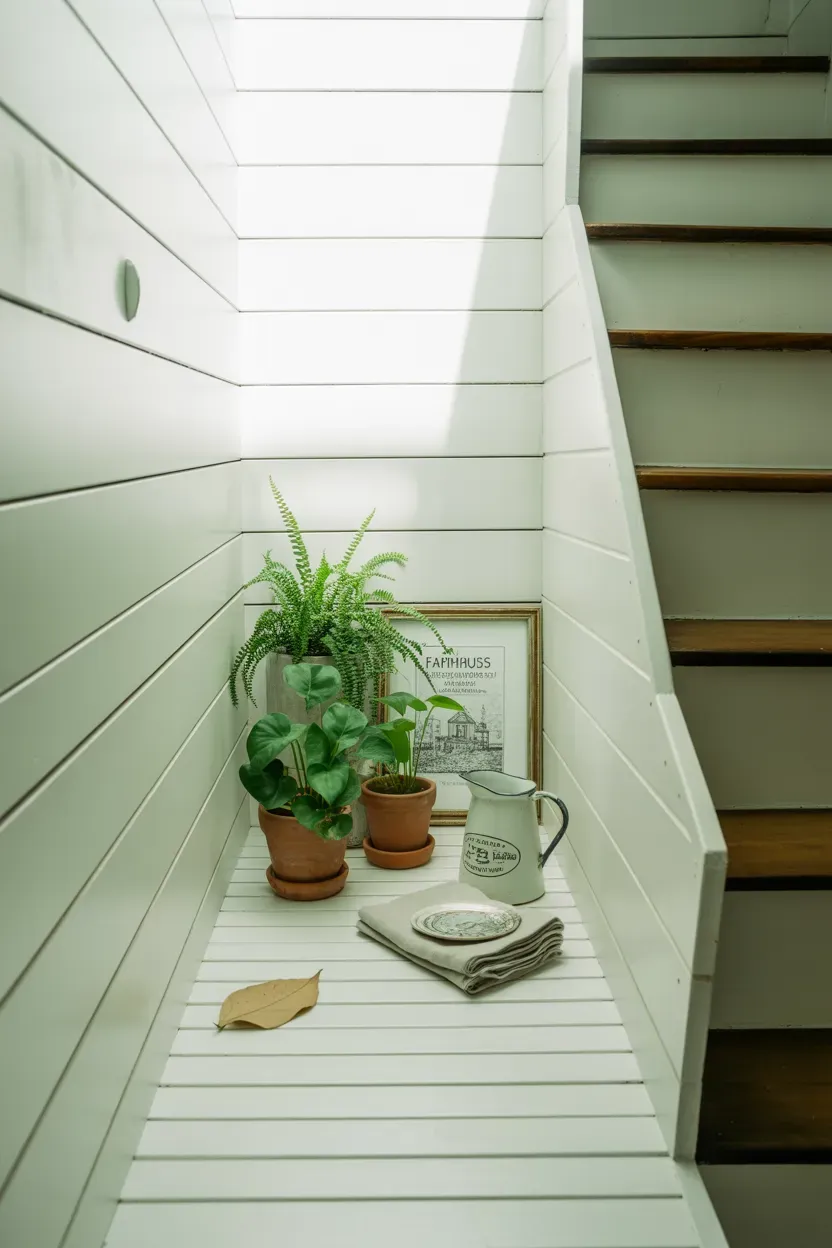
Seal the shelf with a matte polyurethane if it’s near a stairwell that gets regular watering splashes, since raw painted wood stains easily — a mistake visible on my own shelf after just one season. Space pots with a few inches between them so the shiplap grooves stay visible rather than getting hidden behind crowded plants.
Pro Tip: Choose plants with contrasting leaf shapes for a shiplap shelf — pairing a broad pothos leaf next to a fine fern frond keeps the narrow shelf from looking flat.
Our shiplap wall styling guide and BHG cover farmhouse wall treatments generally. It’s a straightforward weekend upgrade.
9. English Ivy Climbing a Rustic Wood Trellis
A small wood-and-wire trellis set beside the staircase gives English ivy something to climb instead of just trail, adding real height to the display.
Guide new ivy growth onto the trellis by hand every week or two rather than expecting it to climb unassisted — ivy clings but needs a gentle nudge in the right direction early on. It prefers cooler temperatures and medium light; keep it away from heat vents, which yellowed mine noticeably within two weeks the one time I placed it too close.
Full guidance is in our ivy trellis training guide, and Missouri Botanical Garden covers ivy’s growth habits. Keep pets in mind, since ivy is mildly toxic if chewed.
10. Boston Ferns in a Galvanized Tin Washtub
An old tin washtub filled with two or three Boston ferns makes a lush, low, wide arrangement that works especially well on a landing.
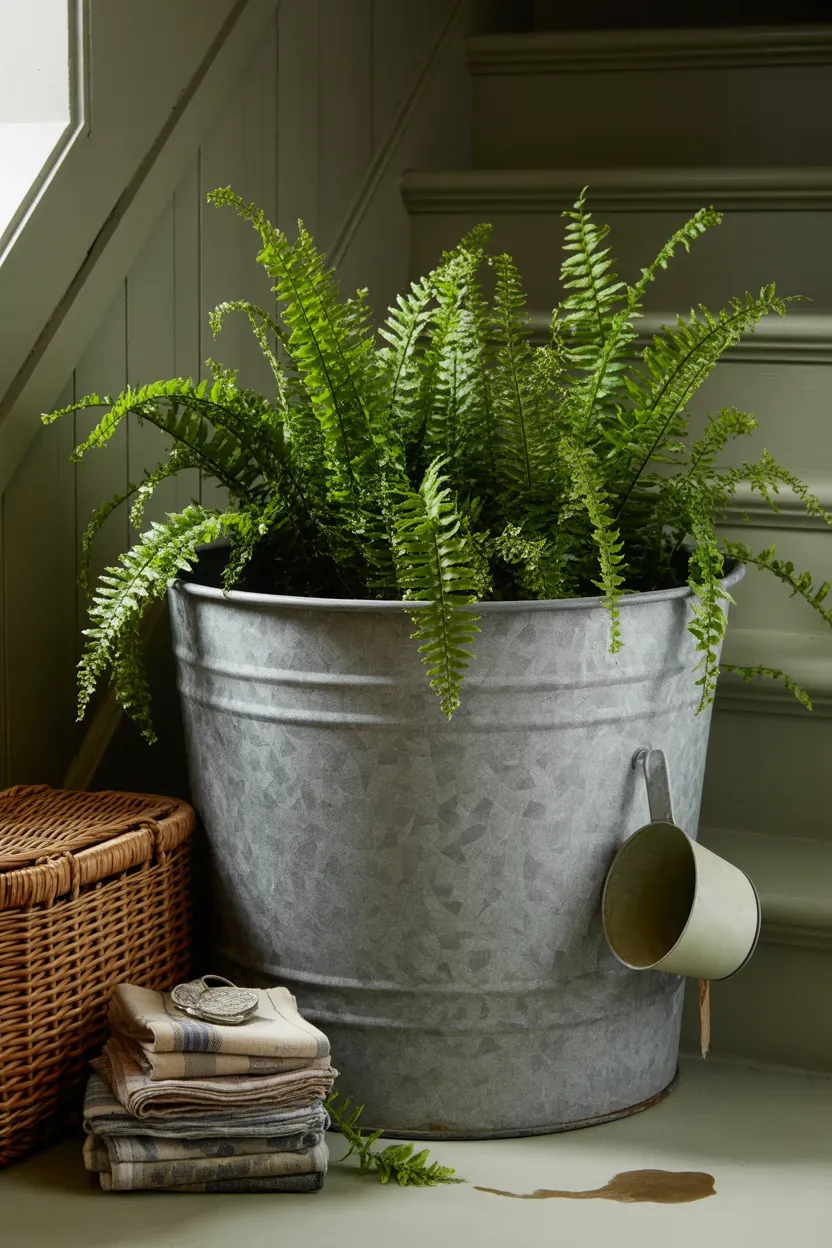
Keep each fern in its own nursery pot inside the washtub rather than planting directly into the tin, which makes watering and eventual repotting far easier — I planted directly the first time and it turned into a genuine excavation project a year later. Mist the ferns two to three times a week, since most stairwells run drier than ferns prefer.
- Group ferns of slightly different sizes for a fuller, layered look
- Elevate the washtub on a small stand for better drainage visibility
- Trim fully browned fronds at the base, not just the tips
Our fern washtub arrangement guide and Penn State Extension’s humidity notes are useful here. It’s a statement piece that fills a landing fast.
11. Dried Herb Bundles Paired With Live Rosemary
Hanging dried herb bundles above a live rosemary plant blends the farmhouse kitchen-garden look with something that’s still actively growing.
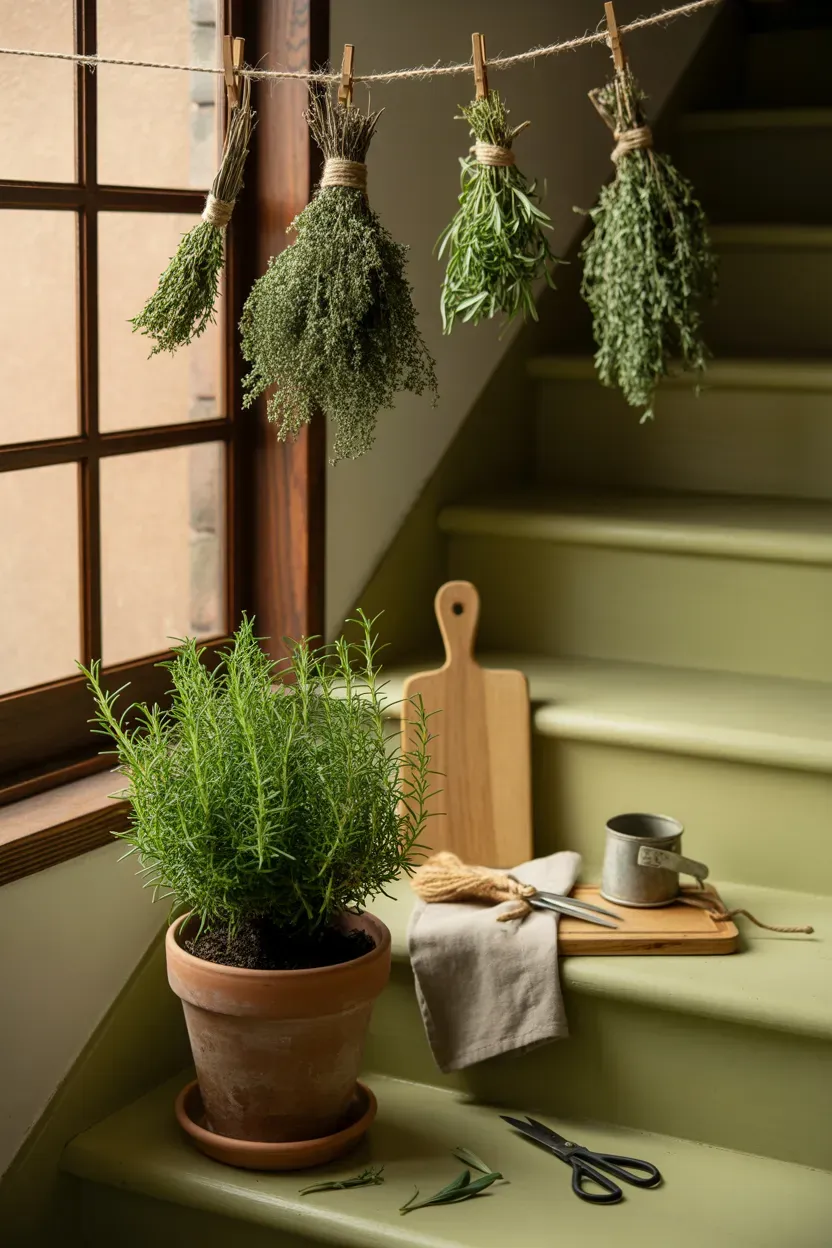
Live rosemary needs at least six hours of bright light and infrequent watering — let the soil dry out between waterings, since rosemary’s biggest killer is consistently wet roots, something I learned after losing two plants to root rot in a row. Dried bundles need zero care beyond an occasional dusting, making this pairing pleasantly low-maintenance overall.
Pro Tip: Hang dried herbs stem-up, leaves-down — it’s how they naturally dry evenly and it also keeps the display looking intentional rather than haphazard.
Read more in our dried herb bundle styling guide and Almanac.com’s rosemary growing notes. It’s an easy way to add fragrance along with visual texture.
12. An Antique Milk Crate Plant Stand
A stack of two antique wooden milk crates makes an instant plant stand with genuine farmhouse history built in.
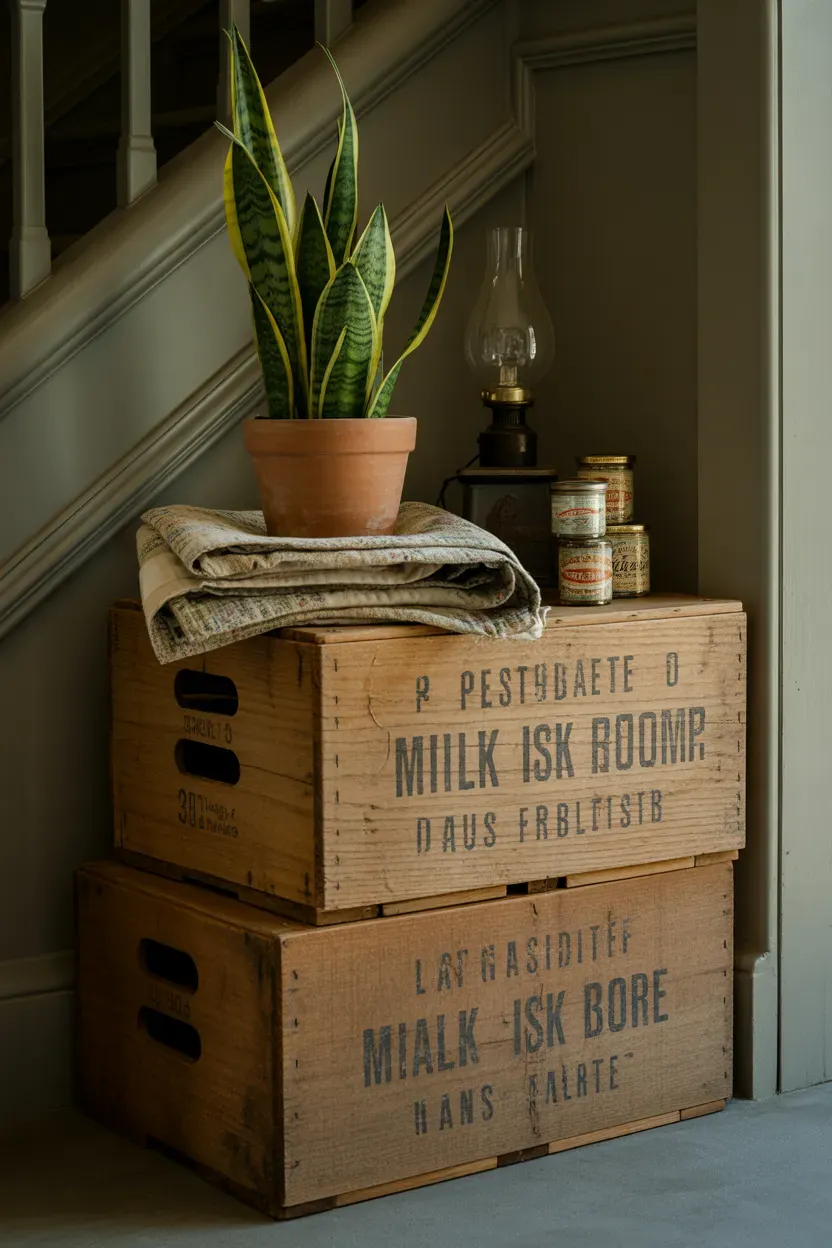
Check that stacked crates are actually secured — I use small L-brackets on the inside corners so the stand doesn’t shift when bumped, since a snake plant in a full pot has real weight to it. Snake plants tolerate almost any light level, making them a safe choice for the often-dim spot at the base of a staircase.
Our antique crate plant stand guide and Penn State Extension’s succulent notes cover care basics. It’s the kind of piece that gets more character with every scuff.
13. Rope-Hung Wooden Crate Planters
Hanging small wooden crates from thick rope along the stair wall adds dimension without needing any wall-mounted shelving.
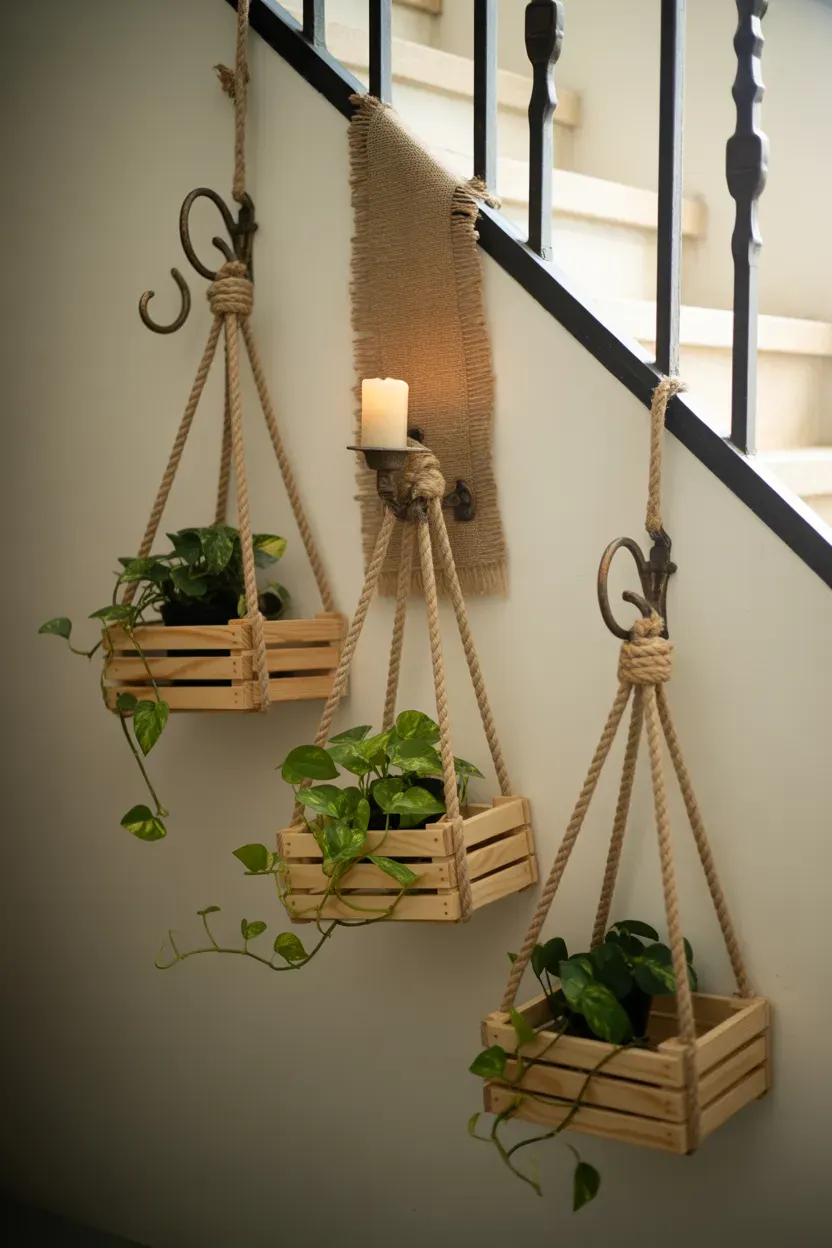
Use rope rated for at least 20 lbs and anchor the top knots to hooks driven into wall studs, not drywall alone, since a watered crate and pot combination adds up fast. Stagger the crates at different heights, roughly 6 to 8 inches apart, so the vines can eventually connect into one continuous cascade.
- Line each crate with a plastic liner before adding a nursery pot
- Check rope knots for slipping every few months
- Choose crates with slatted sides for extra airflow around roots
Our rope-hung crate planter guide and Gardeners’ World cover trailing plant care. It’s a satisfying DIY with real visual payoff.
14. A Rocking Chair Fern Nook
Tucking a small wooden rocking chair beside the staircase with a cluster of ferns nearby creates a cozy, porch-like corner indoors.
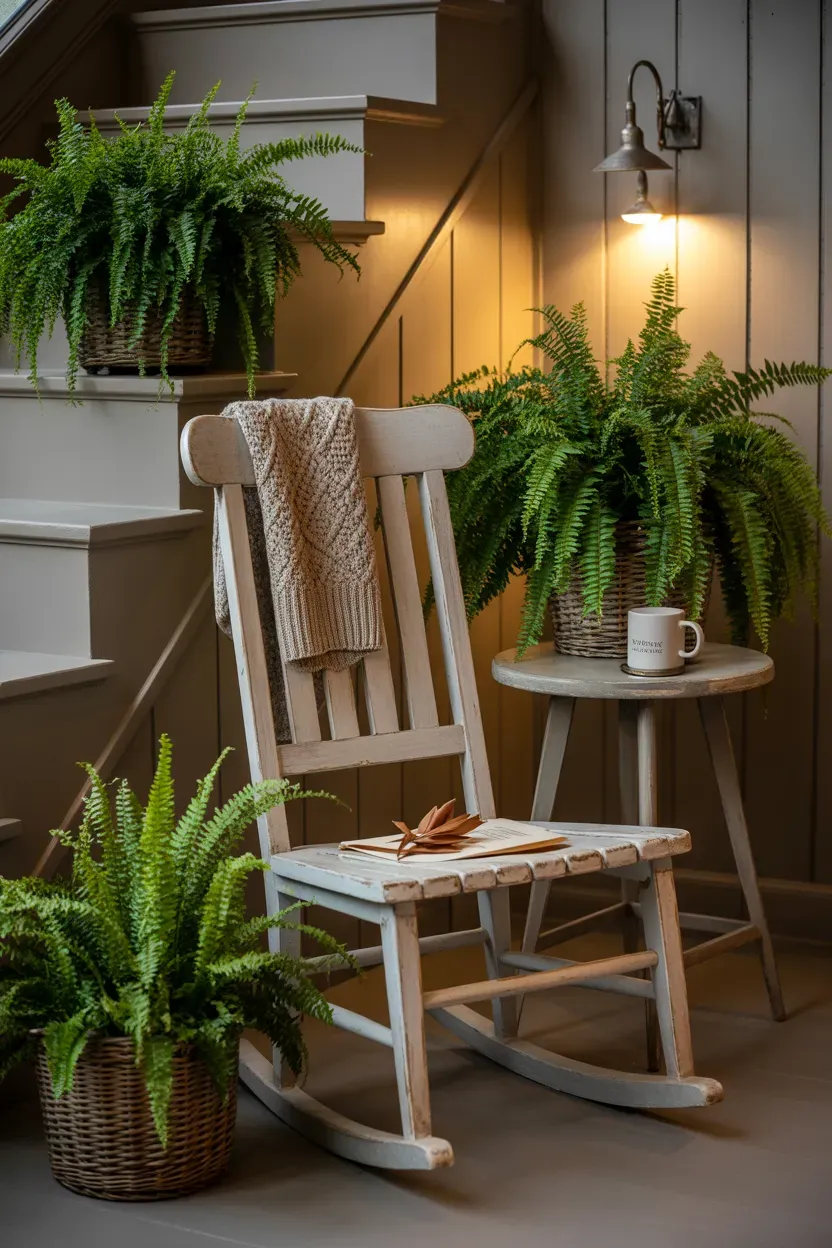
Measure the available floor space carefully before placing a rocking chair here — rockers need clearance both in front and behind to actually move, which I underestimated the first time and ended up scraping the wall. Boston ferns flanking the chair want medium indirect light and regular misting, since a nook next to a staircase often runs drier than the rest of the room.
Pro Tip: Position the chair so it faces slightly toward the stair’s natural light source — even indirect daylight makes the whole nook feel warmer and more inviting to actually sit in.
Our cozy reading nook styling guide and Missouri Botanical Garden fern notes are worth reading. This is the idea most likely to actually get used daily.
15. Chalkboard Plant Tags on a Windowsill Herb Row
A row of small herb pots along a stairwell windowsill, each labeled with a hand-lettered chalkboard tag, adds a personal, farmhouse-kitchen touch.
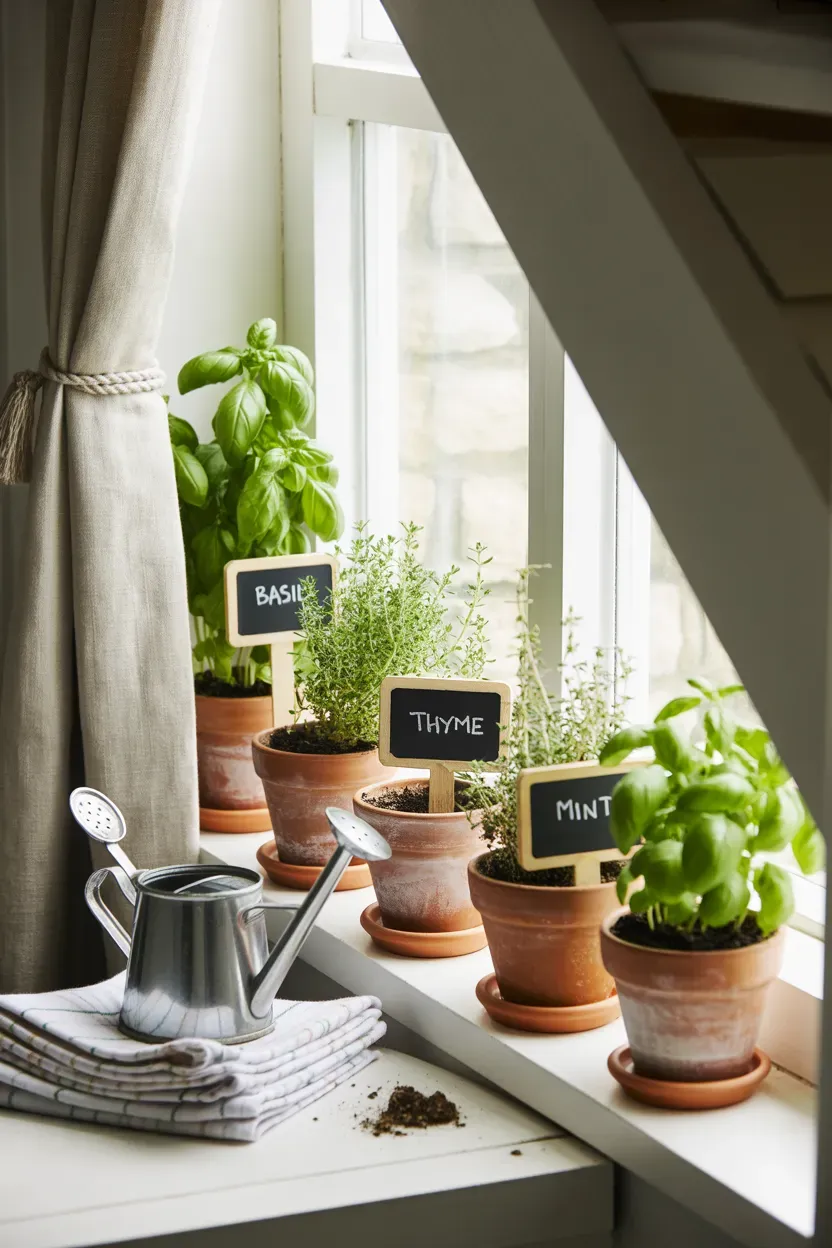
This idea depends entirely on a genuinely sunny windowsill — herbs need at least four to six hours of direct light, and a north-facing stairwell window won’t cut it, something I found out after a batch of leggy, pale basil. Use a liquid chalk marker rather than traditional chalk for tags near a spot that gets watered often, since regular chalk smudges the moment it’s splashed.
Our herb windowsill garden guide and University of Florida Extension’s herb notes cover light requirements well. It’s a small detail that makes the space feel genuinely tended.
16. A Cast Iron Plant Stand for an Areca Palm
A vintage cast iron plant stand holding a tall areca palm brings real weight and permanence to a stair landing.
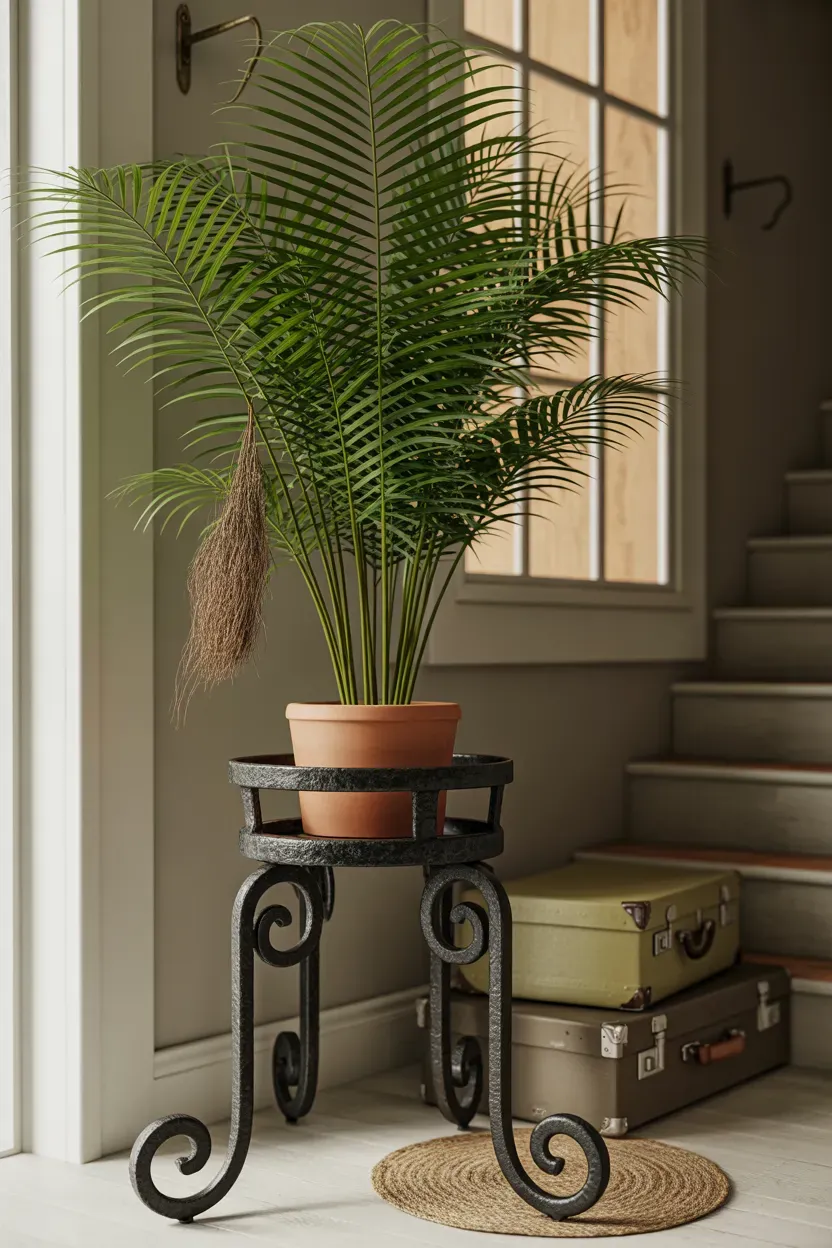
Check the stand’s weight rating before loading it with a mature palm — cast iron stands are sturdy, but older antique pieces can have weakened joints, and I’ve seen one buckle under a heavier ceramic pot at a friend’s house. Areca palms want bright indirect light and weekly watering, with filtered water preferred if tap water leaves mineral deposits on the leaf tips.
- Wipe cast iron with a dry cloth regularly to prevent rust from humidity
- Choose a pot slightly smaller than the stand’s top plate for stability
- Rotate the palm monthly for even growth
Our cast iron stand styling guide and University of Florida Extension’s palm care notes go deeper. It’s a piece that only looks better with age.
17. A Barn Door Backdrop With Hanging Plants
Installing a sliding barn door — real or decorative — behind the staircase and hanging plants from its track hardware makes an unmistakable style statement.
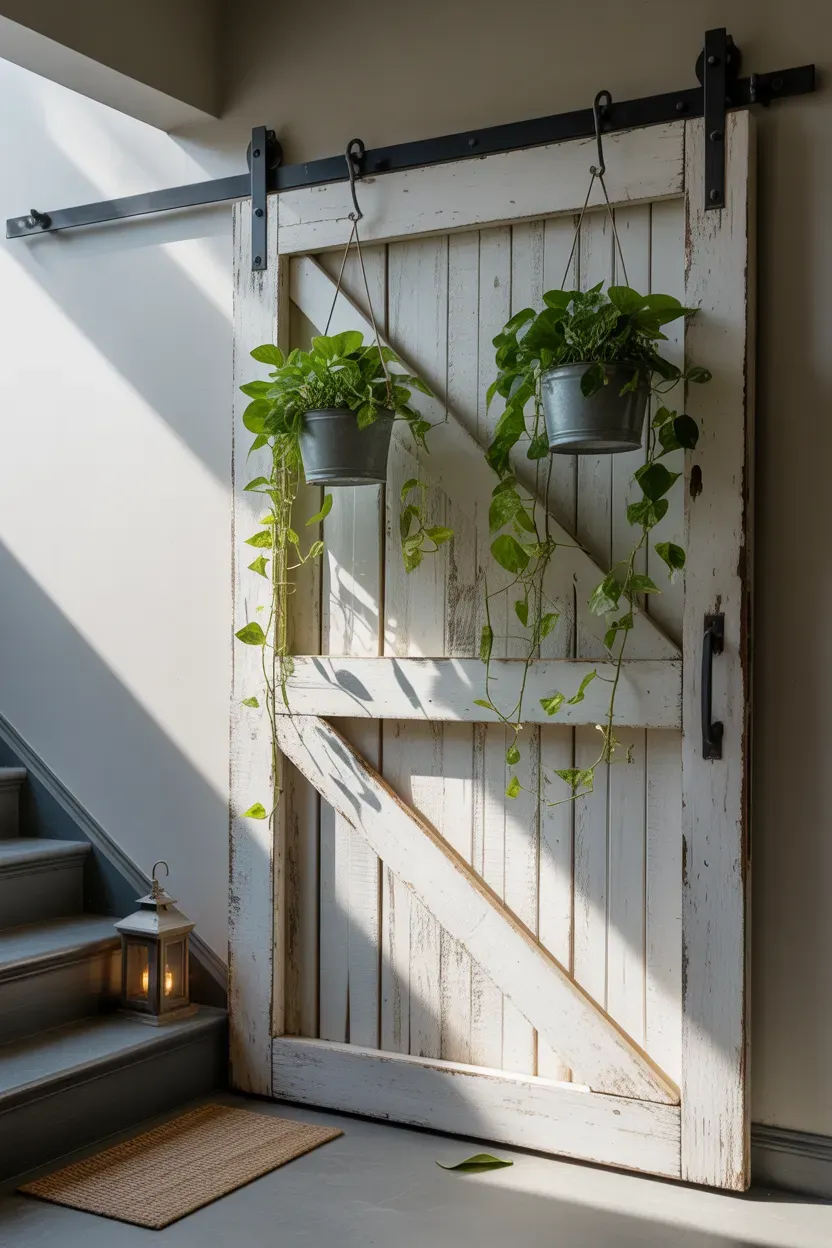
This is one of the more advanced ideas here and works best as a genuine architectural feature rather than an afterthought — confirm the track hardware can bear hanging plant weight before loading it up, since most barn door tracks aren’t rated for extra load without additional bracket support. Pothos handles the mixed light near a barn door reasonably well, tolerating both bright spells and dimmer stretches.
Our barn door installation guide and BHG cover farmhouse architectural features generally. Save this one for a genuine renovation project rather than a quick weekend fix.
18. Vintage Watering Cans Used as Planters
Old tin or enamel watering cans, retired from actual watering duty, make charming small planters with instant farmhouse authenticity.
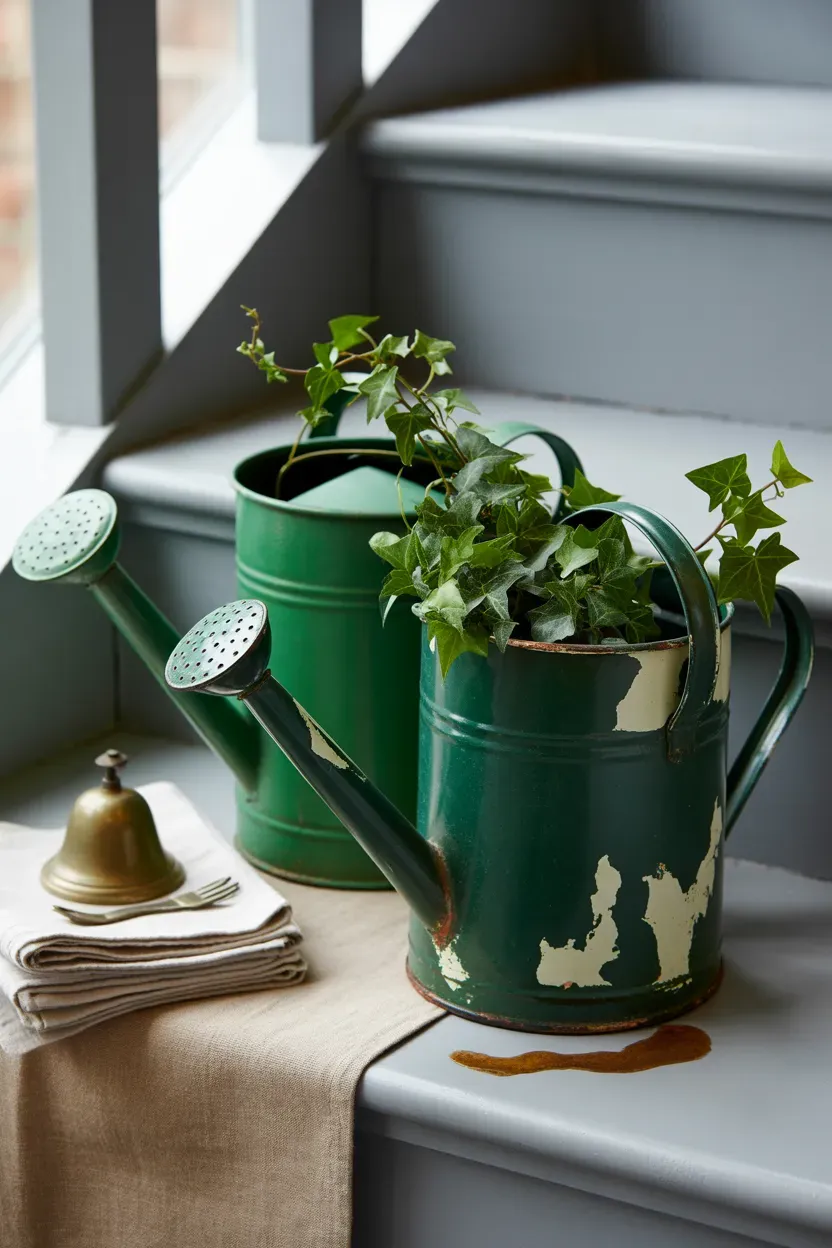
Drill drainage holes in the bottom before planting, and expect some rust over time on true vintage tin — that’s part of the appeal here, though a plastic liner inside will slow the process and protect wood steps underneath. Ivy trails naturally over a watering can’s spout in a way that feels almost intentional, which is why it’s the plant I’d recommend first for this idea.
Pro Tip: Skip drilling holes in cans with visible enamel chipping near the base — the enamel can flake further under drill pressure, so plant those in a nursery pot set inside instead.
Our repurposed container planter guide and Missouri Botanical Garden ivy notes cover this well. It’s an easy way to use pieces you might already have in the garage.
19. Wicker Basket Liners for a Softer Look
Slipping a plain nursery pot inside a wicker basket liner softens the look of a staircase display without committing to a permanent container swap.
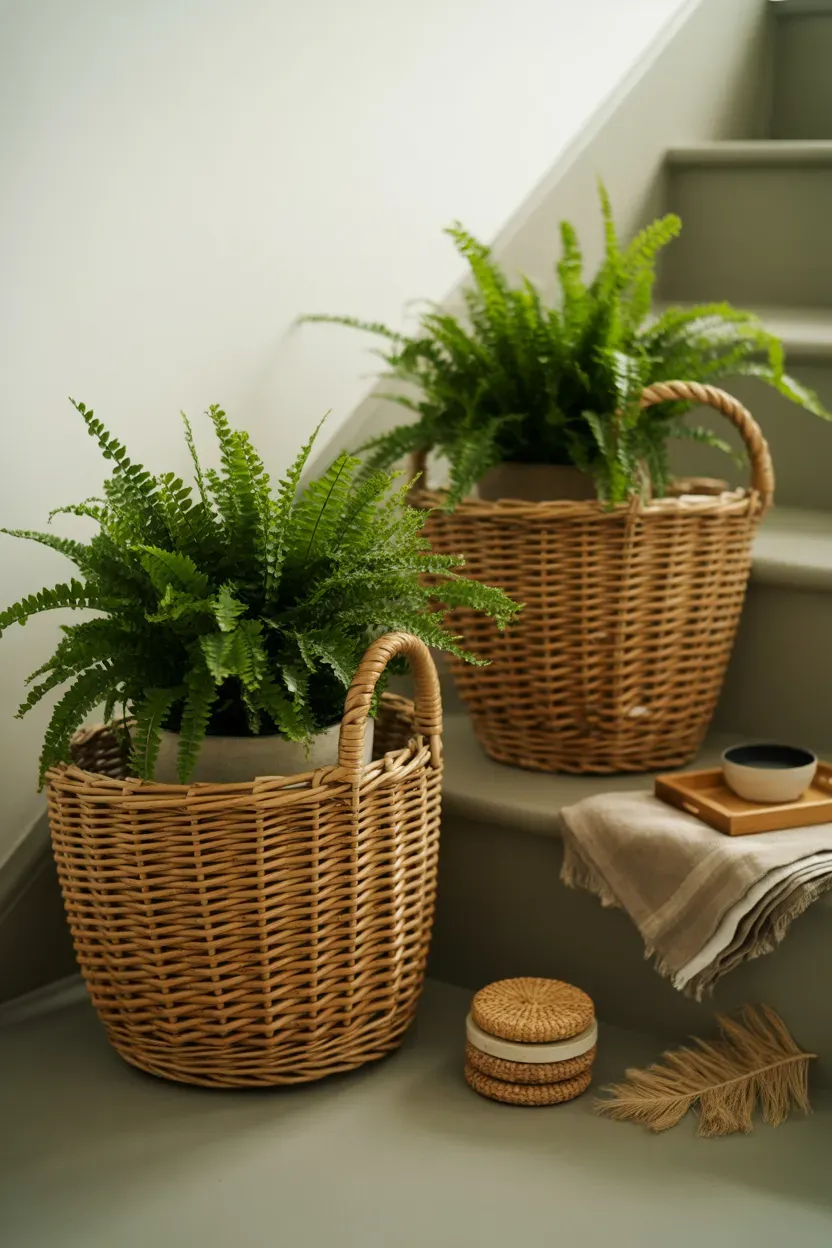
Always keep the plant in its original nursery pot with a saucer underneath — wicker isn’t waterproof, and setting a plant directly into a basket without a liner will rot the weave within a season, something I found out the hard way with a basket I genuinely liked. Ferns suit this soft, textured look particularly well since their fronds echo the basket’s woven texture.
Our wicker basket plant liner guide and SFGate’s fern care notes cover the basics. It’s a simple swap that instantly softens a hard-edged pot collection.
20. A Split-Rail Fence Section as a Plant Shelf
A short section of reclaimed split-rail fencing, mounted horizontally against the stair wall, makes a genuinely unique plant shelf with real farm history.
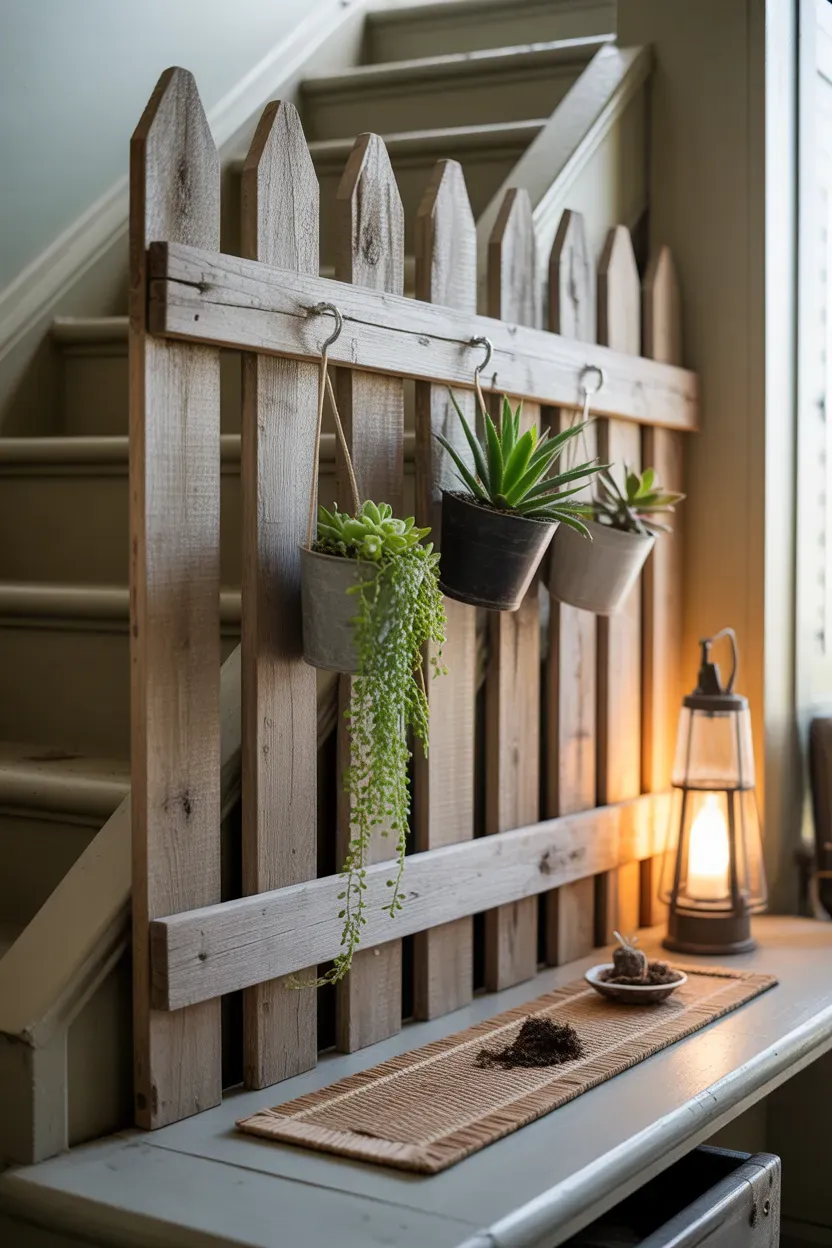
This is an advanced, hardware-heavy project — confirm the mounting brackets are rated for the combined weight of the fence section and any plants before installing, since raw split rail is heavier than it looks. Bright light suits this best if you’re using succulents; swap to pothos or ferns if the wall gets less sun.
- Choose fence sections without active rot or insect damage
- Seal the wood lightly to prevent splinters near a walkway
- Mount into studs, never drywall alone, given the weight involved
Our reclaimed fence shelf DIY guide and Almanac.com cover reclaimed wood projects generally. Save this one for when you’re ready for a real weekend build.
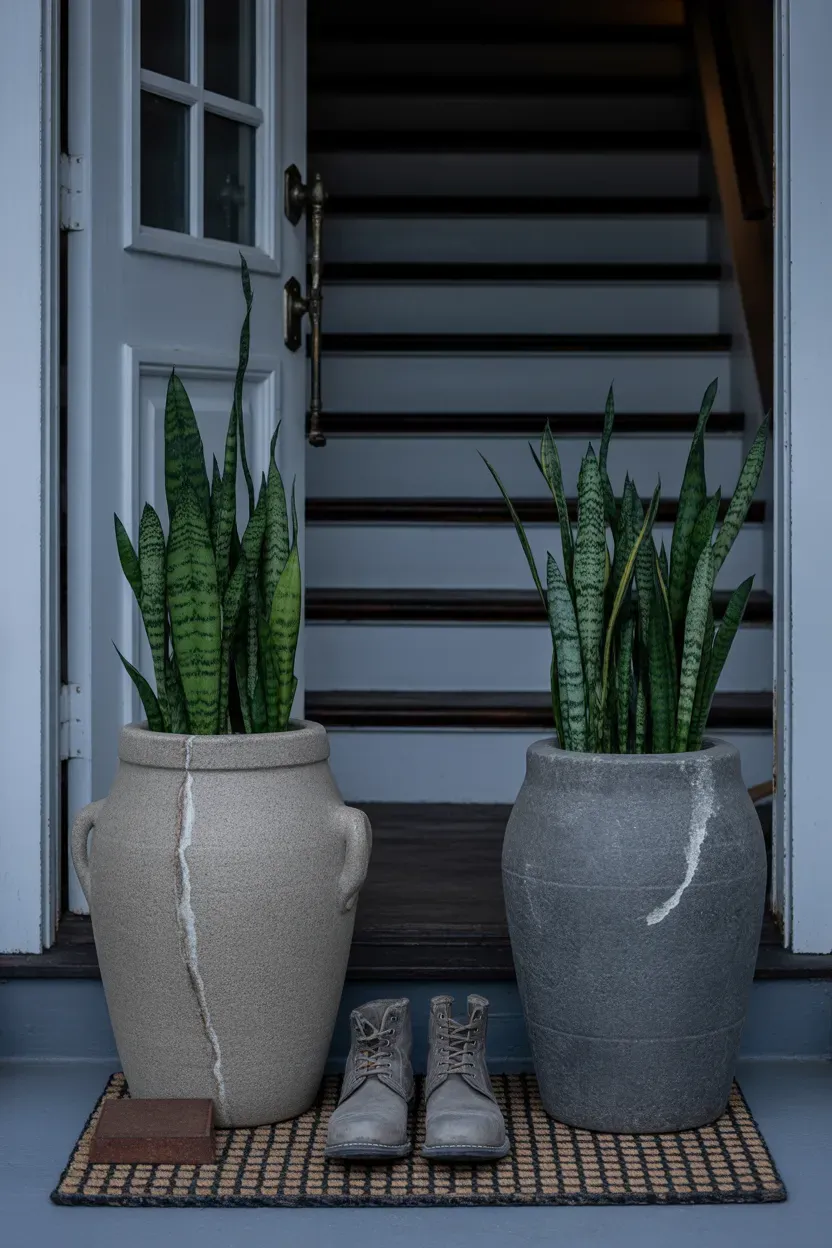
21. Stone Crock Planters at the Stair Base
Old stone crocks, the kind once used for pickling or butter churning, make substantial, grounded planters at the base of a staircase.
Check that any antique stone crock is actually food-safe glaze or unglazed stoneware before planting directly into it, since some older glazes contain lead and shouldn’t be handled with bare, wet hands repeatedly — when in doubt, plant in a liner pot instead. Snake plants tolerate the low light most entryways get and only need watering every three to four weeks.
Pro Tip: If a crock has no drainage hole and you don’t want to drill one, add a thick gravel layer at the bottom and water sparingly rather than on a fixed schedule.
Our stoneware planter safety guide and Penn State Extension’s succulent notes are worth reading first. It’s a striking, low-maintenance anchor for the whole staircase.
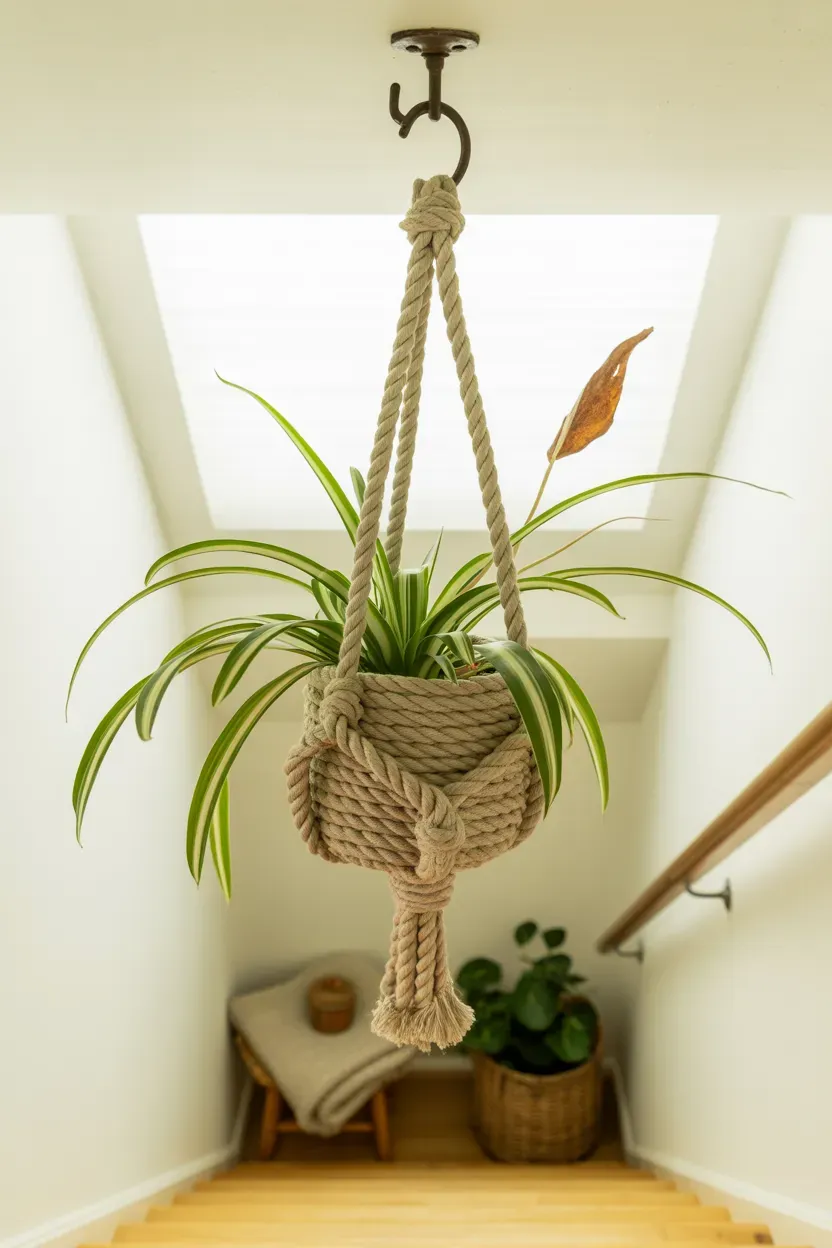
22. Braided Rope Plant Hangers for Spider Plants
A hand-braided rope hanger holding a spider plant brings texture and a distinctly handmade feel that fits the farmhouse aesthetic well.
Braid the rope with a simple three-strand pattern and reinforce the pot cradle with an extra knot layer at the base — a loose braid can slowly stretch and drop the pot over time, which happened to my first attempt about four months in. Spider plants tolerate a wide light range, making them one of the more forgiving choices for a hanger placed anywhere along the stairwell.
Our rope plant hanger DIY guide and Gardeners’ World cover spider plant propagation. It’s a satisfying, inexpensive project that only needs materials you likely already have.
23. A Farmhouse Pendant Light Paired With a Trailing Plant
Hanging a trailing pothos right beside a farmhouse-style pendant light at the stair top creates a warm, layered focal point after dark.
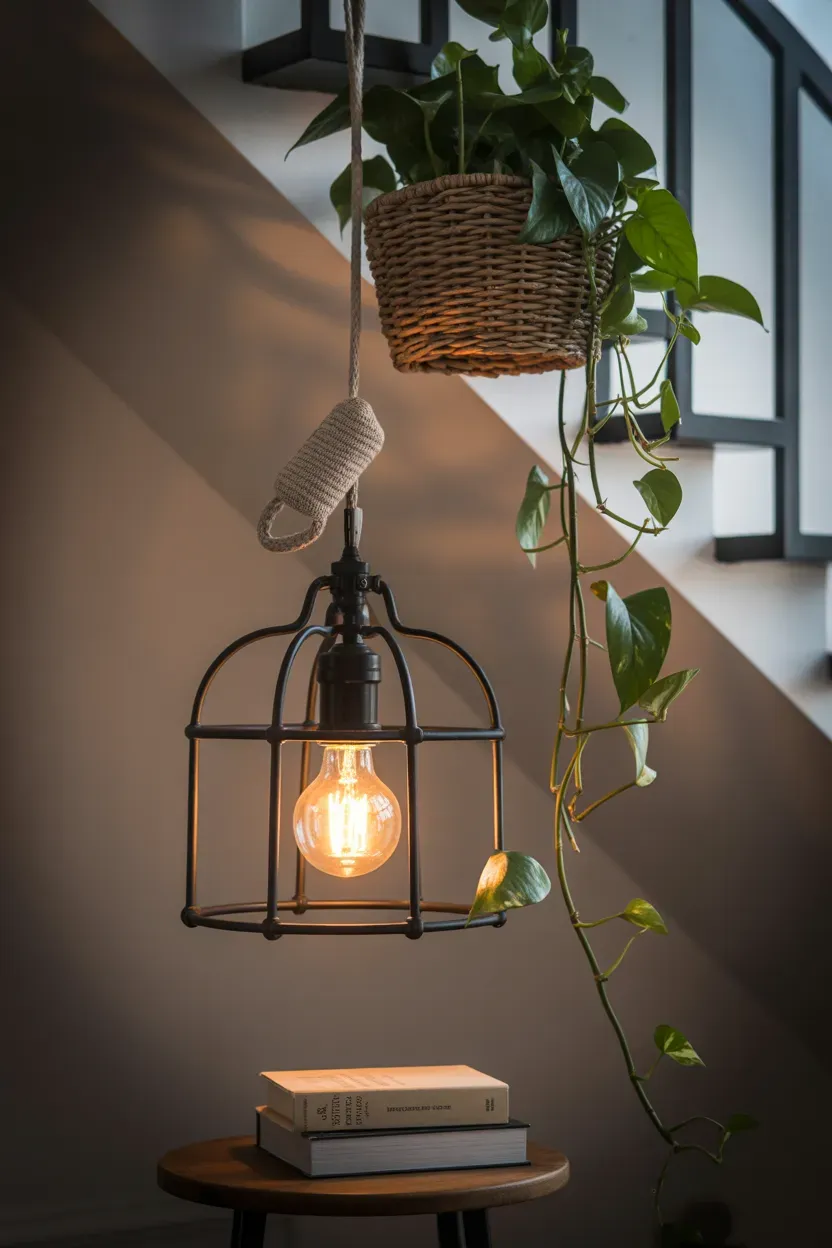
Keep the trailing vine at least 8 inches from the bulb itself, since even LED fixtures generate some heat that can scorch nearby leaves over time — I moved my pothos twice before finding a safe distance. Pothos tolerates the low-to-medium light typical of a stair-top landing, especially with the pendant’s light supplementing it in the evening.
- Choose an LED bulb to minimize heat near foliage
- Route the vine away from the fixture’s cord, not across it
- Dust the pendant shade regularly, since it collects more than you’d expect near a plant
Our pendant light plant styling guide and BHG cover lighting and plant safety. It’s a small pairing that changes how the staircase feels at night.
24. A Barn Wood Shelf With Succulents
A single floating shelf made from raw, unfinished barn wood holding a row of small succulents keeps the look simple and sunlit.
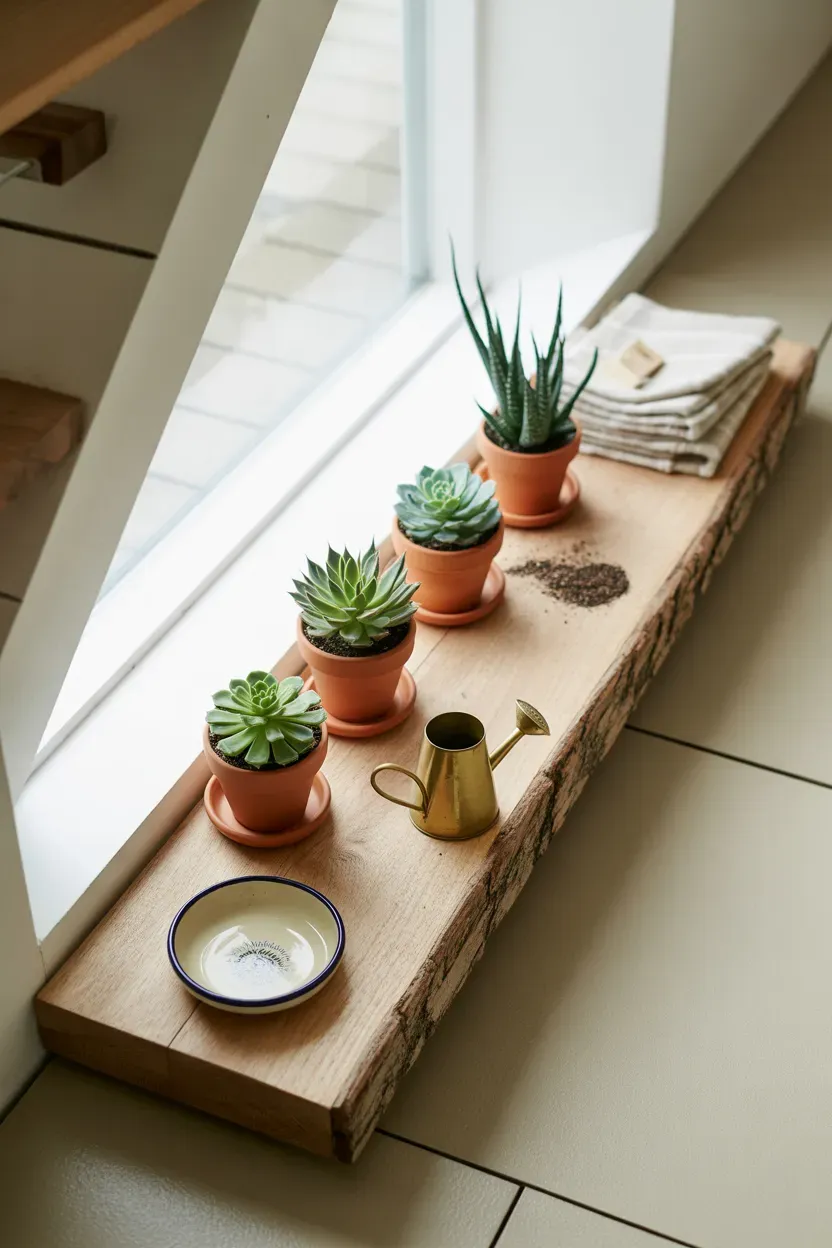
This shelf needs genuine bright light — succulents housed here will stretch and lean toward the nearest window within weeks if the spot isn’t sunny enough, which is exactly what happened on my first attempt at a north-facing wall. Water succulents only when the soil is fully dry, roughly every 10 to 14 days depending on your home’s humidity.
Pro Tip: Rotate each pot a quarter turn weekly — succulents lean toward light fast, and rotation keeps their shape even instead of lopsided.
Our barn wood floating shelf guide and SFGate’s succulent care notes cover this well. Keep it simple — this idea works best without overcrowding.
25. Copper Pot Containers for Warm Metallic Contrast
A few small copper pots, whether vintage cookware or purpose-bought planters, add warm metallic contrast against all the wood and tin elsewhere on the staircase.
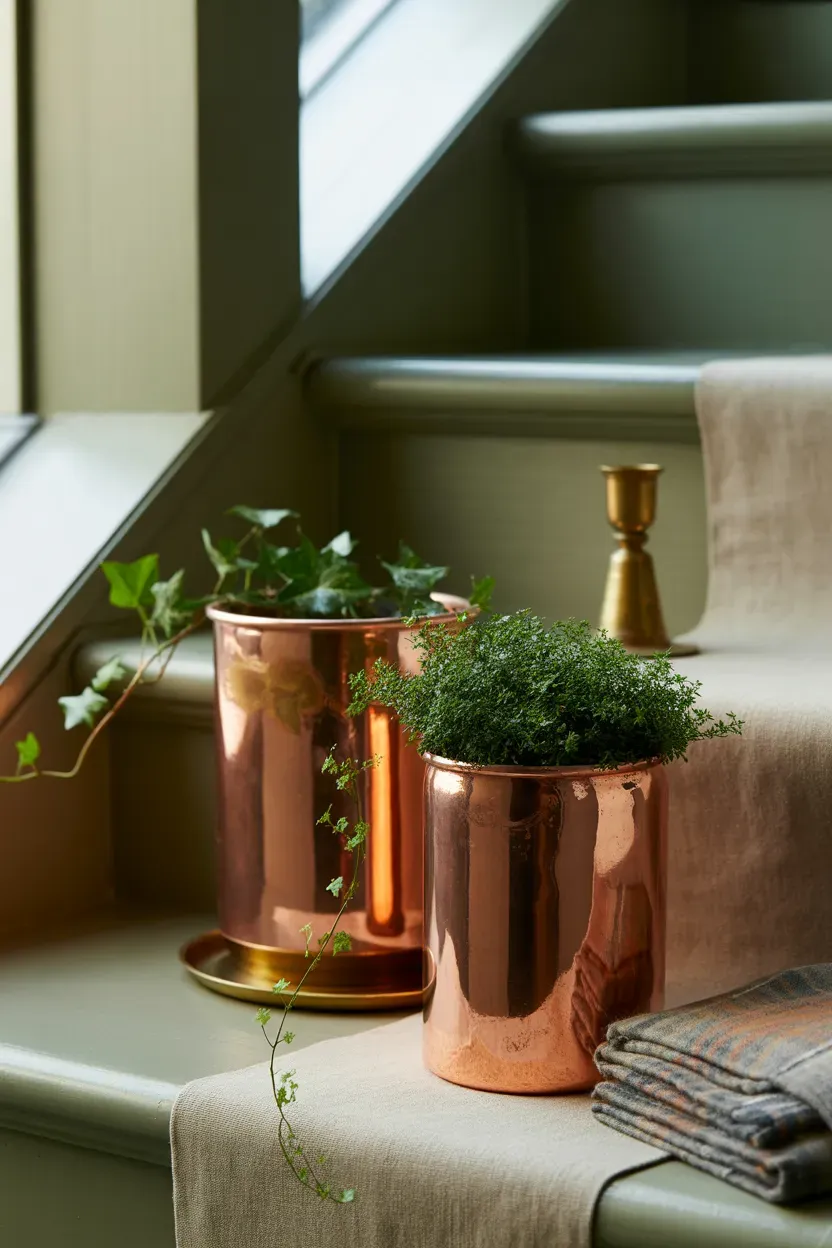
Line copper pots with a plastic liner before planting, since prolonged contact with wet soil can cause verdigris staining that some people like and others don’t — decide which you want before committing. Ivy suits the warm tone of copper nicely and tolerates the medium light most stair steps receive.
Our copper container styling guide and Missouri Botanical Garden ivy care notes are useful references. It’s a small detail that adds real warmth to an otherwise neutral material palette.
26. A Vintage Step Stool as a Plant Display
An old wooden step stool, set beside the staircase rather than used for its original purpose, makes a charming tiered plant display.
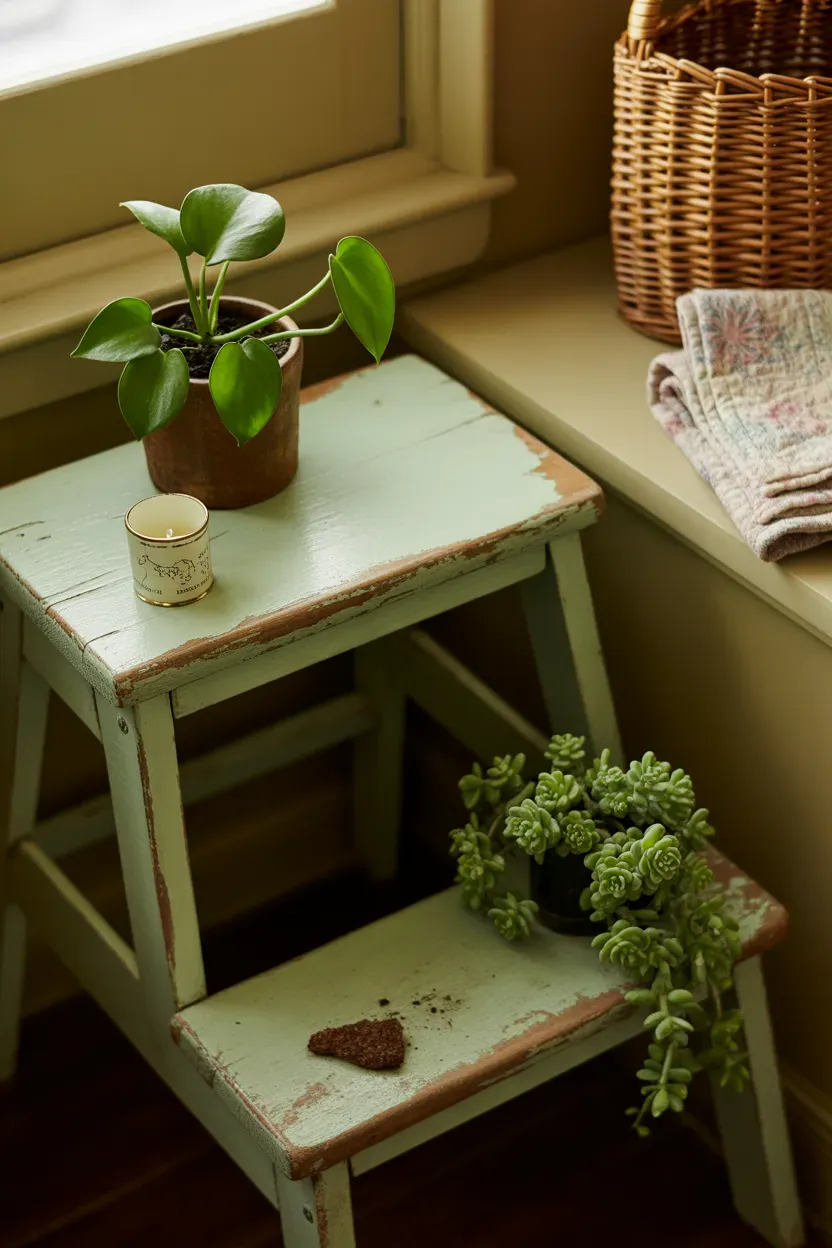
Check the stool’s stability before loading it with pots — old step stools were built for a person’s weight briefly, not a permanent plant load, and mine wobbled until I added small rubber pads to the feet. Mixing a low-light plant like pothos on top with a sun-loving succulent below only works if the actual light matches; otherwise, swap positions or plant choices accordingly.
- Choose a stool with a wide enough top step for stability
- Add felt pads under pots to protect old painted surfaces
- Rotate plants seasonally as the stool’s light exposure shifts
Our vintage furniture plant styling guide and Gardeners’ World cover mixed plant groupings. It’s an easy way to repurpose a piece that might otherwise sit unused.
27. Gingham-Lined Baskets for a Softer Kitchen-Garden Feel
Lining plain baskets with gingham fabric before setting in potted herbs brings a soft, kitchen-garden touch to the staircase display.
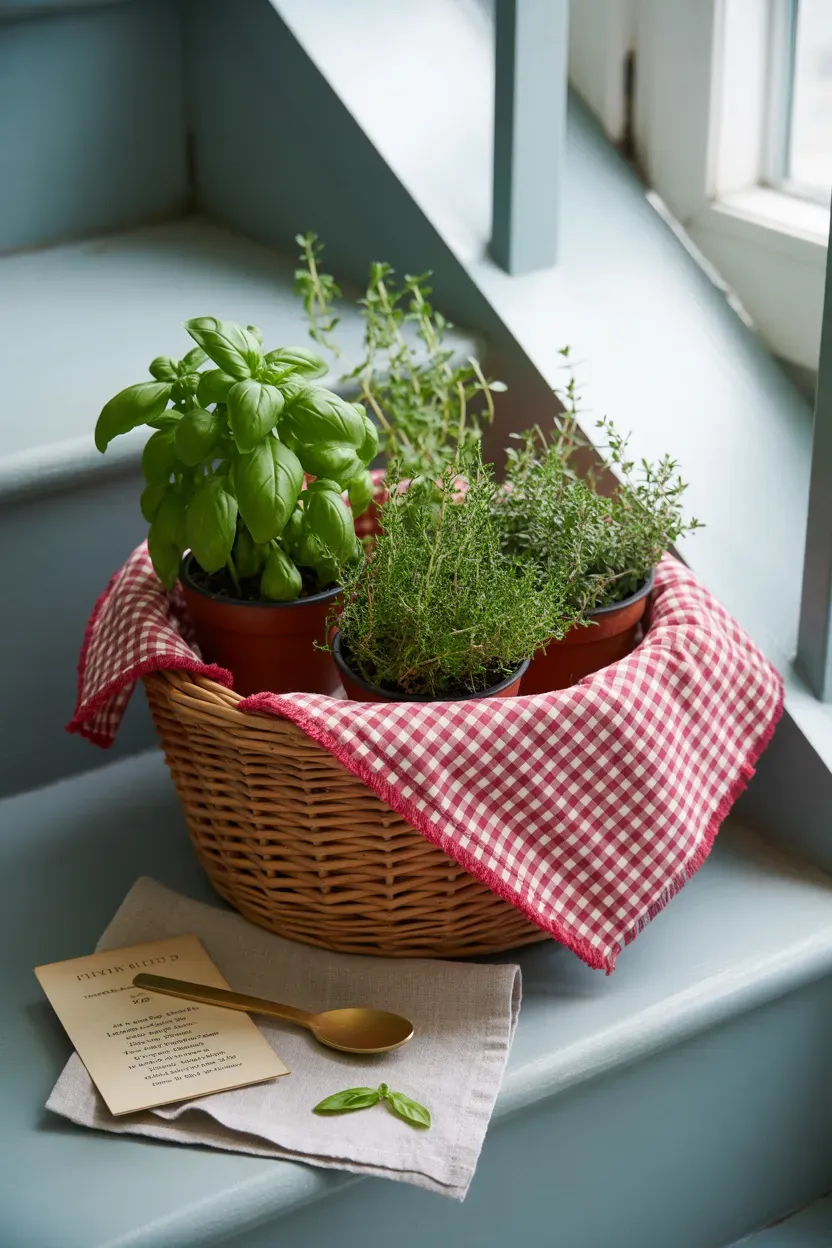
Choose a pre-washed, tightly woven cotton gingham so it holds up to occasional watering splashes without fraying quickly — a loosely woven fabric I used initially frayed within a month of regular handling. Herbs in this setup need bright light, so this idea suits a sunny landing far better than a shaded interior step.
Pro Tip: Remove the gingham liner and hand-wash it every few weeks — soil and water residue build up faster than you’d expect and dull the fabric’s color.
Our fabric-lined basket planter guide and University of Florida Extension’s herb notes cover the basics. It’s a soft, homey detail that photographs especially well.
28. A Wooden Dough Bowl Succulent Planter
An antique wooden dough bowl, once used for kneading bread, makes a wide, shallow planter that suits a cluster of small succulents perfectly.
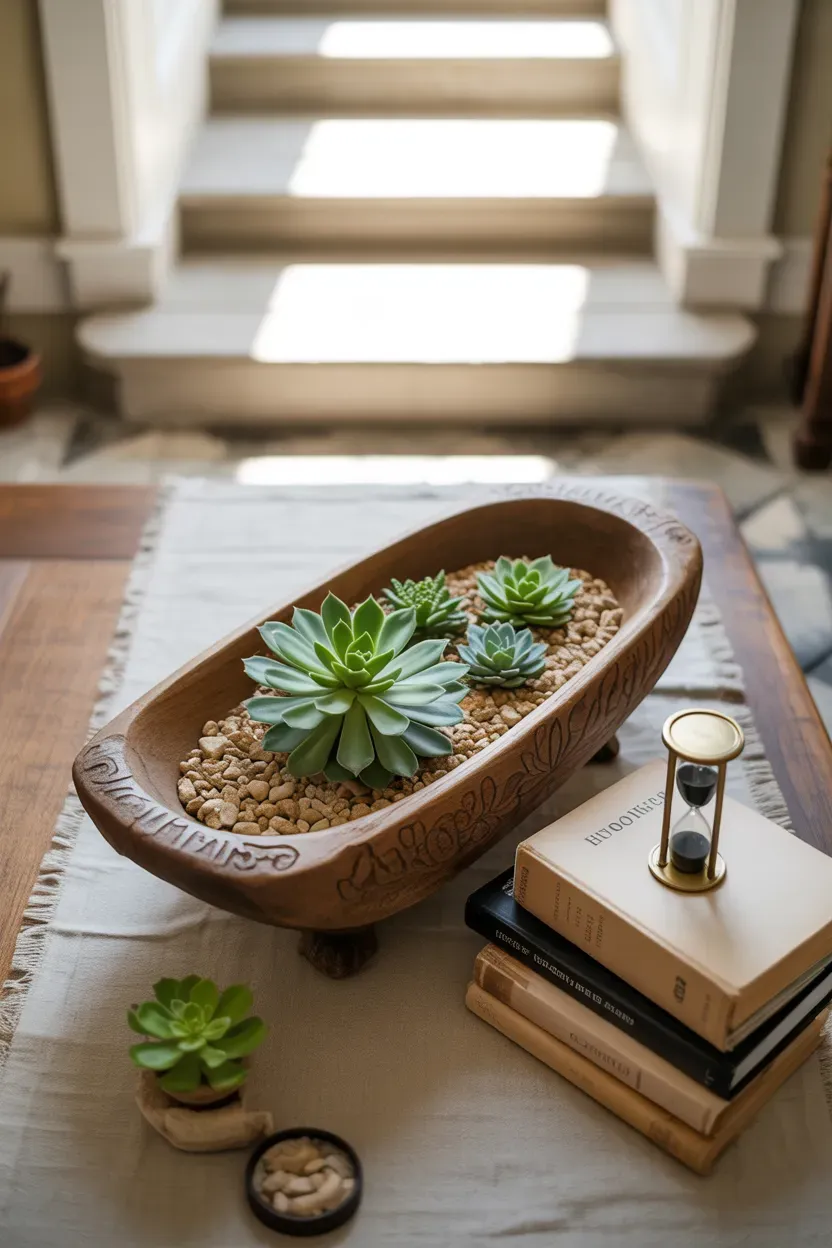
Line the bowl with a plastic sheet before adding soil, since raw wood in prolonged contact with moist potting mix will eventually warp or rot — I skipped this step on a bowl I genuinely loved and lost it to warping within a year. This arrangement needs bright light for the succulents to stay compact rather than stretching toward the nearest window.
Our dough bowl succulent garden guide and SFGate’s succulent care notes are worth reviewing first. It’s a genuinely heirloom-feeling centerpiece if you can source an authentic bowl.
29. String Lights With Dried Wheat and Trailing Greenery
Combining warm string lights, bundles of dried wheat, and a trailing live plant gives the staircase a cozy evening glow that pulls the whole farmhouse theme together.
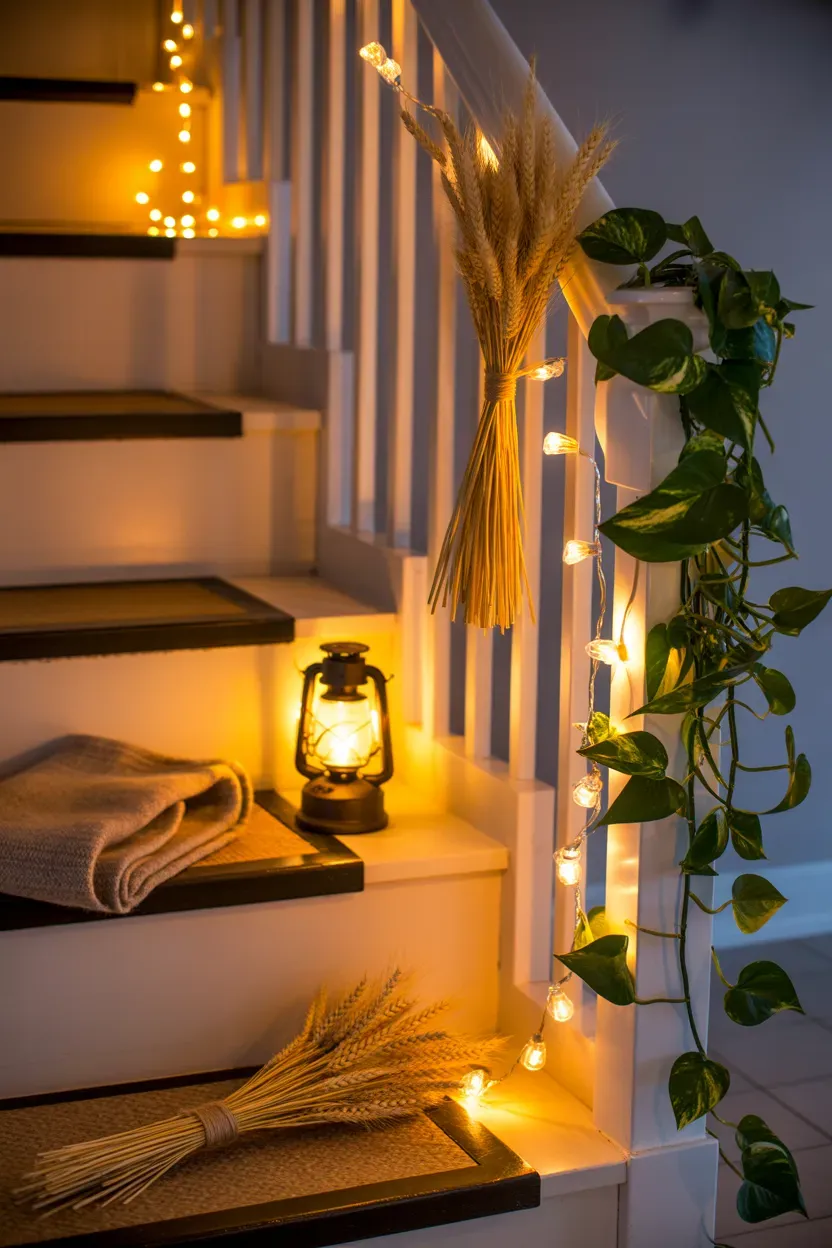
Use battery-powered or USB string lights rather than running a cord across steps, since a trip hazard here isn’t worth the ambiance — a lesson I only needed once after nearly tripping over a cord myself. Dried wheat needs no care at all and pairs naturally with pothos, which tolerates the low-to-medium light typical of an evening-lit stairwell.
- Replace dried wheat bundles yearly, since they fade and become brittle
- Weave lights loosely around live vines to allow continued growth
- Choose warm white (2700K) bulbs to flatter both the wheat and the foliage
Our string lights plant styling guide and Almanac.com cover seasonal dried decor. It’s a fitting, warm way to close out this whole staircase transformation.
Getting Started With a Rustic Staircase Garden
The easiest first step is choosing one anchor piece — a galvanized bucket, a reclaimed ladder, or a wheelbarrow at the base — rather than trying to build the full farmhouse look in a single weekend. Live with that one piece for a few weeks and see how the light and traffic pattern actually work before adding more.
The most common beginner mistake is skipping drainage prep on rustic containers, since tin, stone, and reclaimed wood almost never come pre-drilled the way standard nursery pots do. Before buying anything else, gather one power drill with a metal bit (for galvanized containers) and one plastic liner or nursery pot set to protect wood and porous materials from water damage.
Realistically, expect the staircase to look intentionally styled within four to six weeks of steady additions, and genuinely lived-in — with real wear on the materials and fuller plant growth — by the six to nine month mark. Farmhouse style is meant to look gathered over time, so resist the urge to rush it.
Frequently Asked Questions
What plants work best for a rustic farmhouse staircase?
Pothos, English ivy, snake plants, and Boston ferns are the most forgiving choices, tolerating the mixed and often lower light most staircases actually get. Choose based on your specific light level first, then match plant to container rather than the reverse.
Do galvanized and tin containers need special care?
Yes — nearly all galvanized and tin containers need drainage holes drilled before planting, since they’re rarely sold with any. A plastic liner inside also slows rust and protects wood steps from water rings underneath.
How do I keep rustic wood pieces from rotting near plants?
Line any wood container, shelf, or bowl with a plastic barrier before adding soil, and seal exposed wood surfaces with a matte wax or sealant if they’ll face regular watering splashes. Most rot problems come from direct soil contact, not humidity alone.
Are these plants safe around pets and kids?
Not universally — pothos, philodendron, and ivy are mildly to moderately toxic if chewed, while snake plants, spider plants, ferns, and most herbs are pet- and child-safe. Check the comparison table above and place toxic species on higher shelves or hanging planters out of reach.
How much does a full rustic staircase garden typically cost?
Starting with two or three secondhand or repurposed pieces often costs $30 to $60 total, and a fully built-out staircase garden assembled gradually over six months to a year typically runs $150 to $350. Sourcing containers secondhand — thrift stores, estate sales, flea markets — keeps costs well below buying new farmhouse-branded decor.
A Few Final Thoughts
Twenty-nine ideas is a lot to take in at once, but a rustic staircase garden was never meant to happen overnight — it’s built one galvanized bucket, one reclaimed shelf, one worn watering can at a time. Choose whichever idea matches materials you can actually source and light you actually have, and let the collection grow naturally from there. The pieces that end up looking the most authentically farmhouse are almost always the ones gathered slowly, with real wear earned over real time, not bought to look instantly finished. A staircase that once felt purely functional can become the warmest, most character-filled corner of the house, and that transformation usually starts with something as simple as one tin bucket on the bottom step. Give it a season before judging the results — a proper farmhouse look, even in miniature, is built gradually.