
Most rental leases have a clause somewhere about holes in the walls, which is exactly why so many apartment staircases sit bare while the rest of the home gets all the styling attention. I spent my first year in a rental apartment convinced a staircase garden meant drilling I wasn’t allowed to do, until a neighbor showed me her tension-rod trellis and I realized almost everything on this list needs zero permanent damage. Apartment staircase gardens lean on command hooks, tension rods, freestanding stands, and plain old gravity instead of anchors and screws — and done well, they look every bit as intentional as a homeowner’s built-in setup. Whether you’ve got a narrow interior stairwell or a shared landing you can’t touch at all, there’s a version of this that works within your lease. Ready? Let’s explore all 15 of them.
Quick Answer: For a renter-friendly staircase garden, use command hooks rated for your plant’s wet weight, tension rods for hanging displays, and freestanding shelves or ladders that need zero wall damage. Stick to low-maintenance trailing plants like pothos and ivy, which forgive inconsistent light in shared or narrow stairwells. Everything should be able to come down cleanly at move-out, security deposit intact.
Why an Apartment Staircase Garden Is Worth Your Time
Renters get told constantly what they can’t do to a space, so it’s worth focusing on what actually works within those limits instead. A staircase, even a small rental one, is real square footage most people never use, and damage-free plant styling turns it into something that finally feels like yours.
The practical upside: command hooks rated for 5 to 7 lbs handle most trailing plants just fine, and quality removable adhesive strips leave walls genuinely clean when taken down correctly — pulling straight down and slow, not out. A lesser-known fact — tension rods, usually sold for curtains, hold significantly more weight than people expect when installed correctly, often 20 lbs or more depending on the rod.
This approach suits anyone renting short-term or long-term who still wants a space that feels considered, and it’s genuinely low-risk since almost every idea here can be undone in minutes without a landlord ever noticing it was there.
At a Glance
- Command hooks and tension rods replace drilling for nearly every idea on this list
- Freestanding stands, ladders, and shelves need zero wall contact at all
- Trailing plants like pothos and ivy tolerate the mixed light common in rental stairwells
- Everything here should remove cleanly at move-out with no wall damage or deposit risk
- Portable pieces let you take the whole garden with you to the next apartment
Comparison Table: 15 Apartment Staircase Garden Ideas
| # | Idea | Best Plant/Material | Light Needs | Difficulty | Pet-Safe? |
| 1 | Command hook hanging pothos | Pothos | Low–medium | Easy | No |
| 2 | Tension rod trellis | Climbing philodendron | Medium | Moderate | No |
| 3 | Freestanding ladder shelf | Mixed trailers | Medium | Easy | Varies |
| 4 | Over-the-door plant rack | Pothos/ivy | Low–medium | Easy | No |
| 5 | Removable adhesive shelf | Snake plant | Low–bright | Easy | No |
| 6 | Tension rod curtain of vines | Ivy | Medium | Moderate | No |
| 7 | Rolling plant cart | Mixed | Varies | Easy | Varies |
| 8 | Command strip wall grid | Air plants | Bright | Easy | Yes |
| 9 | Freestanding coat rack repurposed | Pothos | Low–medium | Easy | No |
| 10 | Tension rod under-stair curtain | Spider plant | Medium | Moderate | Yes |
| 11 | Stackable crates, no mounting | Mixed | Varies | Easy | Varies |
| 12 | Suction cup window planters | Succulents | Bright | Easy | Mostly yes |
| 13 | Portable trolley bar cart reuse | Ferns | Medium | Easy | Yes |
| 14 | Peel-and-stick wallpaper backdrop | Faux greenery | None | Moderate | Yes |
| 15 | Freestanding room divider planter | Bamboo palm | Medium | Moderate | Yes |
Main Body — 15 Apartment Staircase Garden Ideas
1. Command Hooks and a Hanging Pothos
Command hooks rated for outdoor use hold a hanging pothos planter without a single hole, and they remove cleanly enough that most landlords never know they were there.
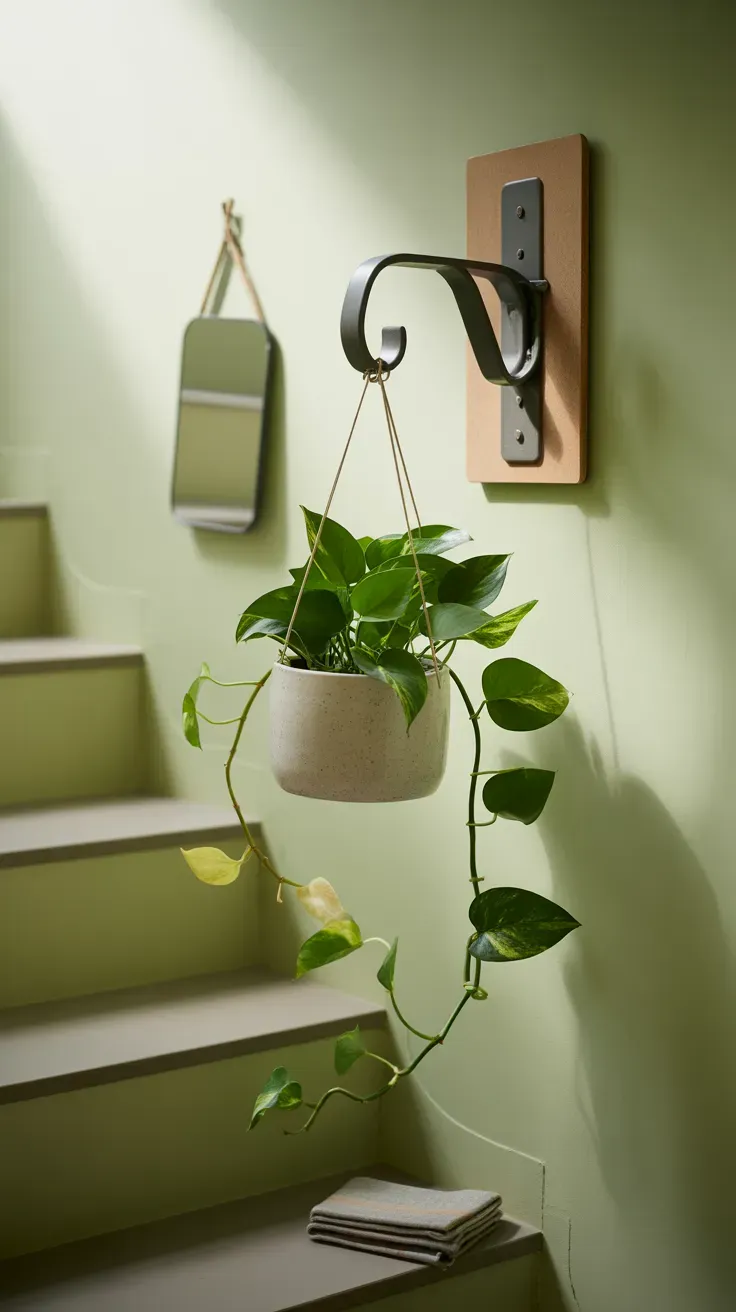
Choose the “outdoor” or “heavy duty” command hook line, rated for at least 5 lbs, since standard indoor hooks often can’t handle a watered hanging pot — I learned this when a lighter hook let go within a month. Let the hook cure for a full hour after applying before hanging anything, and always pull straight down slowly to remove without wall damage.
Pro Tip: Test the hook’s adhesive on an inconspicuous wall spot first if you’re unsure about your paint finish — some matte or textured paints release the adhesive backing along with it.
See our command hook plant hanging guide and the RHS trailing plant care notes for more. It’s the single easiest way to add greenery without touching your lease terms.
2. A Tension Rod Trellis for Climbing Philodendron
A tension rod wedged between two walls or a stairwell alcove makes an instant trellis for a climbing philodendron, with zero drilling involved.
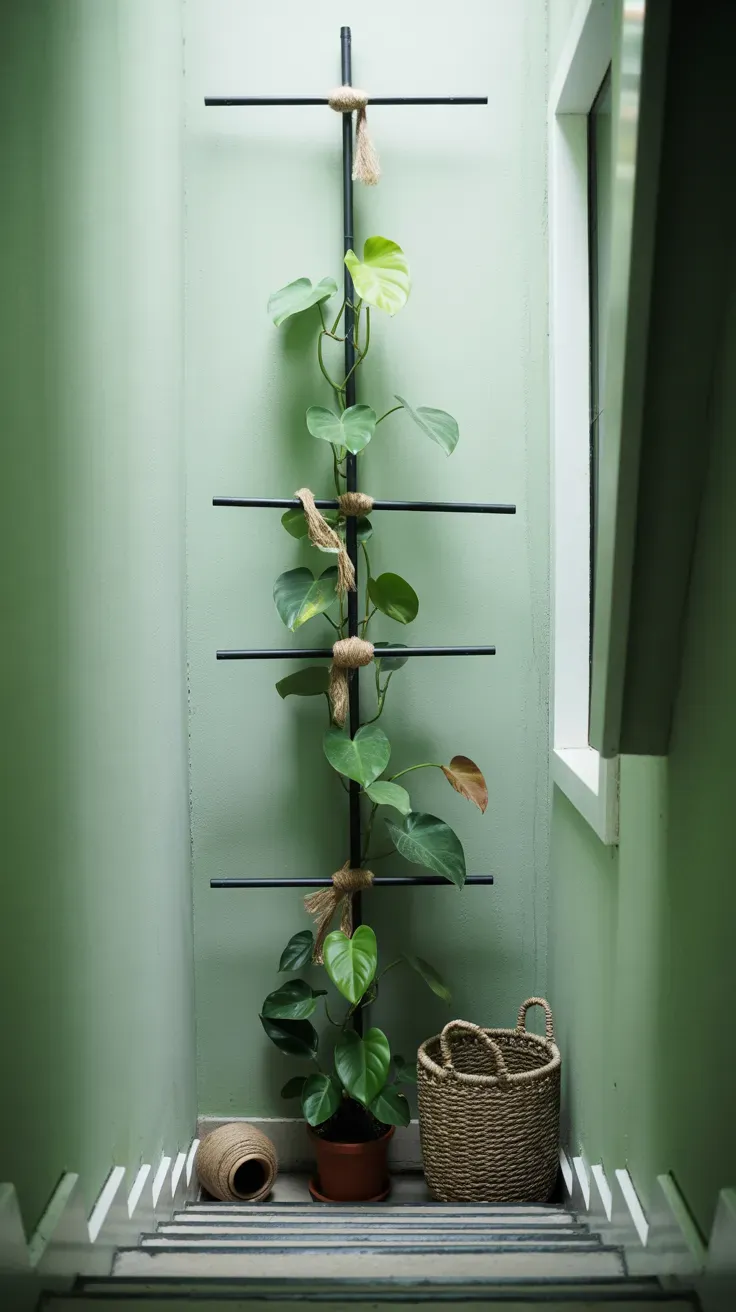
Choose a tension rod rated for at least 20 lbs and test its grip by pressing firmly on it before trusting it with a full plant setup — a rod that slips even slightly can drop the whole trellis. Tie new growth loosely with soft jute every few weeks, leaving room for the stem to thicken as it climbs.
- Measure the alcove width precisely before buying the rod
- Add rubber grip pads to the rod ends for extra hold on smooth walls
- Recheck rod tension monthly, since walls shift slightly with temperature
Our tension rod trellis DIY guide and Gardeners’ World cover climbing plant support. It’s a genuinely sturdy setup once installed correctly.
3. A Freestanding Ladder Shelf, No Wall Contact
A freestanding wooden ladder shelf leaned against the wall — never mounted to it — gives you tiered plant display with zero commitment to the wall itself.
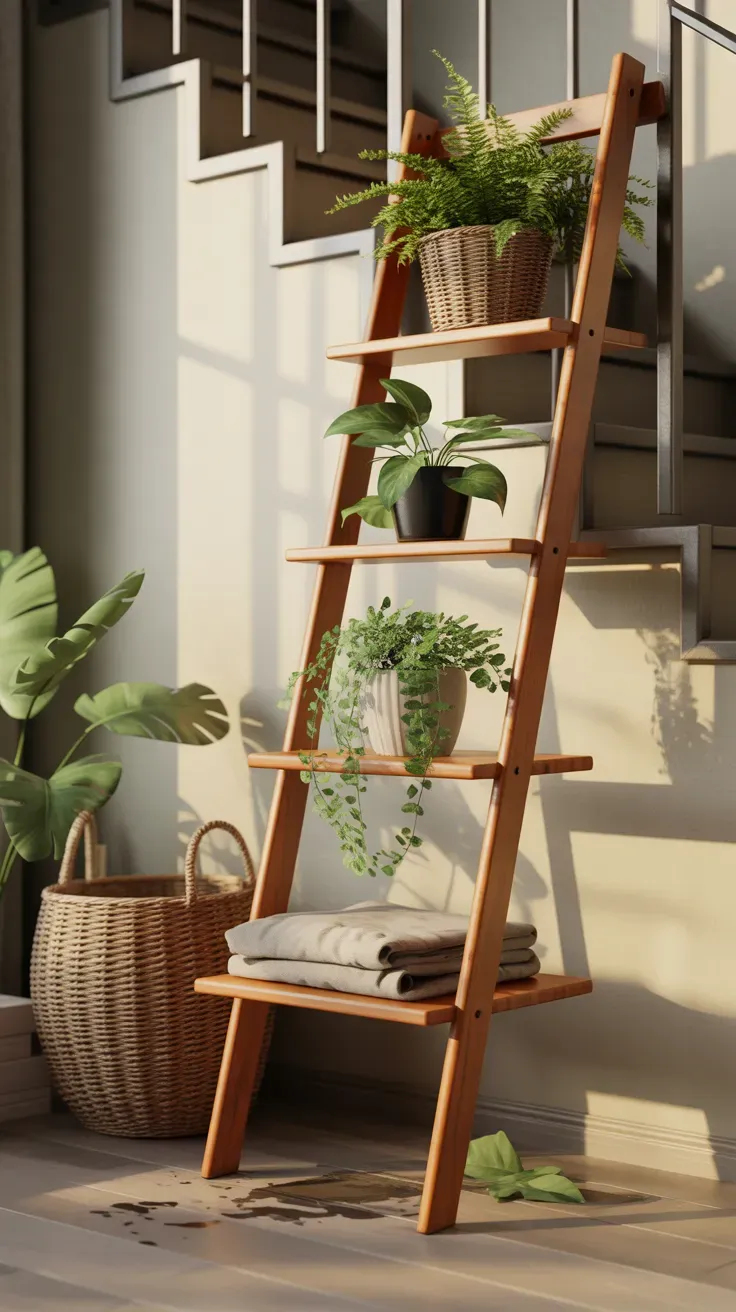
Look specifically for a self-supporting A-frame or wide-base ladder shelf rather than a lean-to style, since a true freestanding design won’t need any wall anchor for stability. Mix trailing plants on upper rungs with more compact upright ones lower down so the whole thing stays balanced when you eventually need to move it.
Pro Tip: Add felt pads to the shelf’s feet — it protects rental flooring from scuffs and makes the whole piece easy to slide when cleaning underneath.
Full setup notes are in our freestanding plant ladder guide, and Missouri Botanical Garden covers mixed trailing species. It’s fully portable if you move apartments.
4. An Over-the-Door Plant Rack
An over-the-door rack, the kind usually sold for towels or shoes, hooks over a stairwell door and holds several small hanging plants without touching the wall at all.
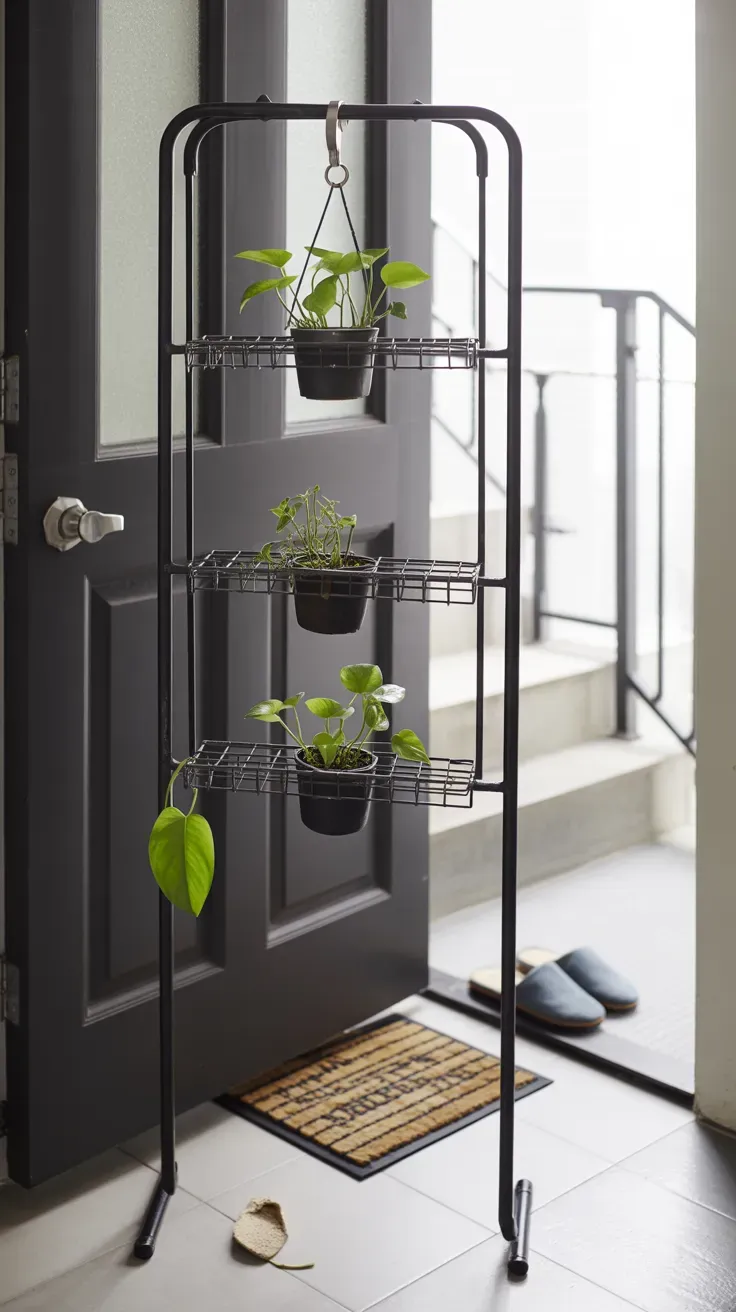
Choose a rack with a padded or rubberized hook to protect the door frame’s paint finish, and confirm the door swings freely with the rack in place before finalizing plant placement. Pothos and ivy both tolerate the inconsistent light typical of a spot hanging directly over a door.
- Check the rack’s weight rating before loading all hooks
- Choose lightweight ceramic or plastic pots, not heavy terracotta
- Water over a towel or tray to protect the door and floor beneath
Our over-the-door plant rack guide and University of Florida Extension cover pothos and ivy care. It’s a clever use of vertical space most renters overlook entirely.
5. A Removable Adhesive Floating Shelf
Heavy-duty removable adhesive strips can mount a genuinely sturdy floating shelf without a single screw, and they come down clean when it’s time to move.
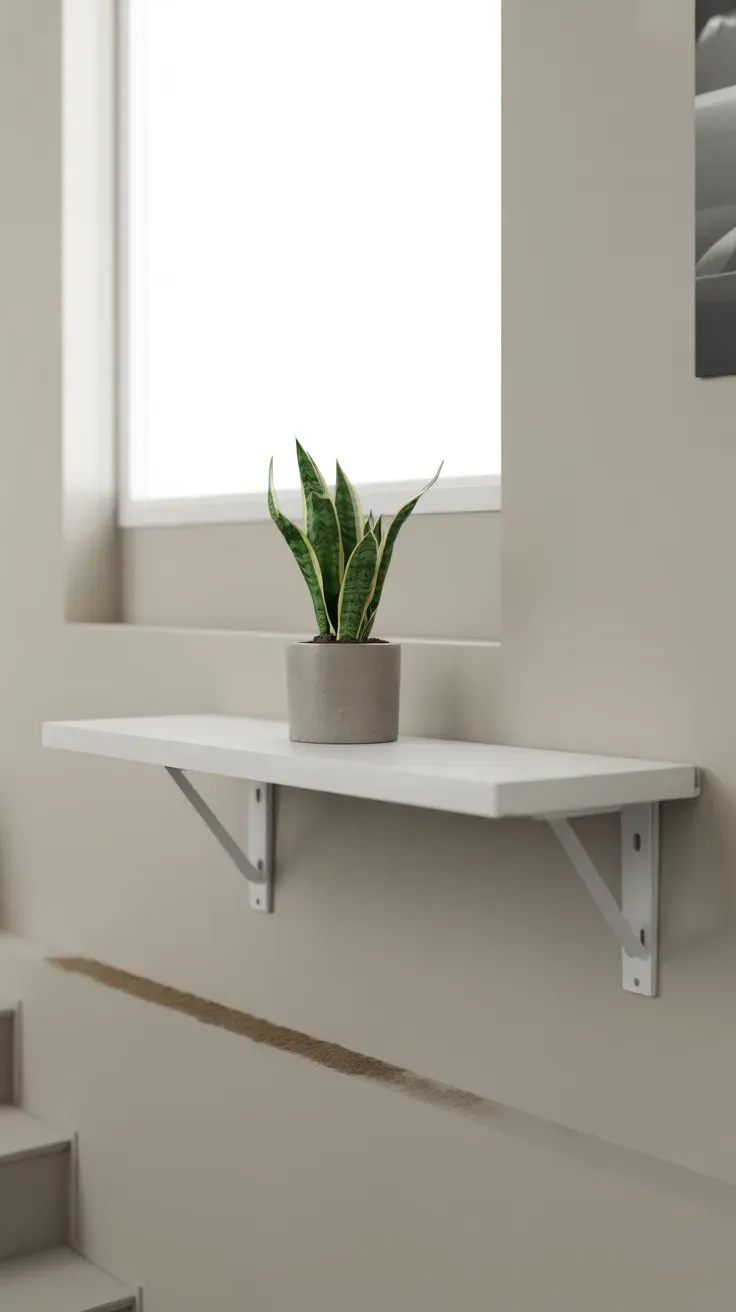
Check the adhesive strip’s weight rating carefully — most heavy-duty versions handle 8 to 16 lbs, which covers a small pot but not a large, fully watered planter, something I found out when an overloaded shelf sagged within weeks. Snake plants are ideal here since their light weight and infrequent watering keep the total load well within the strip’s limit.
Pro Tip: Warm the adhesive strips slightly with a hairdryer before removal at move-out — it makes the “pull straight down” release far cleaner and less likely to peel paint.
Our removable adhesive shelf guide and Penn State Extension’s succulent care notes are worth reading. It’s the closest thing to a real mounted shelf without any lease risk.
6. A Tension Rod Curtain of Trailing Ivy
Mounting a tension rod across a stairwell alcove and hanging several small ivy pots from it creates a curtain-like trailing display with zero wall contact.
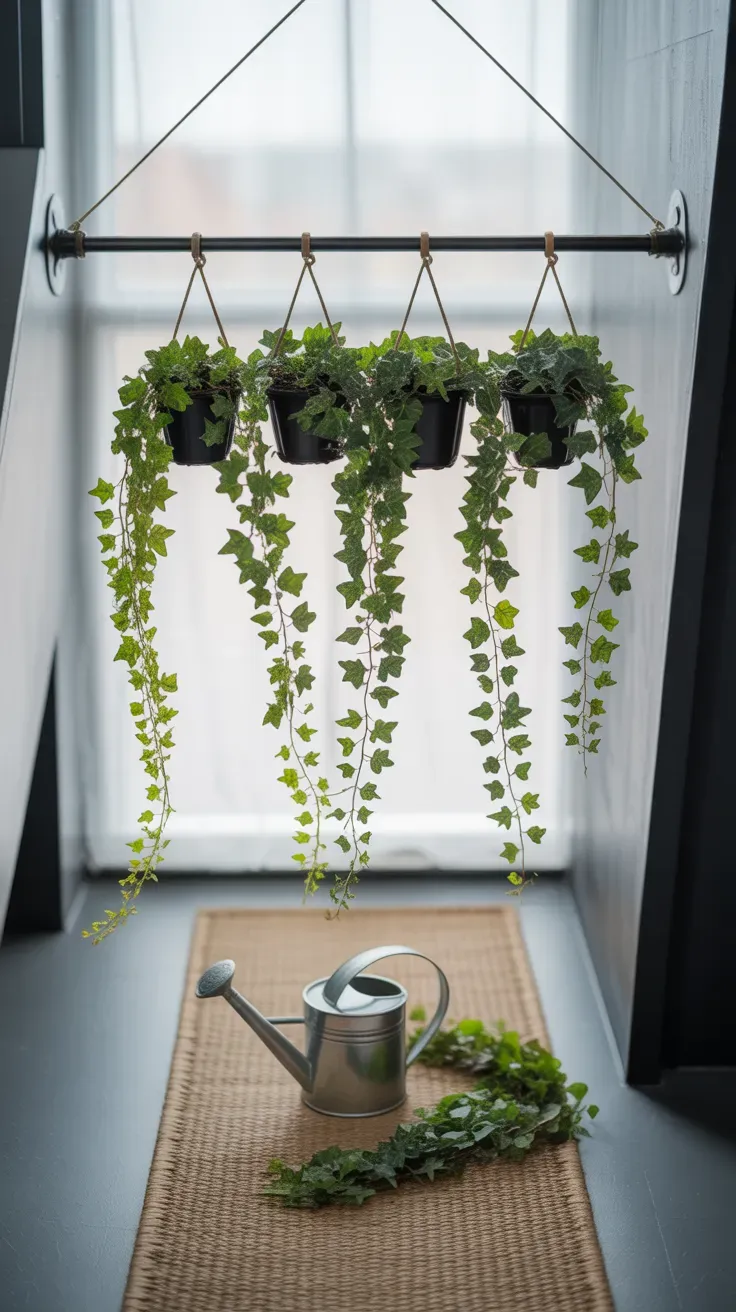
Choose a tension rod rated well above your total hanging weight, and space the pots evenly so the curtain effect reads as intentional rather than accidental. Ivy prefers cooler temperatures and medium light; keep the rod away from any nearby heat vent, which yellowed a batch of mine within two weeks the one time I placed it too close.
Full guidance is in our tension rod hanging plant guide, and Missouri Botanical Garden covers ivy’s growth habits. Keep pets in mind, since ivy is mildly toxic if chewed.
7. A Rolling Plant Cart for Flexible Placement
A small rolling cart, the kind sold for kitchen storage, holds several plants and lets you reposition the whole display depending on the season’s light or a landlord inspection.
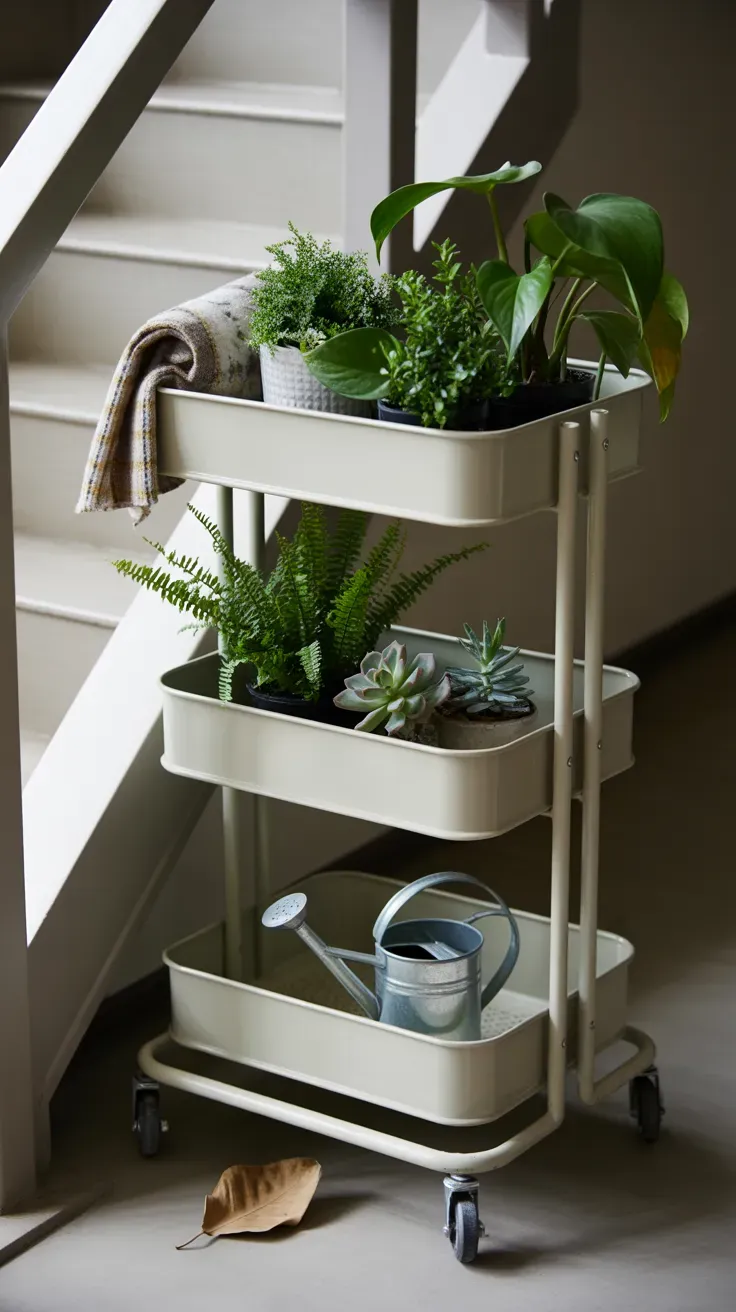
Group plants with similar light needs on the same cart, since the whole point is being able to roll it toward or away from a window as the seasons change — something a fixed shelf can’t offer. Lock the wheels once positioned, and check them periodically, since a fully loaded cart can drift on smooth flooring.
- Choose a cart with a weight-rated bottom shelf for heavier pots
- Add a waterproof tray liner to protect flooring from drips
- Wipe wheels clean regularly if rolling across a rug
Our rolling plant cart guide and SFGate’s mixed plant care notes cover grouping by light needs. It’s the most flexible idea on this whole list.
8. A Command Strip Wall Grid for Air Plants
A grid of small command hooks holding individual air plants in glass globes creates a wall display with genuinely zero holes and zero soil.
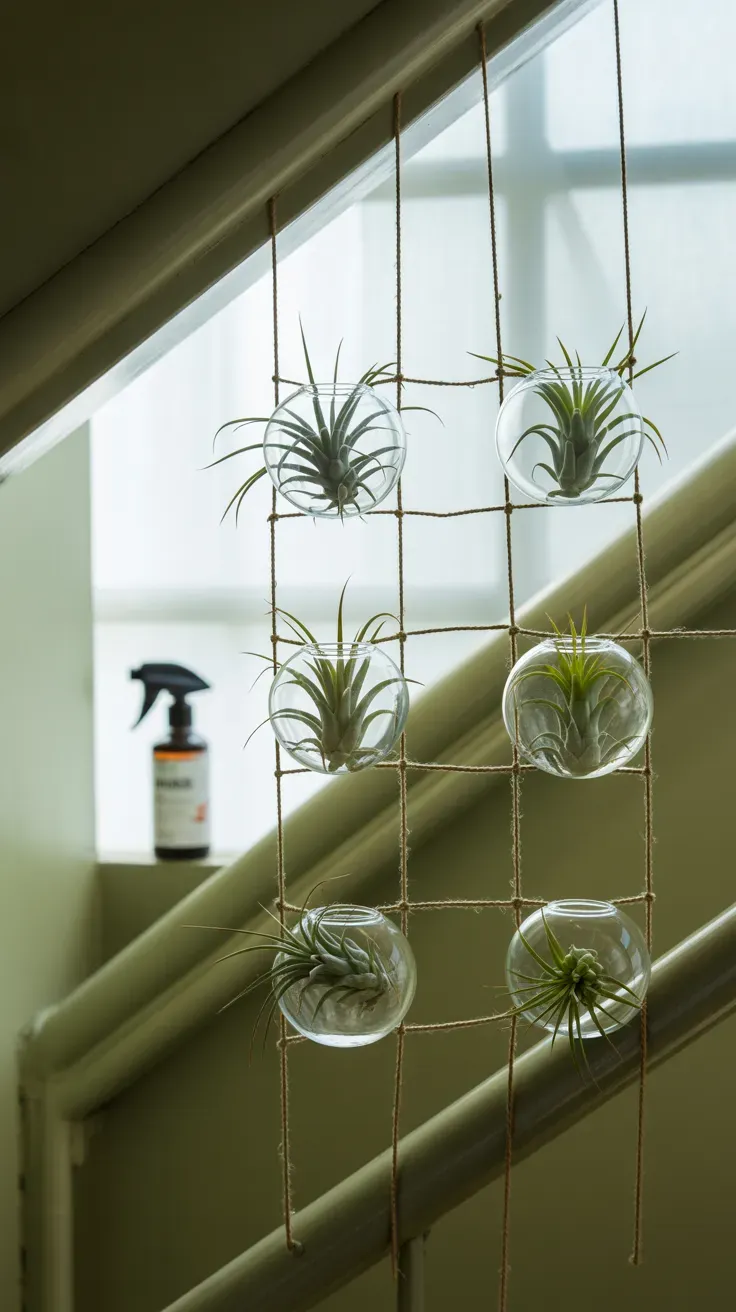
Measure and mark hook positions with painter’s tape before applying any adhesive, since command hooks are difficult to reposition once fully stuck. Air plants need a 20 to 30 minute soak weekly, so plan on unhooking each globe rather than watering in place — skipping this is the most common reason people lose tillandsia.
Pro Tip: Space hooks slightly asymmetrically rather than in a perfect grid — a few globes at staggered heights reads as more intentional than a rigid checkerboard pattern.
Our air plant care basics guide and The Sill’s globe-mounting tips cover this well. It’s one of the lowest-commitment ideas here, in every sense.
9. A Repurposed Freestanding Coat Rack
An old freestanding coat rack, no longer needed for coats, makes a surprisingly good multi-tier plant hanger with zero wall involvement.
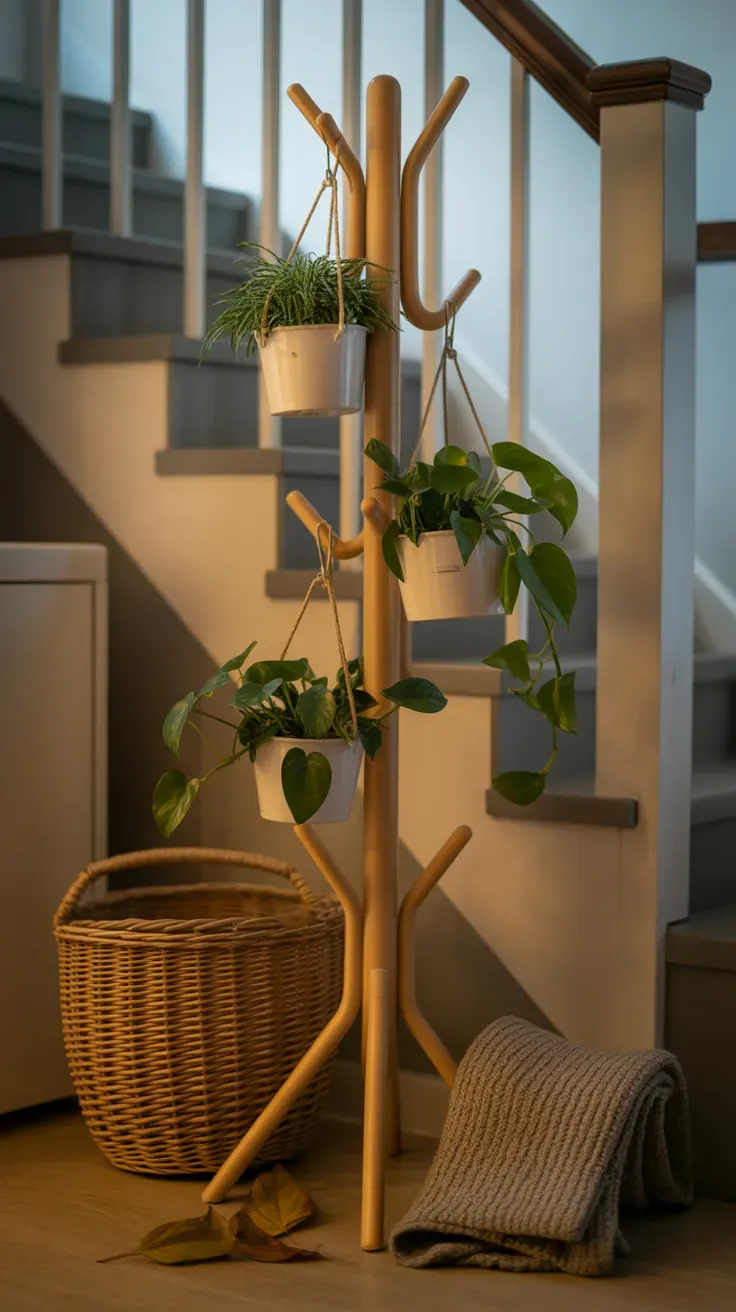
Check the rack’s base stability before loading it with plants — a coat rack built for lightweight jackets isn’t always rated for the combined weight of several watered pots, and mine wobbled until I added a wider furniture pad to the base. Pothos handles the mixed light typical of a landing corner well.
- Choose a rack with a wide, weighted base for stability
- Balance pot weight evenly across the hooks
- Rotate plants occasionally for even light exposure
Our repurposed furniture plant styling guide and University of Florida Extension’s pothos notes cover care basics. It’s a clever, no-cost way to reuse something already sitting in a closet.
10. A Tension Rod Curtain Under the Stairs
Mounting a tension rod inside an under-stair nook and hanging light curtains of trailing spider plant creates a soft, jungle-like divider with no cutting or drilling.
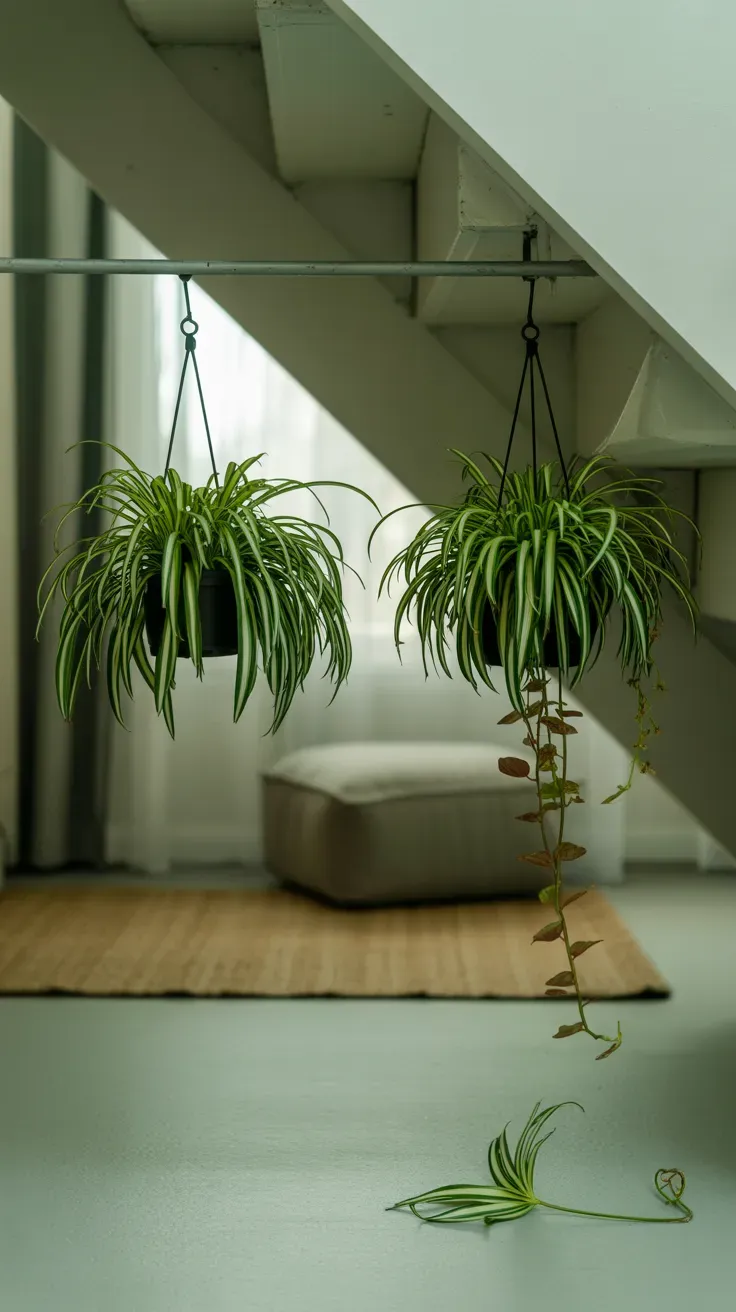
Measure the nook opening precisely before buying the rod, and choose spider plants specifically since their long trailing plantlets create the curtain effect faster than most other trailing species. Spider plants tolerate a wide light range, making them one of the more forgiving choices for an under-stair spot that gets inconsistent light throughout the day.
Our under-stair nook styling guide and Gardeners’ World cover spider plant propagation. It’s a genuinely fun way to define a small nook without construction.
11. Stackable Crates With No Mounting Required
Plain wooden or plastic crates, simply stacked rather than mounted, create tiered plant storage that can be rearranged or disassembled in seconds.
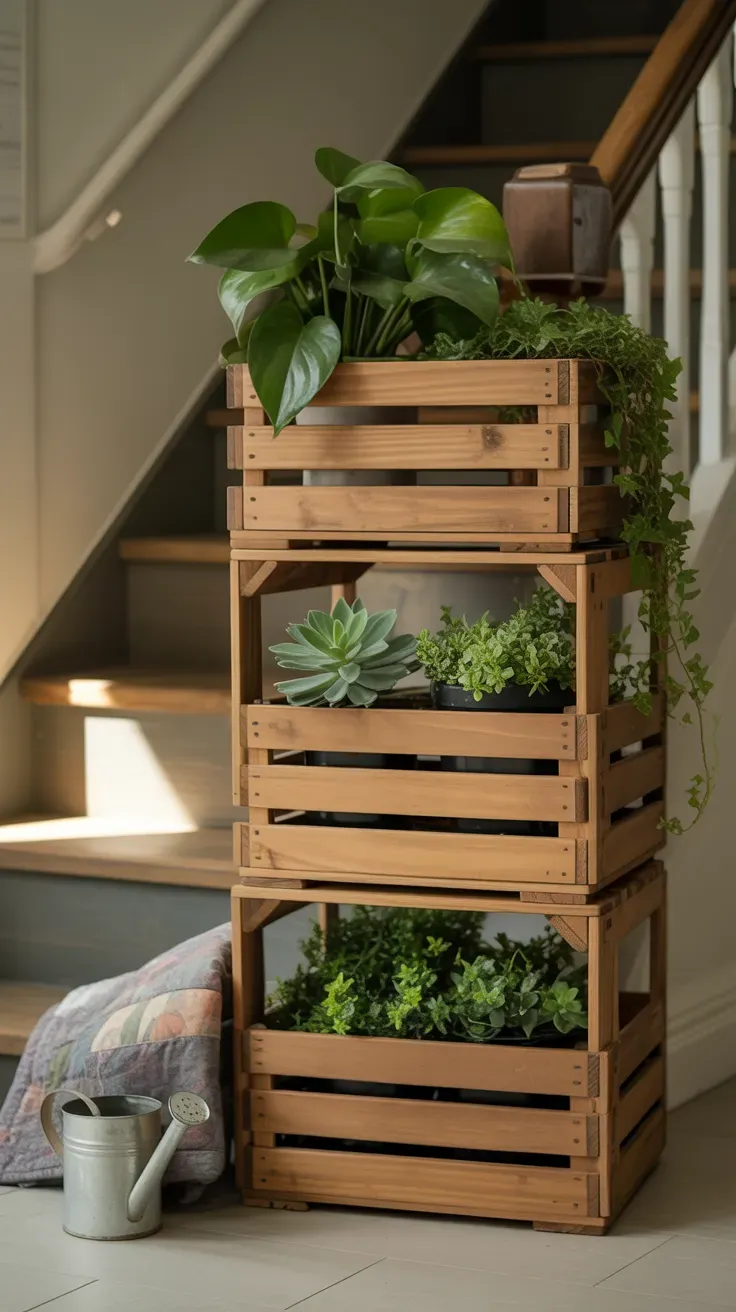
Choose crates with a wide enough base relative to their height to stack safely without tipping, and keep the heaviest, most stable crate on the bottom. This setup can be fully disassembled and moved in minutes, which makes it genuinely ideal for a short-term lease or a first apartment where the layout might still change.
Pro Tip: Add a thin rubber shelf liner between stacked crates — it prevents sliding far more effectively than the crates’ own weight alone.
Our stacked crate plant display guide and Almanac.com cover budget-friendly plant styling. It’s about as low-commitment as a staircase garden gets.
12. Suction Cup Window Planters Near the Staircase
If your stairwell has a window, suction cup planters attach directly to the glass, holding small succulents without touching the wall or frame at all.
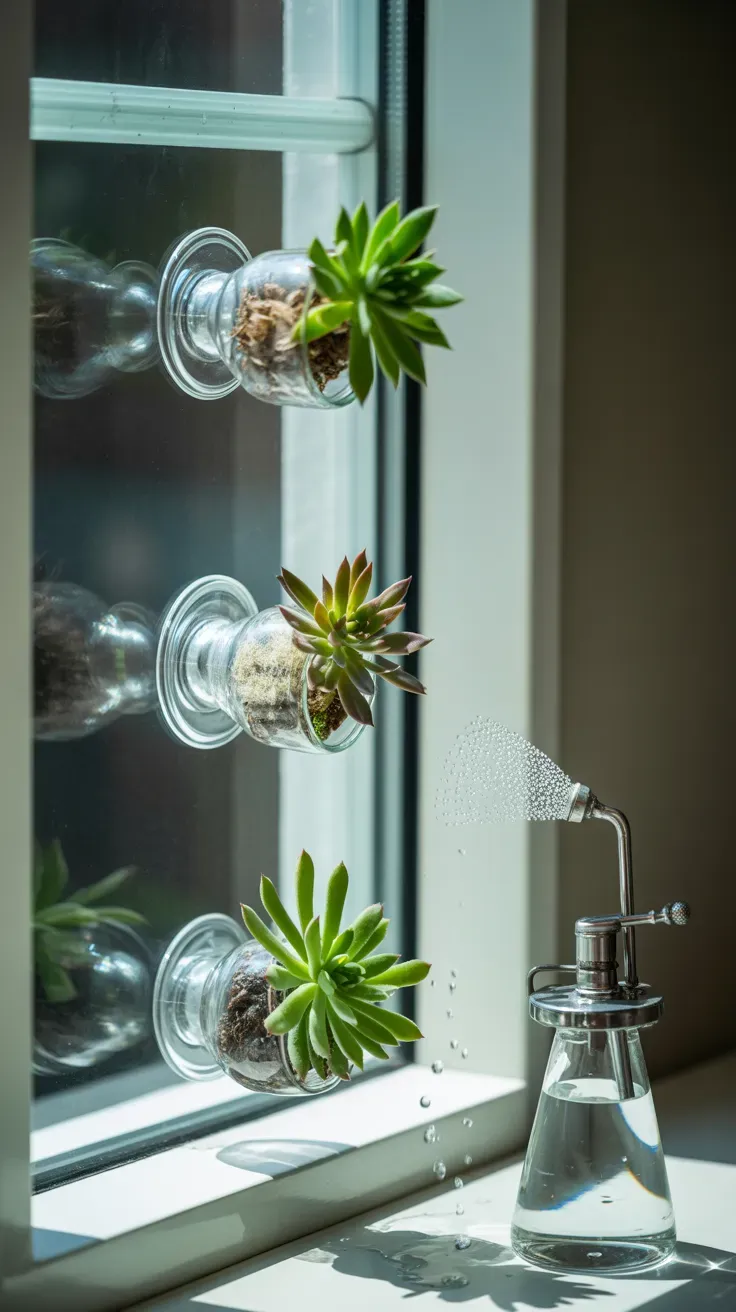
Clean the glass thoroughly before applying suction cups, and check their grip weekly, since even quality suction cups can loosen gradually with temperature changes near a window. This idea needs genuine direct or bright light, since it only works where there’s a window to attach to in the first place.
- Choose planters with a drainage tray built in to protect the sill
- Keep total planter weight light — under 1 lb per cup is safest
- Reposition cups occasionally to avoid a permanent glass residue ring
Our suction cup planter guide and SFGate’s succulent care notes cover this well. It’s a clever use of a spot most people overlook entirely.
13. A Repurposed Bar Cart for Ferns
A small vintage or Ikea bar cart, wheeled into a stairwell corner, makes a genuinely elegant portable fern display that needs zero wall contact.
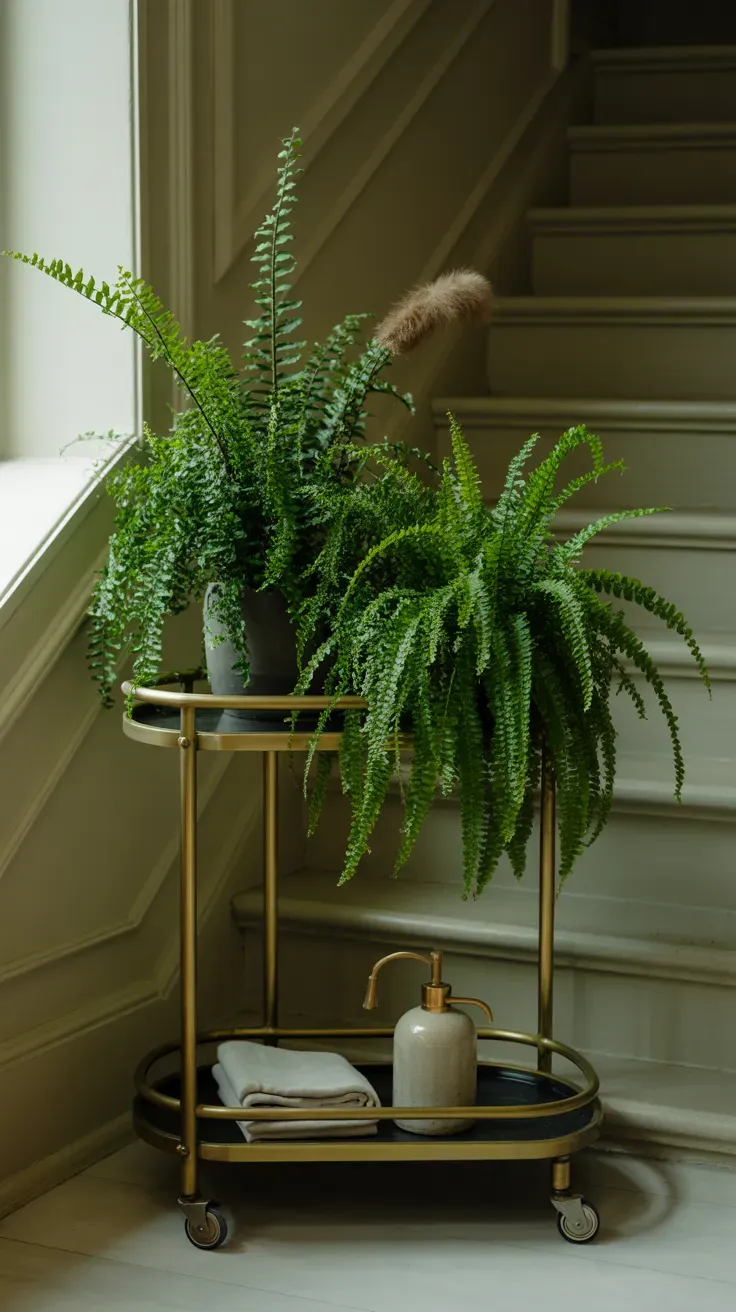
Mist ferns two to three times a week, since most stairwells run drier than ferns prefer, and place a waterproof tray under each pot to protect the cart’s shelves from water rings. The cart’s mobility means you can wheel the whole display closer to a humidity source, like a bathroom doorway, during dry winter months.
Check our fern care guide and Missouri Botanical Garden’s fern humidity notes before starting. It’s a stylish repurpose that costs nothing if you already own the cart.
14. A Peel-and-Stick Wallpaper Botanical Backdrop
For a stairwell too dark or too restricted for real plants, peel-and-stick botanical wallpaper creates a jungle backdrop that removes completely at move-out.
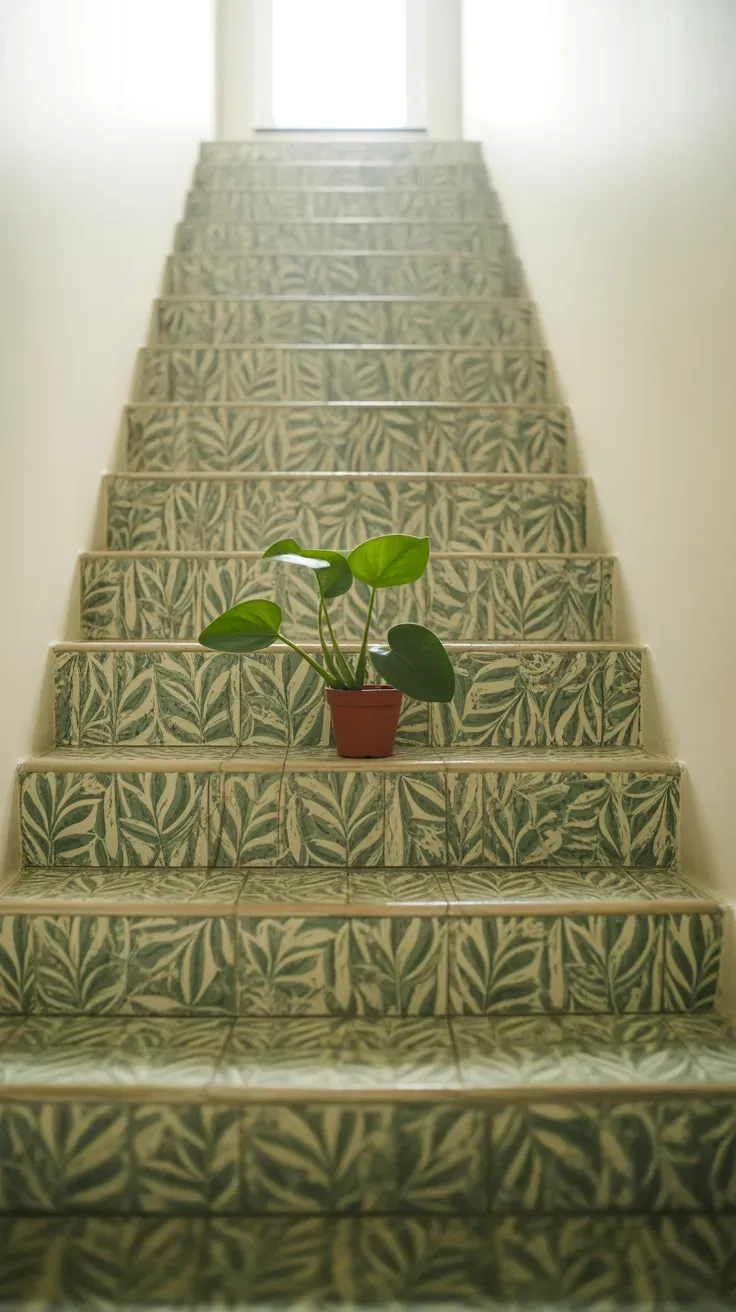
Apply peel-and-stick wallpaper to a clean, dry wall using the wet-application method most brands recommend, and always do a small test patch first — some rental wall paints react differently to the adhesive than expected, which I found out on a patch that pulled a bit of paint despite being labeled removable. Pair it with one or two real plants in front for texture that a printed pattern alone can’t provide.
Pro Tip: Store the backing paper after installation — you’ll want it for a cleaner reapplication if you ever need to reposition a section.
Our peel-and-stick wallpaper installation guide and BHG cover rental-friendly wall treatments. It’s the best option for a stairwell that genuinely can’t support live plants.
15. A Freestanding Room Divider Planter
A freestanding slatted room divider with built-in planter boxes creates a genuine jungle wall at the base of the stairs without a single anchor point.
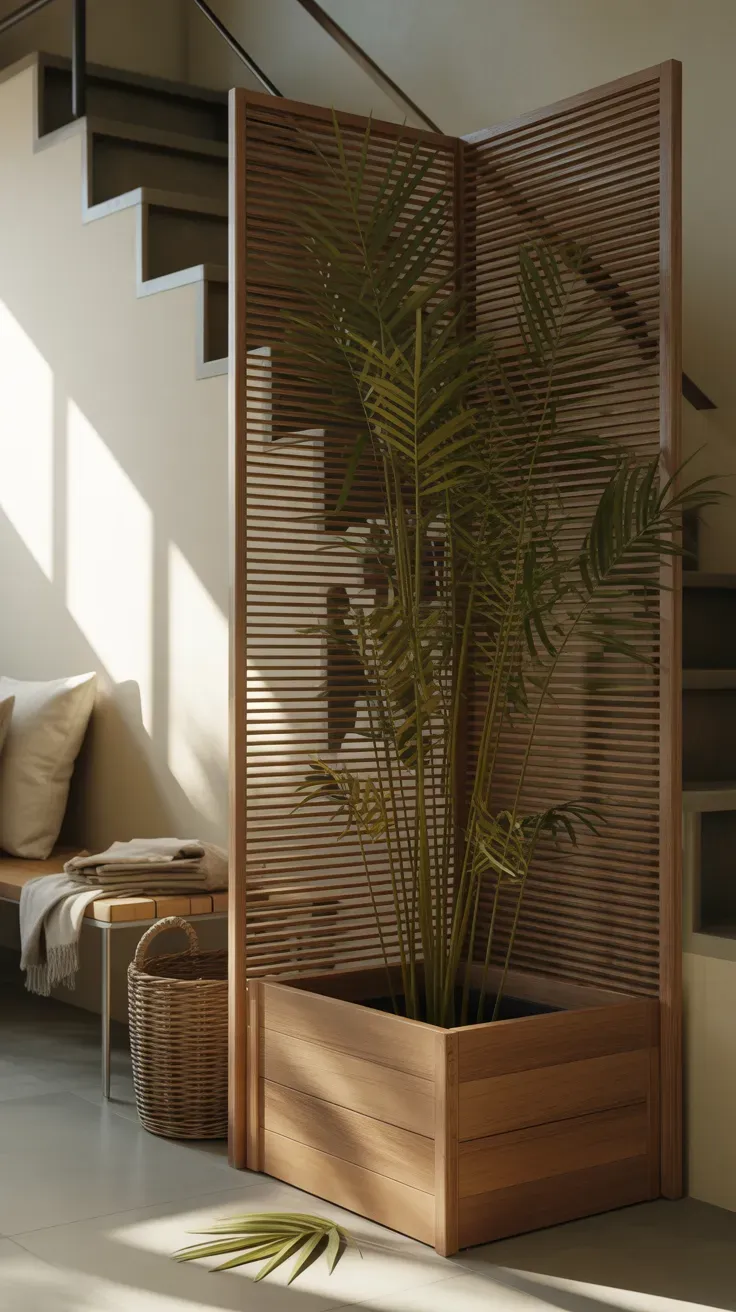
Choose a divider with a genuinely wide, weighted base — most quality room dividers are designed to stand freely without anchoring, but cheaper versions can tip, especially once loaded with a full planter box. Bamboo palm tolerates the medium, filtered light typical of a spot beside a staircase and adds real height without needing anything mounted.
- Check the divider’s stability rating before adding a full planter load
- Line built-in planter boxes with a waterproof liner to protect the wood
- Position it where it won’t block a required fire exit or stairwell path
Our freestanding room divider planter guide and University of Florida Extension’s palm care notes cover this well. It’s the most substantial, statement-making idea on the whole list — and it still moves out with you.
Getting Started With an Apartment Staircase Garden
The easiest first step is a single command hook and one trailing pothos — it costs under $15 total, takes ten minutes, and tells you immediately whether your landlord’s paint finish cooperates with the adhesive before you invest in anything bigger.
The most common beginner mistake is buying a plant before checking the actual weight limit of whatever hook, rod, or adhesive strip is holding it — a dropped pot is the fastest way to both lose a plant and worry about deposit damage. Before buying anything else, gather one roll of quality outdoor-rated command hooks and one lightweight ceramic or plastic pot, since heavy terracotta pushes weight limits fast.
Realistically, expect a rental staircase to look intentionally styled within two to three weeks of adding your first few pieces, since most of these ideas install in an afternoon rather than requiring construction. A fuller, jungle-like look typically takes three to five months as trailing plants grow in.
Frequently Asked Questions
Will command hooks damage rental walls if removed correctly?
No, when removed correctly — pulling the tab straight down slowly rather than outward — quality command strips typically release cleanly without paint damage. Always test on an inconspicuous spot first, since some textured or low-quality paint finishes react differently.
What plants tolerate low light in a rental stairwell?
Pothos, snake plants, and ZZ plants are the most forgiving choices for the inconsistent, often low light common in interior rental stairwells. Even these will grow more slowly without at least some ambient daylight.
How much weight can a tension rod actually hold?
Most quality tension rods rated for curtains hold between 10 and 30 lbs depending on the rod’s diameter and the wall material, though it’s worth checking the specific product’s rating before hanging a fully watered planter. Test the rod’s grip by pressing firmly before trusting it with the full load.
Can I take this staircase garden with me when I move?
Yes — that’s the whole advantage of this approach, since freestanding shelves, rolling carts, tension rods, and hanging pots all pack up and move without leaving anything permanent behind. Only wallpaper backdrops need a bit more care during removal to avoid damaging either the paper or the wall.
Keep any hanging plant well above head height and clear of the walking path, checking local fire code or lease terms if the stairwell is a shared building exit. Trim trailing vines regularly so they don’t creep into the actual walkway over time.
A Few Final Thoughts
Fifteen ideas might feel like a lot to sort through, but almost every one of them can be tried, adjusted, or removed within a single weekend — that’s the real advantage of renting a space rather than owning it outright. Start with whichever idea fits your specific lease restrictions and the light you actually have, and don’t feel obligated to commit to anything permanent before you’re sure it works. The best apartment staircase gardens end up looking just as considered as any homeowner’s, precisely because command hooks and tension rods force a little more intention than a drill ever would. A rental staircase that once felt temporary can become the space that actually makes the apartment feel like home, and it can all come down clean the day you move out. Give it a few weeks before judging the fullness — even damage-free jungles take a little time to grow in.