
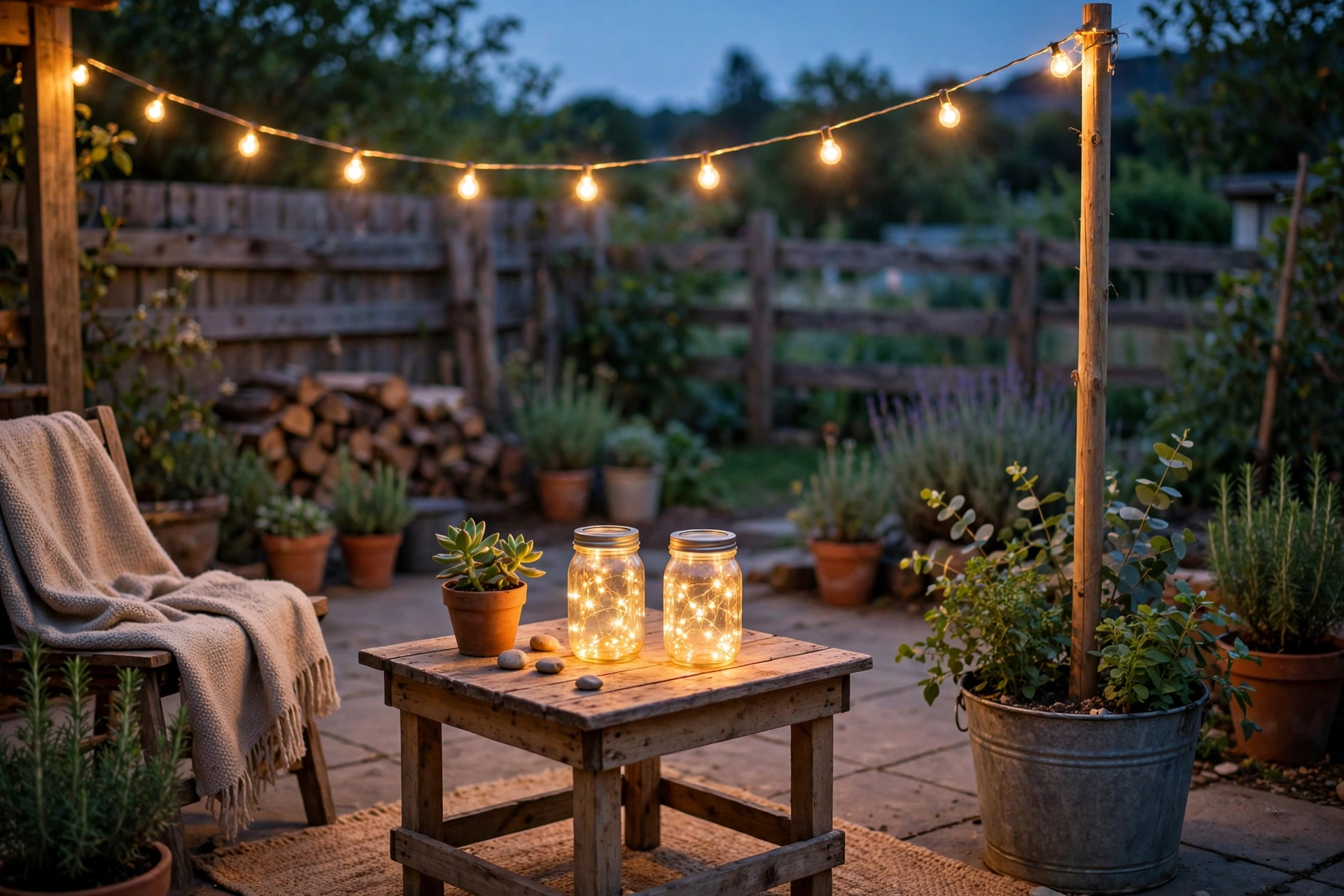
A glowing backyard does not require a glowing bank balance. Some of the prettiest outdoor lighting I have ever seen cost less than a pizza night, because the magic is in placement, not price. These budget backyard string light ideas all come in under 50 dollars total, and most land well under 30.
The budget strategy is simple: spend on one decent strand of lights, then let creativity and things you already own do the rest. Every idea below includes the real cost and the trick that makes it look expensive.
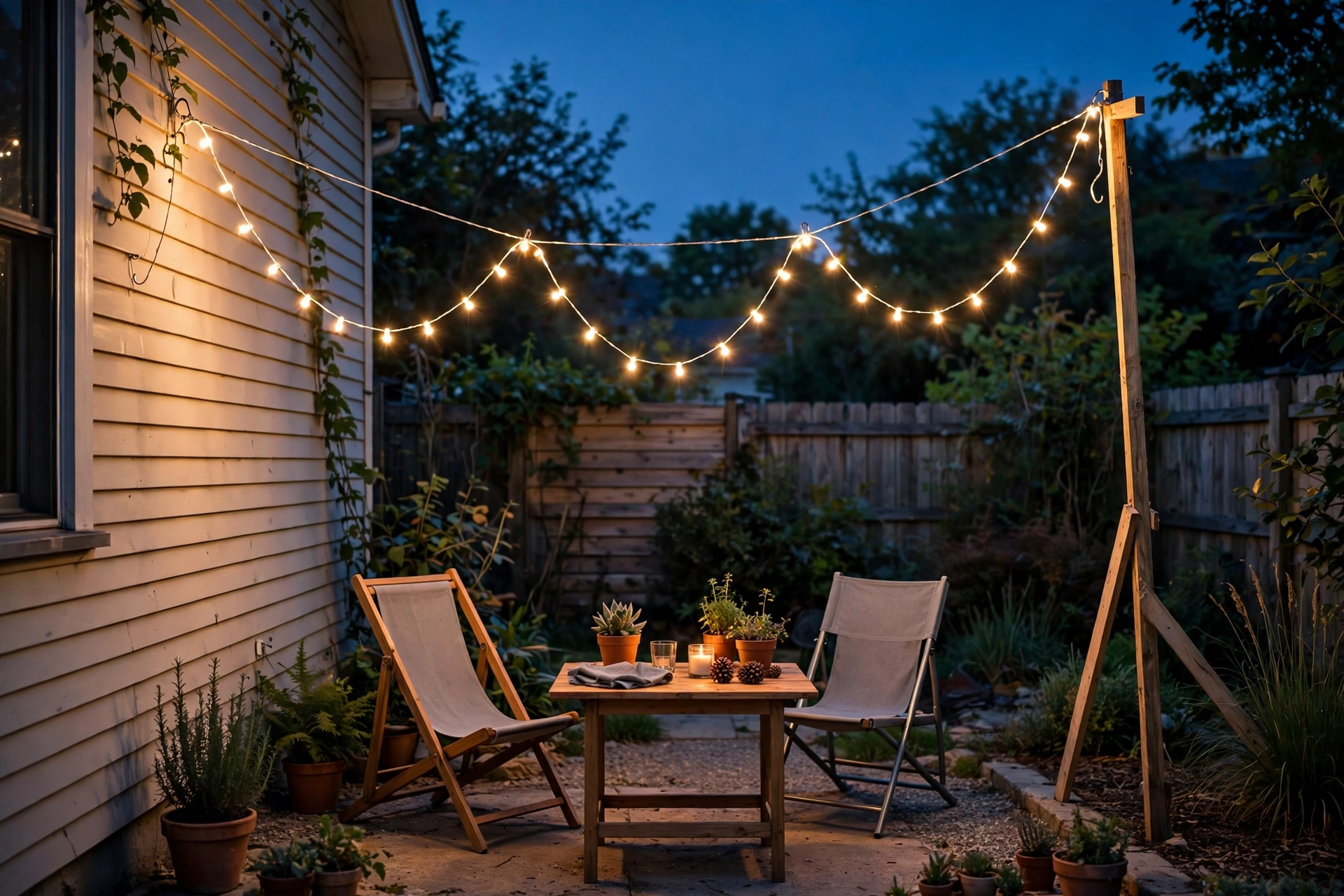
1. Zigzag one long strand over the seating area (about $18)
The single highest-impact move on this list. A 48-foot LED strand from a hardware store costs under 20 dollars; run it in a zigzag between the house and a fence post or a DIY pole and you have the classic bistro canopy. Hang the swags 8 to 9 feet high with a 10 percent allowance for the dip. One strand, one afternoon, total transformation.
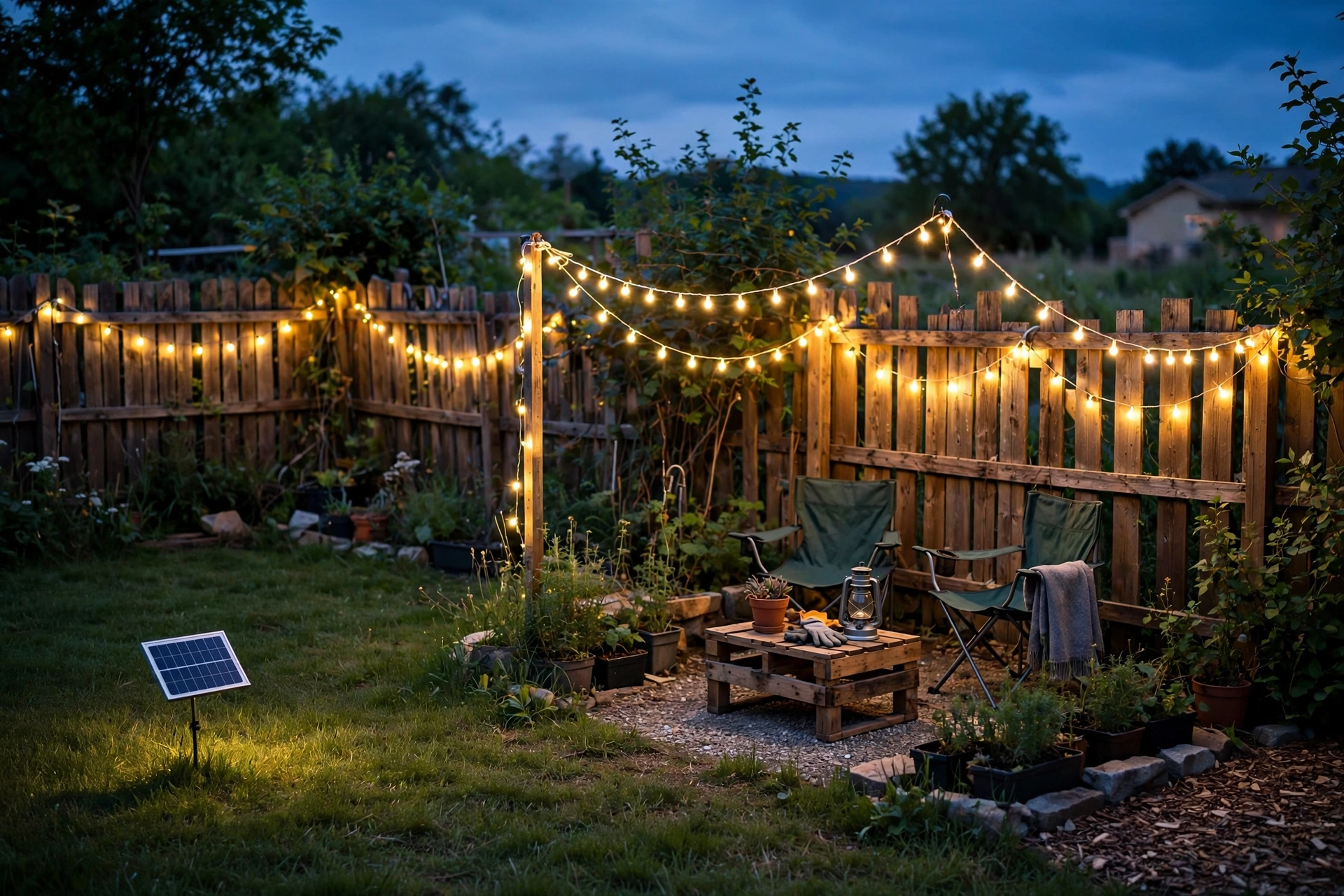
2. Go solar and skip the electric bill entirely (about $15)
Solar string lights cost roughly the same as plug-in ones but eliminate extension cords and electricity costs forever. A 33-foot, 100-LED solar strand runs 12 to 18 dollars. Stake the panel where it gets six hours of direct sun and let dusk do the rest. This is the cheapest way to light a spot far from the house.
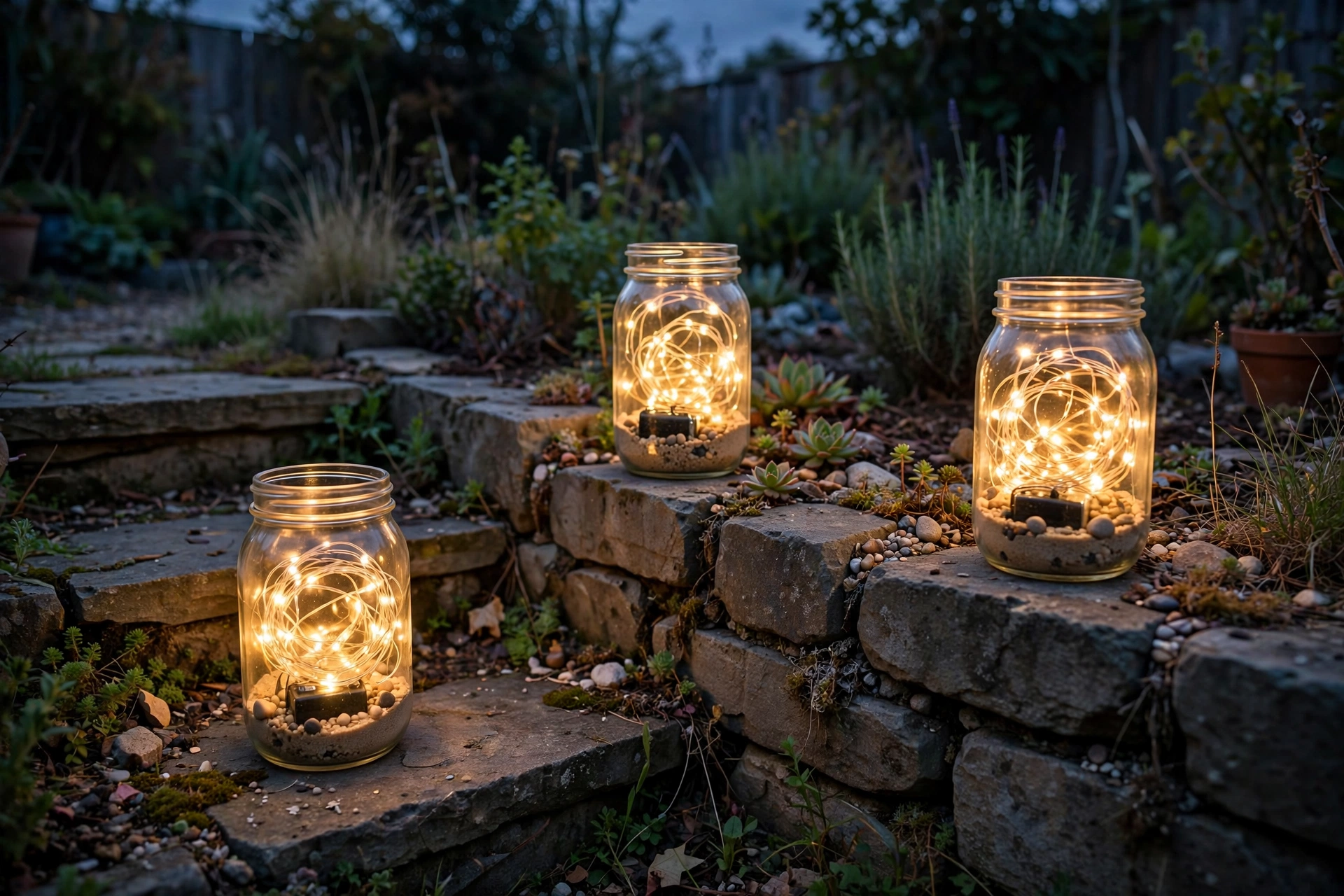
3. Make dollar-store fairy light jars (about $8 for three)
Buy three glass jars and three sets of battery-operated fairy lights from the dollar store. Coil one strand in each jar, hide the tiny battery box under a layer of sand or pebbles, and set the jars on steps, the table, or along a wall. The glass diffuses the LEDs into a candle-like glow. Total cost: under 10 dollars for a trio that looks boutique-bought.
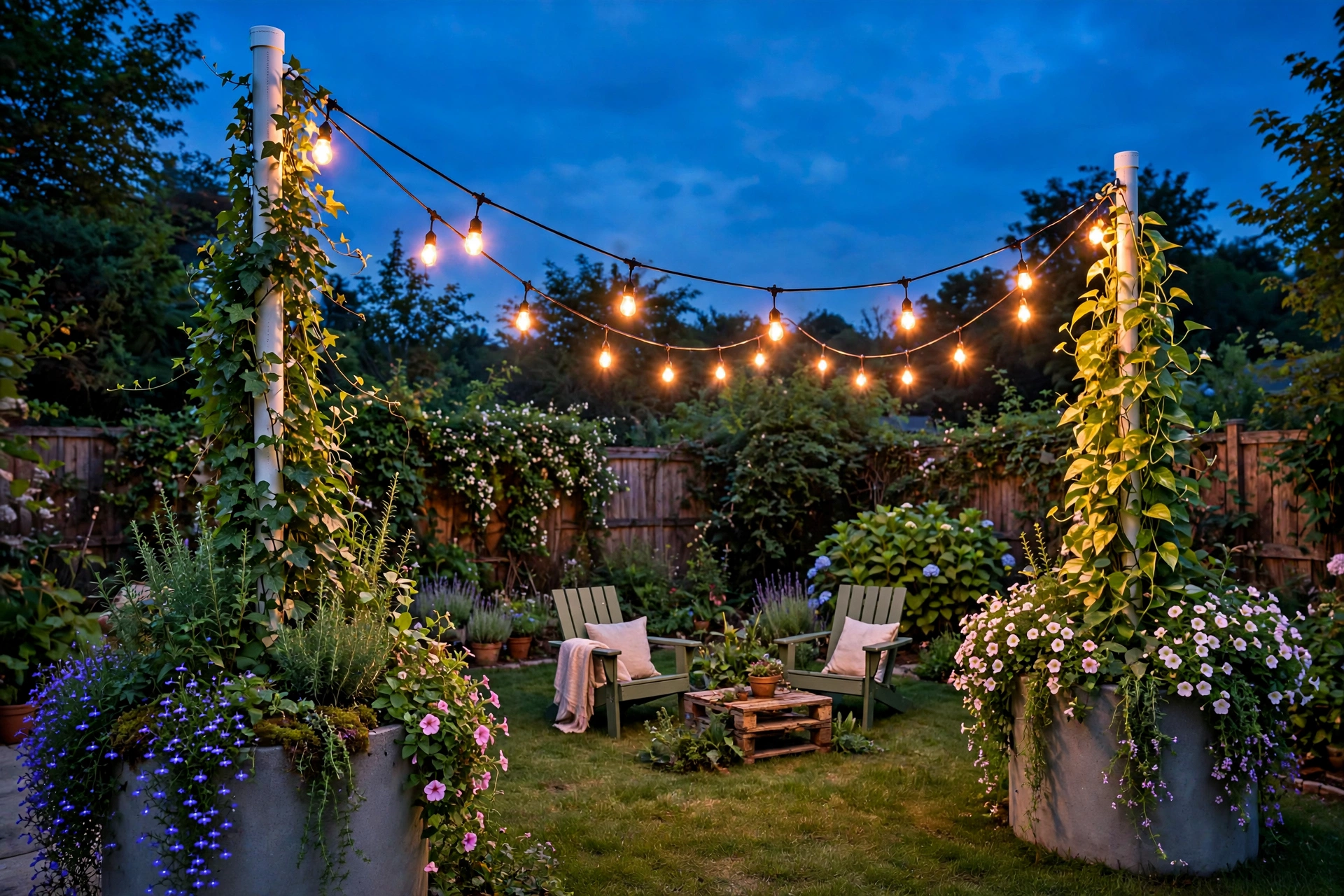
4. Build light poles from PVC and planters (about $25 for two)
No trees or posts to hang from? Two 10-foot lengths of PVC pipe, two large planters, and a bag of concrete mix make freestanding light poles for about 25 dollars total. Set the pipe in the concrete-filled planter, let it cure overnight, and string your lights between the poles. Plant trailing flowers in the planters and the supports vanish.
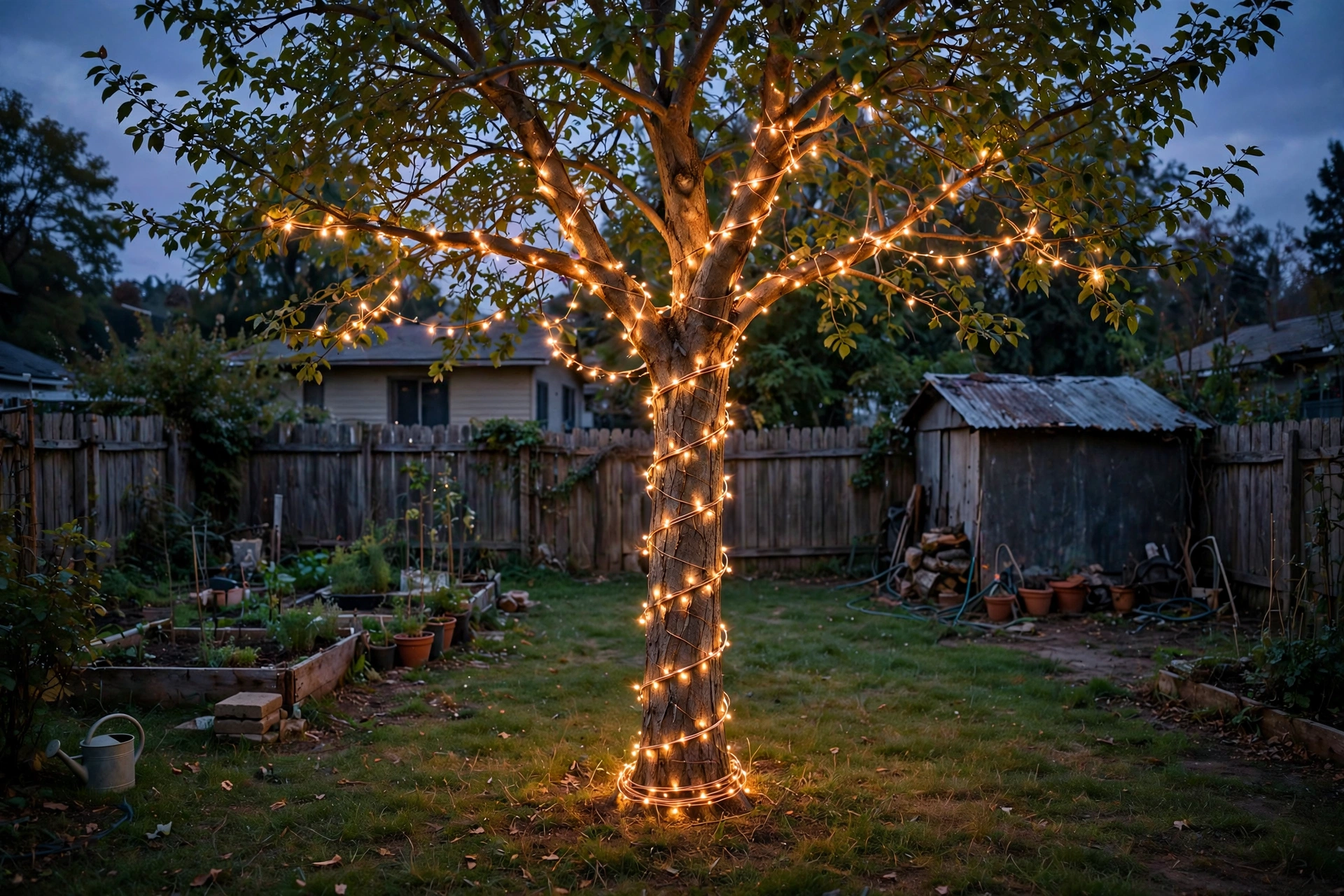
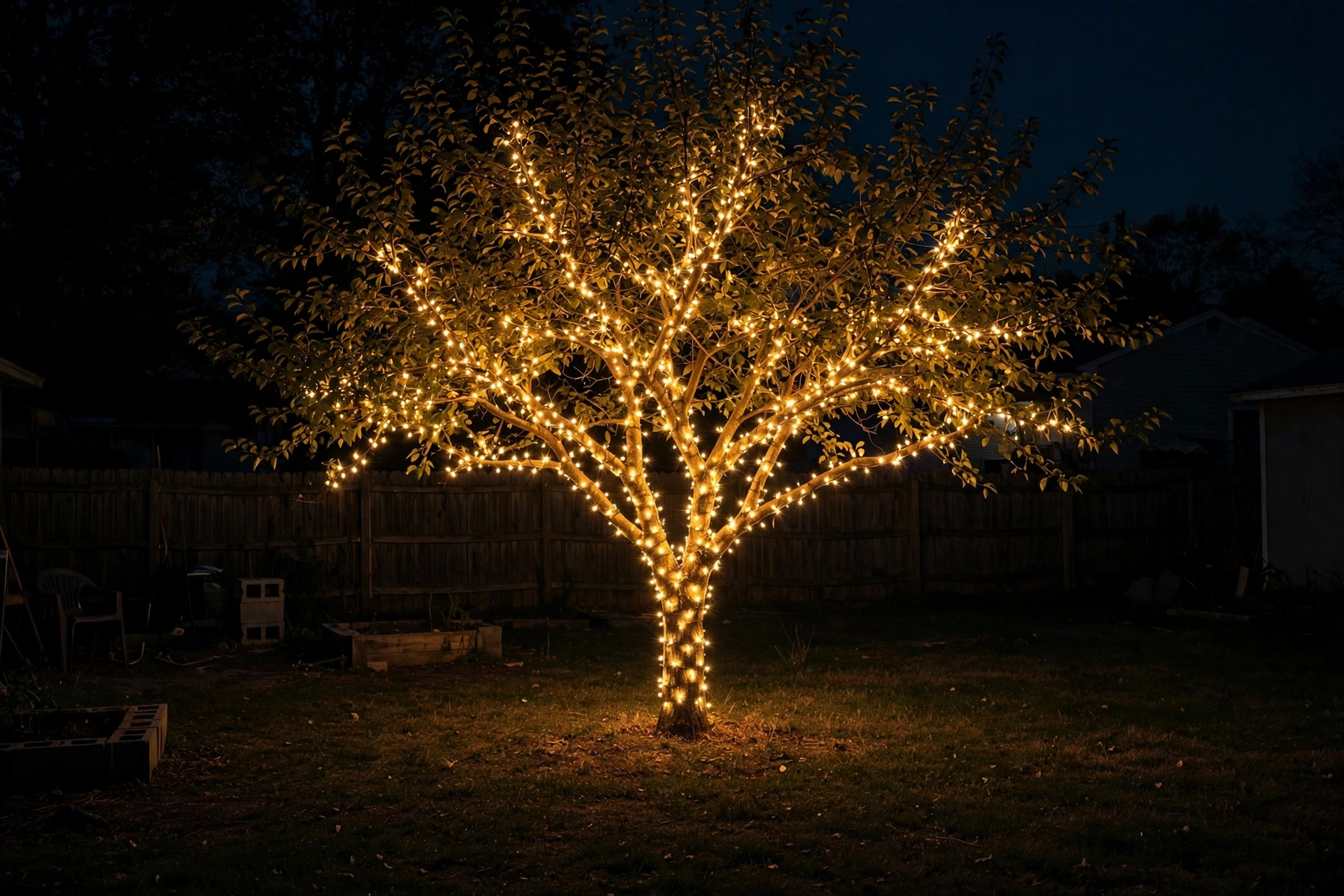
5. Wrap the trees you already have (cost of one strand, about $14)
The cheapest dramatic lighting is the tree in your yard right now. A 66-foot copper-wire fairy light strand costs around 14 dollars; spiral it up the trunk with 4-to-6-inch spacing and weave a few loops through the lower branches. One wrapped tree can carry the entire mood of a small yard, and you bought nothing but the strand.
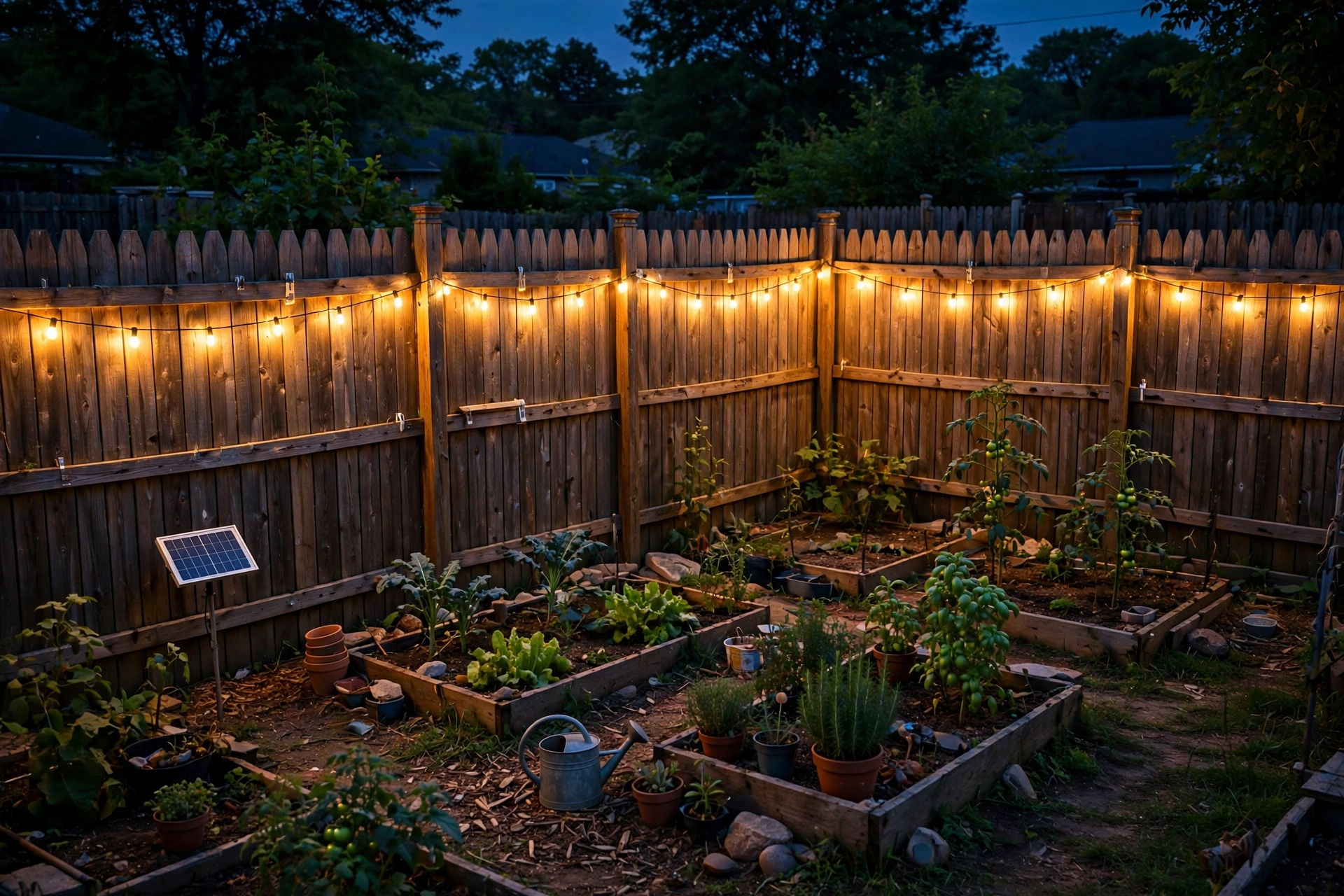
6. Drape lights along the fence you already own (about $16)
Your fence is hundreds of feet of free hanging infrastructure. A single solar strand clipped just below the fence cap with outdoor adhesive clips traces a warm line around the whole yard. Because it is solar, there is no cord to run and no outlet to find. Sixteen dollars of lights, a few dollars of clips, and the yard feels twice as big at night.
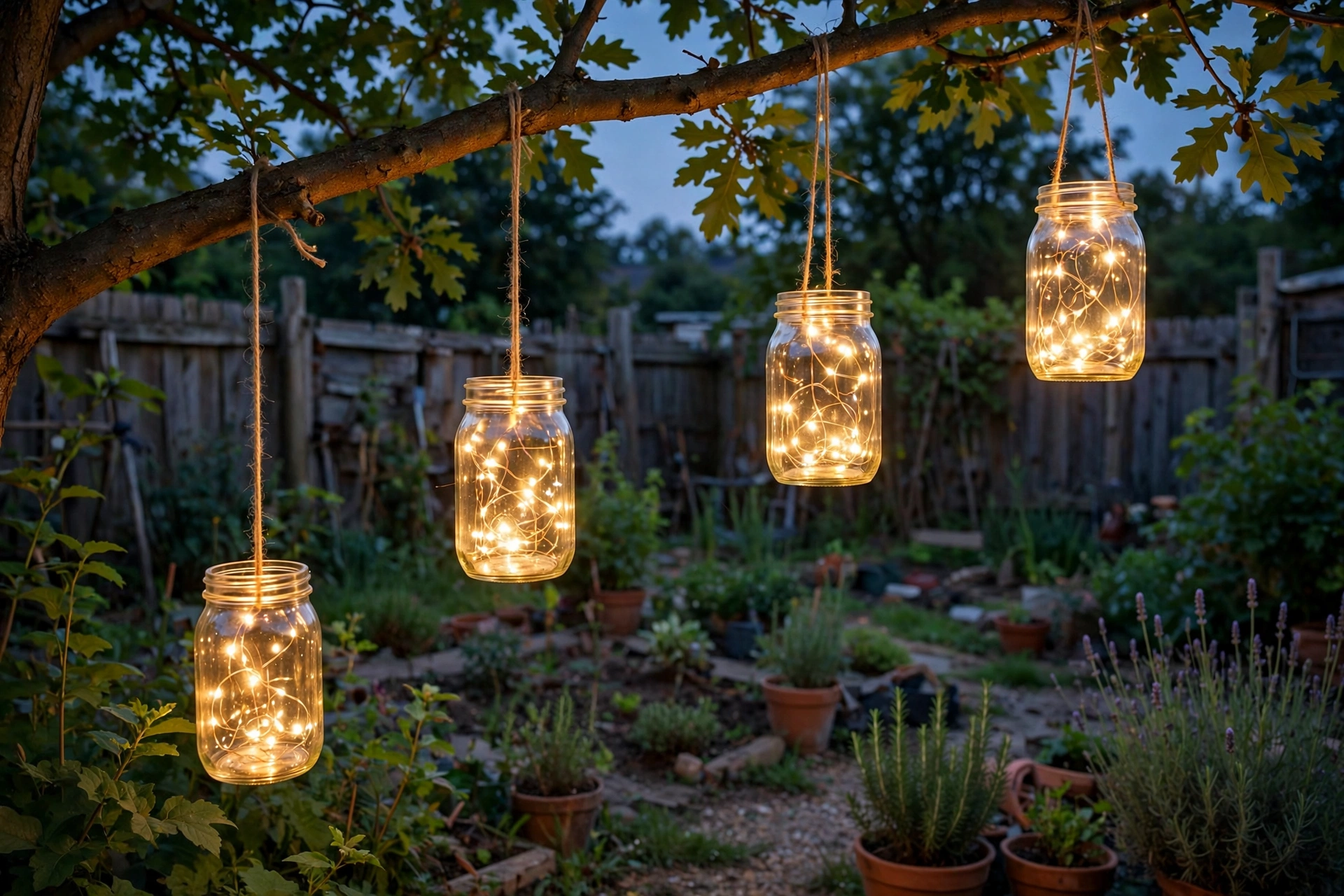
7. Turn mason jars into hanging lanterns (about $12 for four)
Thread wire or twine through the jar rims to make hangers, drop a battery fairy-light strand in each, and hang them from a branch, beam, or shepherd’s hook at staggered heights. Four jars and two strands of lights run about 12 dollars at a dollar store or discount shop. The staggered heights are what make it look designed rather than improvised.
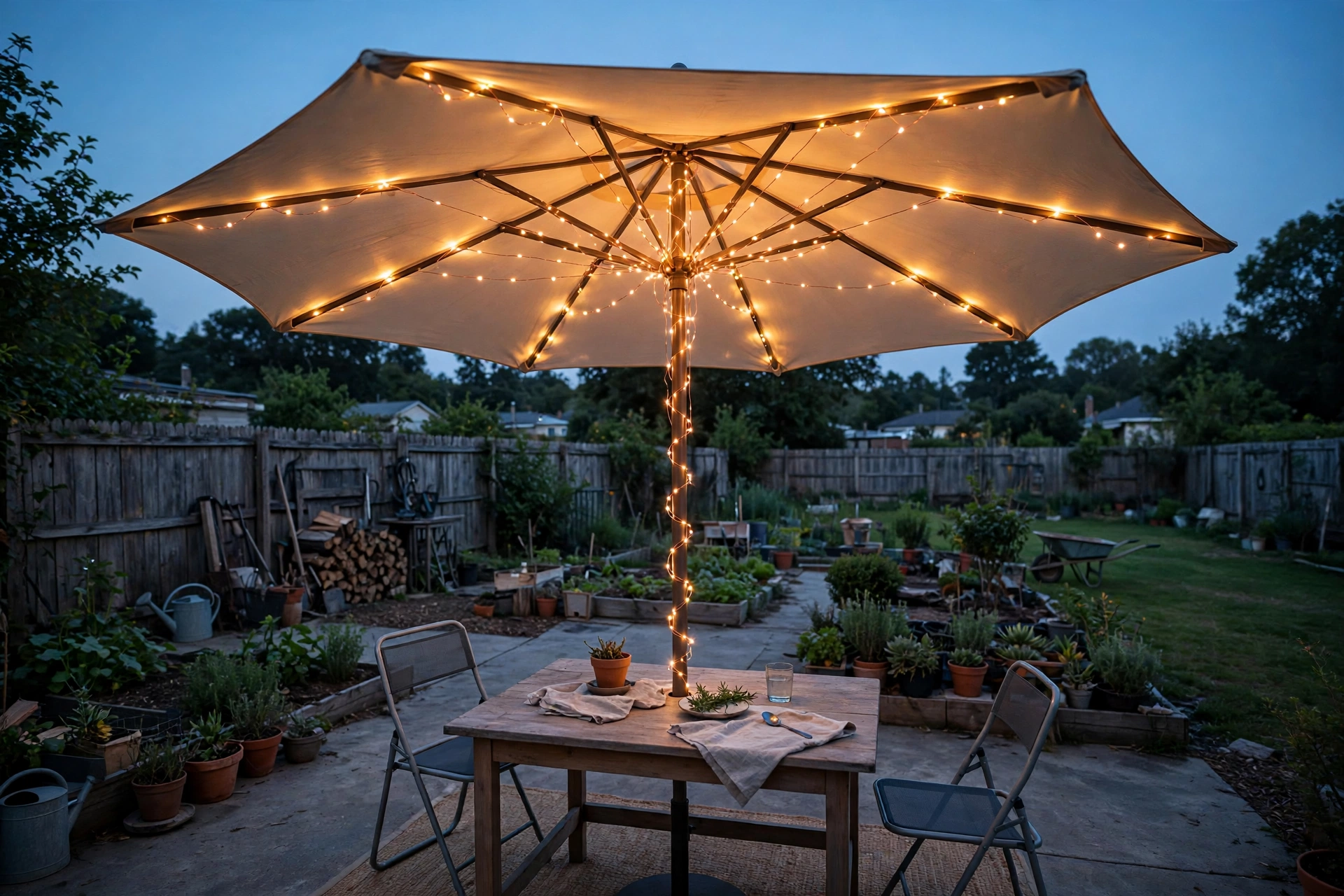
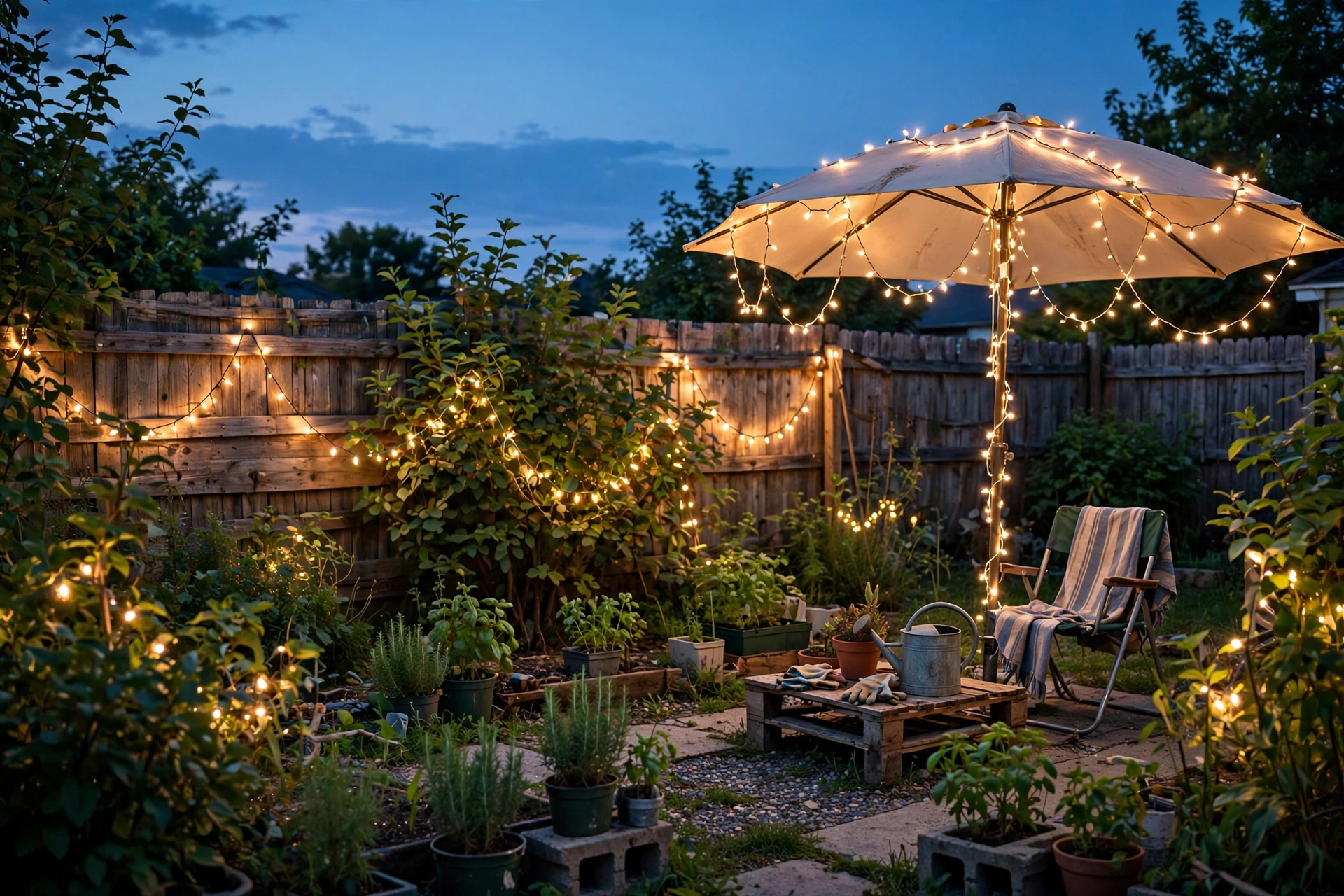
8. Light the patio umbrella you already have (about $13)
Open the umbrella and spiral a lightweight copper-wire strand around the ribs from the center outward, securing loops with small zip ties. A 33-foot strand costs around 13 dollars and the umbrella becomes a glowing canopy over the table. Use copper wire, not heavy globe strands, so the canopy does not sag. Close the umbrella ahead of storms.
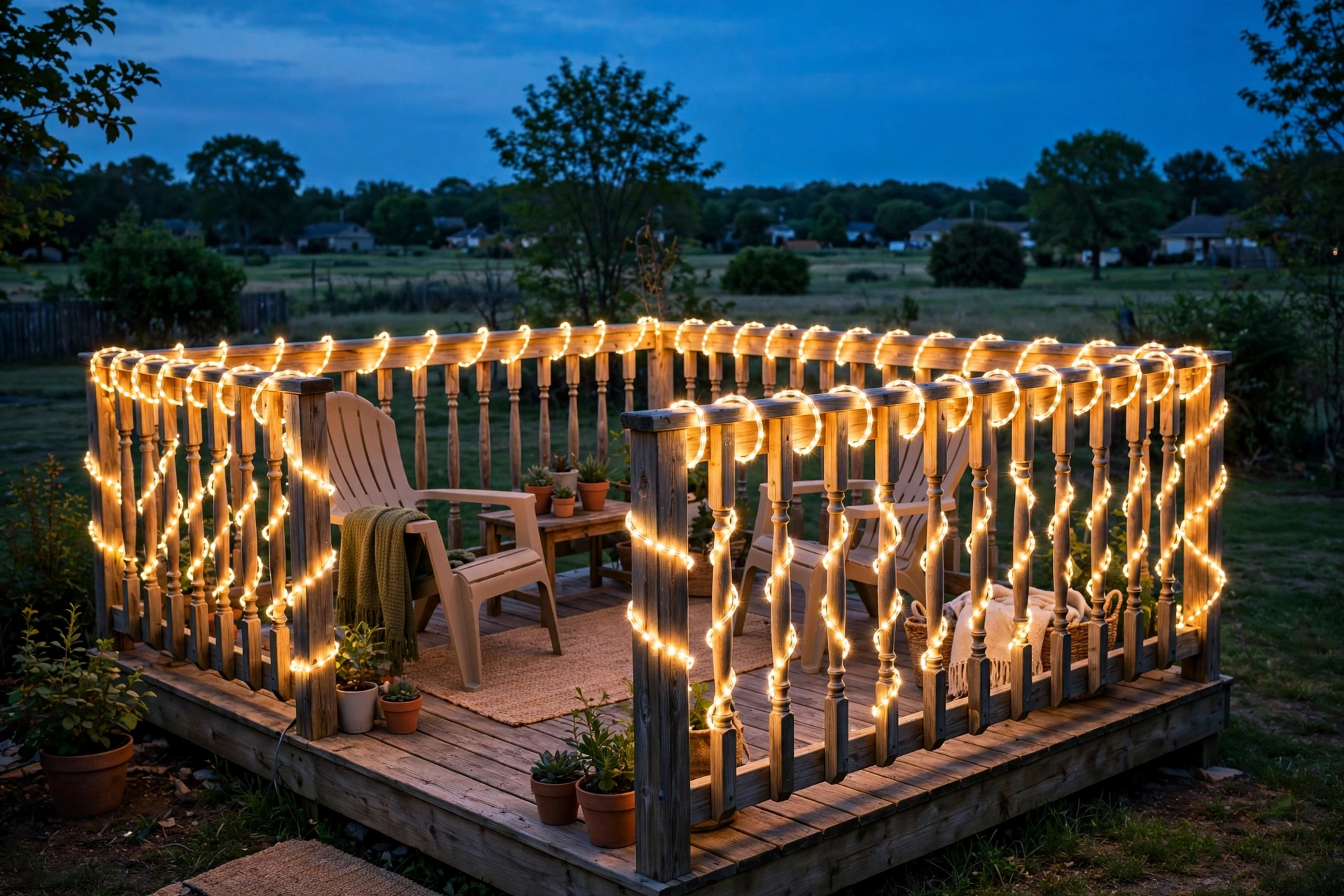
9. Thread lights through the deck railing (about $15)
Weave a strand in and out of the balusters or spiral it around the top rail. The railing does all the structural work, so there is nothing to build and nothing to buy except the lights. Fifteen dollars of warm-white LEDs turns the deck’s edge into a glowing frame. This looks especially good on small decks where the railing is a big part of what you see.
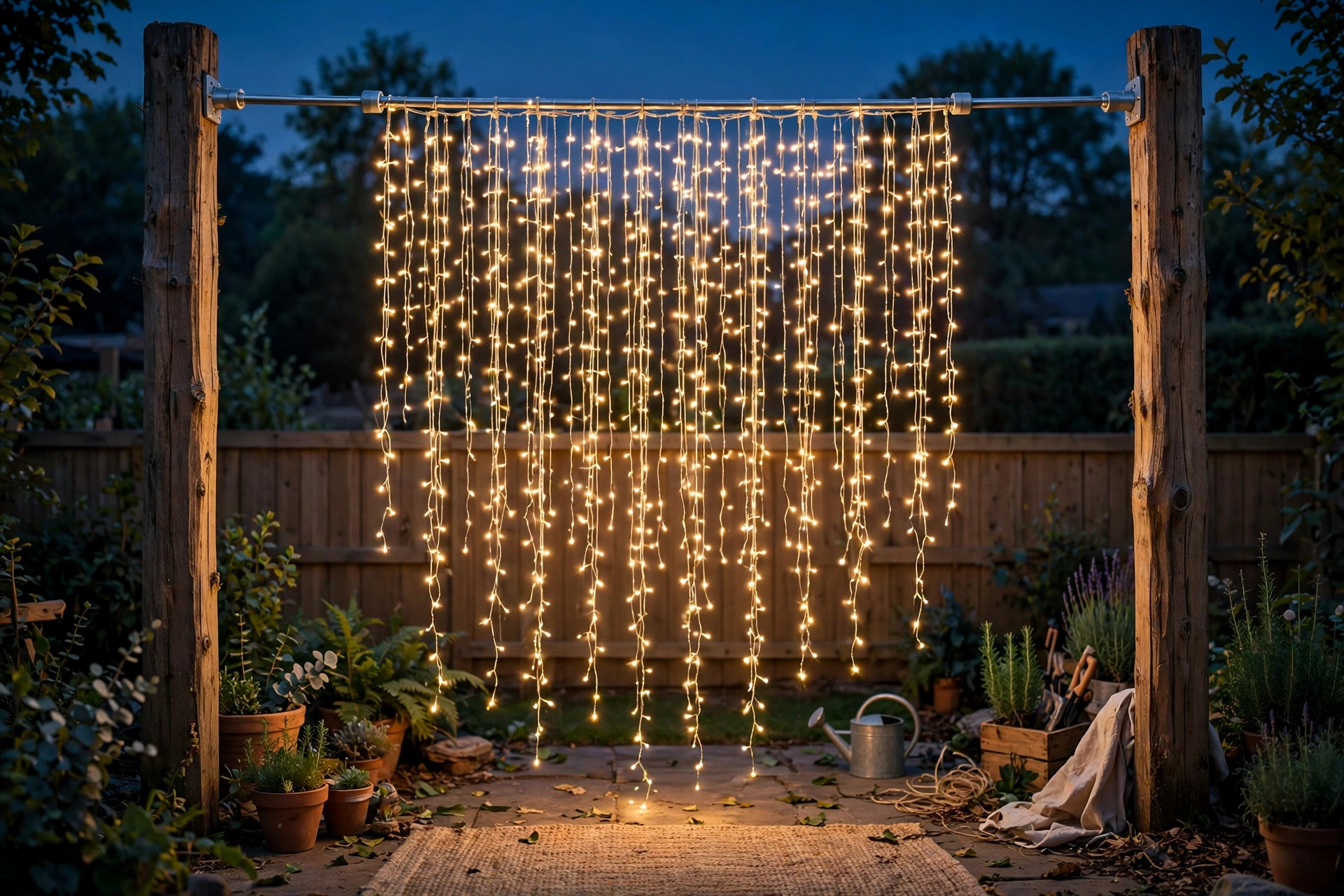
10. Hang curtain lights from a tension rod (about $22)
A shower-style tension rod wedged between two walls, posts, or a doorframe gives you an instant curtain rod with no drilling. Hang a 10-by-6-foot curtain light strand from it with the built-in hooks for about 22 dollars total. The falling drops of light turn any blank wall or fence section into a glowing waterfall. Take it down in seconds when you need the space back.
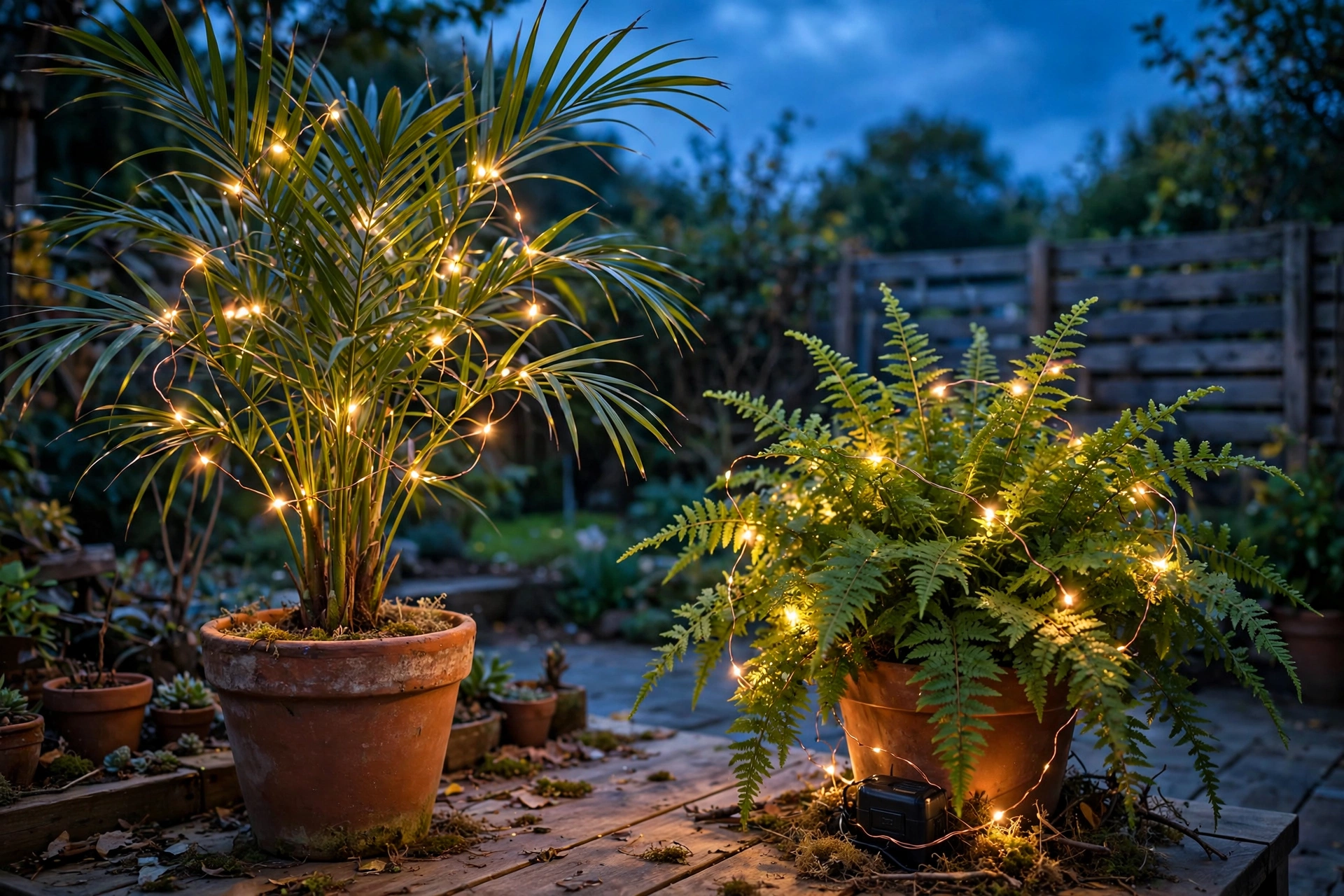
11. Weave copper wire lights through outdoor houseplants (about $11)
Big potted plants on the patio are free light diffusers. Weave an 11-dollar copper-wire fairy strand through the branches of a potted ficus, palm, or bushy fern. The leaves soften the bulbs into a gentle glow and the plant looks alive after dark. Battery strands with timers are perfect since pots move around and rarely sit near outlets.
12. Repurpose last year’s Christmas lights (free)
Those warm-white Christmas strands in the storage bin are outdoor string lights with a different name. Drape them over summer shrubs, along the fence, or through the patio umbrella. Check that they are rated for outdoor use (most Christmas lights are) and untangle them in daylight to save your sanity. Free is the ultimate budget.
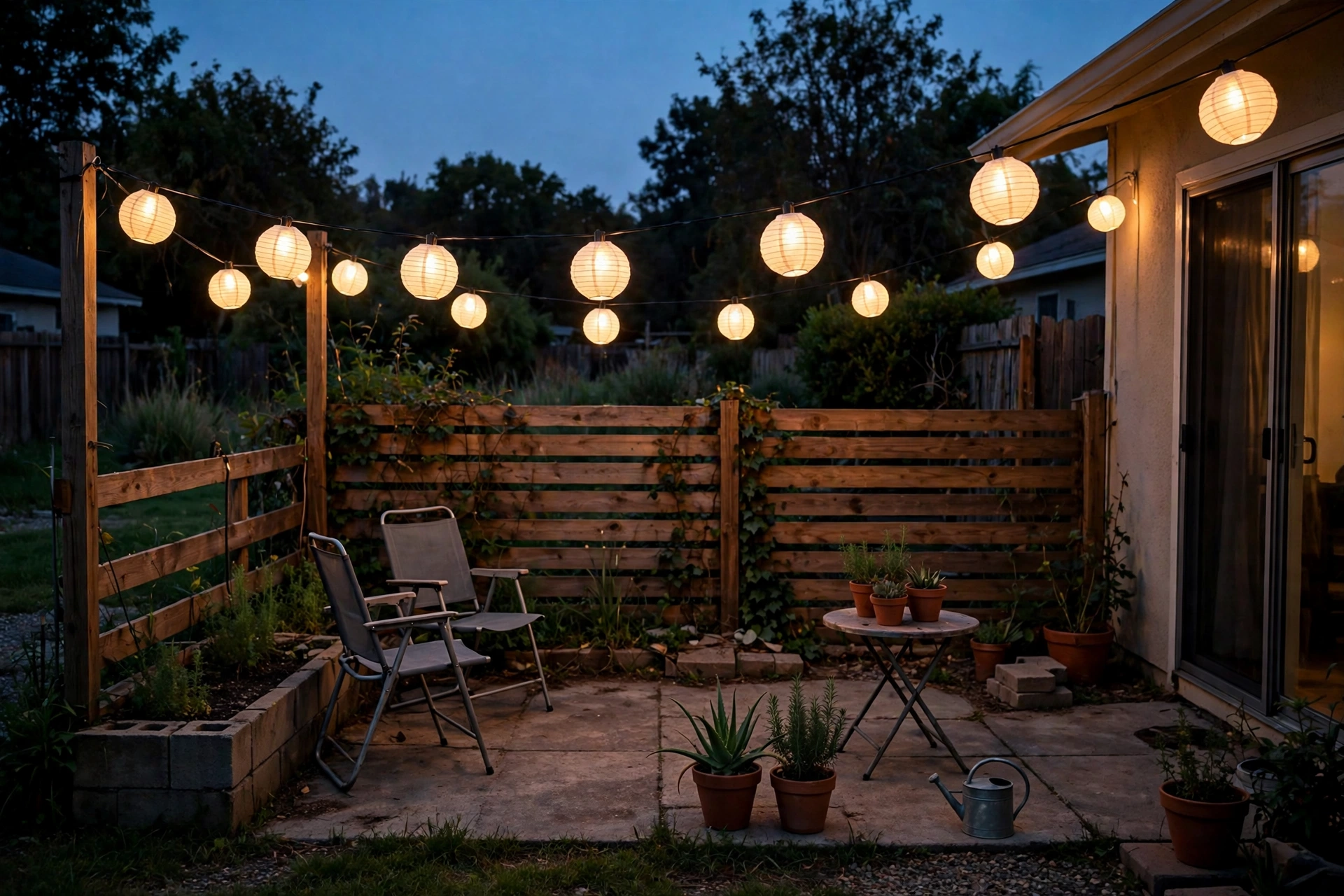
13. Slip paper lantern covers over cheap LEDs (about $20)
A set of 10 paper lantern covers costs around 10 dollars; paired with a 10-dollar LED strand, they become glowing orbs that look straight out of a wedding venue. Feed one LED bulb into each lantern and hang the strand across the patio. The lanterns hide the utilitarian look of budget bulbs completely. Bring paper lanterns inside when rain threatens.
14. Light one focal tree instead of the whole yard (about $14)
Designers call this “one hero moment,” and it is the oldest budget trick in outdoor lighting. Instead of spreading lights thin everywhere, put a single generous strand on the best-looking tree or shrub in the yard and leave everything else dark. The contrast makes the lit tree look spectacular and the dark areas recede. Fourteen dollars, one tree, done.
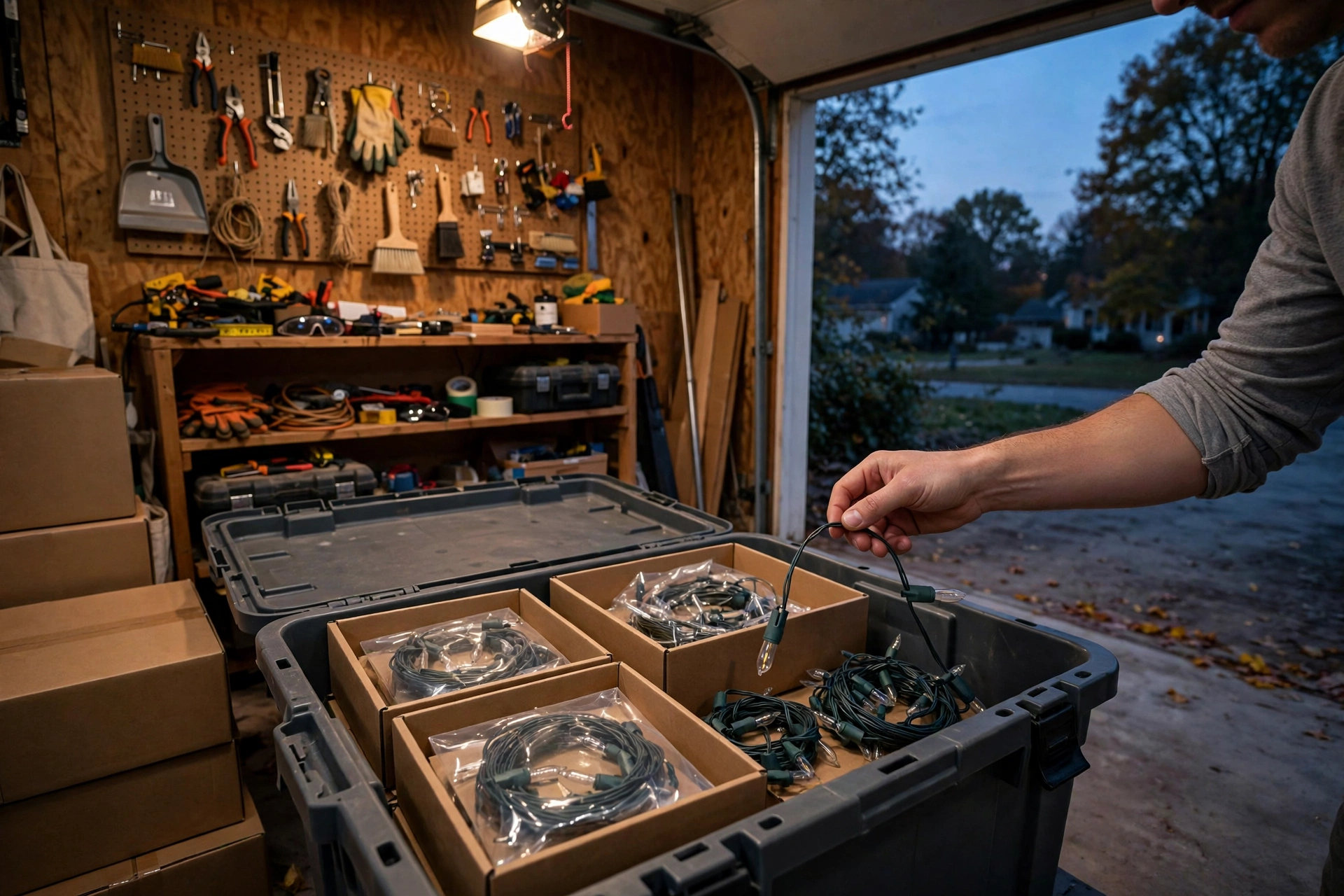
15. Buy off-season and stock up (saves 50 percent or more)
The least glamorous idea saves the most money. Outdoor and holiday lights hit clearance in January and February at 50 to 75 percent off. Buy next summer’s strands then: two premium 48-foot strands for the price of one. Store them loosely coiled in a dry bin, and check the wire for damage before hanging each season. Patience is a lighting strategy.
Quick Buying & Safety Tips
- Choose LED over incandescent. LEDs cost a little more upfront and far less over time: they sip electricity, stay cool, and last for tens of thousands of hours.
- Check for outdoor ratings even on cheap strands. Look for “suitable for wet locations” on the packaging. A bargain strand that fails in the first rain is not a bargain.
- Use timers to save money twice. A 5-dollar outdoor timer plug means lights run only when you enjoy them, cutting electricity use and extending bulb life.
- Go solar to eliminate wiring costs. No extension cords to buy, no outdoor outlet to install. For spots far from the house, solar is both the cheapest and the easiest option.
- Keep extension cords outdoor-rated and off the ground. Run them along fences or walls, never across walkways, and keep every connection dry and elevated.
- Do not overload outlets or strands. Check the maximum connectable strands on the box and respect it. Warm plugs are a warning sign; unplug and redistribute.
- Store lights properly in the off-season. Coil loosely, never wind tightly around your elbow, and keep them dry. Most “dead” strands died in storage, not in use.
FAQs
Can I really light a backyard for under $50?
Absolutely. One 48-foot LED strand (under $20), a set of outdoor clips ($5), and a weekend afternoon cover the classic bistro look. The ideas above that use solar or repurposed lights cost even less.
Are cheap string lights safe?
Price is not the safety factor; certification is. A 12-dollar strand with a UL or ETL wet-location rating is safer than a 40-dollar strand without one. Always check the rating, not the price tag.
How long do budget string lights last?
LED strands typically last 3 to 5 seasons outdoors with basic care. The usual failure points are corroded battery boxes on solar strands and pinched wires from tight staples, both avoidable.
Where is the cheapest place to buy string lights?
Off-season clearance (January to February) at hardware and home stores beats everything, often 50 to 75 percent off. Outside clearance season, warehouse clubs and online multipacks offer the best per-foot prices.
Final Thoughts
Fifty dollars is plenty when you spend it on one good strand and let placement do the heavy lifting. Pick the idea that fits your yard, hang it this weekend, and step outside after dark. That first evening, when the whole backyard glows and you realize what it cost, is one of the best feelings in DIY.