
If you’ve spent any time pulling “weeds” out of a lawn or garden bed, there’s a good chance you’ve yanked out a plant that was quietly worth eating. Wild violet (Viola sororia and close relatives) is one of the most overlooked edible-and-useful plants growing in shady yards across North America and much of Europe. The heart-shaped leaves are mild, slightly mucilaginous, and packed with vitamin C and A — closer in texture to a tender green than anything showy. I started harvesting them almost by accident three springs ago, when a patch took over a raised bed I’d meant for lettuce, and I haven’t looked at them as a nuisance since. Once you know what to look for, using wild violet leaf is genuinely simple, and the payoff — free greens, tea, and a decent skin-soothing infusion — is bigger than the effort involved. Here’s exactly how it’s done.
Quick Answer
Wild violet leaves are edible raw or cooked: pick young, unblemished leaves from unsprayed areas, rinse them well, and use them fresh in salads and sautés, or dry them for tea and infused oil. A quick taste test and a good rinse are really all the prep most uses require, and the leaves keep for months once properly dried.
Why Wild Violet Leaf Is Worth Your Time
Most people either ignore wild violet entirely or spend money trying to eradicate it, which is a little backwards once you know the leaves are edible and the flowers are, too. In practice, the leaves have a mild, slightly grassy flavor with a faint mucilaginous texture — similar to okra in a very small way — that makes them useful as a thickener in soups as much as a salad green.
They’re also one of the earliest greens up in spring, often before dandelion has fully leafed out, which matters if you’re trying to eat seasonally from your own yard. Nutritionally, the leaves are a solid source of vitamin C and vitamin A, and herbalists have used violet leaf infusions for generations as a mild, soothing addition to skin-care routines.
What actually works, in my experience, is treating wild violet the way you’d treat spinach: it wilts fast, tastes best young, and loses a lot of its appeal once the plant bolts and the leaves toughen and get a slightly bitter edge. Picking little and often beats one big harvest.
The one caveat worth stating plainly: never harvest from lawns treated with herbicide or pesticide, from roadside patches, or from areas where pets regularly do their business — the leaves absorb whatever’s in the soil around them.
At a Glance
- Best harvest window: early spring through early summer, before flowering slows
- Identification: heart-shaped leaves with scalloped edges, growing low in a rosette, often with purple or white flowers nearby
- Flavor: mild, slightly earthy, faintly mucilaginous
- Common uses: raw in salads, sautéed, dried for tea, infused into oil
- Shelf life once dried: 6–12 months in an airtight container away from light
Technique At a Glance
| Prep Time | Drying Time | Shelf Life | Difficulty | Tools Needed |
| 10–15 min | 6–10 hrs (dehydrator) or 3–5 days (air-dry) | 6–12 months dried | Easy | Scissors, colander, salad spinner, dehydrator or drying rack |
Identifying Wild Violet Leaves Before You Harvest
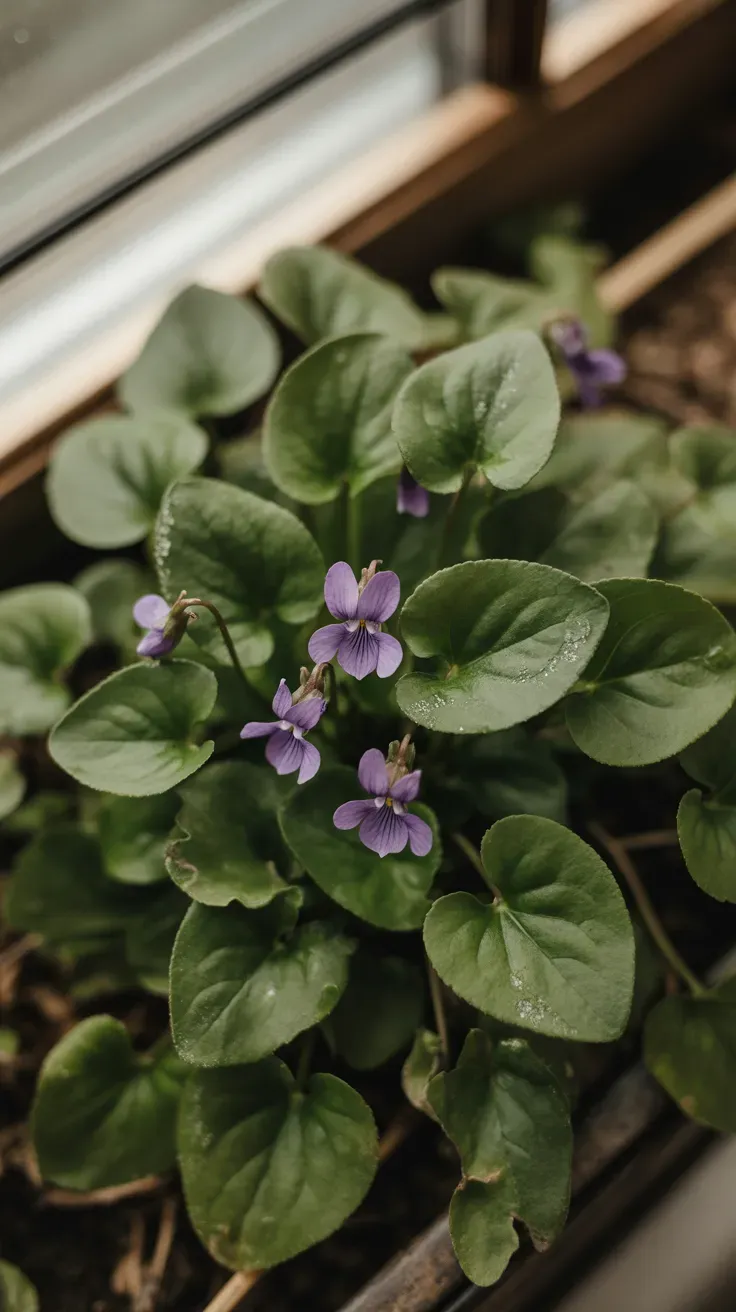
Before you pick a single leaf, get comfortable identifying wild violet correctly — there are a few lookalikes worth knowing.
True wild violet leaves are heart-shaped with gently scalloped edges, growing in a low basal rosette directly from the soil rather than on a tall stem. The flowers, when present, are small, five-petaled, and typically purple, blue-violet, or white, nestled close to the leaves on their own thin stalks. In my yard, the giveaway is usually the flowers showing up a week or two before the leaves get big enough to bother harvesting.
The plant to watch for is lesser celandine, which has a glossier, more rounded leaf and yellow flowers — it’s not dangerously toxic in tiny amounts but isn’t the plant you want, and it can cause GI upset in larger quantities. If you’re not 100% sure, skip that patch.
Pro Tip: Crush a leaf gently between your fingers — true violet leaf releases almost no scent, while many lookalikes have a noticeably sharp or bitter smell. That absence of odor is one of the more reliable field checks.
For a full identification walkthrough with photos, the Missouri Botanical Garden’s plant finder is a solid reference. You can also browse more shade-loving edibles over on our guide to foraging in the home garden.
Getting the ID right the first time makes everything after this step easy.
🛒 Shop This Idea
- Botanical field guide to edible wild plants, pocket-sized — helps you confirm ID on the spot before you harvest anything. Shop on Amazon →
- Folding garden magnifier loupe, 10x — makes it easy to check leaf edges and flower structure up close. Shop on Amazon →
- Stainless steel herb-harvesting scissors — clean, precise cuts that don’t bruise tender leaves. Shop on Amazon →
- Wide-brim garden sun hat — practical for the low, close-to-the-ground kneeling this kind of foraging requires. Shop on Amazon →
- Reusable mesh foraging bag with drawstring — breathable so leaves don’t wilt or steam on the walk back inside. Shop on Amazon →
Harvesting Wild Violet Leaves the Right Way
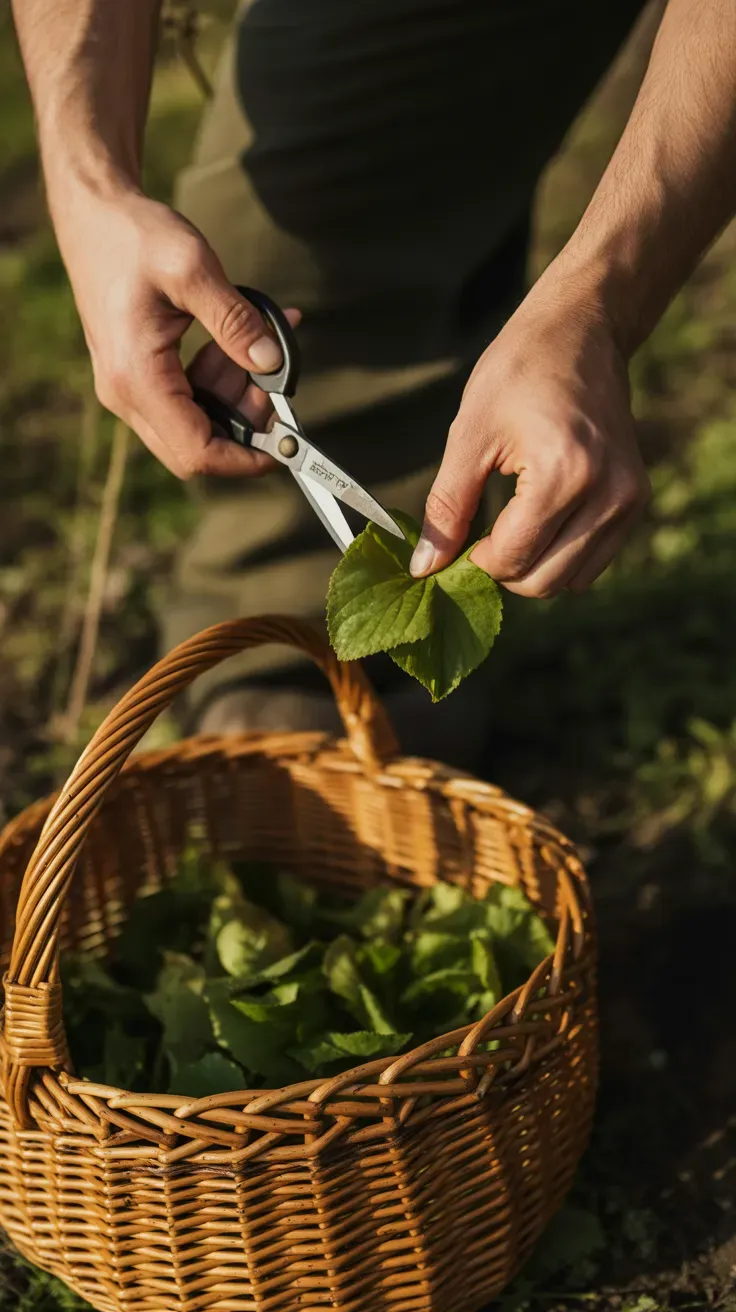
Once you’ve confirmed the ID, harvesting itself takes only a few minutes and does surprisingly little damage to the patch if you do it right.
Snip individual leaves near the base with scissors or garden snips rather than pulling, which can uproot the whole rosette. Choose younger, smaller leaves — roughly two to three inches across — since older leaves get tougher and slightly more bitter as the season goes on. I usually harvest in the cooler part of the morning, after any dew has dried but before the afternoon sun stresses the plant.
Take no more than a third of the leaves from any single patch at once. Violets spread readily by both seed and rhizome, so a light touch this week means a bigger harvest in a few weeks.
- Morning harvest, after dew dries
- Leaves under 3 inches across
- Scissors, not pulling
- Leave two-thirds of any patch untouched
- Skip flowering stalks if you want seed set to continue
The PennState Extension foraging resources cover sustainable wild-harvesting guidelines in more depth if you’re planning to harvest regularly. For more shade-bed ideas, see our container gardening for shady yards guide.
A patient hand now means a healthier patch to come back to next month.
🛒 Shop This Idea
- Viola sororia (common blue violet) starter plants, bare root — for gardeners who want to establish a dedicated patch rather than rely on volunteers. Shop on Amazon →
- Shallow wicker harvest basket with handle — keeps leaves loosely stacked so they don’t crush on the way inside. Shop on Amazon →
- Kneeling garden pad with side pockets — makes low-to-the-ground harvesting a lot easier on the knees. Shop on Amazon →
- Slow-release organic lawn-safe fertilizer — supports patch regrowth after a harvest without harsh chemicals. Shop on Amazon →
- Engraved wooden garden marker stakes — handy for flagging which patches are safe, pesticide-free harvest zones. Shop on Amazon →
Washing and Prepping the Leaves
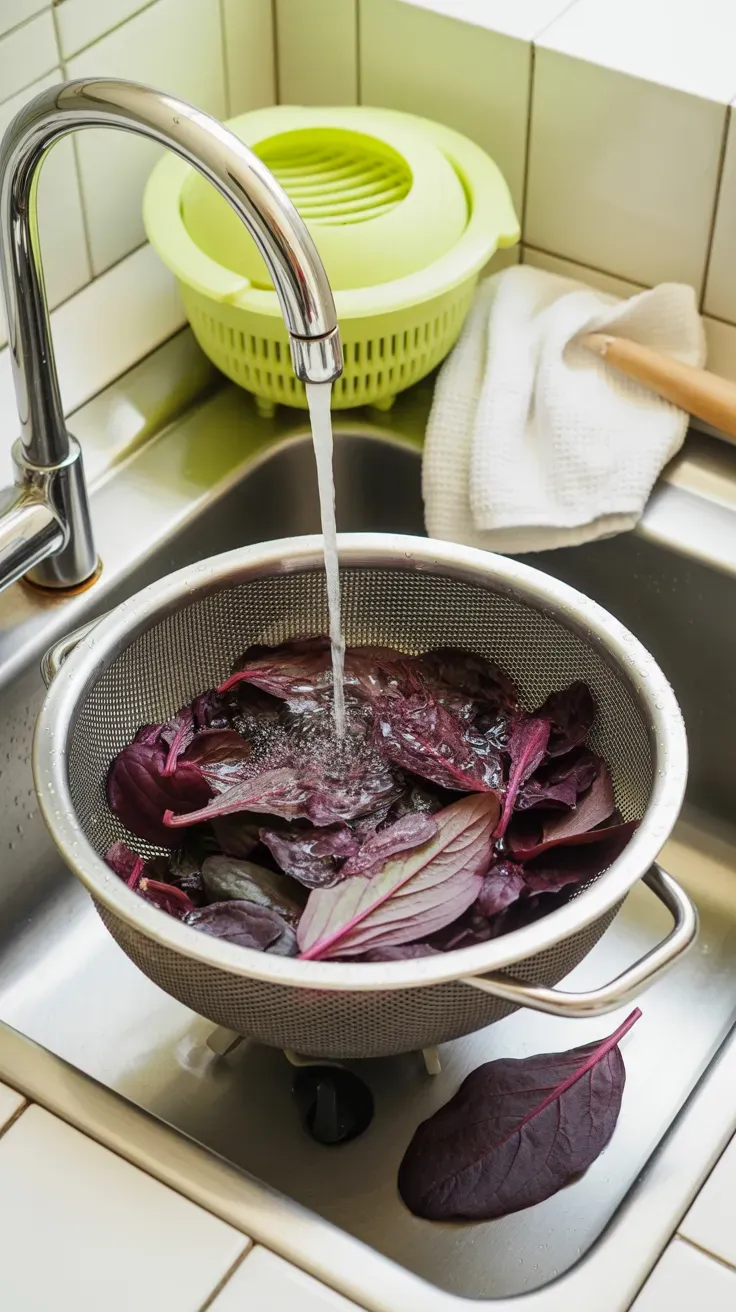
Once the leaves are inside, prep is fast — this isn’t a fussy ingredient.
Swish the leaves in a bowl of cool water to knock loose soil and any hitchhiking insects, then rinse again under running water. A salad spinner speeds up drying and keeps the leaves from turning slimy in storage. Pick through the batch and discard anything yellowed, torn, or chewed by insects, since those spots can turn mushy fast.
If you’re using the leaves same-day, a light pat-dry with a towel is enough. If you’re drying or storing them, get them as dry as possible before the next step — any lingering moisture invites mold.
Pro Tip: Lay washed leaves in a single layer on a towel for 20–30 minutes before storing fresh in the fridge; trapped surface moisture is the number-one reason foraged greens turn slimy within a day or two.
The SF Gate Home Guide has good general guidance on washing and storing foraged greens safely. Our kitchen upcycling and food-prep tips cover more low-waste prep tricks like this one.
A few extra minutes here pays off in how long the leaves actually last.
🛒 Shop This Idea
- Collapsible silicone colander, fine mesh — small enough to rinse a modest violet-leaf harvest without wasting counter space. Shop on Amazon →
- Compact countertop salad spinner — dries delicate leaves gently without bruising them. Shop on Amazon →
- Cotton flour-sack towels, set of 4 — ideal for the air-dry step before fridge or dehydrator storage. Shop on Amazon →
- Glass produce storage containers with vented lids — keeps rinsed leaves crisp in the fridge for several extra days. Shop on Amazon →
- Produce wash spray, fruit and vegetable cleaner — a nice-to-have for anyone harvesting near a well-trafficked yard edge. Shop on Amazon →
Eating Wild Violet Leaves Fresh
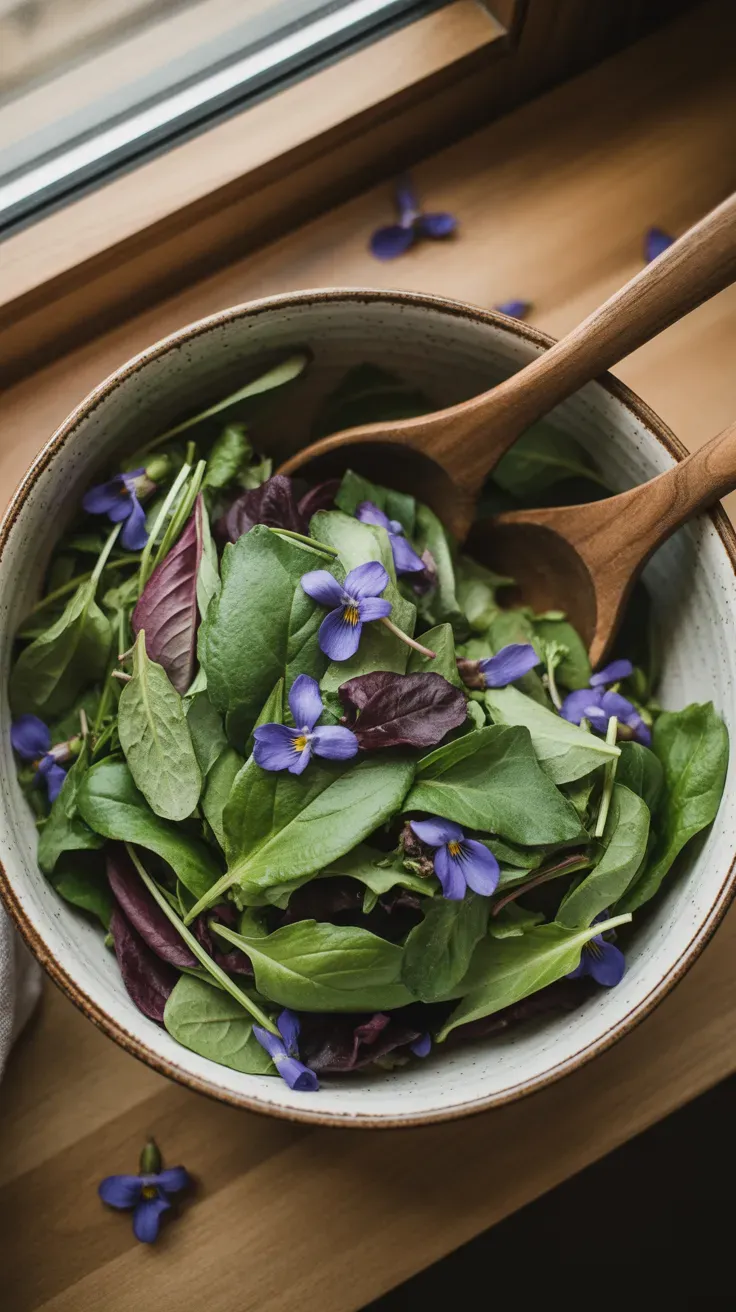
Fresh is the simplest way to use wild violet leaf, and it’s where most people start.
Toss young leaves whole or roughly torn into a mixed green salad — the mild flavor blends in without overpowering other greens, and the flowers make an easy, edible garnish. In practice, I’ve had the best luck pairing them with something slightly acidic, like a lemon vinaigrette, which balances the leaf’s faint earthiness nicely.
Sautéing works too: a quick minute or two in olive oil with garlic softens the leaf and mellows any residual bitterness, similar to how you’d treat baby spinach. Because of their slight mucilaginous quality, a handful of chopped leaves stirred into soup near the end of cooking also acts as a light, natural thickener.
Wild violet leaves pair especially well with other early-spring foraged greens like chickweed or young dandelion, since they share a similar harvest window and mild profile.
The Almanac’s guide to edible weeds has more pairing ideas if you want to branch out. For more spring salad inspiration, check our windowsill herb garden guide.
However you serve them, a light hand with seasoning lets the leaf’s natural mildness come through.
🛒 Shop This Idea
- Cold-pressed extra virgin olive oil, 500ml — the base for a quick sauté or a simple lemon vinaigrette. Shop on Amazon →
- Wooden salad servers, set of 2 — practical for tossing delicate leaves without bruising them. Shop on Amazon →
- Handheld citrus juicer — quick way to make the lemon vinaigrette that pairs well with the leaf’s mild earthiness. Shop on Amazon →
- Ceramic mixing and serving bowl, footed — a nice-to-have for presenting a foraged spring salad at the table. Shop on Amazon →
- Flaky sea salt finishing tin — a light hand with good salt is really all fresh violet leaf needs. Shop on Amazon →
Drying Wild Violet Leaves for Tea and Storage
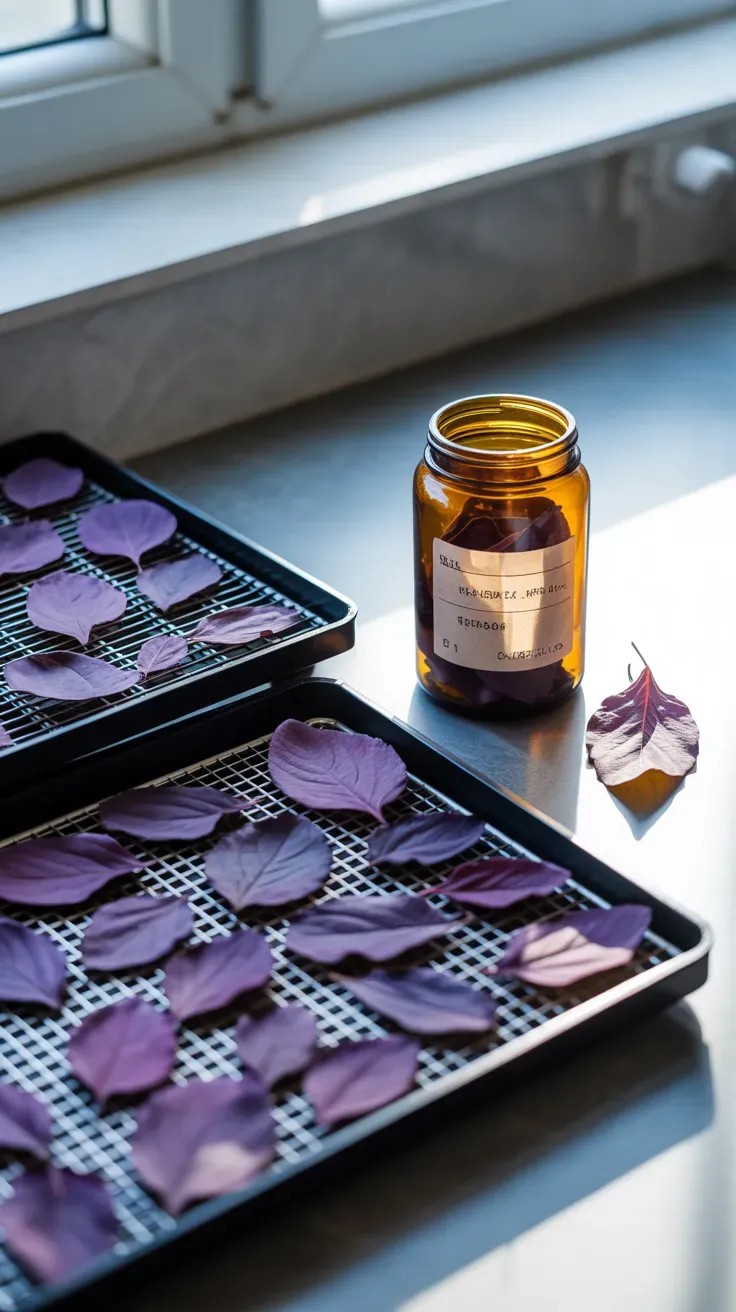
Drying is what turns a spring harvest into something you can use all year, and it’s less fiddly than it sounds.
Spread washed, fully dried leaves in a single layer on a dehydrator tray and run it at a low setting, around 95–100°F, for six to ten hours, checking at the six-hour mark. Without a dehydrator, tie small bundles and hang them somewhere dark, dry, and well-ventilated for three to five days — direct sun fades both color and flavor, so avoid a sunny windowsill.
Leaves are fully dry when they crumble rather than bend. Store them in an airtight jar, away from light and heat, and they’ll hold their color and mild flavor for six to twelve months.
Dried leaves steep into a gentle, faintly grassy tea — use about a teaspoon per cup and let it sit five minutes — or you can crumble them into infused oil for a soothing skin-care base.
Pro Tip: Label the jar with the harvest date; violet leaf tea past the one-year mark isn’t unsafe, it just fades to almost no flavor at all, which is easy to forget by midwinter.
The Gardener’s World foraging archive has more detail on drying wild greens for tea. See also our full guide to drying herbs at home.
Once dried and jarred, that spring patch keeps giving well into the following winter.
🛒 Shop This Idea
- 6-tray countertop food dehydrator with temperature control — the fastest, most consistent way to dry a full harvest of leaves. Shop on Amazon →
- Amber glass herb storage jars with airtight lids, set of 6 — blocks light, which keeps dried leaves flavorful longer. Shop on Amazon →
- Reusable chalkboard jar labels with marker — makes tracking harvest dates simple. Shop on Amazon →
- Loose-leaf tea infuser, stainless steel — sized right for a single-cup violet leaf tea steep. Shop on Amazon →
- Small glass bottles for infused oil, 2oz, with dropper — a nice-to-have for turning dried leaves into a skin-care infusion. Shop on Amazon →
Getting Started With Wild Violet Leaf
The easiest first step is simply spending one walk around your yard confirming you actually have true wild violet, not a lookalike — do that before you pick anything. The most common beginner mistake is harvesting from a treated lawn edge or a spot pets frequent, so scout your patch and its history first.
For your first purchase, a decent pair of herb-harvesting scissors makes a bigger difference than people expect; pulling leaves by hand tends to uproot the shallow-rooted rosette and thin out your patch faster than it can recover. If you want one tool to start with, that’s it.
Realistically, you can be eating your first small salad within a day of a confirmed ID and a light harvest. Drying a jar’s worth for tea takes a bit more patience — plan on a full afternoon’s harvest plus a few days of drying time before you have a usable stash.
- Herb-harvesting scissors, ergonomic grip — the single most useful first purchase for clean, plant-friendly cuts. Shop on Amazon →
Frequently Asked Questions
Is wild violet leaf actually edible?
Yes, the leaves and flowers of common wild violet (Viola sororia and close relatives) are edible raw or cooked. They have a mild flavor and are best eaten young, before the plant fully bolts in late spring.
Can you eat wild violet leaves growing in your lawn?
You can, as long as the lawn hasn’t been treated with herbicide or pesticide and isn’t a spot pets regularly use. When in doubt about a lawn’s treatment history, it’s safer to skip that patch.
What does wild violet leaf taste like?
It’s mild and slightly earthy with a faint mucilaginous texture, closer to a gentle salad green than anything sharp or bitter. Older, bolted leaves can develop a slightly tougher texture and mild bitterness.
How do you dry wild violet leaves for tea?
Spread clean, dry leaves in a single layer and either dehydrate at 95–100°F for six to ten hours or air-dry in small hanging bundles out of direct sun for three to five days. Store the fully crumbled-dry leaves in an airtight jar away from light.
How long do dried wild violet leaves last?
Properly dried and stored in an airtight container away from light and heat, they hold their flavor and color for about six to twelve months. After that they’re still safe, just noticeably milder.
A Few Final Thoughts
Wild violet leaf is about as low-effort as foraging gets — no special equipment, no complicated prep, just a patch of “weeds” most people already have and usually pull without a second thought. Correct identification is really the only step worth taking slowly; everything after that, from a quick rinse to a jar of dried leaves for winter tea, comes together fast. Once you’ve made one salad with leaves from your own yard, it’s hard to look at a violet patch the same way again. Give your first small harvest a try this spring, and let the patch — and your kitchen — grow from there.