
I used to think “everblooming” was mostly marketing language on plant tags, until I actually tracked bloom dates on a windowsill African violet for two years and realized it had flowered in every single month except one. Some flowers genuinely don’t take a real off-season if you meet their light, water, and feeding needs — they just cycle through flush, rest, flush again, often so briefly you barely notice the pause. That doesn’t mean every plant on a “blooms all year” list will do it in every home or climate, and I’ll be upfront about which ones need a warm sunroom versus a bright northern zone. What it does mean is that a genuinely well-chosen dozen can keep something in flower on your sill or patio in every month of the calendar. Ready? Let’s explore all 12 of them.
Quick Answer: African violets, anthuriums, wax begonias, bougainvillea, zonal geraniums, tropical hibiscus, kalanchoe, lantana, Phalaenopsis orchids, wave petunias, impatiens, and angelonia are among the most reliable near-continuous bloomers, whether grown as houseplants in bright indirect light or as container plants in warm, frost-free conditions. Most need deadheading, consistent light, and a light monthly feed to keep the flush going without a real dormant break.
Why Flowers That Bloom All Year Round Are Worth Your Time
Most flowering plants follow a seasonal rhythm — one big spring or summer show, then months of green foliage and nothing else. Continuous bloomers break that pattern by flowering in overlapping cycles rather than one synchronized burst, so as one set of buds fades, another is already opening behind it.
In practice, this makes a huge difference for anyone gardening on a windowsill, balcony, or small patio where there isn’t room for a rotating cast of seasonal plants. A single well-placed anthurium or kalanchoe can be your one reliable spot of color through a gray winter and a bright summer alike, with far less swapping and replanting than a bed of annuals requires.
It’s worth being honest about the caveat: “all year round” for tropical plants like hibiscus and bougainvillea really means indoors or in frost-free zones — take them outside in a cold-winter region and the bloom cycle stops the moment temperatures drop. Match the plant to your actual conditions and the payoff is real; ignore that and you’ll just be disappointed by October.
At a Glance
- Best true year-round bloomers indoors: African violets, anthuriums, kalanchoe, and Phalaenopsis orchids under bright indirect light.
- Best warm-climate outdoor bloomers: Bougainvillea, tropical hibiscus, and lantana in frost-free zones or as container plants brought indoors.
- Feeding matters more than you’d expect: most on this list need a diluted balanced fertilizer every 2–4 weeks during active bloom.
- Deadheading keeps the cycle going: angelonia, wave petunias, and impatiens especially slow down fast without regular spent-bloom removal.
- Light is the single biggest limiter: nearly every failure to rebloom traces back to insufficient direct or bright indirect light, not lack of fertilizer.
Comparing All 12 Flowers That Bloom All Year Round
| Flower | Light Needs | Best Setting | Bloom Frequency | Difficulty |
| African Violet | Bright, indirect | Indoor windowsill | Continuous flushes | Easy |
| Anthurium | Bright, indirect | Indoor | Continuous | Moderate |
| Wax Begonia | Partial sun/shade | Indoor or container | Continuous | Easy |
| Bougainvillea | Full sun | Outdoor/container | Near-continuous, warm zones | Moderate |
| Zonal Geranium | Full sun | Container/windowsill | Continuous with deadheading | Easy |
| Tropical Hibiscus | Full sun | Outdoor/container | Continuous, warm zones | Moderate |
| Kalanchoe | Bright, indirect | Indoor windowsill | Long cyclical flushes | Easy |
| Lantana | Full sun | Outdoor/container | Continuous, warm zones | Easy |
| Phalaenopsis Orchid | Bright, indirect | Indoor | 2–3 rebloom cycles/year | Moderate |
| Wave Petunia | Full sun | Container/balcony | Continuous with deadheading | Easy |
| Impatiens | Partial shade | Container/shade bed | Continuous | Easy |
| Angelonia | Full sun | Container/balcony | Continuous, heat-tolerant | Easy |
African Violet (Saintpaulia Ionantha)
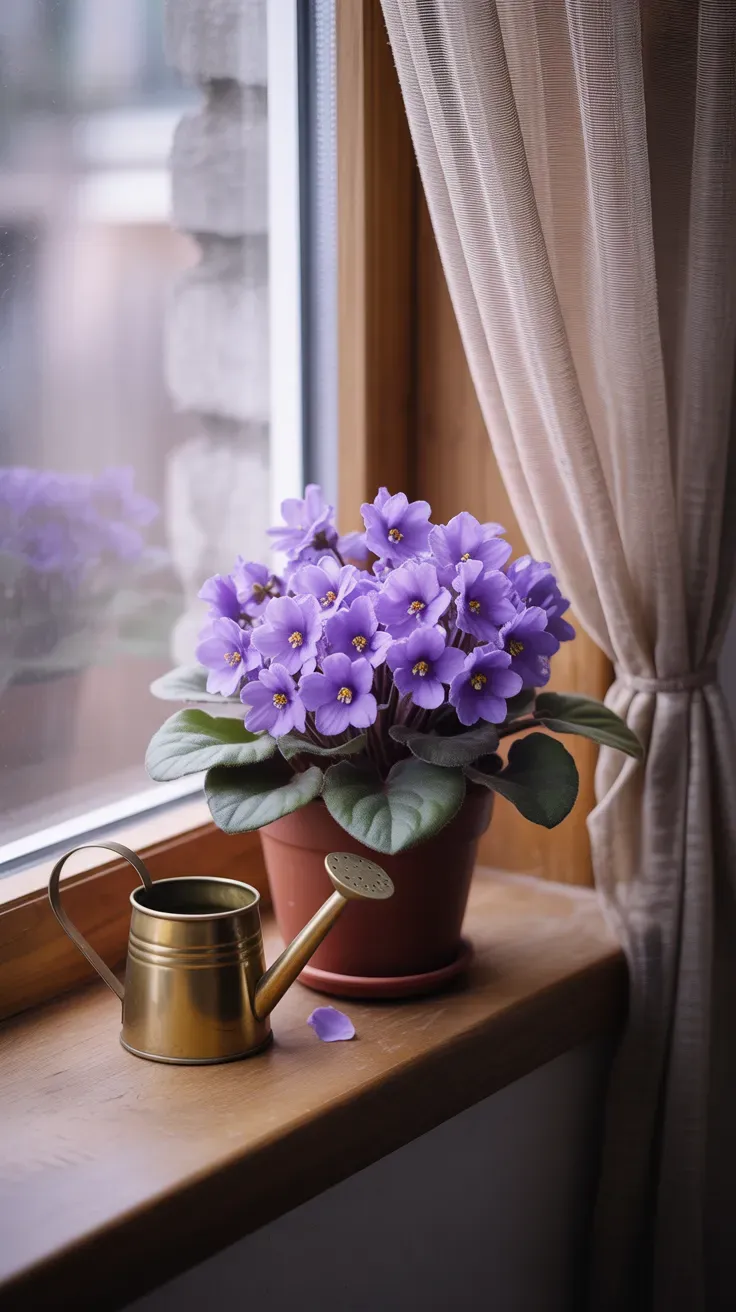
African violets are the classic proof that year-round blooming is achievable on an ordinary windowsill, not just in a greenhouse. Given consistent bright, indirect light, mine has rarely gone more than three or four weeks without at least a few open flowers.
The trick is bottom-watering rather than pouring water over the fuzzy leaves, which are prone to unsightly brown spotting when wet. Room-temperature water in the saucer, left for 20–30 minutes and then drained, keeps the crown dry and the roots consistently moist without rot.
Feed with a violet-specific fertilizer diluted to quarter-strength every other watering during active growth. Skipping fertilizer entirely is the single fastest way to stall the bloom cycle, in my experience, even when light and water are otherwise perfect.
Pro Tip: Rotate the pot a quarter turn every week so the plant doesn’t lean and bloom only toward the light source.
See our full African violet care guide for repotting timing. According to The Sill’s houseplant care library, African violets bloom most reliably under 12–14 hours of bright indirect light daily.
A single healthy violet can genuinely anchor a windowsill’s color for years with almost no dormant period.
🛒 Shop This Idea
- Miniature African violet, purple bicolor — a compact, heavy-blooming variety well suited to a small windowsill pot. Shop on Amazon →
- Self-watering African violet pot with wick system — takes the guesswork out of the bottom-watering technique this plant needs. Shop on Amazon →
- African violet potting mix, peat-based — the light, fast-draining soil this plant’s shallow roots require. Shop on Amazon →
- Violet-specific liquid bloom fertilizer — formulated for the quarter-strength feeding schedule that keeps flushes coming. Shop on Amazon →
- Ceramic scalloped-rim violet display pot — a decorative pick once your violet is blooming reliably enough to show off. Shop on Amazon →
Anthurium (Anthurium Andraeanum)
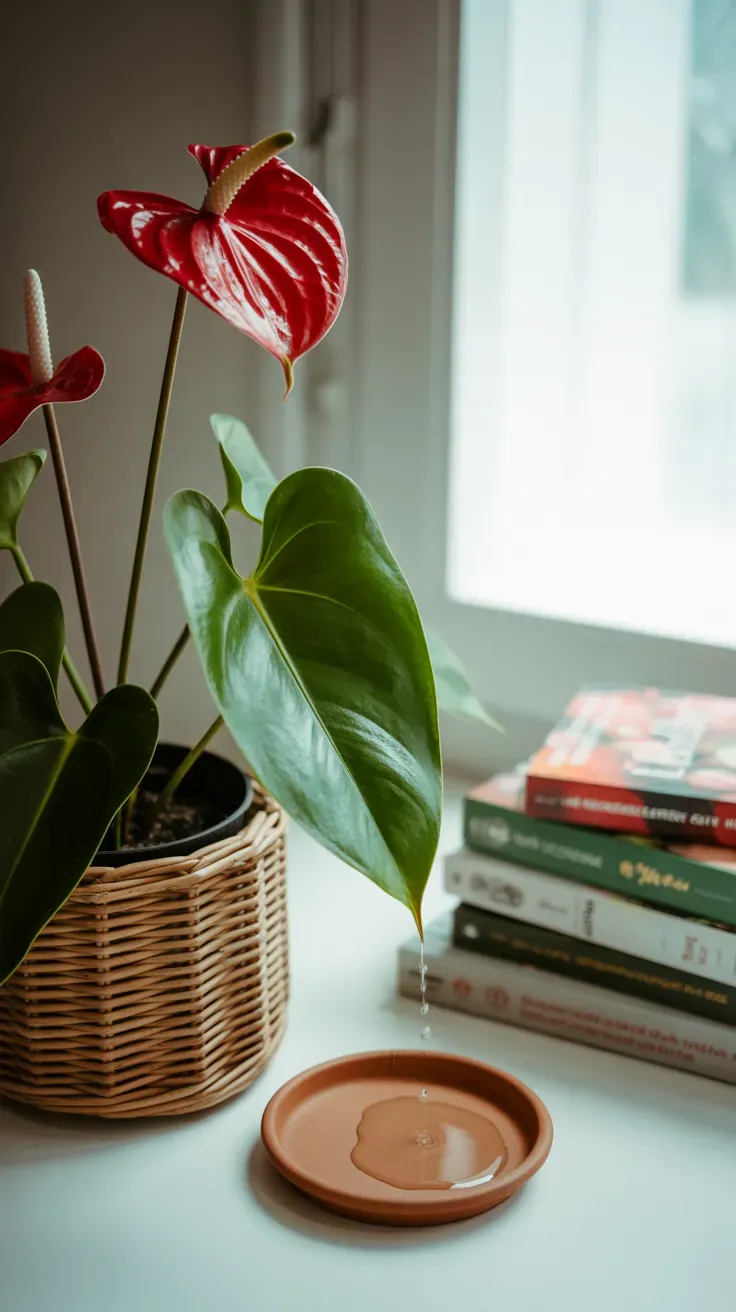
Anthuriums produce their glossy, heart-shaped spathe blooms in overlapping cycles rather than a single seasonal show, and a mature plant can hold two or three blooms open simultaneously nearly year-round indoors.
Humidity matters more here than for most houseplants on this list. In a dry heated room, mine noticeably slowed its bloom rate until I started running a small humidifier nearby, after which new spathes appeared roughly every six to eight weeks again.
Each individual bloom lasts an impressively long time, often six to eight weeks before fading, which is part of why the plant reads as “always in flower” even though it’s really producing new blooms on a staggered schedule rather than constantly.
- Bright indirect light, never direct midday sun
- Water when the top inch of soil dries out
- 60%+ humidity keeps bloom cycles shortest between flushes
- Diluted balanced fertilizer every 4 weeks during active growth
Our guide to humidity-loving houseplants covers pairing options for a bathroom or kitchen window. Missouri Botanical Garden’s plant finder entry on Anthurium andraeanum notes it blooms intermittently throughout the year under suitable indoor conditions.
Give it warmth and humidity and it genuinely earns its reputation as a low-maintenance year-round bloomer.
🛒 Shop This Idea
- Anthurium andraeanum, red spathe, 6-inch pot — a mature-sized starter plant likely to already be in active bloom. Shop on Amazon →
- Cool-mist tabletop humidifier — raises ambient humidity to keep bloom cycles short between flushes. Shop on Amazon →
- Chunky aroid potting mix with orchid bark — the airy, fast-draining blend anthurium roots need. Shop on Amazon →
- Balanced liquid houseplant fertilizer, 10-10-10 — a reliable monthly feed for active bloom production. Shop on Amazon →
- Digital hygrometer and thermometer combo — lets you actually track whether humidity is high enough for consistent blooming. Shop on Amazon →
Wax Begonia (Begonia Semperflorens)
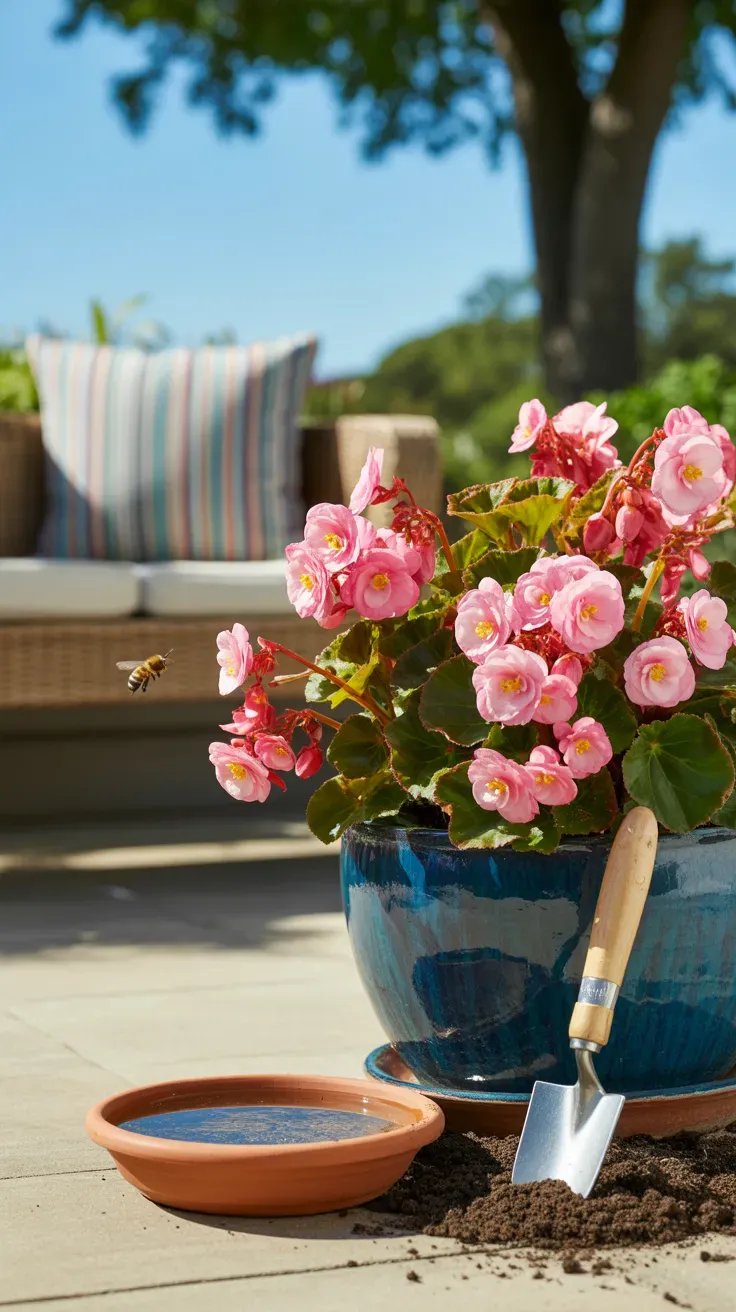
Wax begonias earned the species name “semperflorens,” literally “ever-flowering,” and they live up to it in both containers and beds, cycling through small waxy blooms in white, pink, or red almost without pause from spring through frost.
Grown as a houseplant in a bright window, the same variety can keep blooming through winter indoors, making it one of the few plants on this list that transitions between outdoor container and indoor windowsill duty without missing a beat.
They tolerate more shade than most continuous bloomers, doing well in partial sun or even bright shade, though bloom density does thin out noticeably in deeper shade compared with a half-day-sun spot.
Pro Tip: Pinch back leggy stems in early summer — it costs you a week of blooms but doubles the flowering surface for the rest of the season.
Check our container garden shade plant roundup for companion picks. The University of Florida IFAS Extension’s begonia guide confirms semperflorens begonias bloom continuously from spring through first frost outdoors.
Few flowers give this much continuous color for this little maintenance.
🛒 Shop This Idea
- Wax begonia mixed-color bedding plants, 6-pack — an easy, budget-friendly way to fill a container with continuous bloom. Shop on Amazon →
- Glazed ceramic container with drainage hole, 12-inch — sized right for a full, spilling wax begonia display. Shop on Amazon →
- All-purpose container potting mix — a well-draining base suited to begonia roots in a pot. Shop on Amazon →
- Precision pinching and deadheading snips — small enough for the delicate stems this plant needs pinched. Shop on Amazon →
- Slow-release container flower fertilizer spikes — set-and-forget feeding for a pot that blooms nearly nonstop. Shop on Amazon →
Bougainvillea
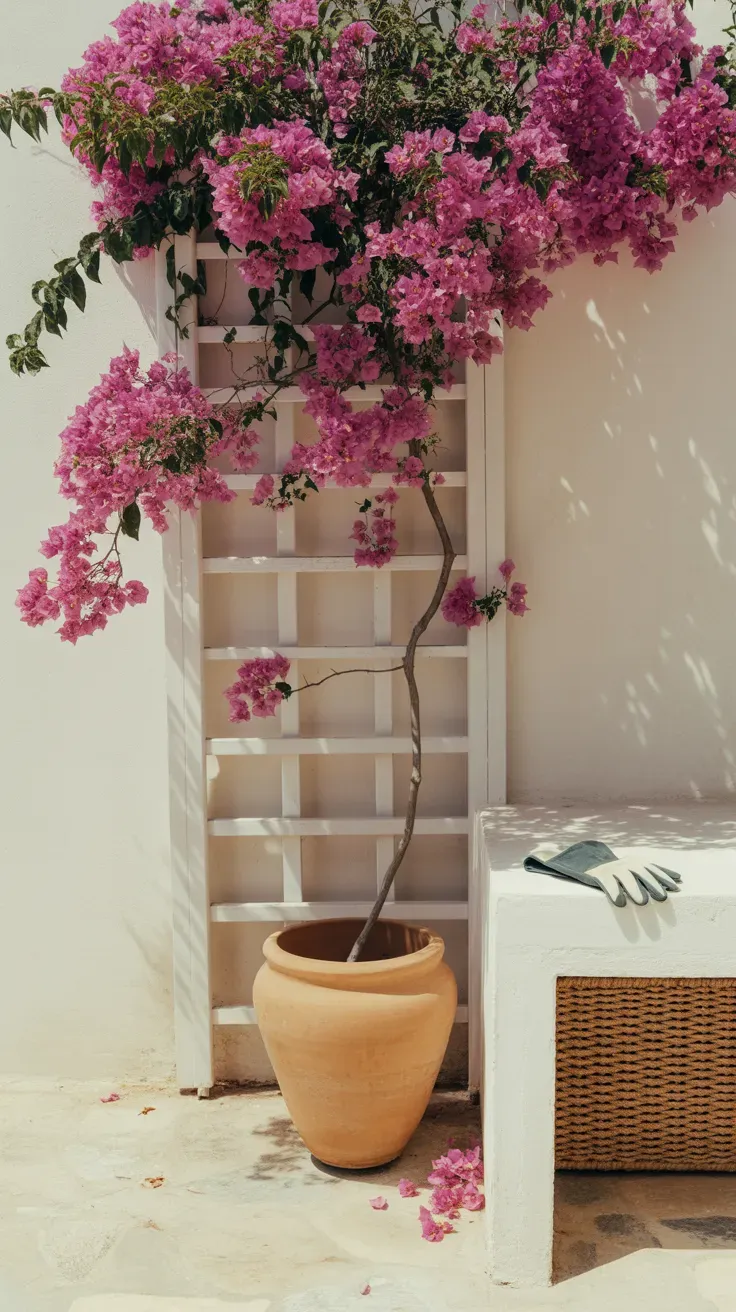
Bougainvillea’s papery colored bracts aren’t technically petals, but the effect is the same — a nearly continuous wash of color in warm, frost-free climates, with the plant taking only brief rest periods between flushes rather than a true dormant season.
It genuinely wants to be a little stressed to bloom its best. Overwatering and over-fertilizing with high-nitrogen feed pushes leafy growth at the expense of bracts, so I let mine dry out noticeably between waterings and use a bloom-boosting low-nitrogen fertilizer instead of an all-purpose one.
Outside frost-free zones, it works as a container plant that summers outdoors in full sun and moves to a bright indoor spot before the first frost, where it will bloom more sparsely but rarely stop entirely if light stays strong.
Read our guide to overwintering tropical container plants if you’re in a colder zone. The RHS guidance on bougainvillea care notes it flowers most heavily under bright light with a slightly dry root zone between waterings.
It’s a demanding plant that rewards a little benign neglect more than pampering.
🛒 Shop This Idea
- Bougainvillea ‘Barbara Karst’ trained standard — a heavy-blooming classic variety well suited to trellis training. Shop on Amazon →
- Cast iron obelisk trellis, 5-foot — sturdy vertical support for the cascading growth habit. Shop on Amazon →
- Low-nitrogen bloom booster fertilizer — the bract-heavy, low-nitrogen feeding formula this plant actually wants. Shop on Amazon →
- Heavy-duty wheeled plant caddy — makes moving a large bougainvillea container in for winter far easier. Shop on Amazon →
- Moisture meter probe for potted plants — takes the guesswork out of letting the root zone dry properly between waterings. Shop on Amazon →
Zonal Geranium (Pelargonium)
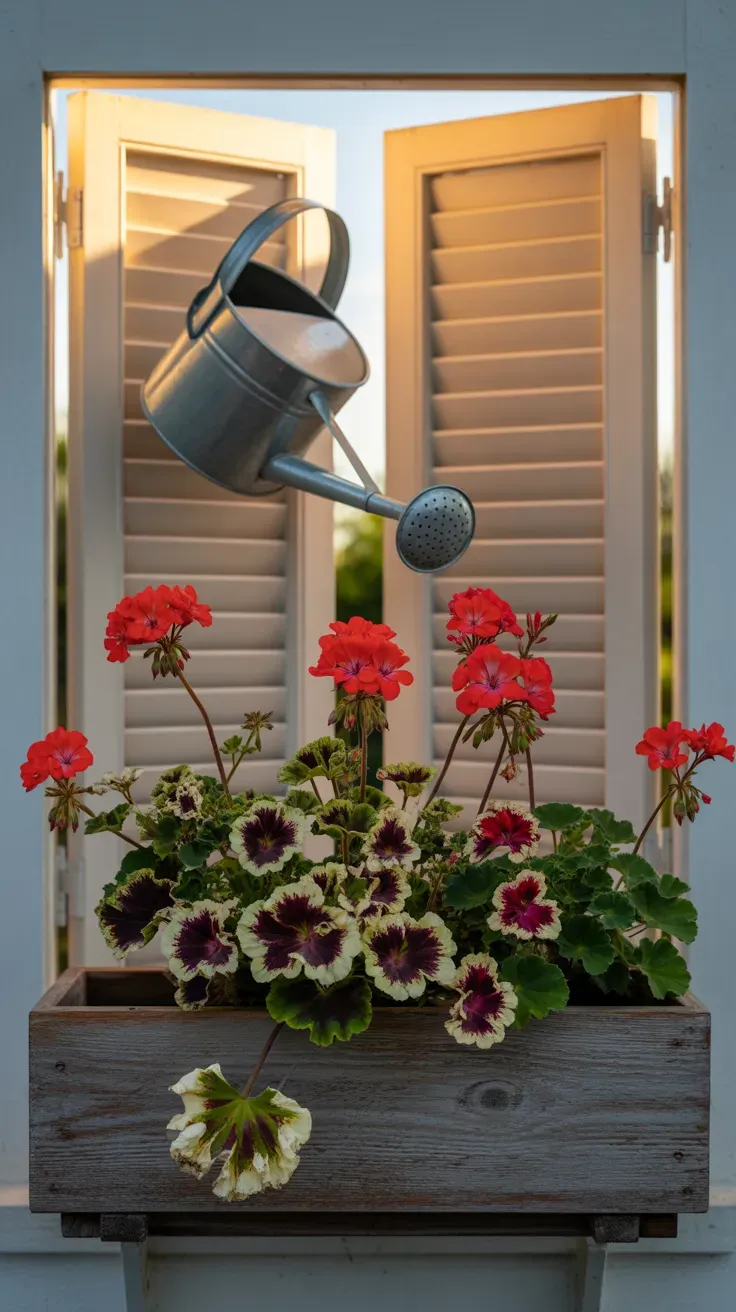
Zonal geraniums are workhorse continuous bloomers for a sunny windowsill or window box, producing rounded flower clusters in reds, pinks, and whites in overlapping waves as long as spent blooms are removed promptly.
Deadheading here isn’t optional the way it is for some plants — leaving spent flower clusters on the plant noticeably slows new bud formation within about two weeks, based on side-by-side pots I’ve compared where one got regular deadheading and one didn’t.
They tolerate a surprising amount of neglect on the watering front, actually blooming better slightly underwatered than kept constantly moist, which makes them forgiving for anyone who travels or forgets a watering day now and then.
Pro Tip: Snap off the entire spent flower stalk at its base, not just the individual florets, or the plant wastes energy maintaining a bare stem.
See our window box planting guide for pairing options. Gardeners’ World’s geranium care notes recommend regular deadheading as the single most effective way to extend bloom.
A five-minute weekly deadhead is genuinely all this plant asks for in return for months of color.
🛒 Shop This Idea
- Zonal geranium ‘Maverick Red’ plants — a heavy, reliable bloomer well suited to window boxes and pots. Shop on Amazon →
- Cedar window box planter with liner — classic housing for this plant’s trailing, bushy growth habit. Shop on Amazon →
- Fine-rose spout watering can, 1.5 gallon — gentle enough watering to avoid knocking blooms loose. Shop on Amazon →
- Geranium and bloom plant food, water-soluble — formulated specifically for the heavy repeat-bloom cycle this plant runs. Shop on Amazon →
- Ergonomic deadheading snips with soft grip — sized for the quick weekly deadheading this plant depends on. Shop on Amazon →
Tropical Hibiscus (Hibiscus Rosa-Sinensis)
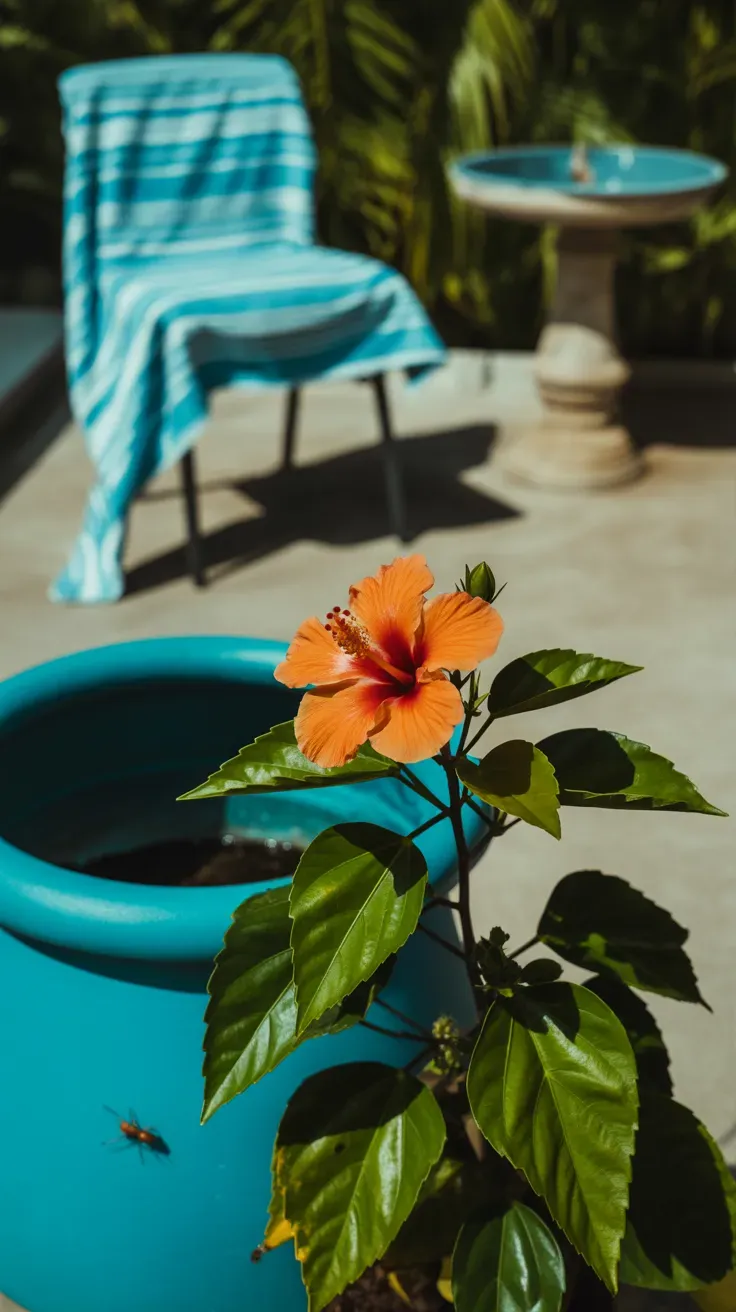
Tropical hibiscus produces individual blooms that only last a single day, which sounds discouraging until you realize a healthy plant opens new flowers daily through most of the warm season, creating an effect that reads as truly continuous.
Consistent moisture matters here more than for bougainvillea — hibiscus doesn’t want to dry out between waterings the way its drought-tolerant neighbors do, and a stressed, dry plant will drop buds before they even open.
Below about 50°F growth and bud formation both stall out, so this is strictly a warm-season outdoor bloomer or a bright indoor plant through winter in cooler climates, not a true four-season outdoor flower outside the tropics.
- Water when the top inch of soil is dry, never bone dry
- Full sun for at least 6 hours daily for best bud count
- Move indoors before nighttime temps drop below 50°F
- High-potassium bloom fertilizer every 2 weeks in active growth
Our tropical plant winter care guide covers the transition indoors in detail. SFGate’s Home Guide on tropical hibiscus confirms daily bloom turnover is normal and not a sign of plant stress.
Watching a new bloom open each morning is honestly one of the more rewarding daily garden habits I’ve kept.
🛒 Shop This Idea
- Hibiscus rosa-sinensis ‘Fiesta’ grafted plant — a heavy-budding tropical variety with vivid multicolor blooms. Shop on Amazon →
- Glazed ceramic patio planter, 14-inch — roomy enough for the vigorous root growth this plant produces. Shop on Amazon →
- High-potassium hibiscus bloom fertilizer — the bud-focused formula this daily-bloom cycle depends on. Shop on Amazon →
- Indoor-outdoor plant dolly with wheels — makes the seasonal move indoors before cold weather far easier. Shop on Amazon →
- Digital min/max outdoor thermometer — tracks overnight lows so you know exactly when to bring hibiscus indoors. Shop on Amazon →
Kalanchoe (Kalanchoe Blossfeldiana)
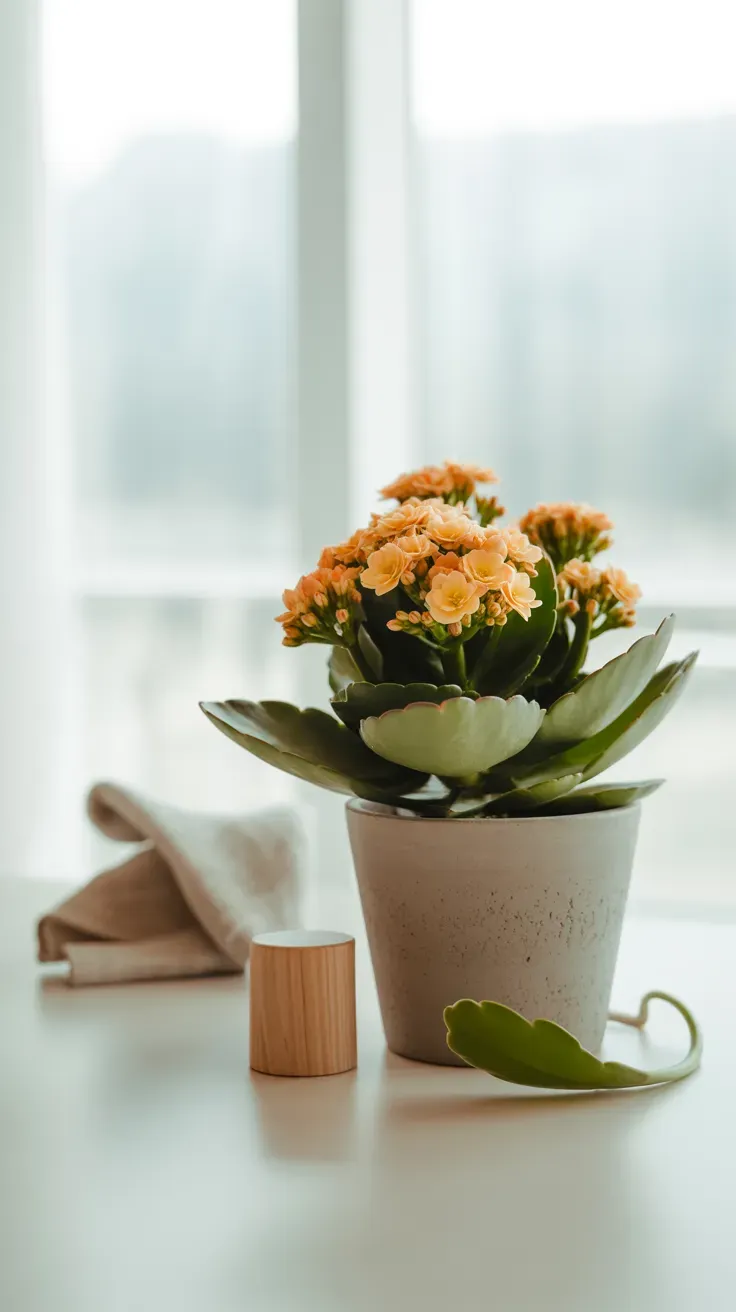
Kalanchoe is technically a short-day bloomer that naturally cycles through roughly six-to-eight-week flowering periods followed by shorter rest phases, but because those cycles overlap on a mature plant, it reads as blooming almost continuously in a bright window.
As a succulent, it’s remarkably forgiving of missed waterings — I’ve let mine go three weeks dry with no visible stress — which makes it one of the lowest-maintenance entries on this whole list.
To reset a bloom cycle that’s stalled, giving the plant roughly 14 hours of complete darkness nightly for two to three weeks can trigger a fresh flush, mimicking the shorter days that naturally cue flowering in its native habitat.
Pro Tip: Deadhead spent clusters at the stem, not individual florets, to keep the plant’s energy focused on the next bud set rather than maintaining old growth.
Check our low-maintenance succulent flower roundup for similar easy bloomers. The Almanac’s kalanchoe care notes describe this reset technique for stalled bloom cycles in detail.
For anyone who wants color without a demanding watering schedule, this is hard to beat.
🛒 Shop This Idea
- Kalanchoe blossfeldiana, mixed orange and yellow — a hardy, cyclical bloomer ideal for a bright but low-fuss windowsill. Shop on Amazon →
- Matte concrete succulent planter, 6-inch — a well-draining pot suited to this succulent’s root needs. Shop on Amazon →
- Fast-draining succulent and cactus soil mix — prevents the root rot risk that comes with kalanchoe’s forgiving watering schedule. Shop on Amazon →
- Blackout plant cover bag for bloom cycling — makes triggering the 14-hour darkness reset simple and consistent. Shop on Amazon →
- Succulent-formula liquid fertilizer — a light, appropriately diluted feed for this low-demand bloomer. Shop on Amazon →
Lantana
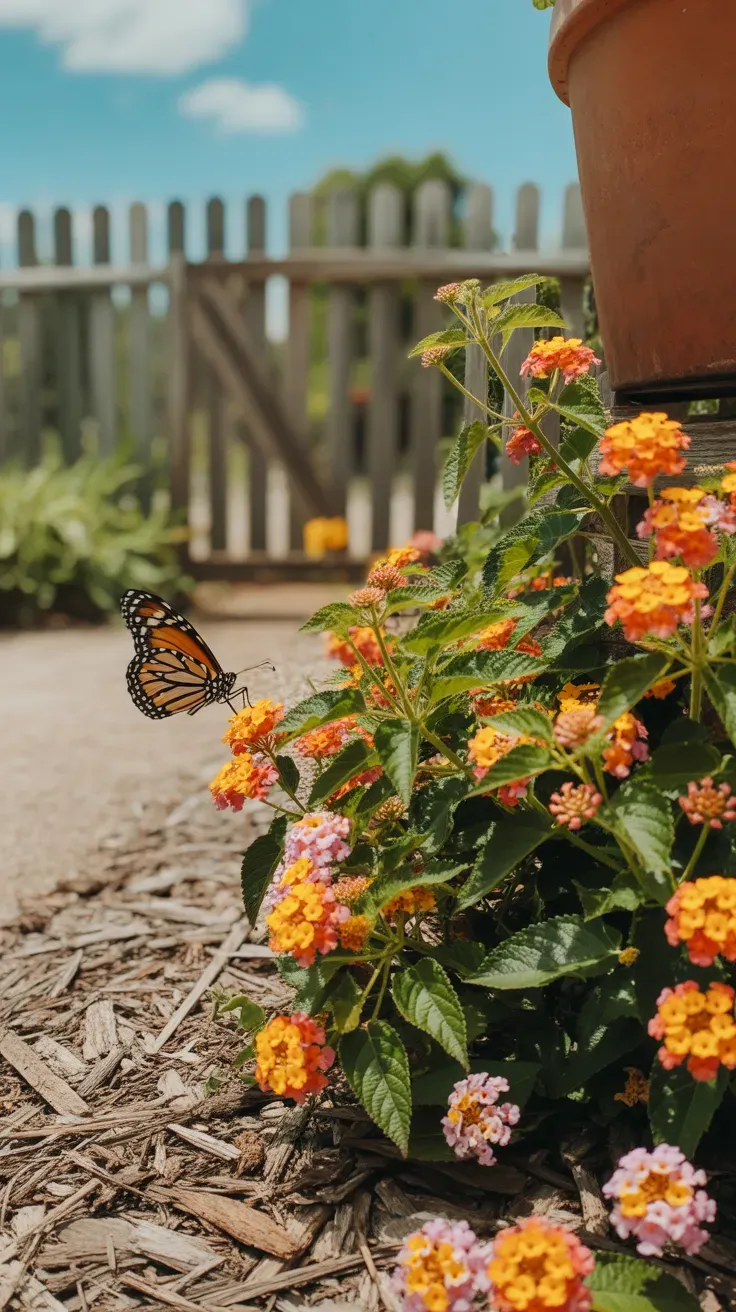
Lantana is one of the most reliably continuous bloomers for a hot, sunny spot, producing its signature multicolor flower clusters from spring through fall outdoors in warm climates and nearly nonstop in truly frost-free regions.
It genuinely thrives on heat and drought stress that would wilt more delicate flowers, making it a strong pick for a balcony or patio container that bakes in afternoon sun most gardeners find brutal for anything else.
In cooler climates it’s grown as an annual or overwintered indoors in a bright, cool spot, where it will bloom more sparingly but still rarely stop entirely if light remains strong through the darker months.
- Full sun, 6+ hours daily minimum
- Water deeply but infrequently once established
- Deadhead spent clusters to encourage the next flush
- Note: berries and foliage are toxic if ingested, keep away from pets
Our pollinator-friendly balcony container guide covers pairing lantana with other butterfly plants. The University of Florida IFAS Extension’s lantana profile notes near-continuous bloom in USDA zones 9 and warmer.
Butterflies and hummingbirds will find this plant faster than almost anything else on the list.
🛒 Shop This Idea
- Lantana camara ‘Miss Huff’ mixed-color plants — a heat-tolerant, heavy-blooming variety built for full-sun containers. Shop on Amazon →
- Large terracotta patio planter, 16-inch — enough root room for lantana’s vigorous, sprawling growth. Shop on Amazon →
- Drip irrigation kit for container gardens — supports the deep, infrequent watering this drought-tolerant bloomer prefers. Shop on Amazon →
- Butterfly and pollinator garden field guide — helps identify the visitors this nectar-rich bloomer attracts. Shop on Amazon →
- Pet-safe garden fencing stakes, low border — a practical way to keep curious pets away from lantana’s toxic berries. Shop on Amazon →
Phalaenopsis Orchid
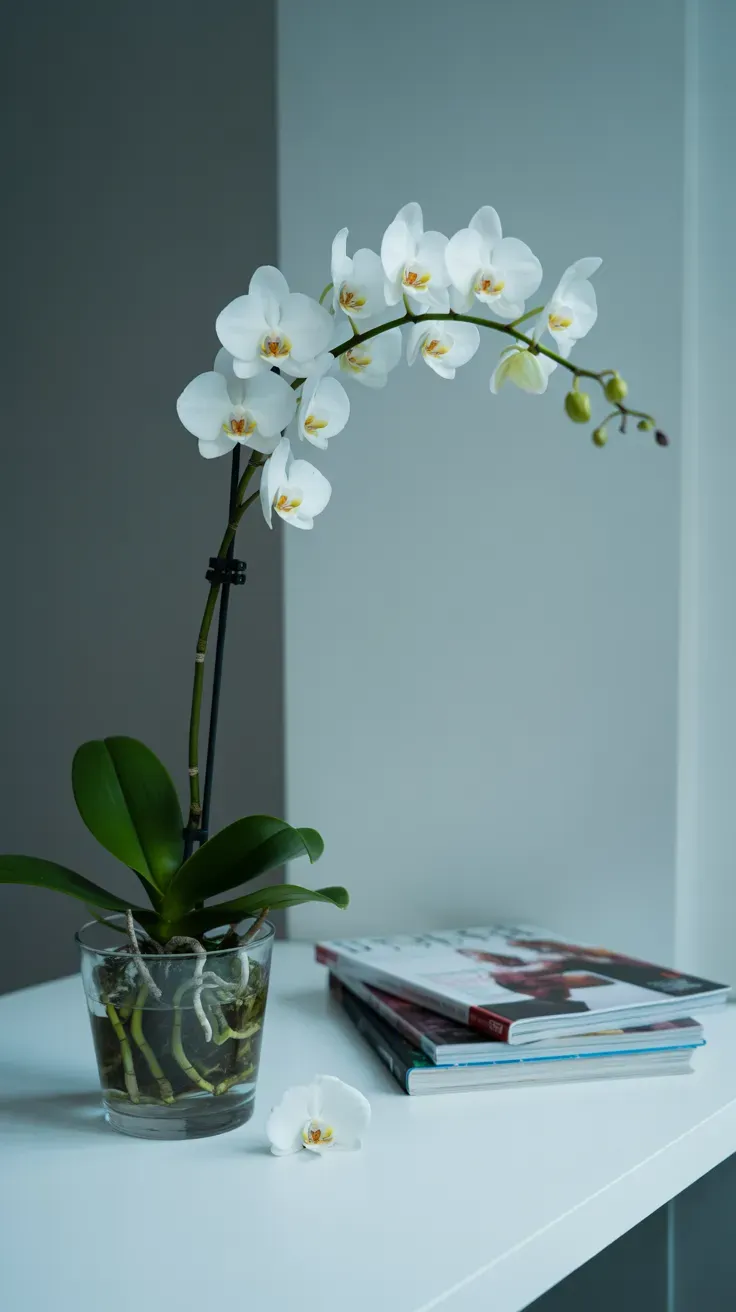
Phalaenopsis orchids don’t bloom continuously in the strictest sense, but a well-cared-for plant reliably reblooms two to three times a year, with each bloom spike holding its flowers open for two to three months — long enough that a small collection of two or three orchids staggered in bloom time genuinely reads as year-round color.
The most common mistake is discarding the plant after the first bloom fades, assuming it’s done. Cutting the spent spike back to just above a node, rather than at the base, often triggers a secondary spike and a second bloom cycle from the same stem within a couple of months.
Ice-cube watering is popular but not ideal — Phalaenopsis actually prefers a thorough lukewarm soak weekly, letting excess water fully drain rather than sitting in cold meltwater against the roots.
Pro Tip: A brief 10–15°F nighttime temperature drop in fall, easy to get near a cool window, is often the trigger a reluctant orchid needs to spike again.
See our orchid reblooming troubleshooting guide for stalled spikes. Gardeners’ World’s orchid care guide recommends cutting spent spikes above a node rather than removing them entirely.
Staggering a few orchids by bloom stage is one of the easiest ways to fake true year-round flowering indoors.
🛒 Shop This Idea
- Phalaenopsis orchid, white bloom, clear pot — a classic, widely available rebloomer suited to beginners. Shop on Amazon →
- Orchid bark potting mix, coarse grade — the chunky, fast-draining medium Phalaenopsis roots need. Shop on Amazon →
- Orchid-specific bloom booster fertilizer — formulated for the phosphorus needs of spike and rebloom production. Shop on Amazon →
- Sterile orchid pruning shears — clean, precise cuts above the node for triggering a secondary spike. Shop on Amazon →
- Clear plastic orchid pot with drainage slots — lets you monitor root health, essential for catching watering issues early. Shop on Amazon →
Wave Petunia
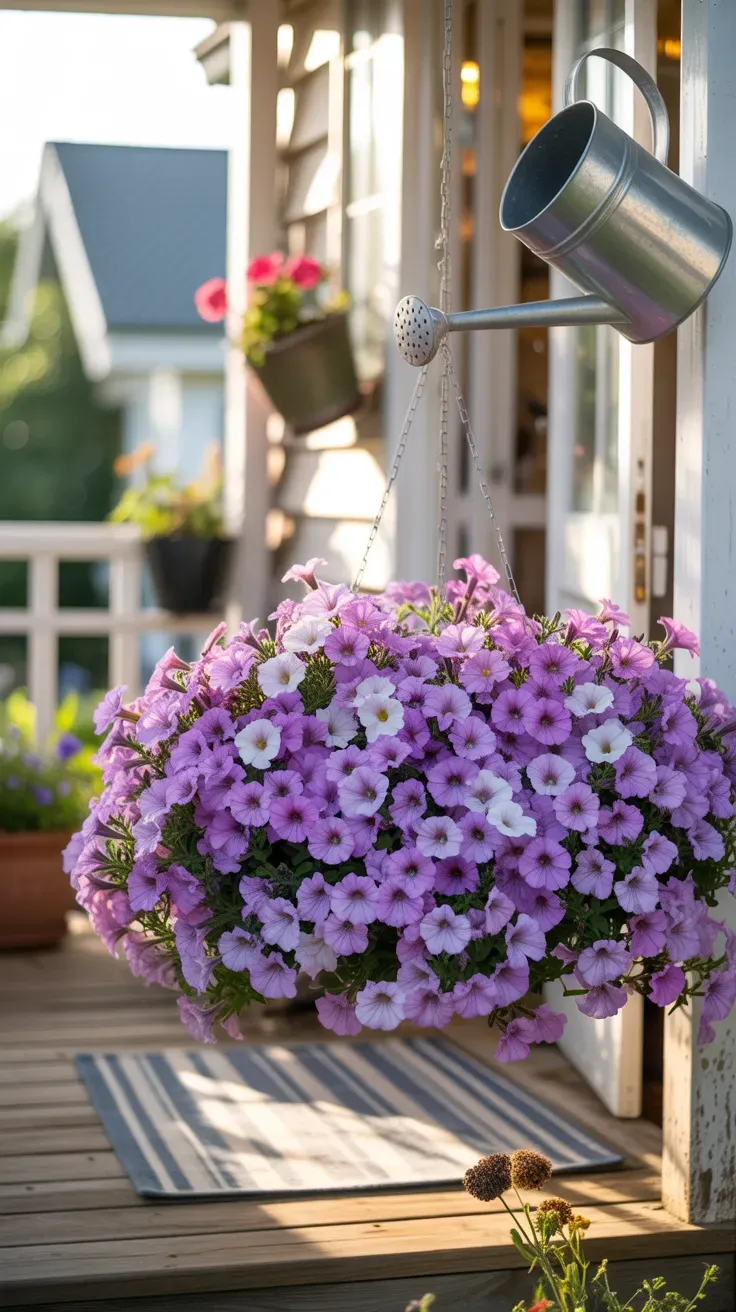
Wave petunias were specifically bred to be self-cleaning and low-maintenance compared with older petunia varieties, spreading vigorously and blooming in continuous waves from planting until frost without the constant deadheading traditional petunias demand.
They’re heavy feeders relative to their size, and a hanging basket or rail planter dries out fast in summer heat, so daily watering during peak summer isn’t unusual for a fully mature basket, especially in a hot climate or windy balcony spot.
Mid-season, growth can get leggy and bloom density drops even with good care. A hard trim back by about a third in midsummer looks drastic for a week or two but reliably triggers a fuller, heavier second flush through fall.
- Full sun, minimum 6 hours daily
- Water daily in peak summer heat for hanging baskets
- Feed weekly with diluted liquid fertilizer during bloom
- Mid-season trim-back by ⅓ to renew density
Our hanging basket container recipe guide has pairing ideas for wave petunias. BHG’s guide to petunia care confirms wave varieties bloom continuously without deadheading, unlike grandiflora types.
Few flowers fill a hanging basket with this much color for this little fuss.
🛒 Shop This Idea
- Wave petunia purple, hanging basket-ready plants — bred specifically for the continuous, self-cleaning bloom this technique relies on. Shop on Amazon →
- Wire hanging basket with coco liner, 14-inch — classic housing that lets the cascading growth spill freely. Shop on Amazon →
- Water-retaining crystals for hanging baskets — helps stretch the daily watering demand of a fully grown basket. Shop on Amazon →
- Weekly liquid bloom fertilizer, water-soluble — matches this heavy feeder’s fast weekly feeding schedule. Shop on Amazon →
- Adjustable S-hook basket hangers, set of 4 — practical hardware for hanging and repositioning baskets through the season. Shop on Amazon →
Impatiens
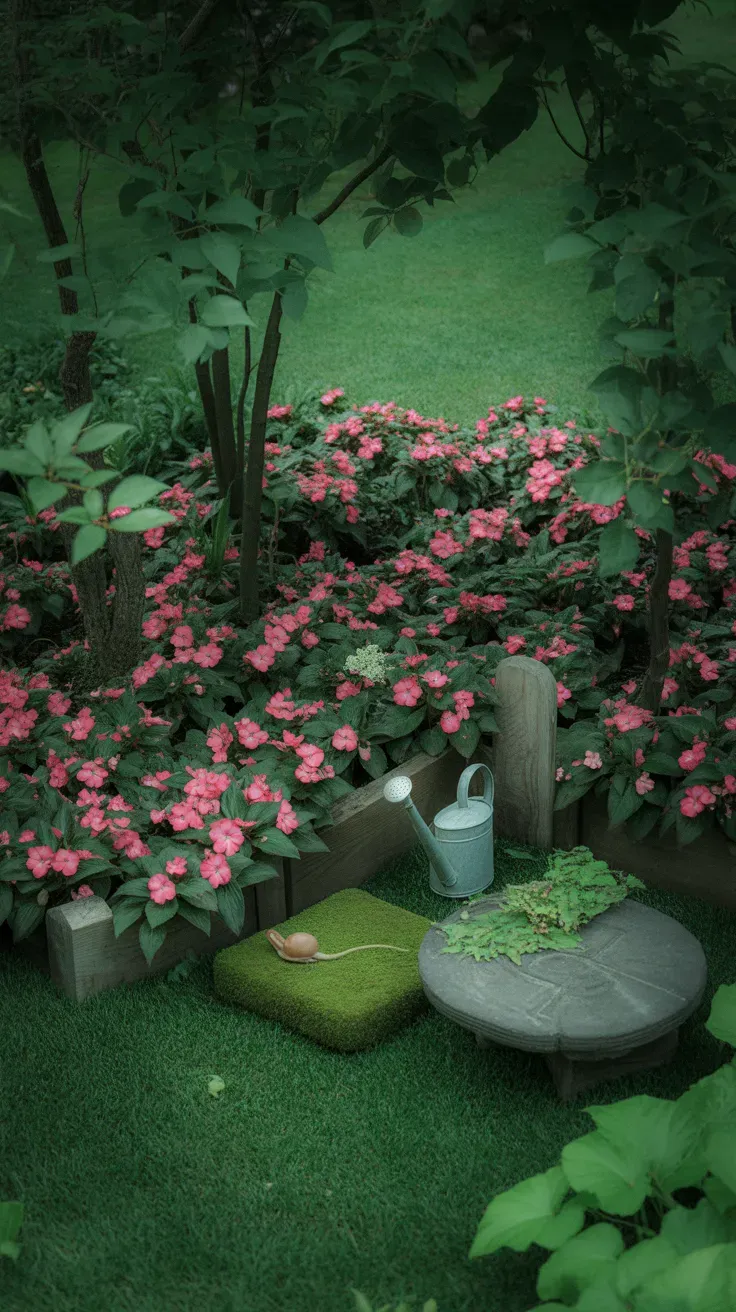
Impatiens are the reliable answer to “what blooms continuously in shade,” a spot most other flowers on this list simply can’t fill, producing a dense, self-cleaning carpet of color from planting through the first frost.
Because they’re self-cleaning, spent blooms drop on their own rather than needing manual deadheading, which makes a large shaded bed of impatiens genuinely low-effort compared with sun-loving continuous bloomers that demand weekly attention.
Consistent moisture is the real requirement — impatiens wilt dramatically within hours of drying out, though most recover fully with a thorough watering, and mulching the bed cuts down noticeably on how often that happens.
Pro Tip: Watch for sudden wilting and yellowing even with adequate water, which can signal impatiens downy mildew — remove affected plants promptly rather than treating, since fungicide options are limited.
Our shade garden design guide covers companion planting for deep-shade beds. Penn State Extension’s notes on impatiens downy mildew explain the disease risk in more humid climates.
For a shady spot that other continuous bloomers can’t handle, this is still the standby.
🛒 Shop This Idea
- Impatiens walleriana mixed-color bedding plants — self-cleaning, continuous shade bloomers sold in ready-to-plant flats. Shop on Amazon →
- Shredded cedar mulch, 2 cu ft bag — helps the bed retain the consistent moisture this plant demands. Shop on Amazon →
- Soaker hose for shade bed irrigation — delivers steady moisture directly to roots without wetting foliage. Shop on Amazon →
- Balanced slow-release bedding plant fertilizer — a light, steady feed suited to a dense continuous-bloom bed. Shop on Amazon →
- Downy mildew-resistant New Guinea impatiens plants — a disease-resistant alternative worth mixing in for humid climates. Shop on Amazon →
Angelonia (Summer Snapdragon)
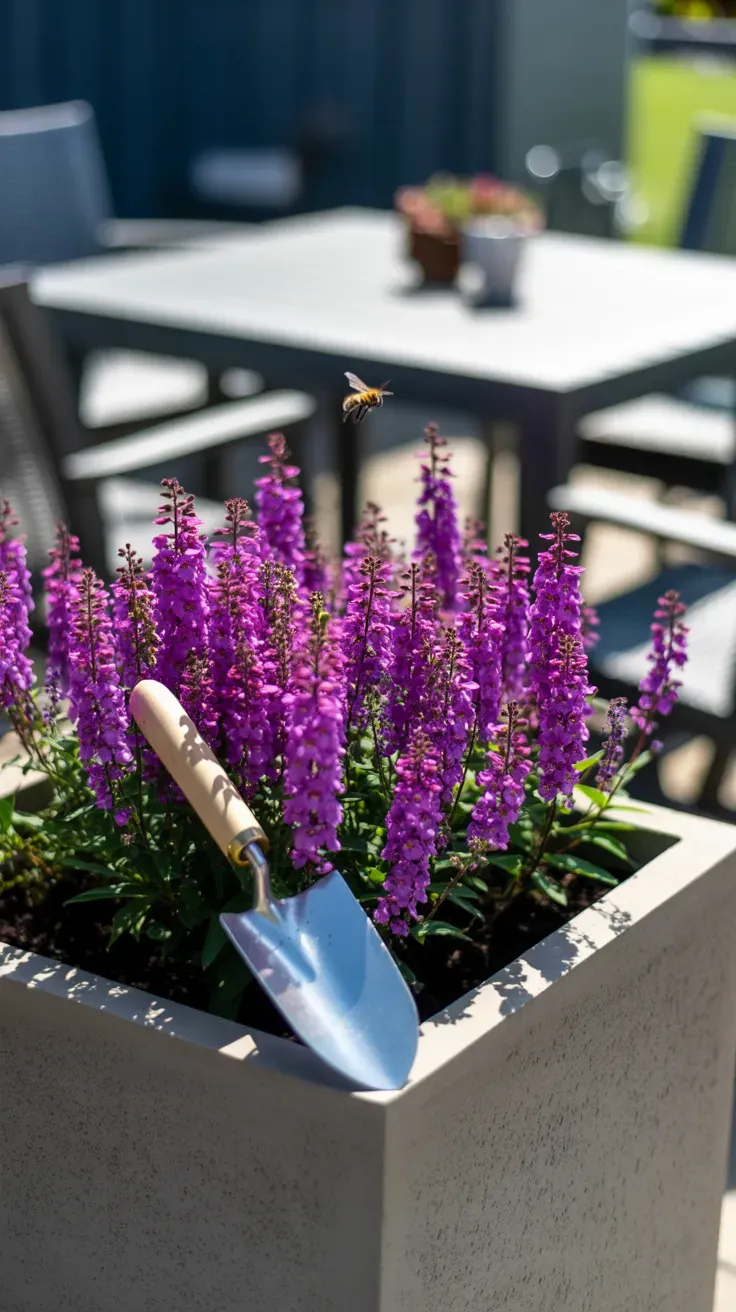
Angelonia, often called summer snapdragon, is one of the most heat-tolerant continuous bloomers available, holding steady through the exact stretch of brutal midsummer heat that stalls out petunias and many other annuals.
Its upright flower spikes are genuinely self-cleaning in most conditions, dropping spent blooms without intervention, though an occasional light trim of the spike tips does encourage branching and a fuller second flush later in the season.
It handles both drought and humidity better than most flowers on this list, making it a strong pick for a hot, exposed balcony or a humid southern climate where other continuous bloomers tend to struggle by midsummer.
- Full sun, thrives in extreme summer heat
- Drought-tolerant once established, humidity-tolerant too
- Minimal deadheading required, self-cleaning habit
- Light spike-tip trim mid-season for fuller rebloom
Check our heat-tolerant balcony flower guide for pairing suggestions. Almanac’s notes on angelonia as a heat-tough annual confirm it outperforms many summer annuals in extreme heat.
For a balcony that bakes all summer, this is the flower that keeps going when others quit.
🛒 Shop This Idea
- Angelonia angustifolia ‘Serena Purple’ plants — a compact, heat-tough variety bred for continuous container bloom. Shop on Amazon →
- Modern square concrete planter, 10-inch — a clean, heat-retaining container suited to full-sun exposure. Shop on Amazon →
- Drought-tolerant container potting mix — matches this plant’s preference for a well-draining, less-fussy root zone. Shop on Amazon →
- Compact hand trowel with measurement markings — sized for the light spike-tip trims that encourage rebloom. Shop on Amazon →
- UV-resistant outdoor plant saucer, 10-inch — protects a hot balcony surface beneath a heat-loving container bloomer. Shop on Amazon →
Getting Started With Flowers That Bloom All Year Round
The easiest first step is picking just one plant from this list that matches the light you actually have, rather than trying to fill a windowsill or patio with all twelve at once. A bright east or south-facing window suits an African violet or kalanchoe; a hot, sunny balcony suits lantana or angelonia.
The most common beginner mistake is placing a sun-loving pick like bougainvillea or hibiscus in a dim spot and blaming the plant when blooms don’t appear — light, not fertilizer, is almost always the real limiting factor. Start by buying one already-blooming plant and one bag of appropriate potting mix, and resist the urge to fertilize heavily right away.
Give a new plant two to three weeks to settle into its new light and watering routine before expecting a fresh bloom cycle, and expect the first true “continuous” rhythm to become obvious by around eight weeks in.
🛒 Starter Pick
- Light meter app-compatible lux sensor — the fastest way to actually confirm your windowsill or balcony gets the light a given flower needs. Shop on Amazon →
Frequently Asked Questions
What flower blooms the longest without stopping?
Wax begonias and impatiens come closest to truly nonstop bloom, cycling through flowers from planting until the first frost outdoors or continuously indoors in bright light. Both are self-cleaning, so they don’t require constant deadheading to keep the cycle going.
Can any flower actually bloom 12 months a year indoors?
African violets, kalanchoe, and anthuriums come the closest to genuine 12-month indoor blooming when given consistent bright indirect light and regular light feeding. Even these plants may take brief 2–4 week rest periods between flushes, which is normal rather than a sign of a problem.
Do year-round bloomers need more fertilizer than seasonal flowers?
Generally yes, since continuous flowering draws more consistently on the plant’s energy reserves than a single seasonal bloom period. Most on this list do well with a diluted balanced or bloom-specific fertilizer every 2–4 weeks during active growth, tapering off during any rest phase.
Which of these flowers survives winter outdoors in cold climates?
None of the tropical entries — bougainvillea, hibiscus, and lantana — survive freezing temperatures outdoors and must come inside or be treated as annuals in cold-winter zones. Impatiens, wax begonias, and angelonia are also grown as annuals outside frost-free climates, though they can be overwintered indoors as houseplants.
Why did my “continuous bloomer” suddenly stop flowering?
Insufficient light is the most common cause, especially as daylight hours shorten in fall and winter or if a plant gets shifted to a dimmer spot. Check light exposure first, then rule out root-bound pots, missed fertilizing, and pest issues like spider mites before assuming the plant is simply resting.
A Few Final Thoughts
None of these 12 flowers bloom with zero interruption, and any list claiming otherwise is overselling it — but African violets, kalanchoe, and anthuriums come remarkably close indoors, while bougainvillea, hibiscus, and lantana deliver the same effect outdoors wherever winters stay mild. The real secret isn’t a special plant so much as matching light conditions honestly to what each flower actually needs, then keeping up with the small, repeatable habits — deadheading, light feeding, the occasional trim — that keep each bloom cycle rolling into the next. Pick one or two that fit your actual windowsill or balcony rather than chasing all twelve at once, and you’ll likely have more color on more days of the year than you expected.