
There’s a particular kind of satisfaction in cutting your own basket material from a hedgerow or riverbank instead of ordering reed online. The first time I pulled a tangle of honeysuckle off a fence post and turned it into a lopsided but functional berry basket, I understood why foragers get a little obsessive about this craft. Some materials, like willow, need almost no processing. Others, like cattail, will mildew on you if you skip the drying step. This guide walks through 15 plants and vines worth foraging, where to find them, and how to prep each one so your basket actually holds together. Ready? Let’s explore all 15 of them.
Quick Answer: For beginners, black willow and honeysuckle vine are the most forgiving — both bend without cracking and need minimal prep. If you want strength and rot-resistance for outdoor baskets, river cane and red-osier dogwood are the better long-term choice. Avoid harvesting invasive species like kudzu or Oriental bittersweet from protected land, but on your own property they’re free, abundant material.
Why Foraging Basket Weaving Materials Is Worth Your Time
Buying reed or cane from a craft supplier works fine, but it strips out the part of basketry that connects you to a place and a season. Foraged materials carry the texture of where they grew — willow cut from a creek bank bends differently than willow bought in a bundle, and you learn that difference by hand, not by reading about it.
There’s also a real cost benefit. A bundle of dried reed can run $15-20 for a single small basket’s worth, while a Saturday afternoon along a fence line or riverbank can supply enough honeysuckle or grapevine for a season of weaving, completely free.
A lesser-known fact: many of the best weaving vines are considered invasive nuisances by land managers. Kudzu, Oriental bittersweet, and Japanese honeysuckle are aggressively removed from natural areas, which means foraging them for craft use is often actively encouraged rather than restricted.
This approach suits patient hobbyists, homesteaders, and anyone who wants a low-cost entry into a traditional craft. It’s less ideal if you need consistent, uniform material fast — foraged stock varies batch to batch in a way commercial reed never does.
At a Glance
- Black willow bends fresh off the cut with zero soaking required, making it the fastest material to start with.
- Wild grapevine wreaths and baskets can last 15+ years indoors if the bark is left intact and untreated.
- Cattail leaves must be dried for 2-3 weeks before use or they’ll shrink and warp your finished piece.
- River cane, once split and scraped, produces some of the strongest, flattest ribs of any wild material in North America.
- Kudzu vine, often treated as a pest, softens into a leather-like weaving fiber after a 20-minute simmer.
At a Glance Comparison
| Material | Best Season to Harvest | Prep Needed | Difficulty | Best Use |
| Black Willow | Late winter (dormant) | Minimal, use fresh | Beginner | Round baskets |
| Honeysuckle Vine | Fall–early winter | Strip leaves, coil | Beginner | Rustic baskets |
| Wild Grapevine | Fall–winter | None, use fresh or dried | Beginner | Wreaths, frames |
| Kudzu Vine | Summer | Simmer, split fiber | Intermediate | Flat mats |
| Cattail Leaves | Late summer | Dry 2–3 weeks | Beginner | Woven seats |
| American Bittersweet | Fall–winter | None, use fresh | Beginner | Wreath bases |
| River Cane | Fall–winter | Split, scrape nodes | Advanced | Ribs, structure |
| Corn Husks | Harvest season | Dry, re-wet to soften | Beginner | Small baskets |
| Daylily Leaves | Late summer | Dry, then dampen | Beginner | Fine coiling |
| Iris Leaves | Late summer | Dry flat, dampen | Intermediate | Flat weaving |
| Pine Needles | Year-round | Soak or dry-coil | Intermediate | Coiled baskets |
| Birch Bark | Spring (sap flow) | Peel, flatten, dry | Advanced | Rigid vessels |
| Red-Osier Dogwood | Late winter | Strip bark if desired | Beginner | Ribs, spokes |
| American Wisteria | Fall–winter | None, use fresh | Intermediate | Large frames |
| Soft Rush | Summer | Dry, then rewet | Beginner | Fine coiling |
15 Plants and Vines to Forage for Basket Weaving
1. Black Willow (Salix nigra)
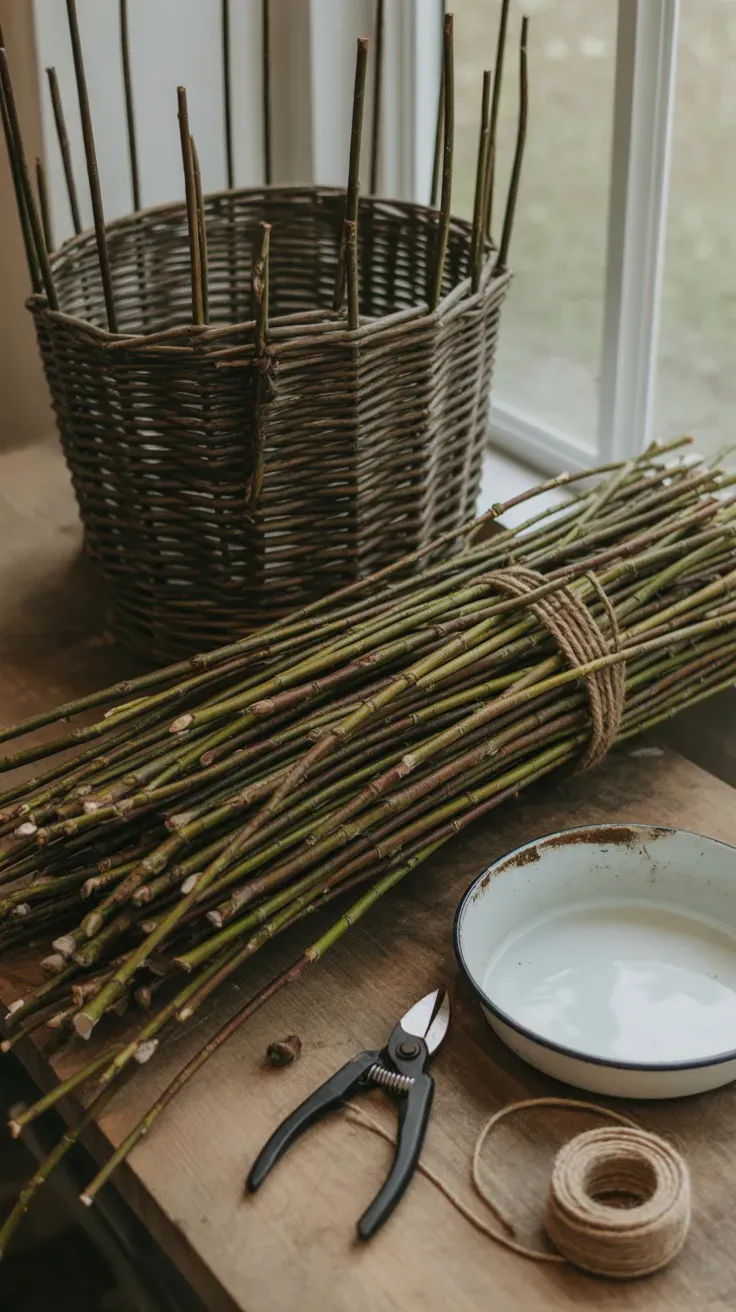
Black willow is the classic starter material for basket weaving because it bends fresh, without soaking, right after you cut it.
Harvest one-year-old shoots in late winter while the plant is dormant, ideally stems under a half-inch thick and at least two feet long. Cut at a slant just above a bud so the plant regrows cleanly next season. Fresh willow weaves immediately, but if it sits more than a day, a 20-minute soak in warm water brings the flexibility right back.
My first willow basket dried lopsided because I wove it too tightly on one side — willow shrinks slightly as it cures, so leave a hair of slack or your shape will pull.
Pro Tip: Harvest willow only from November through March. Cutting in summer removes the leaves the tree needs to store energy, weakening it for next year’s growth.
Willow grows along nearly every creek and pond edge in temperate North America, so it’s usually free for the asking on private land.
Learn more about willow basket structures and see the RHS guide to growing and coppicing willow.
2. Japanese Honeysuckle Vine (Lonicera japonica)
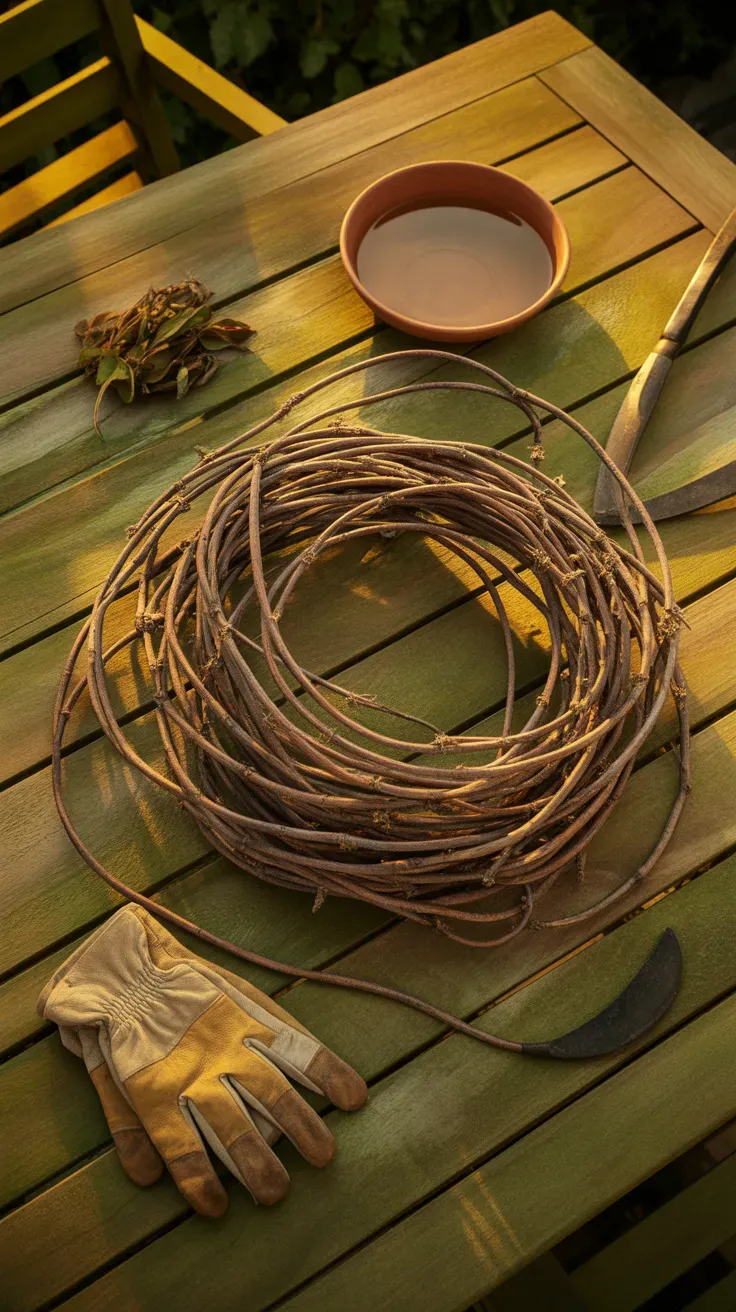
Honeysuckle vine is invasive across much of the eastern and southern US, which makes it one of the most guilt-free materials on this list.
Look for it tangled in fence lines and forest edges, and pull long unbranched runners that haven’t woodied yet. Strip the leaves by running the vine through a closed fist, then coil it loosely so it doesn’t kink while drying. The bark stays on and gives the finished basket a warm, honey-brown color that darkens further with age.
Fresh honeysuckle is pliable enough to weave right away, but older, thicker vines benefit from a 30-minute soak.
Vines under a quarter-inch make tight, detailed weaves, while thicker runners work better as structural ribs. Because it’s considered a nuisance species by most extension offices, cutting it on private land rarely raises any concern.
Compare honeysuckle to other vine materials and check Missouri Botanical Garden’s notes on invasive honeysuckle.
3. Wild Grapevine (Vitis riparia)
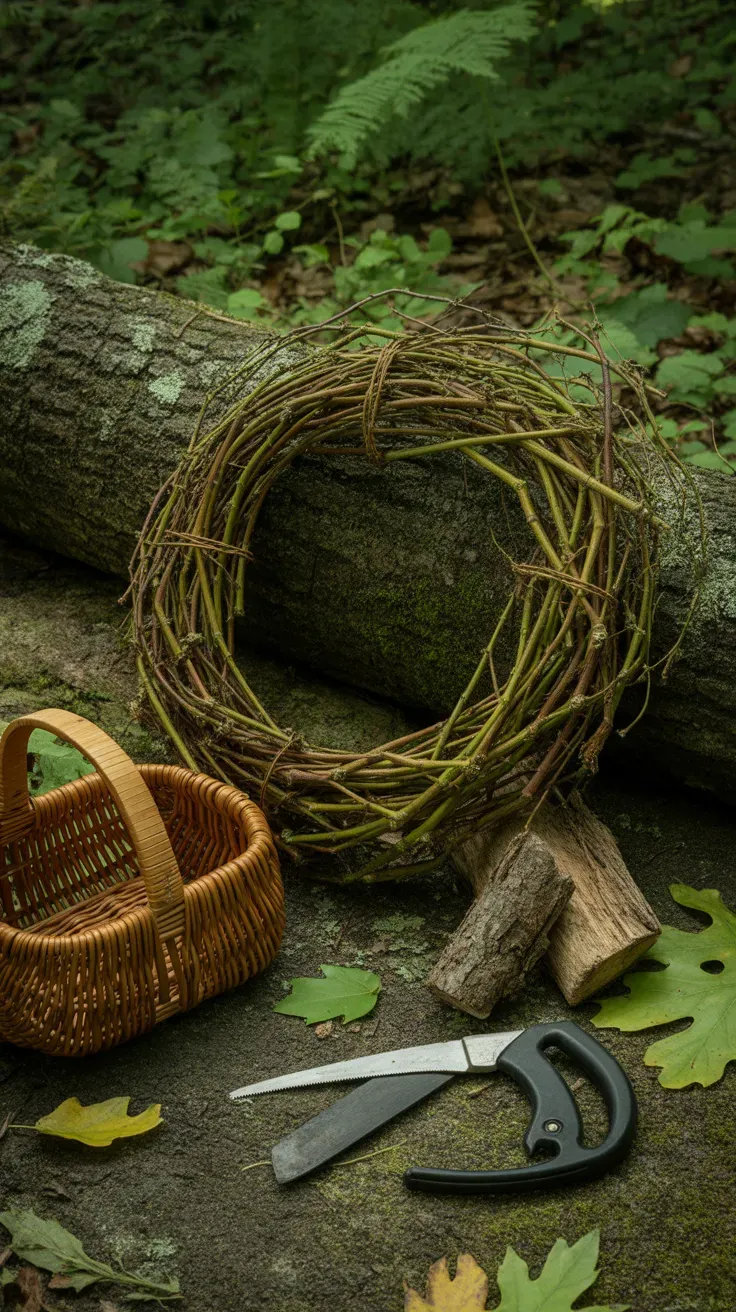
Grapevine is durable enough to shape into wreaths and basket frames that hold their form for over a decade with no soaking required at harvest.
Find it climbing trees and fences in fall or winter when the leaves have dropped and the vine is easier to spot. Cut the thickest runners you can bend into a circle without cracking, usually under a half-inch in diameter, and coil them immediately while still green. The bark is meant to stay on; it peels naturally over the years and adds character rather than weakness.
I once tried weaving grapevine the same week I cut it and split three pieces before realizing thicker sections need a few days to relax before tight bending.
Pro Tip: Store finished grapevine coils somewhere dry but not heated, like an unheated shed. Indoor heat dries the vine too fast and it becomes brittle within weeks.
See how grapevine pairs with willow in mixed baskets and read Gardeners’ World on identifying wild grapevine.
4. Kudzu Vine (Pueraria montana)
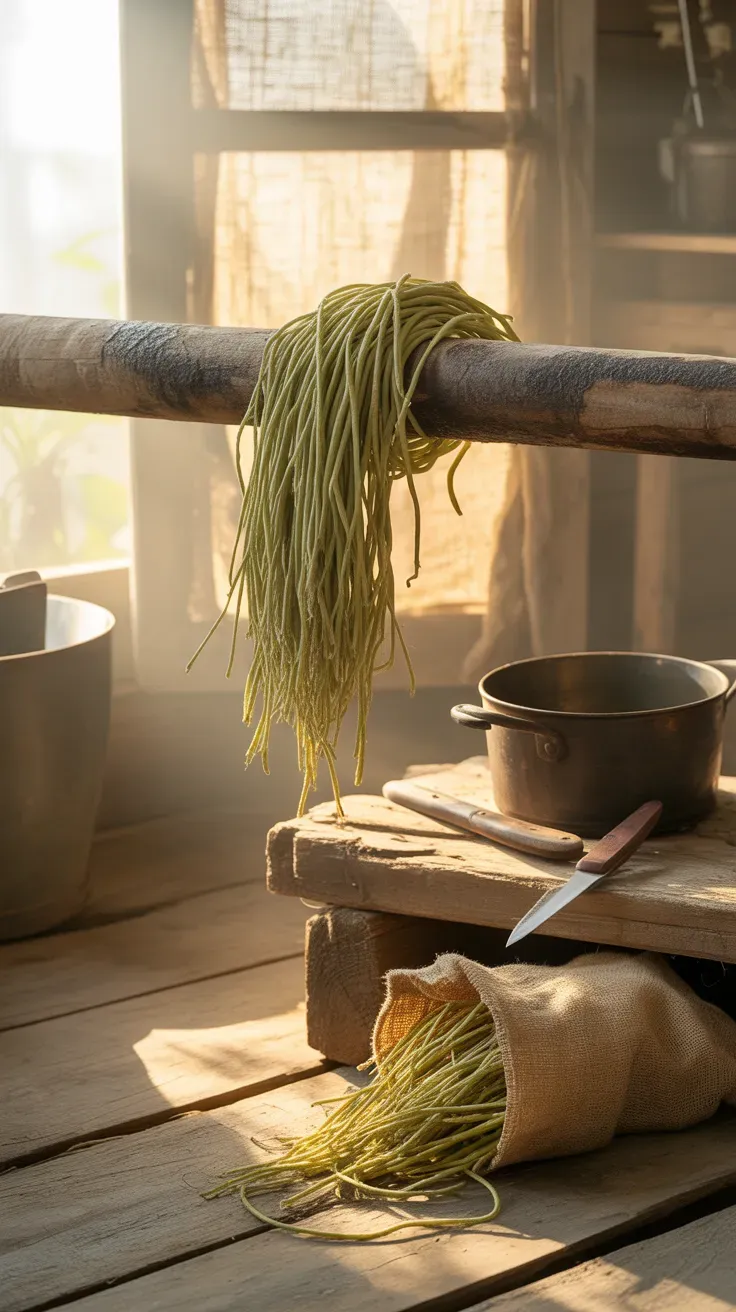
Kudzu is famously invasive in the American South, and its inner bark strips into a strong, leather-like weaving fiber once processed.
Harvest thick summer vines, simmer them in water for about 20 minutes to loosen the bark, then peel and split the fibers into ribbons. The fiber needs to dry fully before storage or it molds within days in humid climates. Dried kudzu fiber rehydrates in a quick soak whenever you’re ready to weave.
The first batch I processed, I under-simmered it by half the time and spent an hour fighting bark that wouldn’t separate cleanly from the wood.
- Works well: flat woven mats, bag straps, wide plaited bases
- Struggles with: tight, detailed coiling — the fiber is too wide and stiff
Because kudzu covers an estimated 7 million acres in the Southeast, land managers generally welcome its removal.
Read our full kudzu fiber processing walkthrough and see University of Florida Extension’s kudzu management guide.
5. Cattail Leaves (Typha latifolia)
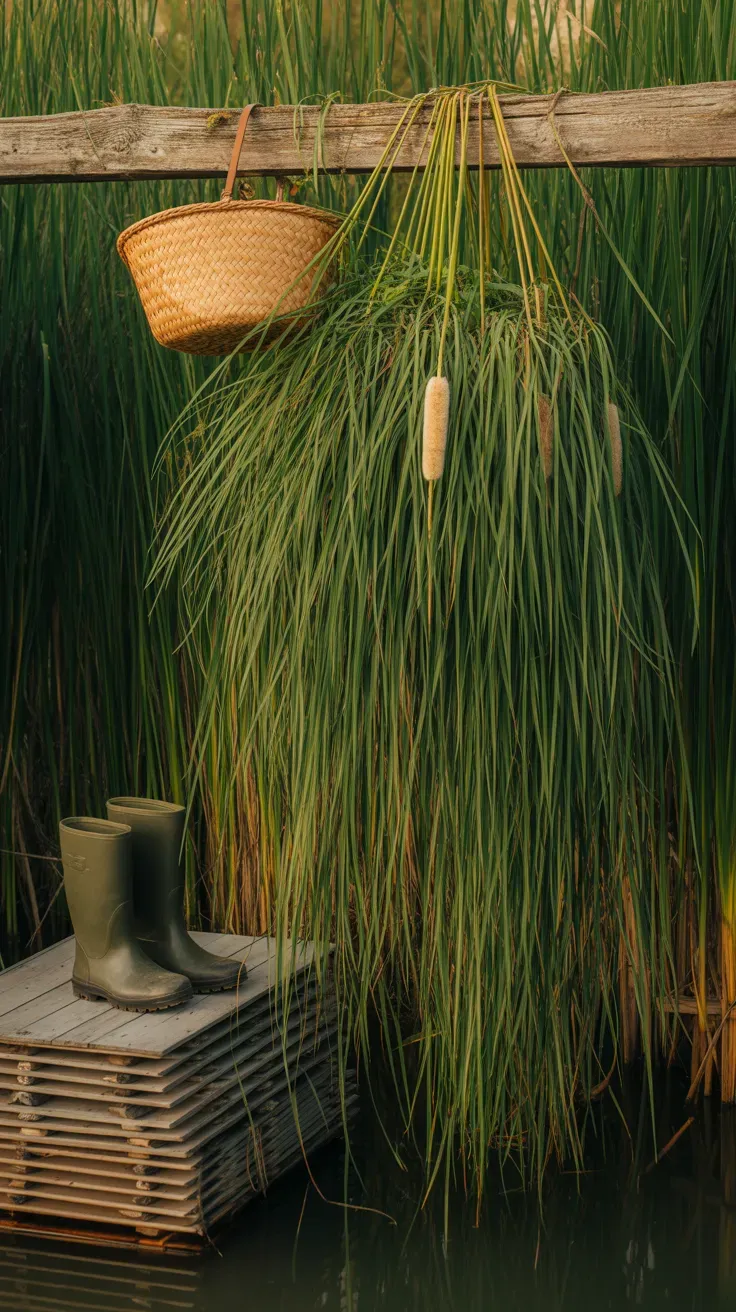
Cattail leaves weave into flexible, water-resistant mats and basket seats once properly cured, a technique used by Indigenous basket makers for centuries.
Cut the long blade-like leaves at the base in late summer, choosing ones without brown tips or insect damage. Lay them flat to dry for two to three weeks; skipping this step means the leaves shrink after weaving and your basket loosens within a month. Once dry, dampen the leaves for about an hour before working to restore flexibility.
Pro Tip: Dry cattail leaves in a single layer, not bundled. Bundled leaves trap moisture and develop mold spots you won’t notice until you’re mid-weave.
Cattail stands are common at pond and marsh edges, and a single stand can supply enough leaf material for several projects each season.
Browse our marsh and wetland foraging guide and check Penn State Extension on cattail identification.
6. American Bittersweet (Celastrus scandens)
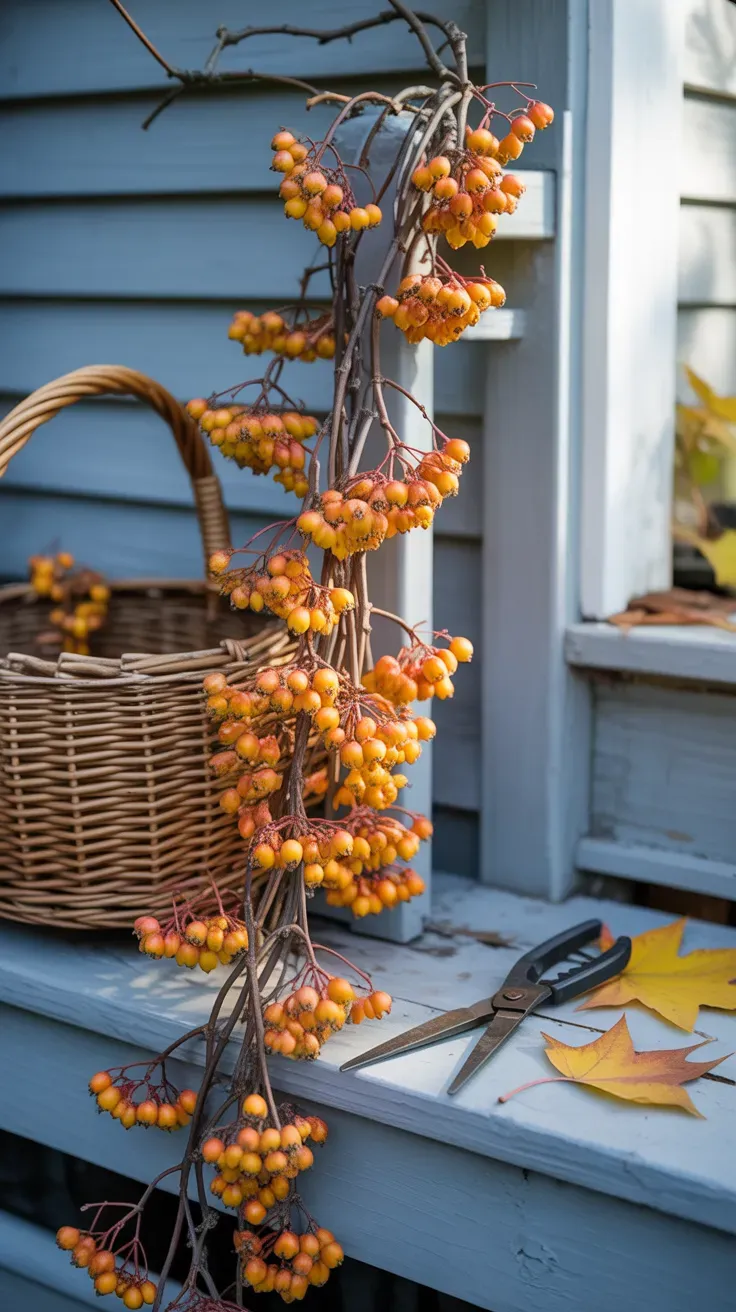
American bittersweet weaves easily fresh off the vine and its bright orange fall berries make wreath bases genuinely decorative on their own.
Look for it twining up trees and fences, and be certain you’ve found the native species — Oriental bittersweet, a lookalike invasive, has berries clustered along the whole stem rather than only at the tips. Cut runners in fall or early winter after the leaves drop, and use them fresh since the vine turns brittle once fully dry.
The pro insight here is patience: bittersweet cracks if bent too sharply in one motion, so work it into a curve gradually over several passes rather than forcing a tight loop immediately.
Native American bittersweet populations have declined significantly due to competition from the Oriental variety, so foraging responsibly and correctly identifying the species matters more here than with most plants on this list.
Learn to tell native and invasive bittersweet apart and reference Missouri Botanical Garden’s bittersweet species comparison.
7. River Cane (Arundinaria gigantea)
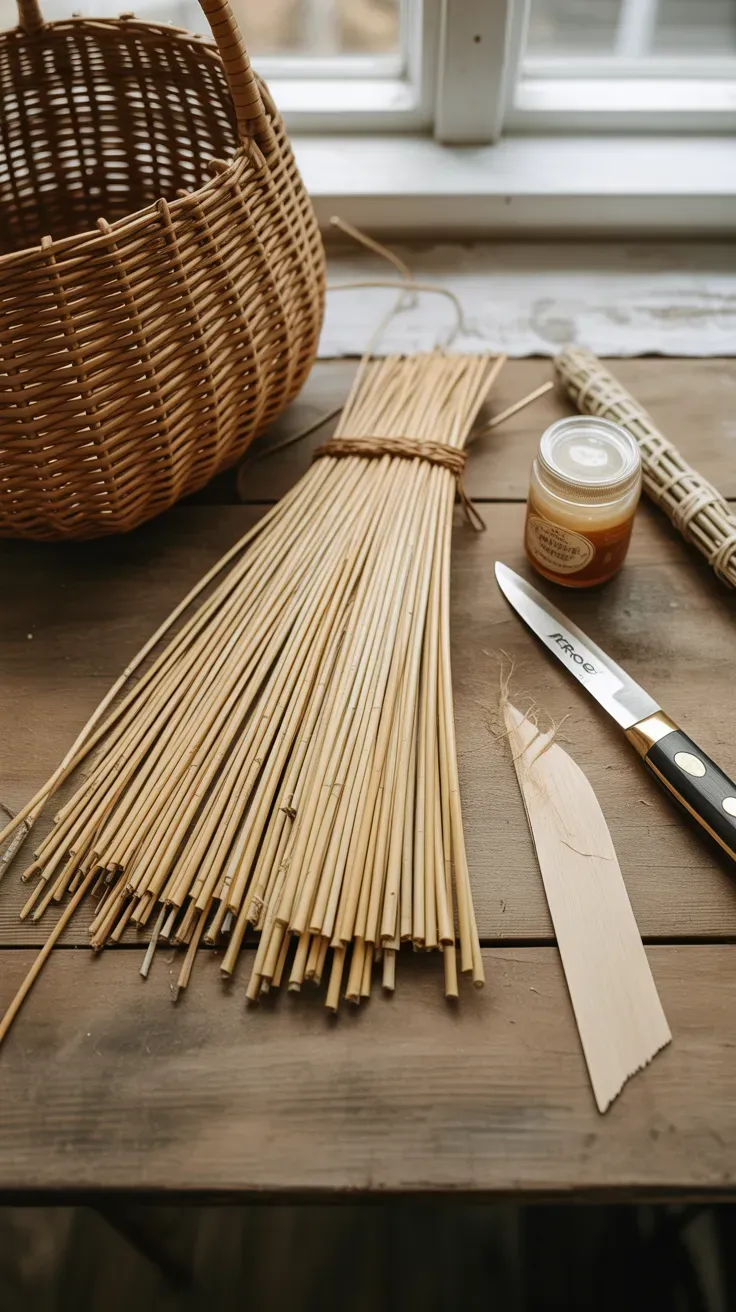
River cane produces the strongest, flattest ribs of any material on this list, which is why it’s central to Southeastern Indigenous basketry traditions going back centuries.
Harvest cane in fall or winter, choosing stalks at least an inch thick with long, straight sections between nodes. Split each stalk into quarters with a froe or sharp knife, then scrape the pithy inner surface flat with the knife’s edge. This scraping step is what separates usable splits from ones that snap under tension — skip it and you’ll break more cane than you weave.
- Beginner approach: buy pre-split cane to learn the weave pattern first
- Advanced approach: split and scrape your own from freshly cut stalks
River cane canebrakes have shrunk to under 2% of their historic range, so harvest only from stands you know are stable or actively managed, never from wild remnant populations.
See our river cane splitting technique guide and read SFGate Home Guide on native cane species.
8. Corn Husks (Zea mays)
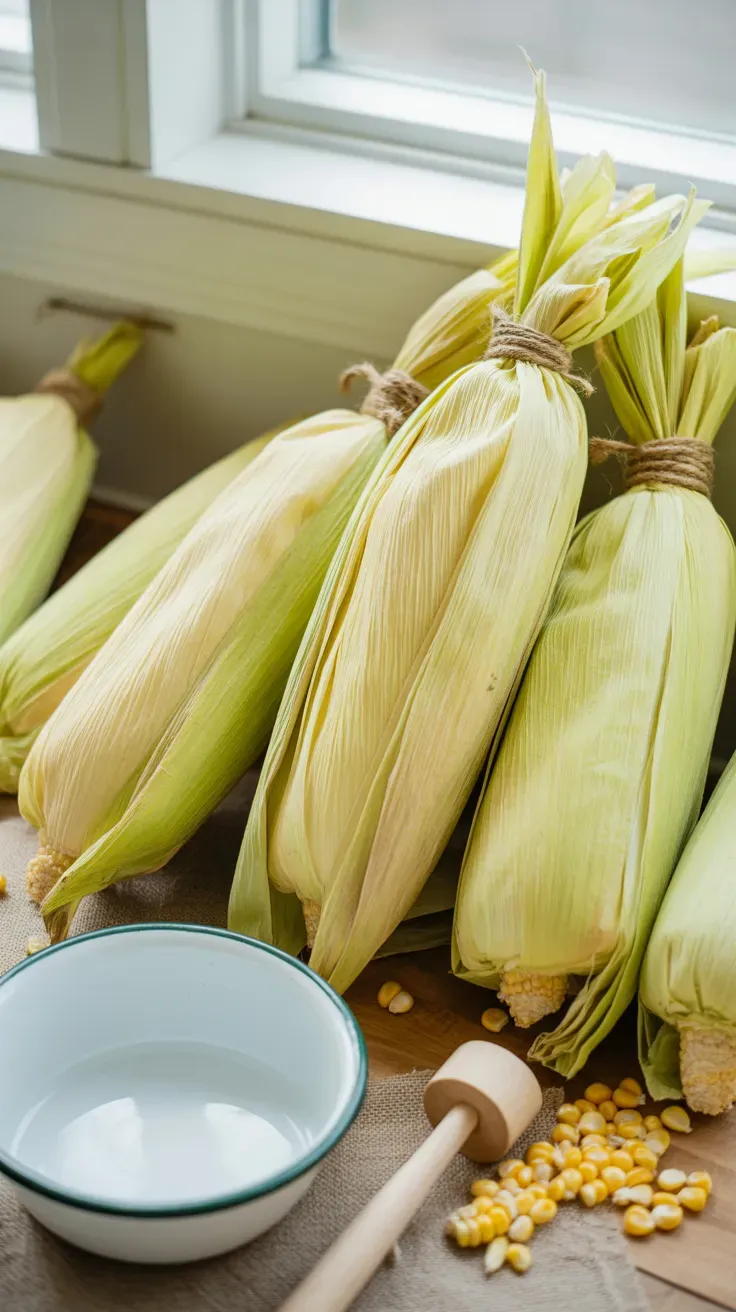
Corn husks are the most accessible material here if you or a neighbor grow sweet corn, since the “waste” from harvest becomes basket stock for free.
Peel husks right after harvesting the ears, then hang or lay them flat to dry completely over about a week. Dried husks are brittle, so soak them in warm water for 15-20 minutes before weaving to make them pliable again. They work especially well for small coiled baskets, dolls, and mats because of their natural cream color and soft texture.
Pro Tip: Save the widest, most unblemished husks separately for visible outer layers, and use torn or narrower ones for the hidden inner structure — nothing goes to waste this way.
Even a dozen ears of corn can yield enough husk material for a small basket, making this one of the lowest-effort entries on the list.
Try our corn husk doll and basket tutorial and see Almanac’s guide to harvesting and drying corn husks.
9. Daylily Leaves (Hemerocallis fulva)
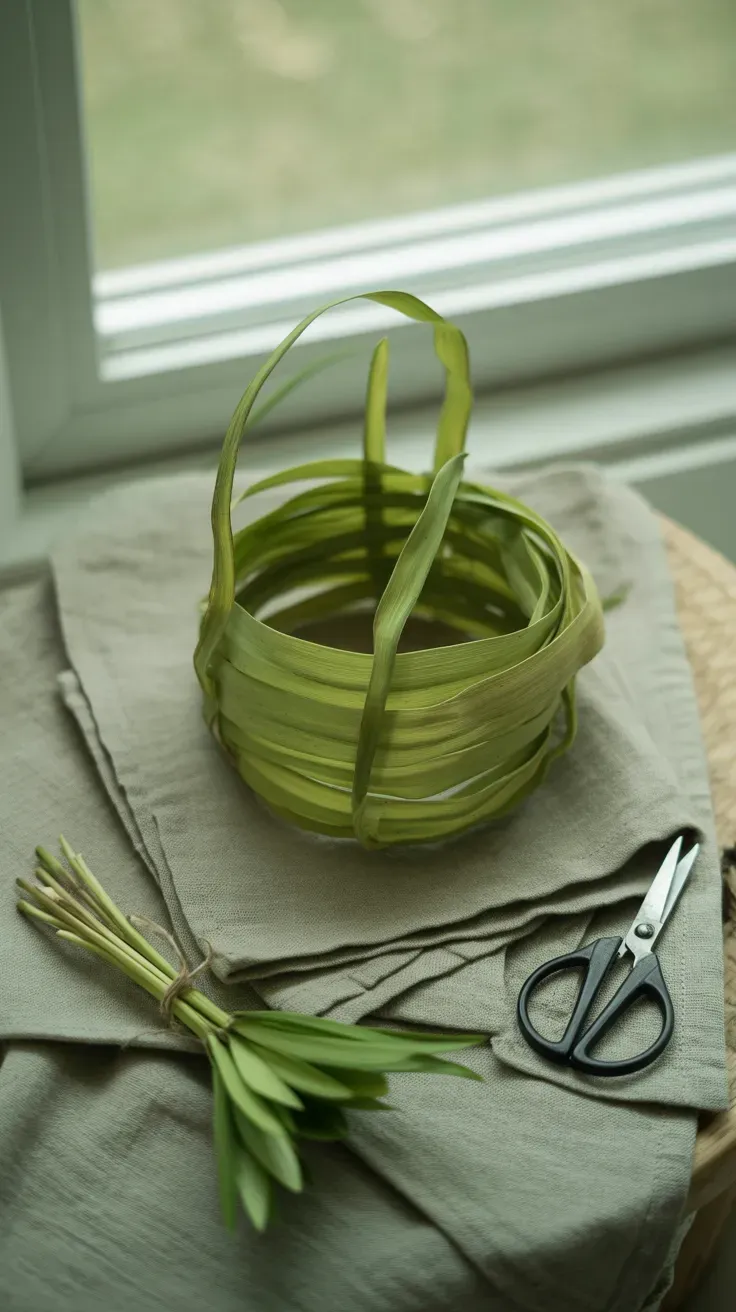
Daylily leaves are an underused coiling material that produces surprisingly fine, tight basket work once dried and rehydrated correctly.
Cut the long strap-like leaves in late summer after the plant finishes flowering, since removing them earlier weakens the bulb for next year. Dry the leaves flat for about a week, then split any wide leaves lengthwise for finer strands. A short soak, around 15 minutes, brings back enough flexibility for tight coiling.
The leaves dry to a soft straw color that takes natural dye beautifully if you want to experiment with color variation across a piece.
Daylilies are common in roadside ditches and old homesteads throughout the US, often planted decades ago and left to naturalize, which makes them easy to find without needing permission from a private landowner.
Explore natural dye techniques for plant fiber and check BHG’s guide to daylily care and maintenance.
10. Iris Leaves (Iris pseudacorus and native species)
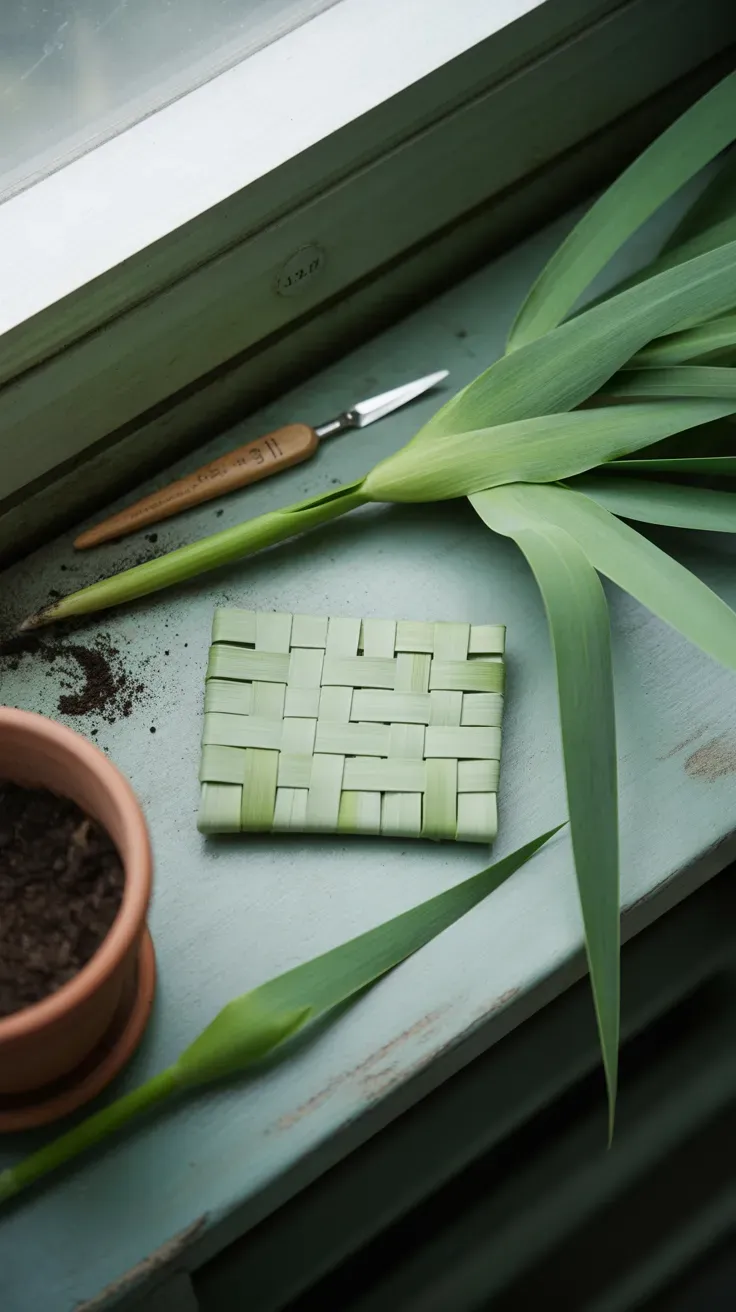
Iris leaves flatten into ribbon-like strips ideal for flat plaiting and mat work, offering a smoother finish than most grass-based materials.
Harvest the long sword-shaped leaves in late summer once flowering has finished, cutting close to the base without damaging the rhizome. Dry them under light weight so they cure flat rather than curling, then dampen them again before weaving. Note that yellow flag iris, a common naturalized species, is mildly toxic if ingested, so keep material away from pets and children during processing.
Pro Tip: Weight-dry iris leaves between two pieces of plywood for at least five days. Skipping the weight step leaves them permanently curled and much harder to work into flat panels.
Iris leaves work best paired with a stiffer rib material like dogwood or willow, since on their own they’re too flexible to hold a three-dimensional shape.
See flat-weaving techniques for basket panels and read RHS notes on yellow flag iris characteristics.
11. Longleaf Pine Needles (Pinus palustris)
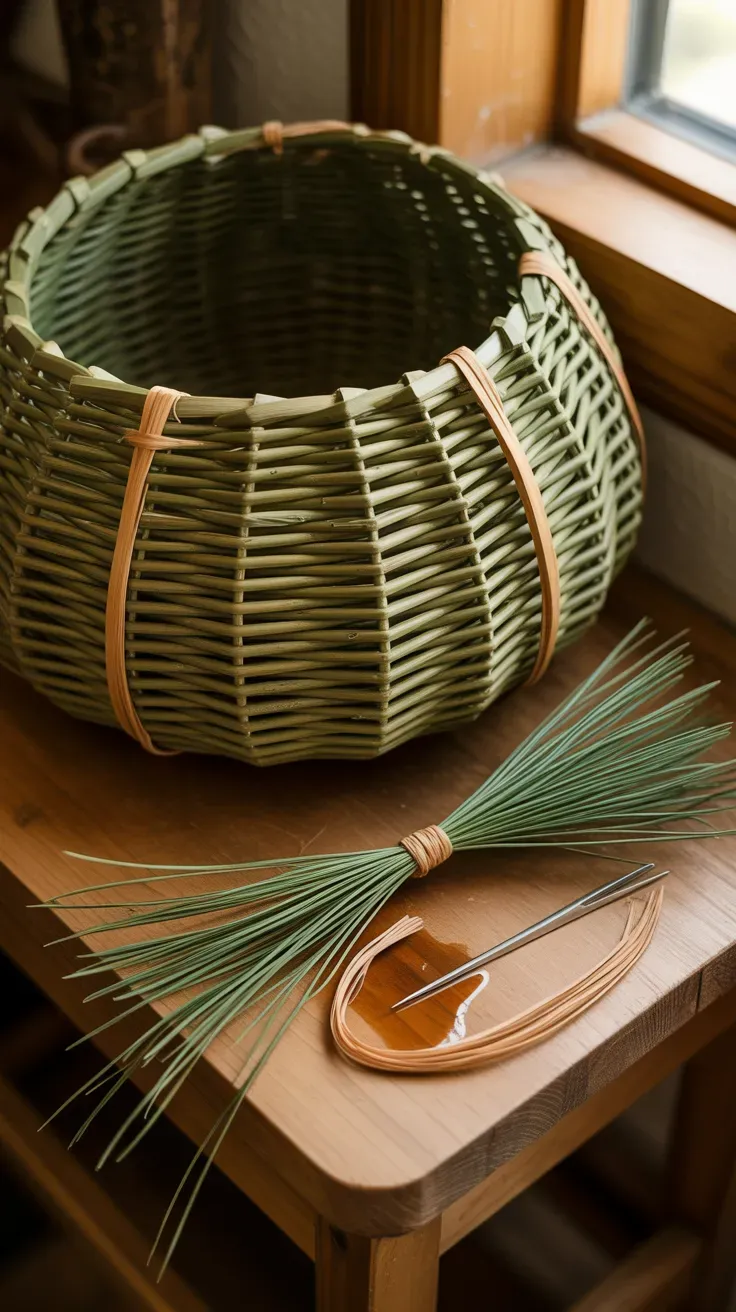
Longleaf pine needles, some of the longest of any pine species at up to 18 inches, are the traditional material behind Southern coiled pine needle baskets.
Gather freshly fallen needles rather than pulling green ones off the tree, since fallen needles are already partly cured and less likely to shrink dramatically after weaving. Bundle them into consistent-width coils and bind each round with waxed thread, raffia, or thin reed. Needles can be used dry with a quick soak, or simmered briefly to darken their color and increase flexibility.
- Fresh green needles: more flexible but shrink noticeably as they dry post-weaving
- Fallen, cured needles: slightly stiffer to start but far more dimensionally stable
Longleaf pine forests have shrunk to a fraction of their historic range, so needles are best gathered from ornamental or managed plantings rather than remnant wild stands.
Follow our step-by-step pine needle coiling method and see University of Florida Extension on longleaf pine identification.
12. Paper Birch Bark (Betula papyrifera)
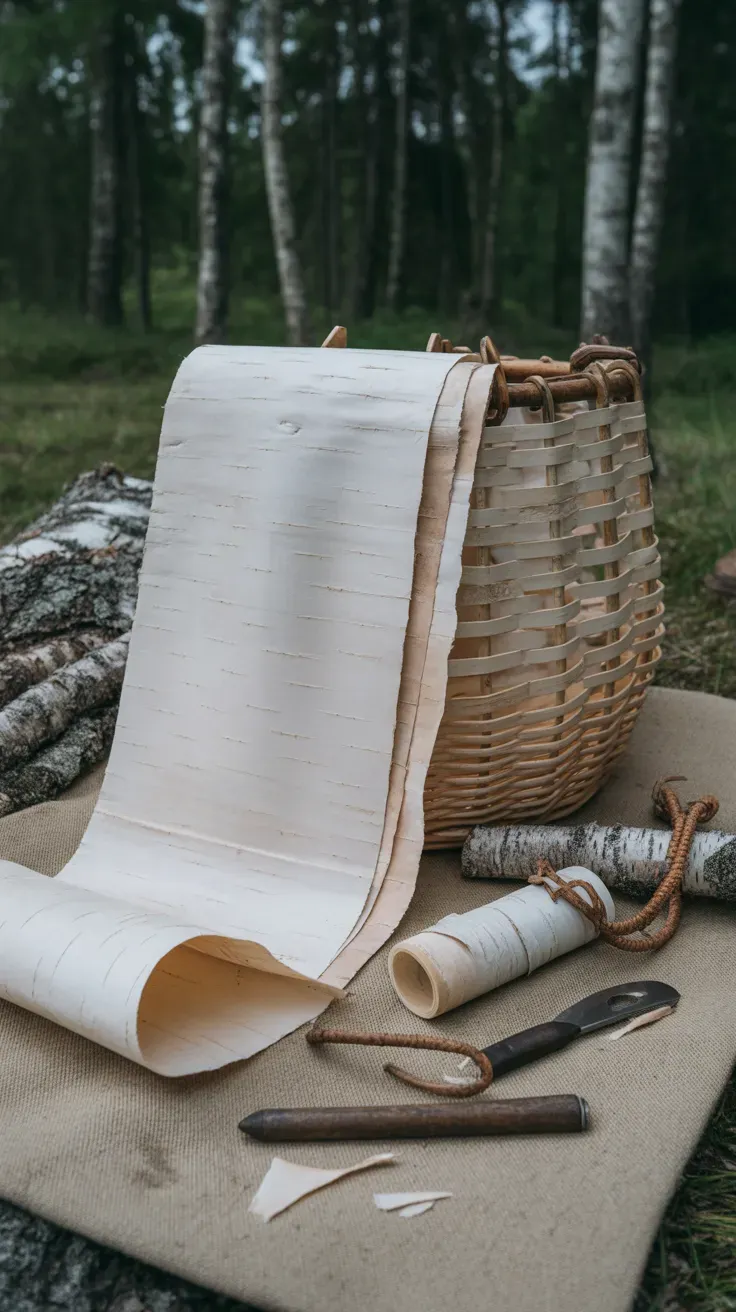
Birch bark folds into rigid, waterproof vessels without any weaving at all, relying instead on stitched seams, which makes it a distinct entry on this list.
Harvest only from birch trees that are already fallen or being cleared, and only during the spring sap flow when bark peels away from the trunk cleanly. Cutting bark from a living, standing birch can permanently scar or kill it, so this material carries more ethical weight than most others here. Flatten peeled sheets under boards while they dry to prevent curling, then score fold lines with a dull blade before assembling.
Pro Tip: Store dried birch bark sheets flat between cardboard, away from direct heat. Bark that dries too fast becomes so brittle it cracks the moment you try to fold it.
Read our full guide to ethical birch bark harvesting and check Gardeners’ World on birch tree care and identification.
13. Red-Osier Dogwood (Cornus sericea)
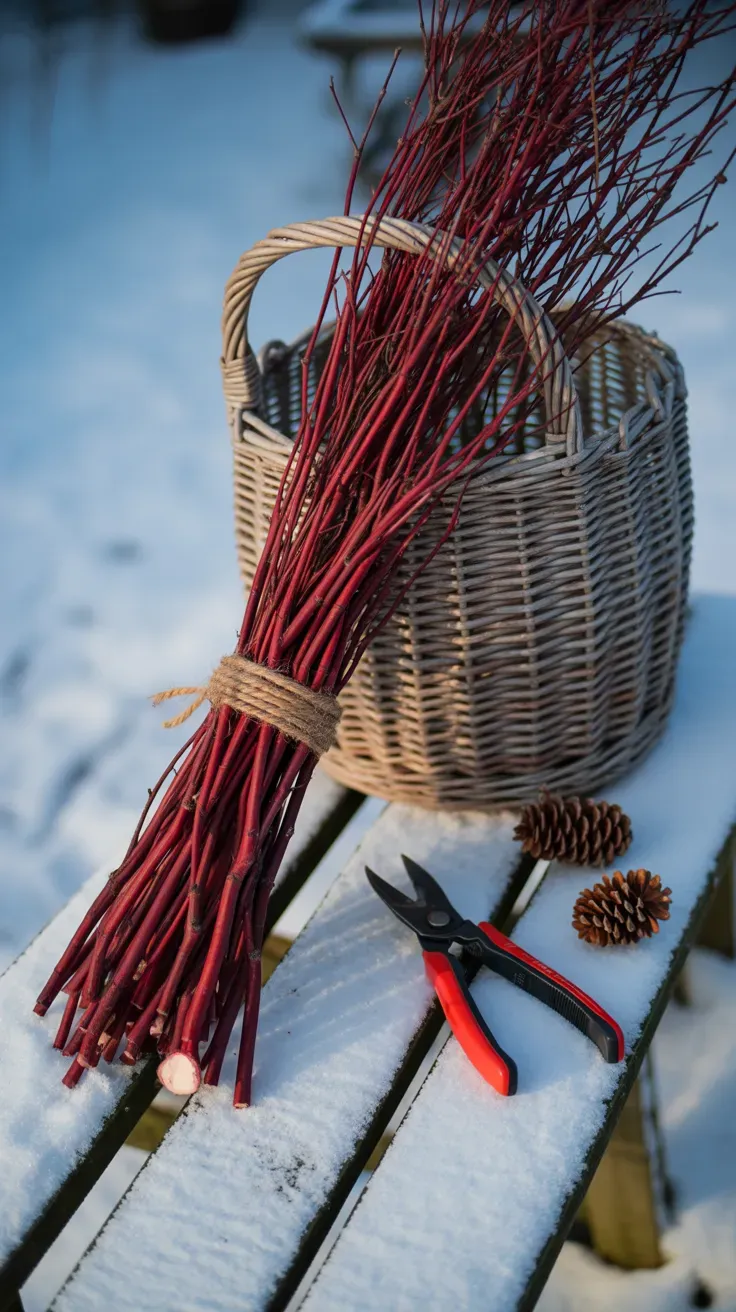
Red-osier dogwood’s flexible, straight stems make some of the best structural ribs for round and oval baskets, and its bright red winter bark is a bonus if you leave it unstripped.
Cut one-year-old shoots in late winter while the plant is dormant, favoring straight, unbranched stems roughly pencil-thick. The wood is stiff enough to hold a basket’s shape but still bends into ribs without soaking, especially within a day or two of cutting. Strip the bark if you want a pale, uniform look, or leave it for color contrast against paler weavers like willow or honeysuckle.
Dogwood tolerates hard coppicing well, meaning you can cut it back to the ground most winters and it regrows vigorous new shoots by the following year, so a single shrub can supply material indefinitely.
Pair dogwood ribs with willow weavers in this frame guide and see RHS growing guide for Cornus sericea.
14. American Wisteria (Wisteria frutescens)
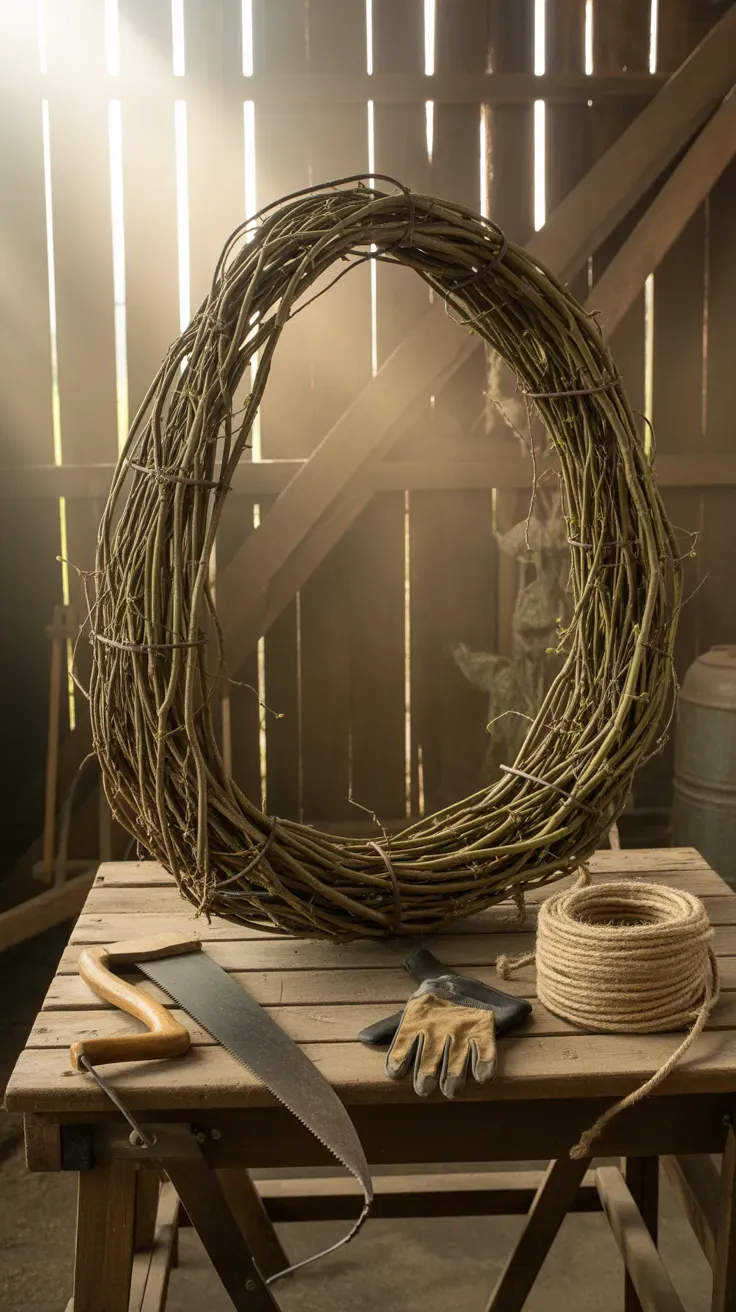
American wisteria’s thick, twisting vines make dramatic large-scale basket and wreath frames that smaller materials simply can’t match in scale.
Confirm the species before cutting — American wisteria is far less aggressive than the invasive Chinese and Japanese varieties, and native stock is worth propagating rather than only harvesting wild. Cut mature vines in fall or winter and bend them into shape immediately while the wood is still workable; once fully dry, thick sections resist bending almost entirely. Smaller side runners can be woven around the main frame for added texture.
- Chinese/Japanese wisteria: extremely invasive, blooms before leafing out, flower clusters up to 20 inches
- American wisteria: less aggressive, blooms after leafing out, flower clusters typically under 6 inches
Because thick wisteria takes real effort to bend and shape, this is better suited to weavers with a season or two of experience already under their belt.
Compare vine thickness and frame strength across species and read Missouri Botanical Garden’s American wisteria profile.
15. Soft Rush (Juncus effusus)
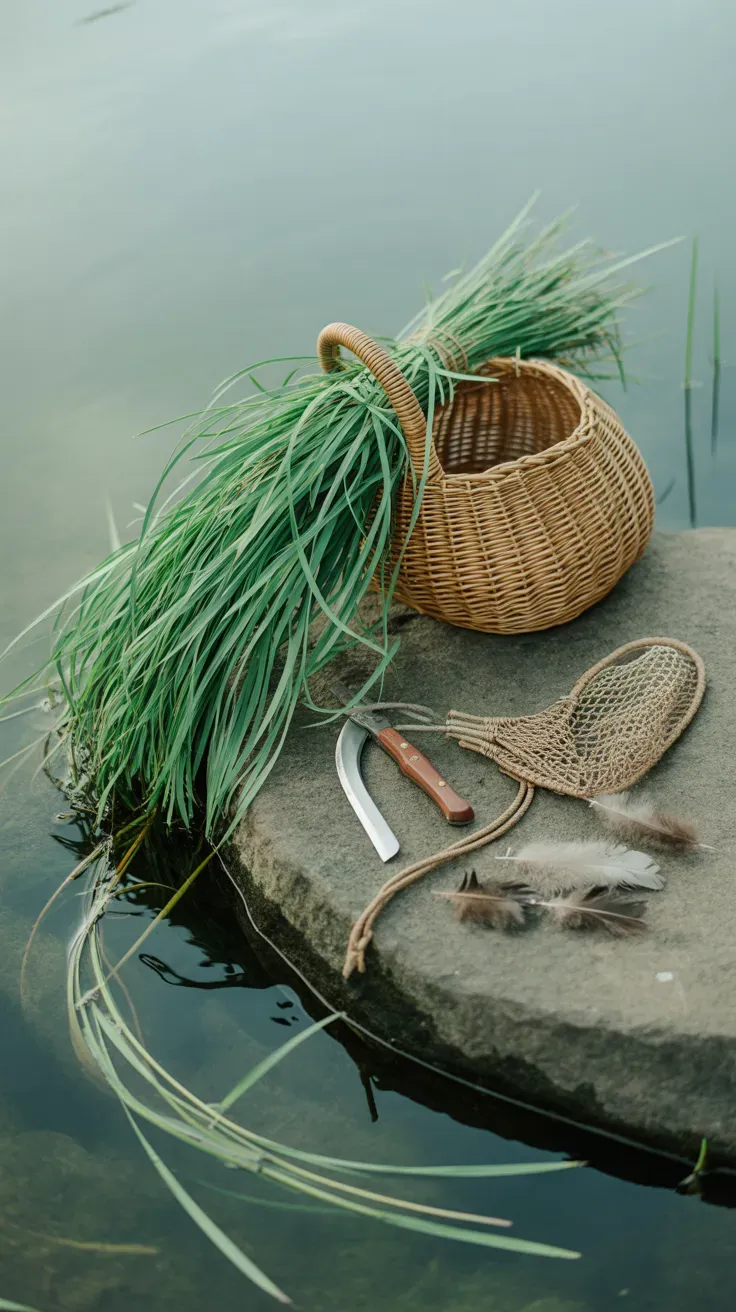
Soft rush produces some of the finest, most pliable coiling material on this list, prized for delicate baskets and traditional rush matting alike.
Harvest the round, pithy stems in summer when they’re at their tallest, cutting close to the base with a sickle or sharp shears. Dry the stems fully for at least two weeks, then rewet them in a damp towel for a few hours before weaving rather than fully submerging, which can cause discoloration. Rush is soft enough to plait by hand without tools for small projects.
Pro Tip: Harvest rush from clean, unpolluted water sources only. The hollow stems readily absorb whatever is in the water they grew in, which can affect both smell and durability.
Soft rush grows in dense clumps at pond edges and wet meadows across most of the Northern Hemisphere, making it one of the most widely available materials here.
Learn traditional rush matting techniques and check The Sill’s guide to identifying wetland plants for craft use.
Getting Started With Foraging Basket Weaving Materials
The easiest first step is honeysuckle or willow — both weave fresh with no drying or soaking wait, so you get a finished piece in an afternoon instead of weeks. Start with a simple over-under coil around a small hoop base before attempting a full basket shape.
The most common beginner mistake is harvesting too little material. Basket weaving eats through stems faster than expected, so cut roughly twice what you think you’ll need, especially with thinner vines that break during shaping.
For your first outing, buy one pair of sharp bypass pruners, one large flexible gathering basket to carry your harvest, and nothing else. Everything past that — froes, weaving needles, dye pots — can wait until you know which materials you actually enjoy working with.
Realistically, expect your first basket to take two to four hours of active weaving time, spread across a few sessions, and expect it to look a little uneven. That unevenness smooths out by your third or fourth attempt, once your hands learn the tension.
Frequently Asked Questions
What is the best plant for beginner basket weaving?
Black willow and Japanese honeysuckle vine are the best starting materials because both bend immediately after cutting with no soaking or drying required. Willow works best cut in late winter, while honeysuckle can be harvested nearly year-round from fence lines and forest edges.
Can you use any vine for basket weaving?
No — vines need to be flexible without being brittle, and woody, thick-barked vines like mature grapevine trunks are too stiff to weave without extensive soaking or splitting. Thin, one- to two-year-old runners under half an inch thick work best for most vine species.
How do you dry plants for basket weaving without mold?
Dry plant material in a single layer with good airflow, never in tight bundles, since trapped moisture is the main cause of mold. Most leaf materials like cattail or iris need two to three weeks of flat drying in a shaded, ventilated space before storage.
Is it legal to forage plants for basket weaving?
Foraging on your own property is always legal, but public land, parks, and nature preserves usually require a permit or prohibit plant removal entirely. Always check with the specific land manager first, and note that invasive species removal on private land is generally unrestricted.
What time of year is best to harvest basket weaving materials?
Late winter, while plants are dormant, is best for woody stems like willow and dogwood since the material bends without cracking and harvesting doesn’t stress the plant. Leaf and grass materials like cattail and rush are harvested instead in late summer when they’re fully grown but not yet dying back.
A Few Final Thoughts
Foraging your own basket weaving materials turns a craft project into a small seasonal ritual, one that ties your hands to the calendar in a way store-bought reed never will. Across these 15 plants and vines, you’ll notice the pattern: timing the harvest matters as much as the species itself, and a properly cured piece of willow or rush will outlast a rushed one by years. Start with whichever material grows closest to you, since proximity beats perfection when you’re still learning tension and technique. Keep a small notebook of what you cut, when, and how it behaved once dry — that record becomes more valuable than any guide after a season or two. Small, consistent harvests build both skill and a genuinely personal material stash. Pick one vine from this list, go cut it this weekend, and see what your hands can make of it.