
The first time I ate something I’d pulled straight out of my own backyard, it was dandelion greens tossed with a little olive oil and lemon, and I remember being almost suspicious of how good they were. Most people start foraging the same way — a little skeptical, a little nervous about eating the wrong thing, and completely unprepared for how much free food is growing within a five-minute walk of home. The trick isn’t memorizing hundreds of plants. It’s starting with 10 that are nearly impossible to misidentify and building confidence from there. Ready? Let’s explore all 10 of them.
Quick Answer: Dandelion, chickweed, and purslane are the safest starting points for absolute beginners — all three have no dangerous lookalikes and grow almost everywhere, including most lawns and sidewalk cracks. Skip anything in the carrot family (wild carrot, parsley, fennel) until you’ve foraged for at least a season, since that family contains deadly lookalikes like poison hemlock.
Why Foraging Wild Food Is Worth Your Time
Foraging turns ordinary walks into something productive, and once you can identify even five or six plants confidently, you start noticing food everywhere — the “weeds” in your garden bed, the edges of a parking lot, the crack in your driveway.
There’s a real practical upside too. Wild greens like chickweed and lamb’s quarters are often more nutrient-dense than their cultivated cousins, and you’re harvesting them at zero cost, usually within steps of your door.
A lesser-known fact: many of the most productive foraging spots aren’t deep wilderness at all. Vacant lots, old farm fields, and even well-maintained lawns that haven’t been sprayed often outproduce forest foraging, simply because sunny disturbed ground is exactly what most edible “weeds” prefer.
This hobby suits patient, detail-oriented people who don’t mind double-checking an identification before eating something. It’s a poor fit for anyone hoping to forage a full meal on day one — real competence here takes a season or two of slow, careful practice.
At a Glance
- Dandelion is edible root to flower, has zero dangerous lookalikes, and often grows within ten feet of your own front door.
- Purslane, one of the most nutrient-dense greens in the world, is usually pulled out of gardens as a weed before anyone realizes it’s food.
- Wild blackberries need almost no identification skill — thorny brambles with the classic aggregate berry shape are safe across nearly all species.
- Elderberries must be cooked before eating; the raw berries, stems, and leaves all contain compounds that cause nausea.
- Chickweed is one of the few wild greens that’s genuinely mild enough to eat raw by the handful straight off the plant.
At a Glance Comparison
| Plant | Season | Lookalike Risk | Difficulty | Best Use |
| Dandelion | Spring–fall | None | Beginner | Salad, tea, root |
| Wild Blackberries | Mid-late summer | Very low | Beginner | Raw, jam |
| Chickweed | Spring, fall | Low | Beginner | Raw salad |
| Field Garlic | Early spring | Moderate | Intermediate | Cooked, pesto |
| Purslane | Summer | Low | Beginner | Raw, sautéed |
| Broadleaf Plantain | Spring–fall | None | Beginner | Cooked greens, salve |
| Elderberries | Late summer | Moderate | Intermediate | Cooked only |
| Wild Violets | Spring | Low | Beginner | Salad, syrup |
| Lamb’s Quarters | Summer | Low | Beginner | Cooked greens |
| Wood Sorrel | Spring–fall | Low | Beginner | Raw garnish |
10 Wild Foods for Beginner Foragers
1. Dandelion (Taraxacum officinale)
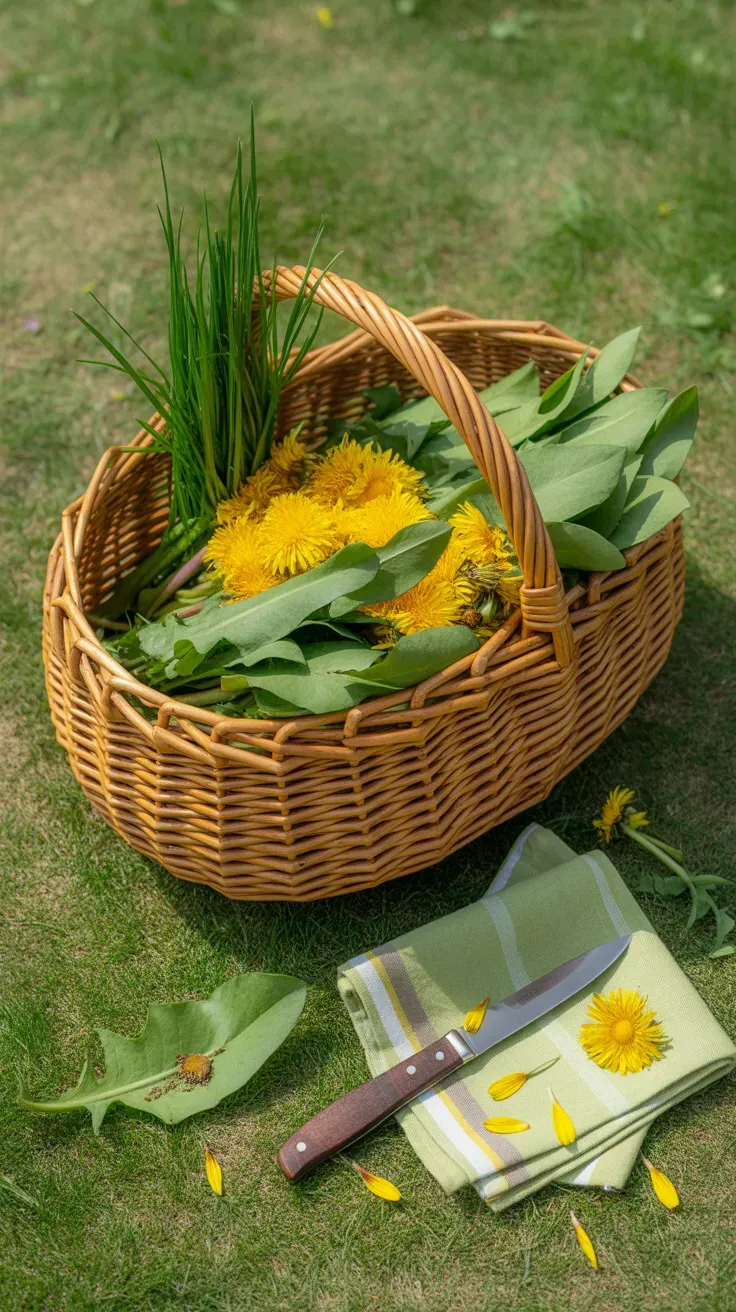
Dandelion is the single best plant for a first-time forager because every part is edible and there is no toxic plant it can realistically be confused with.
Pick young, tender leaves in early spring before the plant flowers, when they’re least bitter, and harvest flowers as soon as they open for the mildest flavor. The taproot can be dug in fall, sliced, and roasted for a caffeine-free coffee substitute. Avoid plants growing near roadsides or in lawns treated with herbicide, since dandelion absorbs whatever is in the surrounding soil.
The first batch I harvested came from a lawn edge that turned out to have been sprayed weeks earlier — always ask before picking from a lawn that isn’t your own.
Pro Tip: Older dandelion leaves turn noticeably bitter by midsummer. Blanch them in boiling water for 60 seconds before using in a salad and the bitterness drops dramatically.
See our full dandelion root roasting guide and check Missouri Botanical Garden’s dandelion plant profile.
2. Wild Blackberries (Rubus fruticosus)
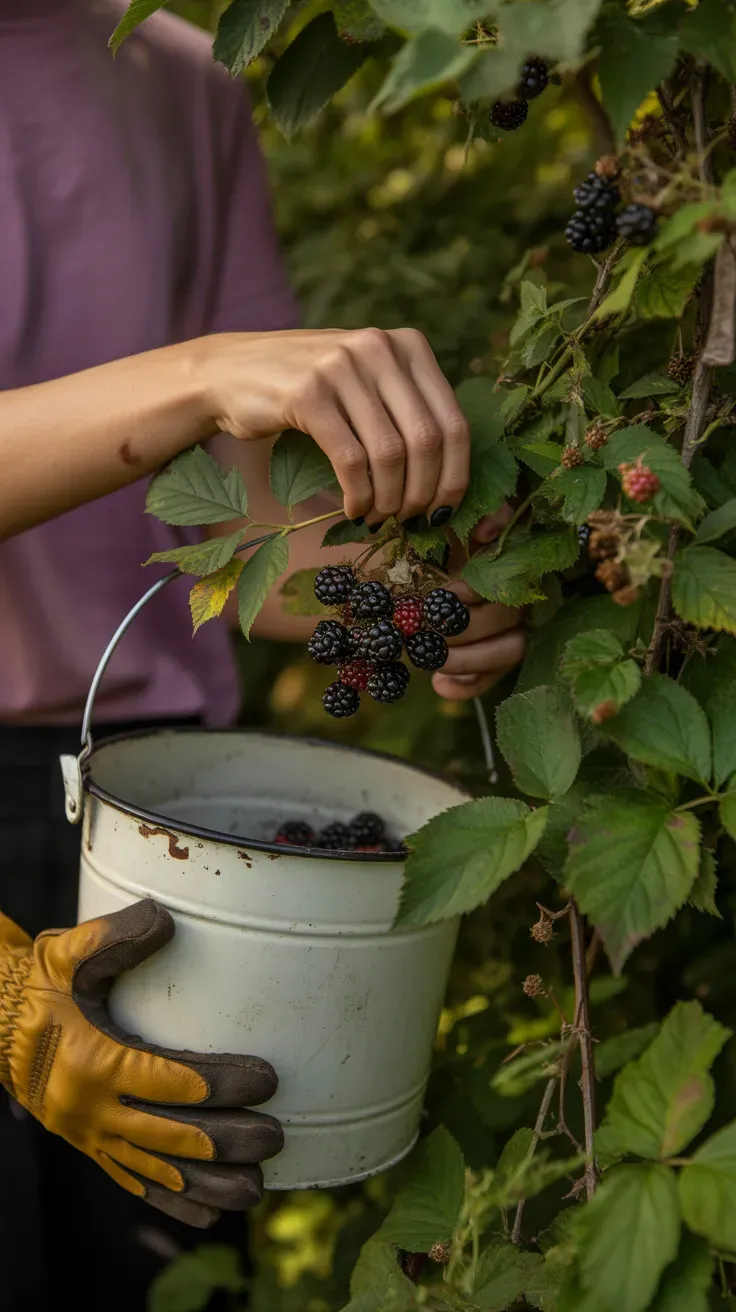
Wild blackberries are nearly foolproof to identify — thorny canes, compound leaves in groups of three or five, and the unmistakable aggregate berry shape rule out any dangerous lookalike.
Look for brambles along fence lines, forest edges, and abandoned lots from mid to late summer, and only pick berries that come off the stem with almost no resistance. Wear long sleeves; the thorns are the real hazard here, not the plant’s identity. Berries keep in the fridge for only two or three days, so plan to freeze or cook what you don’t eat immediately.
- Ripe and ready: deep black, dull rather than glossy, releases easily from the stem
- Not yet ripe: red or reddish-black, glossy, resists pulling — leave these for later
Wild bramble patches often produce for decades once established, so a good patch found this year will likely still be there next season.
Try our wild blackberry jam recipe with no added pectin and read Gardeners’ World on identifying bramble species.
3. Chickweed (Stellaria media)
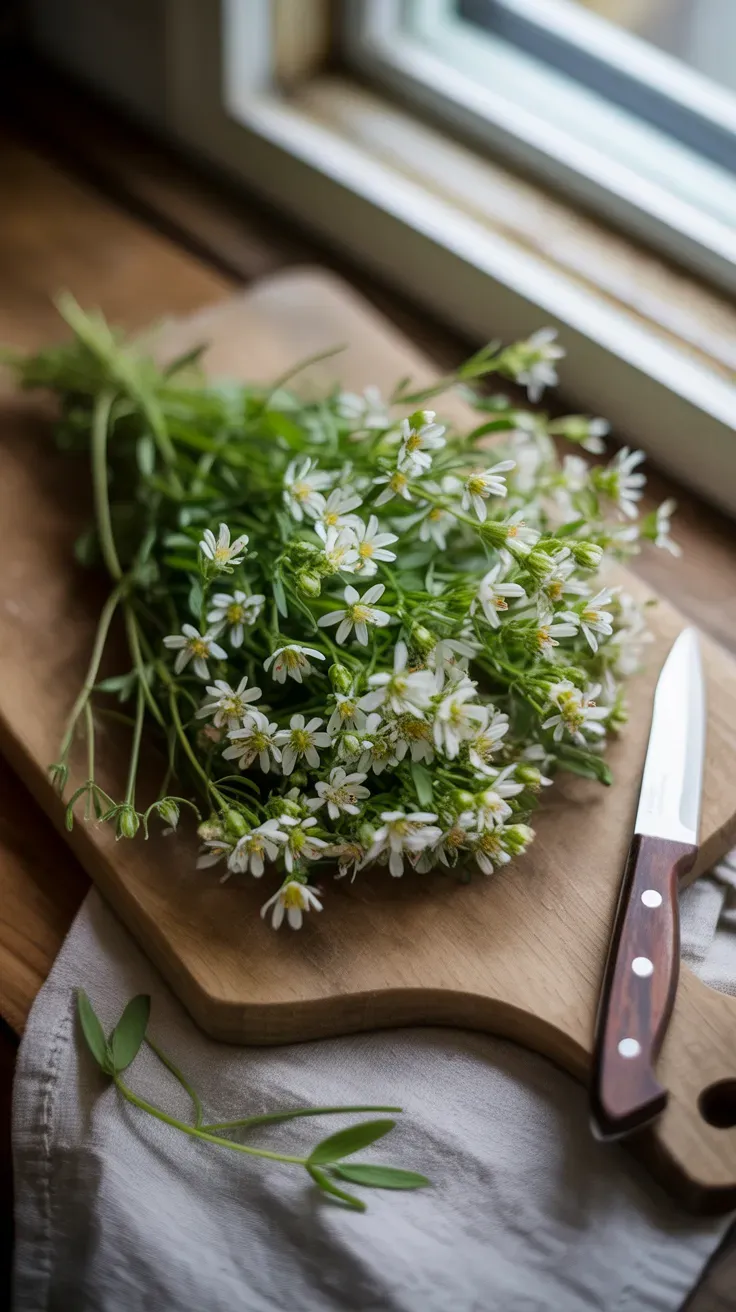
Chickweed is mild enough to eat raw straight off the plant, making it one of the least intimidating wild greens for a first attempt.
Identify it by its tiny white star-shaped flowers, opposite oval leaves, and a single line of fine hairs running down one side of the stem — a distinguishing feature worth checking with a hand lens if you’re unsure. It thrives in cool weather, so look for it in early spring and again in fall once summer heat has passed. Snip the top few inches of each stem, which encourages the plant to keep producing new growth.
Pro Tip: Chickweed wilts fast once picked. Harvest it right before you plan to use it, or store it in a damp paper towel in the fridge for no more than a day or two.
Learn to build a full wild salad around chickweed and see Penn State Extension’s notes on common lawn weeds.
4. Field Garlic (Allium vineale)
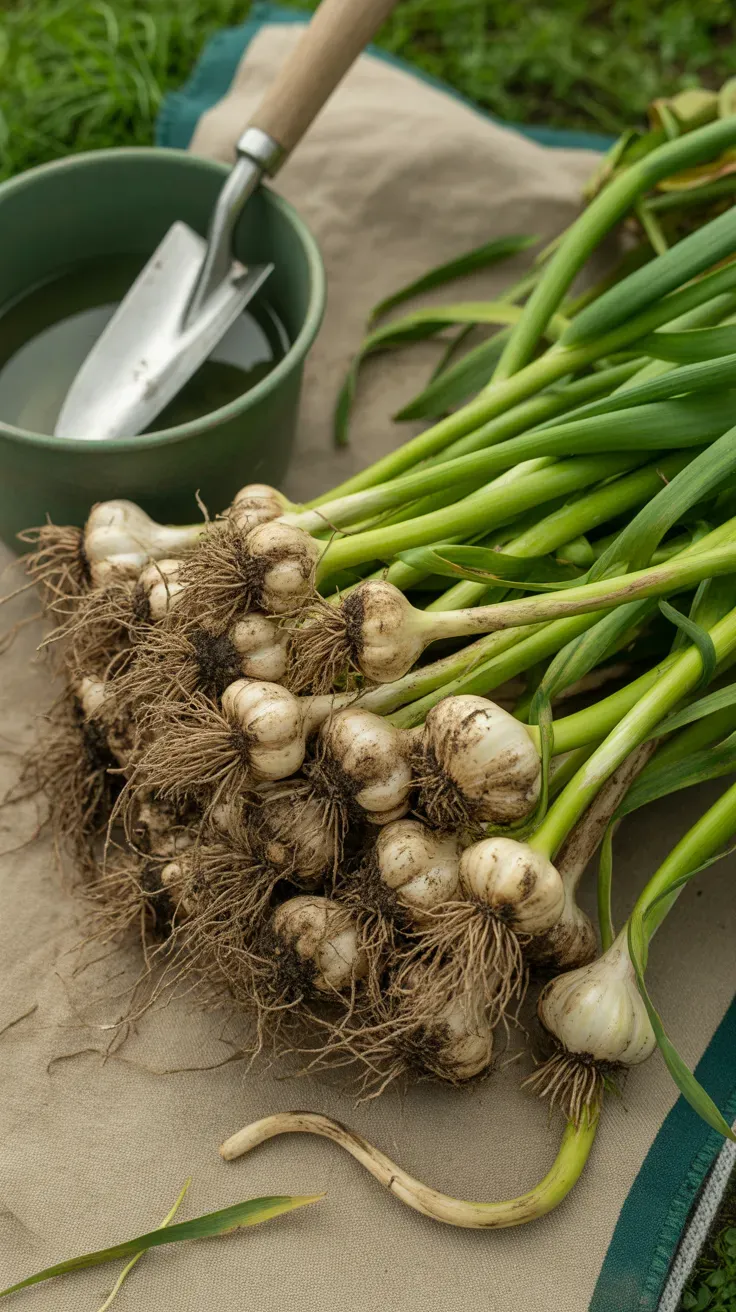
Field garlic offers real payoff for beginners willing to learn one extra confirmation step, since the smell test makes misidentification almost impossible.
Look for thin, hollow, grass-like stalks in early spring, and always crush a piece between your fingers before harvesting — genuine field garlic smells unmistakably of onion or garlic, and if it doesn’t, do not eat it. Dig gently around the base to loosen small underground bulbs rather than pulling straight up, which usually snaps the stalk and leaves the bulb behind. Use the greens like chives and the bulbs like small shallots.
The season for field garlic is short, usually just six to eight weeks in early spring before the plant dies back, so a calendar reminder helps if you don’t want to miss it.
Because field garlic’s grass-like leaves can superficially resemble other narrow-leaved plants, the crush-and-smell test is not optional — it’s the single check that confirms identity every time.
Read our step-by-step wild allium ID guide and check Almanac’s guide to identifying wild onion and garlic.
5. Purslane (Portulaca oleracea)
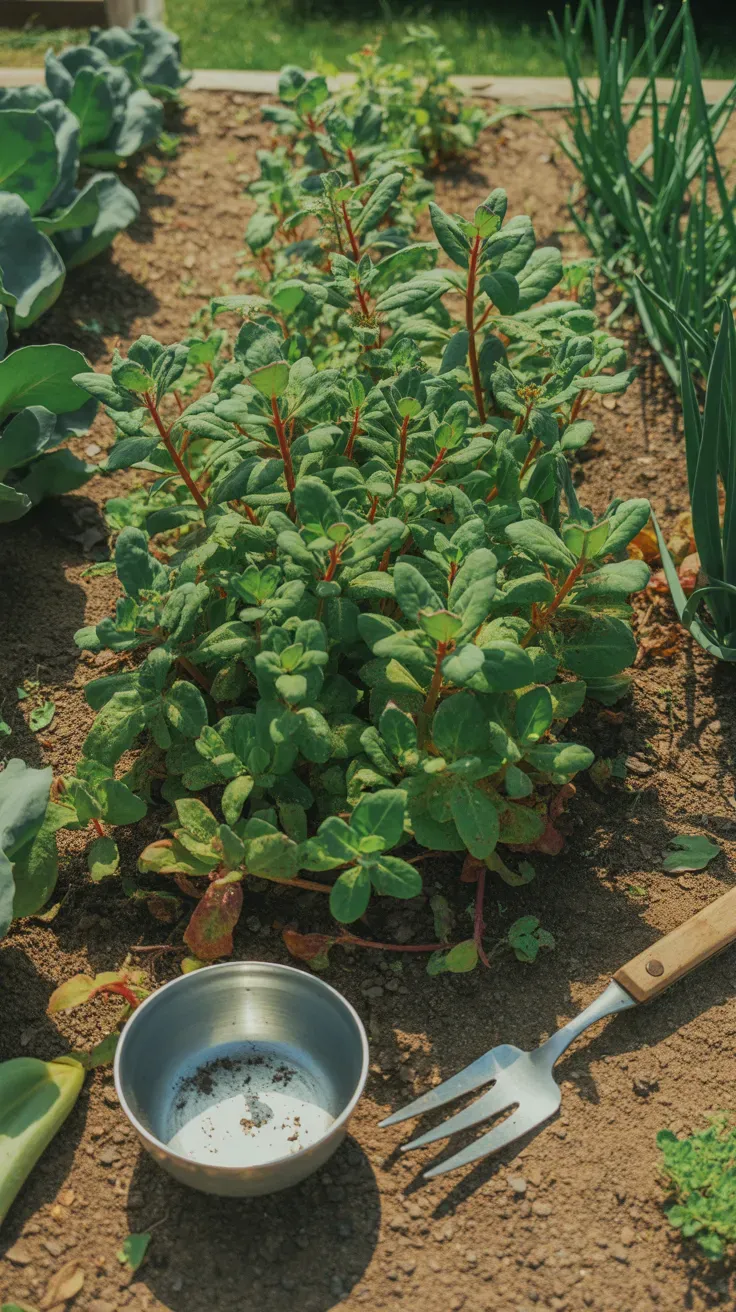
Purslane is one of the most nutrient-dense wild greens available, packed with omega-3 fatty acids at levels unusual for a land plant, and most gardeners rip it out without realizing what they’re throwing away.
Identify it by its thick, succulent, paddle-shaped leaves, reddish trailing stems, and low, ground-hugging growth habit that spreads across bare soil and garden beds in summer heat. Snap off the top few inches of each stem, leaving the root system intact so the plant regrows within days. It has a slightly lemony, crunchy texture that works well raw in salads or lightly sautéed.
Pro Tip: Purslane has a toxic lookalike called hairy-stemmed spurge that grows in a similar low mat. Spurge leaks a milky white sap when snapped — real purslane never does, so that single check confirms identity.
Purslane thrives in exactly the hot, disturbed soil most gardeners consider a weed problem, so a single well-established patch can be harvested repeatedly all summer.
See our full purslane and spurge comparison photos and read University of Florida Extension on purslane as an edible weed.
6. Broadleaf Plantain (Plantago major)
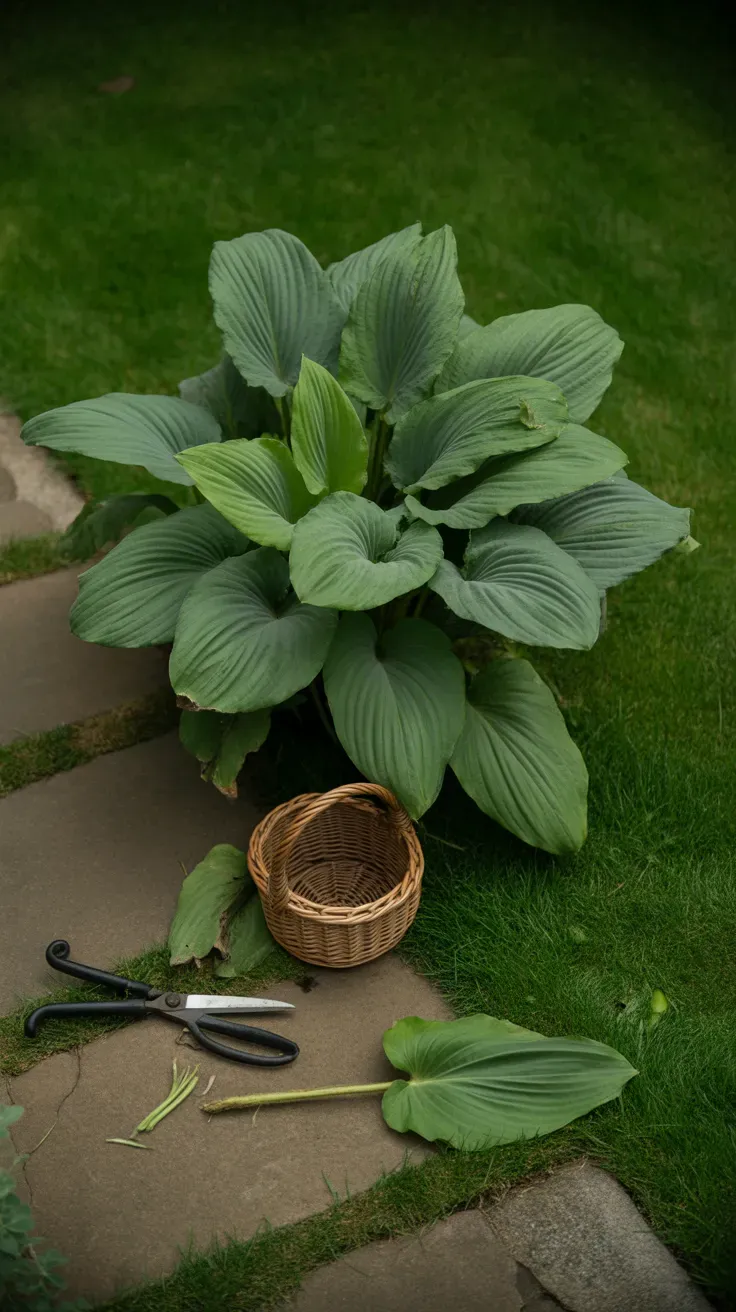
Broadleaf plantain is nearly unmistakable once you know its parallel-veined, oval leaves, and it has zero toxic lookalikes anywhere in North America.
Find it in compacted soil — lawns, footpaths, driveway cracks — almost anywhere people walk regularly, since it tolerates foot traffic that kills most other plants. Harvest young leaves for the mildest flavor; older leaves turn stringy and are better cooked down like collards than eaten raw. The leaves also have a long folk history as a topical remedy for insect bites when crushed and applied directly to the skin.
- Young spring leaves: tender, mild, good raw in small amounts
- Mature summer leaves: tough and fibrous, best chopped fine and cooked
Because it grows in such heavily trafficked areas, always choose plants set back from paths where dogs and foot traffic are less concentrated.
Learn traditional plantain leaf remedies and check RHS notes on Plantago major growth habits.
7. Elderberries (Sambucus canadensis)
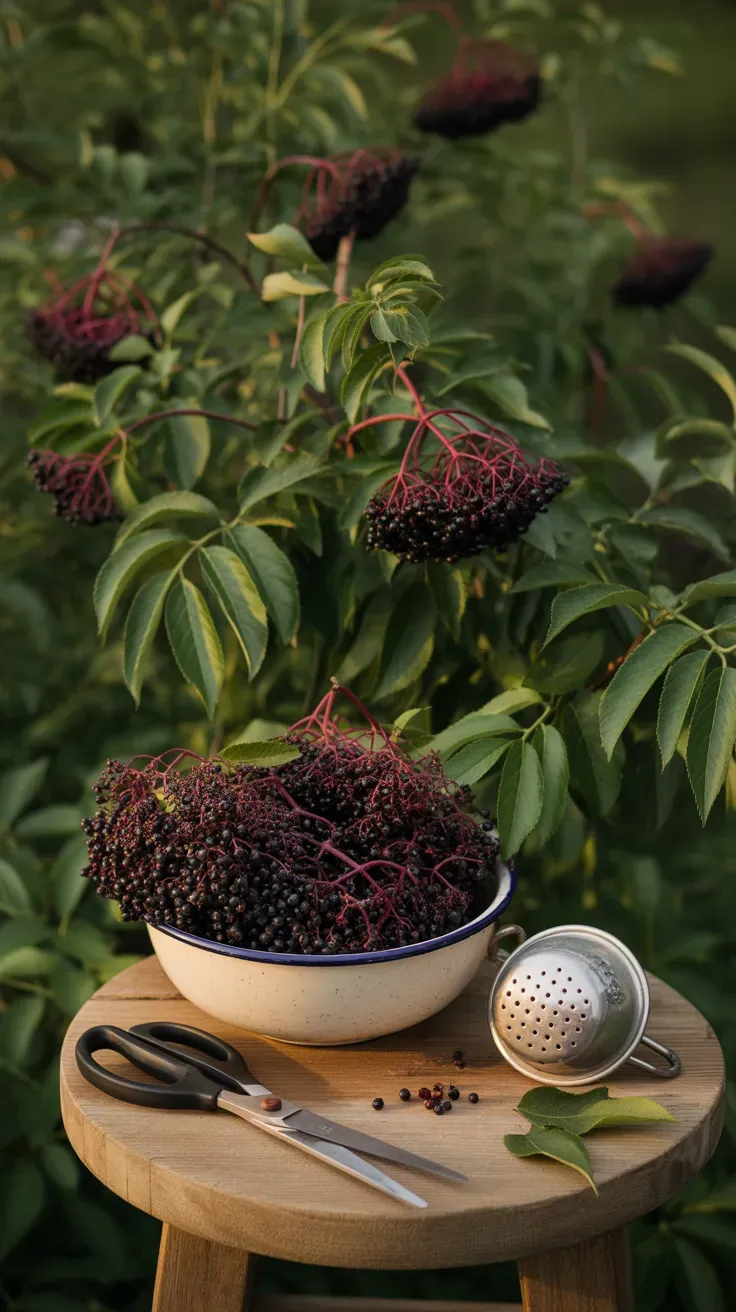
Elderberries reward the extra caution they require — once cooked, they’re a genuinely valuable wild fruit with a long history in syrups and preserves.
Identify the shrub by its clusters of small, dark purple-black berries hanging in flat-topped umbels, opposite compound leaves, and the way ripe clusters droop under their own weight by late summer. Never eat elderberries raw: the raw berries, along with the leaves, stems, and unripe fruit, contain compounds that cause nausea and digestive upset, and cooking neutralizes this reliably.
Pro Tip: Strip berries off the stems entirely before cooking, since even small amounts of stem carry enough of the problematic compound to cause stomach upset in sensitive people.
Elderberry’s toxic lookalike, pokeweed, has berries in a similar dark cluster but grows on a single thick reddish-purple stem rather than the elder’s woody, branching shrub form — a distinction worth confirming carefully before your first harvest.
Follow our cooked elderberry syrup recipe and read Missouri Botanical Garden’s elderberry versus pokeweed comparison.
8. Wild Violets (Viola sororia)
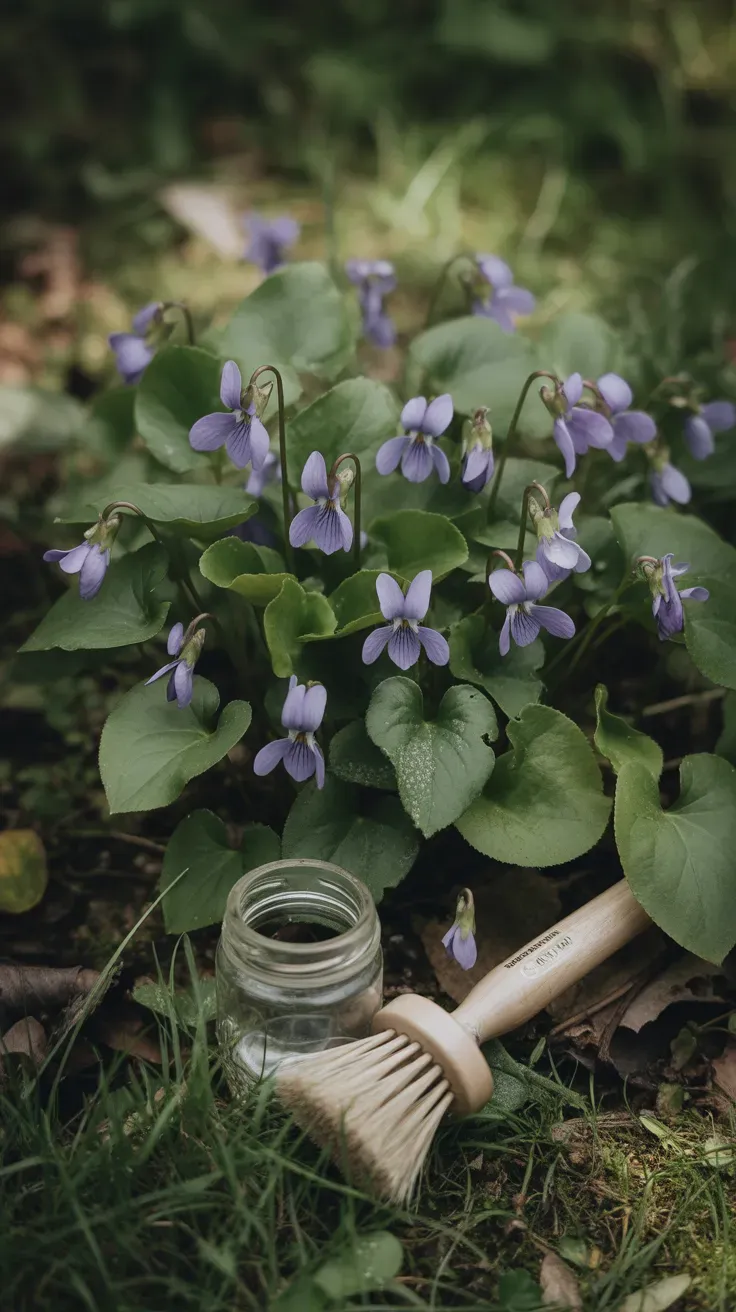
Wild violets add color and a mild, slightly sweet flavor to foraged dishes, and their heart-shaped leaves plus five-petaled purple flowers make them easy to confirm.
Look for them in shaded lawns, garden edges, and woodland borders in early to mid spring, picking both the flowers and young leaves. The flowers are delicate enough to candy for cake decoration or steep into a naturally purple-tinted syrup, while the leaves can go into salads or be cooked down like a mild spinach. Avoid African violets and other ornamental houseplant violets sold commercially — they aren’t the same genus and aren’t confirmed food-safe.
Wild violet patches often spread into thick, low mats over a few seasons, so an established patch in a shaded lawn corner can supply flowers for weeks each spring.
Try our wild violet syrup and candied petal guide and see BHG’s guide to identifying common Viola species.
9. Lamb’s Quarters (Chenopodium album)
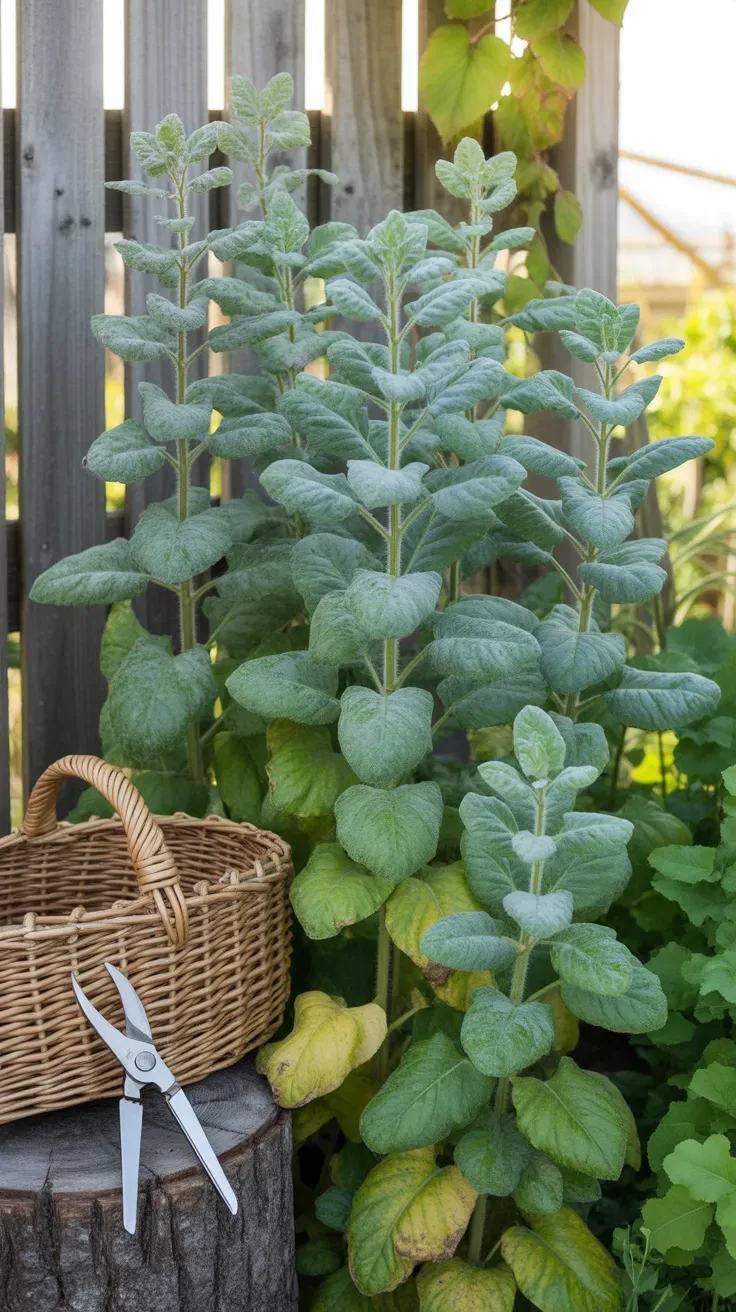
Lamb’s quarters is often called wild spinach, and it genuinely outperforms cultivated spinach in flavor once you know to look past its dusty, almost powder-coated leaf surface.
Identify it by the diamond or goosefoot-shaped leaves with a whitish, mealy coating on the underside, and stems that often show a faint reddish or purplish tint. It grows tall quickly in disturbed soil — garden beds, compost piles, construction edges — often reaching three or four feet by midsummer. Harvest the top six inches of new growth repeatedly through the season; the plant branches out and keeps producing.
- Cook it: wilts down significantly, similar to spinach, mild flavor
- Eat it raw: fine in small amounts, but the mealy texture is more pleasant cooked
Lamb’s quarters can accumulate nitrates if grown in heavily fertilized soil, so it’s best harvested from unfertilized ground and cooked rather than eaten in large raw quantities.
See our full wild greens cooking guide and read SFGate Home Guide on identifying common garden weeds.
10. Wood Sorrel (Oxalis stricta)
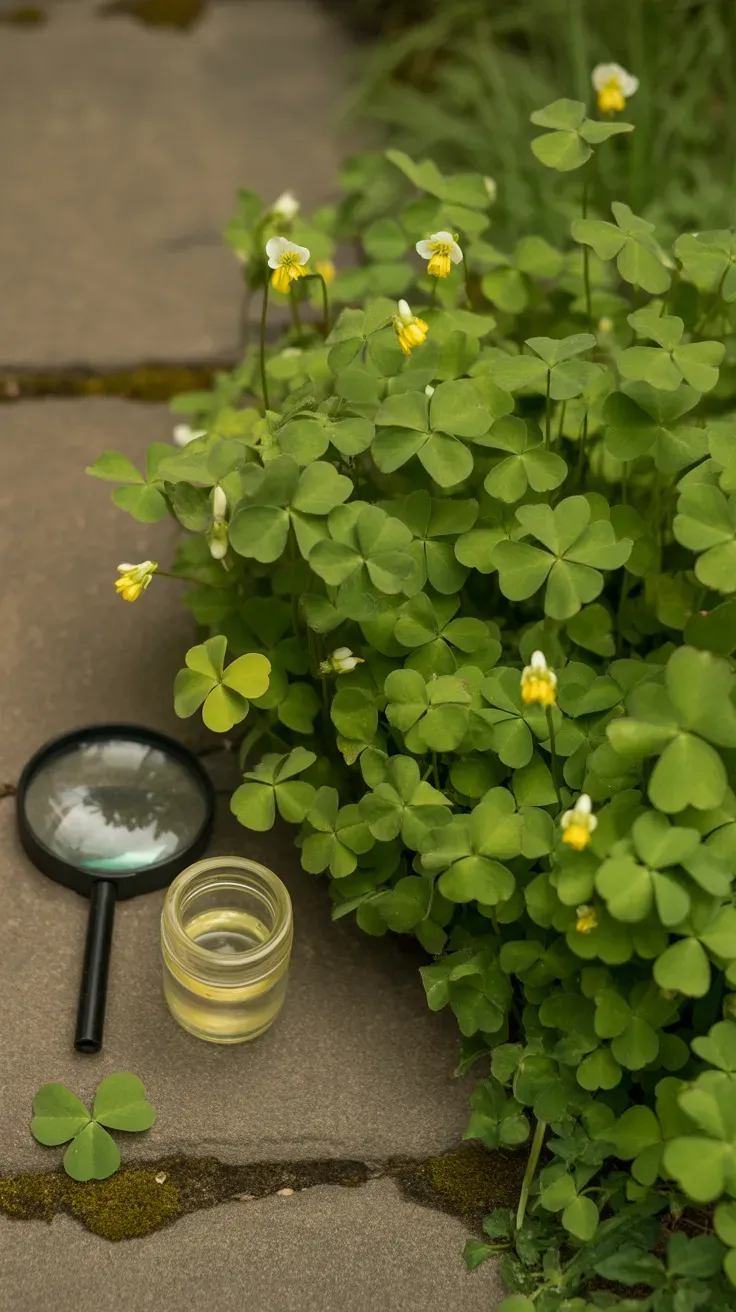
Wood sorrel delivers a sharp, lemony flavor from a single small leaf, making it a favorite trailside nibble once beginners learn to tell it apart from common clover.
Distinguish it from clover by the heart-shaped, rather than rounded, leaflets and small five-petaled yellow (or occasionally pink) flowers; clover flowers form a rounded puffball shape that wood sorrel never does. It grows in lawns, garden beds, and shaded walkways nearly everywhere, often overlooked because of its small size. Use the leaves as a garnish or a tart addition to salad; a large handful eaten at once can cause mild stomach upset due to its natural oxalic acid content.
Pro Tip: Wood sorrel closes its leaflets at night and in bright direct sun, so the best time to spot and harvest it is in the softer light of morning or late afternoon when the leaves sit flat and open.
Compare wood sorrel and clover side by side and check Almanac’s notes on foraging common lawn edibles.
Getting Started With Foraging Wild Food
The easiest first step is your own yard or a nearby park lawn — dandelion, chickweed, and plantain grow in most unsprayed grass, so you don’t even need to travel to start practicing identification.
The most common beginner mistake is skipping confirmation on a plant you’re “pretty sure” about. Use at least two identifying features every time, and when in doubt, don’t eat it — a missed meal costs nothing, but a misidentification can cost your health.
For your first outing, buy one solid regional foraging field guide with clear photos, one pair of garden scissors, and a basket or cloth bag to carry your harvest. Skip apps as your only source at first; they’re a helpful second opinion, not a replacement for a real guide.
Realistically, expect to confidently identify only three or four plants after your first month, and that’s normal progress, not slow progress. Most experienced foragers built their knowledge one plant at a time over a full year of seasons, not in a single afternoon.
Frequently Asked Questions
What is the safest wild plant to forage as a beginner?
Dandelion is widely considered the safest starting plant because every part is edible and it has no toxic lookalikes anywhere in North America. Harvest young leaves in early spring for the mildest flavor, and avoid plants growing near roadsides or treated lawns.
How do you know if a wild plant is safe to eat?
Confirm at least two or three distinct identifying features — leaf shape, flower structure, stem texture, and smell — before eating anything, and cross-check with a trusted regional field guide. If any feature doesn’t match perfectly, don’t eat the plant; there is no shortcut that replaces a full positive identification.
What time of year is best for beginner foraging?
Spring is generally the easiest season to start, since many beginner-friendly greens like chickweed, dandelion, and field garlic are at their mildest and most tender before summer heat sets in. Late summer is better for fruit like blackberries and elderberries, which need cooking before eating.
Can you forage in your own backyard?
Yes, your own yard is one of the best places to start, provided it hasn’t been treated with herbicide or pesticide in at least the past year. Common lawn “weeds” like plantain, dandelion, and wood sorrel are genuinely edible and often the first plants beginners learn.
What plants should beginners avoid foraging?
Avoid anything in the carrot family, such as wild carrot or parsley look-alikes, since that family contains poison hemlock, one of the most dangerous plants in North America. Also avoid any mushroom foraging until you’ve studied specifically with an experienced mentor, since plant and fungi identification require very different skill sets.
A Few Final Thoughts
Foraging wild food as a beginner isn’t about mastering everything at once — it’s about learning 10 reliable plants so well that you’d recognize them blindfolded, then slowly adding more each season. The plants on this list were chosen specifically because they’re forgiving: common, widespread, and free of the dangerous lookalikes that make other wild foods riskier for a first attempt. Go slow, double-check every identification, and treat your first season as practice rather than a race to fill a basket. Consistent, careful harvesting builds real skill faster than any single guide ever could. Step outside this week, find one plant from this list growing near you, and let that be where your foraging actually begins.