
There’s a particular kind of garden envy that hits when you drive past a border blazing with red all July, August, and September while your own beds have already gone quiet by mid-June. The good news is that long-blooming red perennials aren’t rare or fussy — most of them are tough, pollinator-friendly, and genuinely easier to keep going than a lot of trendy annuals. In this guide I’m walking through 13 of the best red perennial flowers for season-long color, with the exact growing conditions that make each one thrive. Ready? Let’s explore all 13 of them.
Why Red Perennial Flowers Are Worth Your Time
Red is the hardest color to ignore in a garden bed, and it happens to be the color hummingbirds are hardwired to seek out — which means a red perennial border does double duty as a wildlife magnet and a design statement. In practice, gardeners consistently find that once red perennials establish (usually by their second season), they return bigger and bushier every year without replanting costs.
What makes this approach especially rewarding is longevity: unlike bedding annuals that need pulling and replacing, most red perennials on this list bloom continuously from June through frost with nothing more than deadheading. A lesser-known fact — many “red” perennials, like Crocosmia and Cardinal Flower, are true red pigments (not orange-red), a genuinely rare trait in the plant world caused by a specific anthocyanin pigment most flowers don’t produce.
This list is ideal for gardeners who want a low-maintenance perennial bed with real visual punch, whether that’s a sunny front border, a pollinator garden, or a single striking accent bed near a patio.
At a Glance
- Crocosmia ‘Lucifer’ shoots up fiery red sprays that hummingbirds visit dozens of times a day.
- Cardinal Flower thrives in soggy soil most perennials hate — perfect for that damp corner of the yard.
- Bee Balm ‘Jacob Cline’ is one of the few red perennials that’s genuinely mildew-resistant.
- Red Hot Poker blooms are edible torch-shaped spikes that look tropical but survive real winters.
- Red Valerian self-seeds gently and blooms nonstop from late spring straight through fall.
Crocosmia ‘Lucifer’
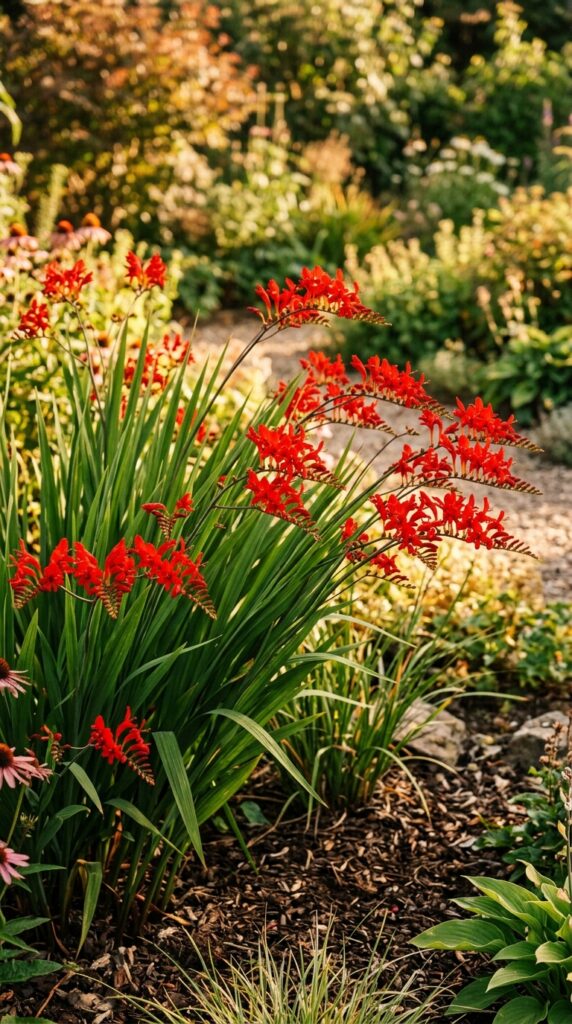
Crocosmia ‘Lucifer’ is the single most reliable true-red perennial for a garden that gets real summer heat, producing arching sprays of trumpet-shaped blooms from a cluster of iris-like leaves.
It grows from corms planted 3–4 inches deep in well-draining soil, and it wants a minimum of 6 hours of direct sun to bloom at full intensity — in partial shade, the flower spikes come in sparse and floppy. Plant corms in spring after the last frost, space them 6–8 inches apart, and water deeply once a week during the first growing season while roots establish. By year two, clumps multiply on their own and can be divided every 3–4 years to keep them from overcrowding.
💡 Pro Tip: In USDA zones below 6, mulch corms heavily with 4 inches of straw after the first frost — Crocosmia’s corms rot in wet winter soil far more often than they freeze.
This is the plant to grow if you want a hummingbird garden that looks effortlessly wild. Pair it with companion plants for a hummingbird border and check the full Crocosmia care sheet from the RHS for regional bloom timing.
Cardinal Flower (Lobelia cardinalis)
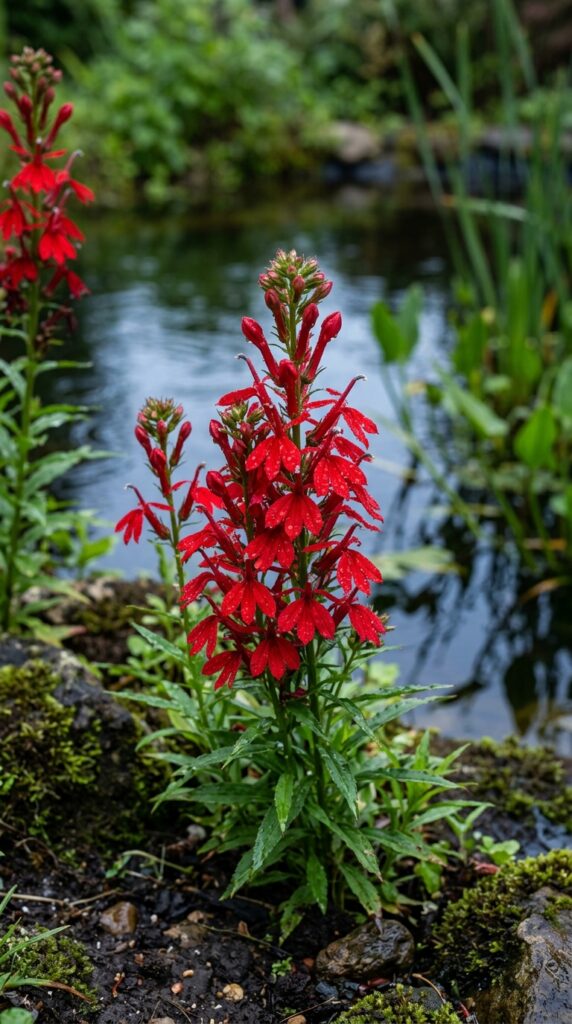
Cardinal Flower solves a problem most red perennials can’t: it actually wants consistently damp, even boggy, soil, making it the answer for that low spot in the yard where everything else drowns.
Give it partial to full sun and soil that never fully dries out — near a downspout, pond edge, or rain garden is ideal. Plant it in spring, spacing plants 12–18 inches apart, and water generously through summer rather than letting it dry between waterings the way you would most perennials. It typically reaches 2–4 feet tall with tall, narrow spikes of tubular red blooms from midsummer into early fall.
The common mistake is planting Cardinal Flower in a standard dry perennial bed — it survives briefly but never thrives, and blooms will be short-lived without steady moisture.
Best conditions for this plant: pond margins, rain gardens, low-lying beds, or containers with a saucer kept filled.
Learn more about pairing it with other moisture-loving natives in our rain garden plant guide, and see Missouri Botanical Garden’s detailed profile for hardiness zone specifics. Once established near water, Cardinal Flower will reliably return every summer with almost no extra effort.
Bee Balm ‘Jacob Cline’ (Monarda didyma)
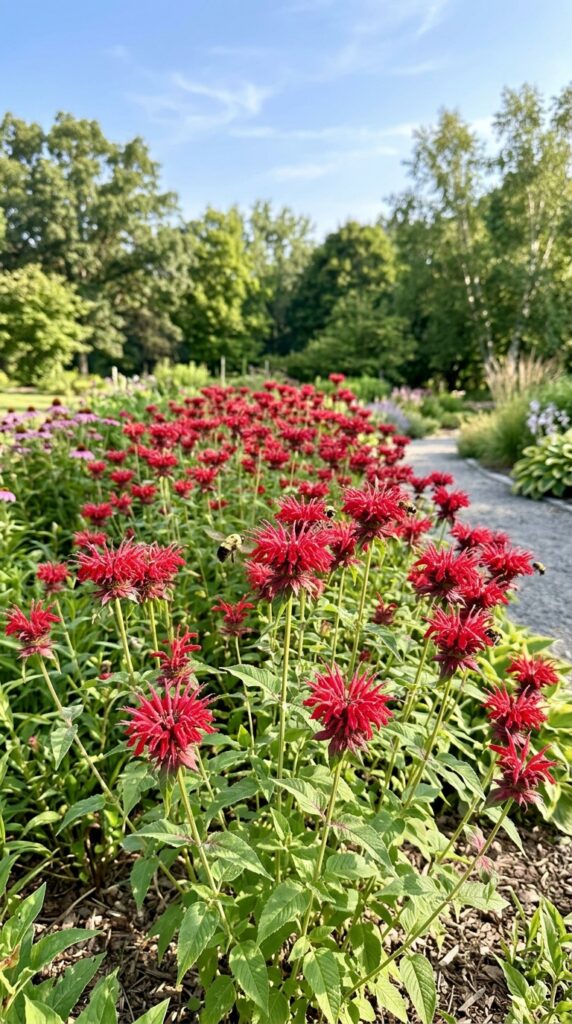
‘Jacob Cline’ is the bee balm variety most gardeners eventually switch to because it resists the powdery mildew that ruins most Monarda by August.
Plant it in full sun with rich, well-draining soil and give each plant 18–24 inches of breathing room — Bee Balm spreads by underground rhizomes and good airflow is what actually prevents mildew, not fungicide. It flowers from early July through September if deadheaded regularly, with shaggy, tubular red blooms that bees and hummingbirds both visit constantly.
💡 Pro Tip: Water at the base rather than overhead — wet foliage overnight is the single biggest trigger for mildew on Monarda, even resistant cultivars like this one.
Best varieties for red bee balm specifically: ‘Jacob Cline’, ‘Gardenview Scarlet’, and ‘Fireball’ all hold true red color better than older cultivars that fade to pink.
Read about spacing it correctly in our pollinator border layout guide, and check Gardeners’ World’s mildew-prevention tips for extra troubleshooting. A well-spaced patch of ‘Jacob Cline’ will outlast almost every other red perennial on this list.
Red Hot Poker (Kniphofia)
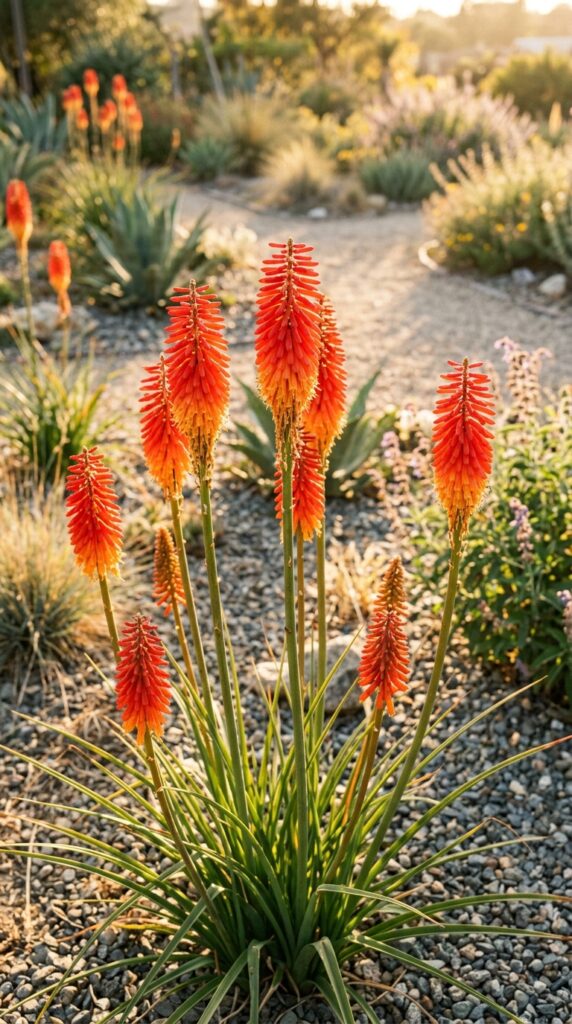
Red Hot Poker produces tall, torch-shaped flower spikes that look almost tropical but are surprisingly drought-tolerant once established, making it one of the lowest-maintenance red perennials for hot, sunny beds.
It needs full sun and, critically, sharp drainage — soggy winter soil is what kills Kniphofia, not cold. Plant it in spring in soil amended with grit or sand if your yard tends toward clay, spacing clumps 2–3 feet apart to allow the strappy foliage room to fan out. Once roots are established after year one, it needs supplemental water only during extended dry spells.
The pro insight here: resist the urge to cut back foliage in fall. Leaving the leaves intact over winter protects the crown from rot and cold damage, and you tidy it up in early spring instead.
This plant struggles in heavy clay that stays wet through winter, so raised beds or slopes work better than low, flat lawns.
Pair Red Hot Poker with drought-tolerant companion perennials, and see the Almanac’s Kniphofia growing notes for regional bloom windows. Once you see hummingbirds queuing up at the torches, you’ll wonder why you didn’t plant it sooner.
Hardy Hibiscus ‘Summer Storm’
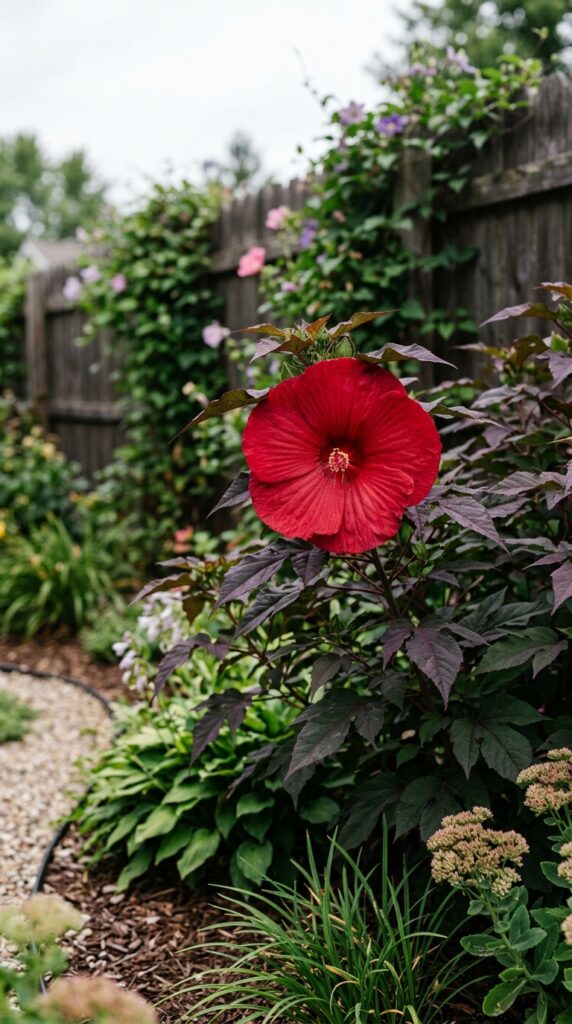
Hardy Hibiscus produces flowers up to 8–10 inches across — genuinely the largest blooms of any perennial on this list — and dies back completely in winter only to return from the roots each spring.
Give it full sun and consistently moist, rich soil; unlike Red Hot Poker, this one tolerates and even prefers heavier soil that holds water. Plant in spring, spacing 3 feet apart since mature clumps get large, and expect the first shoots to emerge late — often not until late May — so mark the spot to avoid accidentally digging it up thinking it died.
Beginner vs. advanced version of this idea: Beginners should start with a single potted specimen near a patio for maximum visual payoff; advanced gardeners can mass-plant three or more for a hedge-like summer privacy screen that blooms continuously.
This plant is a showstopper for anyone wanting maximum drama from a single perennial, and our hibiscus overwintering guide covers exactly when it’s safe to assume it’s dormant rather than dead. For bloom-size comparisons across cultivars, BHG’s hardy hibiscus roundup is a solid reference.
Red Yarrow ‘Strawberry Seduction’
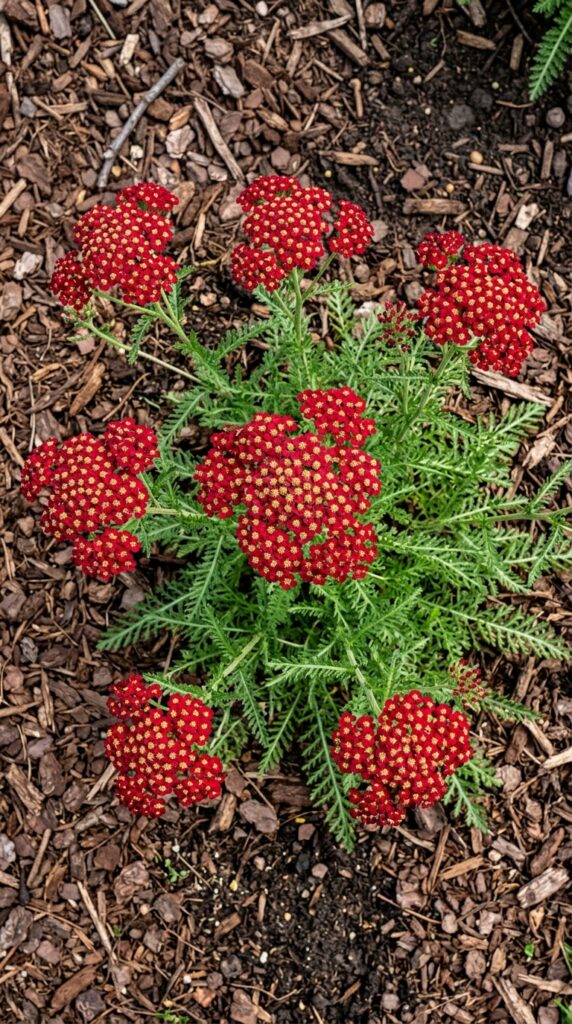
‘Strawberry Seduction’ Yarrow brings flat-topped clusters of deep red flowers on ferny, drought-tolerant foliage, and it tolerates poor soil better than almost anything else on this list.
Plant it in full sun in soil that drains well — rich, fertilized soil actually causes floppy stems and fewer blooms, so resist the urge to feed it. Space plants 12–18 inches apart in spring, and deadhead spent flower heads regularly to encourage continuous rebloom from June through September.
💡 Pro Tip: Divide clumps every 2–3 years in early spring — Yarrow that isn’t divided regularly gets woody in the center and stops flowering well, even though the outer edges look healthy.
It’s an ideal choice for gardeners who want reliable red color in lean, rocky, or clay soil where fussier perennials fail. Explore more low-fertility options in our tough-soil perennial guide, and see Penn State Extension’s Achillea notes on regional performance. Yarrow rewards neglect more than almost any flower you’ll grow.
Red Valerian (Centranthus ruber)
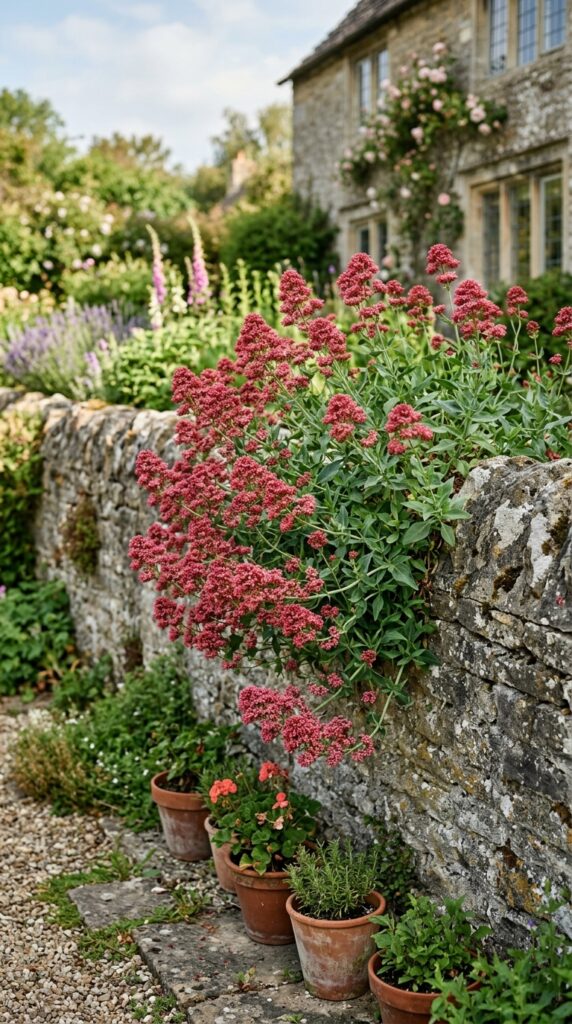
Red Valerian is one of the few perennials that genuinely blooms nonstop from late spring through the first hard frost, and it thrives in exactly the poor, rocky, alkaline soil most flowering perennials reject.
It wants full sun and sharp drainage, making it a natural fit for gravel gardens, wall crevices, or coastal beds with sandy soil. Plant in spring or fall, and skip the fertilizer entirely — rich soil produces leggy growth and fewer flower clusters. Shear the whole plant back by half in midsummer if it starts to look tired, and it will flush out a fresh round of blooms within two to three weeks.
The common mistake is treating it like a delicate perennial and babying it with regular water — Red Valerian actually performs worse with supplemental irrigation once established, and overwatering is the top cause of root rot.
This plant self-seeds gently in cracks and crevices, so it’s perfect if you want a naturalized cottage-garden look. Pair it with other Mediterranean-style plants in our gravel garden design guide, and see SFGate’s Home Guide notes on Centranthus for coastal growing conditions.
Coneflower ‘Tomato Soup’ (Echinacea)
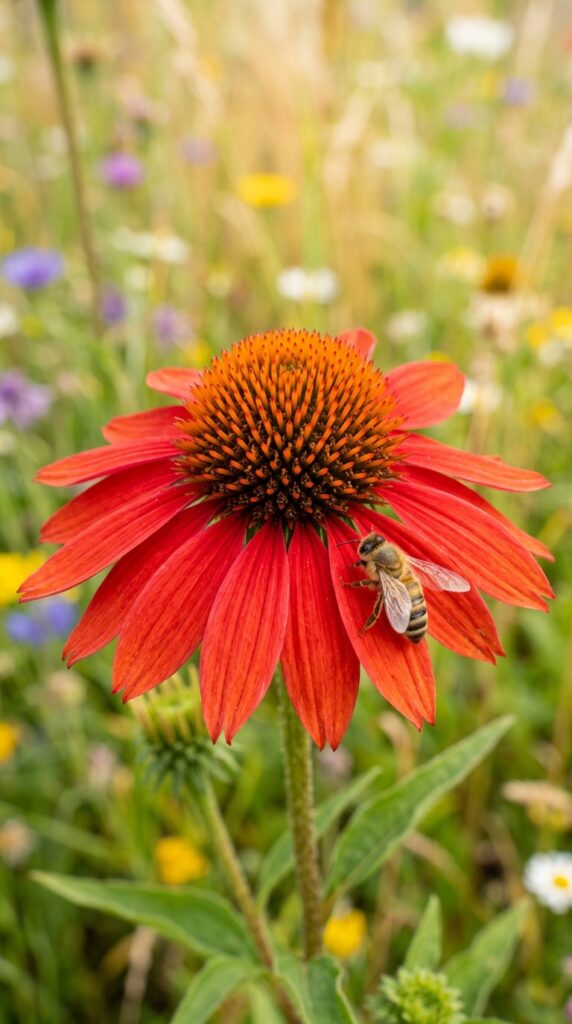
‘Tomato Soup’ Coneflower is a true-red break from the usual pink and purple Echinacea, holding its saturated color better through heat than most red coneflower cultivars.
Give it full sun and well-draining soil; Echinacea is genuinely drought-tolerant once established but suffers in soil that stays soggy over winter. Plant in spring, spacing 18 inches apart, and avoid deadheading toward the end of the season — leaving spent seed heads standing feeds finches through fall and winter.
Its cone-shaped centers and daisy-like red petals bloom continuously from June through September with almost no disease pressure, which is rare for such a saturated red flower.
Best varieties for red coneflowers specifically: ‘Tomato Soup’, ‘Sundown’, and ‘Hot Papaya’ all hold red-orange tones without fading, unlike older red Echinacea hybrids.
Learn to build a full-season pollinator meadow around it in our native meadow planting guide, and check the Missouri Botanical Garden’s Echinacea profile for regional hardiness notes. It’s one of the easiest true reds to keep alive long-term.
Beardtongue ‘Firebird’ (Penstemon)
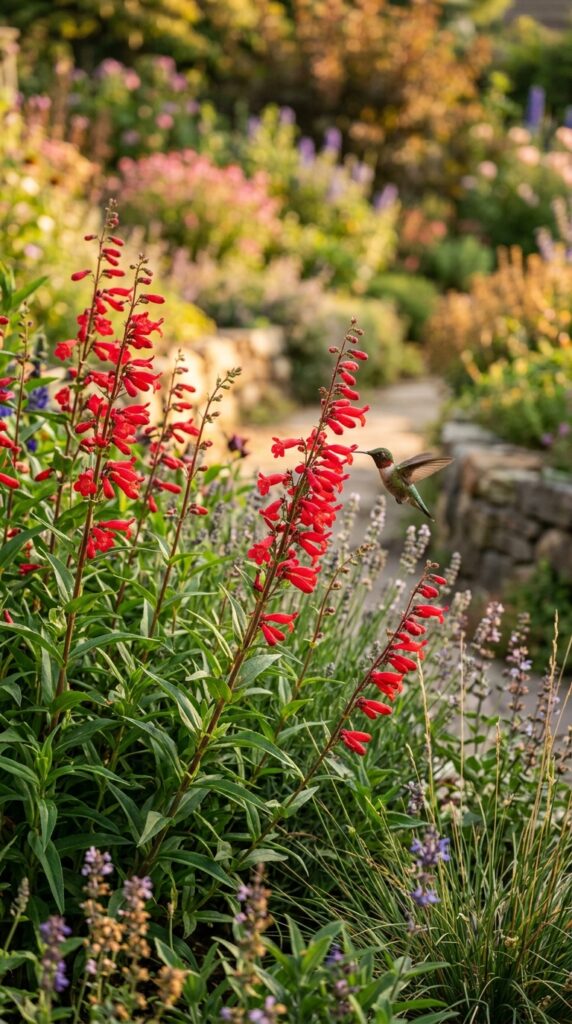
Penstemon ‘Firebird’ produces narrow spikes of tubular scarlet flowers that hummingbirds favor even over many dedicated hummingbird plants, and it blooms nearly continuously if deadheaded.
It needs full sun and, above all, excellent drainage — Penstemon’s biggest killer by far is wet feet in winter, not cold temperatures. Plant it in spring in gritty or sandy soil, and if your soil is heavy clay, plant on a slight mound or in a raised bed instead of amending the native soil. Deadhead spent spikes down to a leaf node to trigger repeat flowering from early summer through fall.
The pro insight most gardeners miss: don’t cut Penstemon back hard in fall. Leave the woody stems standing until new growth appears at the base in spring — cutting too early exposes the crown to winter kill.
It’s a strong pick for xeriscapes and gravel gardens where drainage is already built in. See our full guide to drought-tolerant hummingbird plants, and check the University of Florida Extension’s Penstemon notes for regional adaptations.
Avens ‘Mrs. Bradshaw’ (Geum coccineum)
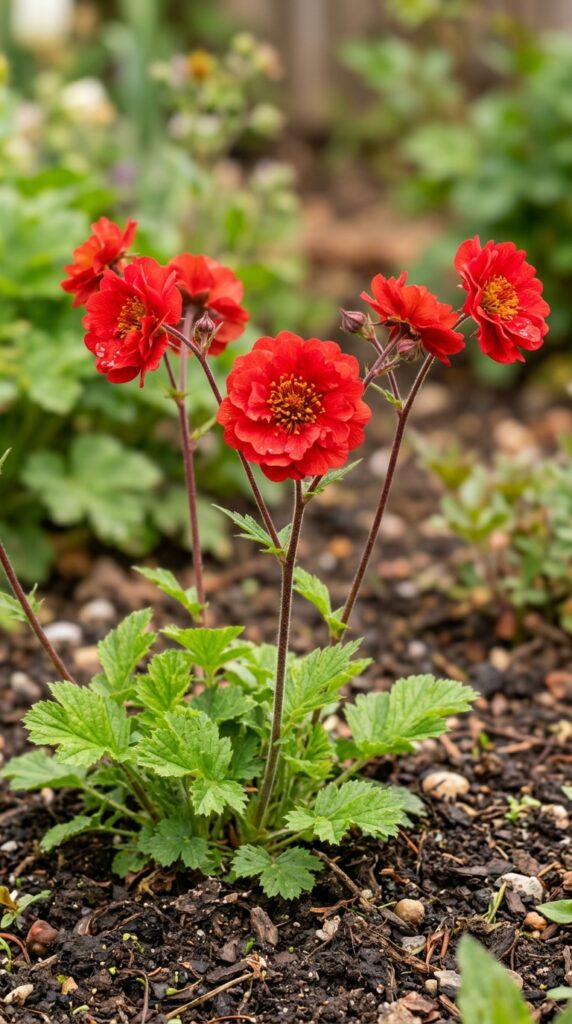
‘Mrs. Bradshaw’ Geum produces cheerful, semi-double scarlet flowers on wiry stems above low mounds of foliage, making it an excellent front-of-border filler that blooms for months.
Plant it in full sun to light afternoon shade in moist, well-draining soil enriched with compost — unlike the drought-tolerant plants elsewhere on this list, Geum actually prefers consistent moisture and struggles in extended dry spells. Space plants 12 inches apart in spring, and shear back after the first flush of bloom in early summer to encourage a strong second round through late summer.
💡 Pro Tip: Divide clumps every 2–3 years — Geum’s foliage rosette declines in vigor if left undivided, and older clumps produce fewer flowering stems each year.
It’s an ideal edging plant for cottage-style borders where you want low, tidy red color without the height of taller perennials on this list. Explore front-border pairings in our cottage garden edging guide, and see Gardeners’ World’s Geum profile for cultivar comparisons.
Scarlet Sage (Salvia coccinea)
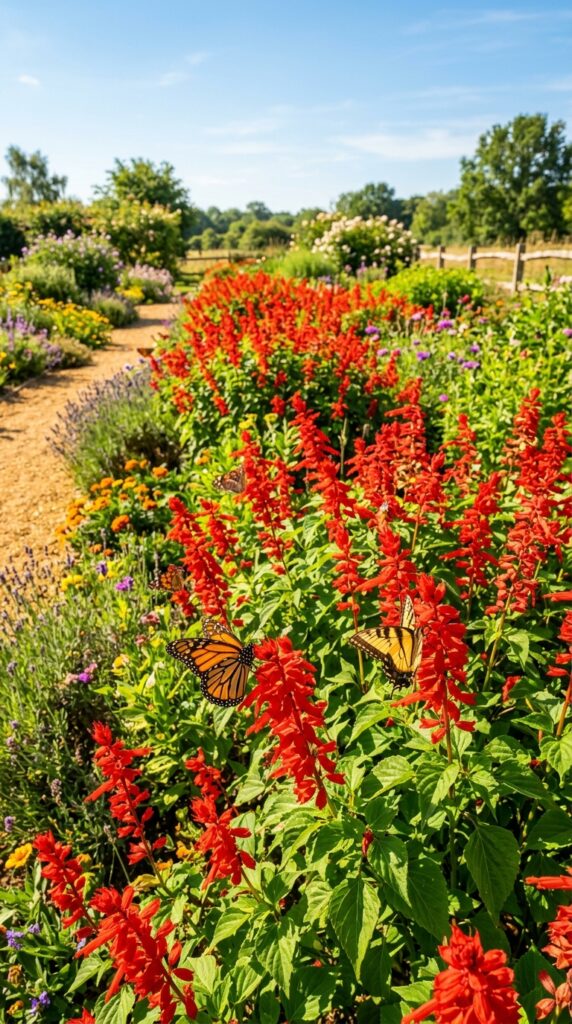
Scarlet Sage behaves as a true perennial in warm climates (zones 8–10) and reliably self-seeds as a returning annual further north, giving nearly every gardener access to its nonstop red blooms.
It wants full sun to part shade and average, well-draining soil — this is one of the most forgiving plants on this list and tolerates both heat and light drought once established. Sow seed or plant nursery starts after the last frost, spacing 12–15 inches apart, and it will flower continuously from early summer straight through the first frost without any deadheading required.
What works vs. what to avoid: Full sun with light afternoon shade in hot climates works best; avoid heavy, waterlogged soil, which is the main cause of stem rot in this otherwise trouble-free plant.
It’s genuinely one of the easiest red perennials for beginners, especially in warmer zones where it never needs replanting. See our zone-by-zone perennial vs. annual guide, and check the Almanac’s Salvia coccinea entry for exact hardiness ranges in your region.
Red Daylily ‘Ruby Stella’
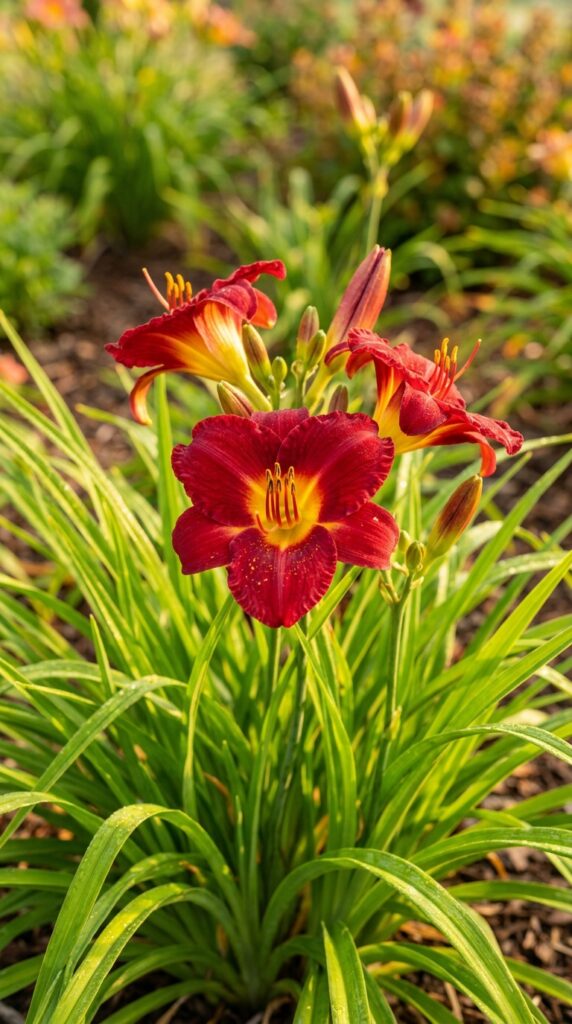
‘Ruby Stella’ Daylily is a rebloomer, meaning it produces new flower scapes continuously all summer rather than the single two-week bloom flush of older daylily varieties.
Plant it in full sun to light shade in average, well-draining soil, spacing clumps 18–24 inches apart in spring or fall. Daylilies are famously tough and tolerate poor soil, drought, and neglect, but deadheading spent blooms daily during peak season noticeably extends the overall flowering window.
The pro insight: individual flowers last only a single day, which is normal and not a sign of a problem — each scape produces many buds in succession, so the plant as a whole stays in continuous bloom for months.
This is one of the most foolproof choices on this list for gardeners who want reliable red color without any real maintenance. See our full guide to rebloomers vs. one-time bloomers, and check the Missouri Botanical Garden’s Hemerocallis profile for cultivar comparisons.
California Fuchsia (Epilobium canum)
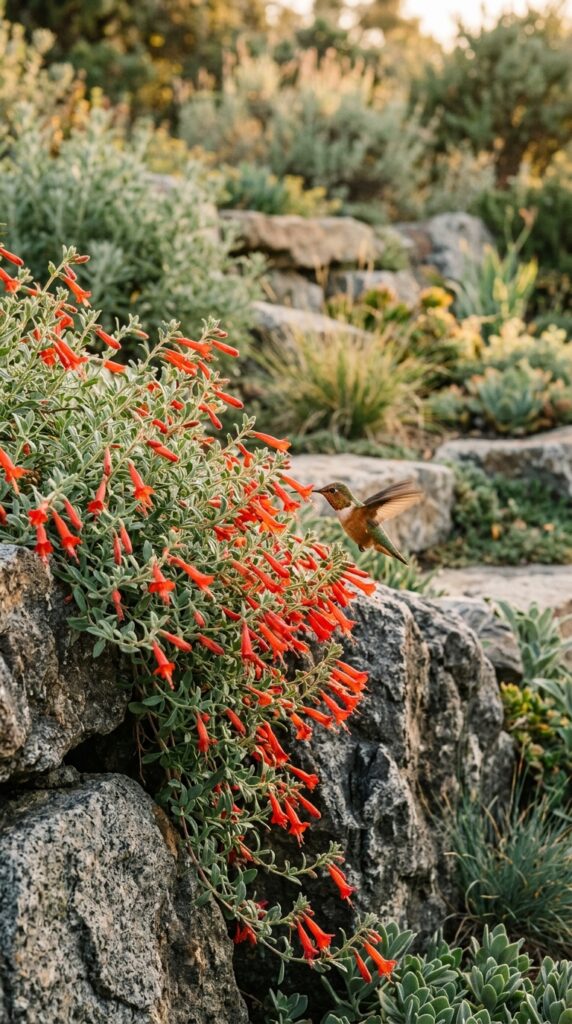
California Fuchsia is the plant to grow if your garden gets bone-dry by late summer — it actually blooms best in exactly the hot, dry conditions that stress out most other red perennials.
It needs full sun and lean, fast-draining soil; rich or regularly irrigated soil causes it to flop and rot at the crown. Plant in spring, spacing 18–24 inches apart to allow for its trailing, spreading habit, and once established (usually by the second season), it needs no supplemental water beyond natural rainfall in most climates.
It flowers latest of anything on this list, often not starting until midsummer, but then continues strong right through the first frost when almost everything else has finished.
This plant struggles in humid climates or heavy clay soil, so it’s best suited to true xeriscape or Mediterranean-style gardens. Read about pairing it with other late-season bloomers in our fall-blooming perennial guide, and see thesill.com’s drought-tolerant perennial notes for container adaptations.
Getting Started With Red Perennial Flowers
The easiest first step is picking just one plant suited to your existing conditions rather than trying to plant all 13 at once — if your yard is hot and dry, start with Red Valerian or California Fuchsia; if you have a damp spot, start with Cardinal Flower.
The most common beginner mistake is amending soil too generously for plants that actually prefer lean conditions, like Yarrow and Red Valerian — rich soil produces floppy growth and fewer blooms, not more. For your very first purchase, buy one established nursery plant (not seed) in a 1-gallon pot, a bag of coarse grit or sand if your soil is heavy, and a pair of bypass pruners for deadheading.
Realistically, expect strong bloom performance by the plant’s second full growing season — the first year is mostly about root establishment, even though you’ll usually see some flowers in year one. By year two, most of these perennials are blooming at full size and multiplying on their own.
Frequently Asked Questions
What is the easiest red perennial to grow for beginners?
Red Valerian and Scarlet Sage are the most forgiving choices — both tolerate poor, dry soil and bloom continuously from late spring through frost with essentially no fertilizer or deadheading required. Daylilies like ‘Ruby Stella’ are equally tough and tolerate almost any soil type as long as they get 6+ hours of sun.
How often should I water red perennial flowers?
It depends heavily on the species: drought-tolerant plants like Red Hot Poker, California Fuchsia, and Yarrow need watering only during establishment and extended dry spells, while Cardinal Flower and Hardy Hibiscus need consistently moist soil all summer. Overwatering drought-tolerant varieties is a more common cause of death than underwatering.
Why is my Bee Balm getting powdery mildew?
Powdery mildew on Monarda is almost always caused by poor air circulation and overhead watering rather than soil quality. Space plants 18–24 inches apart, water at the base, and choose mildew-resistant cultivars like ‘Jacob Cline’ to largely avoid the problem.
Can I grow red perennials in containers?
Yes — Yarrow, Geum, and Scarlet Sage all do well in containers with drainage holes and a well-draining potting mix, though container-grown perennials generally need more frequent watering than the same plant in the ground and may need winter protection in a garage or shed in colder zones.
How do I keep red perennials blooming all summer instead of just for a few weeks?
Regular deadheading is the single biggest factor — removing spent blooms on plants like Yarrow, Coneflower, and Geum signals the plant to keep producing new flowers rather than setting seed. Rebloomers like ‘Ruby Stella’ Daylily and true nonstop bloomers like Red Valerian need little deadheading, but most others benefit from a light shear-back in midsummer.
A Few Final Thoughts
Building a garden around these 13 red perennial flowers doesn’t require a complete overhaul — even swapping in two or three of these into an existing border will noticeably change how the space feels by midsummer. What makes this approach so satisfying is that these plants genuinely improve every year rather than needing to be replaced, and most of them ask for very little once their roots are established. Whether you start with a single pot of Scarlet Sage on a sunny patio or commit to a full Crocosmia-and-Bee-Balm border, the payoff is a garden that stays vivid and alive from June through the first frost. Your red perennial border is closer than you think — now go make it happen!