
There is a particular kind of misery in stepping out of a hot shower onto a freezing tile floor in January. My old flat had a north-facing bathroom with a single-glazed window, and for two winters I genuinely dreaded washing my hair. What fixed it wasn’t a renovation — it was a stack of small, cheap changes made over one season, plus a few plants that turned out to love the steam I’d been fighting. Below are 22 warm bathroom ideas for cold winter nights, from twenty-minute fixes to weekend projects, each one tested against the same question: does this actually hold heat, or does it just look warm? Ready? Let’s explore all 22 of them.
Quick Answer: If you can only do three things, do these: fit a thermal-lined blind or curtain (biggest heat loss in most bathrooms is the window), add a heated towel ladder on a timer set to come on 30 minutes before you bathe, and put a wool bath mat down instead of cotton. If you want warmth you can see, swap to 2700K bulbs on a dimmer and add a Boston fern (Nephrolepis exaltata) near the shower — it thrives in the 50–60% humidity that makes a bathroom feel warmer than the thermometer says.
Why Warm Bathroom Ideas for Cold Winter Nights Are Worth Your Time
Bathrooms are the hardest room in the house to keep warm, and it isn’t your imagination. Hard surfaces — tile, porcelain, glass, mirror — have almost no insulating value and a high thermal mass, so they pull heat out of your skin by conduction the moment you touch them. A 20°C tile floor genuinely feels colder than a 20°C wooden one.
That’s good news, because it means most of the fix is about surfaces and soft materials rather than expensive heating. Layering in wool, wood, and textiles changes how the room feels within a day. Sealing the door gap and dressing the window changes what the room actually holds within an hour.
Here’s the part most people miss: humidity does a lot of the work. Air at 50% relative humidity feels roughly 1–2°C warmer than dry air at the same temperature, which is why a bathroom with healthy steam-loving plants feels gentler than a bone-dry one. Ferns, calatheas and pothos all sit comfortably in that range.
This is ideal for renters, anyone in an older property with poor bathroom insulation, and anyone who wants the room to feel like somewhere they’d linger in February rather than sprint through.
At a Glance
- A thermal-lined blind can cut window heat loss noticeably in a small bathroom — often the single cheapest win at £20–£45.
- Wool bath mats hold warmth against bare feet far longer than cotton, which goes cold as soon as it’s damp.
- Boston ferns and calatheas actively prefer the 50–60% humidity a winter bathroom produces — no misting required.
- Swapping 4000K bulbs for 2700K on a dimmer changes the perceived warmth of a room in under five minutes.
- Underfloor heating mats run at roughly 100–150W per square metre, so a small bathroom costs pennies per evening to heat.
Comparison Table
| # | Idea | Effort | Rough Cost | Warmth Type |
| 1 | Underfloor heating mat | Weekend job | £150–£400 | Real heat |
| 2 | Heated towel ladder | Half day | £90–£350 | Real heat |
| 3 | Eucalyptus shower bundle | 10 minutes | £6–£12 | Sensory |
| 4 | Layered dimmable lighting | 1 hour | £30–£90 | Visual |
| 5 | Clay & terracotta palette | Weekend job | £25–£60 | Visual |
| 6 | Wool bath mat | 5 minutes | £25–£70 | Real heat |
| 7 | Teak bench & duckboard | 15 minutes | £40–£120 | Real heat |
| 8 | Steam-loving fern cluster | 30 minutes | £20–£45 | Humidity |
| 9 | Thermal-lined curtain | 1 hour | £20–£45 | Real heat |
| 10 | Candle tray | 10 minutes | £15–£40 | Sensory |
| 11 | Brass & bronze fixtures | 1–2 hours | £45–£200 | Visual |
| 12 | Draught-proofing the door | 30 minutes | £8–£20 | Real heat |
| 13 | Cedar slat accent wall | Weekend job | £80–£250 | Visual |
| 14 | Bath caddy soak station | 10 minutes | £20–£55 | Sensory |
| 15 | Backlit warm-white mirror | 1–2 hours | £70–£220 | Visual |
| 16 | Hanging plant rail | 1 hour | £25–£60 | Humidity |
| 17 | Amber apothecary jars | 15 minutes | £15–£35 | Visual |
| 18 | Waffle robe station | 20 minutes | £30–£80 | Real heat |
| 19 | Radiator plant ledge | 1 hour | £20–£50 | Humidity |
| 20 | Low-level floor nightlight | 20 minutes | £12–£30 | Visual |
| 21 | Framed botanical textiles | 30 minutes | £25–£70 | Visual |
| 22 | Insulated tub jacket | 1–2 hours | £30–£70 | Real heat |
1. Electric Underfloor Heating Under the Tile
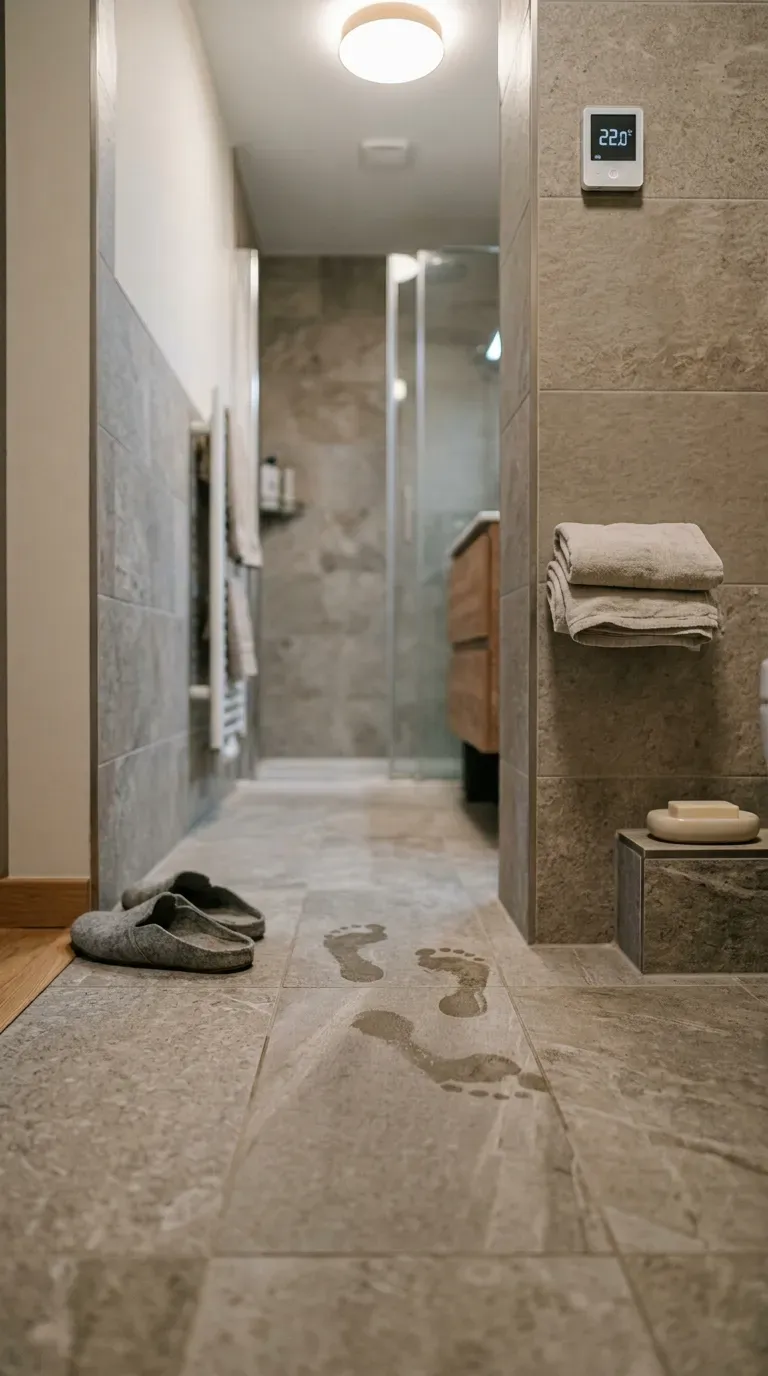
Cold tile is the reason most bathrooms feel unbearable in winter, and an electric mat system solves it at the source rather than heating the air and hoping it settles.
Mats typically run at 100–150W per square metre, so a 3m² bathroom draws about the same as a couple of lightbulbs. You lay the mat over the substrate, embed it in levelling compound, then tile on top — adding roughly 8–12mm to floor height, which matters if your door clearance is tight. Wire it to a programmable thermostat, not a manual switch.
In practice, the mistake I made was running it constantly. Tile takes 30–45 minutes to come up to temperature and holds it for a good while after, so a timed 90-minute window in the evening is far cheaper and just as comfortable.
Pro Tip: Set the floor sensor limit to 27°C rather than the maximum. Above that, engineered wood and vinyl can move seasonally, and tile grout is more prone to hairline cracking from repeated expansion.
Worth noting plainly: this is a job for a qualified electrician, and it is not a renter-friendly option. Pair it with our guide to cold-floor container plants so your pots aren’t sitting directly on a heated surface, and read how underfloor systems suit different floor coverings before committing to a finish.
Get the thermostat schedule right and you’ll never think about it again.
2. A Heated Towel Ladder on a Timer
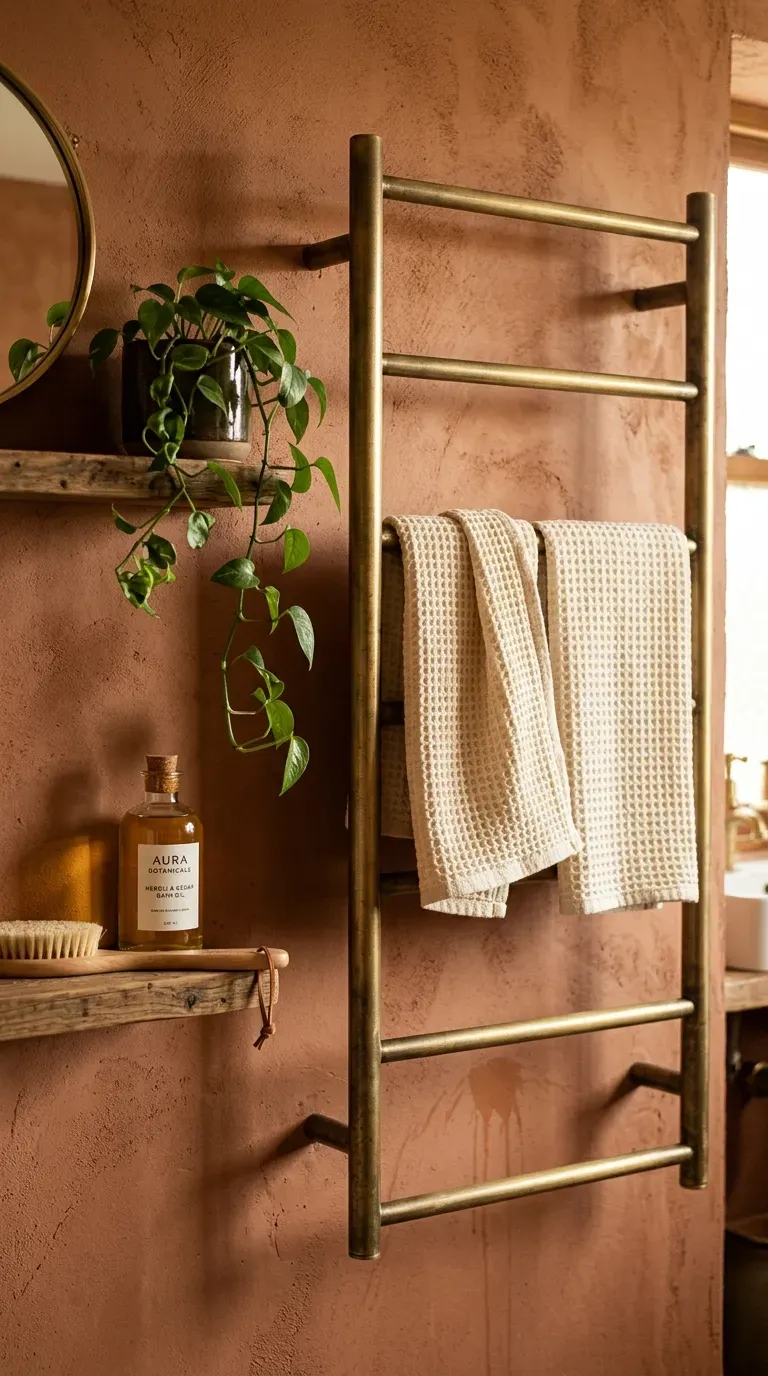
A warm towel does more for perceived comfort than raising the room temperature by two degrees, and it’s the fix people notice first.
Electric-only ladders are the flexible choice — they work independently of your central heating, which matters because most heating systems shut off overnight and in shoulder seasons. Look for 300–500W for a standard bathroom. Plumbed versions tie into your radiator circuit and only run when the heating does.
The trick is the timer. Set it to come on 30 minutes before your usual bath or shower and switch off an hour after. That short window also dries towels properly, which quietly reduces the damp-fabric smell that makes a cold bathroom feel worse than it is.
One honest limitation: a towel ladder is not a radiator. It will take the edge off a small room but won’t heat a large one. If it’s your only heat source, size up.
Hang a trailing plant nearby — see our humidity-loving bathroom plants list — and check guidance on sizing heated rails to room volume before ordering.
Warm towels in January are a small luxury that stops feeling like a luxury very quickly.
3. A Eucalyptus Bundle Tied to the Showerhead
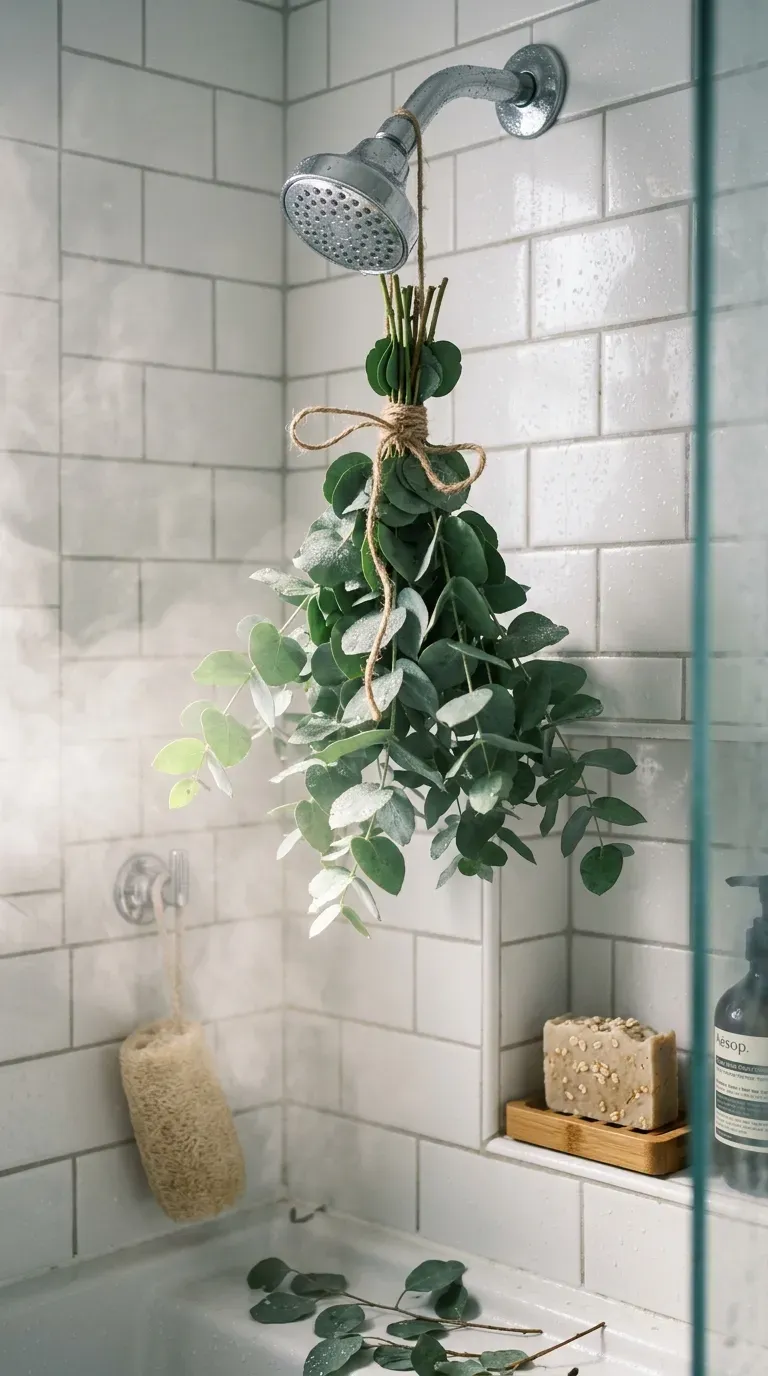
This is the cheapest idea on the list and the one guests always ask about. Hot shower steam releases the volatile oils in eucalyptus leaves, and the room smells like a spa within a minute.
Use Eucalyptus cinerea (silver dollar) or Eucalyptus gunnii — both hold their oils well when dried. Tie 8–10 stems with twine and hang the bundle beside the showerhead, not directly under the water. Wet leaves go slimy and lose scent in days; steam-exposed leaves last three to four weeks.
I killed my first three bundles by hanging them in the spray. Once I moved the knot to the shower arm so the bundle sat off to one side, the same bunch lasted nearly a month.
- Best value: florist bunches at £6–£12, refreshed monthly
- Longest lasting: preserved eucalyptus, six months, but far less scent
- Avoid: lemon eucalyptus indoors if you have cats — it’s an irritant
Find companion ideas in our dried botanicals for small spaces guide, and read how eucalyptus varieties differ in oil content before you buy.
Ten minutes, six pounds, and the whole room changes character.
4. Layered Lighting on a Dimmer at 2700K
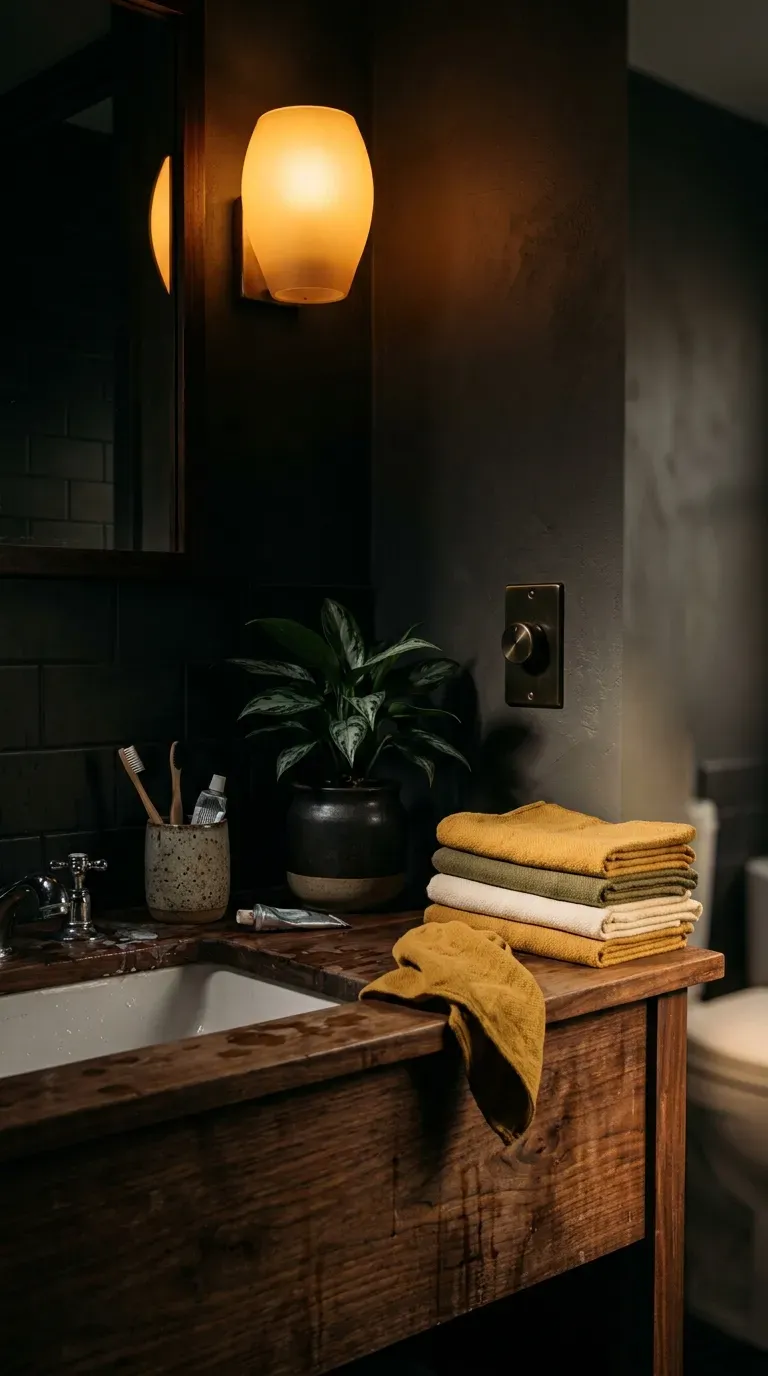
Colour temperature is the fastest warmth upgrade in any room, and most bathrooms are lit like a dentist’s surgery.
Swap anything at 4000K or above for 2700K bulbs. That single change shifts the light from blue-white to candle-adjacent. Then add a second source at a different height — a wall sconce, a plug-in shelf light, anything that stops the ceiling fixture from being the only option.
Put both on a dimmer where the wiring allows. A bright setting for mornings, a low setting for evening baths. In a bathroom, use IP-rated fittings appropriate to the zone; near a bath or shower this is a safety requirement, not a preference.
Pro Tip: If you can’t rewire, a warm-white smart bulb in the existing fitting gets you 80% of the effect for about £12. Set an evening scene that drops to 20% brightness automatically at 8pm and you’ll stop thinking about it.
Plants read differently under warm light too — see how light temperature affects foliage colour indoors and the basics of measuring indoor light levels.
Change the bulbs first. Everything else looks better afterwards.
5. A Clay, Ochre and Terracotta Paint Palette
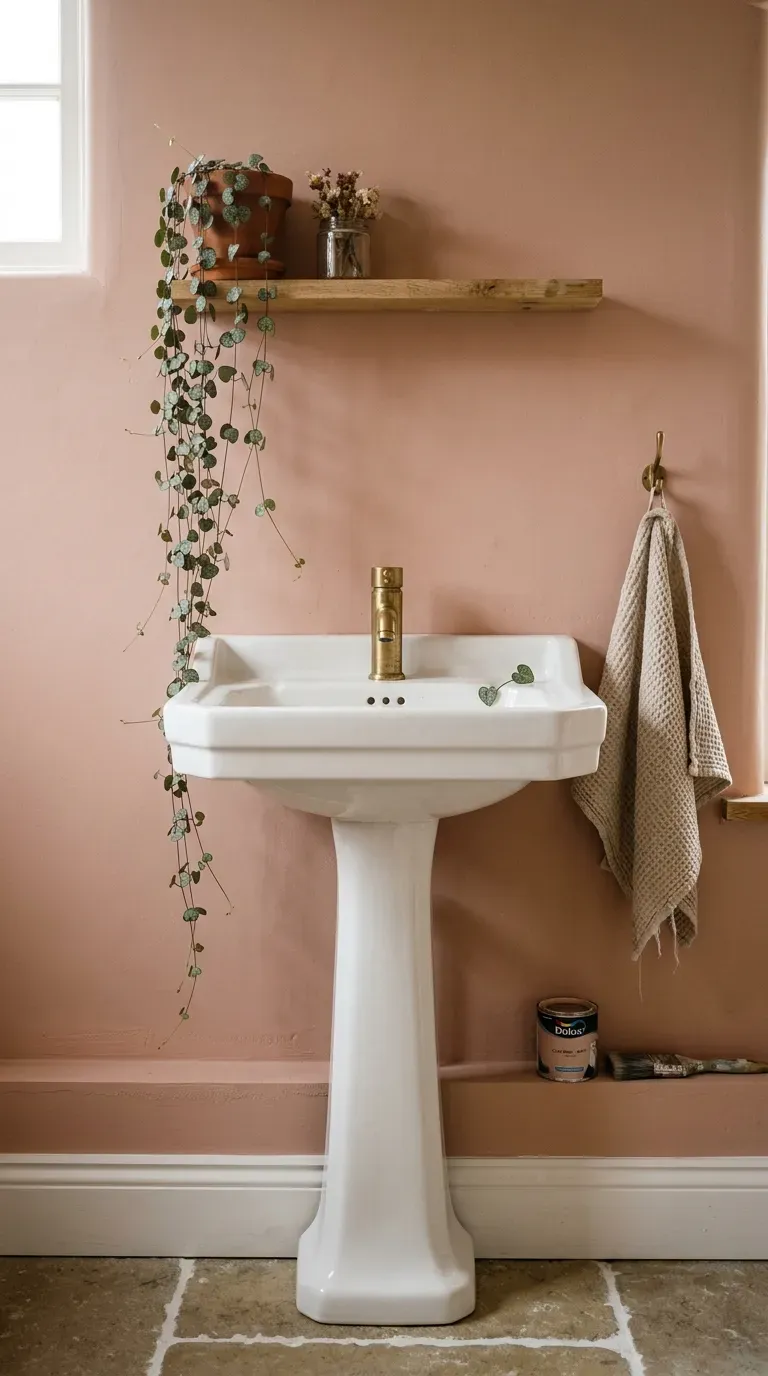
Cool greys and brilliant whites are the default bathroom palette, and they’re the reason so many bathrooms feel like a hospital corridor in December.
Warm-based neutrals — clay pink, ochre, mushroom, soft rust — reflect light with a yellow-red cast instead of a blue one. Use a matt or eggshell bathroom-grade emulsion with mould inhibitors; standard matt will not survive sustained humidity. Two coats over a mist coat on fresh plaster.
Test properly. Bathroom light is usually artificial and often from a single overhead source, so paint two A4 patches and look at them at 9pm, not 11am. The colour I nearly chose looked lovely in daylight and distinctly orange under a bulb.
Terracotta walls also make terracotta pots look intentional rather than accidental, which is a free styling win. Browse pot and wall colour pairings that work indoors and read practical advice on finishes for humid rooms.
One tin, one Saturday, and the room stops feeling clinical.
6. A Wool or High-Pile Bath Mat Instead of Cotton
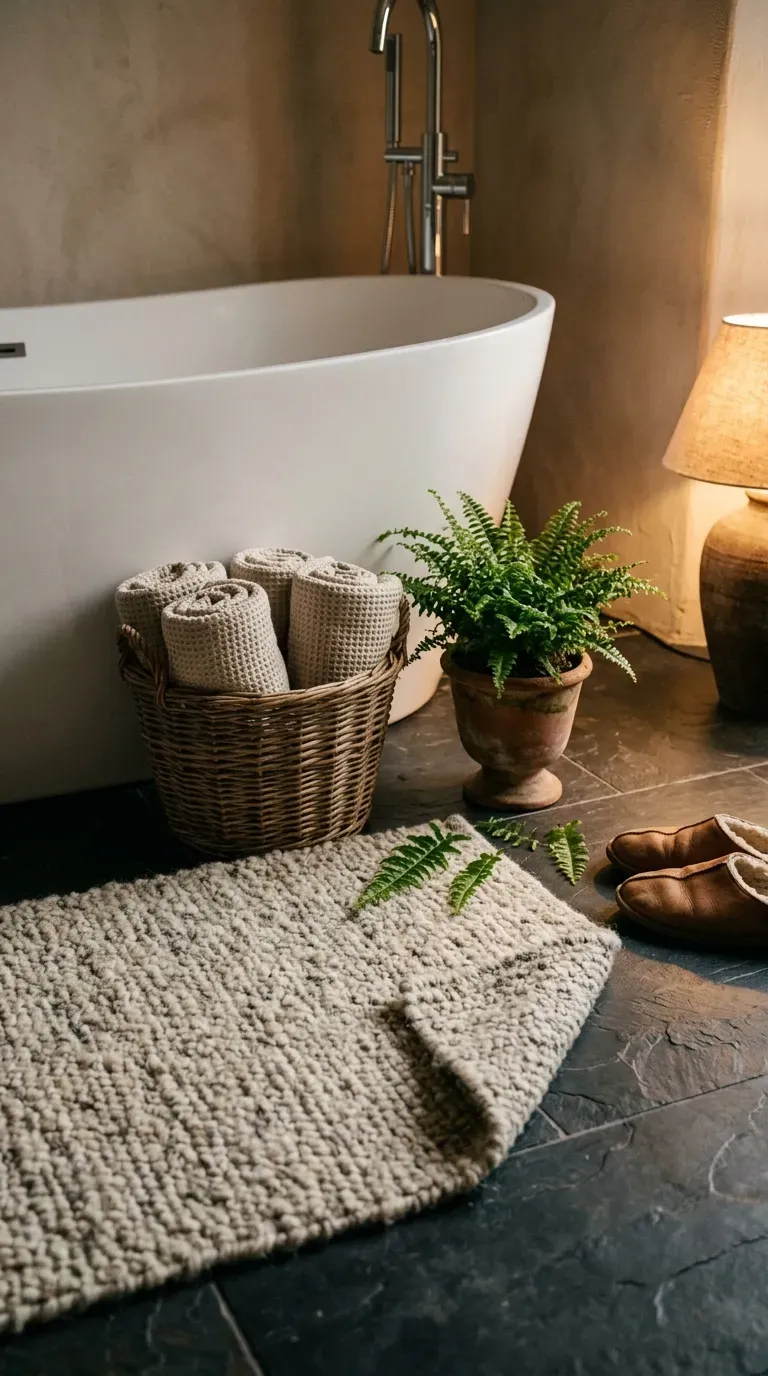
Cotton bath mats feel fine dry and horrible the moment they’re damp, because wet cotton conducts heat away from your feet efficiently.
Wool doesn’t. It holds roughly 30% of its weight in moisture before it feels wet to the touch, and the trapped air in a high pile acts as insulation between your feet and the floor. Bamboo-cotton blends and thick tufted acrylic both sit in the middle.
Buy one size up from what looks right — a mat that covers the landing zone in front of the bath and the basin means you’re never stepping onto bare tile in the dark. Shake it out weekly and let it dry fully; wool needs airflow or it’ll hold odour.
The honest caveat: wool needs cool hand-washing or a wool cycle, and it sheds for the first fortnight. If your bathroom has no ventilation at all, a fast-drying bamboo blend is the more practical choice.
See our notes on managing bathroom humidity for plants and textiles and advice on natural fibre care.
Cheap change, immediate payoff, every single morning.
7. A Teak Bench and Duckboard by the Tub
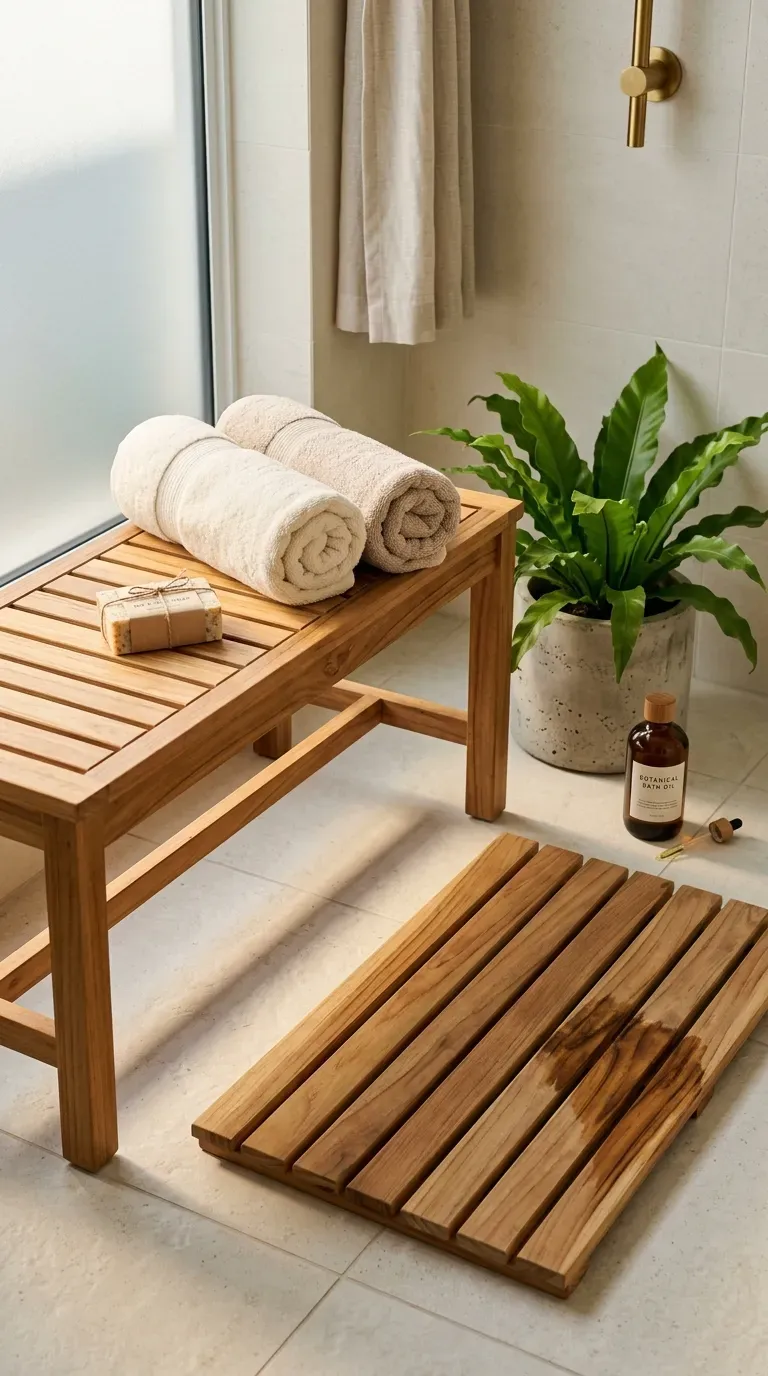
Wood is roughly ten times less conductive than ceramic tile, which is why a teak duckboard feels warm underfoot at exactly the same room temperature.
Teak is the standard for bathrooms because its natural oil content resists water and it doesn’t need sealing. Iroko and thermally modified ash work too. Expect £40–£120 for a decent bench, and buy one with slats spaced 8–10mm apart so water drains rather than pools.
Lift the duckboard occasionally — I left mine down for a whole winter and found a pale outline of trapped damp on the tile underneath. Standing it against the wall once a week solved it entirely.
- Best for small rooms: a narrow duckboard only, 40 × 60cm
- Best for storage: a slatted bench with a lower shelf for baskets
- Skip: untreated pine, which will grey and split within a season
Pair it with our guide to wooden plant stands for damp rooms and read how timber behaves in high-humidity interiors.
Warm wood underfoot is a surprisingly large comfort for a surprisingly small object.
8. A Cluster of Steam-Loving Ferns
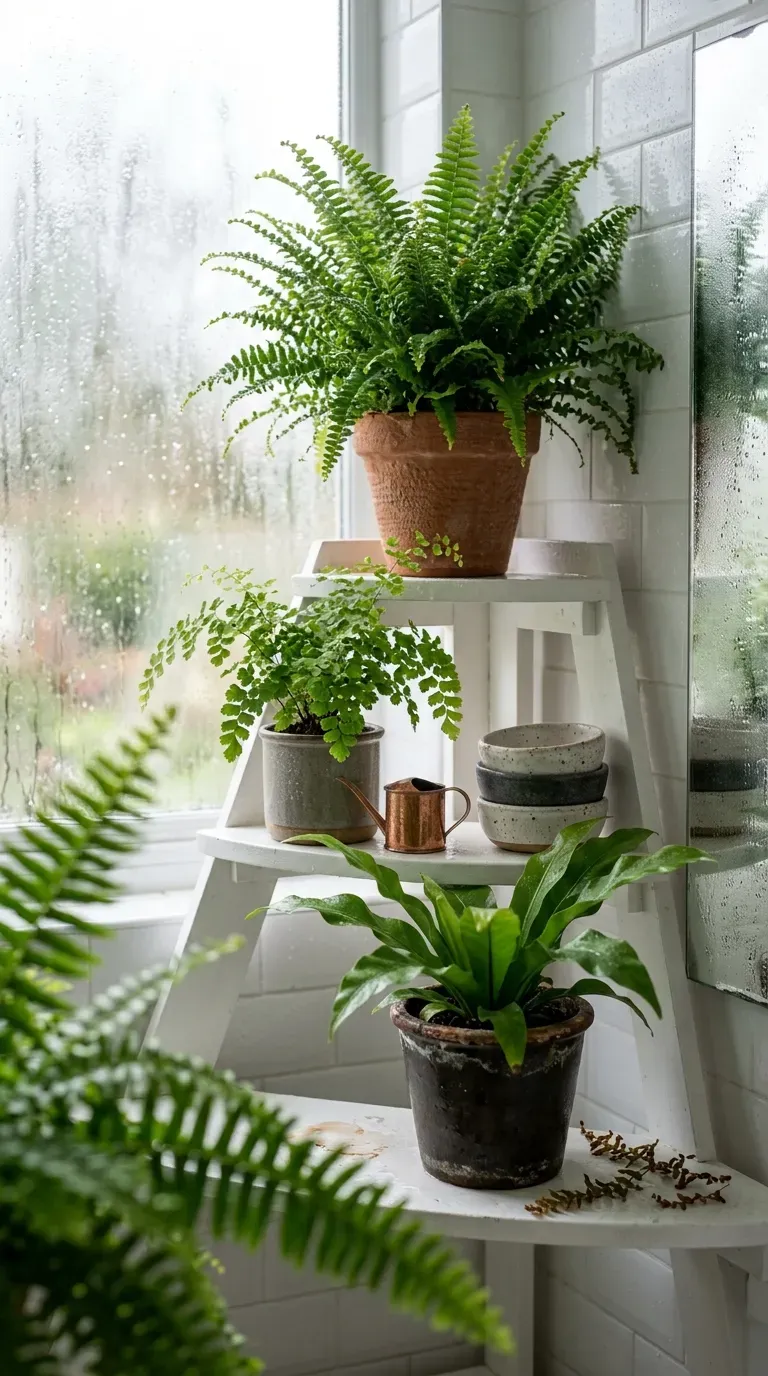
Ferns are the one plant group that genuinely prefers a winter bathroom to the rest of your house, and grouping them raises local humidity further.
Boston fern (Nephrolepis exaltata) reaches 60–90cm across and wants bright indirect light. Maidenhair (Adiantum raddianum) stays under 40cm and is the fussiest — it will not tolerate drying out, even once. Bird’s nest fern (Asplenium nidus) is the forgiving one, happy in lower light and reaching around 60cm.
All three want consistently moist, never waterlogged, peat-free potting mix with added perlite, and a pot with real drainage. Feed monthly at half strength from March to September, then stop.
Pro Tip: Group them within about 30cm of each other on the same shelf. Transpiration from three plants raises the immediate humidity pocket measurably, and the maidenhair — which is the first to crisp — is the plant that benefits most.
The limitation is light. A windowless bathroom will not sustain ferns long-term; rotate them out to a bright room for a fortnight every month or choose pothos instead. More on that in our low-light bathroom plant options, and fern care fundamentals here.
Steam you were fighting becomes steam that’s feeding something.
9. A Thermal-Lined Curtain or Blind on the Window
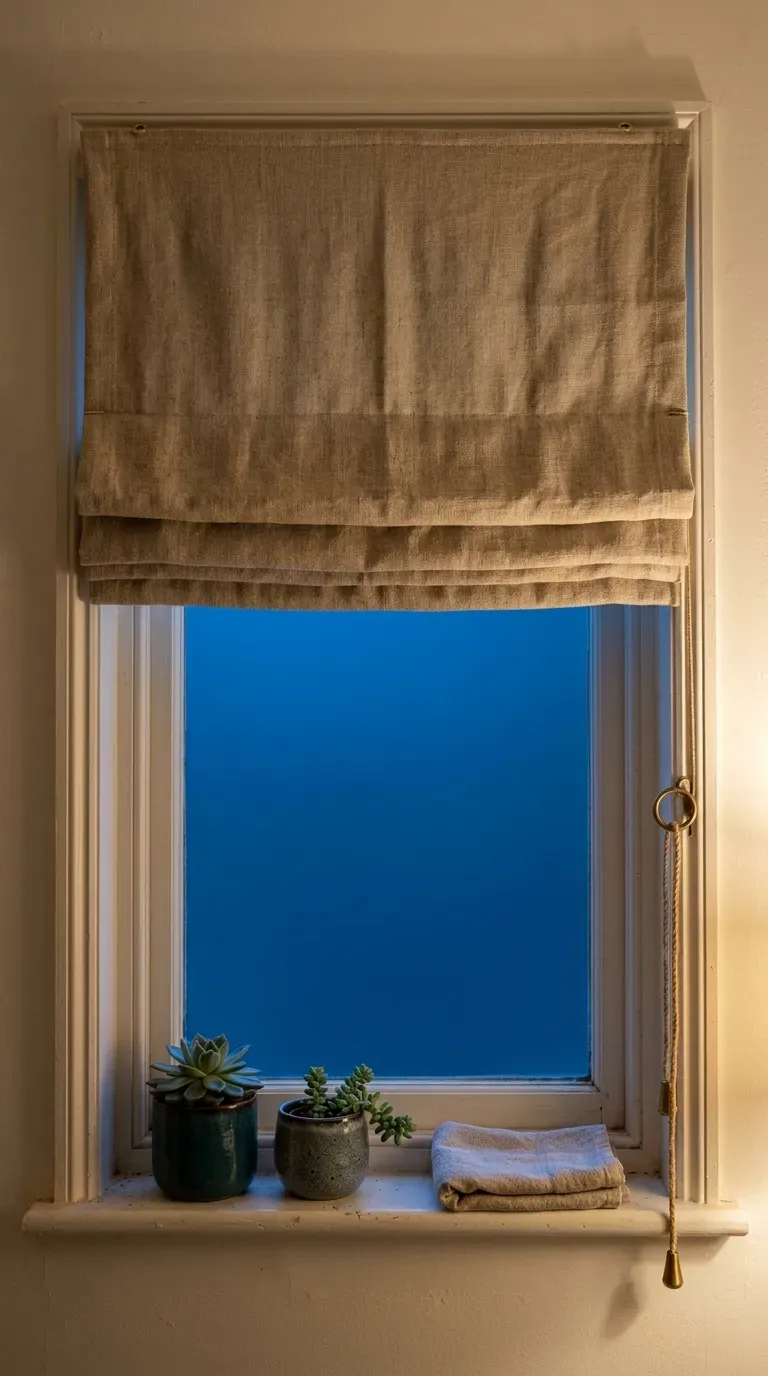
Single-glazed bathroom windows are usually the largest cold surface in the room, and dressing them is the highest-return-per-pound change on this list.
A thermal-lined roman blind or a curtain with interlining creates a still air pocket against the glass. Fit it to sit as close to the frame as possible and extend it 10–15cm beyond the reveal on each side — a blind that stops at the glass edge lets cold air spill around it.
Choose a washable fabric. Bathroom textiles get damp, and anything dry-clean-only will end up mildewed by spring. Linen blends and cotton canvas both cope.
I resisted this for a year because the window was frosted and I assumed privacy was the only reason to cover it. The evening the blind went up, the room stopped having that draught you feel at ankle height.
Windowsill plants need light, so raise them off the sill onto a shelf if the blind stays down — see our windowsill plant rotation tips and how to reduce heat loss through glazing.
Twenty minutes with a drill, and the room holds heat all evening.
10. A Candle Tray on the Vanity or Tub Edge
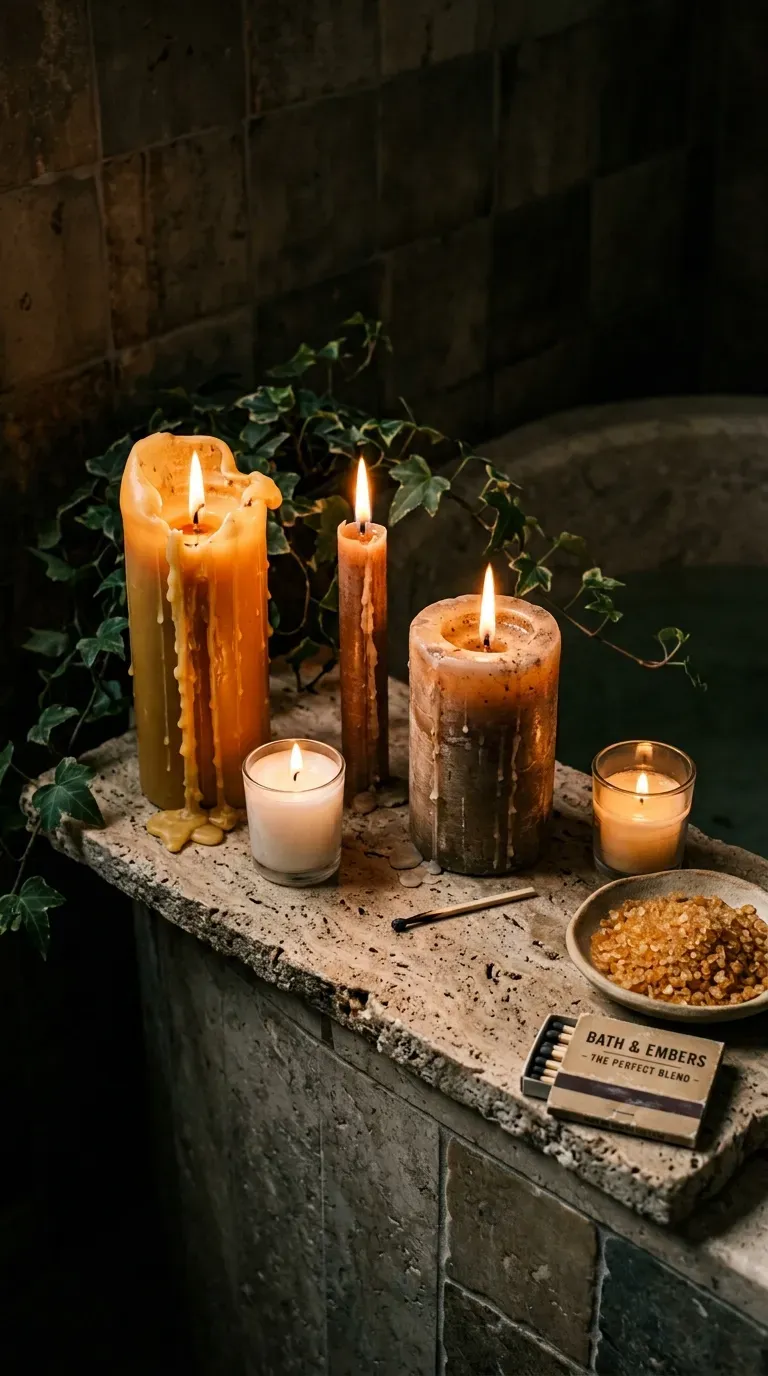
Candlelight sits at roughly 1800–1900K — far warmer than any bulb you can buy — which is why a lit bathroom reads as cosy even when the air is cool.
Group an odd number, three or five, at varying heights on a non-combustible tray: slate, travertine, brass. Mixed heights stop it looking like a shop display. Keep everything at least 20cm from towels, blinds and toilet roll.
Choose unscented or lightly scented if you’re also using eucalyptus, or the two will fight. Soy and rapeseed wax burn cleaner and cooler than paraffin, which matters in a small unventilated room.
Real-world caveat: never leave them burning while you’re in the bath with your eyes closed. I use three LED pillars with a genuine flicker for long soaks and real wax for short evenings, and honestly the difference at low light is hard to spot.
Pair the glow with our list of plants that look best backlit and check safe candle placement guidance.
Ten minutes of setup buys you an entire evening of atmosphere.
11. Swap Chrome Fixtures for Brass or Bronze
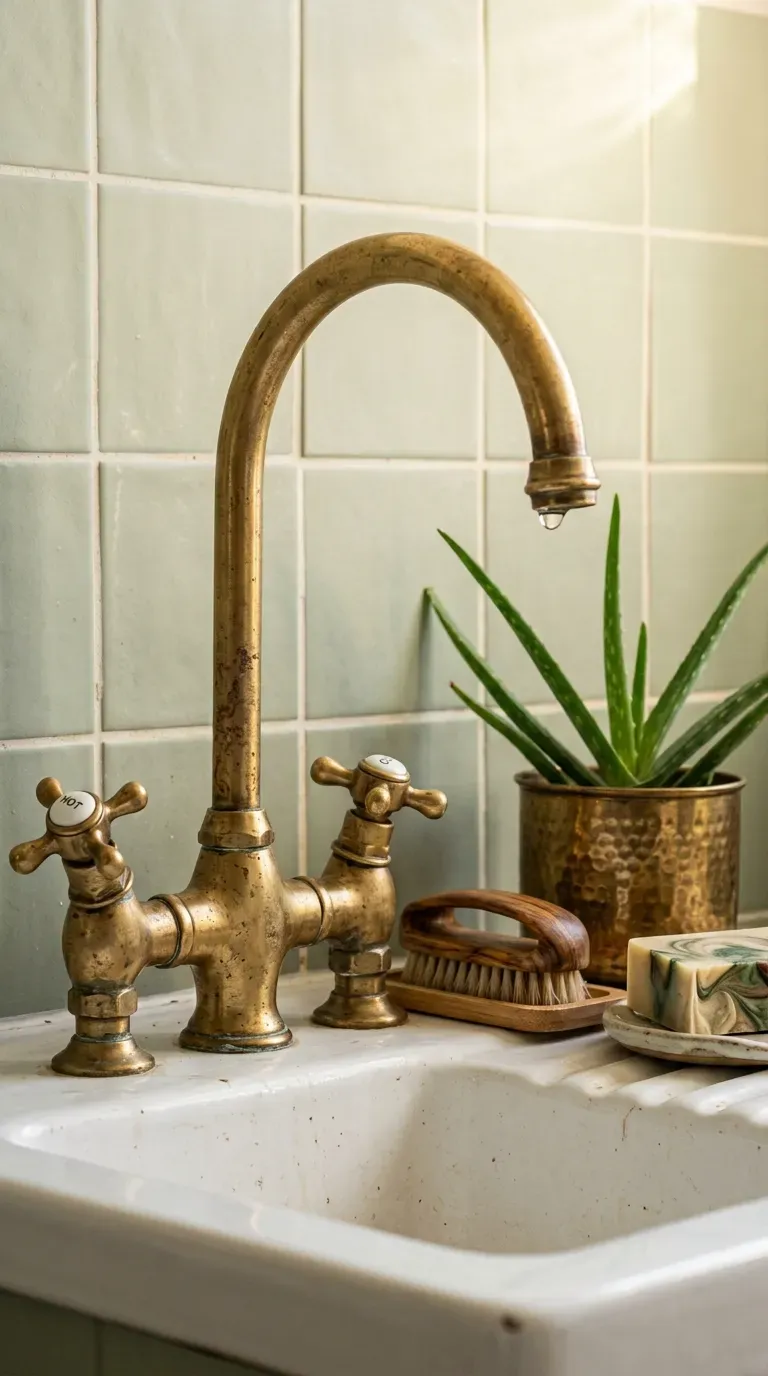
Metal finish sets the temperature of a room visually, and chrome is relentlessly cool. Brass, bronze and antique copper reflect warm.
The cheapest route is not replacing the tap. Change the towel hooks, the toilet roll holder, the shower curtain rings and the cabinet knobs — that’s four warm touchpoints for around £45, and the eye reads the room as warm even with a chrome tap still in place.
If you do replace taps, decide between lacquered and unlacquered. Lacquered stays bright and eventually chips. Unlacquered develops a genuine patina in six to twelve months in a humid bathroom, which some people love and some people hate. There’s no undoing it.
Pro Tip: Mixing metals is fine, but keep it to two and give each a job — brass for all the small hardware, matte black for the shower and radiator, for example. Random mixing is what looks accidental, not the mixing itself.
Brass planters follow the same logic; see our metal planter care guide and finish comparisons for humid rooms.
Four small swaps, one afternoon, and the whole palette shifts.
12. Draught-Proof the Door and Skirting Gaps
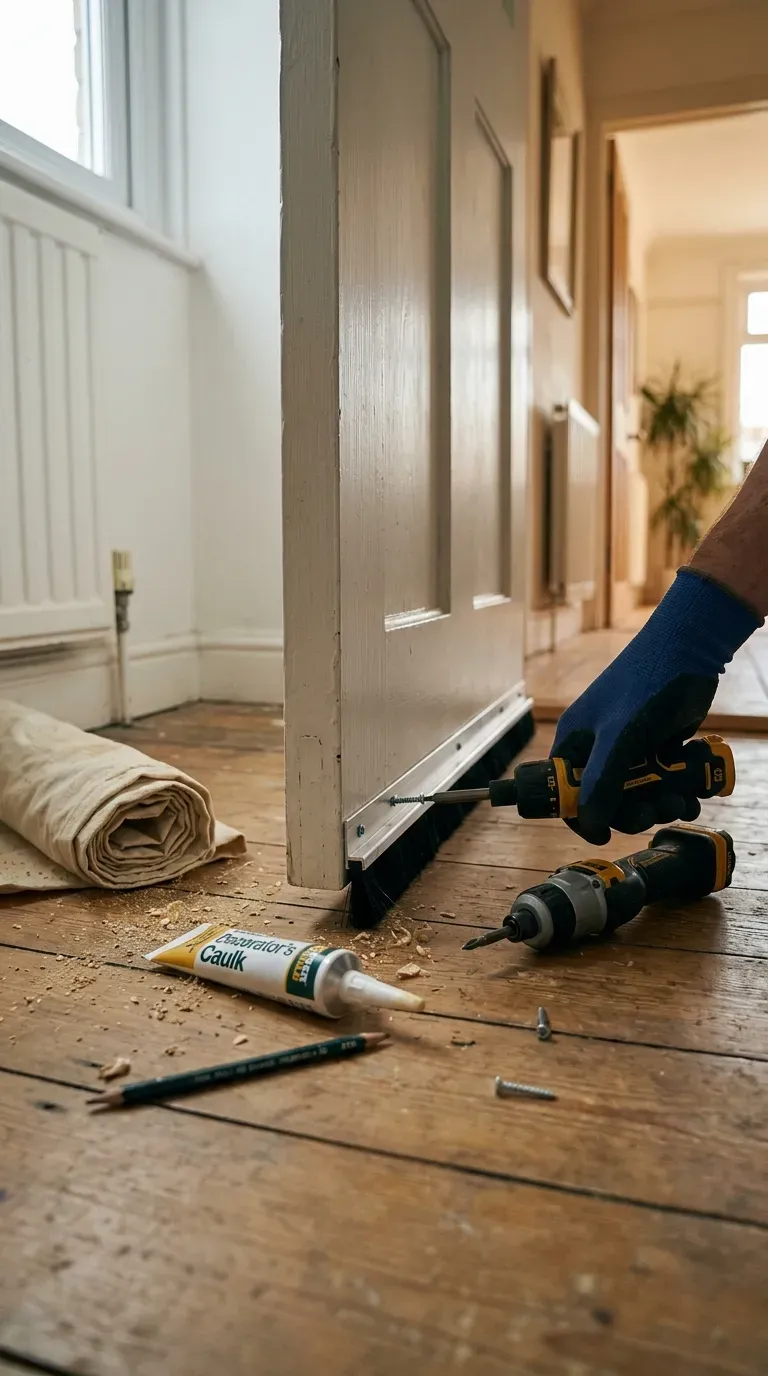
The gap under a bathroom door is often 15–20mm, deliberately, for ventilation — and it’s a direct route for cold hallway air along the floor.
A brush strip is the compromise. It cuts the draught at ankle height while still permitting airflow, unlike a rubber seal which can block ventilation entirely and cause condensation problems. Fit it so the bristles just graze the floor covering.
While you’re there, run a bead of flexible decorator’s caulk along the top edge of the skirting and around the window architrave. These gaps are invisible and they leak constantly.
The honest limit: do not seal a bathroom airtight. If you have an extractor fan, it needs make-up air to work, and without airflow you’ll trade a draught for black mould on the ceiling. Brush strip yes, full seal no.
If humidity climbs after draught-proofing, our condensation management guide covers what to watch, and this explains ventilation requirements.
Eight pounds and half an hour for a draught you’ll stop noticing entirely.
13. A Cedar Slat Accent Wall for Sauna Warmth
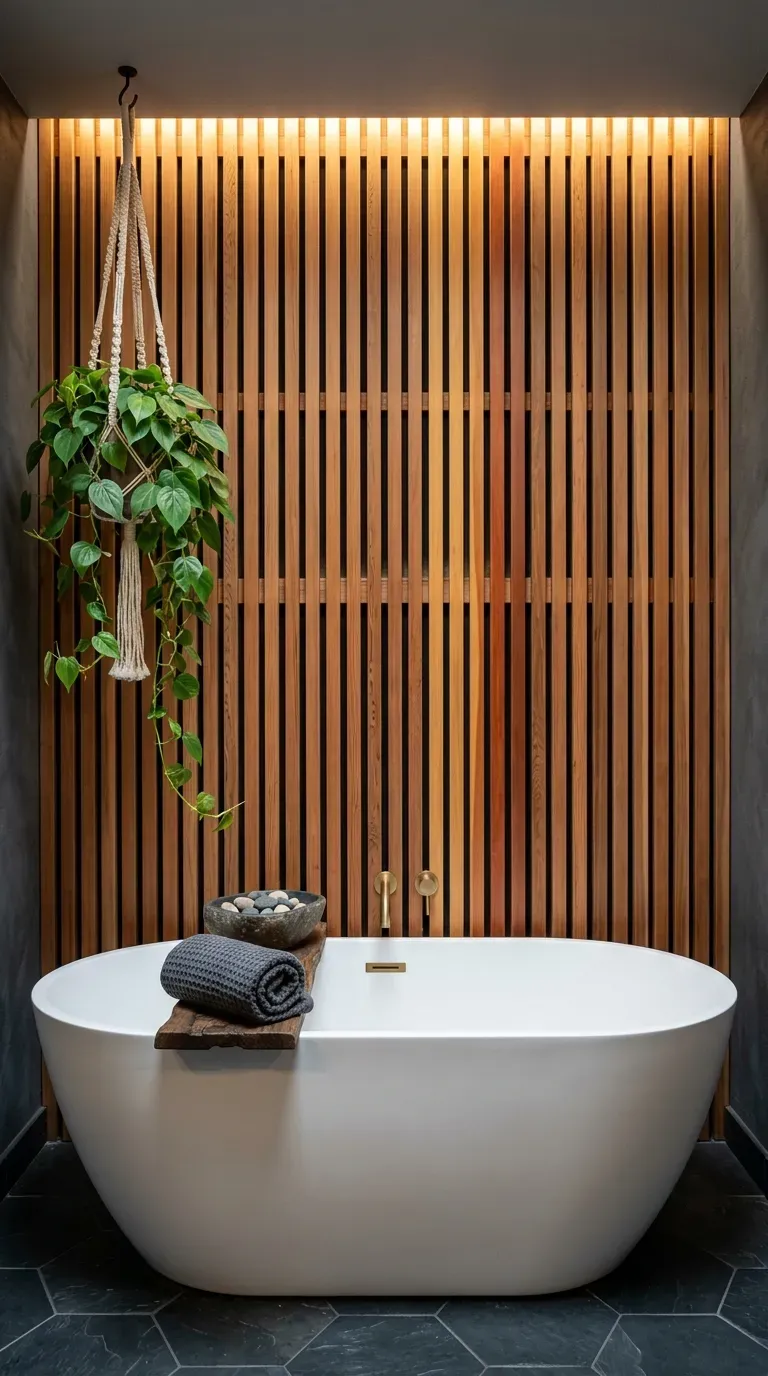
Nothing signals warmth quite like sauna cedar, and a single slatted wall gets most of the effect without the plumbing implications of a full timber-lined room.
Western red cedar is the traditional choice — naturally rot-resistant, dimensionally stable in humidity, and it smells faintly of sauna when the room steams up. Fix slats to battens with a 10–15mm air gap behind, which lets the wood breathe and prevents trapped moisture.
Keep it off the wet wall. A slatted panel behind a bath or on the wall opposite the shower is fine; inside a shower enclosure it isn’t. Finish with a penetrating oil rather than a film-forming varnish so the timber can still move.
- Warmest tone: western red cedar, deepens to reddish-brown
- Most economical: thermally modified pine, around 40% cheaper
- Best for small rooms: narrow 30mm slats with tight spacing, which read less heavy
Hang a trailing plant against it — our guide to macrame and wall-mounted planters helps — and read timber selection advice for humid interiors.
One wall, one weekend, and the room borrows an entire mood.
14. A Proper Bath Caddy Soak Station
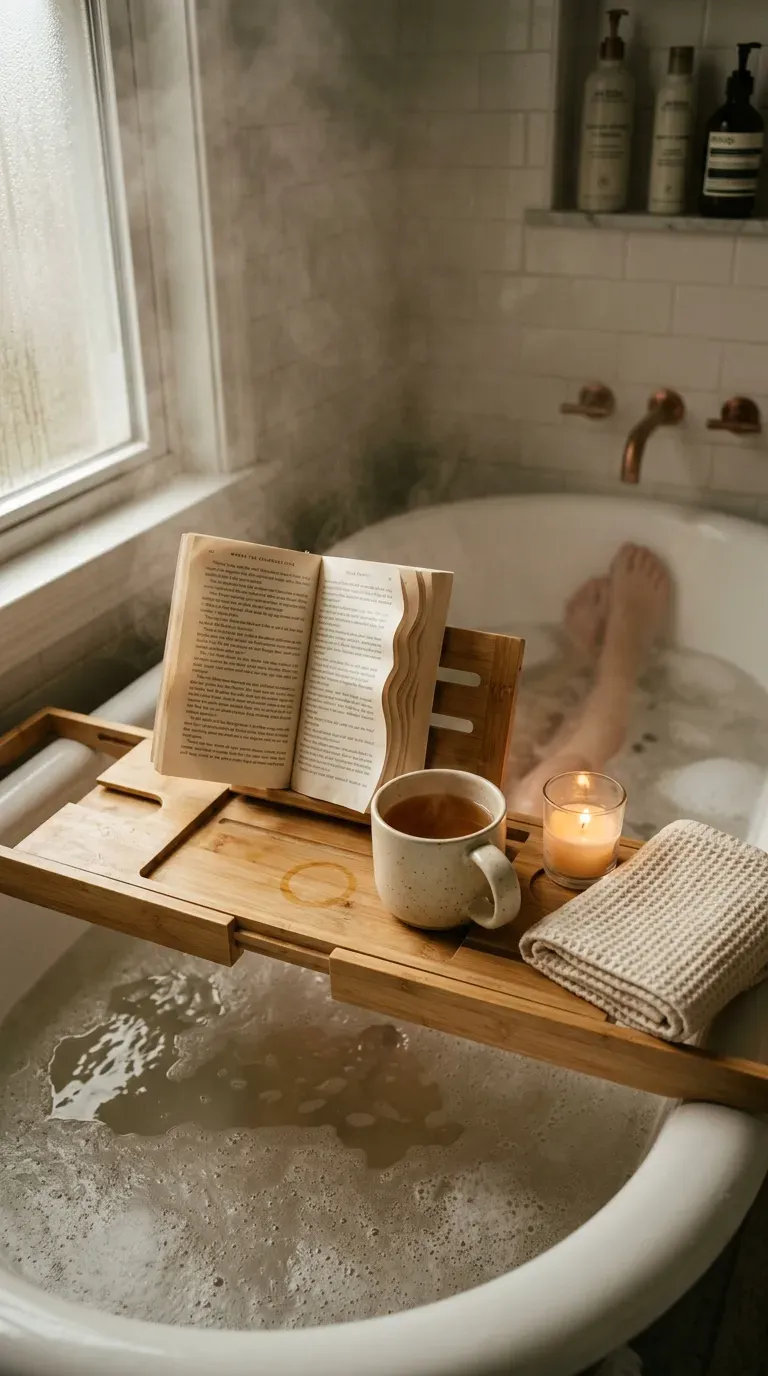
A long soak is the cheapest heat source in a cold house, but most people cut it short because there’s nowhere to put anything.
An extendable bamboo caddy with a book rest, a cup slot and a small tray solves it. Look for silicone-tipped adjustable arms so it grips different tub widths, and check the span before buying — standard caddies fit 68–92cm, and freestanding tubs are often wider.
Bamboo handles humidity well but needs occasional oiling; once or twice a year with a food-safe mineral oil stops it drying and splitting. Wipe it dry after use rather than leaving it spanning a wet bath.
In practice the mug slot is the thing that changes behaviour. Tea within reach turns a fifteen-minute bath into a forty-minute one, and the room stays warm for an hour afterwards from the residual heat.
Pro Tip: Set a timer for 20 minutes rather than topping up with hot water repeatedly. Water above roughly 40°C for long periods dries skin badly, and a shorter, hotter bath followed by a warm towel beats a long tepid one.
Style it with something green — our small trailing plants for tight spaces and advice on safe bathing temperatures.
Twenty pounds buys back an evening ritual you’d stopped bothering with.
15. A Backlit Warm-White Mirror
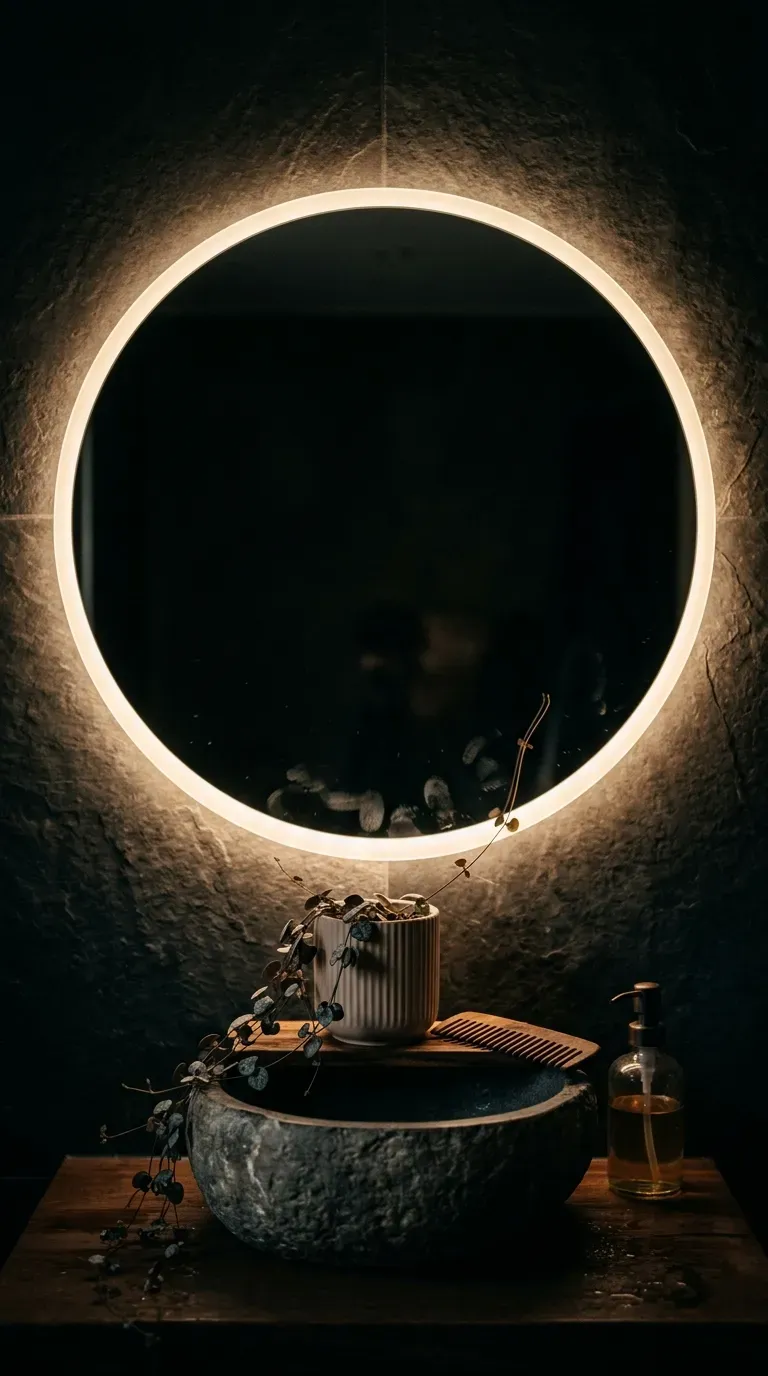
A backlit mirror does two useful things at once: it throws soft indirect light onto the wall rather than glare into your eyes, and at night it can replace the ceiling light entirely.
Specify warm white, 2700–3000K. Most stock mirrors ship at 4000K or with a cool/neutral toggle, and the cool setting is the one that makes a bathroom feel like a car park. Many models now include a demister pad — worth the extra £20–£30 in winter, since it keeps the glass clear through a hot shower.
Check the IP rating for your zone and the cable route before ordering. Hardwired models look far better than trailing a flex, but they need a fused spur nearby.
The trade-off worth knowing: backlit halo light is atmospheric but poor for close tasks like shaving. If it’s your only mirror, choose one with a front-lit task strip as well.
See our picks for plants that suit low evening light and how to assess light quality indoors.
At 10pm, a glowing mirror is all the light the room needs.
16. A Hanging Plant Rail Above the Shower
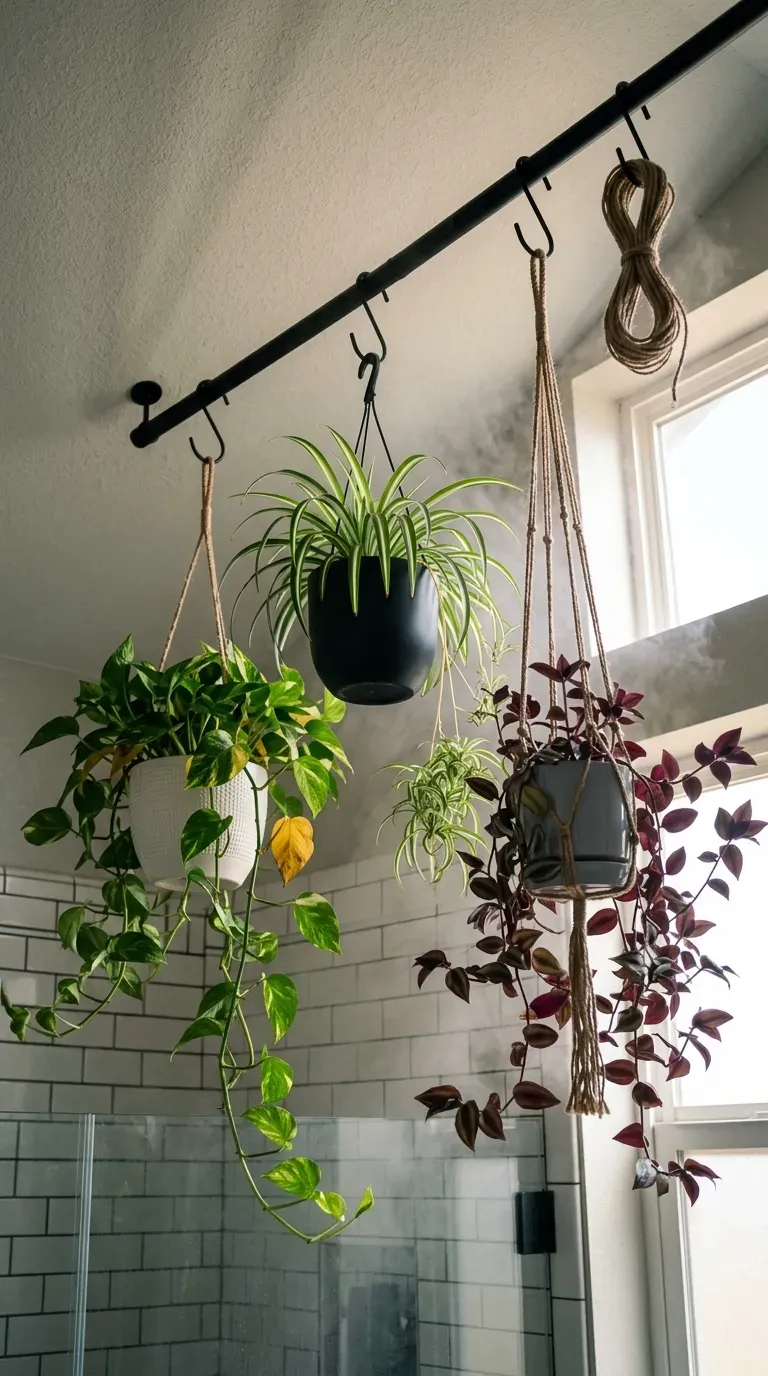
Vertical space above a shower is the warmest, most humid air in the house — and in most bathrooms it’s completely empty.
Fit a slim rail or a row of ceiling hooks into joists, not plasterboard alone; a watered hanging pot can weigh 3–4kg. Golden pothos (Epipremnum aureum) trails to 2m indoors and tolerates almost anything. Spider plant (Chlorophytum comosum) is non-toxic to cats and dogs, which matters if yours drinks from odd places. Tradescantia colours best with more light.
Water these less than you think. Ambient humidity slows evaporation, so a pot that needs weekly watering elsewhere may go ten to fourteen days here. Check the top 3cm with a finger first.
The practical catch: you need a ladder to water them, so keep the rail at a height you’ll actually maintain. Mine at 2.4m got watered; a friend’s at 2.9m did not survive the year.
More in our hanging plant guide for humid rooms and pothos care specifics here.
Dead space becomes the greenest part of the room.
17. Amber Glass Apothecary Jars and Bottles
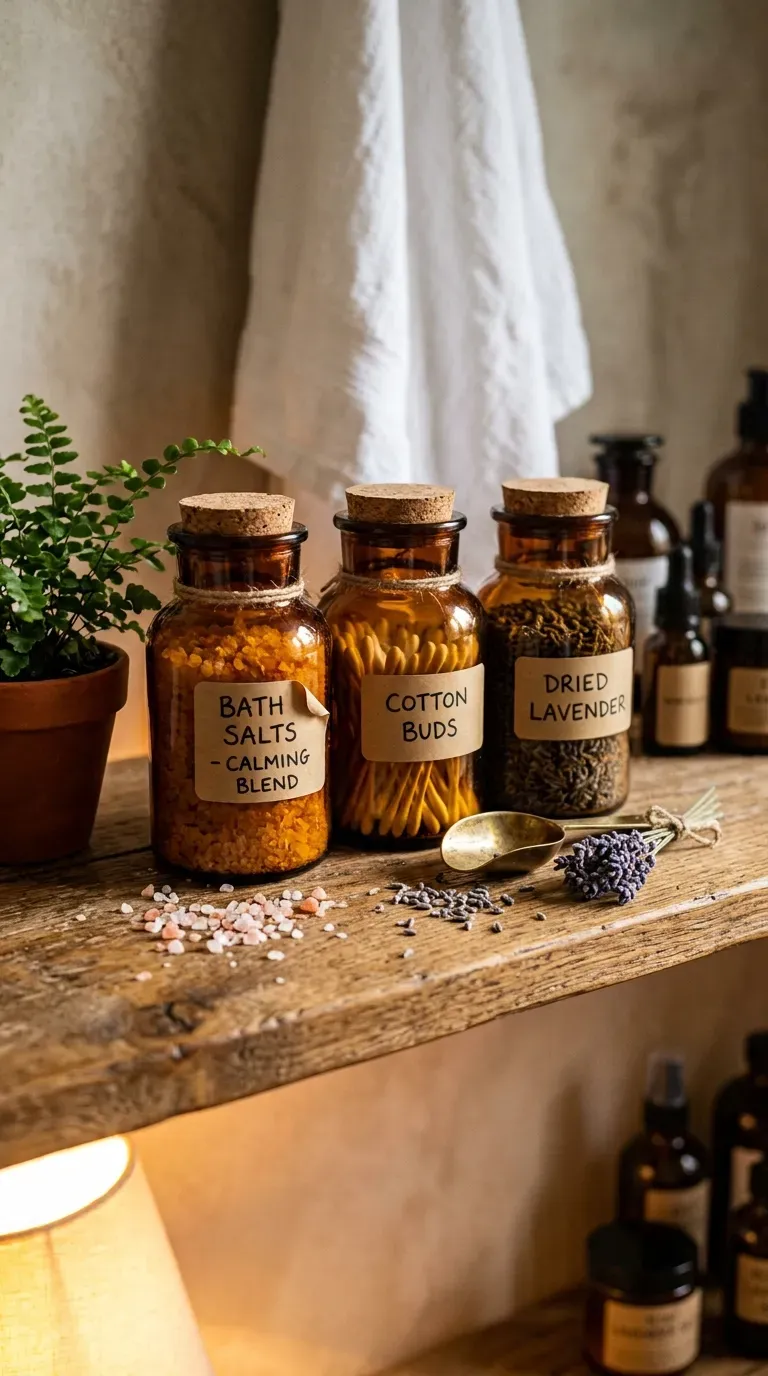
Decanting is usually styling advice, but amber glass has a genuine warming effect: light passing through it lands on the shelf as a honey-coloured pool rather than white.
Use it for the things you look at daily — bath salts, cotton buds, Epsom salt, dried lavender. Keep a sealed lid on anything hygroscopic, because bathroom humidity will turn loose salts into a solid brick within about six weeks. Learned that one the hard way in February.
Amber glass also blocks UV, which genuinely matters for anything with essential oils or plant extracts in it. Bath oils keep noticeably longer decanted than sitting in a clear bottle on a sunny sill.
- Best size: 250ml for daily use, 500ml for salts
- Worth labelling: anything that looks like anything else
- Skip: decanting shampoo, unless you enjoy topping up bottles weekly
Group them with a small fern for contrast — see our shelf styling ideas with plants and how to dry your own lavender.
Fifteen minutes of tidying that reads as a considered scheme.
18. A Waffle Robe and Hook Station by the Door
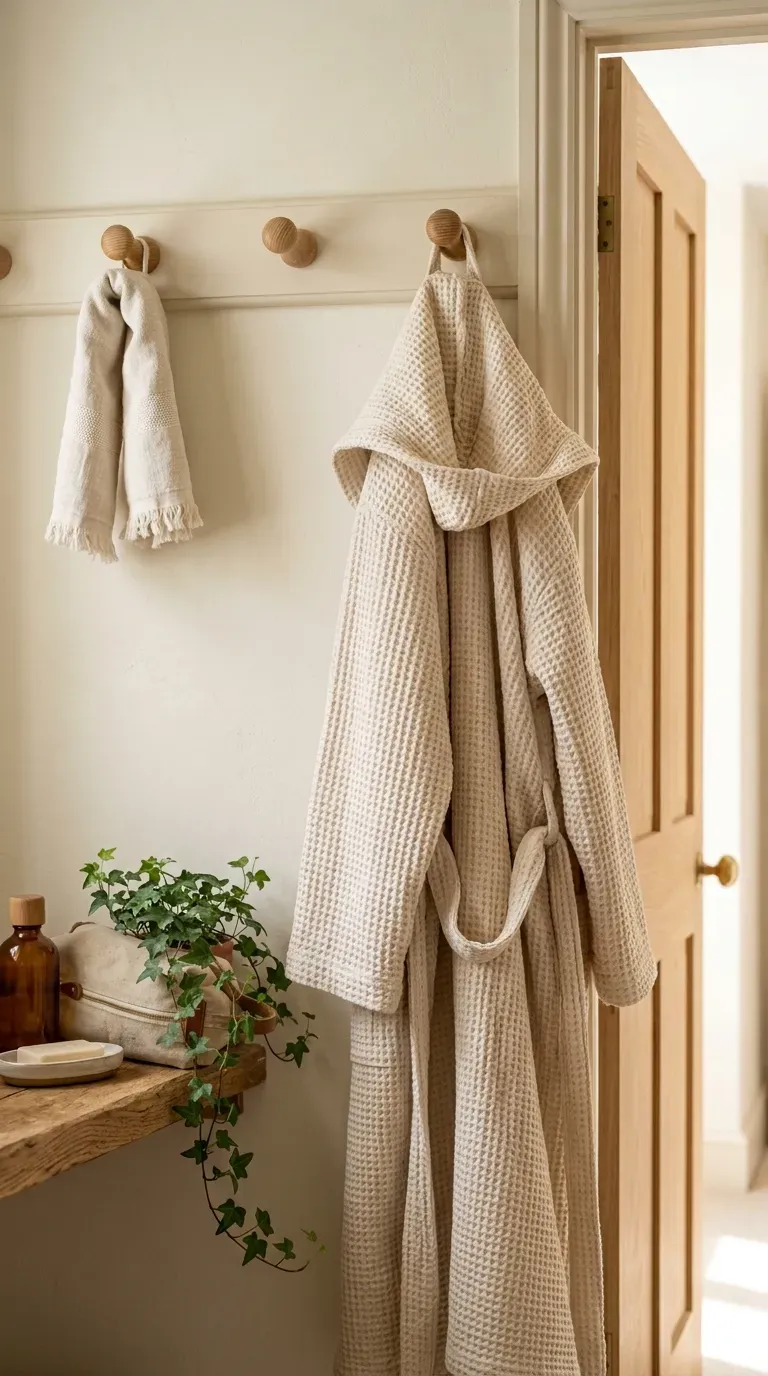
The coldest ninety seconds of any winter bath are the ones after you get out, and a robe within arm’s reach eliminates them completely.
Waffle weave is the right structure — the honeycomb traps air, so it insulates better than flat cotton at the same weight while still drying fast. Look for 300–400gsm; lighter and it won’t hold heat, heavier and it stays damp for a day.
Mount pegs on a batten rather than straight into plasterboard, at around 1.6m so a full-length robe clears the floor. Four pegs is more useful than two: robe, today’s towel, tomorrow’s towel, and one spare that’s always somehow needed.
Hang the robe on the heated towel ladder for ten minutes beforehand if you have one. The difference between a room-temperature robe and a warm one is genuinely disproportionate to the effort.
Add greenery at eye level with our ideas for narrow ledges and shelves and read fabric weight comparisons.
Solve the cold ninety seconds and you’ll bathe far more often.
19. A Narrow Plant Ledge Above the Radiator
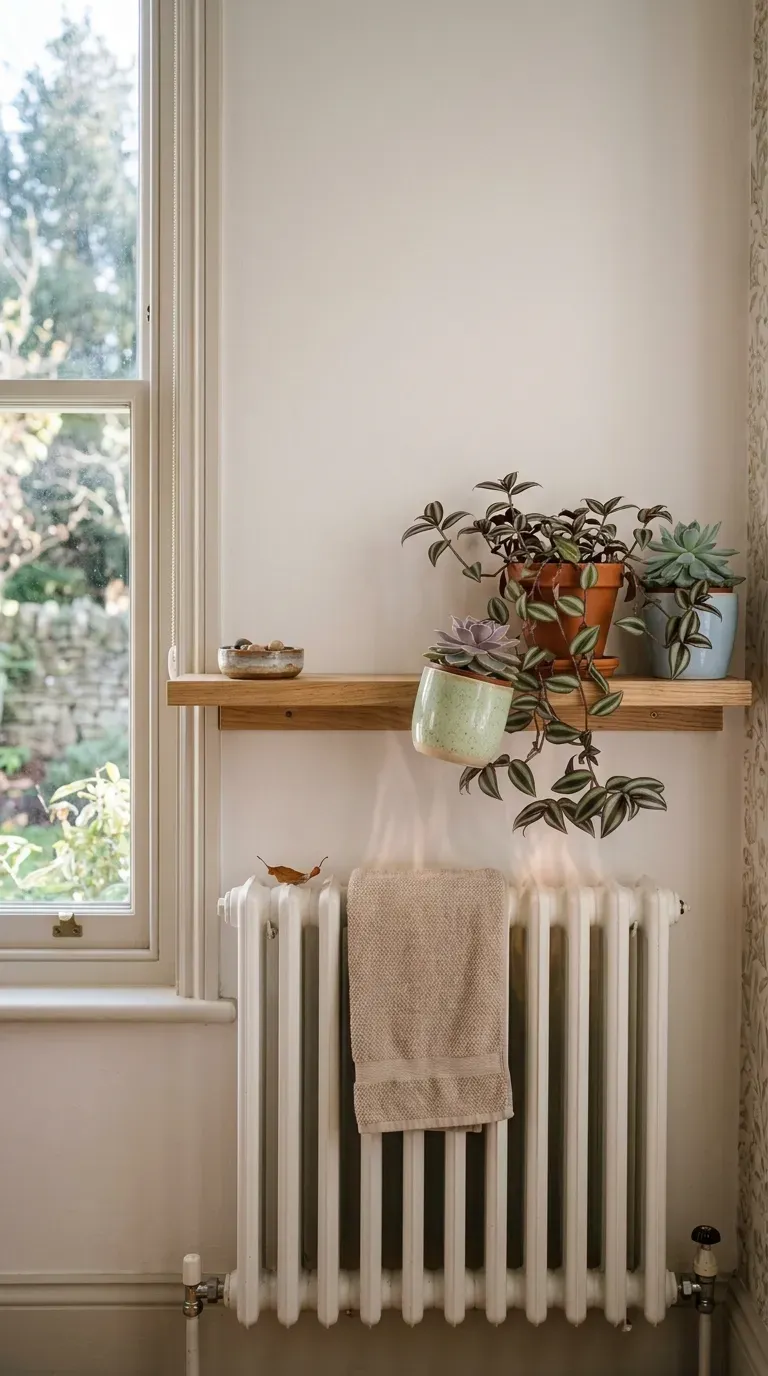
A radiator shelf does something useful and something decorative: it deflects rising heat out into the room rather than letting it run straight up a cold wall, and it gives you a planting ledge at eye height.
Mount it 5–10cm above the radiator top and let it project about 12cm. Any deeper and it traps heat; any shallower and it doesn’t deflect. Solid timber or MDF with a moisture-resistant finish both work.
Choose plants carefully. Direct radiator heat drops local humidity sharply, so this is succulent and cactus territory rather than fern territory — echeveria, haworthia, small sansevieria. Water more often than you would elsewhere; I was caught out by how fast a 9cm pot dries above a working radiator, roughly twice the rate of the same pot across the room.
Pro Tip: Sit each pot on a shallow dish of pebbles and water. It won’t fix humidity for the whole room, but it buffers the immediate air around the roots and buys you a few extra days between waterings.
More options in our succulents for warm dry spots guide and radiator plant placement advice.
Heat that was heading for the ceiling comes back into the room.
20. Low-Level Floor Lighting for Night Trips
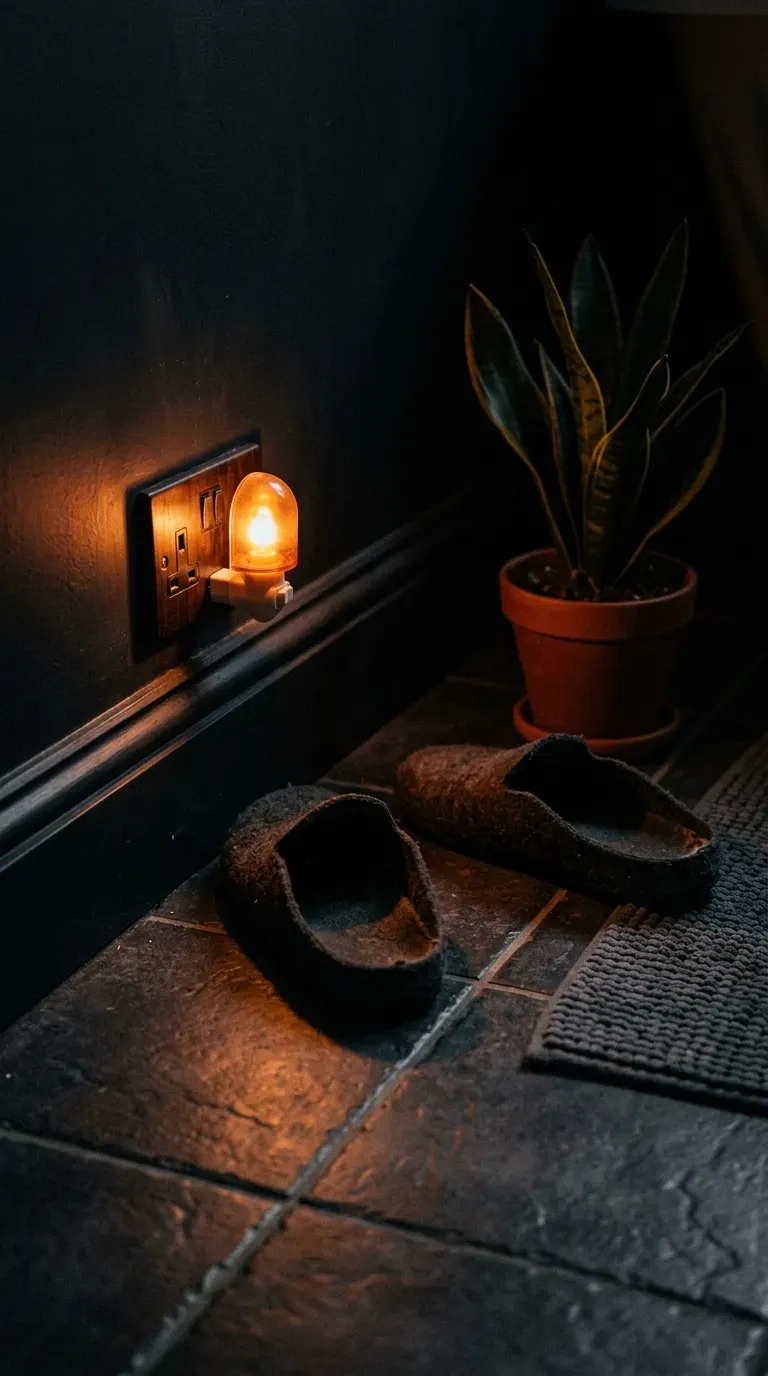
At 3am, the overhead light is violence. A low amber glow near the floor lets you see where you’re going without resetting your body clock.
Use a plug-in motion-sensor nightlight at 1800–2200K, or an LED strip tucked under a vanity plinth. Warm amber matters here specifically: blue-rich light at night suppresses melatonin more than warm light does, and the difference in how easily you get back to sleep is noticeable.
Position it low. Light near the floor shows you obstacles and thresholds without shining into your eyes, and it’s the level where you’re most likely to trip.
Motion sensors are worth the extra few pounds — a permanently-on nightlight is a small annoyance that eventually gets unplugged. Choose one with an adjustable timeout of 30–60 seconds.
A snake plant nearby copes fine with a dark bathroom; see our guide to plants for windowless rooms and why light colour affects sleep.
Twelve pounds for the most-appreciated fixture in the house, twice a night.
21. Framed Botanical Prints and Textile Art
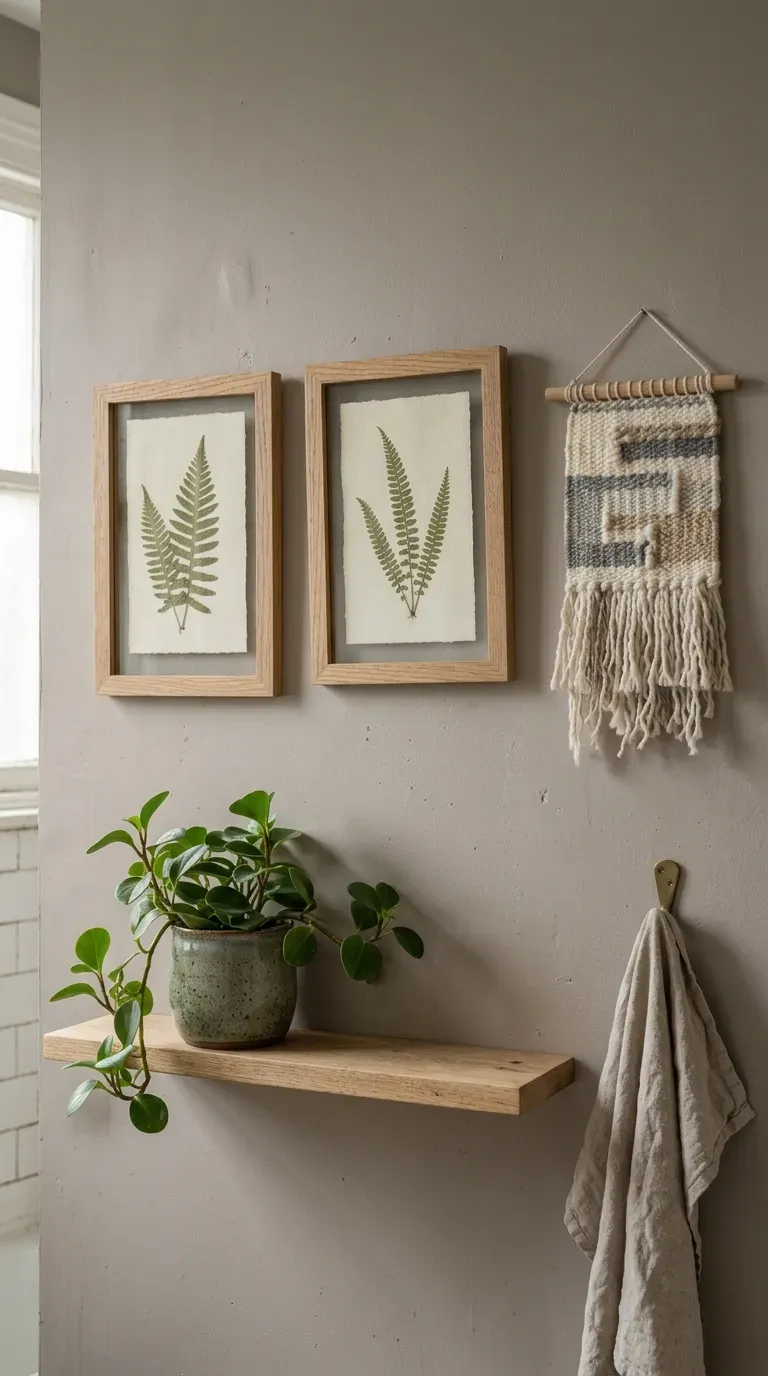
Bare bathroom walls are acoustically and visually hard. Art softens both, and textile art softens them more than paper does.
Pressed fern and seaweed specimens, vintage botanical plates, or a small woven wool hanging all bring texture to a room otherwise made of flat surfaces. A woven piece also absorbs a little sound, which is why a bathroom with textiles feels calmer rather than echoey.
Protect the frames. Humidity will warp mount board and foxing will appear on real paper prints within a couple of years. Use sealed frames with a proper backing board, hang them on the wall furthest from the shower, and avoid anything genuinely valuable.
- Most durable: prints behind glass in a sealed frame
- Most texture: undyed wool or jute weaving
- Best cheap option: press your own ferns — six weeks in a heavy book
Press specimens from your own plants using our pressing and framing guide and botanical illustration background here.
Three frames turn a functional room into one you’ve clearly thought about.
22. Insulate the Bathtub Itself
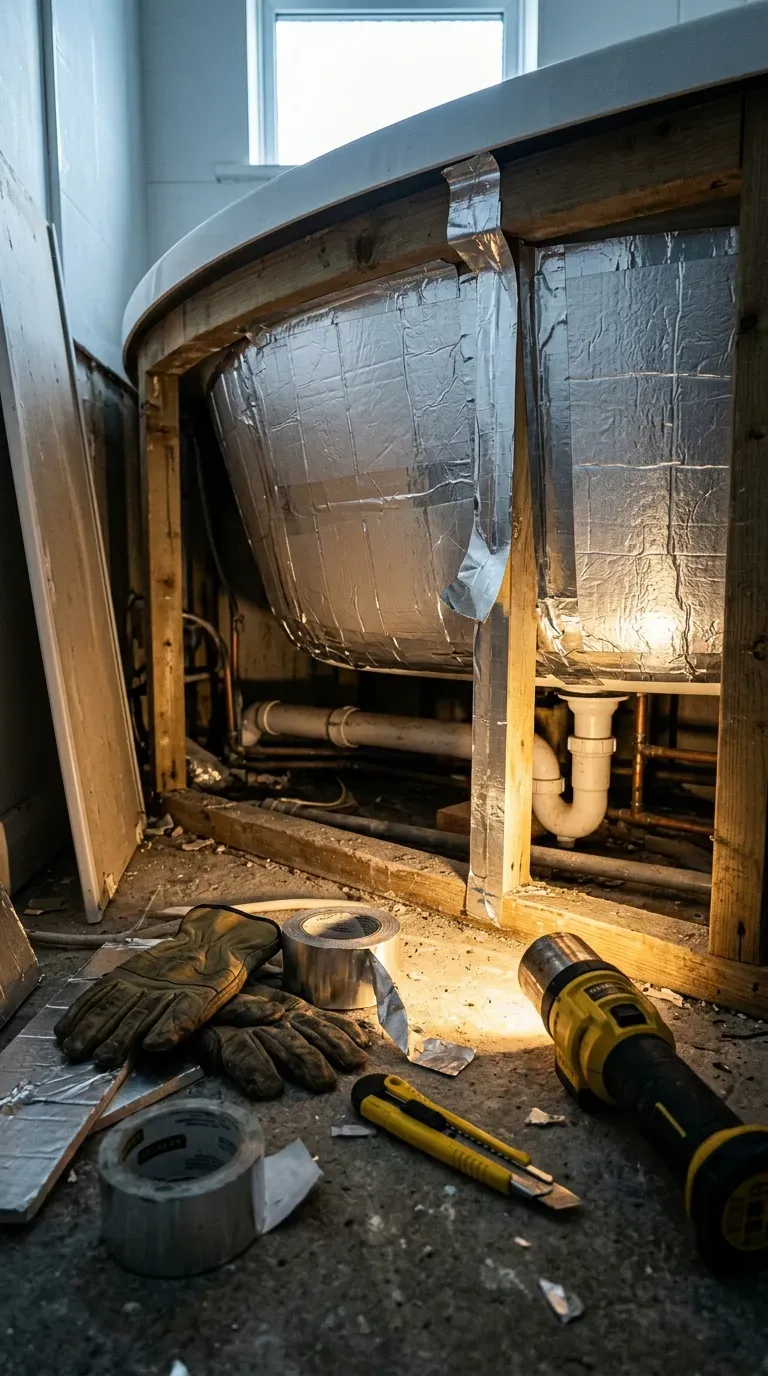
Most acrylic baths are a thin shell with an empty air cavity underneath, which is why bathwater goes lukewarm faster than it feels like it should.
Fitting insulation is genuinely straightforward. Remove the side panel, wrap the underside and sides of the tub in foil-faced insulation board or a purpose-made bath jacket, tape the seams, and refit. It also stiffens the tub, which reduces that unnerving flex when you climb in.
A well-insulated bath holds usable temperature meaningfully longer — enough that you stop topping up with hot water halfway through. Over a winter of regular baths, that’s not nothing.
Check the overflow and trap are accessible before you seal anything, and leave a clear route to the waste. I insulated over an inspection point once and had to cut it all out again eight months later when the trap needed clearing.
Store your bathroom plant kit in that reclaimed panel space — see our small-space plant storage ideas and general home insulation principles.
An afternoon’s work you’ll feel every single bath, all winter.
Getting Started With Warm Bathroom Ideas for Cold Winter Nights
Start with the window. Whatever else is wrong with your bathroom, uncovered single glazing is almost certainly the biggest cold surface in the room, and a thermal-lined blind costs less than dinner out. Fit it on a Saturday morning and you’ll feel the difference that evening.
The most common beginner mistake is buying heat before fixing loss. People install a towel radiator into a room that’s leaking warmth around the door and window, then wonder why it doesn’t help. Seal and dress first, heat second.
If you’re buying three things to begin: one wool bath mat, one thermal blind, and one Boston fern in a 15cm pot with drainage. Total, somewhere around £60–£90. The fern goes on a shelf with bright indirect light, not on the floor, and gets watered when the top 3cm of compost feels dry — usually every 5–7 days in winter.
Realistic timeline: textiles and lighting change the room the same day. Paint takes a weekend and reads properly after a fortnight of living with it. Plants take about six weeks to settle and put out new growth in bathroom humidity. Underfloor heating is a one-weekend job with a permanent payoff.
Frequently Asked Questions
How can I make my bathroom warmer without central heating?
Focus on stopping heat loss and warming surfaces rather than air. A thermal-lined blind on the window, a brush draught excluder on the door, and a wool bath mat will make a bathroom feel noticeably warmer with no heating at all. If you can add one powered item, choose an electric towel ladder at 300–500W on a 30-minute pre-heat timer — it’s cheap to run and warms the thing you touch when you’re most cold.
What plants survive in a cold bathroom in winter?
Snake plant (Sansevieria trifasciata), ZZ plant (Zamioculcas zamiifolia) and pothos all tolerate temperatures down to about 10°C and low light. Ferns prefer warmth but cope if the room stays above 13°C and humidity sits at 50–60%. Avoid calathea and maranta in an unheated bathroom — both sulk badly below 15°C and will show it in curled, browning leaves within weeks.
Is it bad to keep plants in a steamy bathroom?
For most tropical foliage plants, steam is a benefit rather than a problem — it mimics their native humidity and reduces leaf-tip browning. The real risk is overwatering, because high humidity slows evaporation and compost stays wet far longer. Check the top 3cm with a finger and expect to water roughly half as often as you would in a dry living room.
What colour should I paint a small cold bathroom?
Choose a warm-based neutral: clay pink, mushroom, soft ochre or warm off-white. These reflect light with a red-yellow cast and make the room read as warmer than cool greys at the same brightness. Use a bathroom-grade emulsion with mould inhibitors, and test two patches under artificial light in the evening, since that’s when you’ll most often see the room.
Do heated towel rails actually heat a bathroom?
A heated towel rail takes the edge off a small bathroom but rarely heats it fully — a typical 400W model is roughly a third of the output of a comparable panel radiator. It’s excellent at warming towels and reducing damp, which is most of the comfort benefit. In a room larger than about 6m², treat it as a supplement to underfloor heating or a radiator, not a replacement.
A Few Final Thoughts
You don’t need a renovation to fix a cold bathroom — you need to stop the heat leaving and give the room something warm to touch. Of these 22 warm bathroom ideas for cold winter nights, the ones that change things fastest are the least glamorous: a lined blind, a brush strip on the door, and 2700K bulbs. Do those three on a single Saturday and the room will feel different by the evening. Then let the slower changes catch up — a fern that finally has the humidity it wants, a teak duckboard, a wall of cedar if you’re feeling ambitious. The thing nobody tells you is that a bathroom you don’t dread is a bathroom you use properly, and a long bath in February is one of the genuinely good things about winter. Pick the cheapest idea on this list and do it tonight.