
My first apartment bathroom was 5 by 7 feet, and I assumed a plant in there would only crowd me further. I was wrong. The right plants, placed at the right heights, made the room feel taller, softer, and oddly more spacious. These small bathroom ideas mix living greenery with mirrors, paint, light, and storage so a tight room feels calm instead of cramped. You’ll find 23 of them below, from foolproof beginner picks to a few slightly fussier upgrades. Ready? Let’s explore all 23 of them.
Quick Answer: For most small bathrooms, start with a trailing pothos or heartleaf philodendron on a high shelf, a large mirror opposite the light source, and pale, warm wall paint. If your bathroom has no window, a snake plant, ZZ plant, or a full-spectrum LED strip will keep greenery alive. Hang plants rather than crowding the floor, since clear floor space is what makes a small room read as larger.
Why Small Bathroom Ideas Are Worth Your Time
A small bathroom is the most underrated growing space in a home. Steam from showers pushes relative humidity to 60-80% for a while after each use, which is what ferns, orchids, and air plants get in tropical forests. Plants that sulk in a dry living room often thrive here.
Practical benefits add up fast. Foliage softens hard tile and chrome, and vertical plant placement uses wall and ceiling space you’d otherwise waste. Greenery also gives the eye a soft focal point, which makes a room feel intentional rather than merely small.
Here’s the lesser-known part: bathroom light is usually the limiting factor, not humidity. A north-facing frosted window offers roughly 50-150 foot-candles, enough for pothos and cast iron plant but not for orchids. Matching plant to actual light is the whole game.
These ideas suit renters, first-time plant owners, and anyone with a powder room, ensuite, or guest bath under 40 square feet.
At a Glance
- Hanging and wall-mounted plants free up floor and counter space, the fastest way to make a tiny bathroom look larger.
- Windowless bathrooms can still grow snake plants, ZZ plants, and pothos, or use a 6500K LED strip on a timer.
- Mirrors placed opposite a window can roughly double perceived daylight and depth.
- Cohesive pot colors and pale wall tones cut visual clutter more than any single plant does.
- Most ideas cost under $30, and several use cuttings you may already own.
Comparison Table
| # | Idea | Light Needs | Mature Size | Difficulty | Pet-Safe? |
| 1 | Hanging Boston fern | Bright indirect | 2-3 ft | Moderate | Yes |
| 2 | Pothos on high shelf | Low to medium | Trails 6+ ft | Easy | No |
| 3 | Snake plant | Low to bright | 1-3 ft | Easy | No |
| 4 | Peace lily | Low to medium | 1-3 ft | Easy | No |
| 5 | Air plants | Bright indirect | 3-6 in | Moderate | Yes |
| 6 | Eucalyptus shower bundle | Not a living plant | 12-18 in stems | Easy | Toxic |
| 7 | Cast iron plant on teak stool | Low light | 2-3 ft | Easy | Yes |
| 8 | Mirror opposite window | Any window | N/A | Easy | Yes |
| 9 | Sage-green paint | Any | N/A | Easy | Yes |
| 10 | Lucky bamboo | Low to medium | 1-3 ft | Easy | No |
| 11 | Propagation vials | Medium indirect | Cuttings | Easy | No |
| 12 | Spider plant | Medium indirect | 1 ft, trailing | Easy | Yes |
| 13 | ZZ plant | Low light | 2-3 ft | Very easy | No |
| 14 | Phalaenopsis orchid | Bright indirect | 1-2 ft | Moderate | Yes |
| 15 | Vertical wall planter | Medium indirect | Varies | Moderate | Depends |
| 16 | Woven basket cachepots | Any | Varies | Easy | Yes |
| 17 | Frosted window film | Any window | N/A | Easy | Yes |
| 18 | Wall-hung vanity | Any | N/A | Moderate | Yes |
| 19 | Matching white pots | Any | Varies | Easy | Yes |
| 20 | Peperomia on vanity | Medium indirect | 8-12 in | Easy | Yes |
| 21 | Preserved moss frame | None | 12-24 in | Very easy | Yes |
| 22 | LED grow strip | Windowless | N/A | Moderate | Yes |
| 23 | Bird’s nest fern | Low to medium | 1-2 ft | Moderate | Yes |
1. Hanging Boston Fern in the Shower Corner
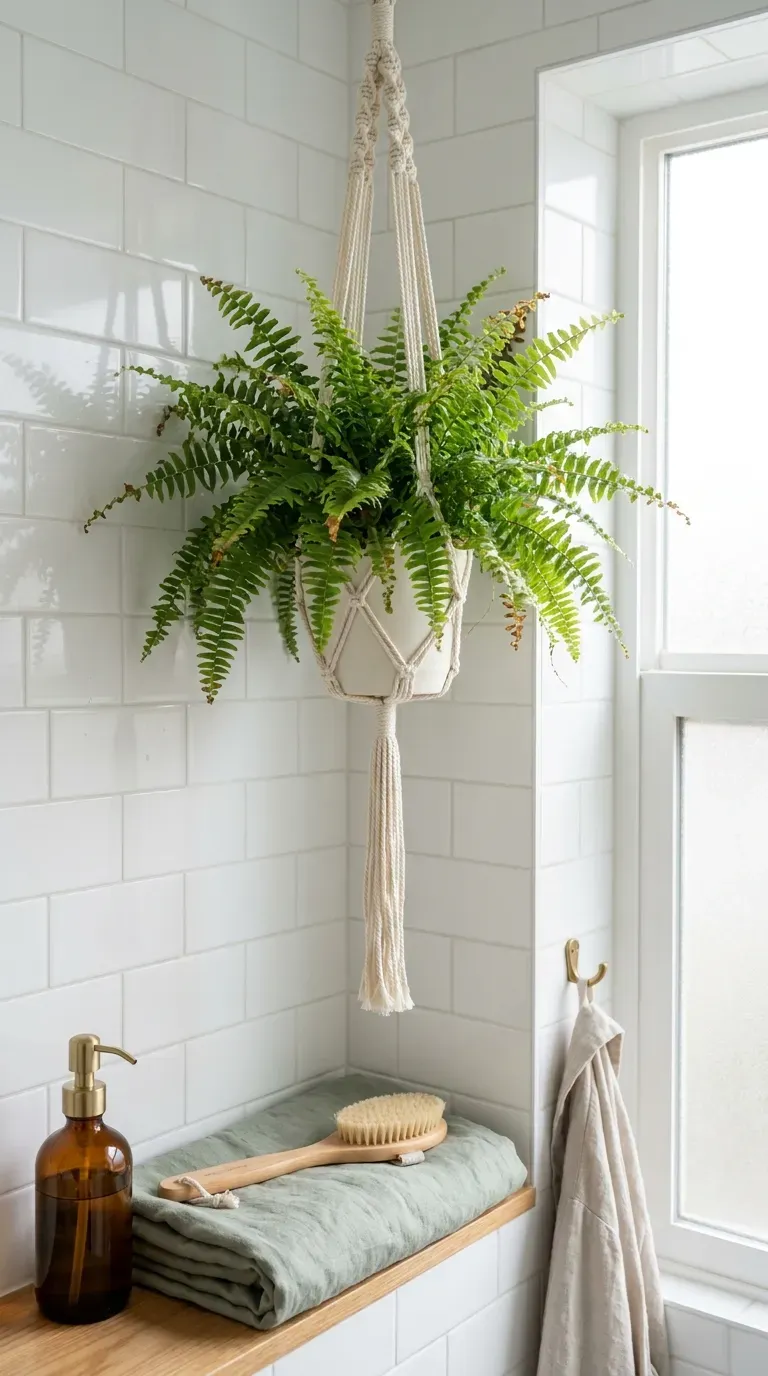
Boston fern (Nephrolepis exaltata) is the classic humidity lover, and hanging it lifts the eye upward. Use a 10-inch basket with peat-free potting mix and a screw hook anchored into a ceiling joist, not drywall.
Give it bright indirect light and keep the soil evenly damp, never soggy. I lost my first one by hanging it in a windowless corner, where fronds crisped within three weeks. Ferns need at least a few hours of real daylight.
Pro Tip: Rotate the pot a quarter turn weekly. Ferns lean toward light, and rotating keeps the shape full instead of lopsided.
Read more in our guide to humidity-loving houseplants and the RHS Boston fern care page.
Hang it and let it grow into the corner you never knew you could use.
2. Pothos on a High Floating Shelf
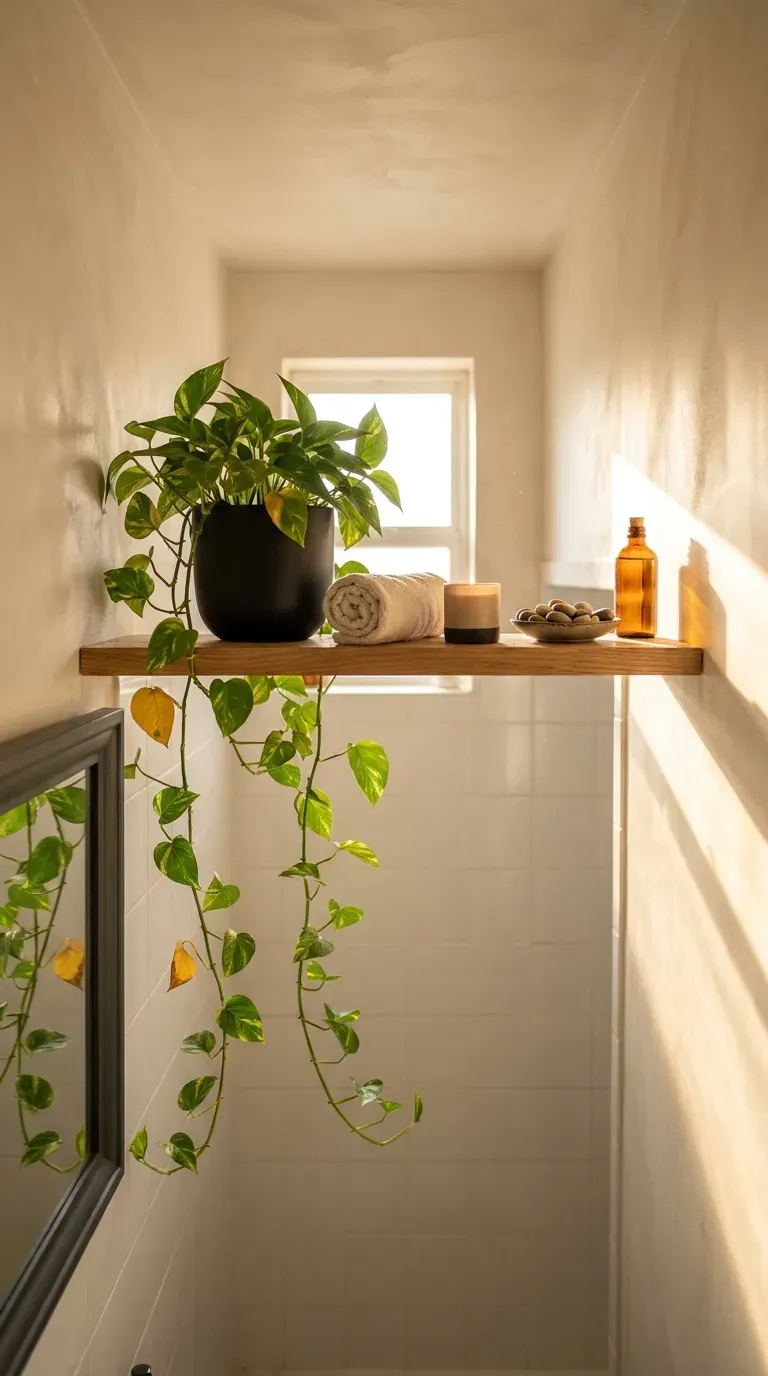
Pothos (Epipremnum aureum) tolerates low light and bathroom humidity, and a shelf at 6.5 feet lets vines fall without touching anything. In practice, that vertical line makes ceilings feel taller.
Plant it in a 6-inch pot with a drainage saucer and standard indoor mix. Water when the top inch of soil is dry, typically every 7-10 days. Expect 12-18 inches of trailing growth per season under moderate light.
- Best variety: ‘Marble Queen’ for brighter rooms
- Low-light pick: plain green or ‘Jade’
- Avoid: direct sun through glass, which scorches leaf edges
More ideas live in our easy trailing plants roundup, and the Missouri Botanical Garden profile covers toxicity. Note it is toxic to cats and dogs.
Set the shelf high and let gravity do your styling.
3. Snake Plant for a Windowless Bathroom
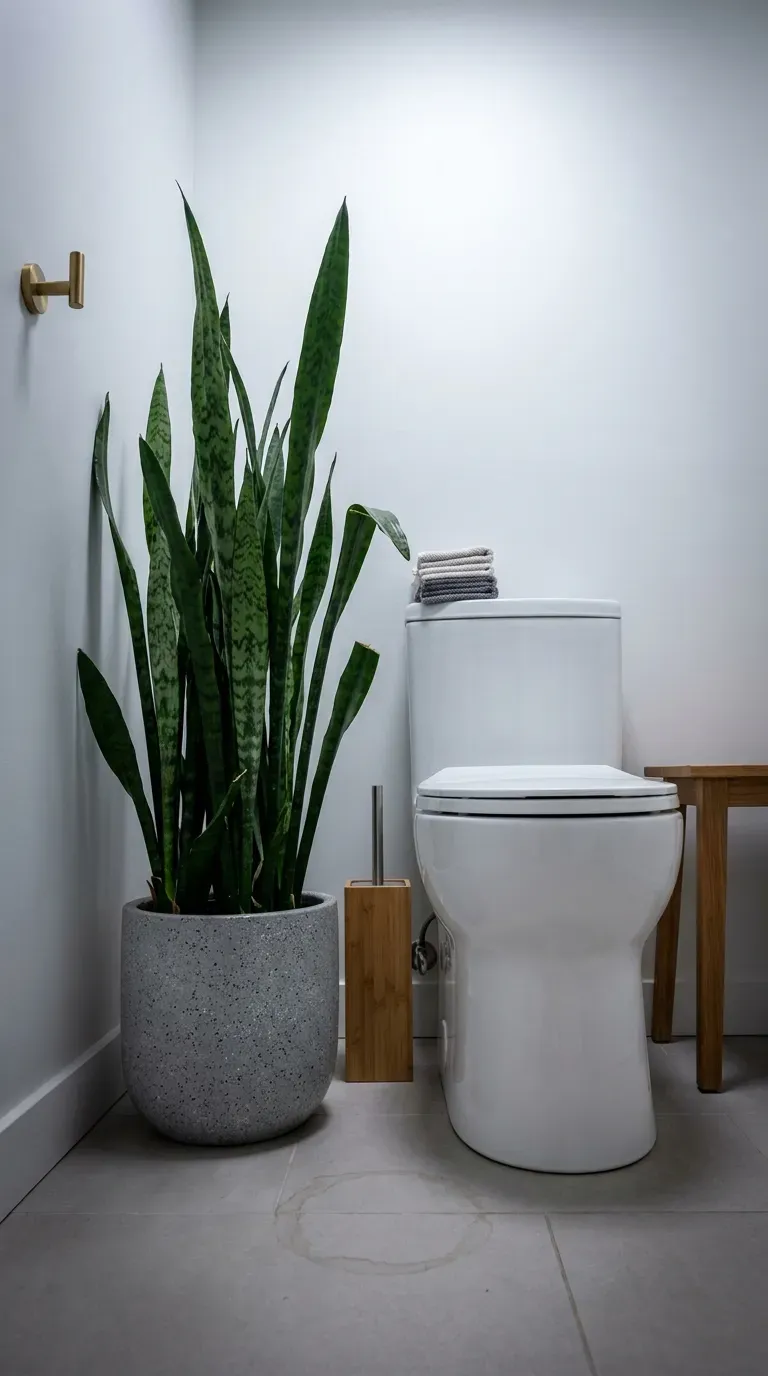
Snake plant (Dracaena trifasciata) is the standard answer to “what survives no window?” It handles low light, though growth slows to almost nothing under 50 foot-candles.
Use a gritty cactus mix in a 8-inch pot with a drainage hole. Water only every 3-4 weeks in a dim bathroom, since the leaves store water and rot punishes overwatering. I nearly killed one by treating it like a fern.
Pro Tip: Wipe the leaves with a damp cloth monthly. Dust blocks the small amount of light available, and cleaner leaves photosynthesize better.
See our low-light houseplants list and this University of Florida IFAS guide. It is mildly toxic to pets.
Sometimes the toughest plant is the right one.
4. Peace Lily on the Toilet Tank
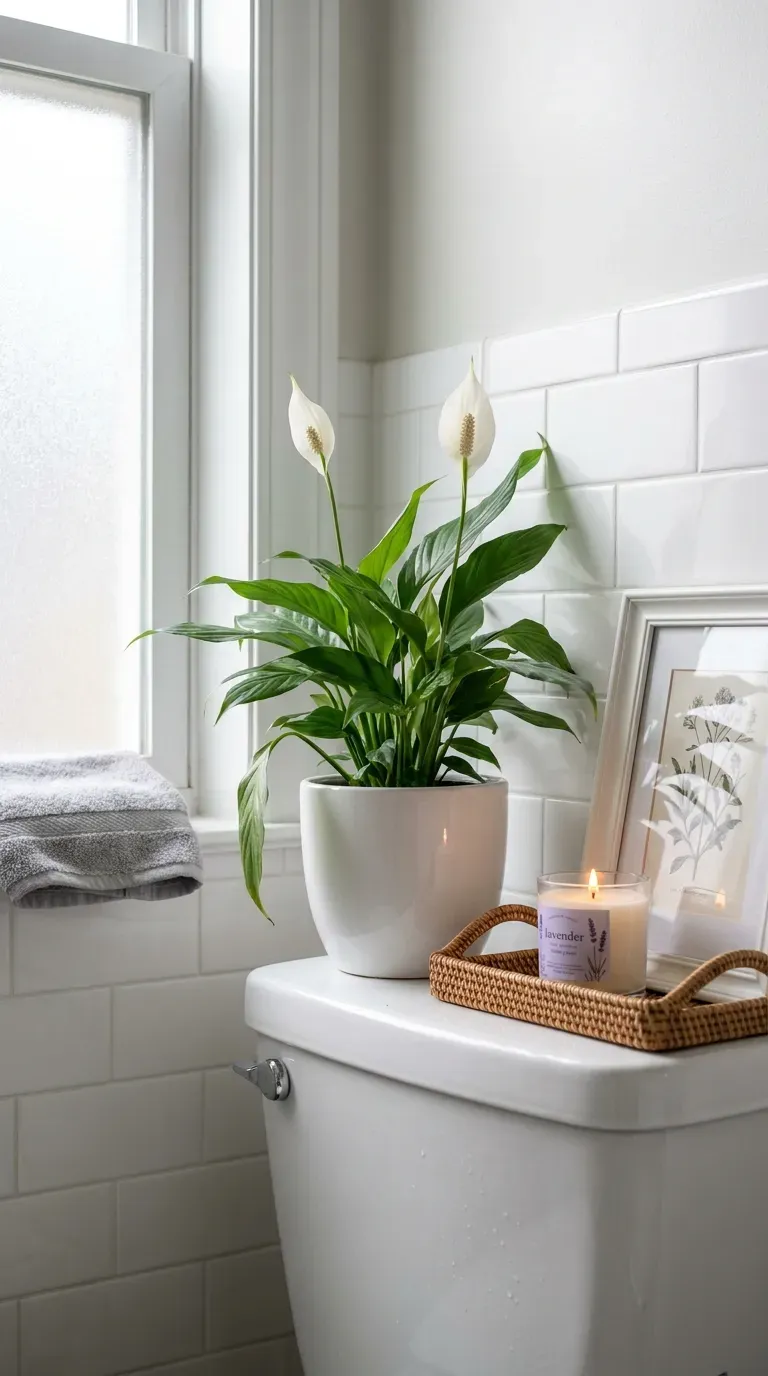
Peace lily (Spathiphyllum wallisii) is a reliable bloomer in humid, dim rooms, and the tank top is often dead space. Choose a 6-inch compact variety like ‘Sensation Petite’ rather than a giant.
It tells you when it’s thirsty: leaves droop dramatically, then recover within hours after watering. Water weekly with room-temperature water and let tap water sit overnight to soften chlorine.
- Works: bright shade, 65-80°F, high humidity
- Fails: cold drafts and fluoride-heavy tap water (brown tips)
Browse our best flowering indoor plants and the Almanac care overview. It is toxic to cats and dogs, so keep it out of reach.
A small flower on a plain white tank is a surprising amount of charm.
5. Air Plants on a Wall-Mounted Holder
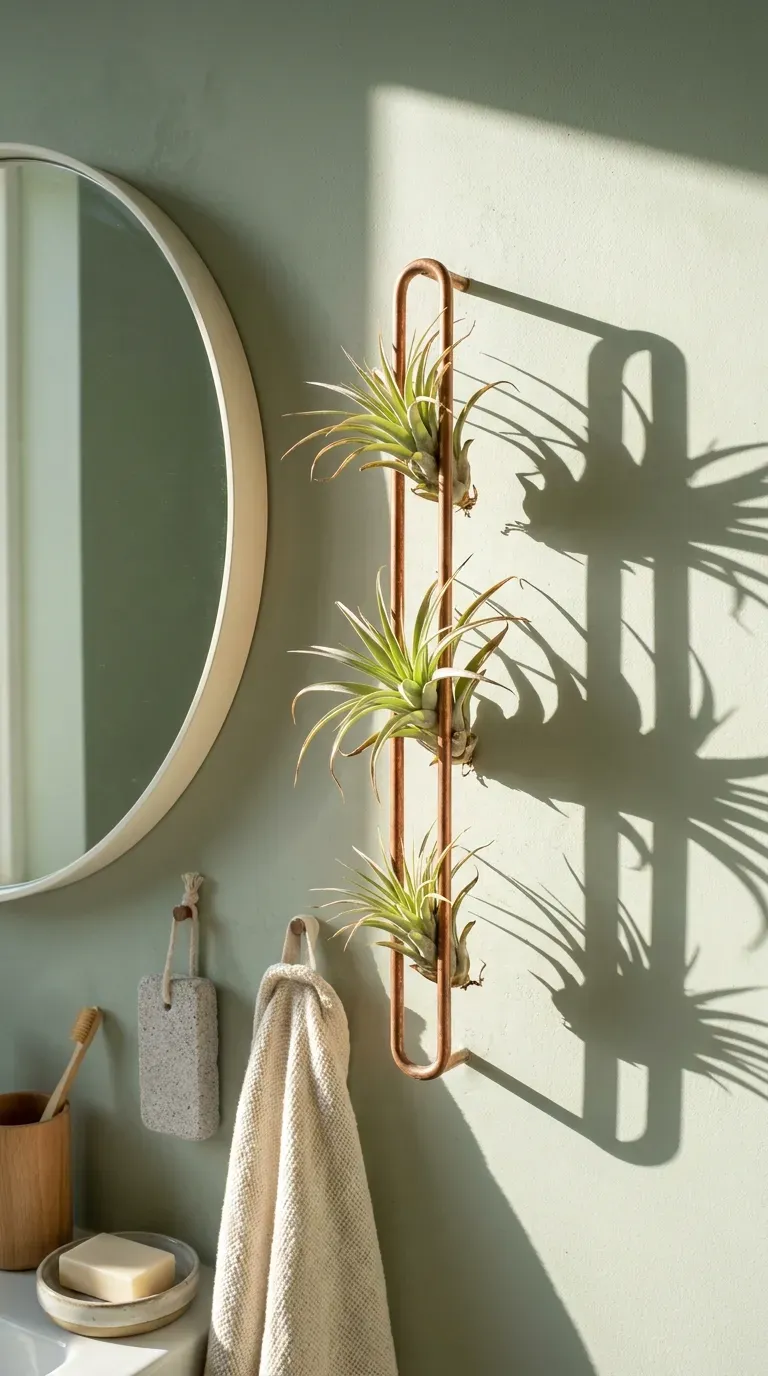
Air plants (Tillandsia ionantha) absorb moisture through their leaves, so bathroom humidity does half the work. They need zero soil and take about 4 square inches of wall.
Mount them in a copper rail or glass frame near a window. Soak in a bowl of water for 20 minutes every 10-14 days, then shake them dry and let them sit upside down for an hour. Trapped water in the center causes rot, which is the top beginner mistake.
Pro Tip: If your bathroom is windowless, skip these. They need bright indirect light for at least 4 hours daily and won’t survive on ambient bulbs.
Our air plant care guide goes deeper, and The Sill’s care notes are worth a read.
Tiny plants, big presence.
6. Eucalyptus Bundle on the Showerhead
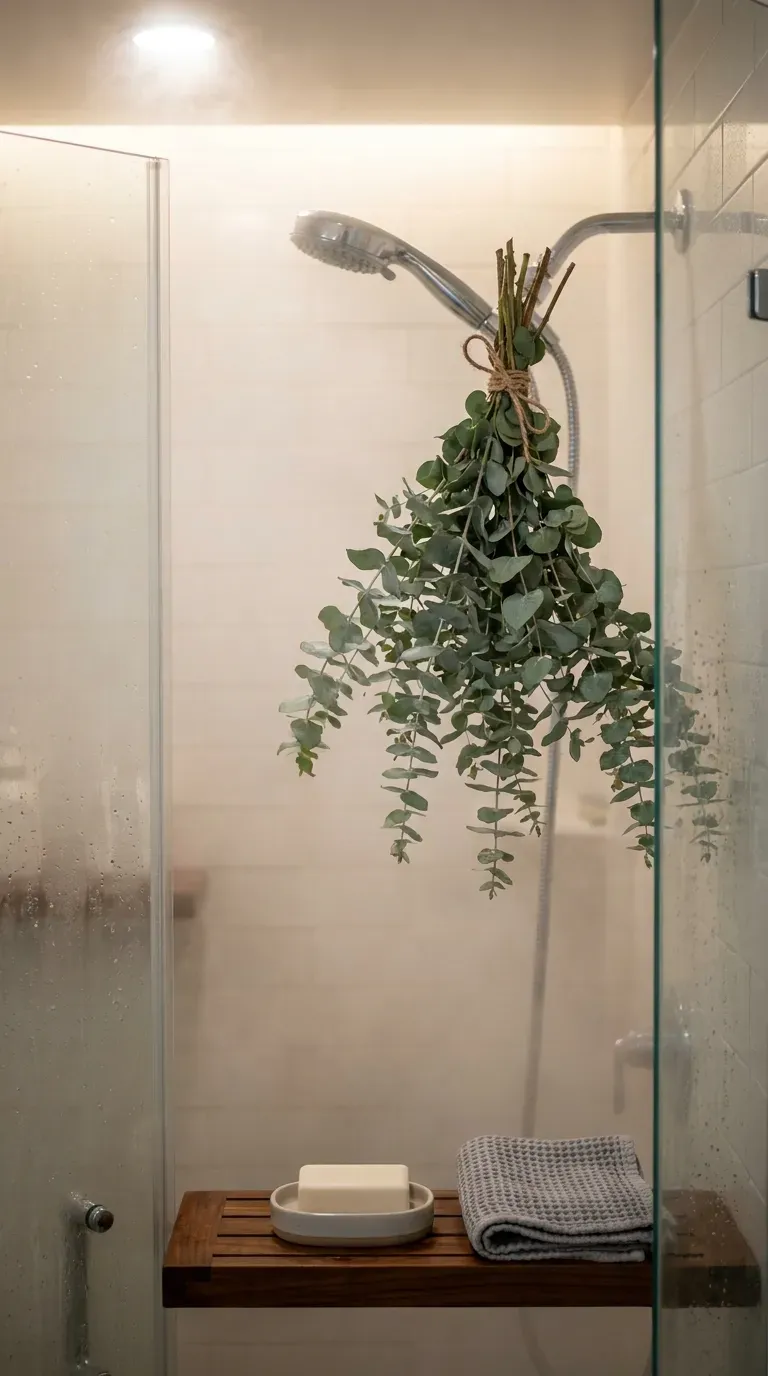
This isn’t a living plant, but it belongs here: steam releases the eucalyptus’s scent, and the pale gray-green stems soften a hard chrome fixture. Use 5-7 stems of Eucalyptus cinerea about 14 inches long.
Tie them with twine and hang just out of the direct spray. Fresh stems last 1-2 weeks; after that they dry and lose most scent. Swap them out, or trim the ends and refresh in a small vase of water outside the shower.
Pro Tip: Buy stems from a florist rather than a craft store. They’re fresher, and the oils are stronger.
For more scent-and-plant ideas, see our bathroom aromatherapy plants and this Better Homes & Gardens guide. Eucalyptus is toxic if ingested by pets.
A cheap bundle can make the shower feel like a spa.
7. Cast Iron Plant on a Teak Shower Stool
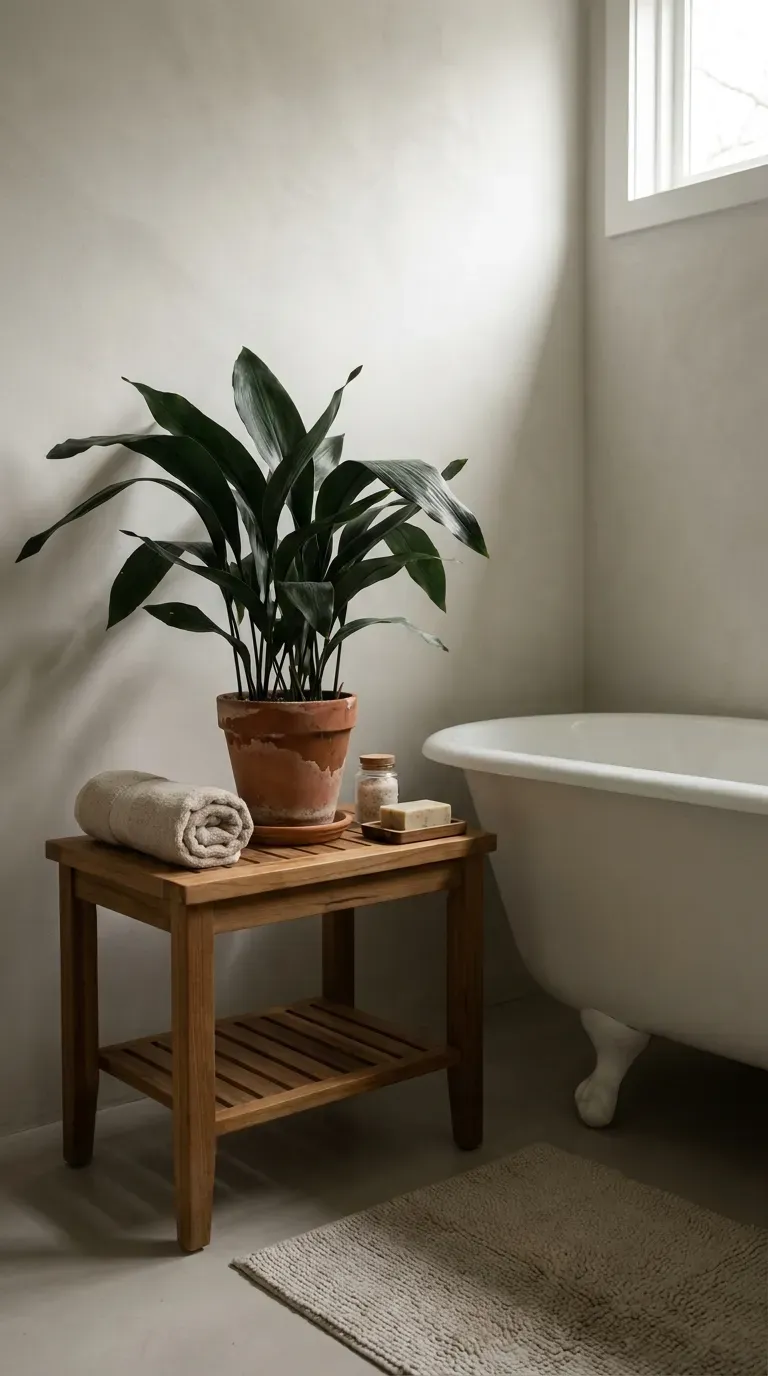
Cast iron plant (Aspidistra elatior) is famously hard to kill. It tolerates deep shade, humidity swings, and neglect, and it’s non-toxic to pets. A teak stool doubles as a seat and a plant stand, and teak resists moisture.
Use a 10-inch pot with drainage and loamy indoor mix. Water when the top 2 inches are dry, about every 10-14 days. Growth is slow, roughly 3-5 new leaves per year, so buy the size you want.
- Works: north windows, dim corners, temperatures 50-85°F
- Avoid: direct sun, which bleaches the leaves
See our slow-growing indoor plants and the Missouri Botanical Garden entry.
Slow, steady, and pet-safe: the plant version of a good bath.
8. Mirror Opposite the Window: A Small Bathroom Trick That Works
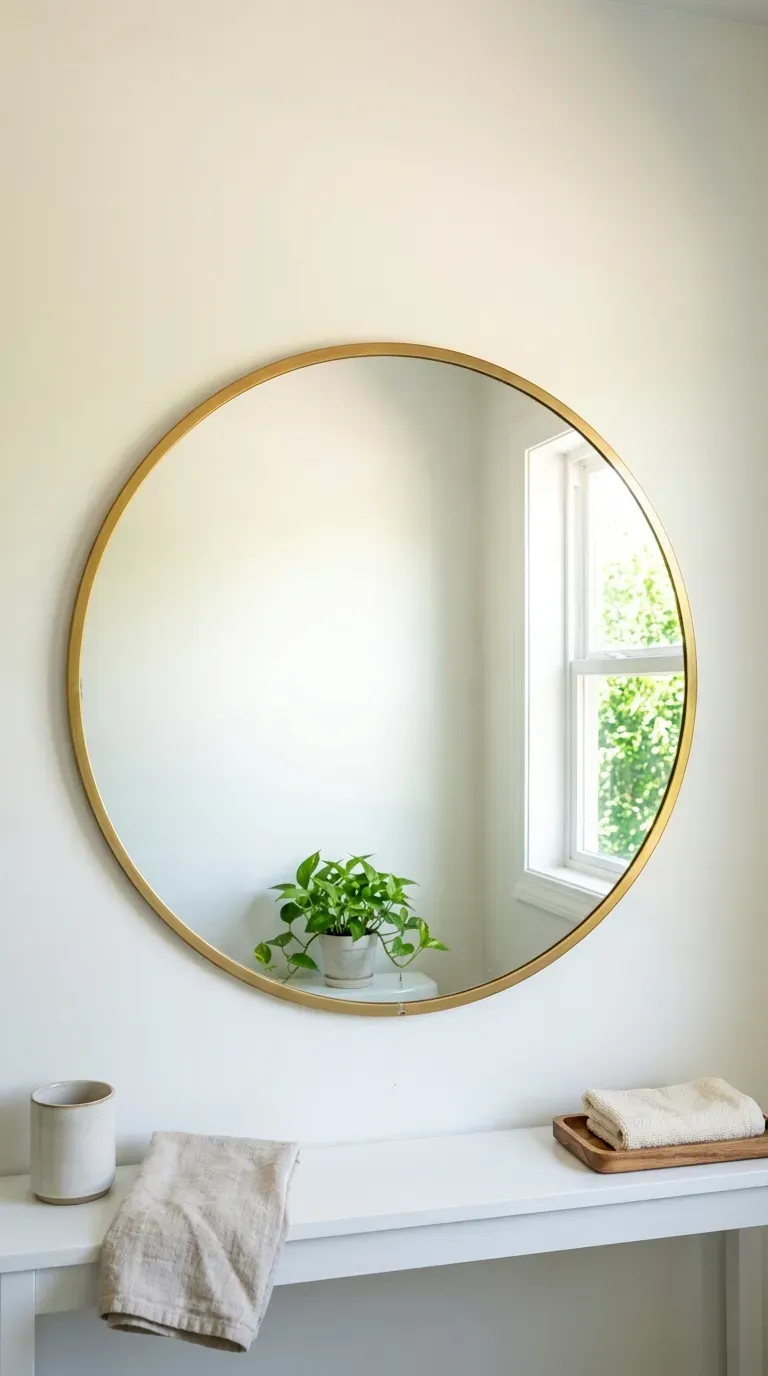
A mirror placed opposite a window bounces daylight deeper into the room and can double how bright the far wall feels. It also gives your plants extra usable light, a bonus most guides skip.
Go big: a 30-inch round or full-width rectangle beats a small medicine cabinet. Mount it so the reflection catches greenery, which visually doubles the plants too.
Pro Tip: Hang the mirror 4-5 inches above the sink, not higher. It anchors the vanity, and the reflection includes more of the ceiling for a taller feel.
More on this in our small space decorating with plants and the Gardeners’ World light guide.
One mirror, twice the room.
9. Sage-Green Paint That Makes Plants Pop
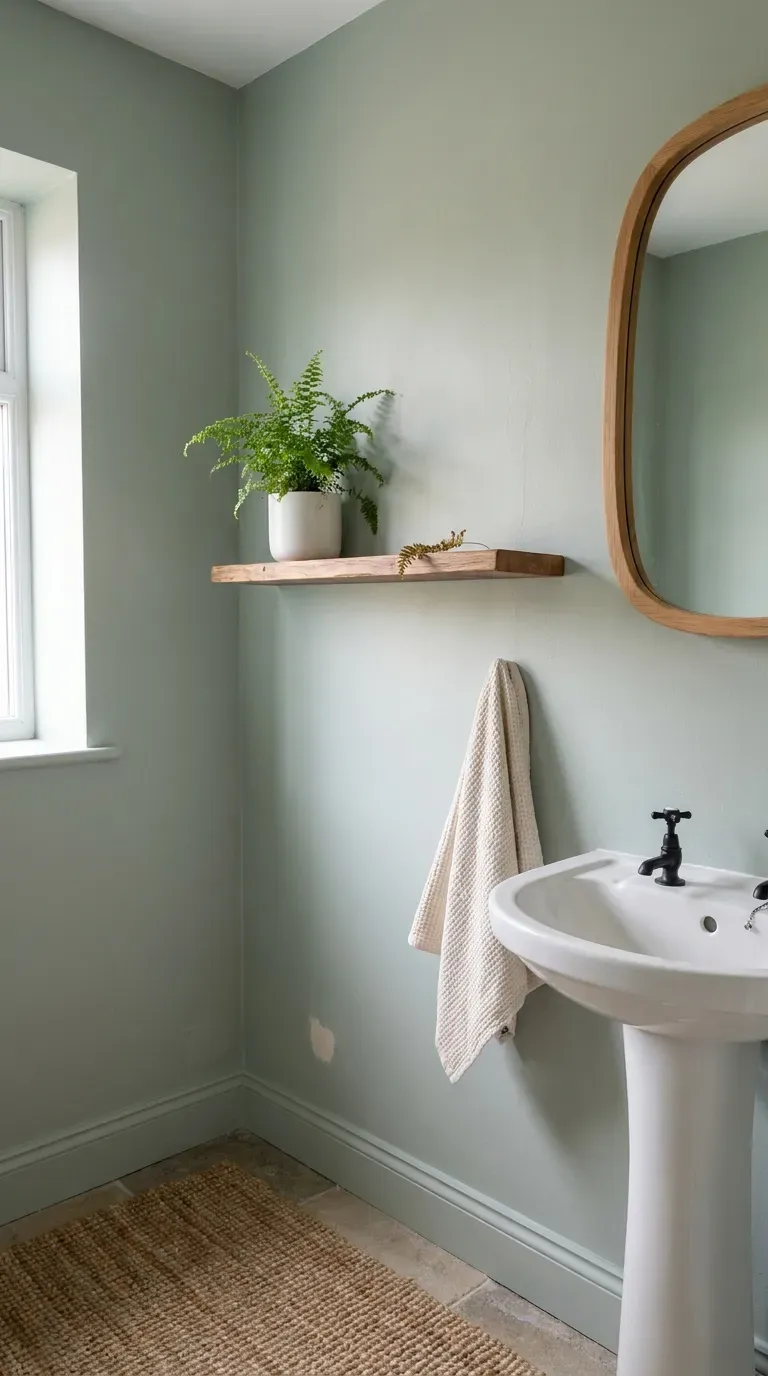
Pale, warm greens recede visually, so walls feel farther away, and they flatter every green plant. Choose an LRV (light reflectance value) above 60 so the color still bounces light.
Paint the whole room, ceiling included, in a matte or eggshell finish rated for bathrooms. I once painted only three walls and the contrast made the room look chopped up. A single continuous tone feels larger.
- Works: sage, soft eucalyptus, warm off-white
- Avoid: dark navy or charcoal in windowless rooms, which absorb light
Read our color palettes for plant lovers and this BHG paint overview.
A quiet wall lets the leaves talk.
10. Lucky Bamboo in a Glass Vase
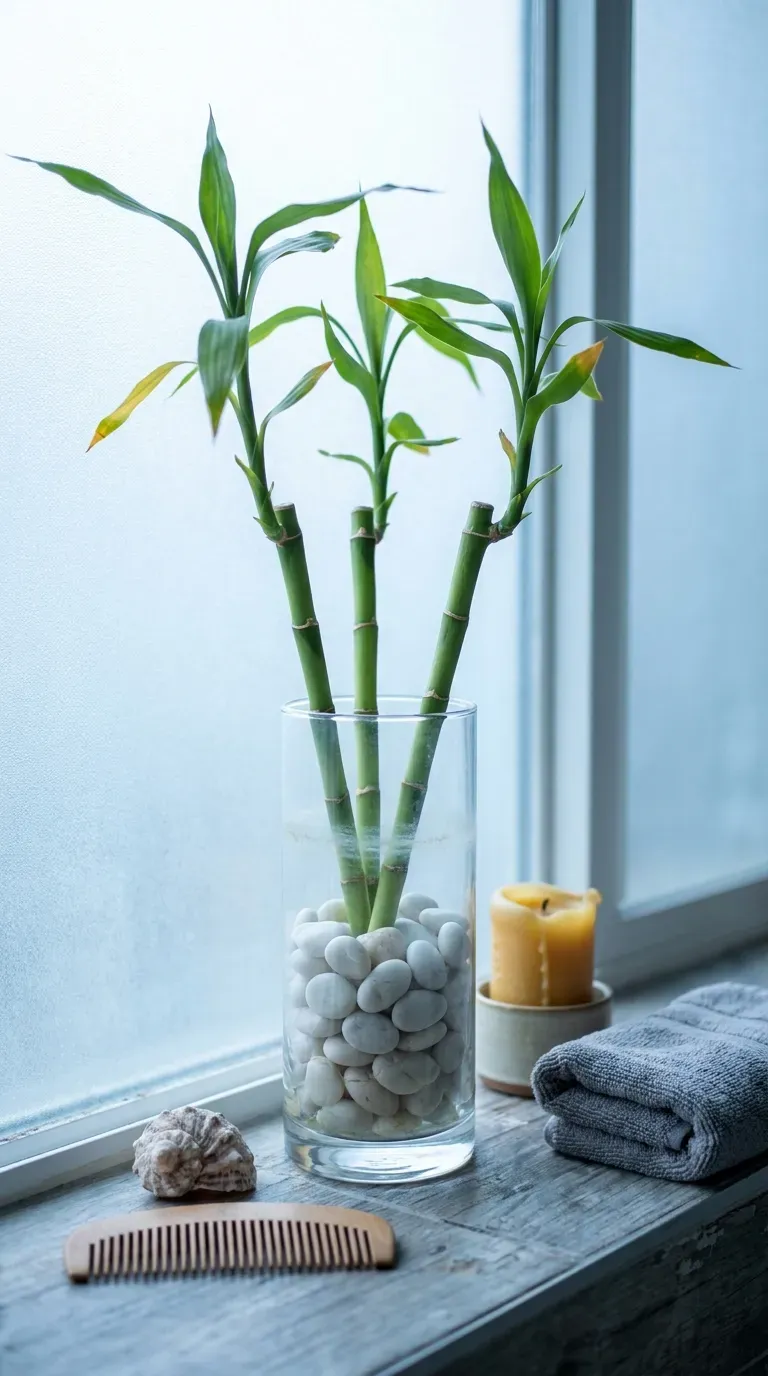
Lucky bamboo (Dracaena sanderiana) grows in water, so there’s no soil to spill and no drainage to worry about. A 6-inch vase on the windowsill takes almost no room.
Keep 1-2 inches of water covering the roots and change it every 7-10 days. Use filtered or rainwater; tap water fluoride causes yellow tips, which I learned the hard way after months of puzzled fixes.
Pro Tip: A single yellow stalk means it’s dying, but a yellow leaf tip only needs a trim. Cut a stalk off, then let the rest regrow.
See our plants that grow in water and this Almanac care summary. It is toxic to cats and dogs.
The easiest plant you’ll ever water.
11. Propagation Vials Along the Wall
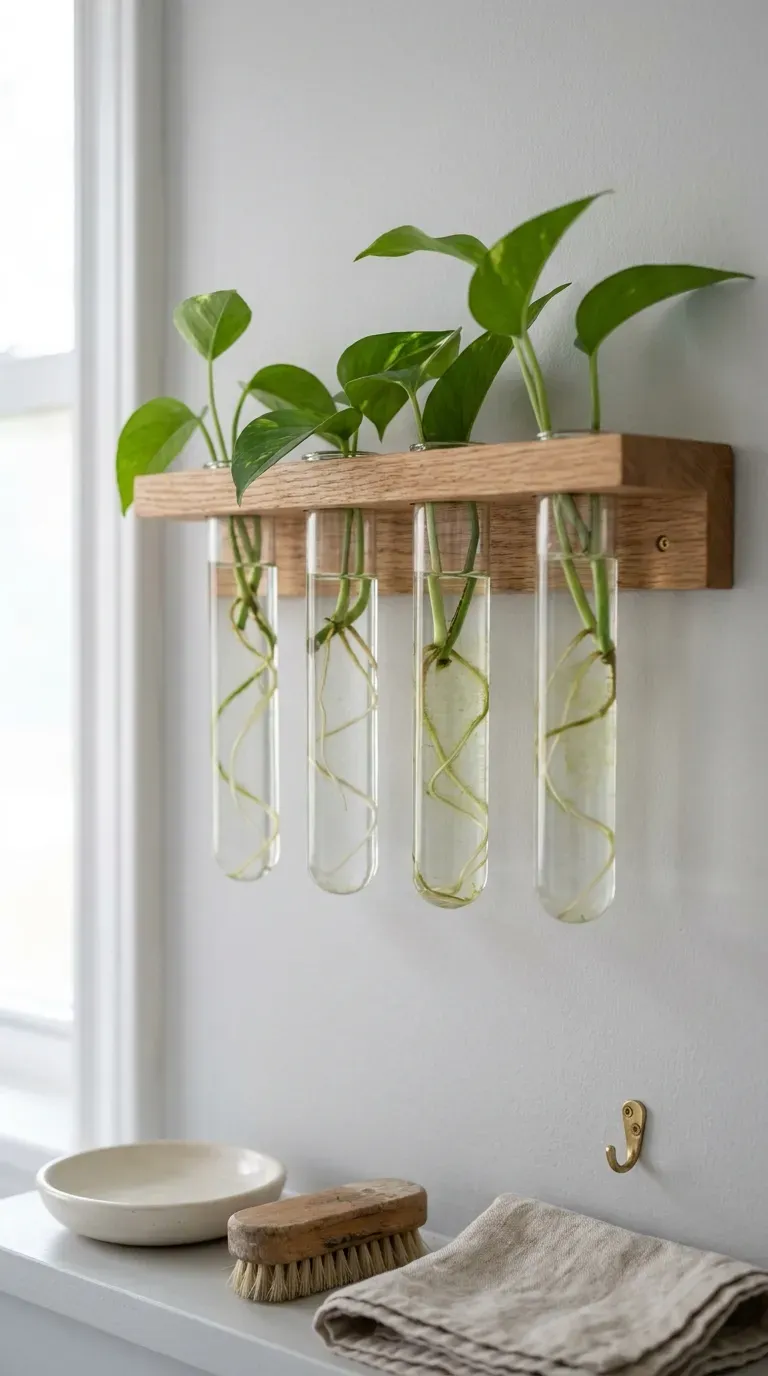
Propagation vials turn cuttings into wall art and take just 3 inches of width. Fill each with filtered water and one cutting with at least one node.
Place them where they get medium indirect light. Roots appear in 2-4 weeks for pothos, and you can pot them once roots reach 2-3 inches. Change the water weekly to prevent slime.
Pro Tip: Add one drop of liquid houseplant fertilizer per vial every month. Water alone lacks the nutrients cuttings need after the first few weeks.
Use ideas from our propagation for beginners and Gardeners’ World propagation tips.
Free plants, free decor.
12. Spider Plant on the Windowsill Ledge
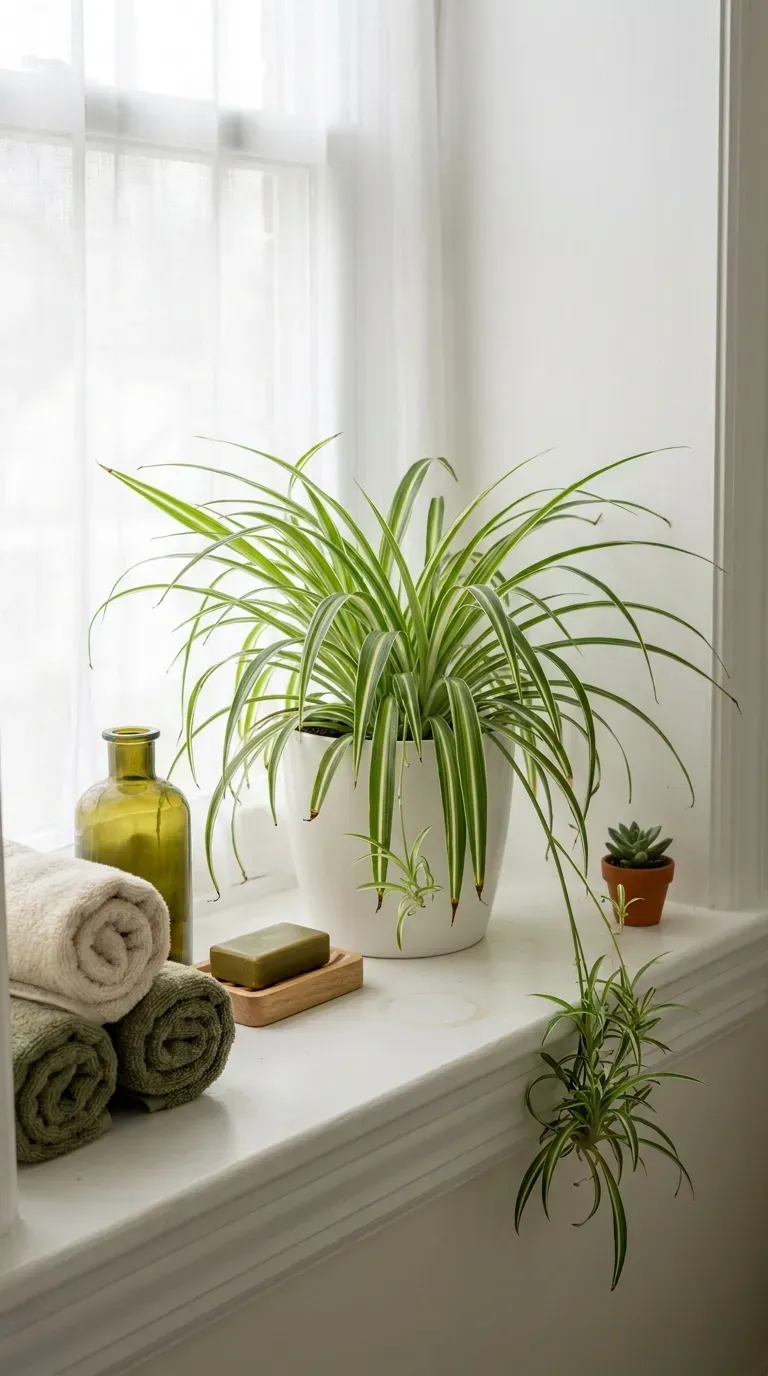
Spider plant (Chlorophytum comosum) is pet-safe, forgiving, and produces baby plantlets that dangle like small green fountains. It thrives in the 60-70% humidity most bathrooms provide.
Use a 6-inch pot with drainage and well-draining potting mix. Water weekly in summer, every 10-14 days in winter. Brown tips mean fluoride or dry air, not doom.
Pro Tip: Snip plantlets and root them in water, then gift them. One mother plant can supply a whole friend group.
See our pet-safe houseplants and this RHS overview.
Reliable, cheerful, and the plant that gives back.
13. ZZ Plant in the Narrow Gap Beside the Vanity
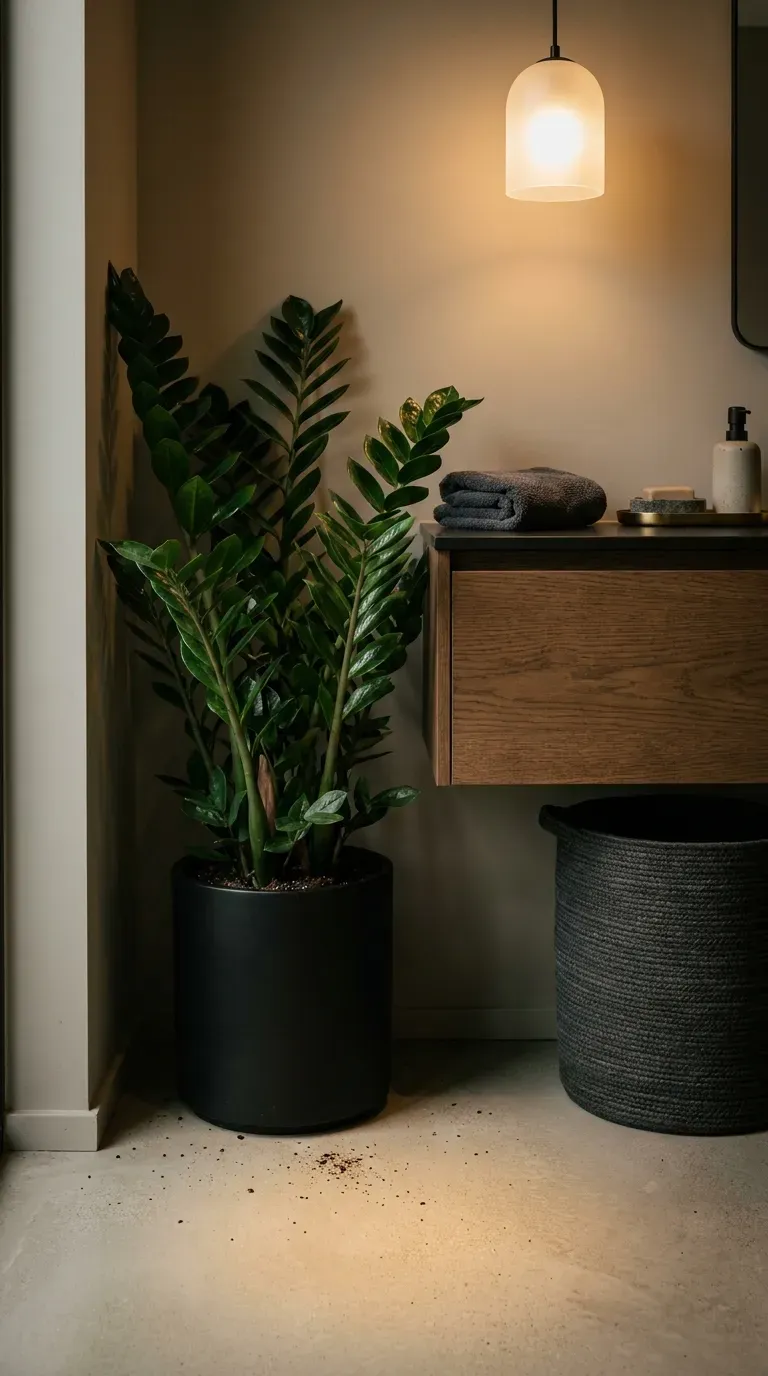
ZZ plant (Zamioculcas zamiifolia) grows upright, so it fits in a 10-inch gap without spreading. It handles low light and skipped waterings better than almost anything.
Plant it in a well-draining mix in a heavy pot to avoid tipping. Water every 2-3 weeks, only when the soil is completely dry through the pot. Rhizomes store water, and overwatering causes mushy stems.
- Best for: windowless or dim bathrooms with occasional light
- Avoid: if you have pets or toddlers, since it is toxic
Read best low-maintenance plants and this Missouri Botanical Garden profile.
Fill the gap, forget the schedule.
14. Phalaenopsis Orchid Near a Bright Window
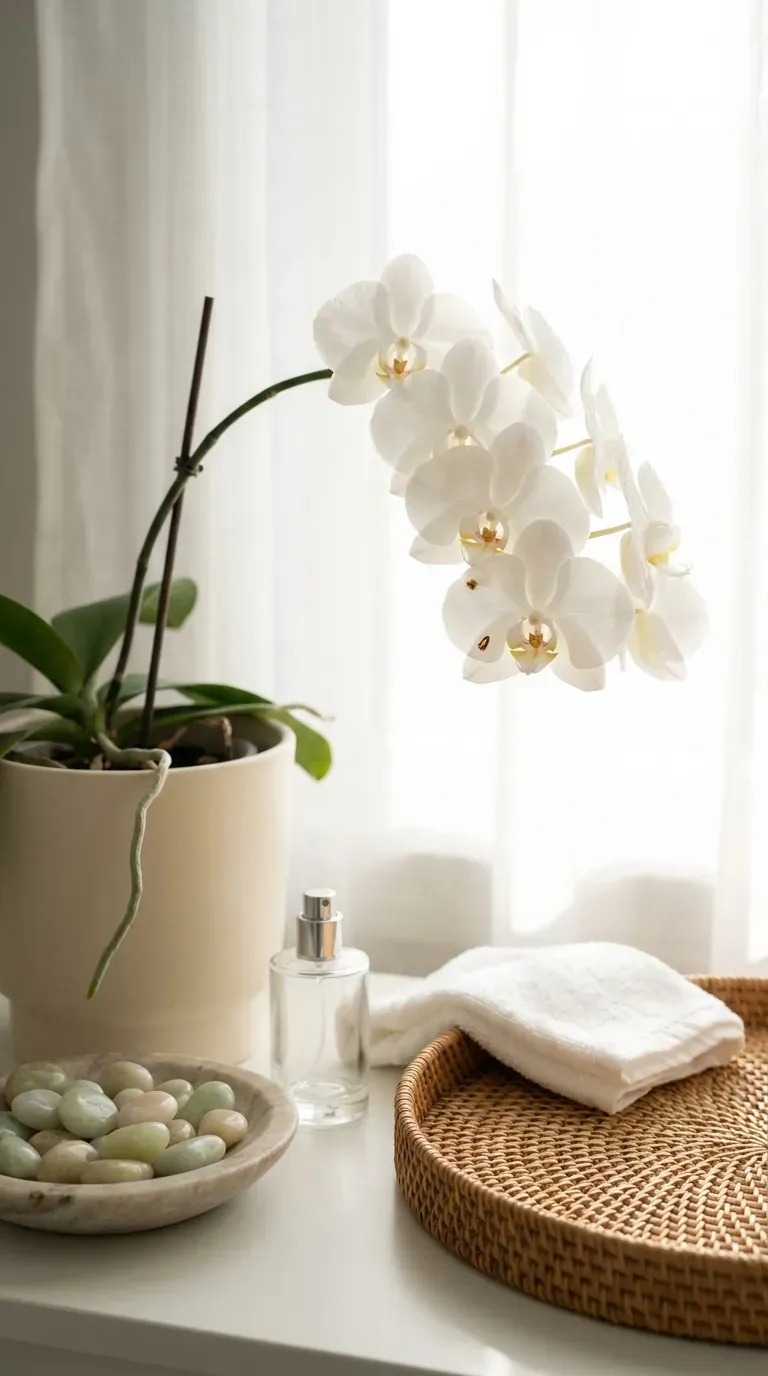
Moth orchids (Phalaenopsis) love the 50-70% humidity a shower provides, which is more than most living rooms manage. They bloom for 2-3 months and are pet-safe.
Give bright indirect light such as an east window. Water by soaking the bark mix for 10 minutes every 7-10 days, and drain fully. Never leave water in the crown, which causes rot.
Pro Tip: A plastic inner pot with a decorative cachepot lets roots photosynthesize and makes watering easy to check.
Explore our orchid care for beginners and the RHS orchid page.
One bloom makes a small room feel special.
15. Vertical Wall Planter Over the Toilet
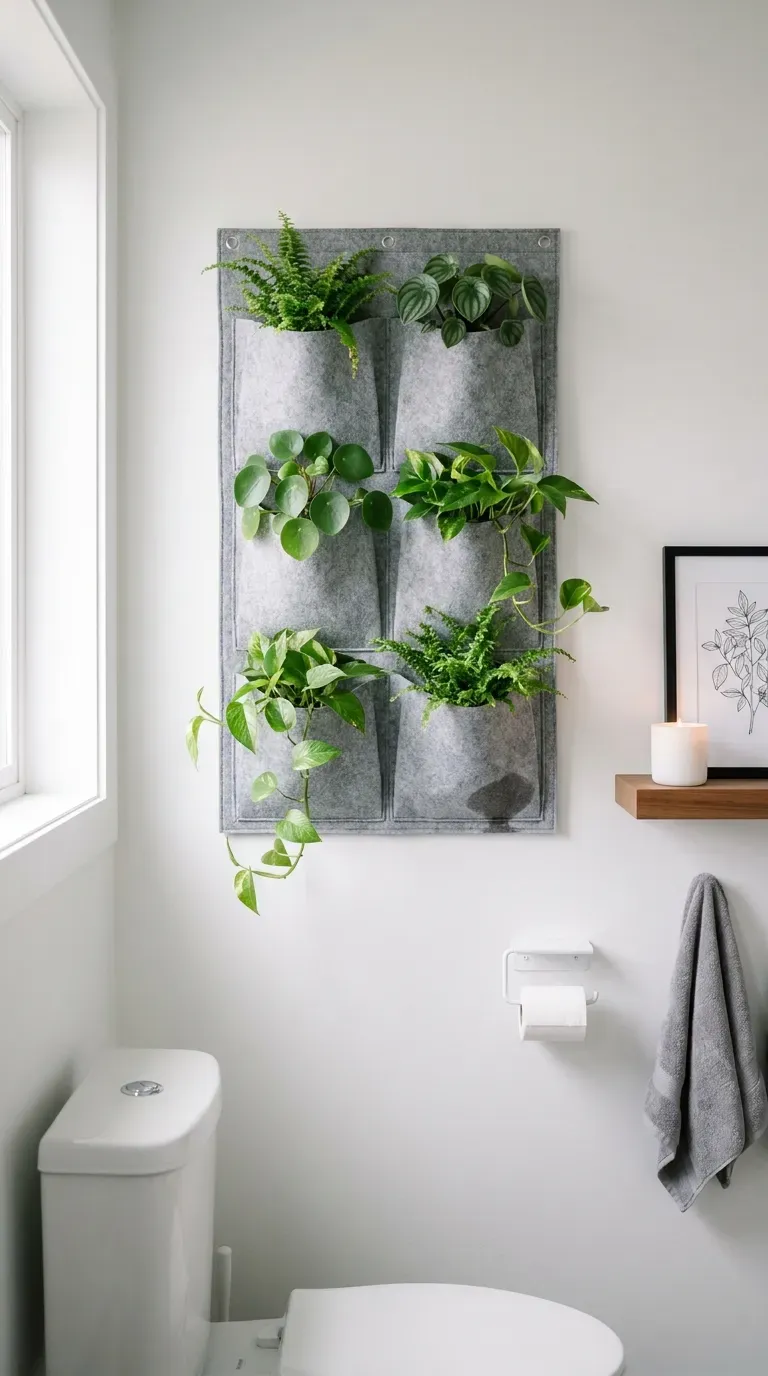
A vertical planter turns a bare wall into a living panel. Use a felt or modular system 24 inches wide, and mount it into studs since a watered planter can weigh 15-20 pounds.
Choose plants with similar needs, such as ferns, peperomia, and pothos. Water pockets with a small watering can, letting excess drain into a liner. Wall systems dry faster than pots, so check every 3-4 days at first.
Pro Tip: Place thirstier plants on the bottom row. Water trickles down, so bottom pockets stay damper.
Try our vertical gardening for small spaces and this Penn State Extension guide.
Grow up, not out.
16. Woven Basket Cachepots for a Cozy Feel
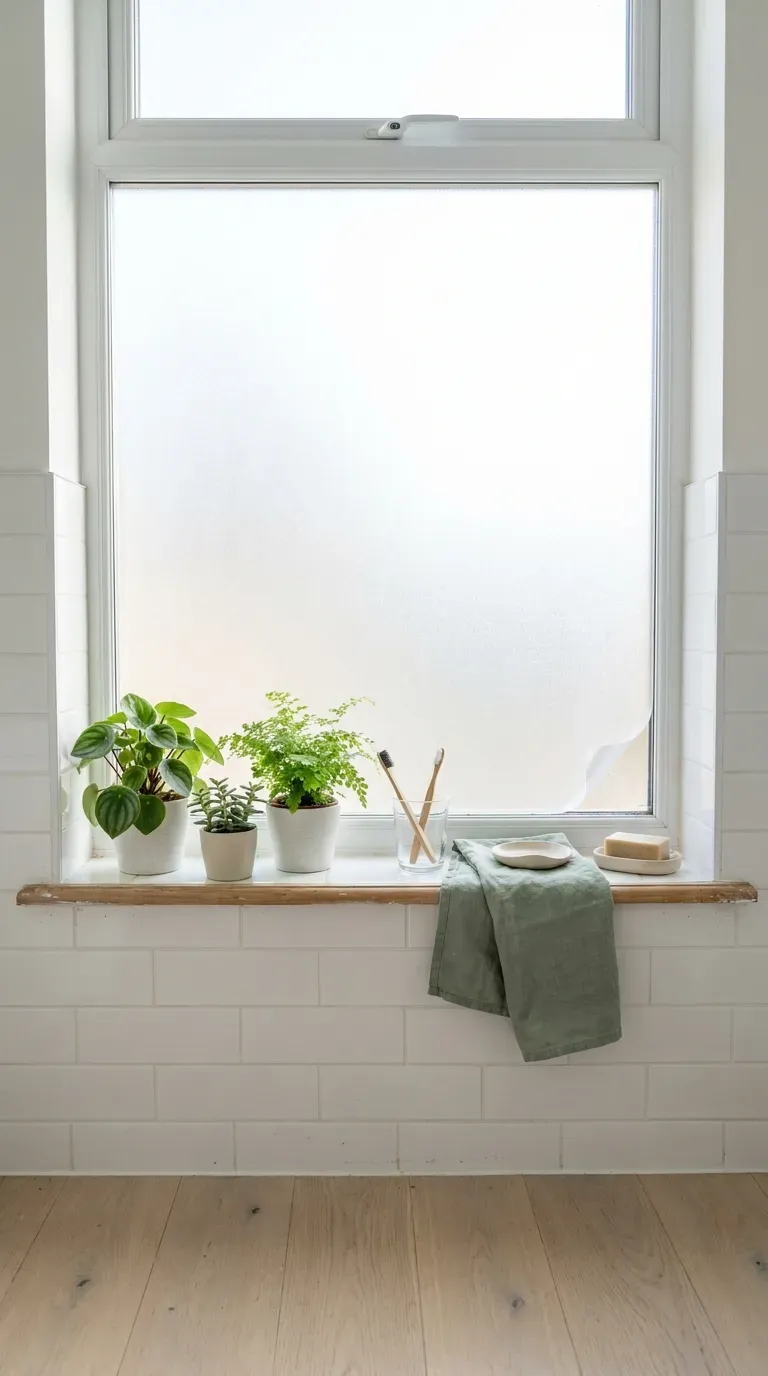
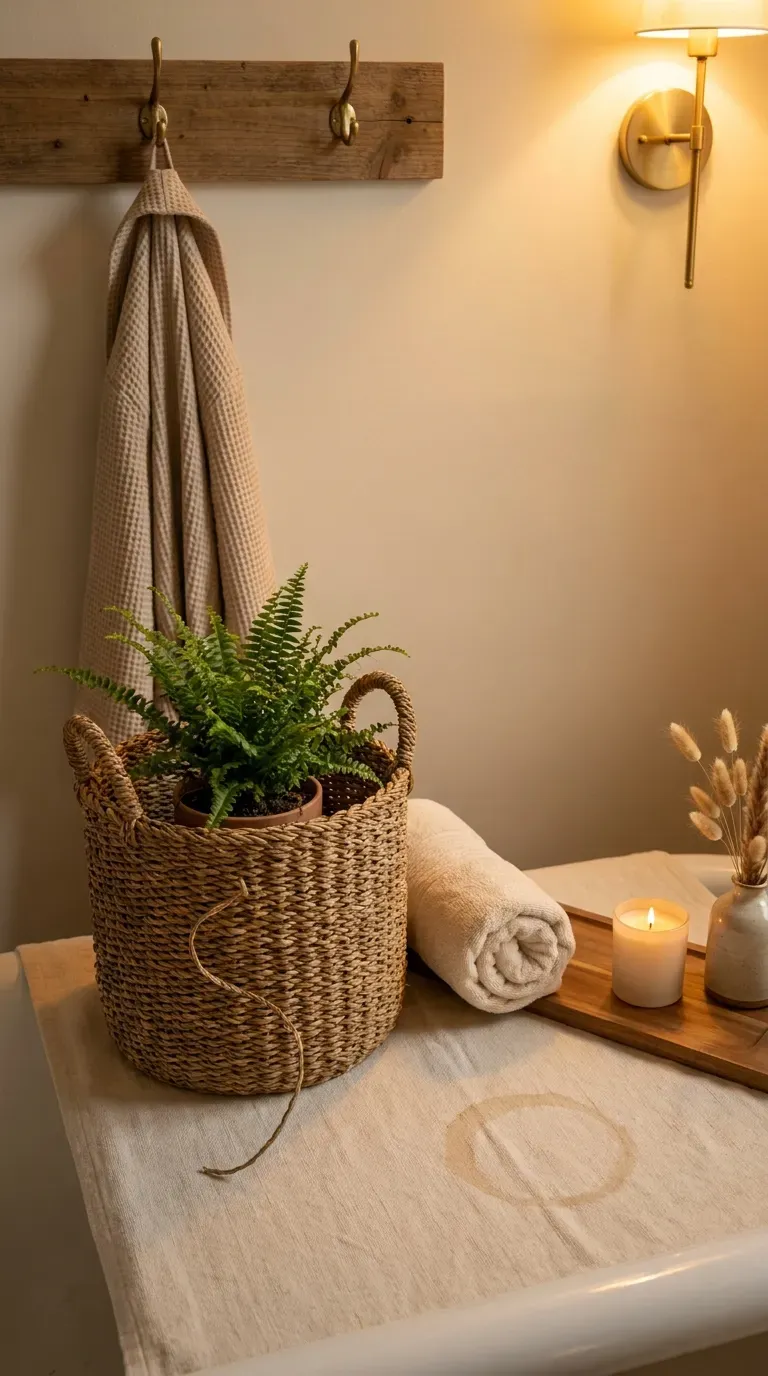
Baskets add warmth and texture, the main ingredients of “cozy.” Slip a plastic nursery pot inside a seagrass basket, and you get instant style without repotting.
Line the basket with a plastic bag or saucer so water doesn’t stain or mold the fibers. Bathroom humidity can mildew natural fibers over time, so lift the pot out to water and let the basket air dry weekly.
Pro Tip: Choose baskets 1-2 inches wider than the pot, allowing air circulation and preventing damp trapped against the weave.
See our decorative planters guide and this Better Homes & Gardens planter overview.
Texture is what makes a small room feel lived in.
17. Frosted Window Film to Let Plants Have Light
Curtains block plant light, and blinds make a small bathroom feel closed in. Frosted film gives privacy while letting roughly 70-80% of light through, so plants keep growing.
Choose static-cling film, which peels off without residue and works for renters. Apply with a spray bottle of soapy water, and trim edges 1/8 inch inside the frame.
- Best for: street-facing or shared-wall windows
- Skip if: you want a view, since it blocks it completely
Read our window light guide for plants and Gardeners’ World light basics.
Privacy and photosynthesis are not enemies.
18. Wall-Hung Vanity That Shows More Floor
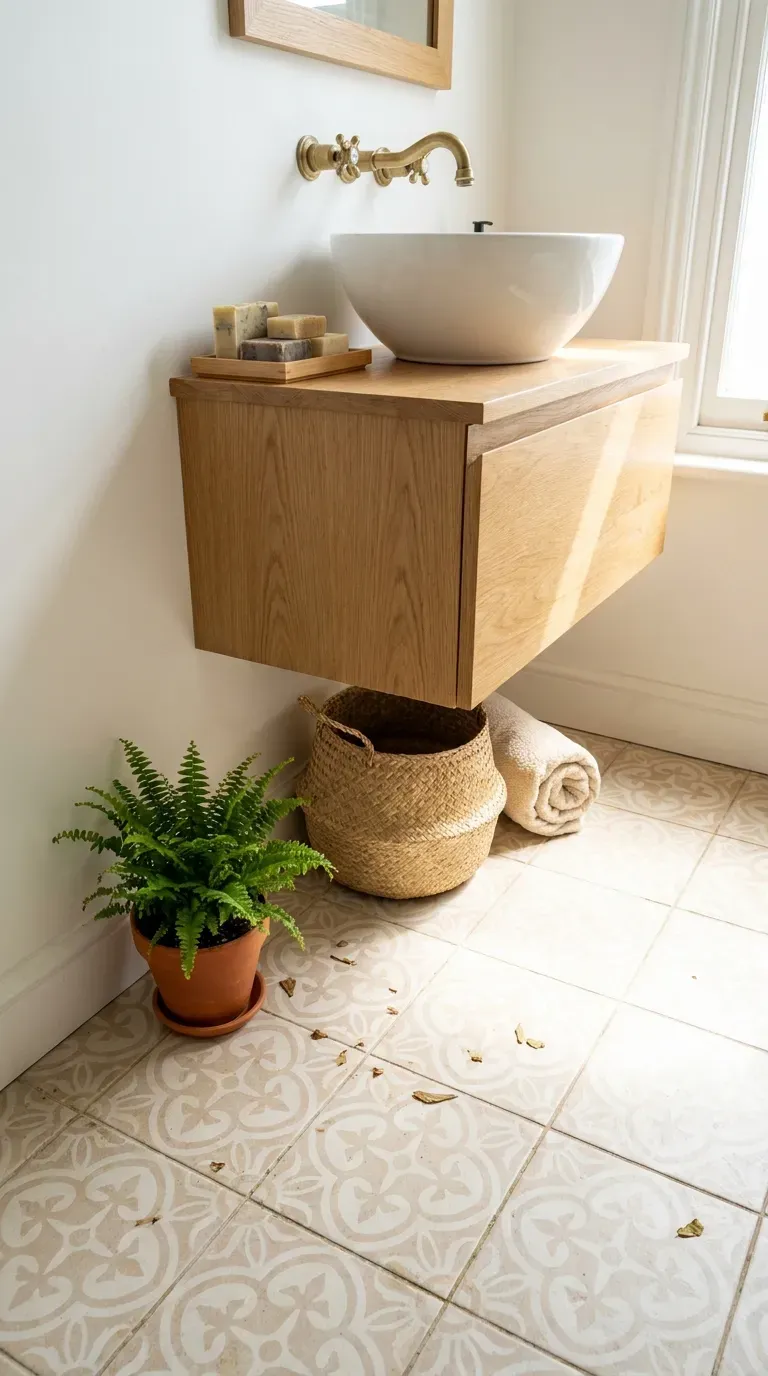
Seeing more floor makes a room read larger, which is why floating vanities work so well. A 24-inch wall-hung unit leaves a clear strip underneath.
Use that space for one plant and a basket. A fern or cast iron plant thrives at floor level in shaded humidity, and the low placement keeps counters clear.
Pro Tip: Mount the vanity at 34-36 inches high. Lower looks squat, and higher becomes uncomfortable to use.
Compare options in our small space bathroom storage and this BHG bathroom design guide.
Show the floor and the room gets a little longer.
19. Matching White Ceramic Pots for Visual Calm
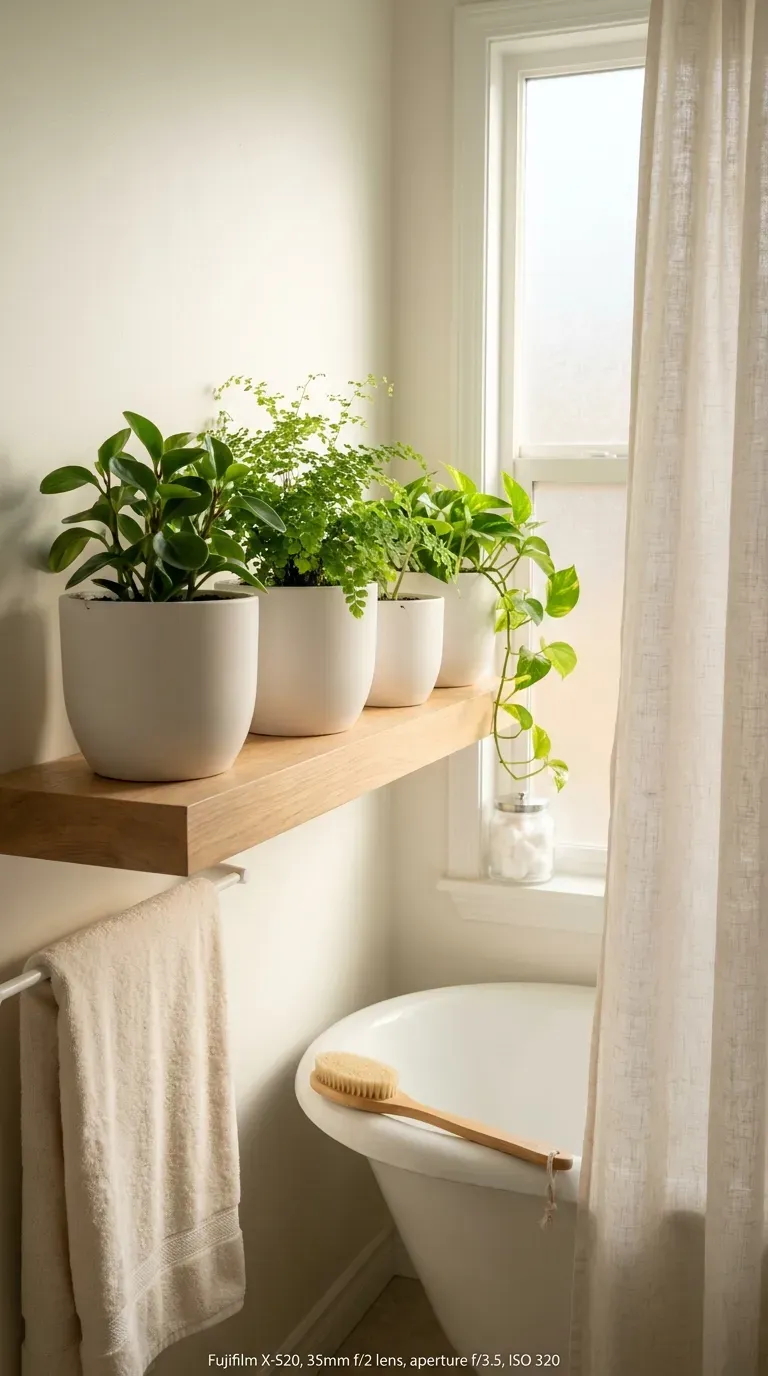
Mismatched pots create visual noise, which small rooms can’t absorb. Three white or cream pots of different heights make a group look intentional.
Keep the finish matte, which hides water spots better than gloss. Drill drainage holes or use nursery pots inside cachepots. I once used pots without drainage and lost two plants to root rot in a month.
- Works: 4, 6, and 8-inch pots grouped in odd numbers
- Avoid: more than two pot colors in a small room
Get ideas from our houseplant grouping guide and this The Sill styling page.
Consistency reads as calm.
20. Peperomia on the Vanity Counter
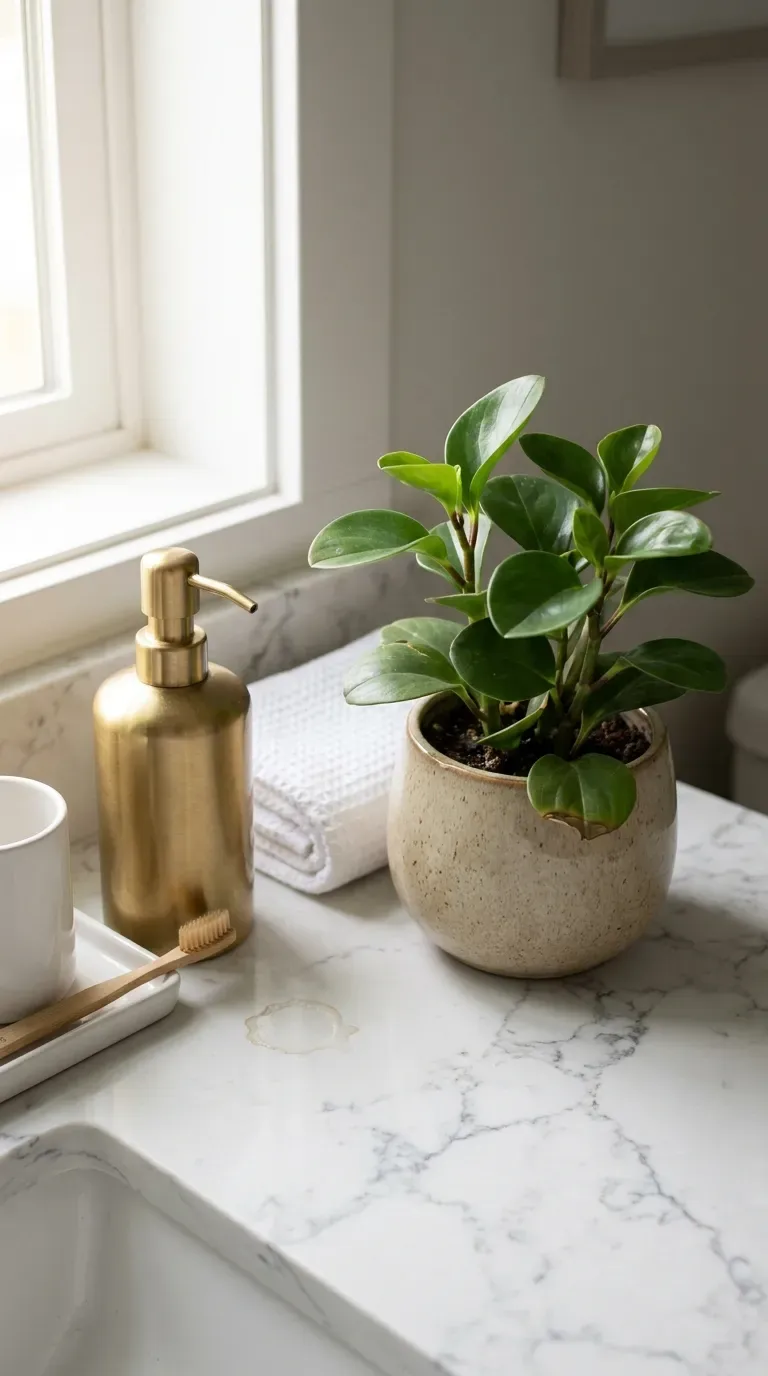
Peperomia (Peperomia obtusifolia) stays 8-12 inches tall, so it takes about 4 inches of counter. Its thick, waxy leaves hold water and tolerate the occasional missed week.
Use a 4-inch pot with a chunky, well-draining mix and give it medium indirect light. Water when the top inch is dry, about every 10 days. It’s pet-safe, which makes it a good counter plant.
Pro Tip: Pinch back the top growth once a year to keep it bushy instead of leggy.
More on this in compact houseplants for small spaces and Missouri Botanical Garden’s peperomia page.
A little green beside the tap goes a long way.
21. Preserved Moss Frame With No Care Needed
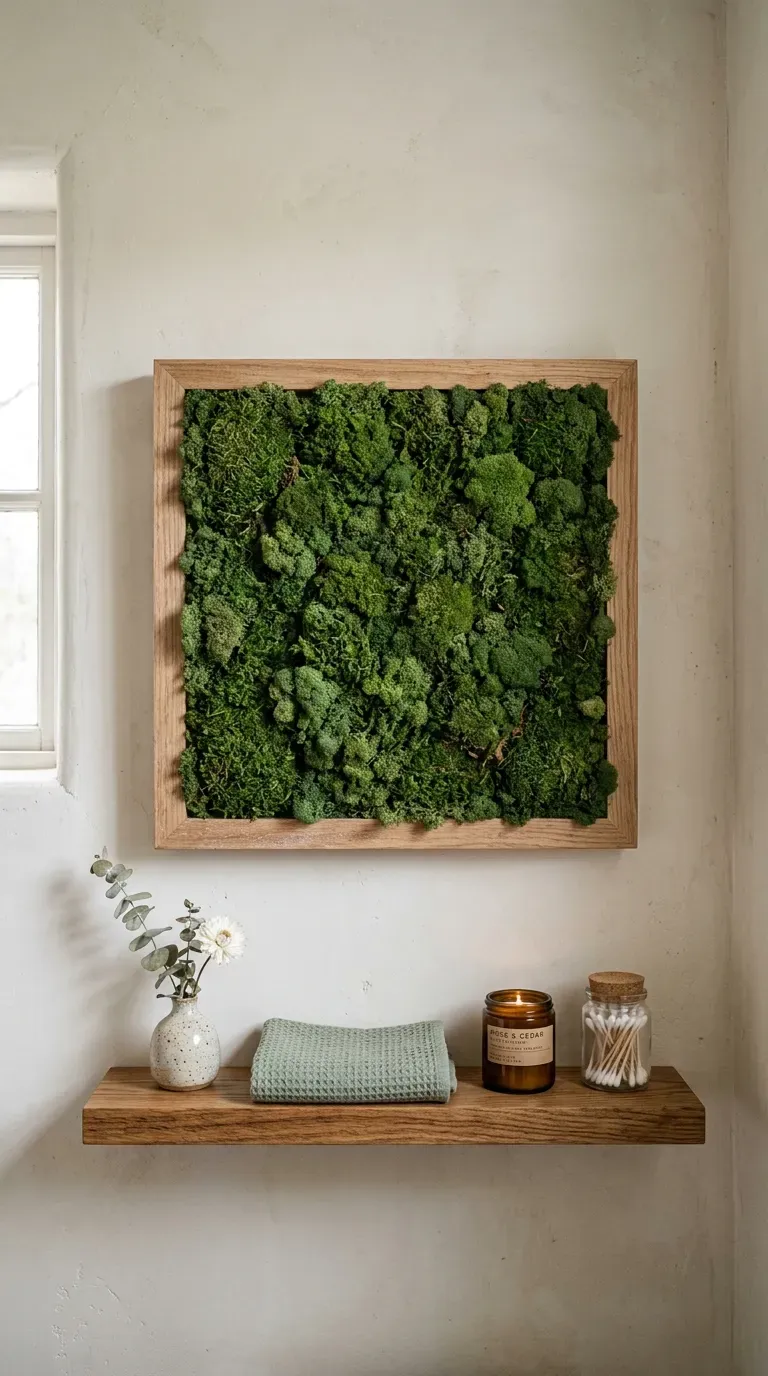
Preserved moss looks alive but needs no light, water, or soil, so it works in the darkest bathroom. It adds depth and texture to a flat wall.
Choose a frame 12-24 inches wide and hang it out of direct spray. Preserved moss tolerates humidity, but it isn’t waterproof; keep it away from the shower and wipe dust with a dry brush.
Pro Tip: Avoid misting or watering it. Moisture causes mold and dulls the dye.
Pair it with living plants from our decorating with moss and this Better Homes & Gardens moss guide.
Evergreen without effort.
22. LED Grow Strip for a Windowless Bathroom
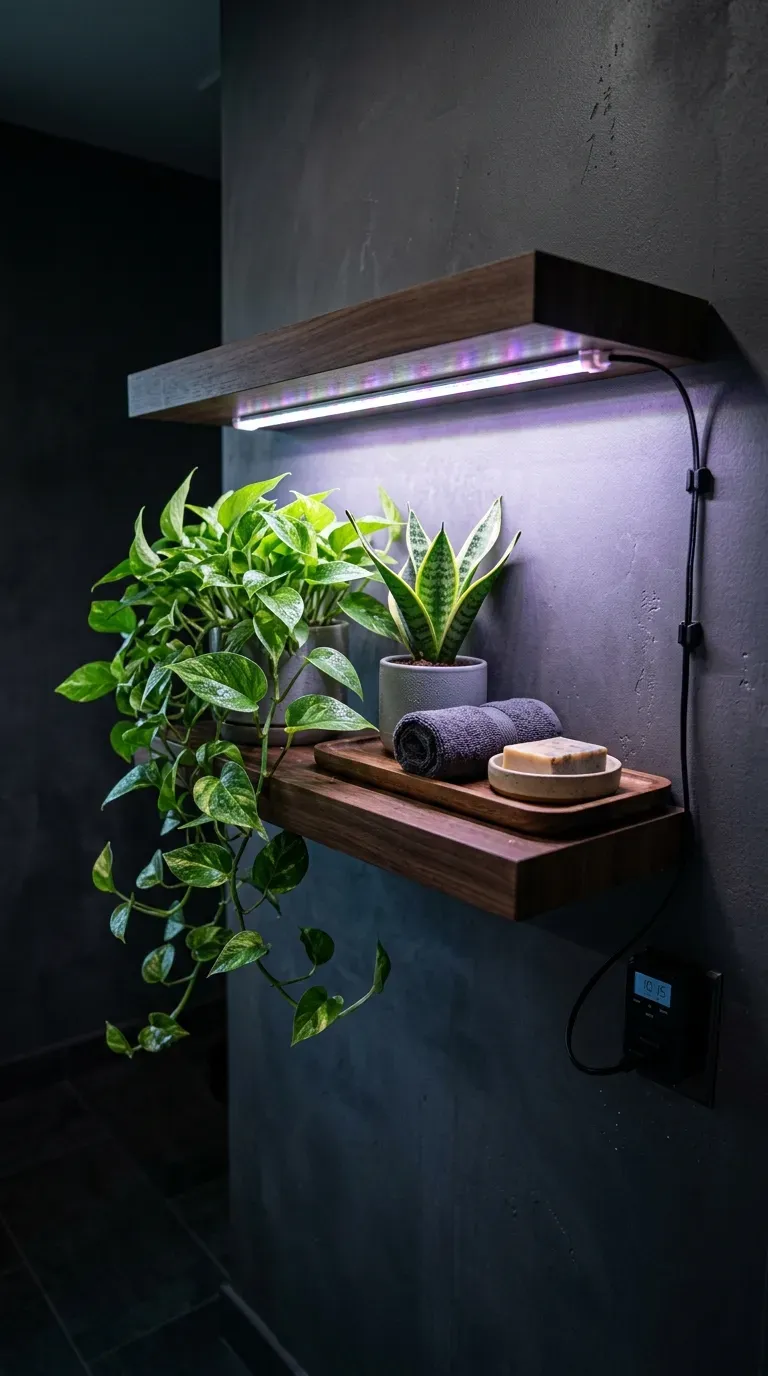
A full-spectrum 6500K LED strip turns a dark bathroom into a viable growing space. Mount it 6-12 inches above plants and run it 8-10 hours daily on a cheap plug-in timer.
Choose plants that match the light: pothos, philodendron, and snake plant handle a single strip well. Orchids and ferns need more intensity. A 10-watt strip costs about $15-25 and uses very little power.
- Works: pothos, ZZ, snake plant, peperomia
- Avoid: using warm-white bulbs, which lack the blue spectrum plants need
See our grow lights for houseplants and this University of Florida IFAS lighting guide.
No window, no problem.
23. Bird’s Nest Fern in the Floor Corner
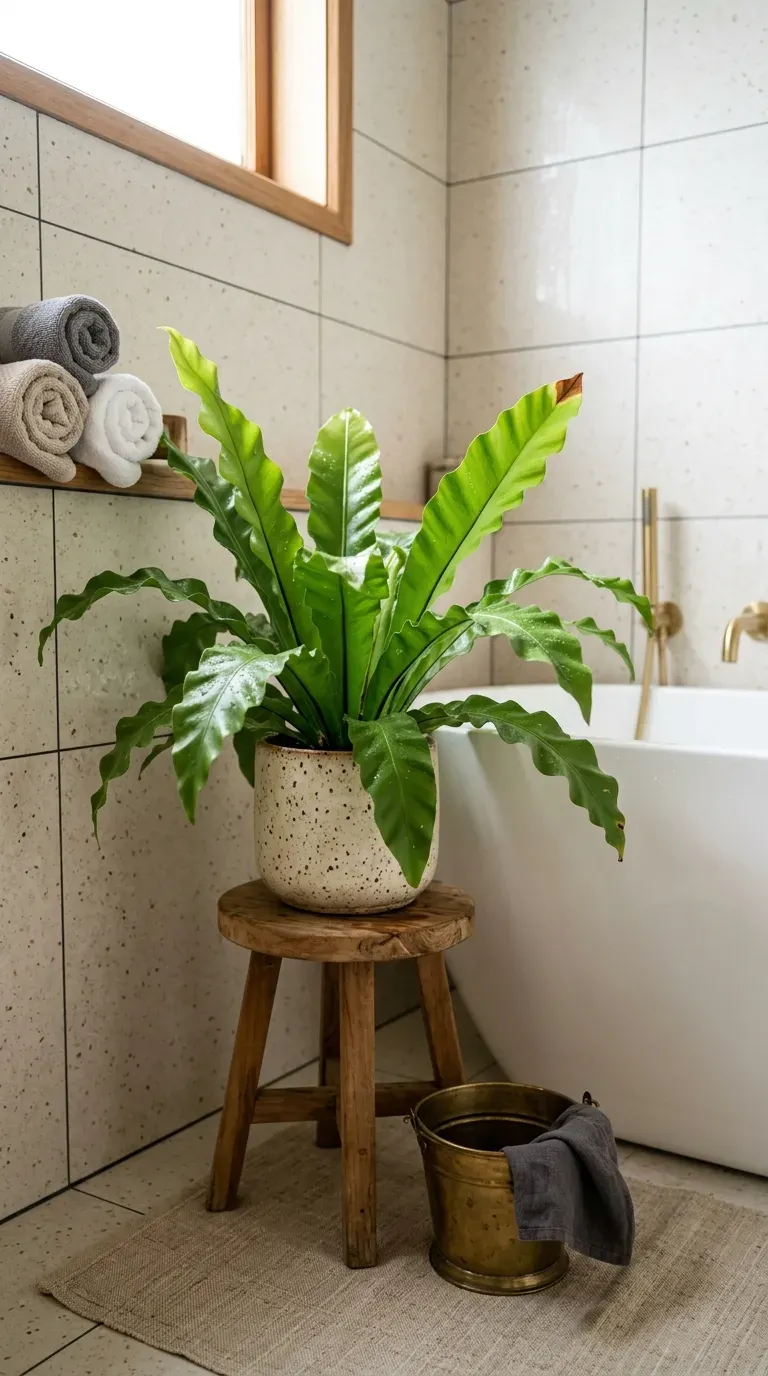
Bird’s nest fern (Asplenium nidus) has wavy, apple-green fronds and copes better with low light than most ferns. It grows 1-2 feet tall and is pet-safe.
Plant it in a peat-free mix in an 8-inch pot. Water around the edges, not into the central rosette, since standing water there causes rot. Keep evenly moist, roughly weekly.
Pro Tip: Use a saucer of pebbles under the pot. It adds local humidity without making the soil soggy.
Try our ferns for humid rooms and the Missouri Botanical Garden fern page.
Fill the corner and finish the room.
Getting Started With Small Bathroom Ideas
The easiest first step is checking your light. Stand in the bathroom at midday with the door closed and lights off: if you can read a book, pothos or spider plant will do well. If you can’t, use a ZZ plant, snake plant, or a grow strip.
The most common beginner mistake is overwatering. Bathroom humidity slows soil drying, so check the top inch before watering, even if you’re used to a weekly schedule.
Buy one plant, one container with drainage, and one tool. I’d suggest a 6-inch pothos, a white ceramic pot with a saucer, and a small watering can with a narrow spout.
Expect a few weeks of adjustment. Pothos shows new growth in 3-4 weeks, ferns take 6-8 weeks to fill in, and orchids may rebloom after 6-9 months.
Frequently Asked Questions
What plants grow best in a small bathroom with no window?
Snake plant, ZZ plant, and cast iron plant handle low light best. Pair any of them with a full-spectrum LED strip on a timer for 8-10 hours daily for real growth. Without artificial light, growth will be minimal and plants will decline over time.
How can I make a small bathroom look bigger?
Use a large mirror opposite the light source, paint walls and ceiling in a pale continuous tone, and choose a wall-hung vanity to reveal floor. Hang plants from shelves or hooks instead of crowding the floor.
Do plants really like bathroom humidity?
Yes, many tropical plants do. Ferns, orchids, air plants, and peace lilies thrive at 50-80% humidity, which showers can provide. Bathrooms with poor light are the bigger challenge, so match the plant to your light first.
Are bathroom plants safe for pets?
Some are. Spider plant, Boston fern, bird’s nest fern, cast iron plant, peperomia, and moth orchids are considered non-toxic to cats and dogs. Pothos, peace lily, snake plant, and ZZ plant are toxic if chewed, so place them out of reach.
How often should I water plants in a small bathroom?
Check the top inch of soil before watering rather than following a fixed schedule. Most bathroom plants need water every 7-14 days, but humidity and low light can stretch this to three weeks for succulents-like plants such as snake and ZZ plants.
A Few Final Thoughts
These 23 small bathroom ideas prove that a compact room doesn’t have to feel cramped. A single trailing plant, a well-placed mirror, or a pale coat of paint can shift how the whole room feels. Start with the plant that matches your actual light, then add layers of texture and reflection over time. Small changes stack up, and you’ll be surprised how quickly the space feels bigger and calmer. Pick one idea from this list this weekend and let the rest follow.