
A cluttered staircase full of mismatched pots can feel busier than the rest of the house combined, which is exactly the opposite of what most people want from the space they pass through every day. I stripped my own staircase down to three plants two years ago — a single snake plant, one trailing pothos, one empty stretch of wall — and it’s the first home project that actually made the house feel quieter. Minimalist staircase gardens work because they trust restraint: one strong plant, a neutral pot, and enough negative space around it to actually notice the leaves. This isn’t about having fewer plants for the sake of it — it’s about choosing the right few and giving them room to matter. Ready? Let’s explore all 24 of them.
Quick Answer: For a minimalist staircase garden, choose one or two sculptural plants — snake plant, ZZ plant, or a small olive tree — in matte neutral pots (white, concrete, or black), and leave visible negative space around each one rather than filling every step. Stick to a tight color palette and a single pot material throughout the staircase for cohesion. Less genuinely reads as more here, so resist adding a plant just to fill a gap.
Why a Minimalist Staircase Garden Is Worth Your Time
A staircase gets looked at constantly — climbed, passed, glanced up at from the hallway — which makes it a poor place for visual noise. A minimalist approach treats each plant as a deliberate choice rather than a filler, so the eye actually lands somewhere instead of skating over a crowded row of pots.
The practical upside is real: fewer plants means fewer watering schedules to track, and sculptural low-maintenance species like snake plants and ZZ plants genuinely thrive on a bit of neglect. A lesser-known fact — matte, unglazed pots actually help wick excess moisture away from roots faster than glossy glazed ceramic, which matters more than people think for plants that hate wet feet.
This approach suits people who find heavily styled spaces exhausting rather than relaxing, and it’s forgiving for beginners since fewer plants means fewer things that can go visibly wrong at once.
At a Glance
- One or two statement plants outperform a dozen small ones in a minimalist staircase
- Sculptural species — snake plant, ZZ plant, olive tree — hold visual weight without clutter
- Matte neutral pots (white, concrete, black, unglazed terracotta) read as calm; glossy or patterned ones don’t
- Negative space around each plant is part of the design, not empty space to fill
- A single repeated pot material throughout the staircase creates cohesion better than variety does
Comparison Table: 24 Minimalist Staircase Garden Ideas
| # | Idea | Best Plant/Material | Light Needs | Difficulty | Pet-Safe? |
| 1 | Single snake plant, concrete pot | Snake plant | Low–bright | Easy | No |
| 2 | ZZ plant on floating shelf | ZZ plant | Low–medium | Easy | No |
| 3 | Matte white pot, top landing | Pothos (trained upright) | Medium | Easy | No |
| 4 | Sculptural olive tree at base | Olive tree | Bright | Moderate | Yes |
| 5 | Monochrome fern cluster | Boston fern | Medium | Moderate | Yes |
| 6 | Single fiddle leaf fig | Fiddle leaf fig | Bright indirect | Moderate | No |
| 7 | Black steel plant stand | Rubber plant | Medium | Easy | No |
| 8 | Bare branch + one small pot | Dried branch + succulent | Bright | Easy | Yes |
| 9 | Recessed wall niche planter | Pothos | Medium | Advanced | No |
| 10 | Concrete cube planters, paired | Succulents | Bright | Easy | Mostly yes |
| 11 | Single trailing string of pearls | String of pearls | Bright indirect | Easy | No |
| 12 | White ceramic trio, matched | Air plants | Bright | Easy | Yes |
| 13 | Sculptural dracaena | Dracaena marginata | Medium | Easy | No |
| 14 | Floating minimalist shelf, one plant | Peace lily | Medium | Moderate | No |
| 15 | Neutral linen-wrapped pot | ZZ plant | Low–medium | Easy | No |
| 16 | Single tall cactus | Columnar cactus | Bright | Easy | Mostly yes |
| 17 | Monochrome gravel-topped pot | Snake plant | Low–bright | Easy | No |
| 18 | Glass cylinder propagation station | Pothos cuttings | Medium | Easy | No |
| 19 | Single pampas stem, tall vase | Dried pampas | Low | Easy | Yes |
| 20 | Wall-mounted single plant sconce | Pothos | Medium | Moderate | No |
| 21 | Matte black hanging planter | String of hearts | Bright indirect | Moderate | No |
| 22 | One large paddle plant | Kalanchoe luciae | Bright | Easy | No |
| 23 | Minimalist bonsai on landing | Ficus bonsai | Bright indirect | Advanced | No |
| 24 | Empty step, single plant at top | ZZ plant | Low–medium | Easy | No |
Main Body — 24 Minimalist Staircase Garden Ideas
1. A Single Snake Plant in a Concrete Pot
One tall snake plant in a raw concrete pot at the base of the stairs does more for a minimalist look than five smaller plants scattered up the steps.
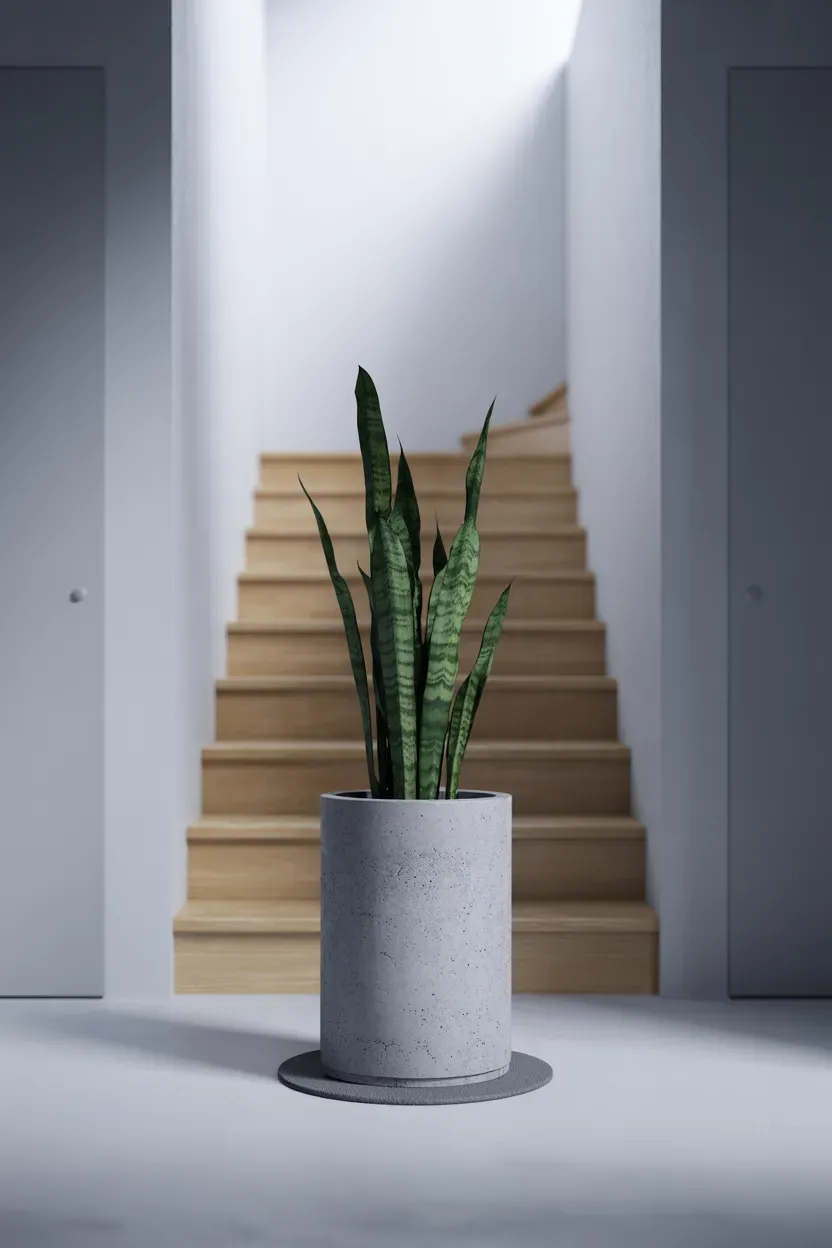
Snake plants tolerate almost any light level and need watering only every three to four weeks, making them the most forgiving choice for a minimalist entryway that gets inconsistent light. Choose a pot with a wide, stable base — concrete’s weight actually works in its favor here, keeping a tall plant from tipping in a high-traffic spot.
Pro Tip: Resist the urge to add a second plant beside it — one strong silhouette against a plain wall reads as intentional; two competing shapes start to look cluttered again.
See our snake plant styling guide and the Penn State Extension succulent care notes for more. It’s the single easiest way to start a minimalist staircase garden.
2. A ZZ Plant on a Floating Shelf
A single ZZ plant on a slim floating shelf gives you glossy, structural greenery without a single visible bracket or messy cord to distract from the look.
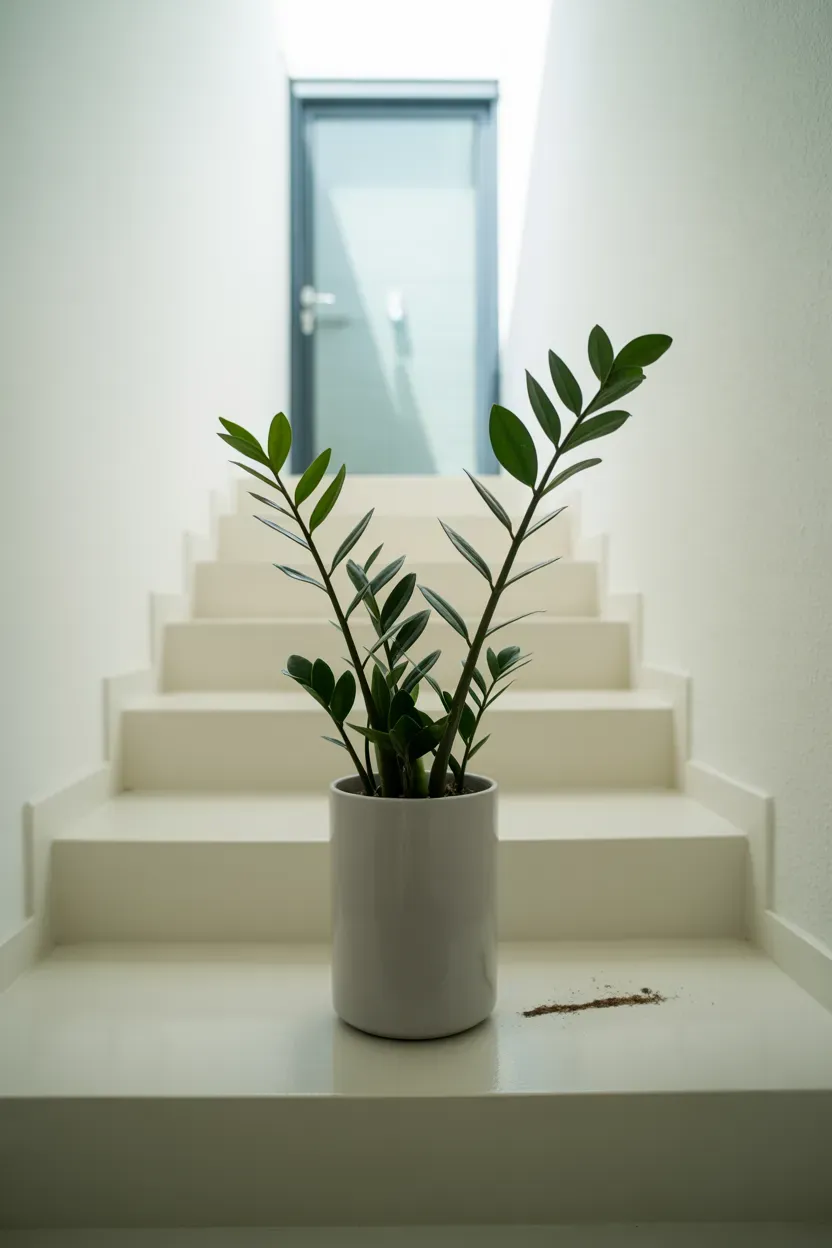
ZZ plants tolerate low light better than almost any other structural houseplant, which makes them ideal for the dimmer midpoint of most staircases. Water only when the soil is fully dry, roughly every three weeks — overwatering is the fastest way to lose one, something I learned after yellowing an entire stem on my first attempt.
- Choose a shelf depth of at least 8 inches for stability
- Mount into a stud, not drywall alone, given the pot’s weight when watered
- Wipe leaves monthly with a dry cloth to keep their natural gloss
Our floating shelf plant guide and RHS growing notes cover ZZ plant care well. It’s an easy way to add height without adding floor clutter.
3. A Trained Upright Pothos in a Matte White Pot
Training a pothos to grow upright on a slim stake, rather than letting it trail everywhere, keeps the plant contained and gives it a cleaner, more architectural shape.
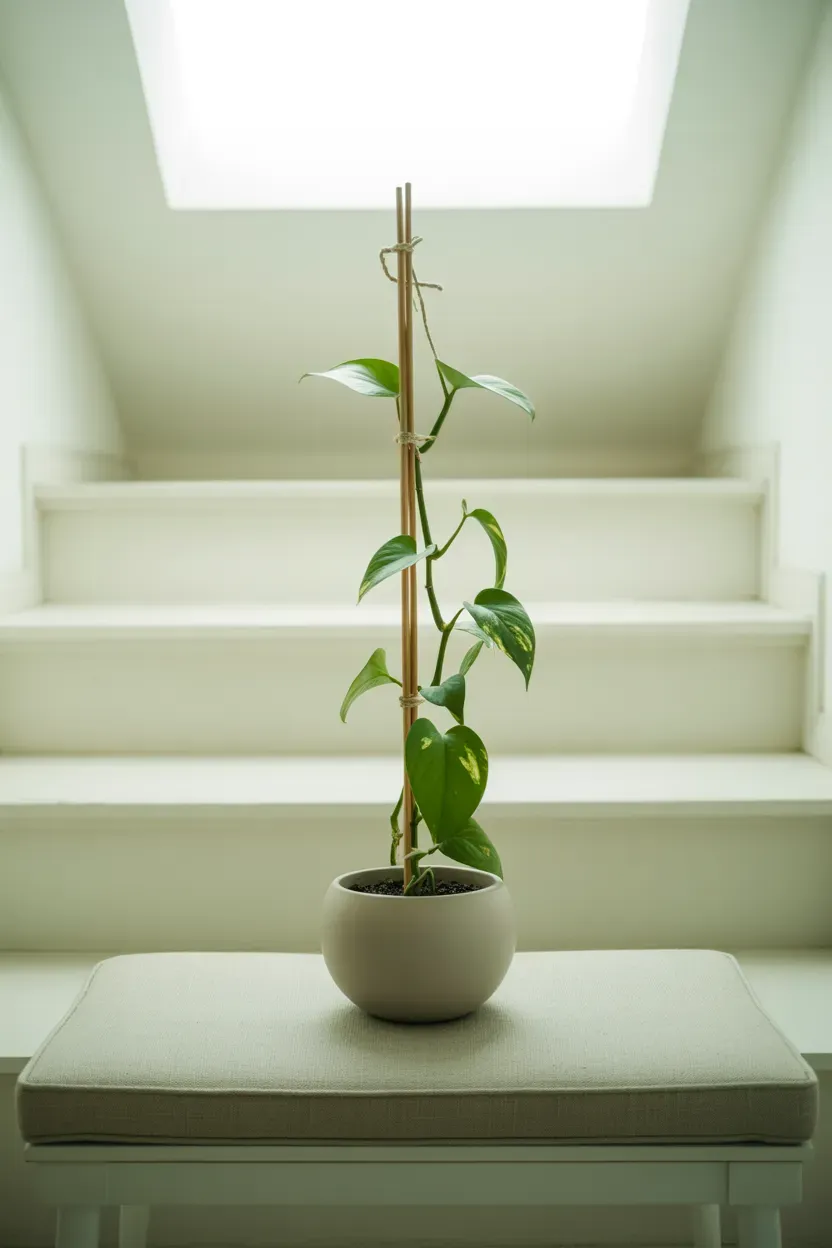
Tie new growth to the stake loosely every few weeks with soft twine, leaving slack for the stem to thicken — a tight tie left too long can scar the stem, which happened to one of mine before I started checking monthly. Bright indirect light keeps the trained shape compact; in lower light, expect looser, less defined growth.
Pro Tip: Trim any side shoots that try to trail rather than climb — removing them early keeps the silhouette clean instead of letting it revert to its natural sprawl.
Our training pothos upright guide and Gardeners’ World cover staking techniques. It’s a fresh, tidier take on a plant most people only let trail.
4. A Sculptural Olive Tree at the Base
A single potted olive tree at the bottom of the stairs brings soft, silvery texture and real height without any visual clutter around it.
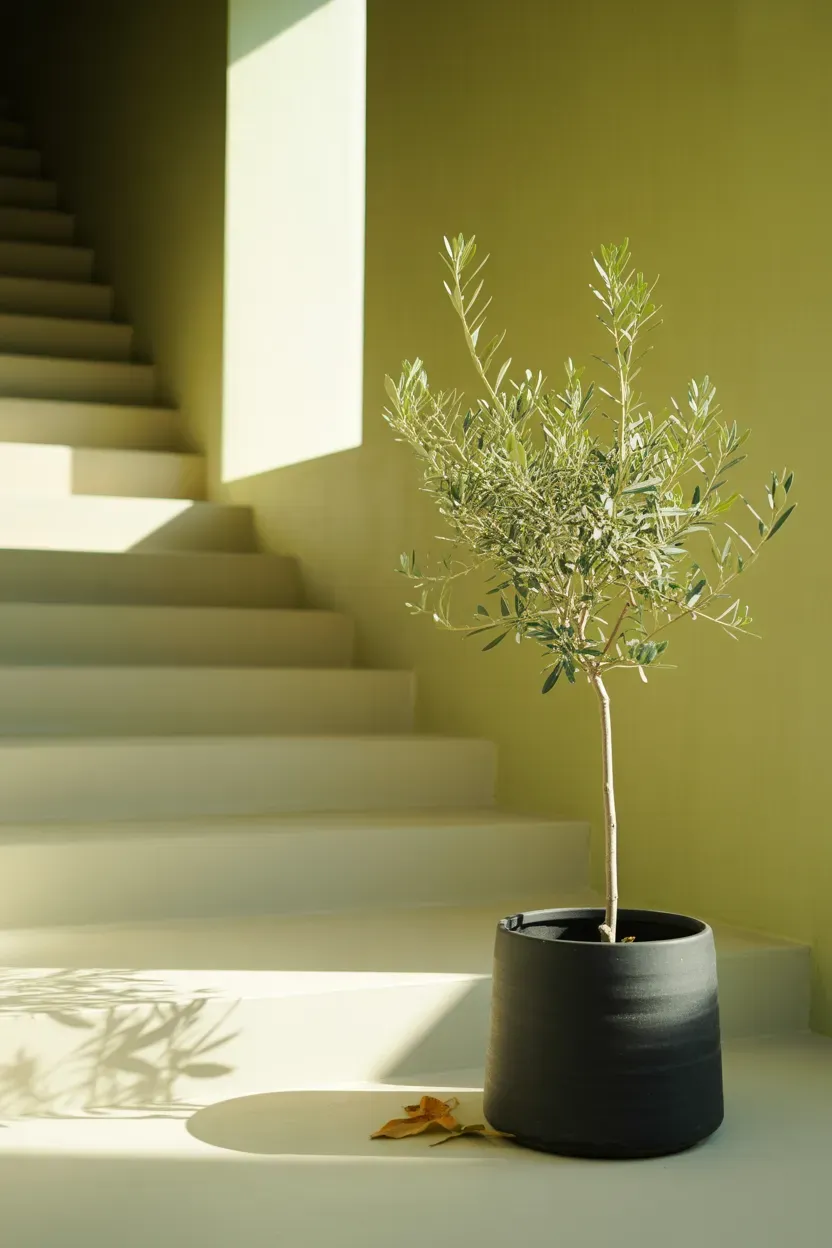
Olive trees need at least six hours of bright, direct light, so this idea only works near a large window or glass door — mine struggled and dropped leaves steadily the one winter I kept it too far from natural light. Water deeply but infrequently, letting the soil dry out between waterings, since olive trees are far more drought-tolerant than most indoor plants.
Full care notes are in our indoor olive tree guide, and Missouri Botanical Garden has background on olive tree light needs. It’s a strong choice if your staircase genuinely gets bright, direct sun.
5. A Monochrome Fern Cluster in Matching Pots
Grouping three or four ferns in identical matte pots, rather than mixing containers, keeps a fuller planting from tipping into visual clutter.
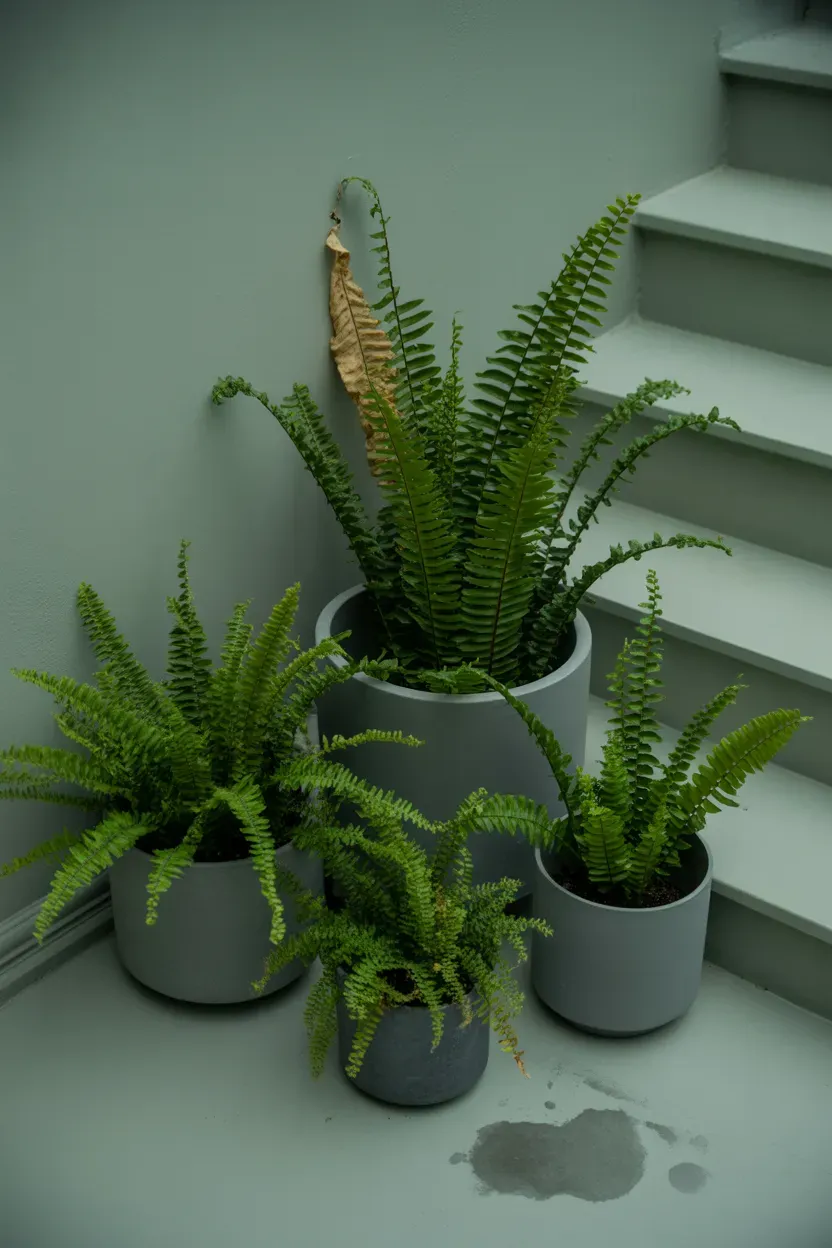
Grouping works as a minimalist technique specifically because the pots match — mix in even one different color or material and the cluster starts to look accidental rather than composed. Mist the ferns two to three times weekly, since most stairwells run drier than ferns want, and rotate the group monthly for even growth.
- Choose three or five plants, not an even number, for a more natural-looking cluster
- Keep pot sizes graduated rather than identical for visual interest
- Trim fully browned fronds at the base rather than the tips
Our plant grouping guide and SFGate’s fern notes cover this well. It’s proof that “more plants” and “more clutter” aren’t the same thing.
6. A Single Fiddle Leaf Fig on the Landing
One fiddle leaf fig, given a full corner of the landing to itself, becomes the kind of quiet focal point a minimalist space actually needs.
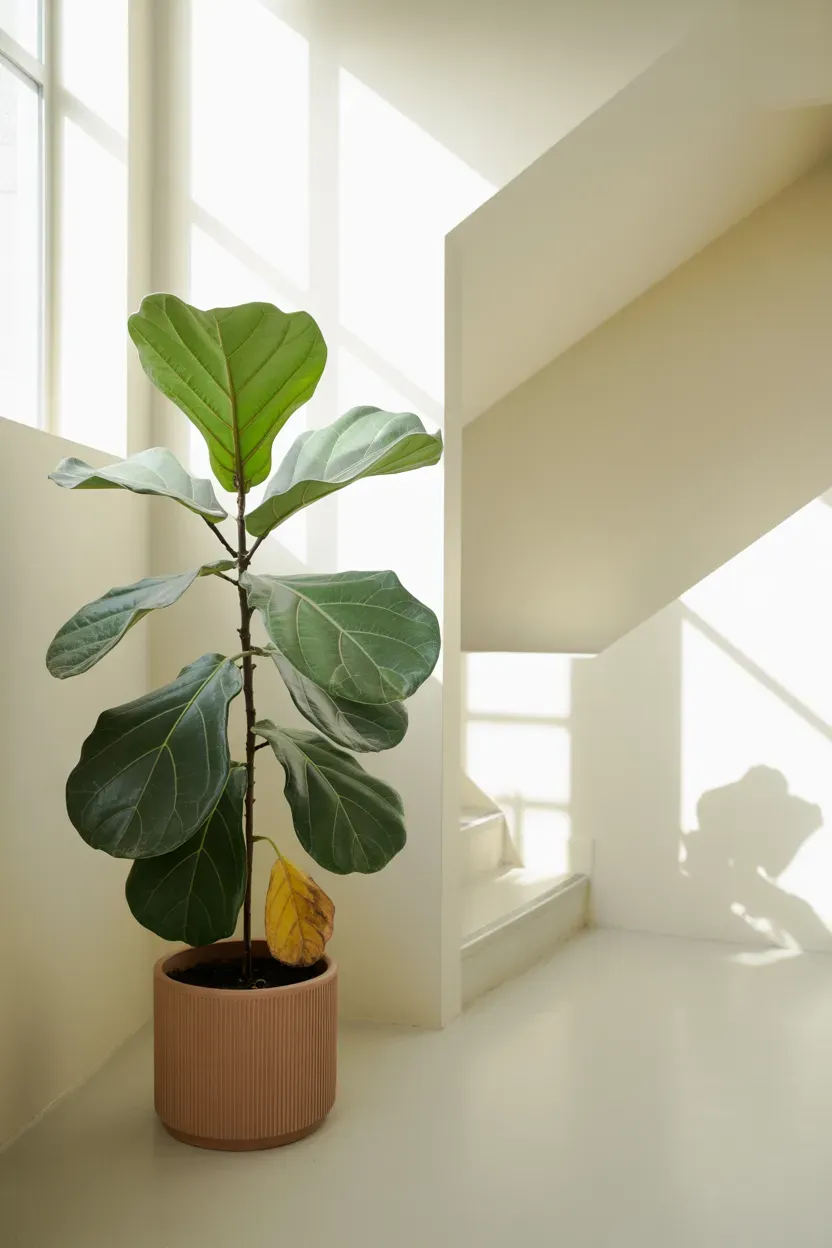
Fiddle leaf figs are notoriously particular about being moved, so choose the spot once and commit — mine dropped several leaves in protest after I relocated it twice in one month. Rotate it a quarter turn every couple of weeks instead of moving it, and keep it away from cold drafts near an entryway door.
Pro Tip: Wipe each leaf individually with a damp cloth monthly — dust buildup on large leaves measurably reduces the light they can absorb, which shows up as slower, smaller new growth.
Our fiddle leaf fig care guide and The Sill’s plant profiles cover placement well. Give it one settled spot and it rewards you with real presence.
7. A Rubber Plant on a Black Steel Stand
A single rubber plant on a slim black steel stand introduces a hard, architectural line that pairs well with a minimalist staircase’s clean geometry.
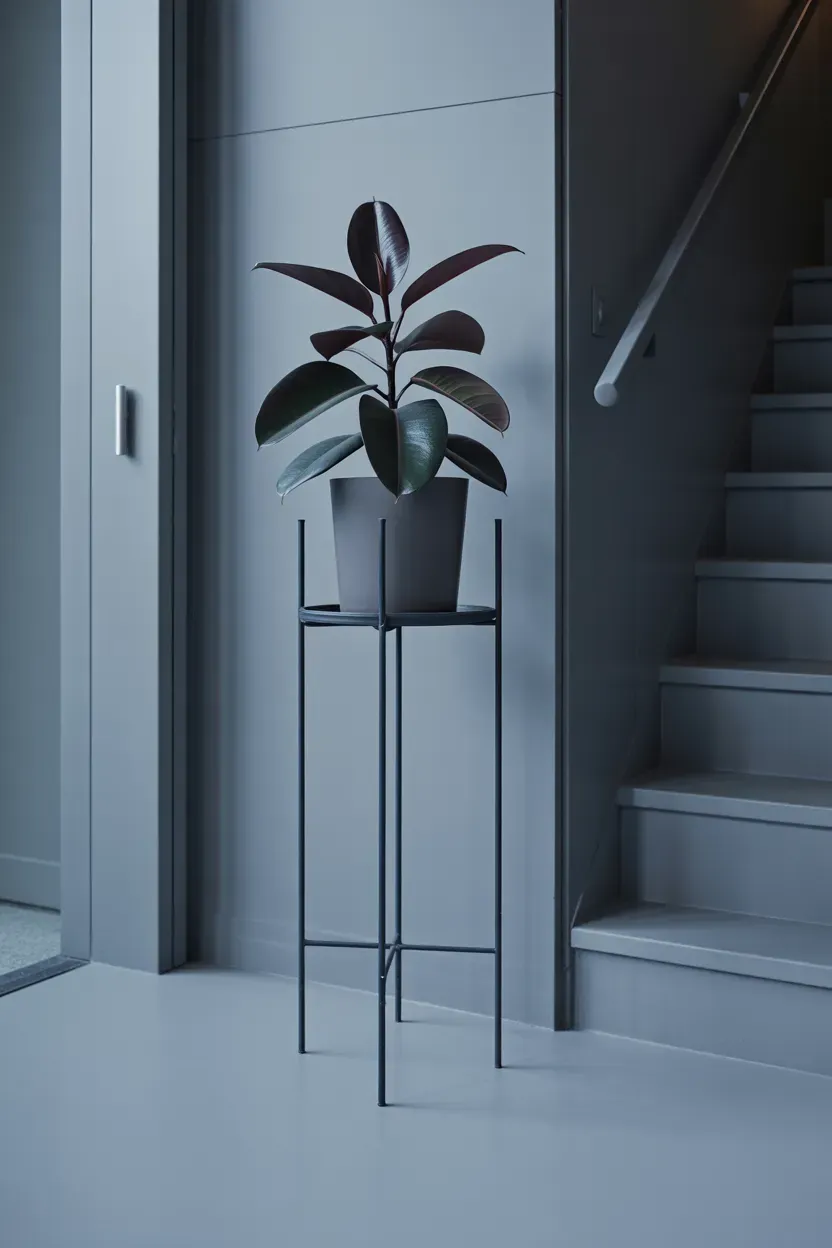
Rubber plants want bright indirect light and only need watering when the top two inches of soil dry out, roughly every 10 to 12 days. Choose a stand rated for at least 15 lbs, since a mature rubber plant in a full pot is heavier than it looks — mine tipped a lighter wire stand within its first year.
Full details are in our rubber plant care guide, and Missouri Botanical Garden has background on Ficus elastica. It’s a strong, structural choice for anyone drawn to darker foliage tones.
8. A Bare Branch Paired With One Small Pot
Sometimes the most minimalist choice isn’t a plant at all — a single bare branch in a tall vase, paired with just one small potted succulent, creates negative space that reads as intentional rather than empty.
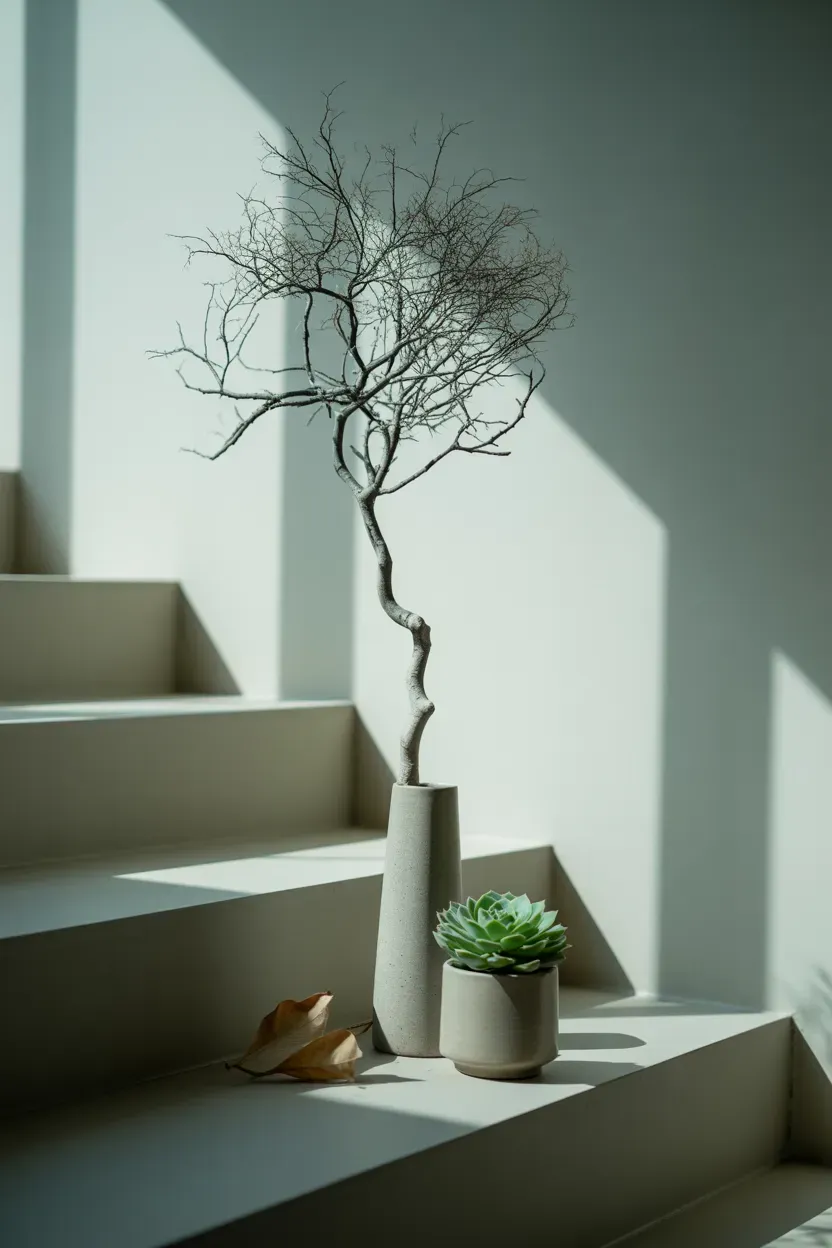
Choose a branch with genuine sculptural shape — an angled or forked piece reads far better than a straight stick — and let it dry fully before placing it indoors to avoid mold. The single succulent needs bright light to stay compact; without it, the whole vignette starts to look neglected rather than deliberately spare.
- Source branches from your own yard or a local florist rather than buying decorative ones
- Anchor the branch in dry floral foam or pebbles inside the vase
- Dust the branch occasionally, since bare wood collects it visibly
Our dried branch styling guide and Almanac.com cover seasonal natural decor. It’s the boldest “less is more” idea on this whole list.
9. A Recessed Wall Niche Planter
Building or repurposing a recessed wall niche into a built-in planter is one of the most seamless ways to add greenery without a single visible pot.
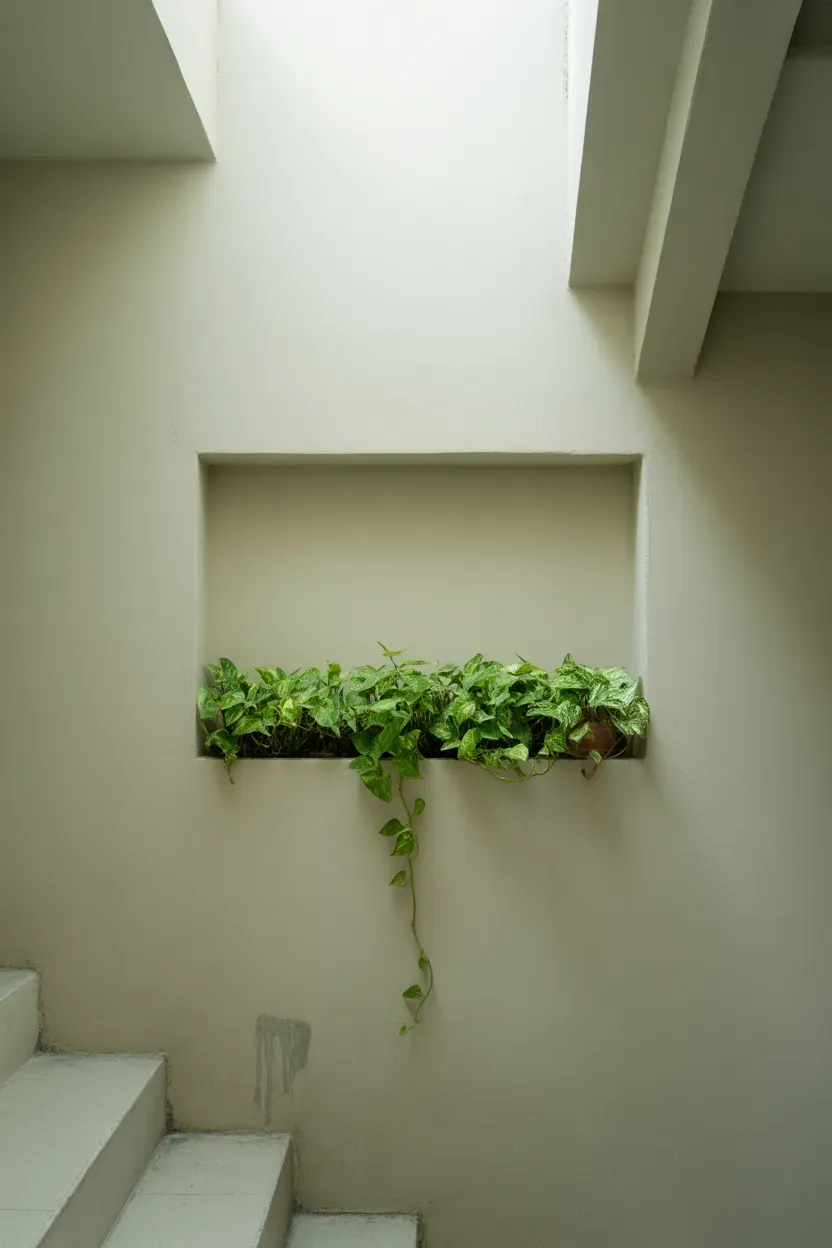
This is the most advanced project on the list and genuinely needs either an existing niche or a contractor to build one with proper waterproof lining and drainage — skipping the lining is what damaged the plaster around my own first attempt. Pothos handles the niche’s typically indirect light well and trails naturally without extra training.
Pro Tip: Install a small hidden drainage tray at the niche’s base rather than relying on the wall cavity to handle runoff — it’s the difference between a clean feature and a slow leak.
Our built-in wall planter guide and BHG cover architectural plant features. Save this one for a genuine renovation rather than a quick weekend fix.
10. Paired Concrete Cube Planters
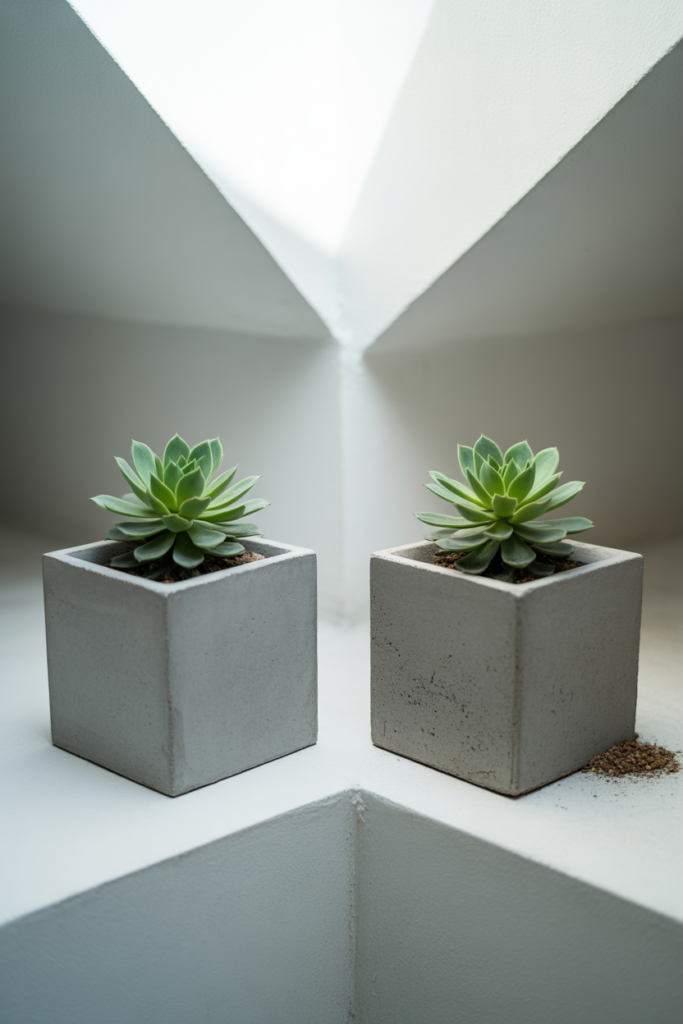
Two identical concrete cube planters, placed symmetrically at the base of the stairs, bring a quiet geometric order that suits a minimalist entryway.
This idea needs genuinely bright light, since the succulents will stretch and lose their compact shape without at least four hours of direct or bright indirect sun daily. Symmetry is the whole point here, so match pot size, plant size, and placement exactly on both sides — a mismatch undermines the calm, ordered effect entirely.
Our concrete planter styling guide and SFGate’s succulent care notes are worth reading first. Skip this one for a dim entryway — the plants simply won’t hold their shape.
11. A Single Trailing String of Pearls
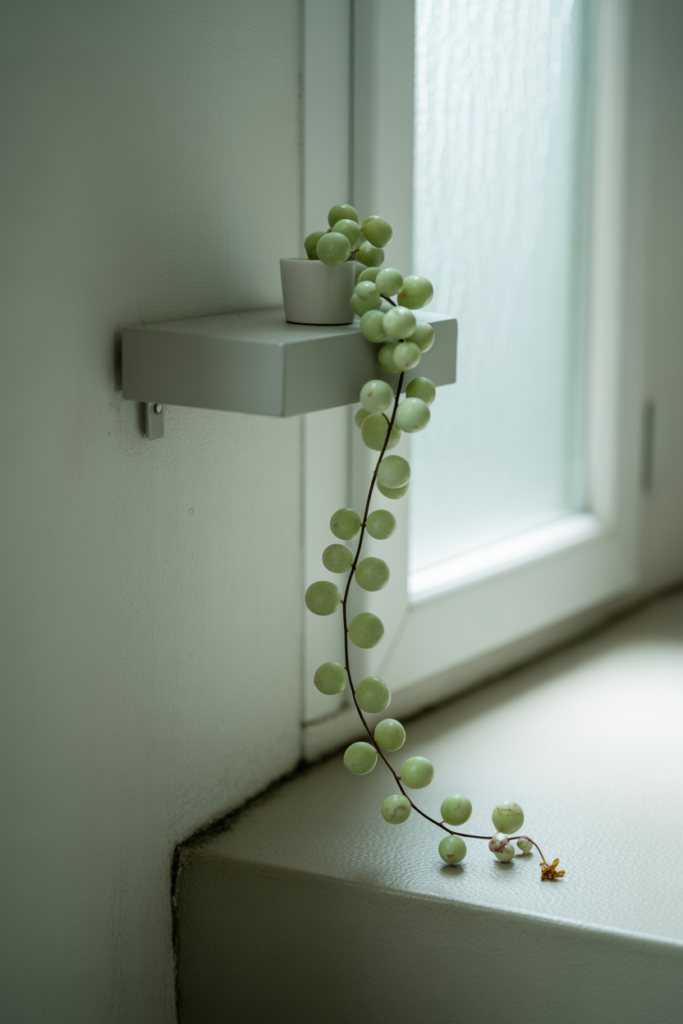
One string of pearls, hung alone at just the right height, gives a minimalist staircase a delicate, almost sculptural line without any visual competition.
String of pearls wants bright indirect light and very infrequent watering — every two to three weeks — since its bead-like leaves store water and rot quickly if kept too moist. Let the vine trail freely rather than trimming it for shape; part of its minimalist appeal is the single unbroken line it creates on its own.
- Water only when the beads look slightly deflated, not on a fixed schedule
- Keep it away from cold drafts near an entryway door
- Repot every two years into a slightly larger pot, not a dramatically bigger one
Our string of pearls care guide and The Sill cover succulent-adjacent trailers. It rewards patience with genuinely striking length over time.
12. A White Ceramic Trio of Air Plants
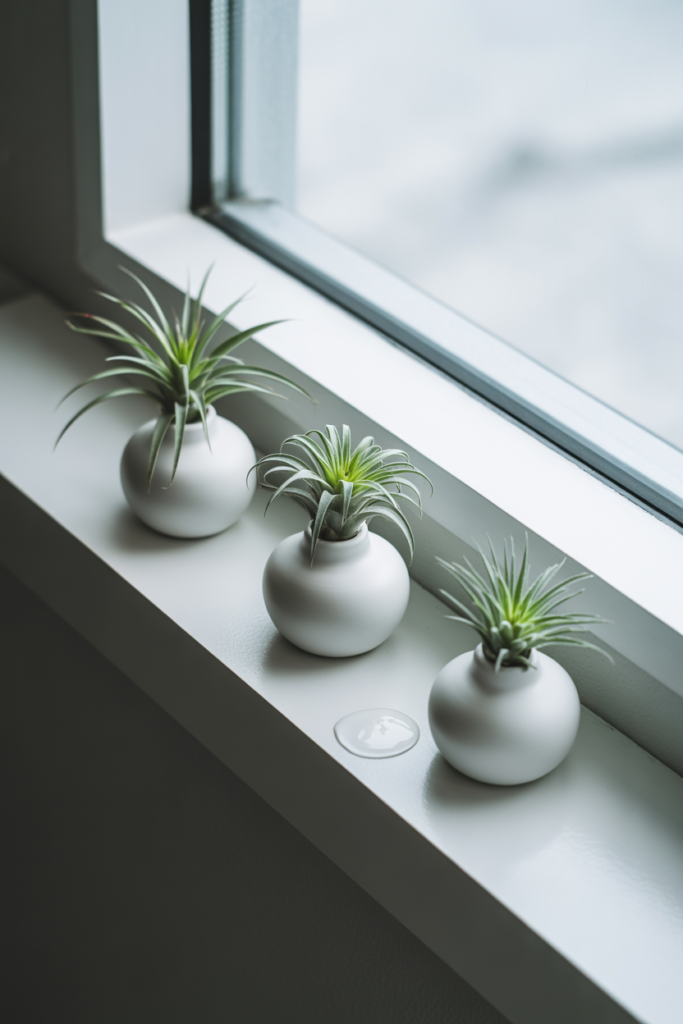
Three small matching white ceramic vessels, each holding a single air plant, gives you texture and greenery with zero soil mess on the stairs.
Air plants need a 20 to 30 minute soak once a week, so plan on lifting each one out of its vessel for its bath rather than watering in place — skipping this is the most common reason air plants fail. Bright, indirect light works best; direct sun through glass can scorch leaves faster than expected, which happened to one of mine in a south-facing spot last summer.
Our air plant care basics guide covers soaking schedules, and University of Florida Extension has more on tillandsia care. It’s a low-commitment way to add texture without soil.
13. A Sculptural Dracaena Marginata
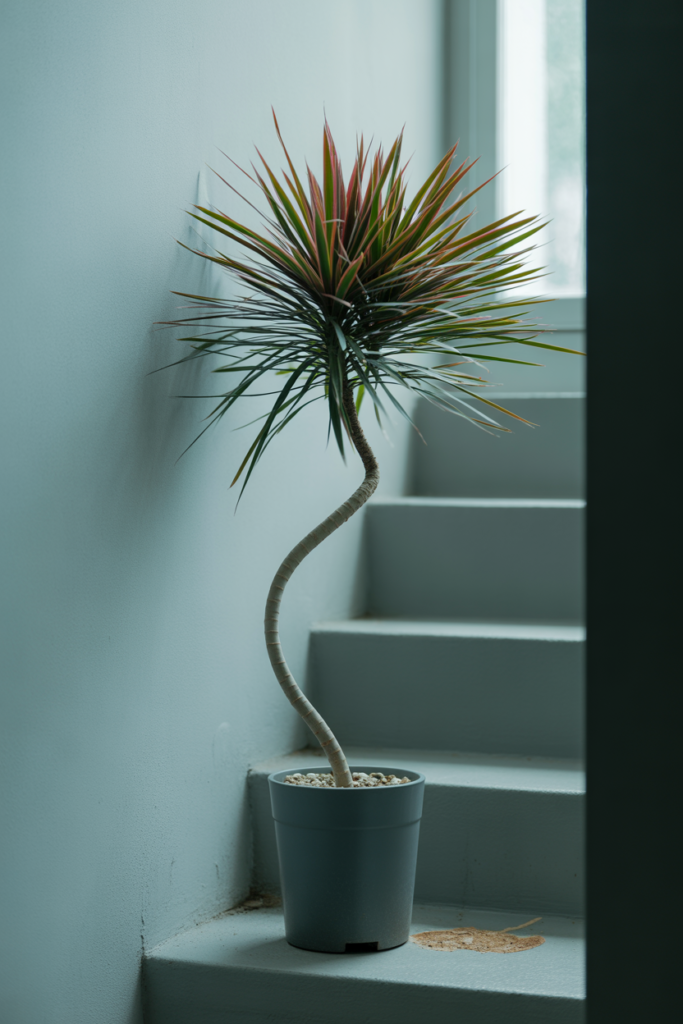
A dracaena’s thin, twisting cane and spiky leaf rosette gives a minimalist staircase real sculptural interest without needing a large footprint.
Dracaena tolerates medium light well and only needs watering every two weeks or so, letting the top half of the soil dry out between waterings. It’s sensitive to fluoridated tap water, which shows up as brown leaf tips — switching to filtered water noticeably improved mine within a couple of months.
Pro Tip: Choose a plant with an already-curved or leaning cane rather than a perfectly straight one — the natural bend is what gives this idea its sculptural quality, and it won’t straighten out later.
Our dracaena marginata care guide and Missouri Botanical Garden cover Dracaena species. It’s an easy way to add visual line without visual bulk.
14. A Peace Lily on a Minimalist Floating Shelf
A single peace lily on a slim floating shelf brings soft, arching leaves and the occasional white bloom without cluttering the wall around it.
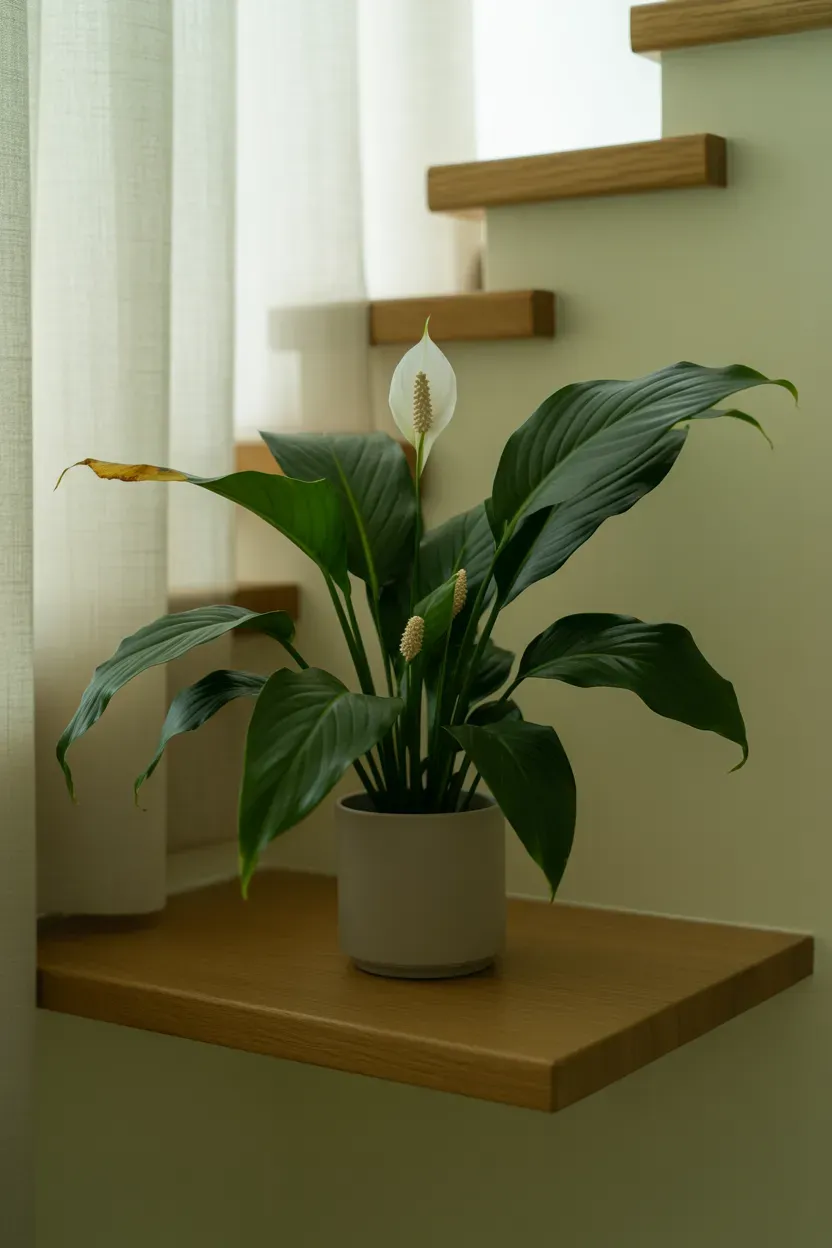
Peace lilies want medium indirect light and consistently moist soil — they droop dramatically when thirsty, which is actually a useful, unmissable watering cue rather than a problem. Mount the shelf securely into a stud, since a watered pot and saucer add real weight for a slim floating design.
Full care details are in our peace lily care guide, and RHS has notes on Spathiphyllum. Keep it out of reach of pets, since peace lilies are mildly toxic if chewed.
15. A Linen-Wrapped Pot for Soft Neutral Texture
Wrapping a plain pot in raw, undyed linen adds a soft textural note to a minimalist staircase without breaking the neutral color palette.
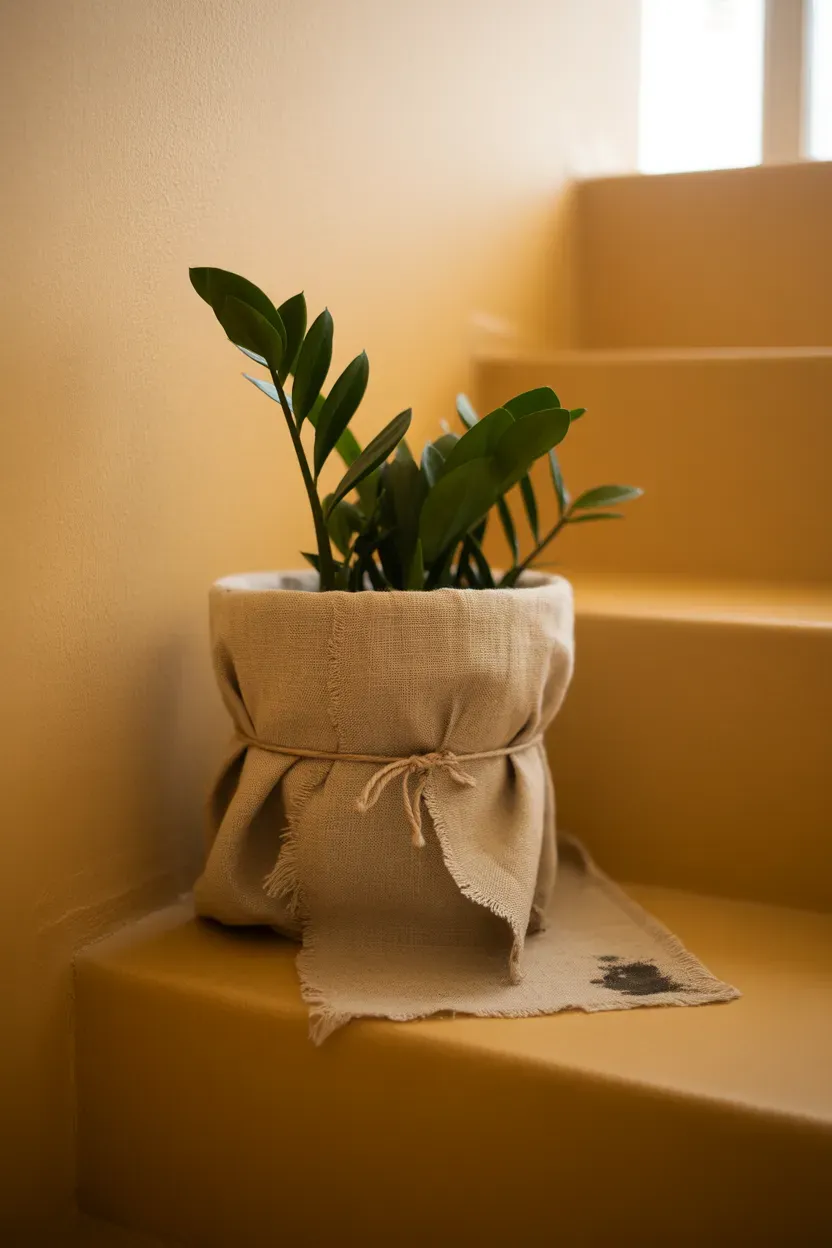
Wrap the linen loosely enough to allow airflow, and check soil moisture by lifting the pot rather than judging by the fabric’s surface feel, since linen can look dry while the soil beneath stays wet. ZZ plants suit this method well since they need infrequent watering, meaning the linen wrap stays cleaner and drier longer than it would around a thirstier plant.
- Choose a heavyweight, tightly woven linen so it holds its shape
- Secure the wrap with a single knot rather than visible pins
- Replace the linen yearly, since watering residue eventually darkens it
Our linen pot wrap tutorial and Almanac.com cover simple textile plant styling. It’s an easy way to soften a hard-edged pot collection.
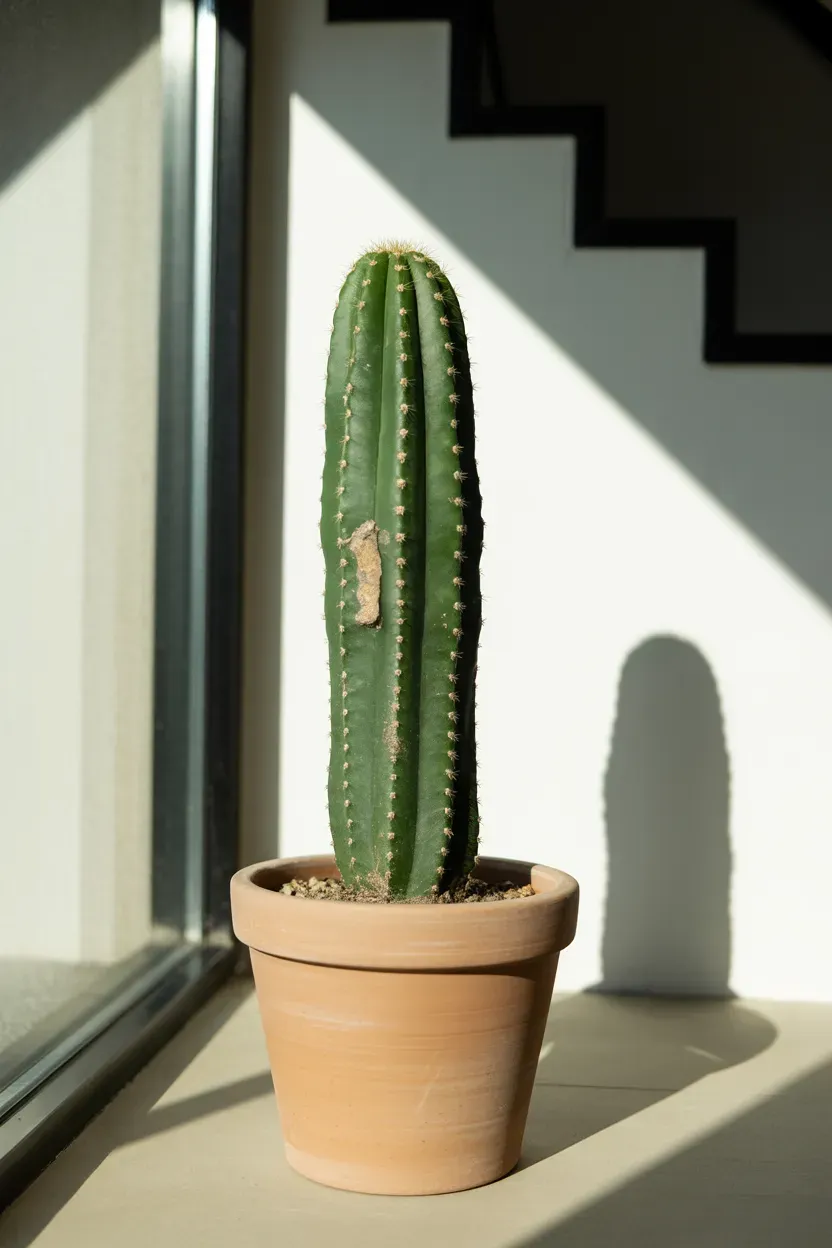
16. A Single Tall Columnar Cactus
A tall, narrow columnar cactus standing alone in a plain pot gives a minimalist staircase real vertical drama with almost no maintenance required.
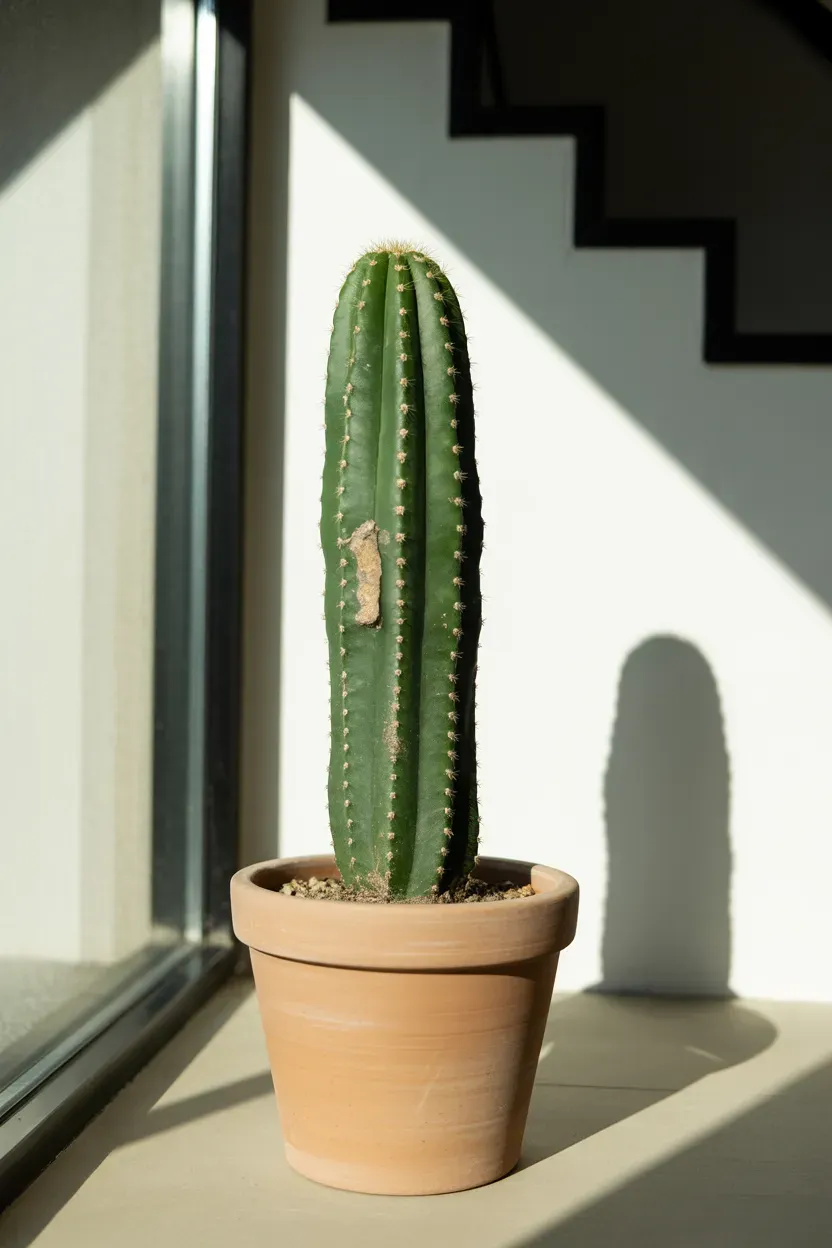
Columnar cacti need bright, direct light for at least four to six hours daily and very infrequent watering — once every three to four weeks in most homes, less in winter. This idea depends entirely on real sun; a cactus placed in a dim stairwell will lean and etiolate within weeks, which happened to one of mine before I moved it closer to the window.
Pro Tip: Rotate the cactus a quarter turn every few weeks even in bright light — even strong sun still comes from one direction, and rotation keeps the growth straight instead of leaning.
Our columnar cactus care guide and SFGate’s cactus notes cover light requirements. It’s a striking, nearly maintenance-free choice for a sunny stairwell.
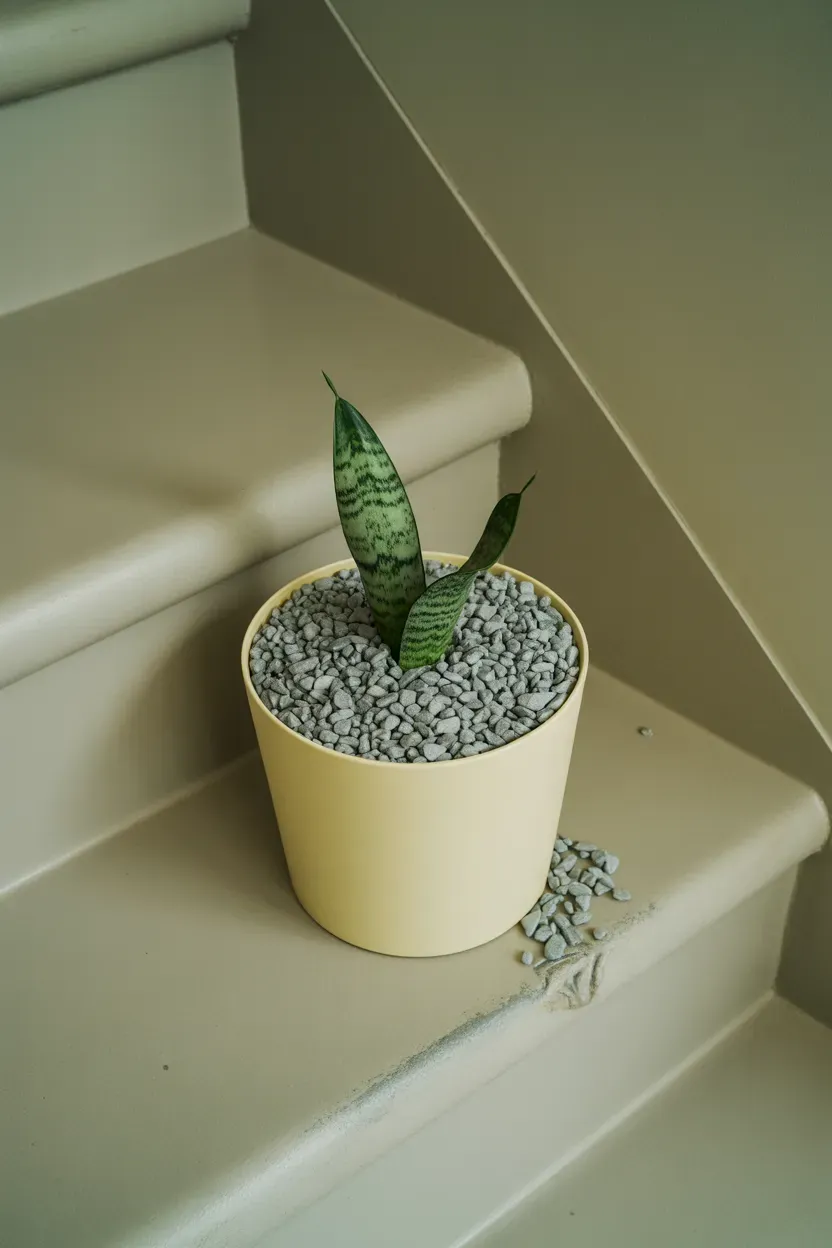
17. A Snake Plant Topped With Decorative Gravel
Topping a snake plant’s soil with a layer of pale gravel hides the potting mix entirely and gives the whole pot a cleaner, more finished look.
Choose gravel in a single, consistent size and color rather than a mixed decorative blend, since uniformity is what makes this read as minimalist rather than busy. Water carefully around the gravel’s edge so it doesn’t wash away, and rinse the gravel occasionally to keep dust from dulling its color.
Our gravel topdressing guide and Penn State Extension’s succulent notes cover topdressing basics. It’s a small finishing detail that makes a pot look genuinely considered.
18. A Glass Cylinder Propagation Station
A row of pothos cuttings rooting in identical glass cylinders turns a purely functional propagation setup into a genuinely minimalist display.
Change the water every five to seven days to prevent algae and root rot, and once roots reach about 2 inches, they’re ready to pot into soil if you want to move beyond the water display. Bright indirect light keeps the cuttings actively rooting; in low light, expect the process to slow noticeably.
- Use identical, unlabeled glass vessels for the cleanest look
- Snip cuttings just below a node, since roots only form there
- Refresh the display with new cuttings once older ones are potted
Our pothos propagation guide and Gardeners’ World cover cutting care. It’s a functional idea that happens to look genuinely elegant.
19. A Single Pampas Stem in a Tall Vase
One tall stem of dried pampas grass in a slim ceramic vase adds soft texture to a minimalist staircase without requiring any care at all.
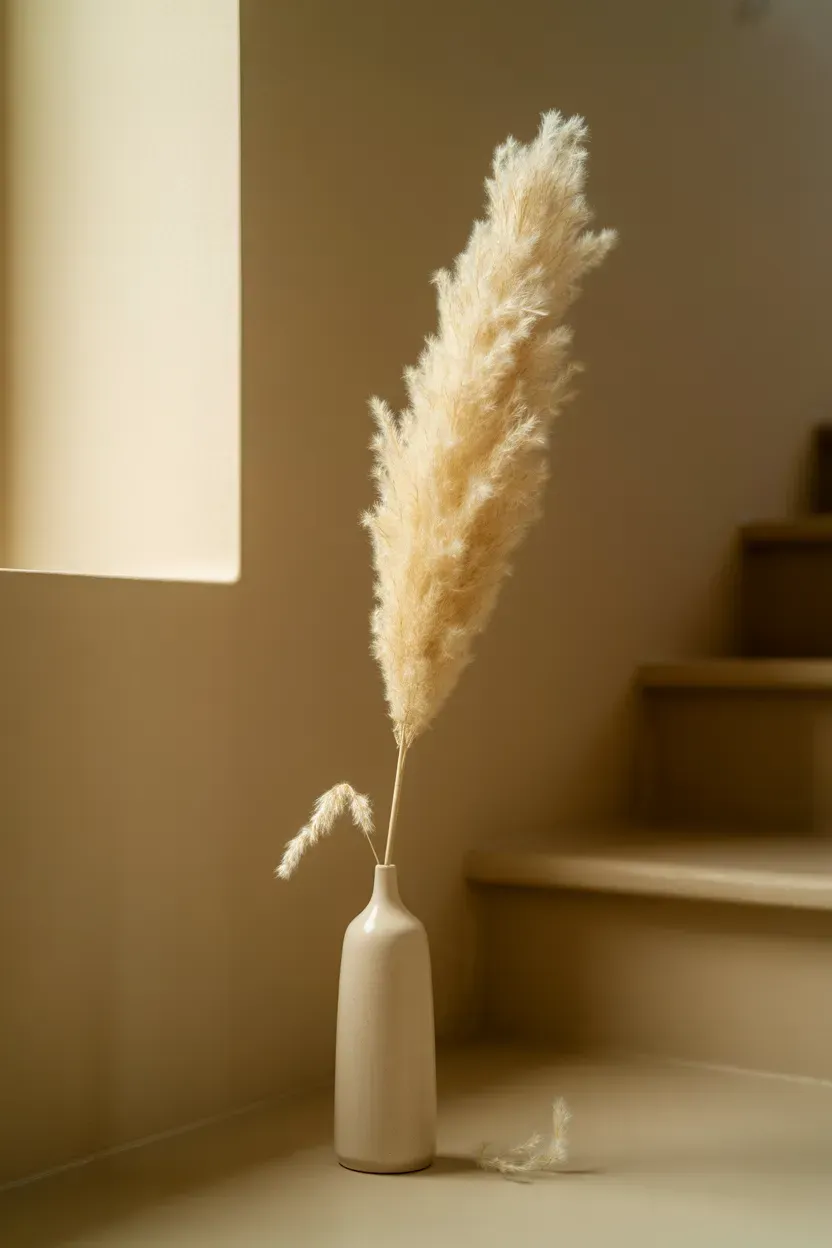
This idea needs zero water and zero light, making it the lowest-maintenance item on the entire list, though the fine fibers do shed over time, so vacuum around the base every couple of weeks. Choose a single stem rather than a full bunch — restraint here is the entire point, and one stem reads as considered where a full bunch starts to look decorative in a busier way.
Read more in our dried pampas grass decor guide, and BHG has more on dried natural decor generally. It’s proof a “garden” idea doesn’t always need a living plant.
20. A Wall-Mounted Single Plant Sconce
A minimalist wall sconce holding one small plant instead of light gives you a fixed, sculptural greenery point without any floor or shelf footprint.
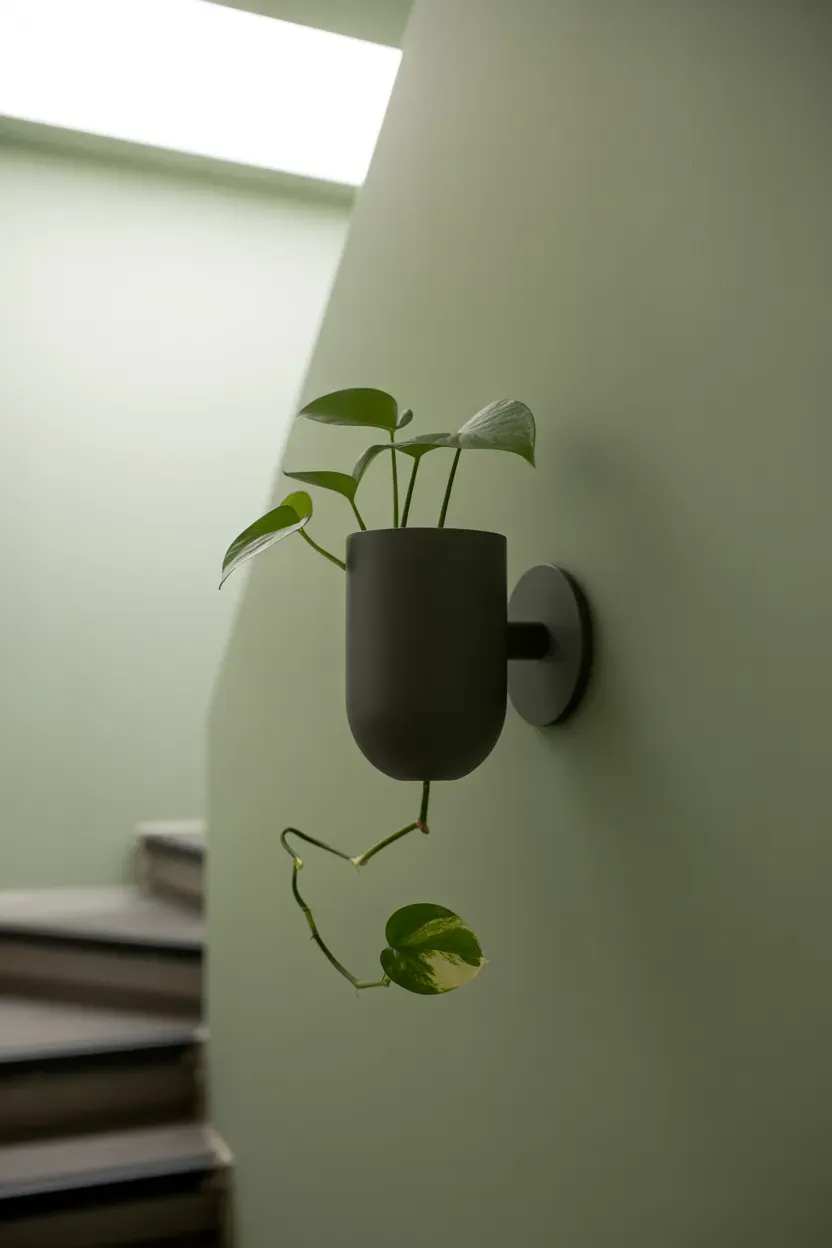
This idea works best with a genuine self-watering wall planter designed for indoor use, since a standard pot mounted sideways will leak. Pothos handles the medium light most stair walls get and doesn’t mind the smaller root space these planters typically offer.
Pro Tip: Mount the sconce at a height you can reach without a stool — a wall planter that’s hard to water gets neglected fastest, no matter how good it looks initially.
Our wall-mounted planter guide and The Sill cover self-watering wall systems. It’s a genuinely space-saving way to add a fixed green point.
21. A Matte Black Hanging Planter for String of Hearts
A single matte black hanging planter holding string of hearts gives a minimalist staircase a delicate trailing line in a color that disappears into the wall.
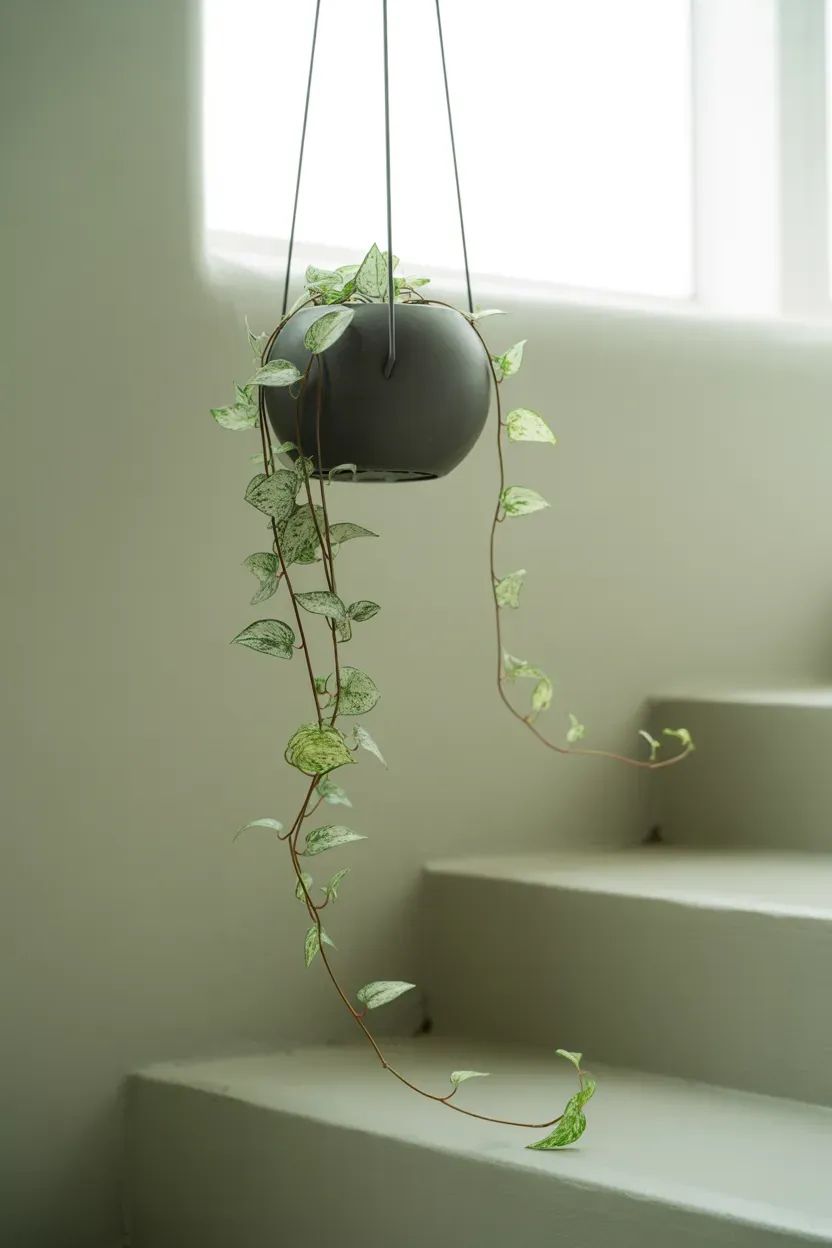
String of hearts wants bright indirect light and very infrequent watering — every two to three weeks, letting the soil dry out completely between waterings. Anchor the hanging hook into a stud rather than drywall alone, and choose a matte rather than glossy black finish, since glossy surfaces catch more visual attention than a minimalist palette usually wants.
Full care notes are in our string of hearts care guide, and RHS has general trailing-plant support advice. It’s a delicate, quiet addition that disappears into the wall until you notice it.
22. One Large Paddle Plant for Bold Simplicity
A single large paddle plant, with its broad flat leaves and red-tinged edges, brings unexpected color and shape to a minimalist staircase without any clutter around it.
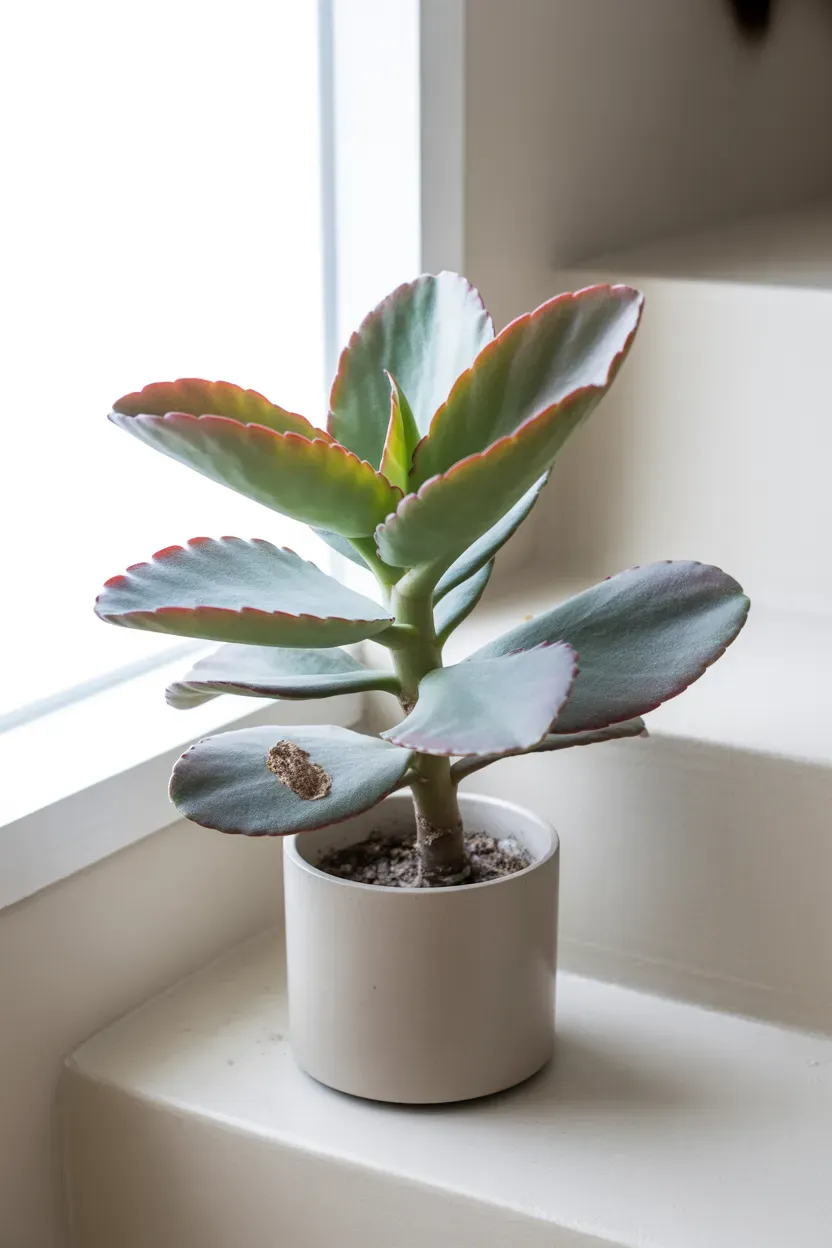
Paddle plants need bright, direct light to develop their characteristic red leaf edges — in lower light, the leaves stay solid gray-green and lose the color contrast that makes this idea work. Water only when the soil is fully dry, roughly every two weeks, since overwatering causes the broad leaves to soften and blacken quickly.
- Place it directly in a sunny window-adjacent spot for best color
- Avoid overhead watering, which can mark the flat leaf surface
- Repot only when clearly rootbound, since it dislikes frequent disturbance
Our paddle plant care guide and SFGate’s succulent notes cover this species. It’s one of the boldest single-plant statements on this whole list.
23. A Minimalist Bonsai on the Landing
A single small bonsai on the landing brings genuine horticultural craft to a minimalist staircase, rewarding a closer look rather than demanding attention from across the room.
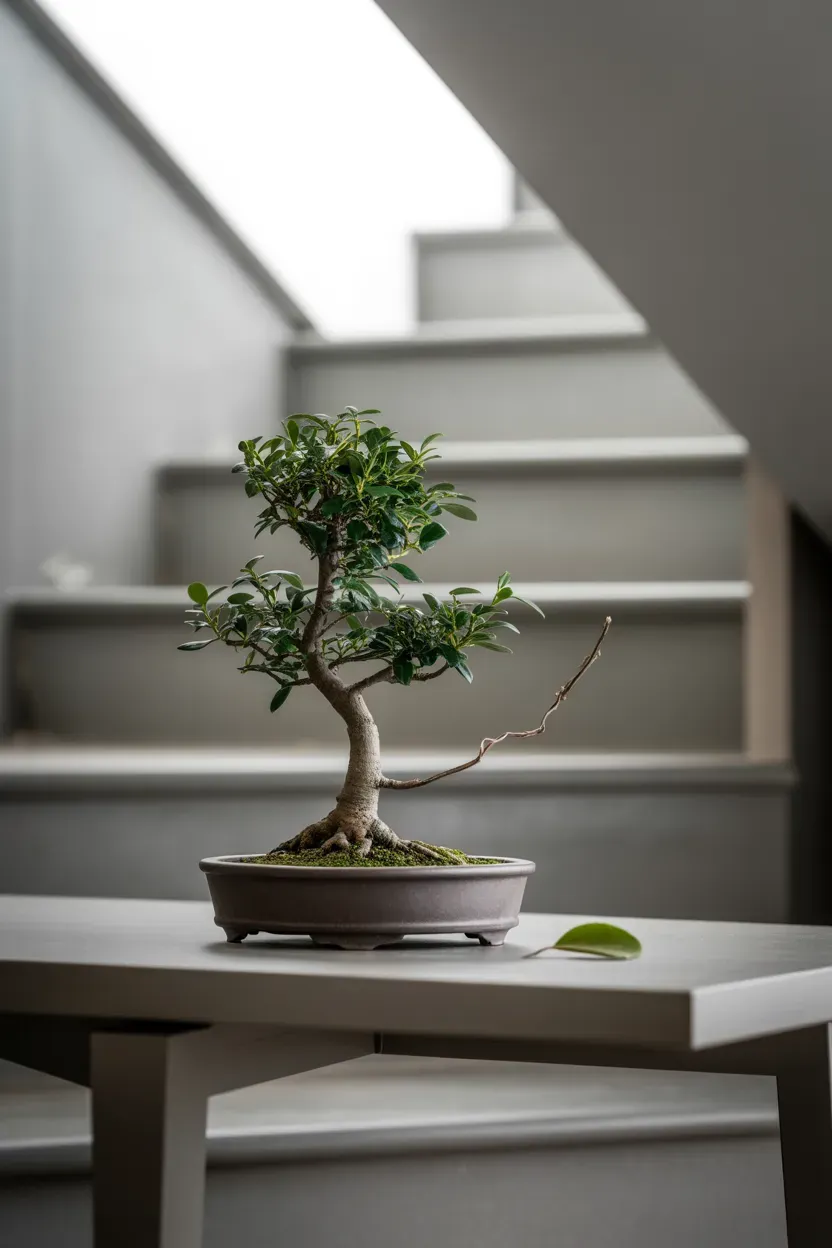
This is genuinely the most advanced idea on the list — bonsai requires regular pruning, careful watering (checking soil daily rather than on a fixed schedule), and repotting every two to three years into fresh, well-draining soil. Bright indirect light suits most indoor ficus bonsai well, though direct afternoon sun can scorch the small leaves.
Pro Tip: Start with a ficus rather than a more temperamental species like juniper — ficus tolerates indoor conditions and beginner mistakes far better, which is exactly why nurseries recommend it first.
Our beginner bonsai care guide and Missouri Botanical Garden cover ficus bonsai basics. It’s a genuine long-term commitment, but an unmatched focal point.
24. One Empty Step and a Single Plant at the Top
Sometimes the most minimalist move is leaving most of the staircase completely bare and placing just one plant at the very top, where it becomes the payoff for the climb.
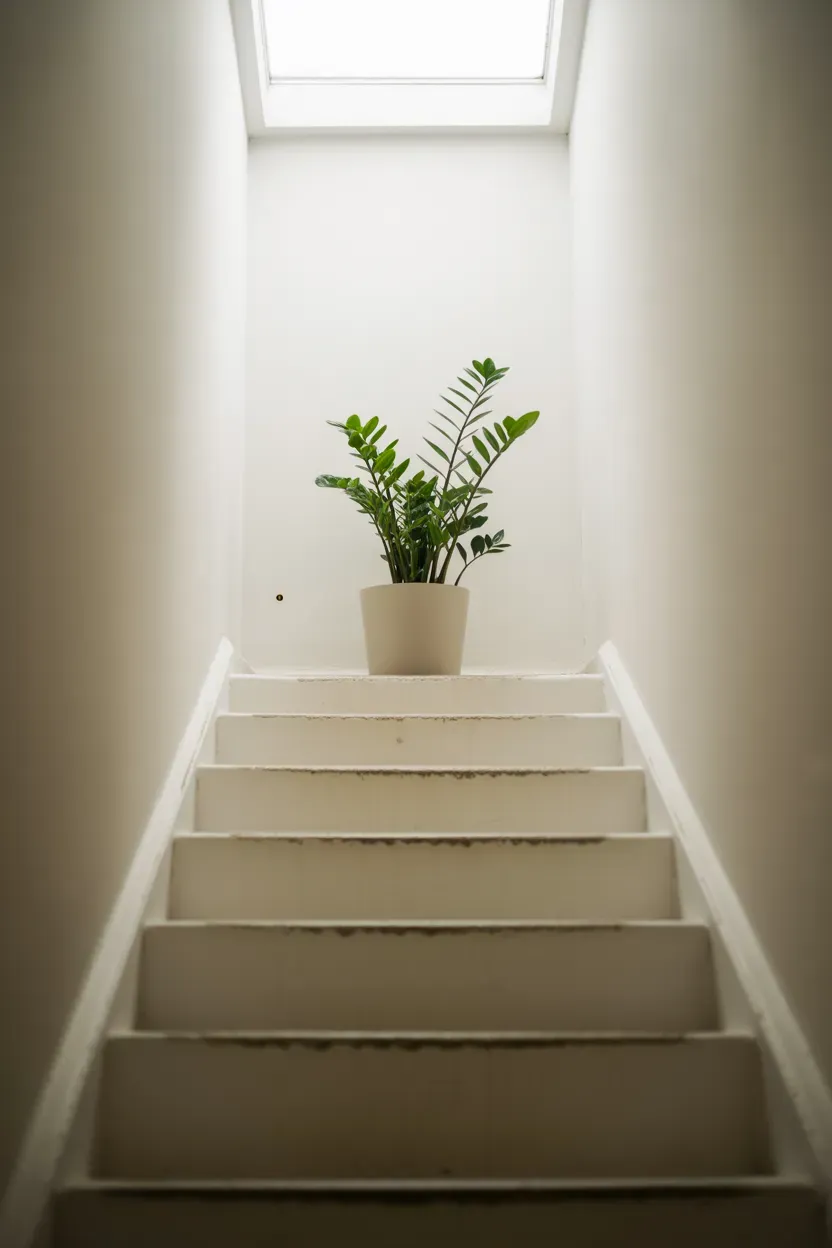
Leaving every step below genuinely empty is the hardest part of this idea to commit to — the instinct to add “just one more” plant is strong, but the bare steps are what make the single plant at the top feel earned rather than incidental. ZZ plants tolerate the low-to-medium light typical of a stair-top landing and need almost no attention, which suits a spot you’ll walk past daily without wanting to fuss over it.
Our single statement plant styling guide and Gardeners’ World cover minimalist plant placement generally. It’s the idea that best captures what this whole list is really about.
Getting Started With a Minimalist Staircase Garden
The easiest first step is choosing one plant, not several — a single snake plant or ZZ plant at the base of the stairs will teach you more about your actual light and how much restraint the space can hold than any list can. Live with it for a few weeks before deciding whether to add a second piece.
The most common beginner mistake is treating minimalism as an excuse to skip planning, when in practice it takes more deliberate choices, not fewer — a mismatched pot or an overcrowded shelf stands out far more in a spare space than it would in a fuller one. Before buying anything else, gather one plant you genuinely like the shape of and one matte, neutral pot in a size that actually fits it, rather than whatever’s cheapest.
Realistically, expect the space to feel intentionally calm within two to three weeks of settling on your first piece, and fully resolved — with confidence about what to leave out — by the two to three month mark, once you’ve resisted the urge to keep adding.
Frequently Asked Questions
What are the best plants for a minimalist staircase?
Snake plants, ZZ plants, dracaena, and olive trees all offer strong sculptural shapes that hold visual weight on their own, which is the core requirement for a minimalist display. Choose one or two, not a collection, and match the plant to your actual light level first.
What pot colors work best for a minimalist look?
Matte neutrals — white, black, concrete gray, cream, and unglazed terracotta — read as calm, while glossy, patterned, or brightly colored pots tend to pull focus and clutter the look. Repeating a single pot material throughout the staircase creates more cohesion than matching every pot to its plant individually.
How many plants should a minimalist staircase have?
There’s no fixed number, but most successful minimalist staircases have between one and four plants total across the whole space, not per step. The goal is negative space around each plant, not maximum coverage.
Is a minimalist staircase garden low-maintenance?
Generally yes, since sculptural species like snake plants, ZZ plants, and dracaena are chosen partly for their tolerance of inconsistent watering and light. Fewer plants overall also means fewer individual care schedules to track.
Can a minimalist staircase garden include flowering plants?
Yes, though sparingly — a single peace lily or one well-placed orchid can work if it’s the only bloom in the space, since multiple flowering plants together start to compete visually. Stick to white or pale blooms if you want the flower to feel like a quiet accent rather than a statement.
A Few Final Thoughts
Twenty-four ideas is a lot to consider, but the whole point of a minimalist staircase garden is that you’ll likely only use one or two of them, and that’s exactly right. Choose the single plant or vignette that matches the light you actually have and the level of restraint you’re genuinely comfortable living with, not the busiest option on this list. The staircases that end up feeling the calmest are almost always the ones where someone resisted adding a second or third piece just because there was room. A little negative space, held with confidence, does more for a stairwell than another pot ever will. Give the first plant a few weeks before deciding whether it needs company — most of the time, it won’t.