
The first time I filled a paper bag with dandelion greens, chickweed, and violet leaves from my own backyard, I felt slightly ridiculous — and then I tasted the salad. Wild herbs taste sharper, weedier, and somehow more alive than anything from a grocery bag, and most of them are already growing within twenty feet of your back door. Foraging rewards patience more than skill: you learn one plant at a time, confirm it three different ways, and only then do you put it in the pan. This guide walks through 25 wild herbs to forage this season, how to tell them apart from their less friendly lookalikes, and what to actually do with them once you’re home. Ready? Let’s explore all 25 of them.
Quick Answer
The best wild herbs to forage this season include dandelion, chickweed, purslane, plantain, and wild garlic — all common, easy to identify, and forgiving for beginners. Harvest in the morning after dew has dried, from areas untouched by pesticides or road runoff, and always cross-check three identifying features before eating anything. Start with five plants you can identify with total confidence rather than trying to learn all 25 at once.
Why Foraging Wild Herbs Is Worth Your Time
Wild herbs grow without irrigation, fertilizer, or babying, which in practice means they’re often more concentrated in flavor and nutrients than their cultivated cousins — dandelion greens, for example, carry more calcium and vitamin A per cup than spinach. Foraging also puts a name to the “weeds” most people pull and throw away, turning yard work into a harvest instead of a chore.
There’s a practical side too. A single spring walk can fill a basket with greens, edible flowers, and tea herbs worth $15–20 at a farmers market, for free. What actually works is starting small: pick three or four unmistakable plants, learn them cold, and expand your list one species per season.
The honest caveat is that this hobby has real risk if you skip steps. A few toxic plants closely resemble edible ones, so every entry below includes a lookalike warning. Treat the “maybe” pile as a “no” pile until you’re certain.
At a Glance
- Best foraging window: early spring through mid-fall, mornings after dew dries
- Safest starter plants: dandelion, chickweed, plantain, violets, purslane
- Tools needed: scissors or a foraging knife, cloth bags, a plant ID guide or app
- Avoid harvesting within 30 feet of roads, treated lawns, or industrial runoff
- Always positively confirm ID using three features before consuming anything
Wild Herb Comparison at a Glance
| Herb | Season | Habitat | Difficulty | Main Use |
| Dandelion | Spring–Fall | Lawns, fields | Easy | Salad, tea, root coffee |
| Stinging Nettle | Spring | Damp shade | Moderate | Cooked greens, tea |
| Chickweed | Spring–Fall | Gardens, beds | Easy | Raw salad |
| Purslane | Summer | Sunny disturbed soil | Easy | Salad, pickling |
| Plantain | Spring–Fall | Trails, lawns | Easy | Salve, cooked greens |
| Wild Garlic (Ramps) | Early Spring | Woodlands | Moderate | Sauté, pesto |
| Violets | Spring | Shaded lawns | Easy | Salad, syrup |
| Wood Sorrel | Spring–Fall | Lawns, gardens | Easy | Raw garnish |
| Lamb’s Quarters | Summer | Disturbed soil | Easy | Cooked greens |
| Cleavers | Spring | Hedgerows | Moderate | Tea, tincture |
| Yarrow | Summer | Meadows, roadsides | Moderate | Tea, poultice |
| Red Clover | Summer | Lawns, fields | Easy | Tea, flour |
| Chicory | Summer–Fall | Roadsides | Moderate | Root coffee, greens |
| Common Mallow | Spring–Fall | Sidewalks, lots | Easy | Cooked greens, soup |
| Wild Mint | Summer | Wet ground | Easy | Tea, garnish |
| Sheep Sorrel | Spring–Summer | Acidic soil | Easy | Raw, soup |
| Burdock | Fall (root) | Field edges | Moderate | Root vegetable |
| Watercress | Spring–Fall | Cold streams | Advanced | Salad, soup |
| Elderflower | Early Summer | Hedgerows | Moderate | Cordial, tea |
| Wild Fennel | Summer–Fall | Roadsides | Moderate | Tea, seasoning |
| Garlic Mustard | Spring | Woodland edges | Easy | Pesto, sauté |
| Self-Heal | Summer | Lawns | Easy | Tea, poultice |
| Wild Chamomile | Summer | Fields, paths | Moderate | Tea |
| Wild Bergamot | Summer | Meadows | Moderate | Tea, garnish |
| Milk Thistle | Summer | Waste ground | Advanced | Roasted seed, tea |
1. Dandelion (Taraxacum officinale)
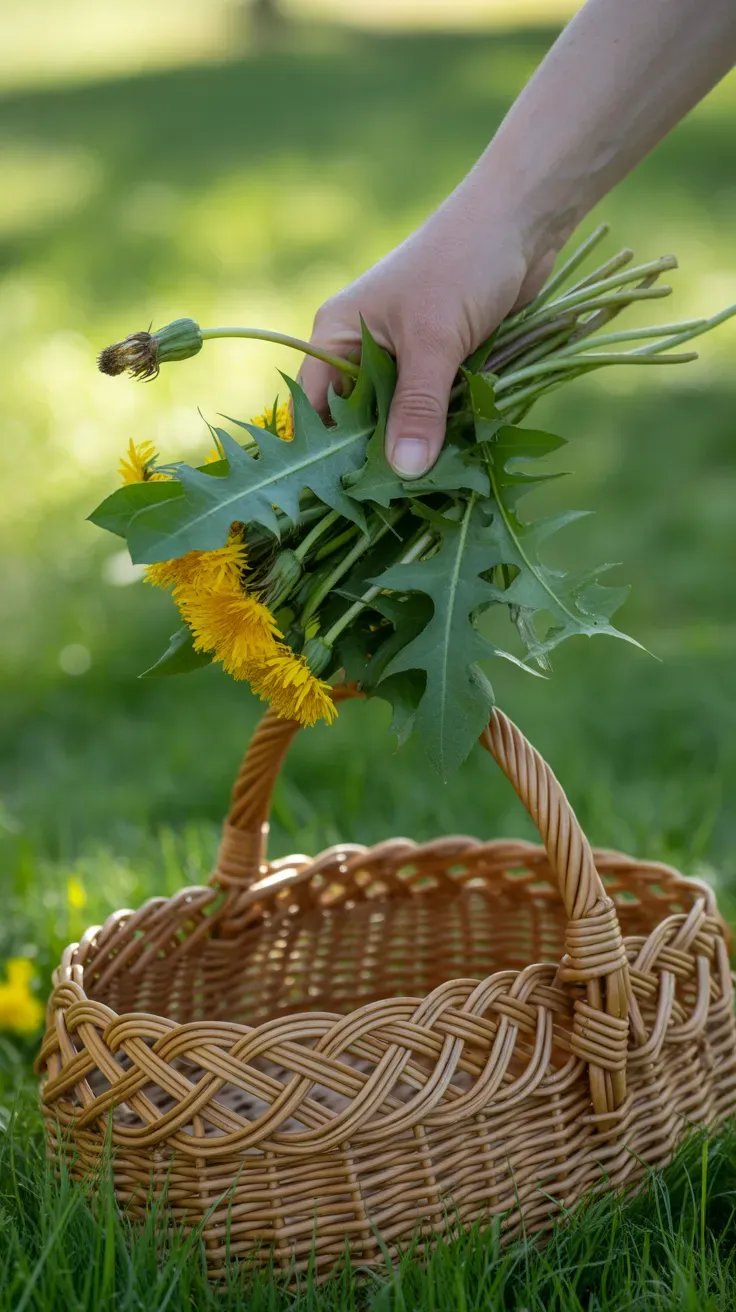
Dandelion is the plant most people already know how to identify, which makes it the perfect first forage of the season. Every part is edible — leaves, flower, and root — and it grows almost everywhere lawns do.
Look for the deeply toothed, hairless leaves growing in a flat rosette with a hollow stem that leaks milky sap when snapped. In practice, younger leaves picked before the flower opens taste far less bitter than mature ones; I learned that the hard way with a mouth-puckering May batch. The single yellow flower head, never branching, rules out the mildly toxic catsear lookalike, which has hairy leaves and branched stems.
Pro Tip: Soak picked leaves in cold water for 10 minutes before eating raw — it pulls out a surprising amount of grit hiding in the leaf ridges.
Toss young leaves into salads, sauté older ones like spinach, or roast the root for a caffeine-free coffee substitute.
Read more on container herb gardening basics for growing companion herbs at home. For identification confirmation, see Missouri Botanical Garden’s dandelion profile.
Dandelion is forgiving, abundant, and the easiest way to start building real foraging confidence.
🛒 Shop This Idea
- Stainless steel dandelion weeder tool — Digs the long taproot out cleanly for root-coffee harvesting. Shop on Amazon →
- Wild edible plant field guide, spiral-bound — Confirms leaf and flower ID before you eat anything. Shop on Amazon →
- 12-inch canvas foraging harvest bag — Breathable so leaves don’t wilt on the walk home. Shop on Amazon →
- Cast iron roasting skillet, 10-inch — Ideal for slow-roasting dandelion root before grinding. Shop on Amazon →
- Ceramic salad serving bowl set — A nice way to actually serve your first foraged salad. Shop on Amazon →
2. Stinging Nettle (Urtica dioica)
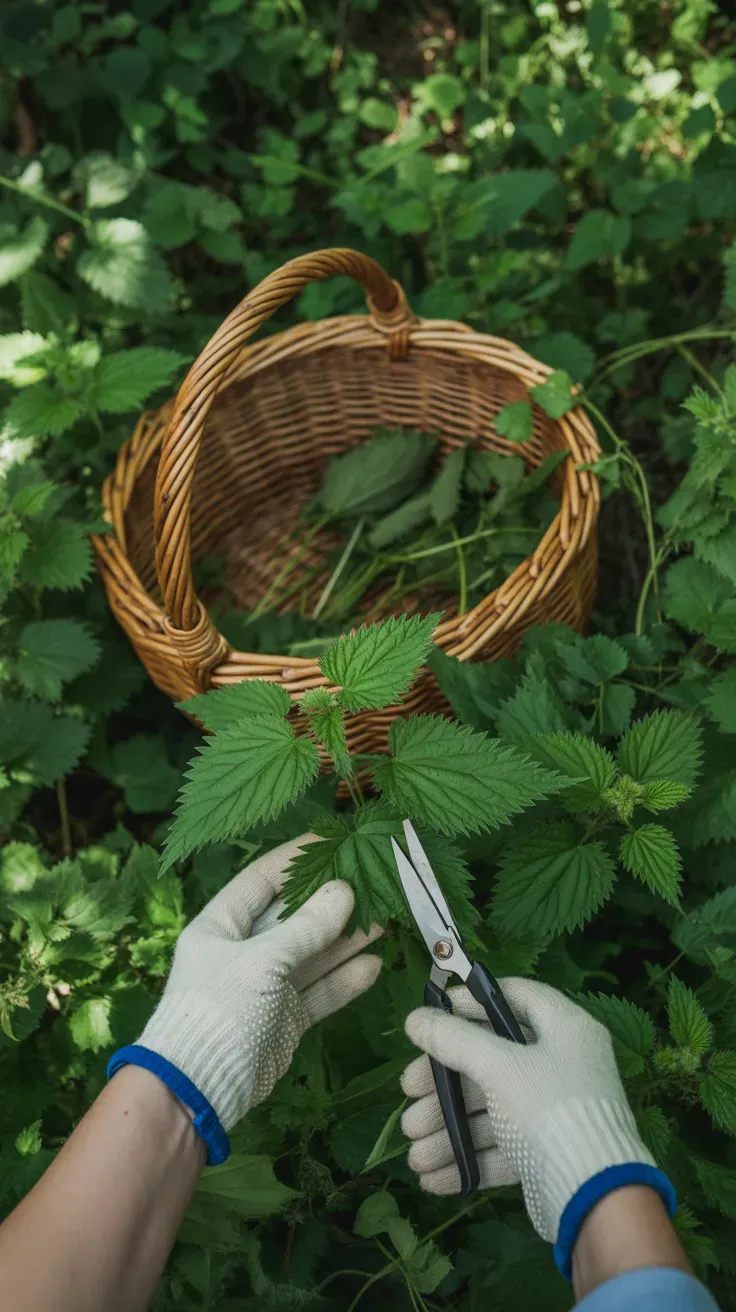
Nettle rewards the brave with one of the most nutrient-dense greens in the wild, but it demands gloves and respect until it’s cooked.
Identify it by opposite, heart-shaped, deeply serrated leaves covered in fine stinging hairs, growing on a square-ish stem in damp, shaded ground. The sting disappears entirely once heated for even a minute, which surprised me the first time I made nettle soup barehanded-brave from the second harvest onward. Its main lookalike, dead nettle, has rounded rather than serrated leaves and doesn’t sting at all — harmless to confuse, just less useful.
- Best harvested: top 4–6 leaf pairs, before flowering
- Avoid: nettle that has already gone to seed, which can irritate kidneys in large amounts
Use it in soups, blanched as a spinach substitute, or dried for a mineral-rich tea. Pair it with our guide to drying herbs for winter storage, and cross-check identification at Gardener’s World.
Once cooked, nettle becomes one of the most rewarding greens of the whole season.
🛒 Shop This Idea
- Leather gardening gauntlet gloves — Essential protection for harvesting nettle without getting stung. Shop on Amazon →
- Nettle seed packet, organic heirloom — Grow a tame patch at home once you love the wild version. Shop on Amazon →
- Stainless mesh herb drying rack — Air-dries nettle leaves evenly for winter tea. Shop on Amazon →
- Enamel stockpot, 6-quart — Perfect size for a nettle-and-potato soup batch. Shop on Amazon →
- Loose-leaf tea infuser basket — Steeps dried nettle leaves for daily mineral tea. Shop on Amazon →
3. Chickweed (Stellaria media)
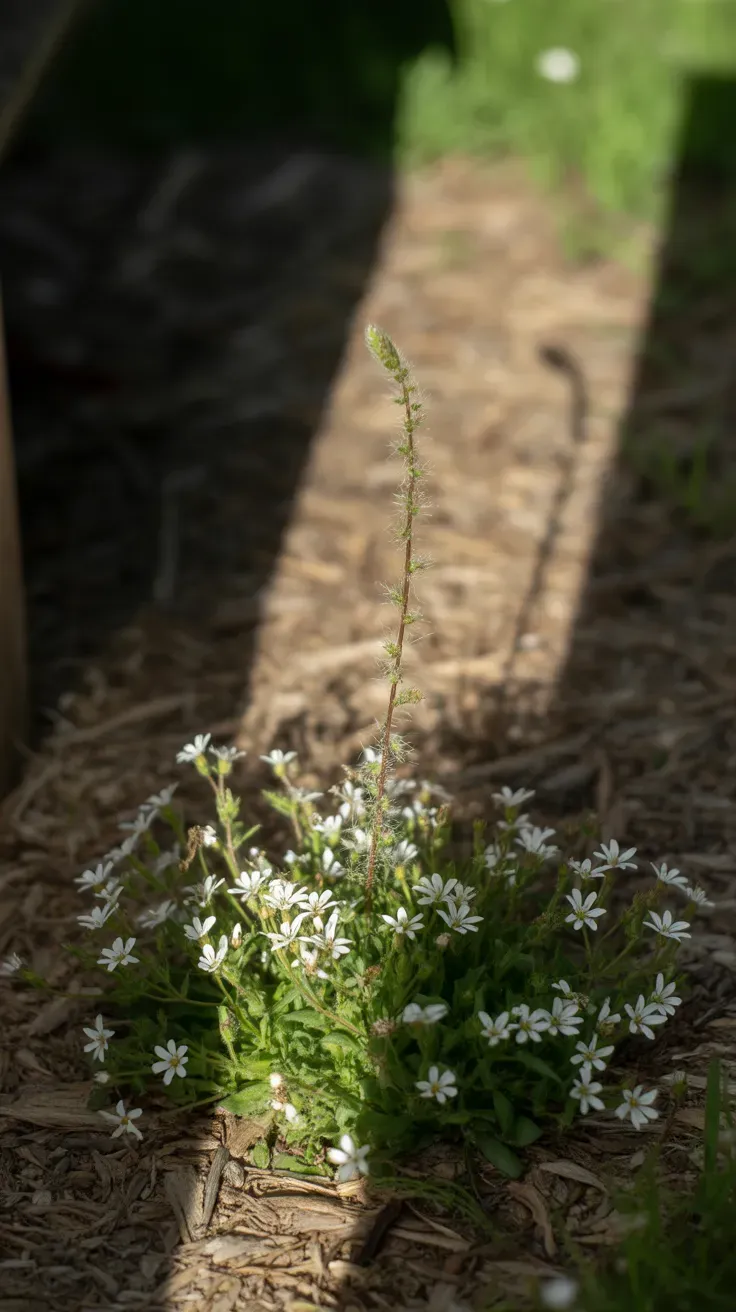
Chickweed carpets garden beds by early spring and tastes like a mild, cool cross between corn silk and spinach — genuinely pleasant raw, which isn’t true of most foraged greens.
Look for opposite oval leaves, tiny five-petaled white flowers that look like they have ten petals, and, most reliably, a single line of fine hairs running down one side of the stem that switches sides at each leaf node. That single-line hair test is the detail that separates chickweed from scarlet pimpernel, a similar-looking but toxic plant with orange flowers and no hair line.
Pro Tip: Snap the stem gently — chickweed’s stem contains a thin elastic “string” inside that stretches slightly before breaking, a quick confidence check in the field.
It’s best eaten raw in salads or blended into pesto; cooking mutes its flavor fast.
See our beginner windowsill herb garden guide for growing salad greens indoors, and confirm ID details via The Sill’s plant library.
Chickweed is one of the gentlest, most rewarding greens for a first-time forager’s basket.
🛒 Shop This Idea
- 10x loupe magnifier for plant ID — Makes the diagnostic hair-line on chickweed stems easy to spot. Shop on Amazon →
- Chickweed salve making kit — A classic beginner project for skin-soothing balm. Shop on Amazon →
- Salad spinner, large capacity — Dries delicate chickweed without bruising the leaves. Shop on Amazon →
- Small mortar and pestle, granite — Grinds chickweed into a quick raw pesto. Shop on Amazon →
- Glass mason jars, 8-ounce set — Stores fresh-picked greens crisp in the fridge. Shop on Amazon →
4. Purslane (Portulaca oleracea)

Purslane thrives in the cracks and disturbed soil most gardeners fight against, and it happens to be one of the few land plants naturally rich in omega-3 fatty acids.
It’s identified by thick, reddish, succulent stems and paddle-shaped fleshy leaves growing low and sprawling, with tiny yellow five-petaled flowers that open only in full sun. Its lookalike, spurge, has thinner leaves, grows more upright, and leaks a white milky sap when broken — purslane’s sap is clear, which is the fastest field test.
- Texture: crisp, slightly tangy, almost like a cross between spinach and cucumber
- Best harvested: mid-summer heat, when stems are thickest
I’ve had purslane self-seed so aggressively in a gravel path that I started weeding it into dinner instead of the compost bin.
Use it raw in salads, pickled like a quick refrigerator pickle, or stirred into soups near the end of cooking. Learn more in our balcony container gardening guide and verify ID at extension.psu.edu.
Purslane turns one of the most persistent “weeds” into a genuinely nutritious, no-effort harvest.
🛒 Shop This Idea
- Purslane microgreen seed packet — Lets you grow a controlled patch if wild sourcing feels uncertain. Shop on Amazon →
- Kitchen pickling jar set with lids — Quick-pickles purslane stems in under an hour. Shop on Amazon →
- Garden kneeling pad with handles — Saves your knees while harvesting low-growing purslane. Shop on Amazon →
- Digital kitchen scale, compact — Weighs harvested greens for recipe consistency. Shop on Amazon →
- Bamboo cutting board, small — A tidy prep surface for chopping succulent stems. Shop on Amazon →
5. Broadleaf Plantain (Plantago major)
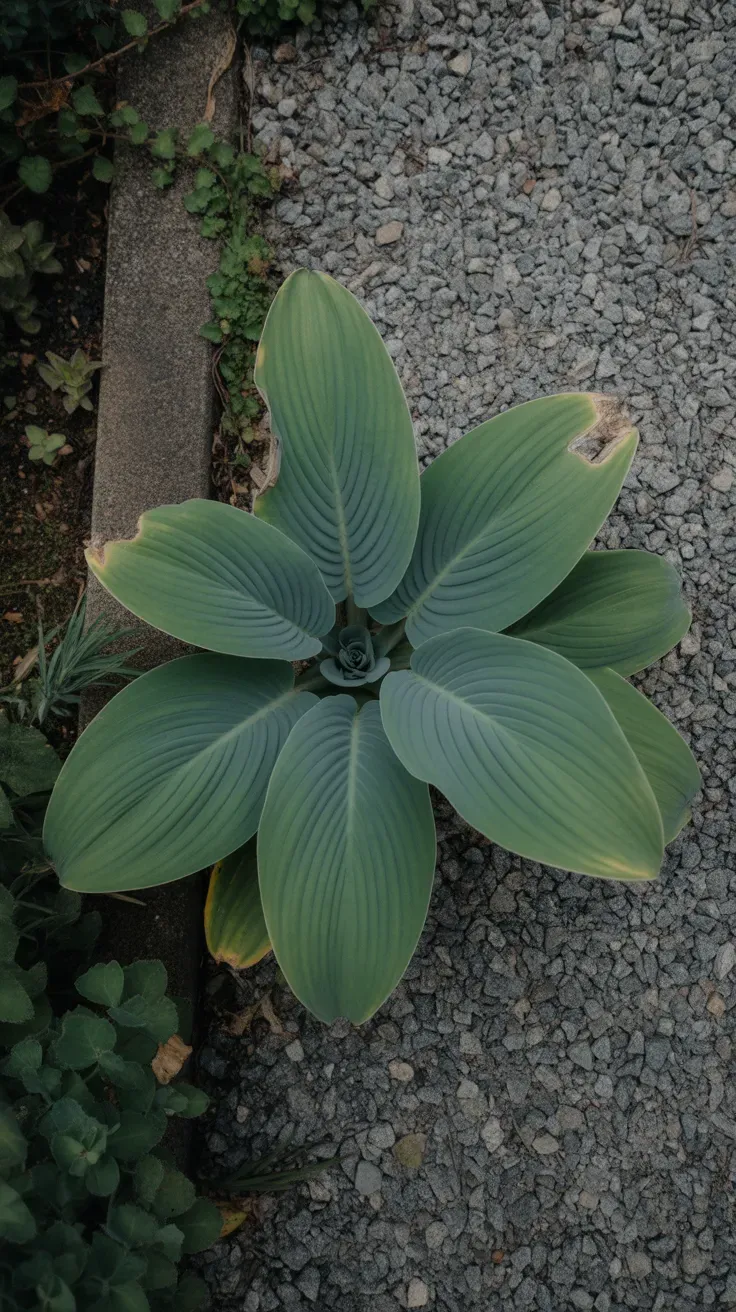
Plantain is the “band-aid plant” old-timers still reach for, and it’s one of the easiest herbs on this list to confirm with total certainty.
Look for broad oval leaves growing in a low rosette with five to seven parallel veins running the length of each leaf — pull a leaf apart slowly and you’ll see thin fibrous strings connecting the two halves, a signature no lookalike shares. There’s genuinely no toxic plant that mimics this vein pattern closely enough to worry about, which makes plantain a confidence-building first ID.
Pro Tip: Chew a leaf into a rough paste and press it onto a bug bite or small scrape — the astringent compounds noticeably calm itching within a few minutes.
The young leaves are edible cooked (older ones turn stringy and bitter), and the plant is a staple in homemade salves.
Pair this with our DIY herbal salve tutorial, and check growth habits at almanac.com.
Plantain is about as low-risk and high-reward as wild foraging gets.
🛒 Shop This Idea
- Beeswax and coconut oil salve base kit — Base ingredients for a plantain-infused healing salve. Shop on Amazon →
- Amber glass salve tins, 2-ounce set — Stores finished plantain salve away from light. Shop on Amazon →
- Double boiler pot for infusions — Gently infuses oil with plantain leaves without scorching. Shop on Amazon →
- Fine mesh cheesecloth, reusable — Strains plant matter out of infused oils cleanly. Shop on Amazon →
- Herbalist’s first-aid reference book — Covers plantain and other backyard first-aid plants in depth. Shop on Amazon →
6. Wild Garlic and Ramps (Allium tricoccum)
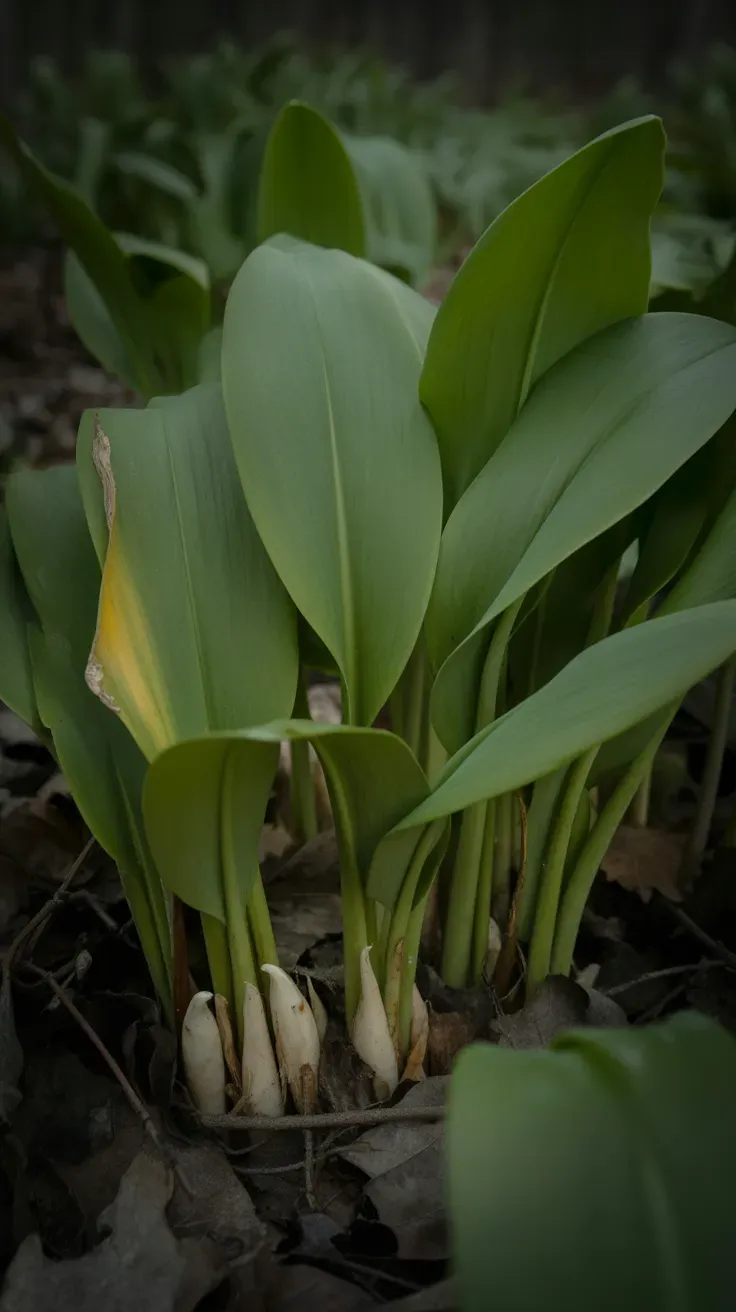
Ramps announce spring in hardwood forests with a smell of garlic before you even see the leaves, and their flavor is genuinely unlike any cultivated allium.
Identify them by broad, smooth, unmarked green leaves emerging from a small white-to-pink bulb, always accompanied by a strong onion-garlic smell when crushed — that smell test is non-negotiable. This is the one plant on the list with a seriously dangerous lookalike: lily of the valley, which has similar leaves but no garlic smell and is toxic. If it doesn’t smell like garlic, it isn’t a ramp.
- Harvest ethically: take one leaf per plant and leave the bulb, since overharvesting has crashed wild populations in parts of Appalachia
- Season: a narrow 3–4 week window in early spring
Use the leaves raw in pesto or sautéed with eggs, and only take bulbs from a patch large enough to spare a few.
See our related growing an indoor herb garden piece, and read sustainable-harvest notes at rhs.org.uk.
Ramps are a short-season treat worth planning your spring walks around.
🛒 Shop This Idea
- Folding foraging knife with brush tip — Cleanly cuts ramp leaves without disturbing the bulb. Shop on Amazon →
- Ramp bulb bare-root starts, cultivated — A sustainable way to grow your own patch at home. Shop on Amazon →
- Cast iron skillet, 8-inch — Ideal small pan for sautéing ramps with eggs. Shop on Amazon →
- Wide-mouth freezer bags, quart size — Freezes chopped ramps for use well past their short season. Shop on Amazon →
- Wild edible plants of Appalachia guidebook — Region-specific ID help for ramps and lookalikes. Shop on Amazon →
7. Wild Violets (Viola sororia)

Violets turn an ordinary shaded lawn patch into something worth stopping for, and they’re one of the few wild flowers safe to eat raw in quantity.
Look for heart-shaped leaves with scalloped edges and small five-petaled purple, white, or blue flowers with no scent, growing low to the ground in shade. The main caution isn’t a toxic lookalike but a mix-up with African violets sold as houseplants, which are unrelated and shouldn’t be eaten — stick to the outdoor, heart-leaved kind.
Pro Tip: Candy the flowers by brushing them with lightly beaten egg white and superfine sugar, then air-drying overnight — they keep their color for weeks as a cake topper.
Use the leaves in salads (they’re mildly mucilaginous, good for thickening soups) and the flowers fresh, candied, or infused into a simple syrup.
Check out our edible flower garden ideas, and cross-reference growth habit at gardenersworld.com.
Violets are a small, cheerful reminder that some of the best foraging happens without leaving your own lawn.
🛒 Shop This Idea
- Wild violet plant starts, potted — Establish a dedicated patch instead of relying on lawn luck. Shop on Amazon →
- Superfine baking sugar, 2-pound bag — The right texture for candying delicate violet petals. Shop on Amazon →
- Small offset spatula for garnish work — Handles delicate candied flowers without crushing them. Shop on Amazon →
- Glass syrup bottles with pour spout — Stores homemade violet syrup for drinks and desserts. Shop on Amazon →
- Silicone flower ice cube tray — Freezes violet blossoms into drink cubes for entertaining. Shop on Amazon →
8. Wood Sorrel (Oxalis stricta)
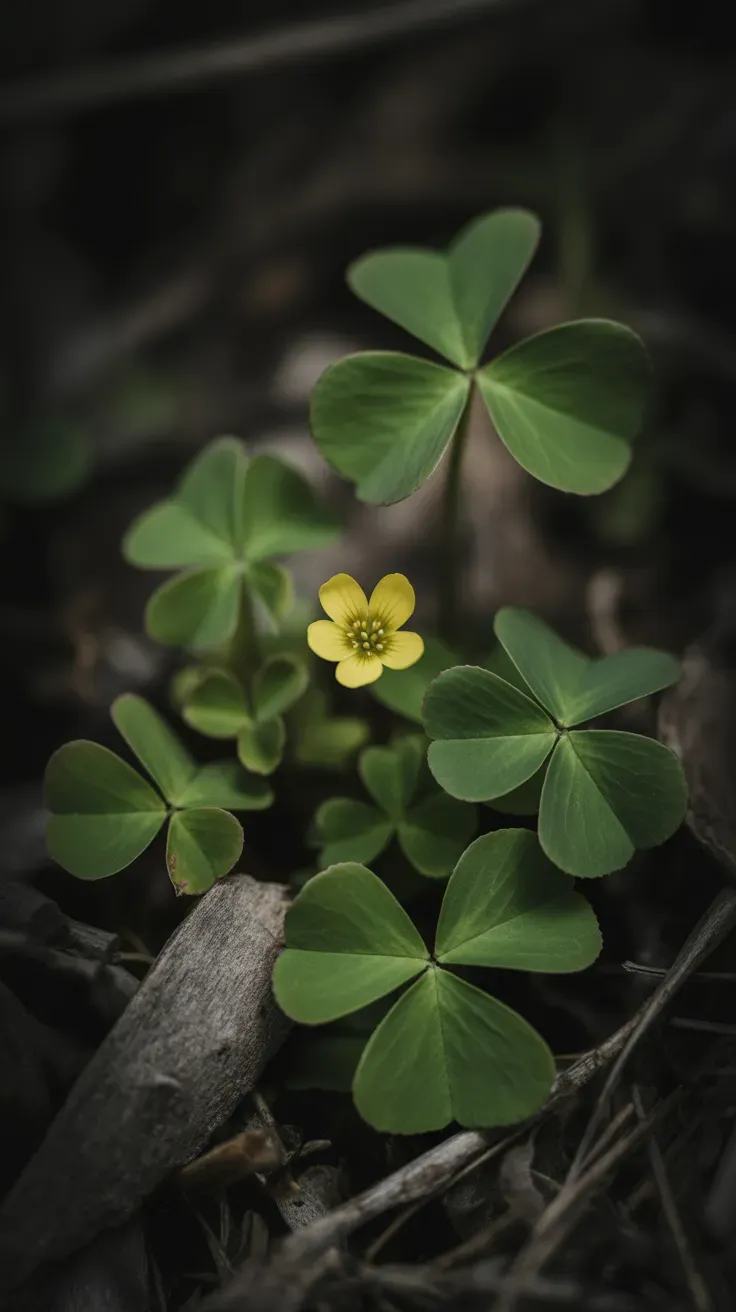
Wood sorrel is the tangy, lemony snack most people accidentally sample as kids without knowing its name, and it’s genuinely one of the safest wild plants to identify.
It looks like clover but isn’t — three heart-shaped leaflets folded at the center crease, paired with small five-petaled yellow (sometimes pink) flowers. The taste test seals it: a sharp, lemony tang from oxalic acid that true clover never has. That flavor is also the caution — eaten in very large amounts, oxalic acid can bother people with kidney issues, so treat it as a garnish, not a main course.
- Best use: a bright garnish for salads, fish, or cold soups
- Folds its leaflets closed at night and in strong heat, a helpful ID clue
I still pinch a leaf off almost every walk out of habit; it’s become my go-to trailside snack.
Learn about growing edible ground cover at home, and confirm identification at missouribotanicalgarden.org.
Wood sorrel’s bright, lemony bite makes it one of the most instantly gratifying wild herbs to try.
🛒 Shop This Idea
- Micro herb scissors, stainless steel — Snips small wood sorrel leaflets without bruising them. Shop on Amazon →
- Wood sorrel (Oxalis) potted plant — A tidy patio version if you want it on demand. Shop on Amazon →
- Small glass garnish dish set — Keeps foraged garnishes fresh and visible at the table. Shop on Amazon →
- Citrus zester and fine grater — Pairs well for building bright, tangy garnish plates. Shop on Amazon →
- Pocket-size plant ID cards, laminated — Trail-ready reference that survives wet grass and rain. Shop on Amazon →
9. Lamb’s Quarters (Chenopodium album)
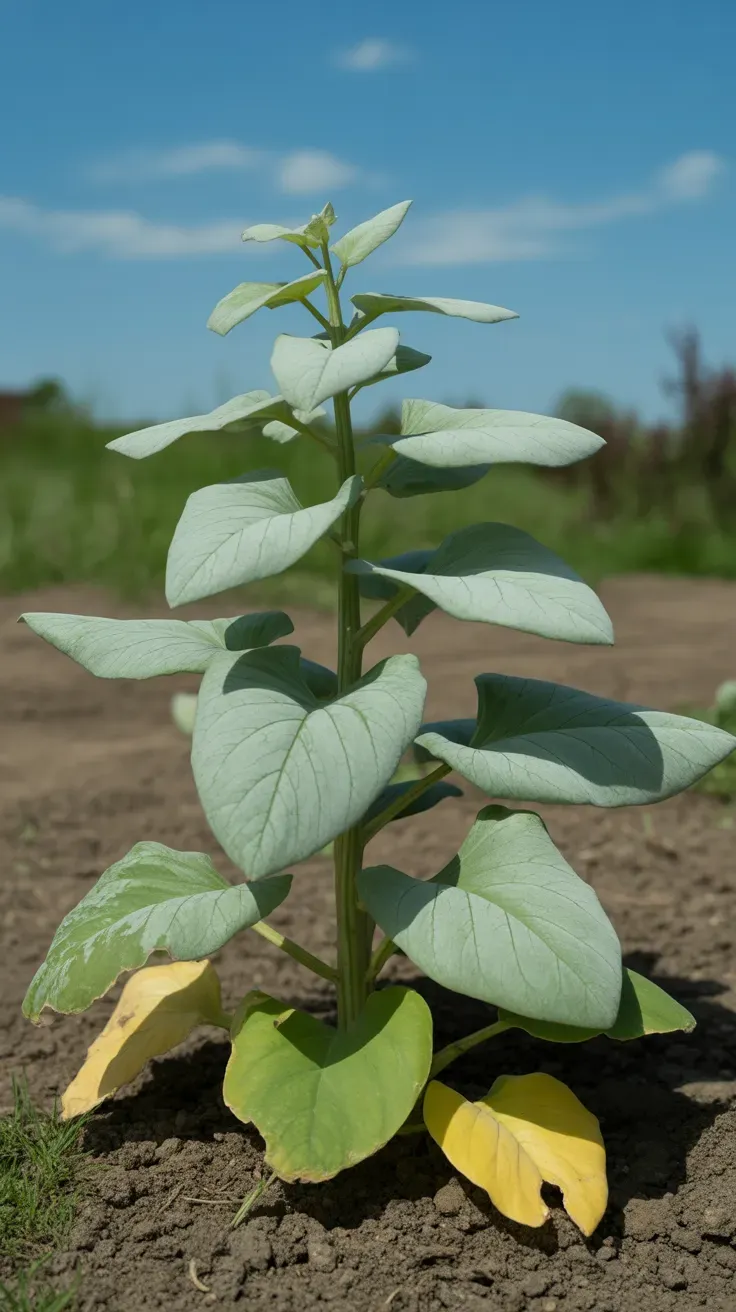
Lamb’s quarters is often called “wild spinach,” and after cooking a batch I understood why — the texture and mild flavor are nearly indistinguishable from the cultivated version.
Identify it by diamond- or goosefoot-shaped leaves with a distinctive mealy, silvery-white powder coating the new growth, especially on the underside. That powdery coating is the giveaway that separates it from other similar-looking weeds; rub a leaf between your fingers and the dust should come off slightly chalky.
Pro Tip: Harvest the top 4 inches of new growth repeatedly through the season — the plant regrows quickly, giving you multiple cuttings instead of one.
Cook it exactly like spinach: a quick sauté with garlic and oil is all it needs, since raw leaves carry more oxalic acid than most people want in bulk.
Explore our container vegetable gardening tips, and see nutritional notes at extension.ufl.edu.
Lamb’s quarters is one of the most productive, forgiving greens you’ll find growing wild all summer.
🛒 Shop This Idea
- Garden harvest scissors, ergonomic grip — Makes repeated cut-and-come-again harvesting easy on the hands. Shop on Amazon →
- Non-stick sauté pan, 12-inch — Cooks down large batches of greens evenly. Shop on Amazon →
- Garlic press, stainless steel — A quick companion tool for the classic garlic sauté. Shop on Amazon →
- Vacuum food sealer bags — Freezes blanched lamb’s quarters for winter use. Shop on Amazon →
- Wild greens cookbook, foraged recipes — Recipe ideas beyond the basic sauté. Shop on Amazon →
10. Cleavers (Galium aparine)
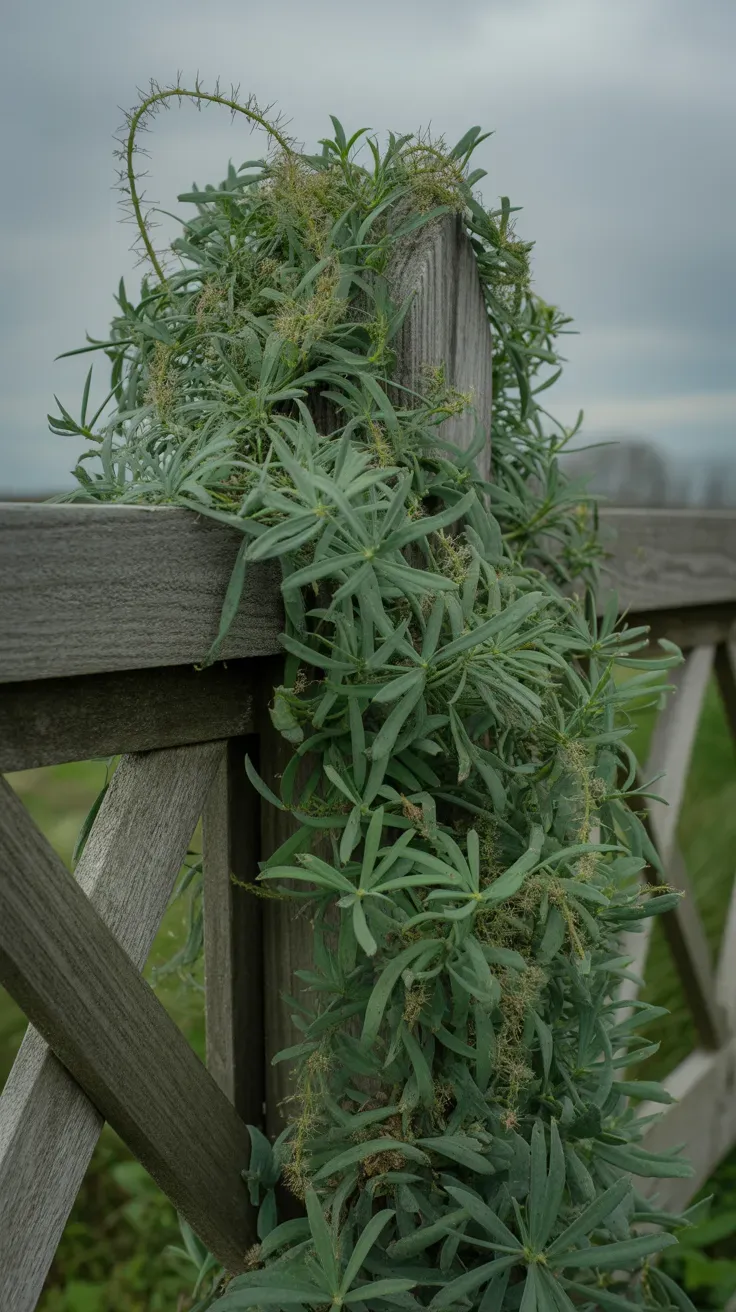
Cleavers earns its nickname “sticky willy” honestly — it clings to clothing, pets, and skin with tiny hooked hairs, which doubles as its easiest identifying trait.
Look for square stems and leaves growing in whorls of six to eight around the stem, all covered in fine backward-facing hooks that grip anything they touch. There’s no toxic lookalike that shares this exact whorled, velcro-like texture, which makes cleavers one of the safer plants to learn early.
- Best harvested: young spring growth, before it toughens
- Traditionally used as a cold-infused tea, since heat can dull its beneficial compounds
I ran a hand through a patch on a hike and spent the next ten minutes picking it off a sleeve — a good reminder to harvest with scissors, not fingers.
Steep it as a cold tea or juice the fresh stems; check our growing tea herbs at home guide, and read more at sfgate.com/homeguide.
Cleavers is a strange, sticky little plant that’s easier to identify than almost anything else on this list.
🛒 Shop This Idea
- Cold-brew tea pitcher, glass — Ideal for the traditional cold-infusion method cleavers prefers. Shop on Amazon →
- Small kitchen shears for herb cutting — Harvests cleavers cleanly without it snagging on your hands. Shop on Amazon →
- Manual masticating juicer, compact — Extracts juice from fresh cleavers stems efficiently. Shop on Amazon →
- Amber tincture dropper bottles, 1-ounce — Stores a cleavers tincture for longer shelf life. Shop on Amazon →
- Herbal tea sampler variety pack — Compares cleavers tea against familiar herbal blends. Shop on Amazon →
11. Yarrow (Achillea millefolium)
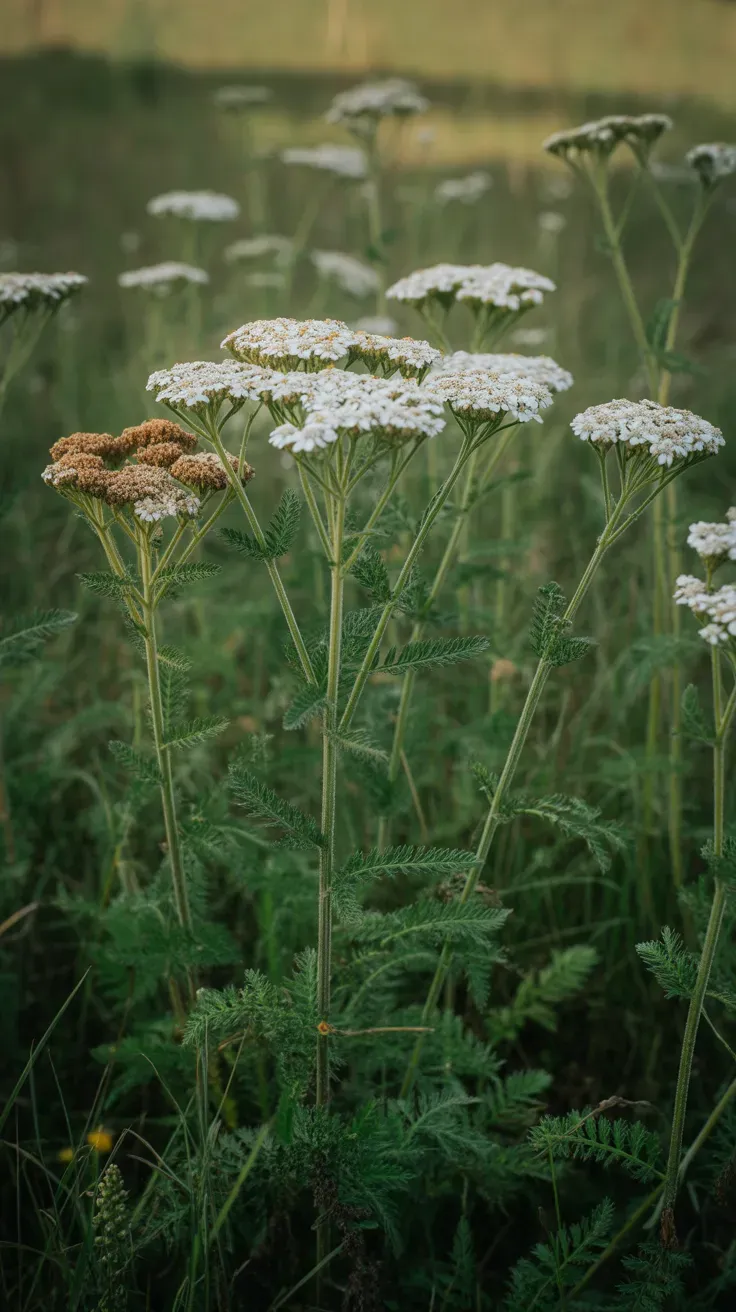
Yarrow’s feathery, almost fern-like leaves are unlike anything else growing in an open meadow, which makes it one of the more distinctive plants on this list once you’ve seen it once.
Identify it by finely divided, feather-like leaves with a sharp, herbal scent when crushed, topped by flat clusters of small white (occasionally pink) flowers on a single upright stem. The scent test matters here — poison hemlock can superficially resemble yarrow’s ferny foliage from a distance, but hemlock lacks yarrow’s sharp aroma and has purple-blotched stems, so always crush and smell before harvesting.
Pro Tip: Pack a pinch of crushed fresh yarrow leaf directly onto a minor cut — it’s traditionally used to help slow small bleeds, though it’s not a substitute for real first aid on anything serious.
Dry the flowering tops for tea, or infuse into an oil for topical use.
See our drying and preserving herbs guide, and confirm ID at rhs.org.uk.
Yarrow rewards a careful smell-test with one of the most useful herbs in an old-fashioned home apothecary.
🛒 Shop This Idea
- Yarrow seed packet, white heirloom — Establishes a reliable patch if wild ID feels uncertain. Shop on Amazon →
- Hanging herb drying rack, wall-mounted — Air-dries yarrow bundles upside down properly. Shop on Amazon →
- Natural jute twine, garden weight — Bundles yarrow stems for hang-drying. Shop on Amazon →
- Poison plant identification field guide — Helps rule out hemlock and other dangerous lookalikes. Shop on Amazon →
- Dark glass tea storage tin — Keeps dried yarrow potent and light-protected. Shop on Amazon →
12. Red Clover (Trifolium pratense)
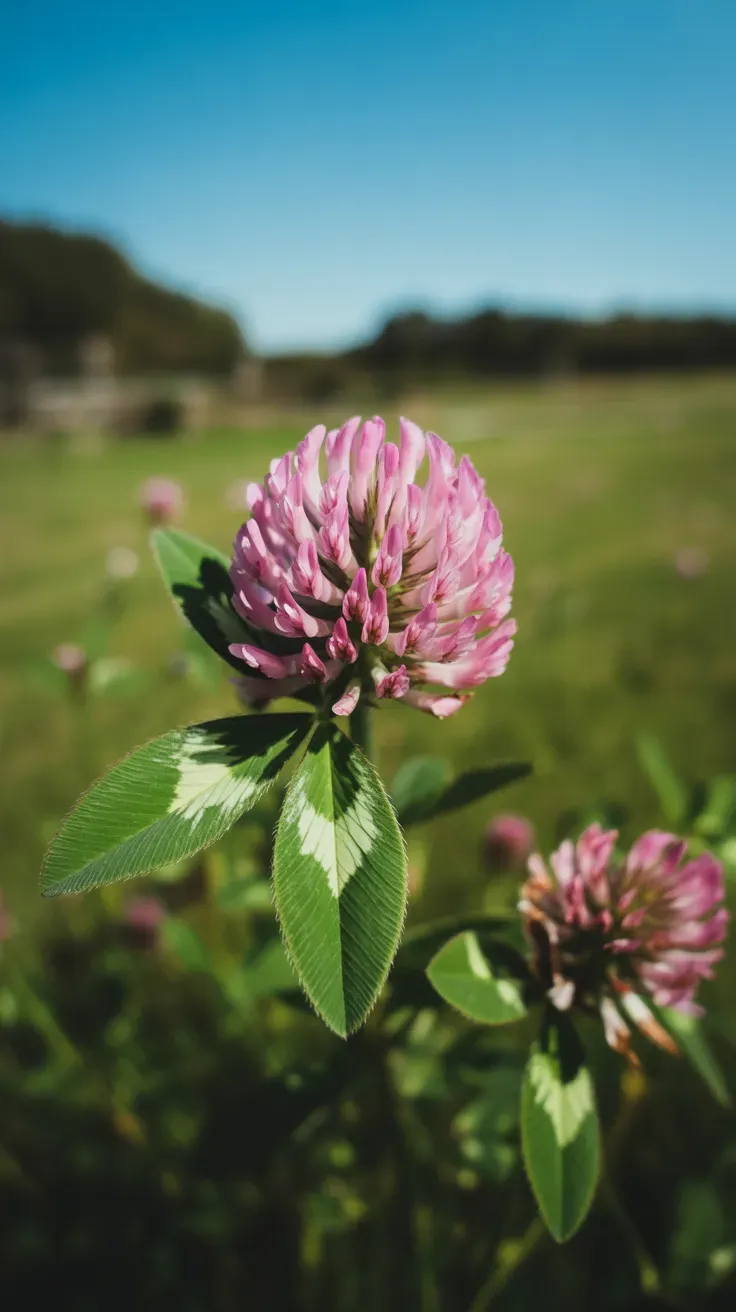
Red clover blankets meadows and lawns by early summer, and its round pink-red flower heads are sweet enough to eat straight off the stem.
Identify it by the classic three-leaflet clover shape, each leaflet marked with a faint pale chevron, and a rounded, dense flower head in pink to magenta. There’s no toxic lookalike among true clovers, though older, blackened flower heads can develop mold and should be skipped — fresh, bright color only.
- Best harvested: fully open flower heads, mid-morning
- Common use: dried for tea, said to be one of the mildest, most approachable herbal teas to start with
I keep a jar of dried red clover blossoms by the kettle all summer; it’s become a lazy, five-minute ritual more than a project.
Check our herb tea blending guide for pairing ideas, and see growth details at almanac.com.
Red clover is an easy, pleasant entry point into drying your own herbal teas.
🛒 Shop This Idea
- Red clover seed mix, pollinator blend — Grows a dedicated patch that also feeds local bees. Shop on Amazon →
- Mesh flower drying screen, stackable — Dries clover blossoms flat without mold. Shop on Amazon →
- Ceramic tea kettle with infuser — Brews loose dried clover blossoms directly. Shop on Amazon →
- Kraft paper tea bags, empty fillable — Portions dried clover for gifting or travel. Shop on Amazon →
- Honey dipper and small glass jar — A natural pairing for sweetening clover tea. Shop on Amazon →
13. Chicory (Cichorium intybus)
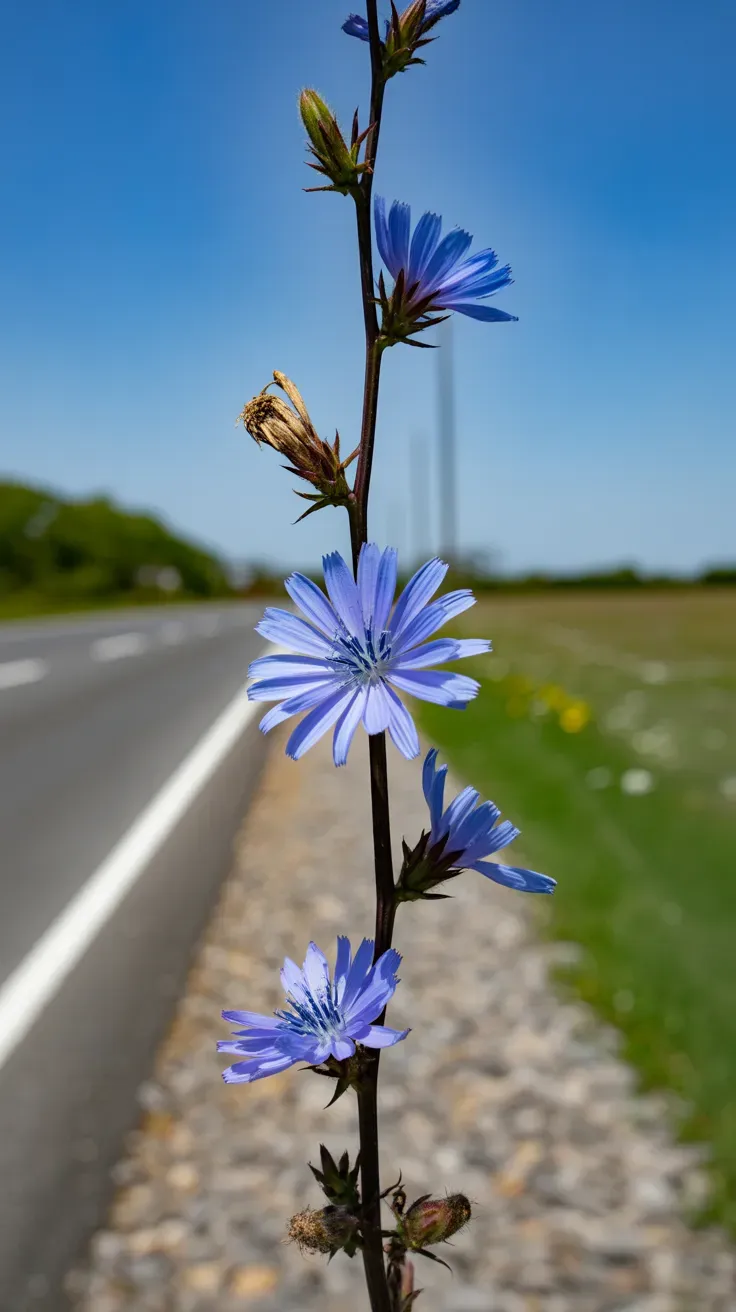
Chicory’s sky-blue flowers along summer roadsides are hard to miss, and its root has a long history as a coffee substitute during shortages.
Identify it by wiry, branching stems up to four feet tall, sparse lance-shaped leaves, and distinctive bright blue (rarely white or pink) ray flowers that close by early afternoon. There’s no dangerous lookalike, though roadside harvesting should be avoided for contamination reasons, not identification ones — find a patch well off the shoulder.
Pro Tip: Dig the taproot in fall after the first light frost, when the plant channels more bitter compounds into the root, giving a deeper roasted flavor.
The young spring leaves are edible (bitter, best blanched), and the roasted, ground root makes a genuinely good coffee extender.
See our herbal coffee alternatives roundup, and read more at bhg.com/gardening.
Chicory turns a common roadside weed into a genuinely useful pantry staple once dug and roasted.
🛒 Shop This Idea
- Garden digging fork, forged steel — Loosens soil deeply enough to lift the chicory taproot intact. Shop on Amazon →
- Chicory root seed packet, coffee variety — A cultivated option bred specifically for root size. Shop on Amazon →
- Countertop coffee roaster, small batch — Roasts chicory root evenly before grinding. Shop on Amazon →
- Manual burr coffee grinder — Grinds roasted root to a consistent brewing texture. Shop on Amazon →
- French press coffee maker, 34-ounce — Brews chicory root coffee without paper filter waste. Shop on Amazon →
14. Common Mallow (Malva neglecta)
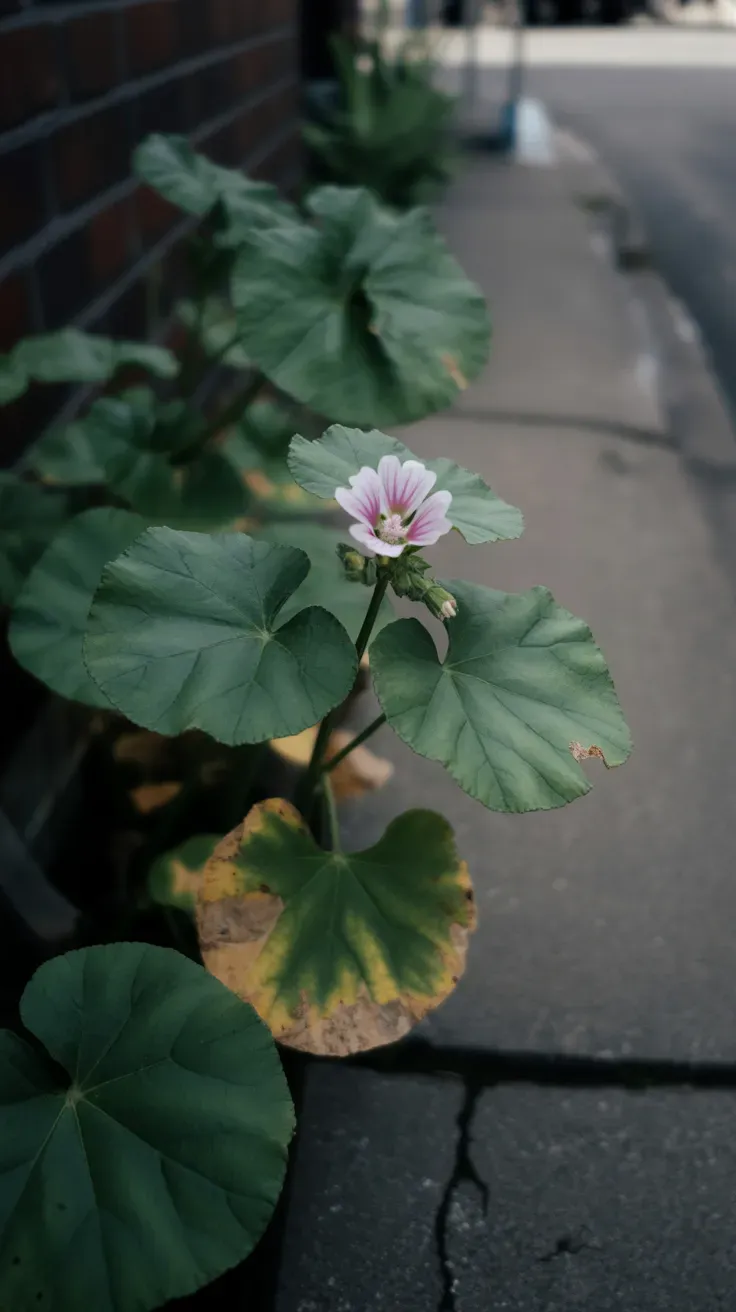
Common mallow is the plant kids call “cheeseweed” for its round, cheese-wheel-shaped seed pods, and it grows in the cracked, neglected soil most people never think to forage.
Identify it by round, lobed leaves with a slightly fuzzy texture and long petioles, plus small pale pink or white five-petaled flowers with darker veining. There’s no toxic lookalike, and its mucilaginous texture — similar to okra — is a helpful confirming clue when the leaves are cooked.
- Culinary use: thickens soups the way okra does, thanks to its natural mucilage
- Young seed pods (“cheeses”) are edible raw, mild and nutty
I added a handful of chopped mallow leaves to a thin vegetable soup and watched it thicken on its own within minutes — no cornstarch required.
See our soup-thickening herbs and greens post, and check details at extension.psu.edu.
Mallow is an underrated, gently thickening green that deserves more attention than it gets.
🛒 Shop This Idea
- Enamel soup pot, 4-quart — Right size for testing mallow’s natural thickening power. Shop on Amazon →
- Wooden soup ladle, long handle — Stirs thickened mallow soup without scratching the pot. Shop on Amazon →
- Common mallow seed packet, culinary — A cultivated backup if wild patches are scarce. Shop on Amazon →
- Fine colander, stainless steel — Rinses grit from low-growing mallow leaves. Shop on Amazon →
- Sourdough bread baking kit — Mallow’s mild, nutty seed pods pair surprisingly well with fresh bread. Shop on Amazon →
15. Wild Mint (Mentha arvensis)
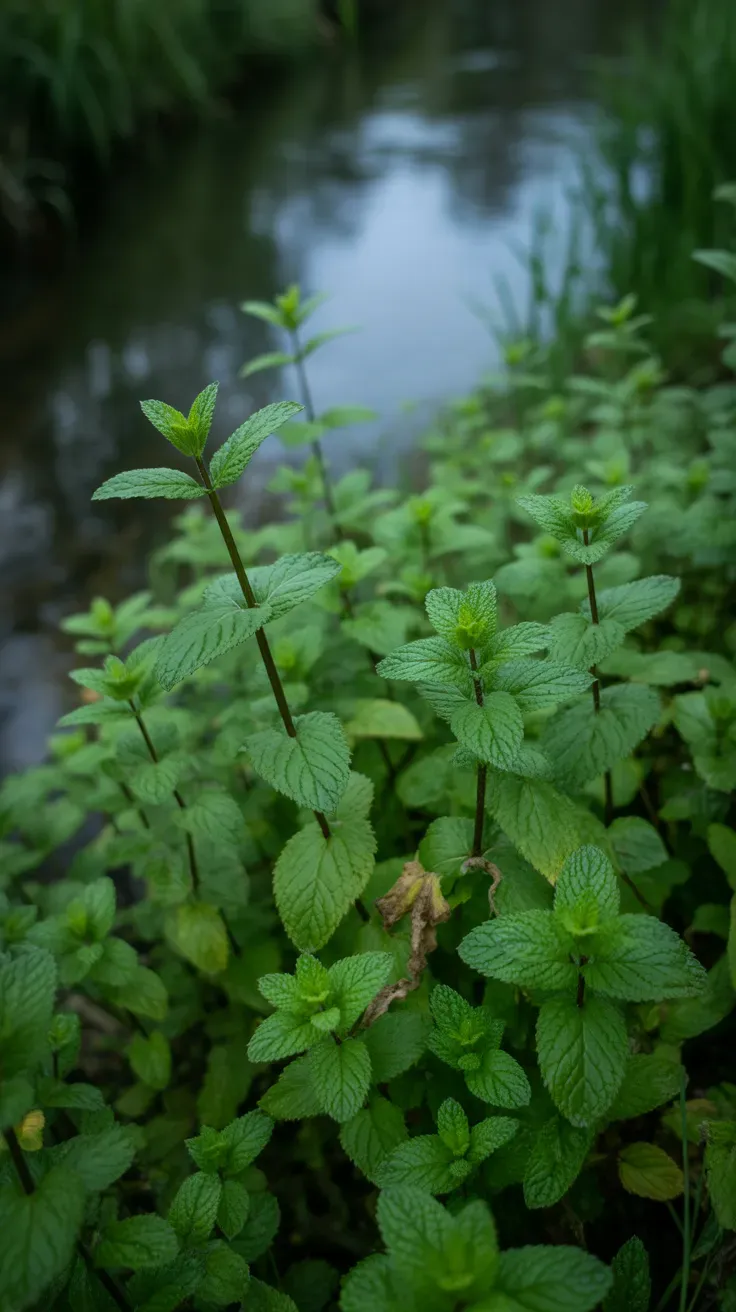
Wild mint spreading along a creek bank is one of the easiest scent-based identifications in foraging — crush a leaf, and you’ll know within a second.
Identify it by a square stem (roll it between your fingers to feel the four flat sides), opposite serrated leaves, and a strong, unmistakable minty smell when crushed. The square stem plus mint scent together rule out virtually everything else growing nearby, making this one of the safest plants on the list.
Pro Tip: Harvest just before the small purple flower clusters open — leaf oil concentration peaks right before flowering and drops noticeably afterward.
Use fresh in drinks and salads, or dry for tea; it also holds up well frozen into ice cubes for summer.
See our growing mint in containers guide (it spreads aggressively, so containment matters), and confirm ID at gardenersworld.com.
Wild mint is a reliable, fragrant win almost anywhere there’s a damp ditch or stream edge.
🛒 Shop This Idea
- Mint plant starts, spearmint variety — A contained alternative if wild patches are hard to reach. Shop on Amazon →
- Ice cube tray with lid, silicone — Freezes fresh mint leaves into ready-to-use cubes. Shop on Amazon →
- Cocktail muddler, wooden — Releases mint oils for drinks and mocktails. Shop on Amazon →
- Herb-stripping tool, multi-size — Strips mint leaves from stems quickly. Shop on Amazon →
- Insulated water bottle, wide mouth — Great for infusing trail water with fresh mint on hikes. Shop on Amazon →
16. Sheep Sorrel (Rumex acetosella)
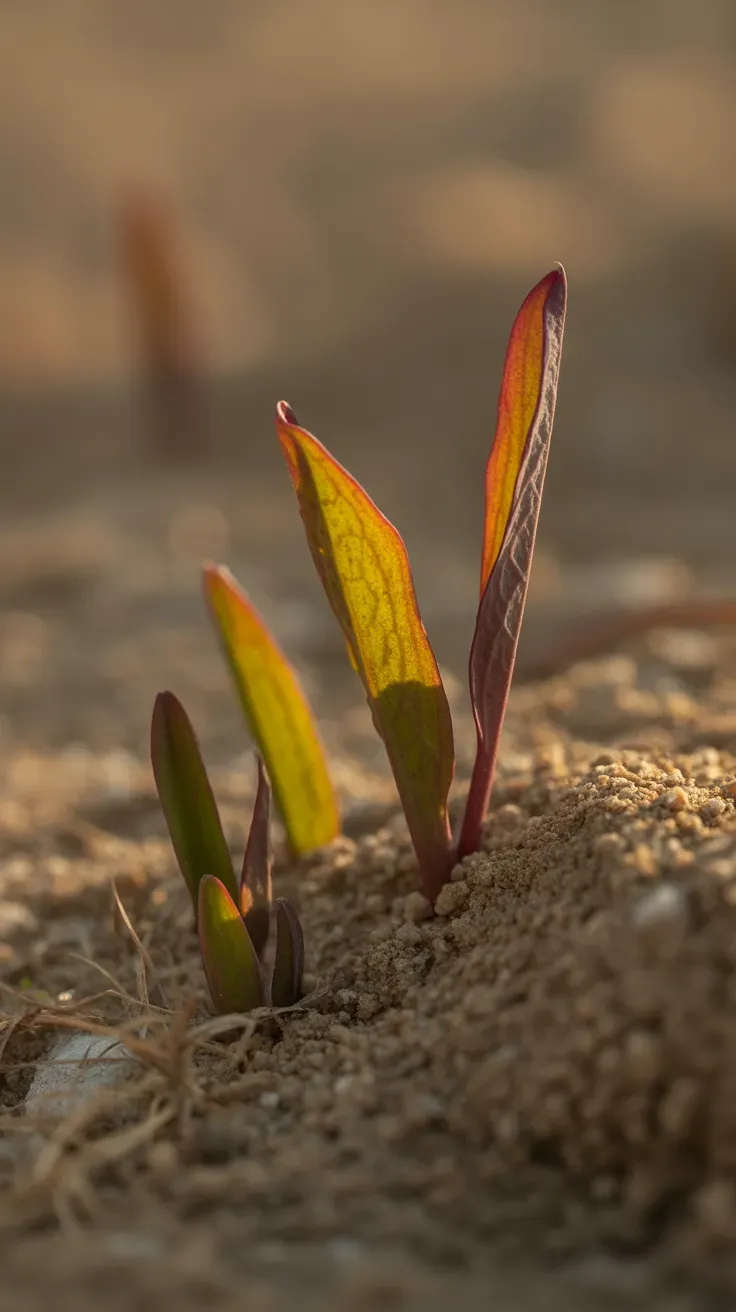
Sheep sorrel colonizes the poor, acidic soil most other plants avoid, and its small arrow-shaped leaves pack a bright, lemony tartness that punches above their tiny size.
Identify it by distinctive leaves shaped like narrow arrowheads, with two small lobes flaring outward near the base of each leaf — that arrow shape is genuinely unique among common lawn plants. Reddish-brown flower spikes appear on thin stalks in early summer, adding another confirming clue.
- Flavor: sharply sour, similar to green apple skin
- Caution: like wood sorrel, its oxalic acid content means it’s a garnish herb, not a bulk salad green
I use it the way I’d use a squeeze of lemon — a few leaves stirred into potato soup at the end brightens the whole pot.
Check our sour and tangy herb pairings guide, and see growing conditions at extension.ufl.edu.
Sheep sorrel is a tiny, tart plant that punches well above its size in the kitchen.
🛒 Shop This Idea
- Sheep sorrel seed packet, heirloom — A garden version for consistent, controlled harvesting. Shop on Amazon →
- Soil pH test kit — Confirms the acidic conditions sheep sorrel prefers before you plant. Shop on Amazon →
- Immersion blender, hand-held — Blends a quick sheep-sorrel potato soup smooth. Shop on Amazon →
- Ceramic soup bowls, set of 4 — Serves up the finished tangy soup in style. Shop on Amazon →
- Foraging identification app subscription card — Digital ID backup for tricky sorrel-family plants. Shop on Amazon →
17. Burdock (Arctium lappa)
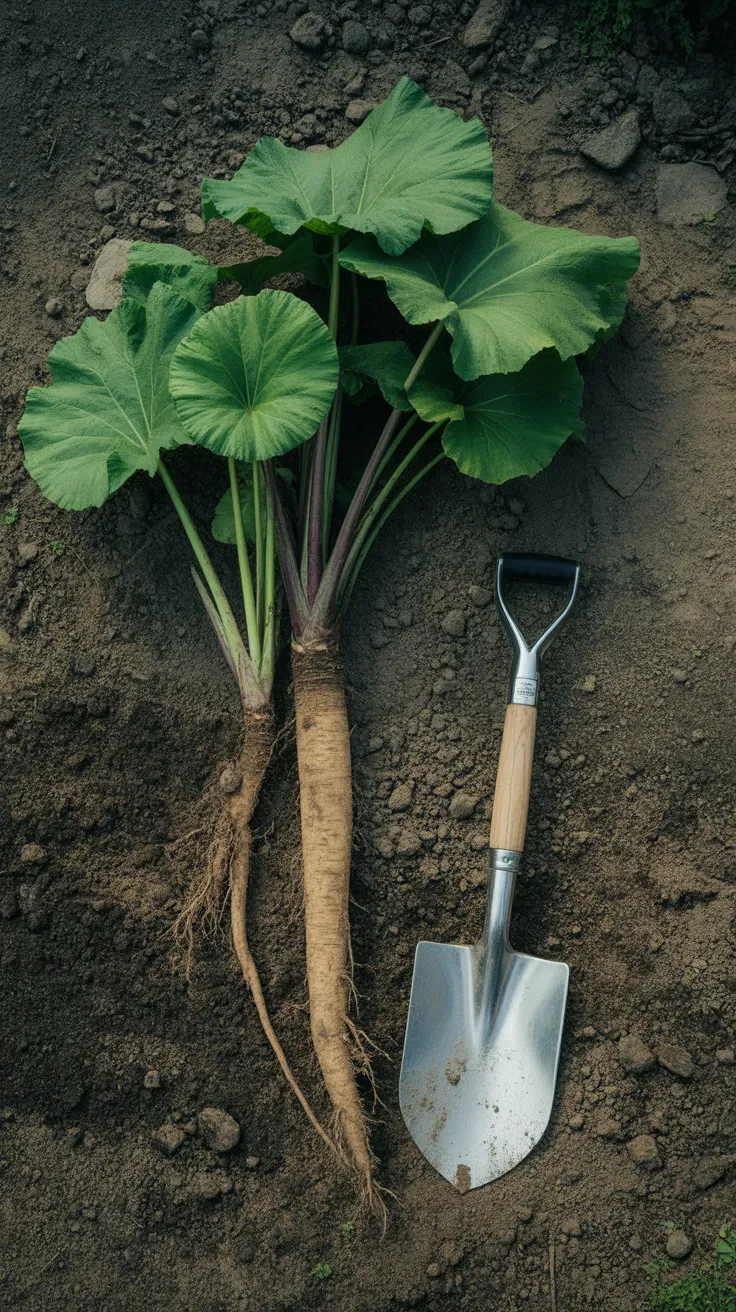
Burdock’s enormous first-year leaves are unmistakable, and the long taproot underneath is a genuine root vegetable once you get past the digging.
Identify it by large, heart-shaped leaves with a woolly gray underside and wavy edges in the first year, before the plant sends up its familiar burred flower stalk in year two. The woolly underside is the clue that separates it from rhubarb, a common visual mix-up — rhubarb’s leaf underside is smooth and its stalks are red, while burdock’s are green and fibrous.
Pro Tip: Dig first-year plants in fall — the root is at its largest and least fibrous before the plant bolts to flower in its second year.
Peel and slice the root like a carrot for stir-fries, soups, or pickling; it has an earthy, slightly sweet flavor similar to Jerusalem artichoke.
See our root vegetable storage guide, and read growing notes at rhs.org.uk.
Burdock is genuinely hard work to dig but rewarding enough to make it worth the effort each fall.
🛒 Shop This Idea
- Root harvesting spade, narrow blade — Digs deep enough to lift burdock’s long taproot without snapping it. Shop on Amazon →
- Vegetable peeler, swivel blade — Peels burdock root’s tough outer skin quickly. Shop on Amazon →
- Wok, carbon steel 14-inch — Ideal for classic burdock stir-fry preparation. Shop on Amazon →
- Root cellar storage crate, ventilated — Keeps harvested burdock root fresh for weeks. Shop on Amazon →
- Japanese vegetable cookbook — Recipes for burdock (gobo) beyond the basics. Shop on Amazon →
18. Watercress (Nasturtium officinale)
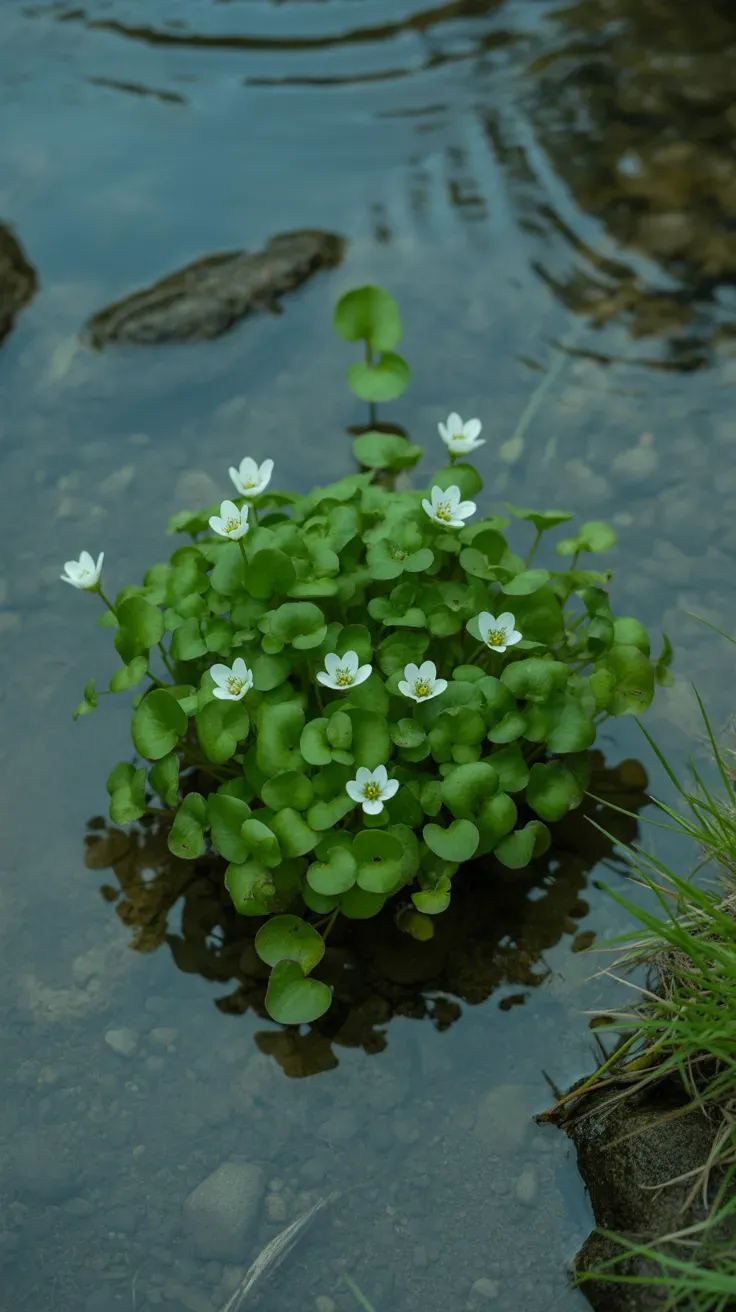
Watercress is the one plant on this list I’d call genuinely advanced, and it’s worth saying plainly: harvest it only from moving, clean water you can verify is free of agricultural or livestock runoff upstream.
Identify it by small, rounded compound leaves on hollow, floating stems, with tiny white four-petaled flowers, growing rooted in clear, cold, flowing streams. The real risk isn’t misidentification but liver flukes carried in contaminated water — this is the one entry where I’d say buy it if you have any doubt about the water source, and only forage from streams you know well.
- Flavor: peppery, similar to arugula
- Never harvest from stagnant ponds or water near grazing livestock
Use it raw in salads and sandwiches, or blended into a classic watercress soup.
See our water-safe foraging precautions post, and read water-quality guidance at extension.psu.edu.
Watercress is worth learning eventually, but it’s the one herb here where caution should outweigh eagerness.
🛒 Shop This Idea
- Water quality test strips, multi-parameter — Screens stream water before committing to a watercress patch. Shop on Amazon →
- Waterproof wading boots, ankle-height — Keeps feet dry while harvesting from shallow streams. Shop on Amazon →
- Watercress seed packet, hydroponic-friendly — A safer, controlled-water alternative to wild streams. Shop on Amazon →
- Salad spinner with pour spout — Rinses and dries delicate watercress leaves gently. Shop on Amazon →
- Immersion blender with soup attachment — Makes quick work of a classic watercress soup. Shop on Amazon →
19. Elderflower (Sambucus canadensis)
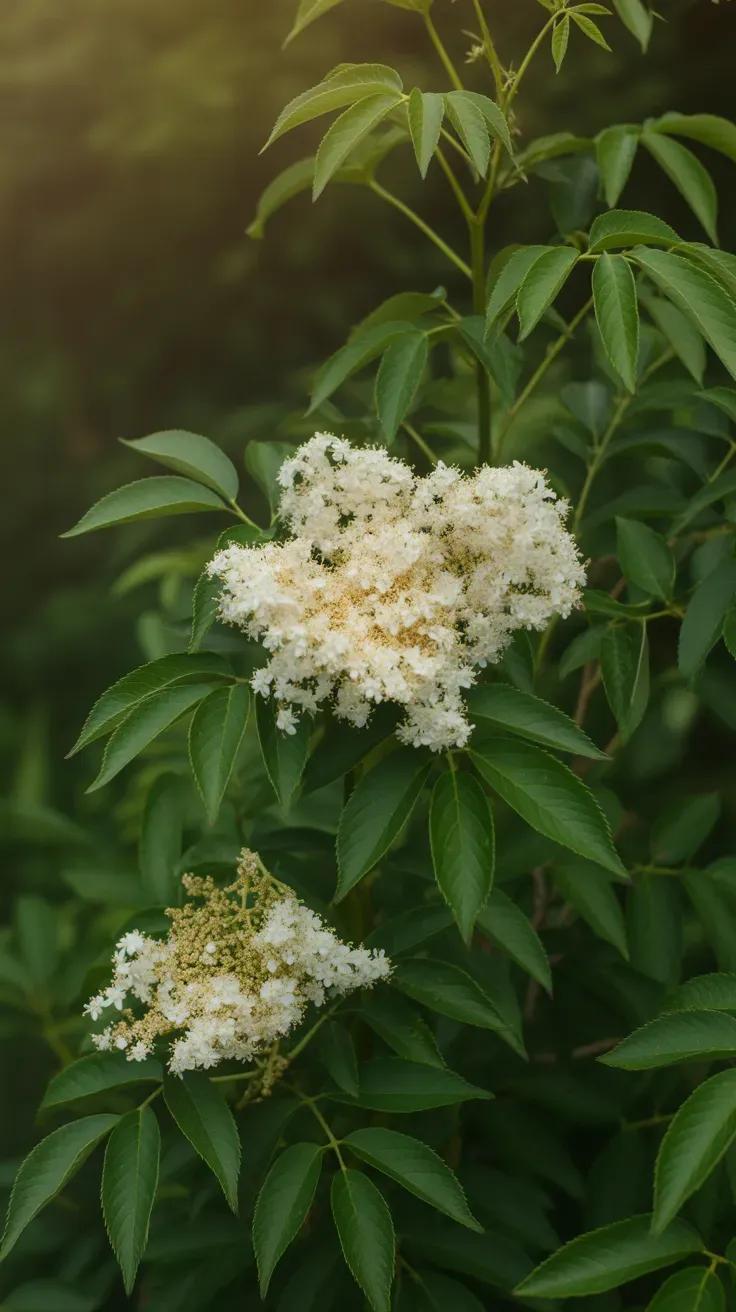
Elderflower’s fragrant, lacy white clusters mark early summer better than almost any other bloom, and the flavor — floral, slightly grape-like — is genuinely worth the short window it’s available.
Identify it by flat-topped clusters of small white five-petaled flowers on a shrub with compound leaves of five to seven serrated leaflets and grayish, corky bark. Note that unripe green elderberries, the leaves, and the stems are all mildly toxic raw, so only the fully open flowers (and later, fully ripe cooked berries) are used — never eat any other part raw.
Pro Tip: Snip whole flower clusters and shake gently rather than washing them under running water — washing rinses away much of the pollen that carries the floral flavor.
Steep the flowers into a classic cordial, syrup, or light tea.
See our foraged flower syrups and cordials guide, and read species notes at missouribotanicalgarden.org.
Elderflower season is brief, fragrant, and worth circling on the calendar every year.
🛒 Shop This Idea
- Elderflower cordial recipe kit — Everything needed for a first cordial batch. Shop on Amazon →
- Fine mesh jelly strainer bag — Filters pollen and plant matter from cordial syrup. Shop on Amazon →
- Glass swing-top bottles, 16-ounce set — Bottles finished elderflower cordial for storage. Shop on Amazon →
- American elderberry shrub, potted — Grows a reliable home source for future seasons. Shop on Amazon →
- Kitchen funnel set, stainless steel — Makes bottling syrup and cordial mess-free. Shop on Amazon →
20. Wild Fennel (Foeniculum vulgare)
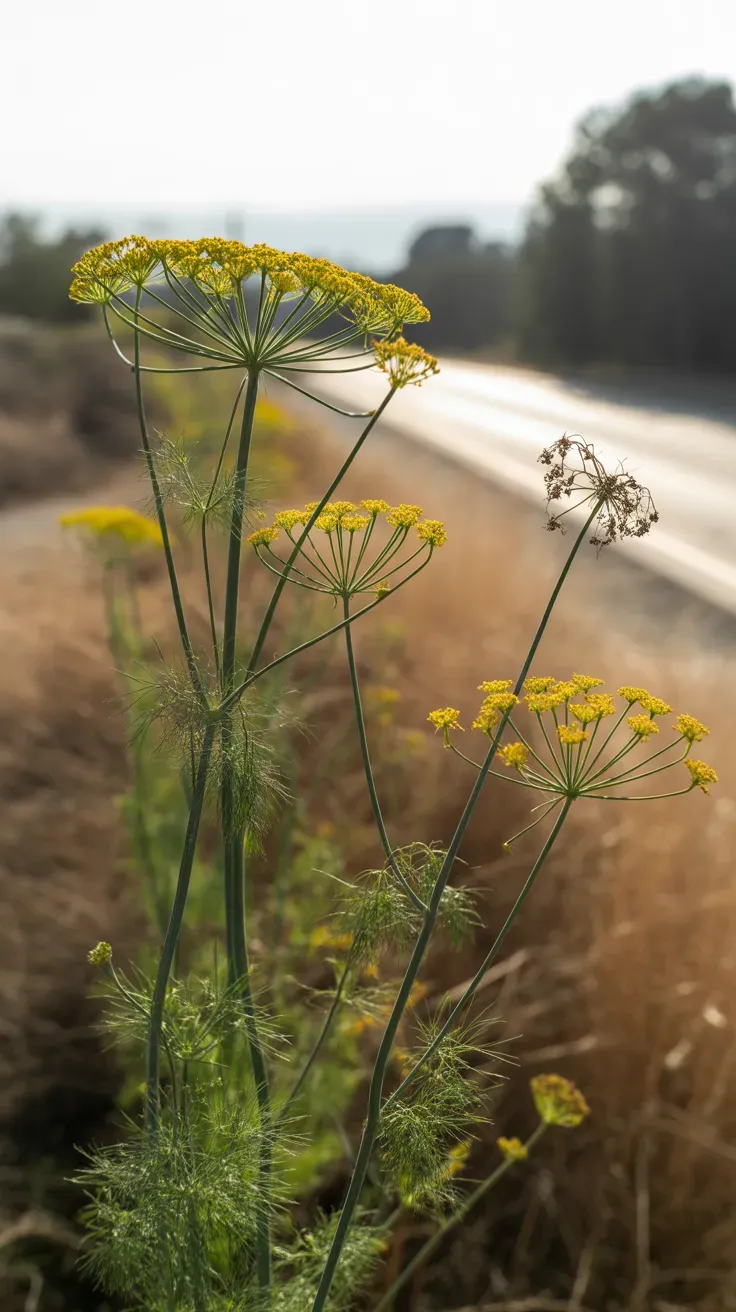
Wild fennel escapes gardens and naturalizes along roadsides and dry fields, and it announces itself with an unmistakable anise smell the moment you brush against it.
Identify it by tall, hollow, blue-green stems with feathery, thread-like leaves and flat-topped clusters of small yellow flowers, all carrying a strong licorice-anise scent when crushed. That scent is the key confirming test — poison hemlock again is the plant to rule out here, since both grow in similar disturbed roadside habitat, but hemlock smells musty and unpleasant, not sweetly anise-like, and has purple-blotched stems fennel never has.
- Best harvested: fronds in spring, seeds in late summer once dried and browned
- Every part is used differently: fronds as an herb, seeds as a spice, stalks like a mild celery
I dry the seed heads upside down in a paper bag each August, which catches falling seeds without half of them ending up on the counter.
See our growing and using fennel guide, and confirm ID cautions at gardenersworld.com.
Wild fennel is a fragrant, generous plant once you’re confident separating it from its dangerous lookalike.
🛒 Shop This Idea
- Poison hemlock vs. fennel comparison guide — A focused resource for the one lookalike that matters here. Shop on Amazon →
- Spice grinder, dedicated for seeds — Grinds dried fennel seed into fresh spice. Shop on Amazon →
- Paper harvest bags, brown kraft — Catches fennel seeds as heads dry upside down. Shop on Amazon →
- Mandoline slicer, adjustable — Slices the fibrous stalk thin like celery for salads. Shop on Amazon →
- Glass spice jars with labels, set of 12 — Stores fresh-ground fennel seed alongside other foraged spices. Shop on Amazon →
21. Garlic Mustard (Alliaria petiolata)
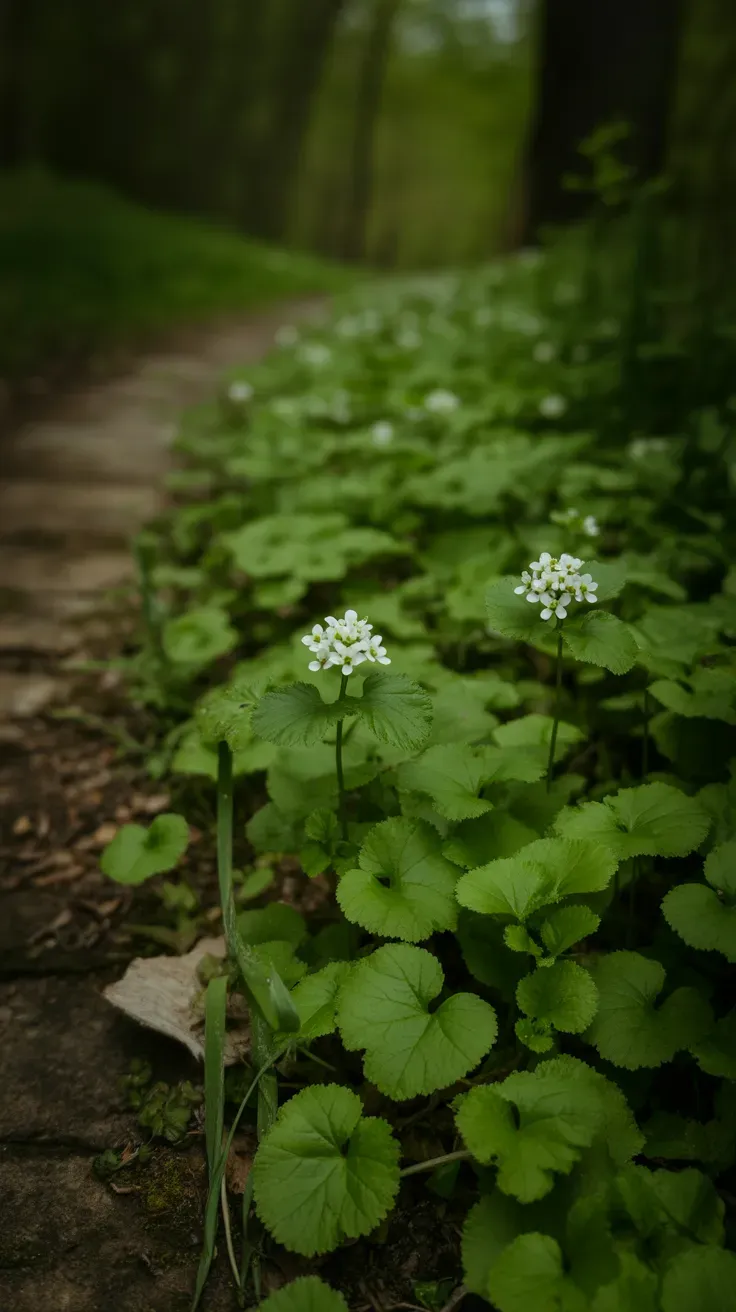
Garlic mustard is an aggressive invasive species in North America, which means foraging it is one of the rare cases where eating a wild plant actively helps the local ecosystem.
Identify it by heart-shaped, scalloped-edge leaves that release a distinct garlic smell when crushed, with small white four-petaled flowers clustered at the stem tip in its second year. The garlic scent from a non-allium-looking plant is the tell — nothing else in its typical woodland-edge habitat smells quite like it.
Pro Tip: Pull the whole plant, roots included, when harvesting — since it’s invasive, removing the root prevents regrowth and helps native wildflowers recover nearby.
Use young leaves in pesto or salads; the flavor mellows from sharp garlic-mustard to a milder green as the season progresses.
See our invasive-but-edible plants roundup, and read management notes at extension.psu.edu.
Garlic mustard is a rare forage where a full harvest is genuinely good land stewardship.
🛒 Shop This Idea
- Weeding tool with root claw — Pulls the full root system when clearing invasive patches. Shop on Amazon →
- Food processor, compact 4-cup — Blends garlic mustard leaves into pesto quickly. Shop on Amazon →
- Parmesan cheese grater, rotary — A classic pesto pairing for garlic mustard’s sharp bite. Shop on Amazon →
- Reusable produce mesh bags, set of 6 — Carries invasive-species harvests home for full use. Shop on Amazon →
- Native wildflower seed mix — Reseeds cleared patches with beneficial natives afterward. Shop on Amazon →
22. Self-Heal (Prunella vulgaris)
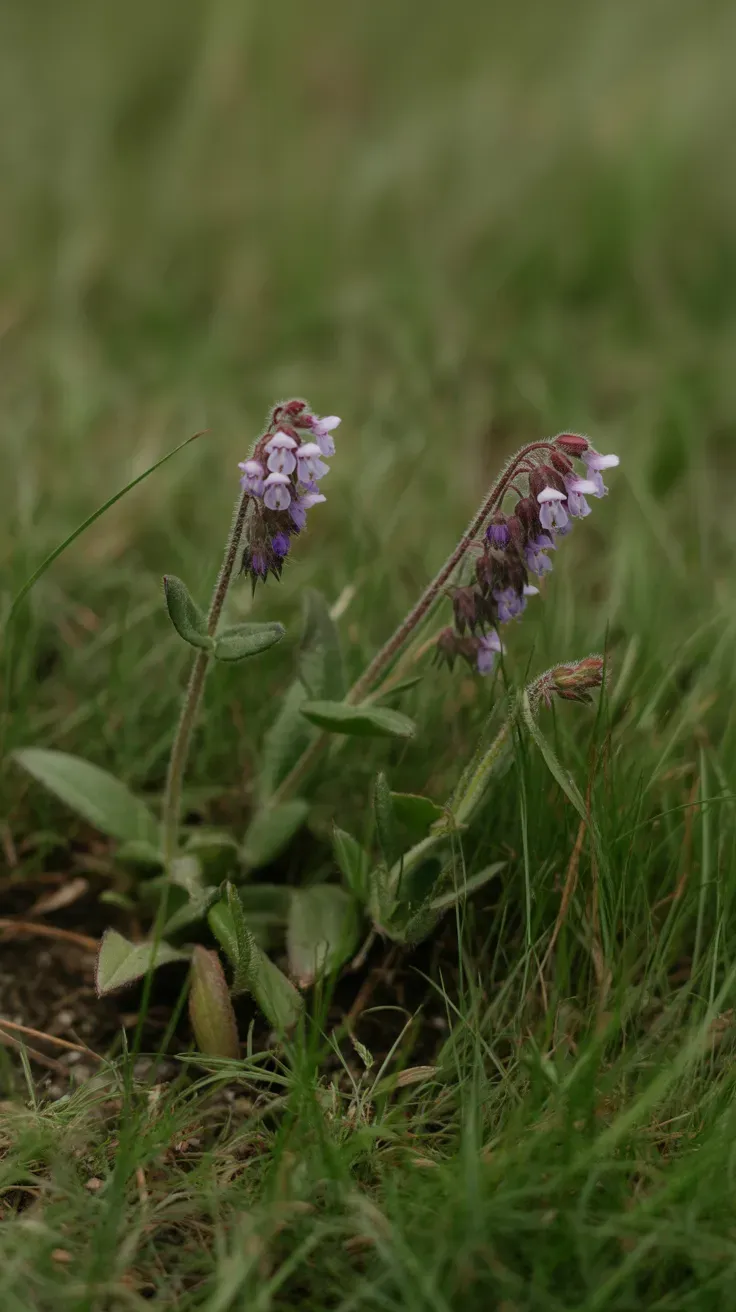
Self-heal survives constant mowing by staying low and blooming anyway, which is why it’s one of the most overlooked plants in an average lawn.
Identify it by a square stem, opposite oval leaves, and a small, tight cluster of purple hooded flowers stacked on a short spike. The square stem paired with that stacked purple flower spike is distinctive enough that it’s rarely confused with anything else in a typical lawn setting.
- Traditional use: a mild tea, sometimes used as a gargle for minor throat irritation
- Grows in both sun and shade, often in the same lawns as clover and violets
I started noticing it everywhere once I learned the name — it had been quietly flowering in my lawn for years before I ever looked down.
Check our lawn-to-forage-garden transition guide, and see details at gardenersworld.com.
Self-heal is proof that some of the most useful plants are the ones we mow right past.
🛒 Shop This Idea
- Self-heal (Prunella) seed packet — Establishes a patch you can leave unmowed on purpose. Shop on Amazon →
- Small tea strainer, fine mesh — Strains loose dried self-heal for a clean cup. Shop on Amazon →
- Herb identification magnifying glass set — Helps spot the square stem and flower detail up close. Shop on Amazon →
- Glass gargle cup, small — A dedicated cup for herbal gargle preparations. Shop on Amazon →
- Lawn care journal, garden log book — Tracks where useful “weeds” like self-heal keep reappearing. Shop on Amazon →
23. Wild Chamomile (Matricaria discoidea and relatives)
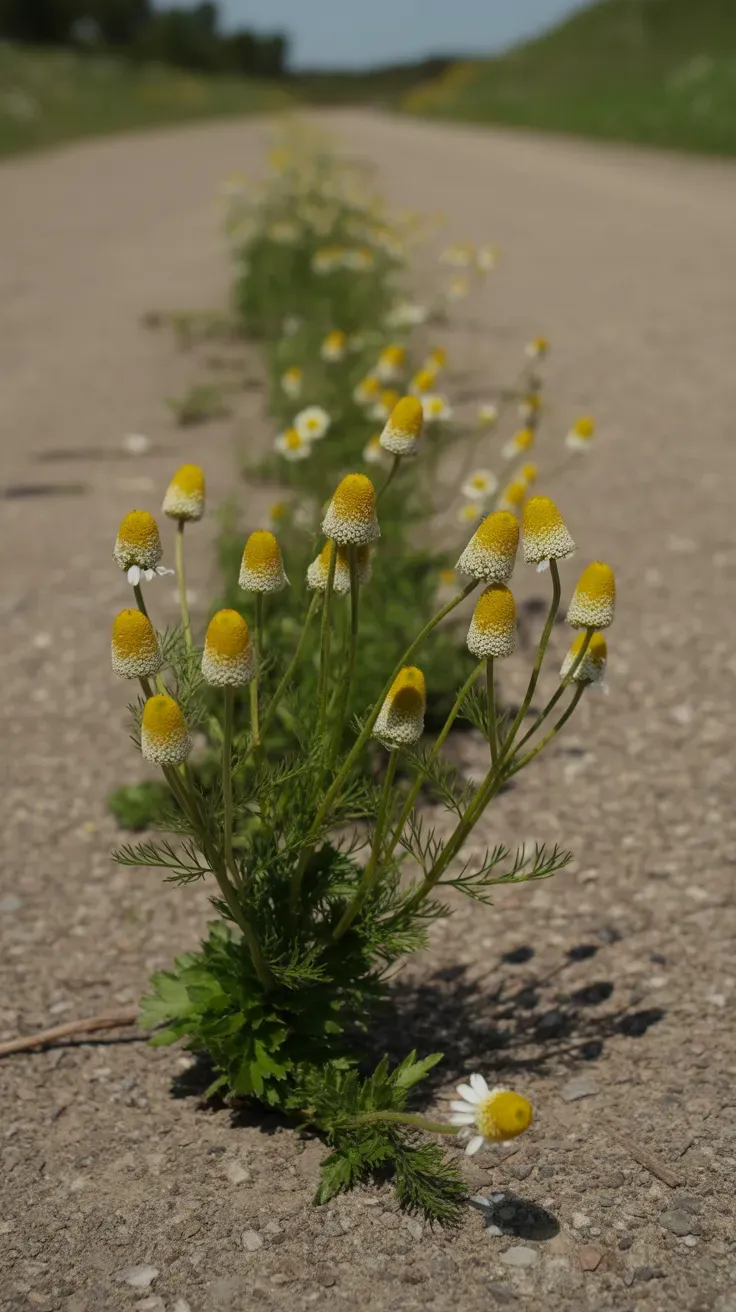
Wild chamomile — often the petal-less “pineapple weed” variety — grows in the most compacted, walked-over soil imaginable, along driveways and path edges where little else survives.
Identify it by finely feathery leaves and small, cone-shaped yellow-green flower heads with no white petals, releasing a distinct sweet, pineapple-like scent when crushed. That scent, paired with the petal-less cone shape, makes this one of the easier chamomile relatives to confirm confidently.
Pro Tip: Crush a flower head between two fingers before picking a whole patch — the pineapple smell confirms ID faster than examining leaf shape alone.
Dry the flower heads for a mild, calming tea, similar in effect to German chamomile but slightly earthier in flavor.
See our calming herbal tea blends guide, and read species notes at almanac.com.
Wild chamomile turns the most overlooked, trampled patch of dirt into a surprisingly good tea harvest.
🛒 Shop This Idea
- German chamomile seed packet — A cultivated companion if you want larger, petaled blooms too. Shop on Amazon →
- Flower drying press, wooden — Preserves flower heads flat for tea or crafts. Shop on Amazon →
- Bedtime herbal tea infuser mug — A cozy way to enjoy a calming chamomile blend. Shop on Amazon →
- Small glass spice jars, screw-top — Stores dried flower heads away from moisture. Shop on Amazon →
- Garden kneeler stool with tool pouch — Comfortable low-to-ground harvesting for path-edge plants. Shop on Amazon →
24. Wild Bergamot (Monarda fistulosa)
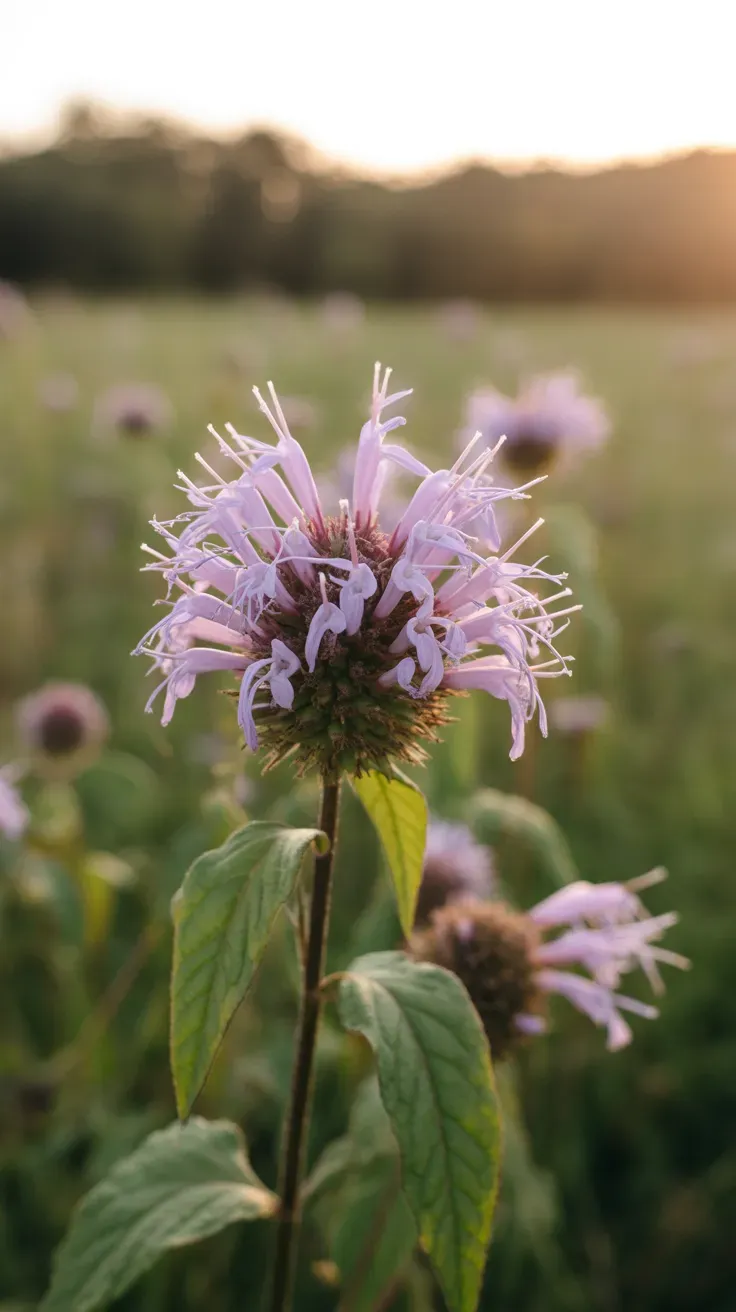
Wild bergamot’s shaggy lavender flower heads are a magnet for bees and hummingbird moths, and its minty-oregano scent makes it one of the easiest mint-family plants to confirm by smell alone.
Identify it by a square stem, opposite lance-shaped leaves, and a distinctive spiky, tubular lavender-pink flower head atop a single stalk, with a strong bergamot-oregano aroma when crushed. As with other mint-family plants, the square stem combined with that unmistakable scent makes false identification unlikely.
- Traditional use: tea, said to taste similar to Earl Grey without the actual bergamot orange
- Grows best in full sun, dry meadows, and open fields
The first cup of bergamot tea I made surprised me — it really does taste close to Earl Grey, which makes sense since the two share aromatic compounds.
Check our flowering herbs for pollinator gardens post, and read growing notes at missouribotanicalgarden.org.
Wild bergamot is a fragrant, pollinator-friendly plant that doubles nicely as a homegrown tea herb.
🛒 Shop This Idea
- Wild bergamot (Monarda) seed packet — Grows a pollinator patch that also stocks your tea shelf. Shop on Amazon →
- Bee-friendly garden plant marker set — Labels bergamot and other pollinator plants in the bed. Shop on Amazon →
- Earl Grey style tea tin, empty — A fitting container for homemade bergamot tea blends. Shop on Amazon →
- Herb bundle drying clips, set of 12 — Hangs bergamot stems to dry without a rack. Shop on Amazon →
- Pollinator garden field guide book — Identifies which visitors your bergamot patch attracts. Shop on Amazon →
25. Milk Thistle (Silybum marianum)
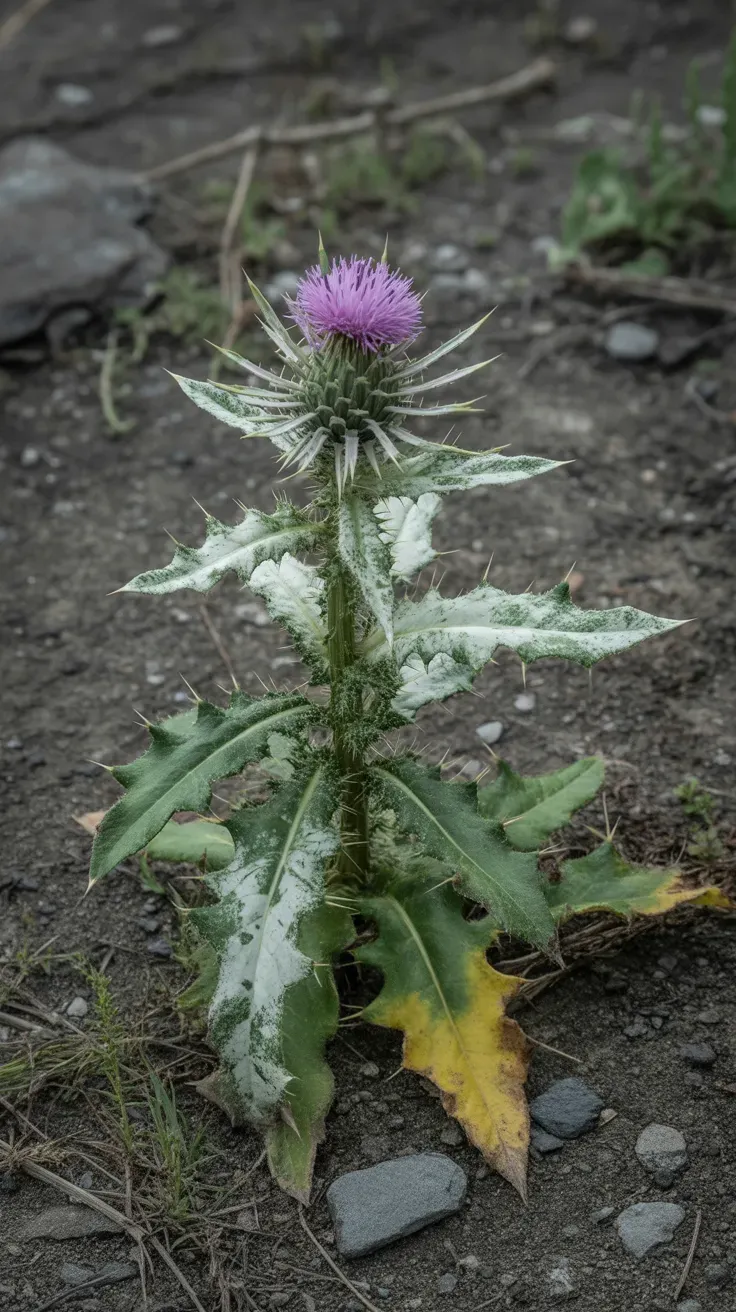
Milk thistle closes out this list as the most advanced entry — worth learning, but genuinely requiring thick gloves and patience before it earns a spot in the kitchen.
Identify it by large, spiny-edged leaves marbled with distinctive white veining, and a purple, spiky flower head on a tall stalk. That white marbling is unique among common thistles, which makes ID fairly reliable, but the spines themselves demand real caution when handling any part of the plant.
Pro Tip: Roast the mature seeds after the flower head dries and browns — a light pan-roast makes them easier to crack and brings out a nutty flavor for tea or grinding.
Peeled young stalks and de-spined leaf midribs can be cooked like a mild vegetable, and the roasted seeds are traditionally steeped for tea.
See our thorny and spiny wild plants safety guide, and read background at rhs.org.uk.
Milk thistle takes real patience to process, but it’s a satisfying last plant to add once your identification skills are solid.
🛒 Shop This Idea
- Heavy-duty thorn-resistant work gloves — Essential for handling milk thistle’s spiny leaves safely. Shop on Amazon →
- Milk thistle seed packet, culinary variety — A garden option for a controlled, tamer harvest. Shop on Amazon →
- Kitchen shears with serrated blade — Trims spines from stalks and leaf midribs safely. Shop on Amazon →
- Small cast iron roasting pan — Roasts milk thistle seeds evenly before grinding. Shop on Amazon →
- Coffee and spice grinder, dual blade — Cracks roasted milk thistle seeds for tea. Shop on Amazon →
Getting Started With Foraging Wild Herbs
The easiest first step is picking three plants from this list you’re already confident you can spot — dandelion, plantain, and chickweed are the most forgiving trio — and learning them completely before adding a fourth. The most common beginner mistake is trying to memorize all 25 herbs at once and then second-guessing every plant in the field; slow, confident recognition beats broad, shaky knowledge every time.
Buy one solid field guide specific to your region and a pair of sturdy scissors before your first walk — a guide with photos of both the plant and its dangerous lookalikes matters more than a longer plant list. Realistically, expect to feel fully confident identifying five to eight plants by the end of one growing season, not all 25; that pace is normal, not slow.
Skip anything within 30 feet of roads, treated lawns, or standing water you can’t verify, and when in doubt, leave it in the ground — there’s always another patch next week.
🛒 Shop This Idea
- Regional wild edible plants field guide, photo-based — The single most useful first purchase for confident, safe identification. Shop on Amazon →
Frequently Asked Questions
Is it safe to eat wild herbs I find growing in my yard?
Many common lawn plants like dandelion, plantain, and chickweed are safe and easy to identify, but always confirm with at least three distinct features before eating anything. Avoid anything treated with pesticides or herbicides in the past year, since residue lingers in leaves and soil.
What is the best time of year to forage wild herbs?
Early spring through early summer offers the widest variety, since many greens turn bitter or tough once flowering finishes. Mornings after dew has dried are generally best, as leaves are crisp but not wet enough to bruise during picking.
How do I know if a wild plant is poisonous?
There’s no single universal rule, which is why cross-checking three separate identifying features — leaf shape, stem structure, and scent or sap — matters more than relying on one trait alone. When any feature doesn’t match perfectly, treat the plant as unsafe and leave it.
Can I forage wild herbs in a city or suburban yard?
Yes, but avoid areas within 30 feet of roads, since exhaust and runoff settle into nearby soil and leaves. Also skip lawns treated with herbicides or fertilizer within the last year, and ask neighbors before harvesting from shared or unfamiliar property.
Do I need a permit to forage on public land?
Rules vary widely by park, forest, and country, so it’s worth checking with the specific land manager before harvesting on public trails or preserves. Many local and national parks prohibit foraging entirely, while some state forests allow small personal-use amounts with a free permit.
A Few Final Thoughts
Foraging 25 wild herbs to forage this season doesn’t mean tackling all of them by June — it means slowly building a mental library of plants you’d recognize blindfolded, one confident identification at a time. Start with the forgiving trio of dandelion, plantain, and chickweed, add a scent-based plant like mint or fennel once those feel automatic, and save the trickier entries like watercress and milk thistle for later in the season. The real payoff isn’t just free salad greens; it’s the small, genuinely useful skill of looking at a patch of “weeds” and seeing dinner, tea, and medicine instead. Take it slow, trust the three-feature check every single time, and let this be the season your yard starts looking a little different to you.