
A dark stairwell feels like the one part of the house plants simply have to sit out, and most people give up before realizing how many genuinely tough species tolerate low light without slowly dying over a few sad months. I spent a full year killing pothos and ferns in my own north-facing stairwell before switching to ZZ plants and cast iron plant, and the difference between “surviving” and “thriving” plant choices turned out to matter more than any amount of extra watering ever could. This list covers 20 staircase garden ideas built specifically for dark hallways and low-light homes, each with the specific light tolerance, watering adjustment, and placement details that separate a plant that lasts from one that limps along until it doesn’t. Ready? Let’s explore all 20 of them.
Quick Answer: For genuinely dark stairwells with no direct light at all, ZZ plant and cast iron plant survive where almost nothing else will. For dim but not lightless spots, pothos, snake plant, and peace lily add more visual variety. Skip flowering plants entirely in true low light, since blooming requires more light energy than foliage plants need.
Why Low-Light Staircase Gardens Are Worth Your Time
A dark stairwell doesn’t have to stay bare just because it lacks a window — a handful of genuinely shade-tolerant species handle these conditions as their natural habitat, since many originated as forest-floor plants under a dense tree canopy. In practice, choosing the right species matters more here than anywhere else on a plant list, since the margin for error in low light is much narrower than in a sunny room.
The practical benefits are real once you match plant to condition correctly. Low-light plants typically need less frequent watering than their sun-loving counterparts, since slower growth means slower water use, and many tolerate the temperature swings common in unheated or drafty stairwells better than delicate flowering plants would. The lesser-known fact most people miss: “low light” still means some usable light — a windowless interior stairwell with no ambient light source at all genuinely can’t support live plants, and artificial grow lights become necessary rather than optional in that specific case.
This approach is ideal for north-facing entryways, interior stairwells without windows, apartment hallways, and anyone who’s assumed their dim staircase was simply off-limits for plants.
At a Glance
- ZZ plant and cast iron plant tolerate the darkest conditions of any plant on this list.
- Pothos and snake plant add variety while still handling genuinely low light well.
- Skip flowering plants in true low light, since blooming needs more light than foliage alone.
- Watering less often, not more, is the biggest adjustment low-light plants actually need.
- A small supplemental grow light rescues an otherwise plant-free windowless stairwell.
20 Low-Light Staircase Garden Ideas Compared
| Idea | Light Tolerance | Watering Frequency | Difficulty | Growth Habit |
| ZZ Plant Corner Feature | Very low light | Every 2-3 weeks | Very easy | Upright, compact |
| Cast Iron Plant Landing | Very low light | Every 2-3 weeks | Very easy | Upright, broad |
| Pothos Trailing Rail | Low to medium | Every 7-9 days | Easy | Trailing |
| Snake Plant Step Row | Low to bright | Every 3-4 weeks | Very easy | Upright, sculptural |
| Peace Lily Landing Accent | Low to medium | Every 5-7 days | Easy | Upright, mounding |
| Chinese Evergreen Display | Low to medium | Every 7-10 days | Easy | Upright, mounding |
| Philodendron Heartleaf Rail | Low to medium | Every 7-9 days | Easy | Trailing |
| Parlor Palm Statement | Low to bright | Every 7 days | Easy | Upright, feathery |
| Dracaena Warneckii Corner | Low to medium | Every 10-14 days | Easy | Upright, striped |
| Maidenhair Fern Humidity Spot | Medium, no direct sun | Every 3-4 days | Moderate | Mounding, delicate |
| Cast Concrete Grow Light Shelf | None (artificial) | Every 7-10 days | Moderate | Varies |
| Aspidistra Trio Grouping | Very low light | Every 2-3 weeks | Very easy | Upright, broad |
| Spider Plant Hanging Feature | Low to medium | Every 7-9 days | Easy | Trailing |
| Rabbit’s Foot Fern Landing | Medium, no direct sun | Every 4-5 days | Moderate | Mounding, textural |
| Calathea Statement Corner | Medium, no direct sun | Every 5-7 days | Moderate | Upright, patterned |
| ZZ Raven Dark-Leaf Accent | Very low light | Every 2-3 weeks | Very easy | Upright, compact |
| Philodendron Brasil Rail Trail | Low to medium | Every 7-9 days | Easy | Trailing |
| Artificial Skylight Tube Bed | Redirected daylight | Standard for species | Advanced | Varies |
| Moss Terrarium Step Accent | Low light, humid | Misting only | Moderate | Ground cover |
| Mirror-Bounced Light Corner | Reflected low light | Standard for species | Easy | Varies |
1. ZZ Plant Corner Feature for the Darkest Spots in the House
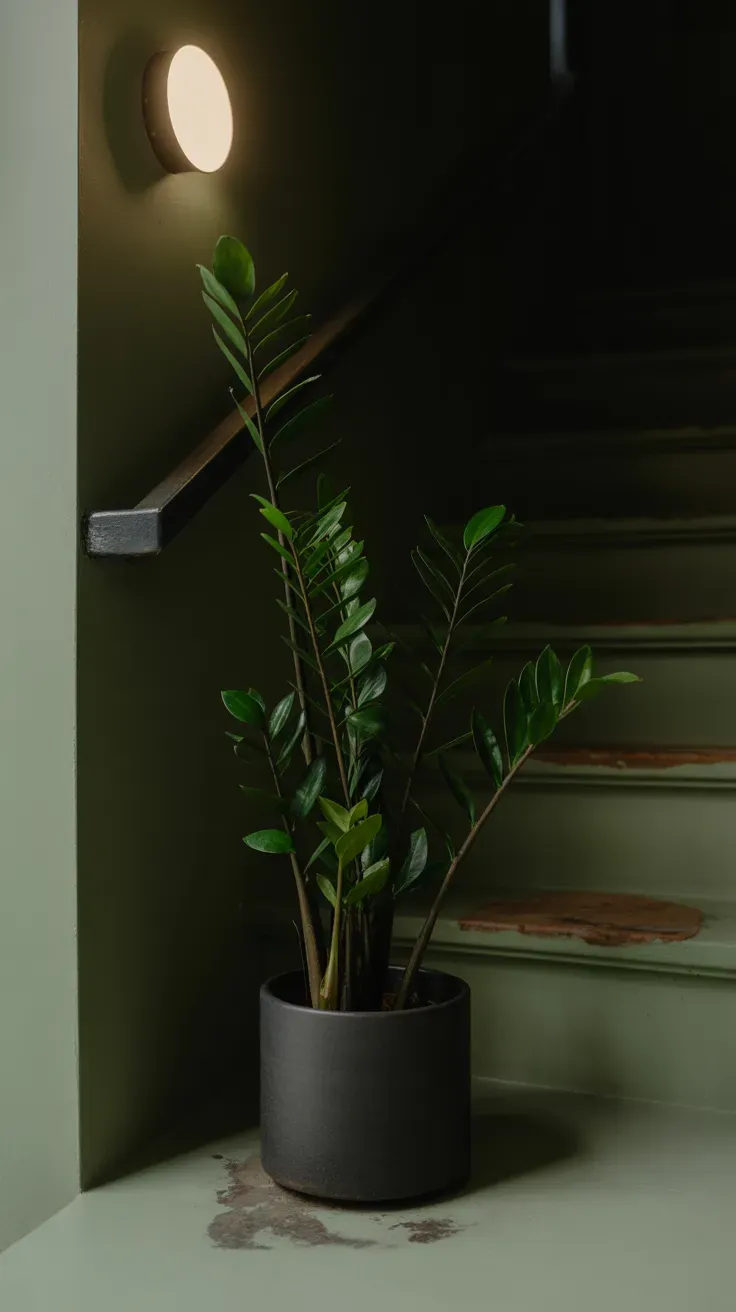
ZZ plant (Zamioculcas zamiifolia) tolerates the darkest conditions of anything on this list, genuinely surviving in corners that receive no direct or even strong indirect light at all, making it the default answer for a truly windowless stairwell.
It needs low light (even fluorescent-only conditions work) and watering only every 2-3 weeks, since its thick rhizomes store water and rot easily if overwatered in low-light, slow-growth conditions. Its glossy, waxy leaves also resist dust buildup better than matte-leafed plants, an underrated advantage in a low-traffic dark corner that rarely gets cleaned.
Pro Tip: Resist the urge to water on a fixed schedule — in genuinely low light, a ZZ plant’s growth slows dramatically, and watering on a sunny-room schedule is the single most common way people kill this otherwise nearly indestructible plant.
Internal link: low-light plants that survive genuine neglect External link: University of Florida Extension’s ZZ plant growing notes
2. Cast Iron Plant Landing for Old-Fashioned Toughness
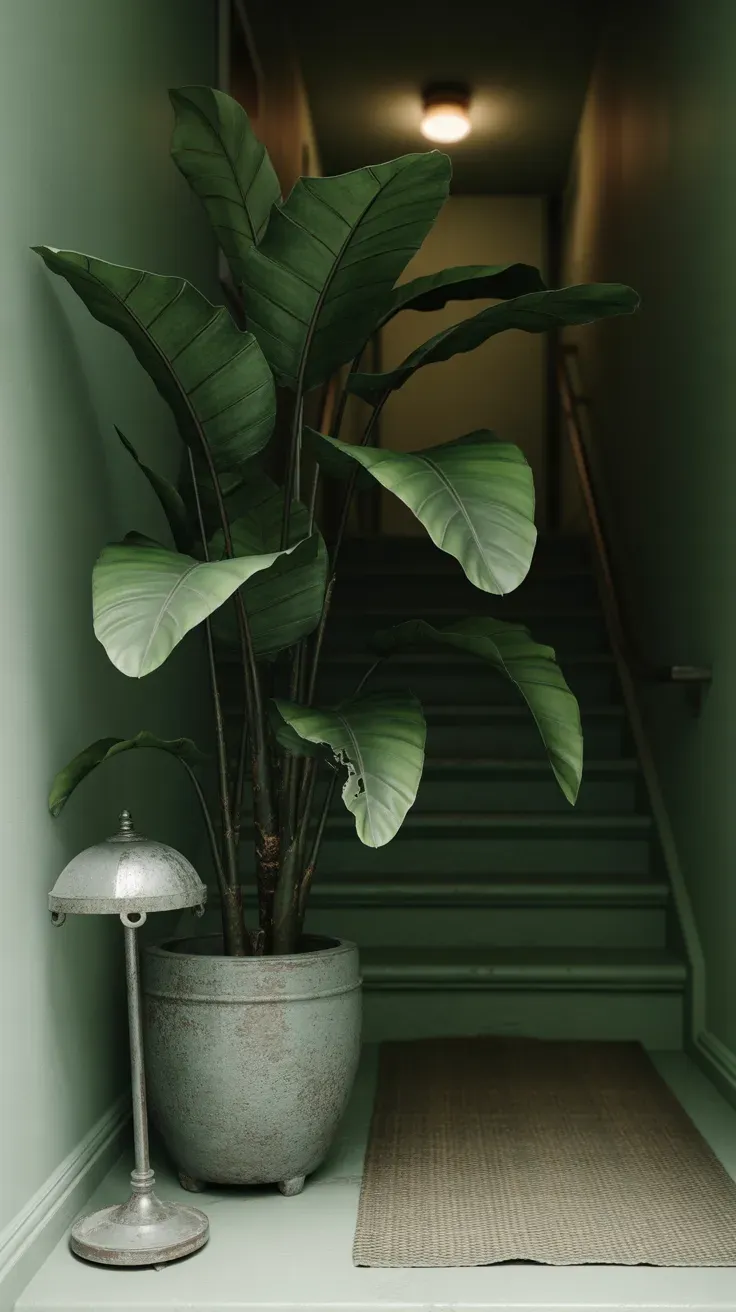
Cast iron plant (Aspidistra elatior) earned its Victorian-era popularity precisely because it tolerated the gas-lit, poorly ventilated, dim parlors of the era, and it remains just as tough in a modern dark stairwell.
It tolerates genuinely low light and needs watering only every 2-3 weeks, tolerating irregular care better than almost any houseplant available. Its broad, leathery leaves handle occasional dust wiping without damage, and it’s essentially immune to the pest problems that plague more delicate low-light plants.
Internal link: Victorian-era houseplants built for dim rooms External link: Almanac’s cast iron plant growing guide
This is the plant to reach for if you’ve already killed everything else in a dark landing corner.
3. Pothos Trailing Rail for Easy Vertical Greenery
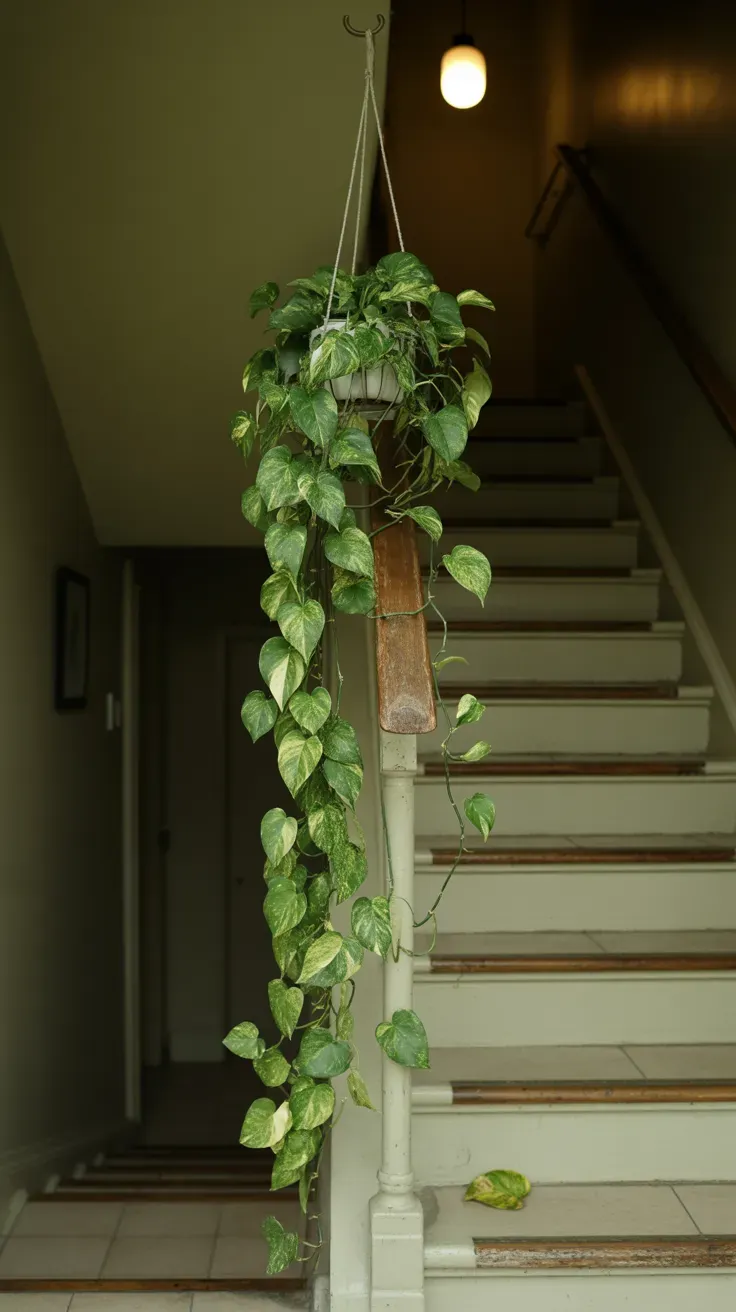
Pothos (Epipremnum aureum) tolerates low to medium light reasonably well, though its variegated patterns fade toward solid green in the darkest conditions, making it a good choice for a stairwell with at least some ambient light rather than total darkness.
It needs watering every 7-9 days, letting the top 2 inches of soil dry between waterings, and its trailing habit works well draped over a railing where it can cascade downward without needing a pole or trellis. Pinch back leggy growth occasionally to keep it full rather than sparse and stringy.
Pro Tip: If pothos variegation fades to solid green, that’s the plant signaling it needs more light, not a disease or nutrient problem — move it closer to whatever light source exists, even a hallway fixture, if the pattern matters to you.
Internal link: trailing plants for staircase railings External link: Gardeners’ World’s pothos care guide for containers
4. Snake Plant Step Row for Sculptural Low-Light Structure
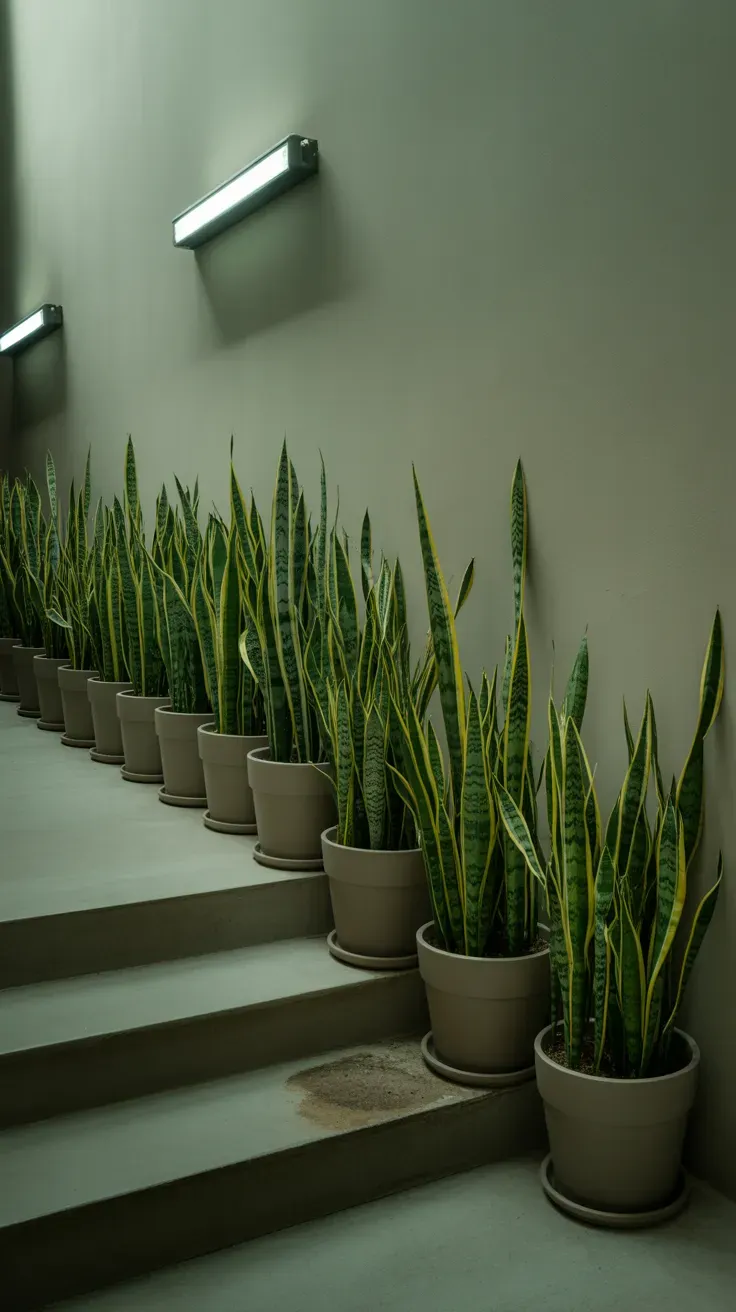
Snake plant (Sansevieria trifasciata) tolerates a genuinely wide light range, from very low to bright indirect, making it one of the more forgiving choices if a stairwell’s light levels vary between the top and bottom of the run.
It needs watering only every 3-4 weeks, letting soil dry out completely between waterings, since overwatering in low light is far more dangerous than underwatering. Its rigid, upright leaves also hold their sculptural shape without leaning toward whatever weak light source exists, unlike softer-leafed plants that visibly stretch and lean in dim conditions.
Internal link: low-light plants that survive neglect External link: RHS care sheet for Sansevieria (Dracaena trifasciata)
A repeated row of snake plants down a dim staircase reads as intentional rather than an afterthought.
5. Peace Lily Landing Accent for a Touch of Occasional Bloom
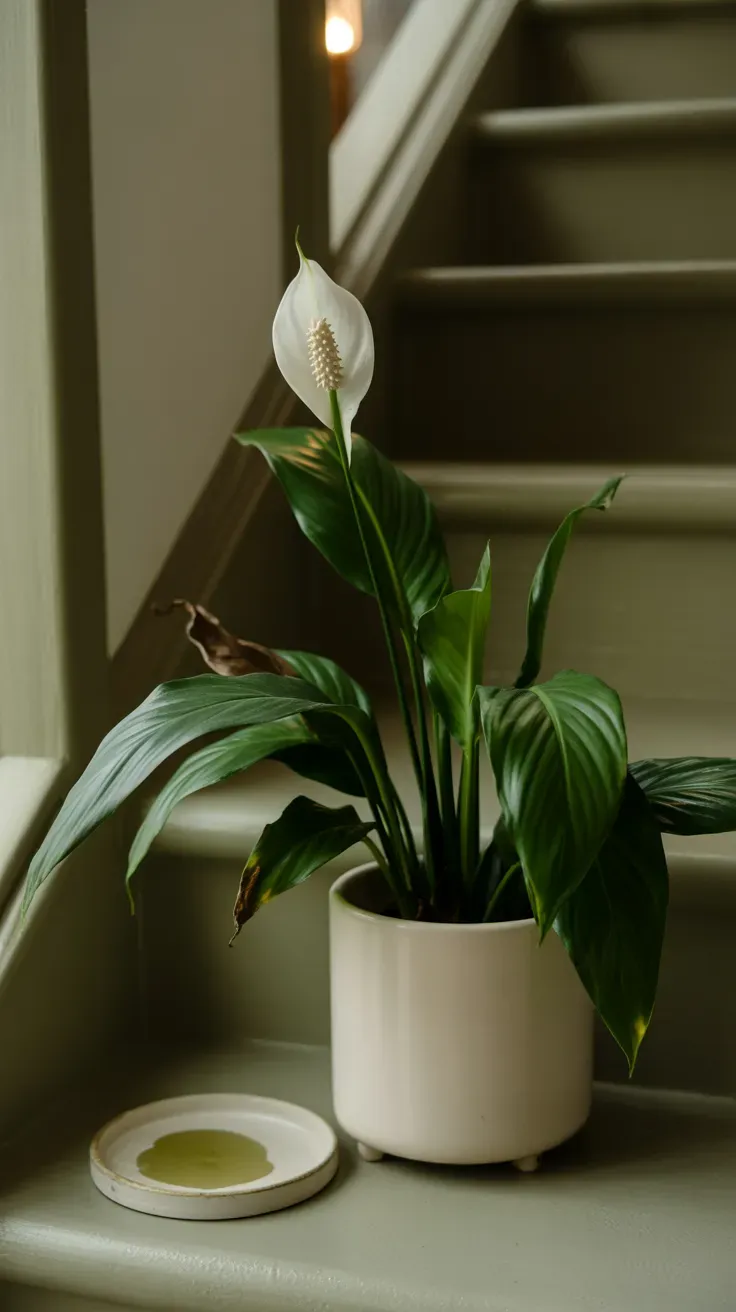
Peace lily (Spathiphyllum) is one of the few plants that still produces occasional white blooms in relatively low light, making it a rare exception to the “skip flowering plants” rule for genuinely dim spaces.
It needs low to medium indirect light and watering every 5-7 days; it’s also famously dramatic about wilting visibly when thirsty, then recovering fully within hours of watering, which makes it an easy plant to read correctly even for beginners. Avoid direct sun entirely, which scorches its leaves quickly.
Internal link: low-light plants that still occasionally bloom External link: Missouri Botanical Garden’s Spathiphyllum growing profile
6. Chinese Evergreen Display for Colorful Low-Light Foliage
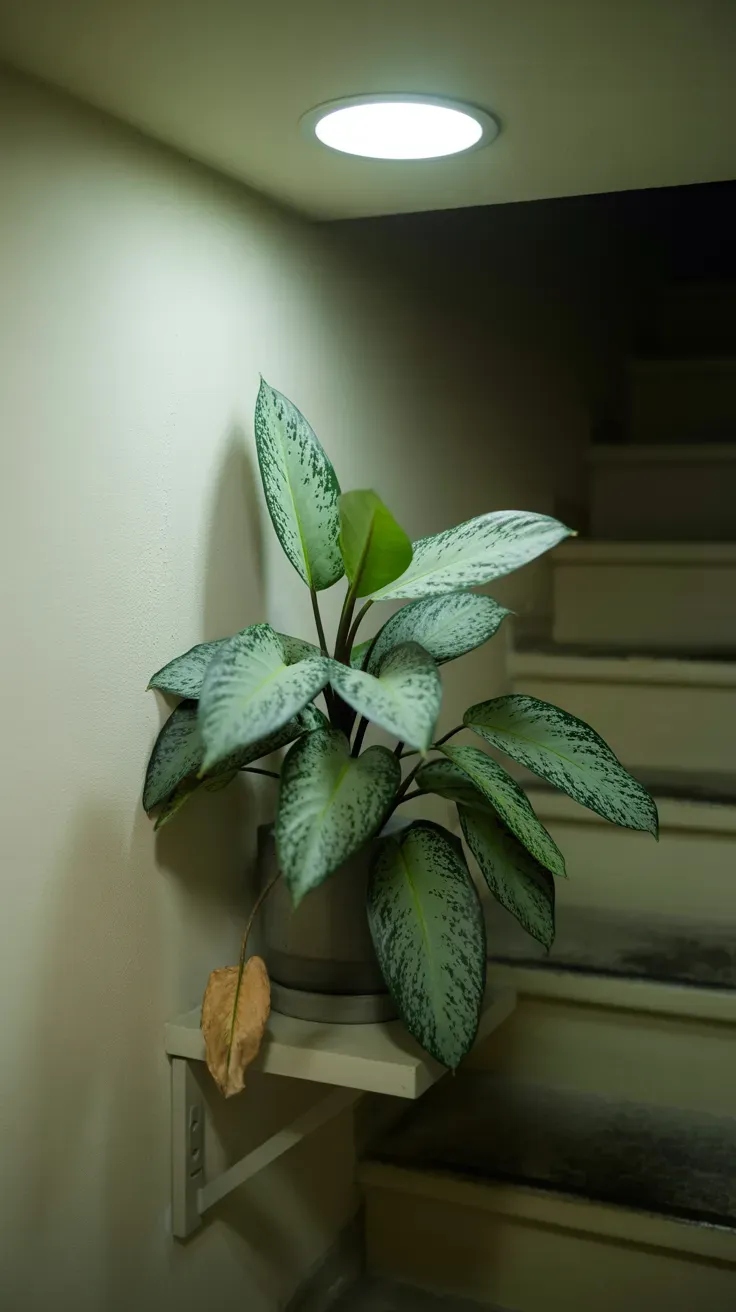
Chinese evergreen (Aglaonema) offers more foliage pattern variety than most low-light plants, with silver, pink, and deep green variegation options that add visual interest without needing flowers to do it.
It tolerates low to medium light, though the more colorful (pink or red) varieties need slightly more light than the classic silver-green types to maintain their color intensity. Water every 7-10 days, and avoid cold drafts, since it’s notably sensitive to temperature swings below 60°F, a real consideration in an unheated or drafty stairwell.
Internal link: colorful foliage plants for low-light spaces External link: University of Florida Extension’s Aglaonema growing notes
7. Philodendron Heartleaf Rail for Fast, Forgiving Trailing Growth
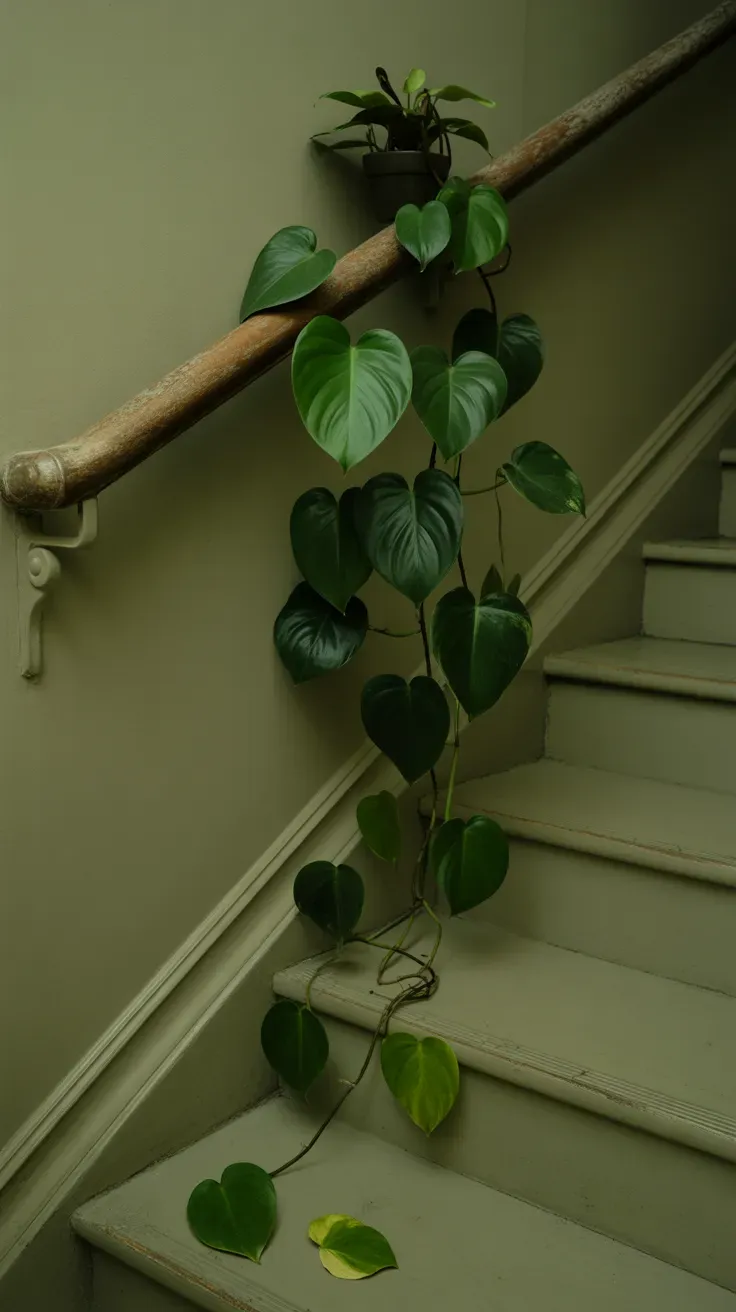
Heartleaf philodendron tolerates low light arguably better than pothos, maintaining its solid deep green color without the fading variegation issue, and it’s genuinely one of the most forgiving trailing plants for a consistently dim stairwell.
It needs watering every 7-9 days and tolerates missed waterings better than most trailing plants, showing mild leaf droop as a clear, recoverable warning sign rather than sudden collapse. Its fast growth rate means a single small starter plant fills out a railing’s length within one growing season even in relatively low light.
Pro Tip: Wipe the glossy leaves with a damp cloth monthly — in low light, every bit of light-absorbing leaf surface matters, and dust buildup measurably reduces a plant’s ability to photosynthesize in already-limited conditions.
Internal link: fast-growing trailing plants for low-light rails External link: BHG’s heartleaf philodendron care guide
8. Parlor Palm Statement for Soft Texture in Dim Corners
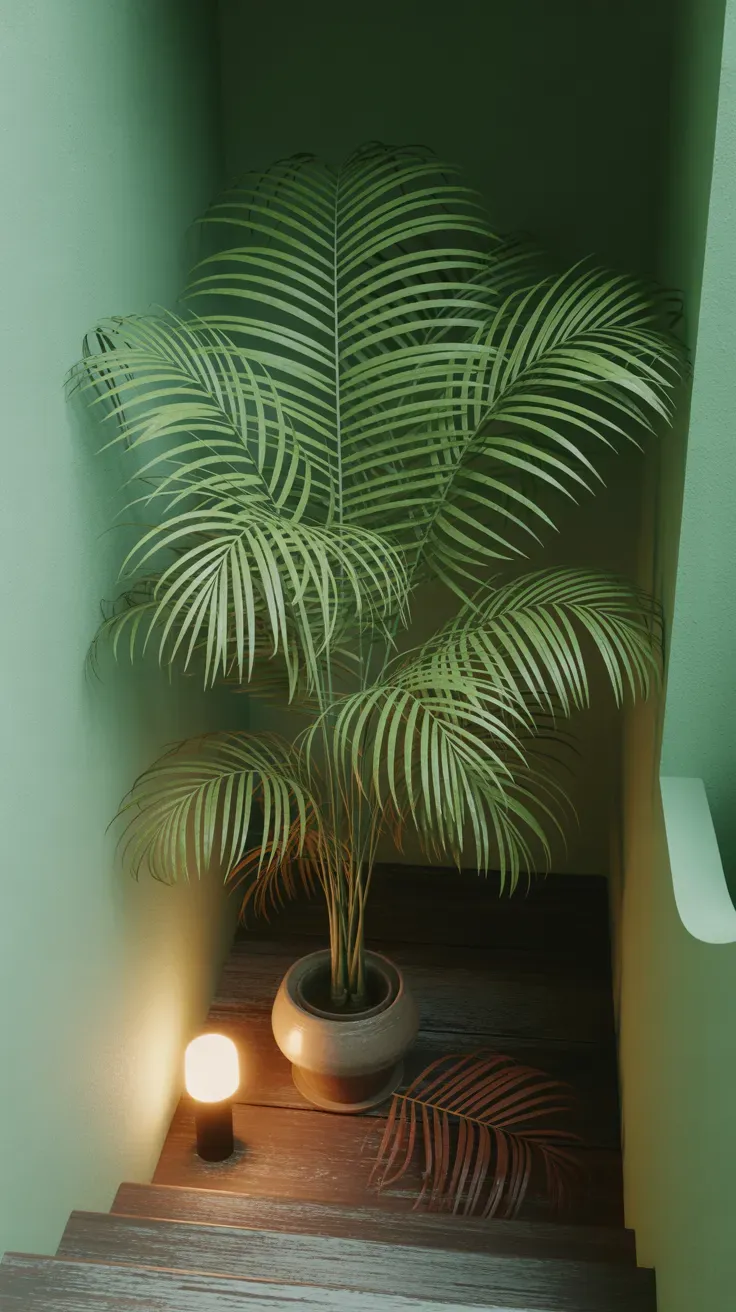
Parlor palm (Chamaedorea elegans) brings a softer, more feathery texture to a dim corner than the stiffer-leafed low-light plants on this list, and it genuinely tolerates the low light conditions of a Victorian parlor it was originally cultivated for.
It tolerates low to bright indirect light and needs watering weekly, letting the top inch of soil dry between waterings. Its slow growth rate and compact mature size (typically 2-4 feet) make it well suited to a staircase corner without eventually outgrowing the space.
Internal link: soft-textured plants for dim interior corners External link: University of Florida Extension’s parlor palm growing notes
9. Dracaena Warneckii Corner for Striped Vertical Interest
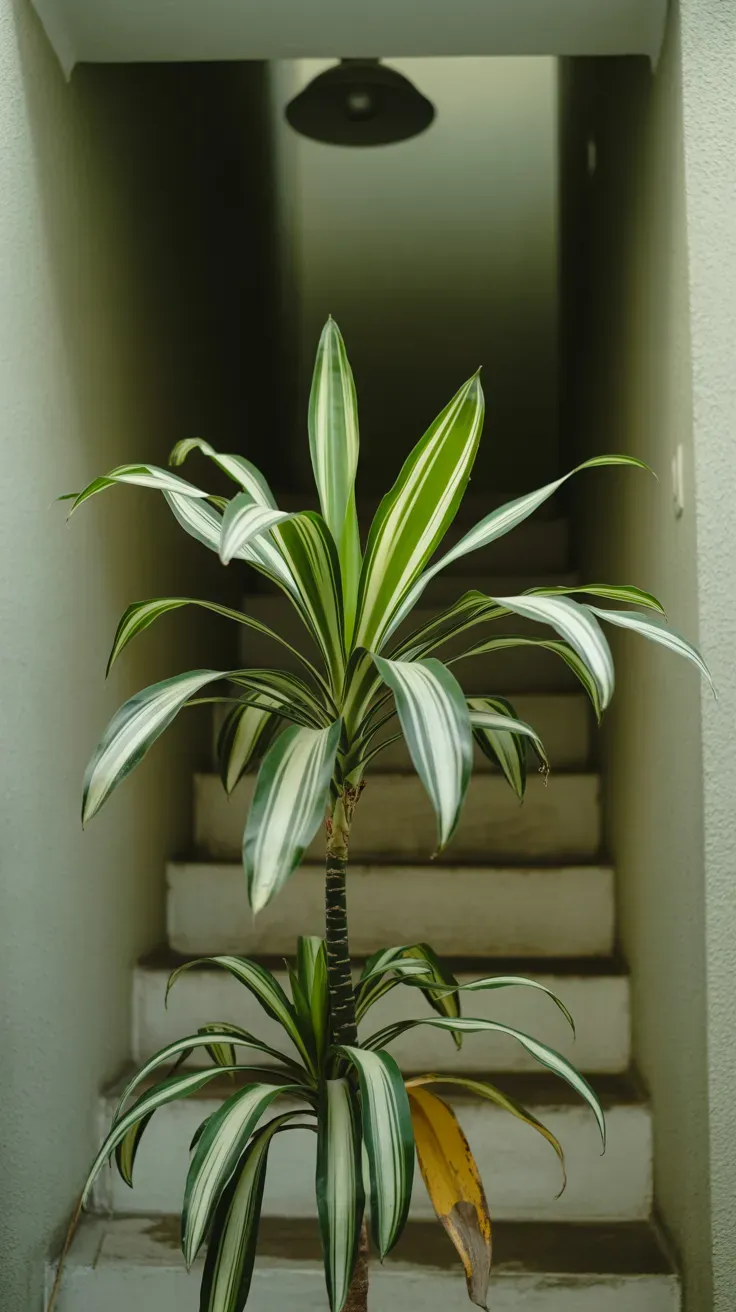
Dracaena ‘Warneckii’ brings striped white-and-green vertical interest to a dim corner, its architectural upright form offering more structure than a rounded, bushy plant would in a tight stairwell space.
It tolerates low to medium light and needs watering every 10-14 days, similar to other dracaena varieties, and it’s sensitive to fluoride in tap water, so use filtered water if brown leaf tips appear despite otherwise correct care. Its slow growth means minimal maintenance once positioned.
Internal link: striped and variegated dracaena varieties for low light External link: Almanac’s dracaena growing and dividing guide
10. Maidenhair Fern Humidity Spot for Delicate Texture Where It’s Feasible
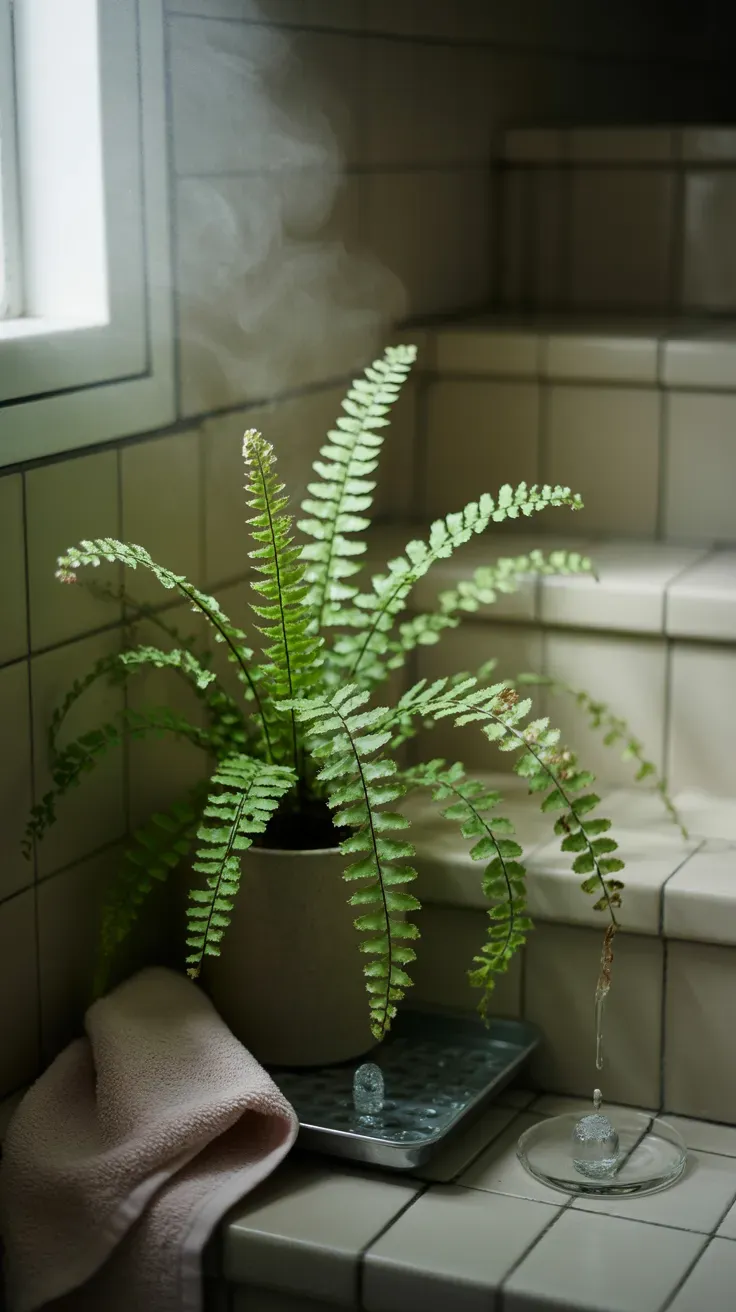
Maidenhair fern is genuinely more demanding than most plants on this list, but if your dim stairwell happens to be near a bathroom or humid area, its delicate, lacy fronds add a texture nothing else here can match.
It needs medium light (no direct sun) and consistently moist soil with high humidity, ideally 50%+, watering every 3-4 days and misting regularly. This is not a forgiving, neglect-tolerant plant like the others on this list, so it’s worth attempting only if the humidity and moisture consistency genuinely fit your specific spot.
Important: If your dim stairwell is dry rather than humid, skip this plant entirely — it will decline steadily regardless of watering diligence without adequate ambient moisture, and the frustration isn’t worth it compared to the tougher options elsewhere on this list.
Internal link: ferns that need genuine humidity versus tolerant alternatives External link: Missouri Botanical Garden’s maidenhair fern growing profile
11. Cast Concrete Grow Light Shelf for Genuinely Windowless Stairwells
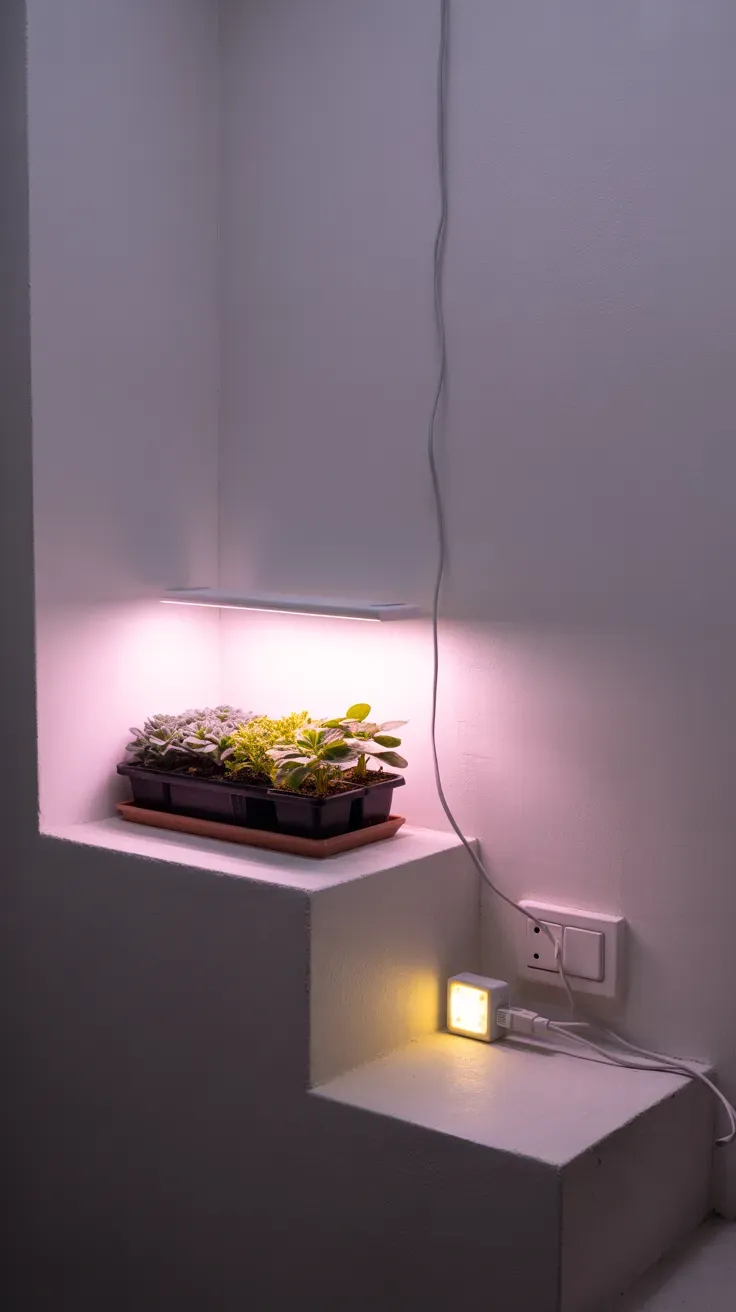
When a stairwell genuinely has no windows or ambient light source at all, no plant on this list will survive indefinitely without supplemental light, making a small grow light shelf the honest solution rather than a workaround.
Install a slim LED grow light rated for low-light houseplants, set on a timer for 10-12 hours daily, and choose plants that tolerate the closer proximity grow lights typically require, like pothos or philodendron. This setup costs $30-60 for a basic shelf-mounted light and timer, considerably less than repeatedly replacing dying plants every few months.
Internal link: supplemental lighting for plants in windowless spaces External link: RHS guide to using grow lights for indoor plants
If you’ve tried and failed with “low-light” plants in a truly dark space, this is the actual fix, not a better plant choice.
12. Aspidistra Trio Grouping for Repeated Dark-Corner Structure
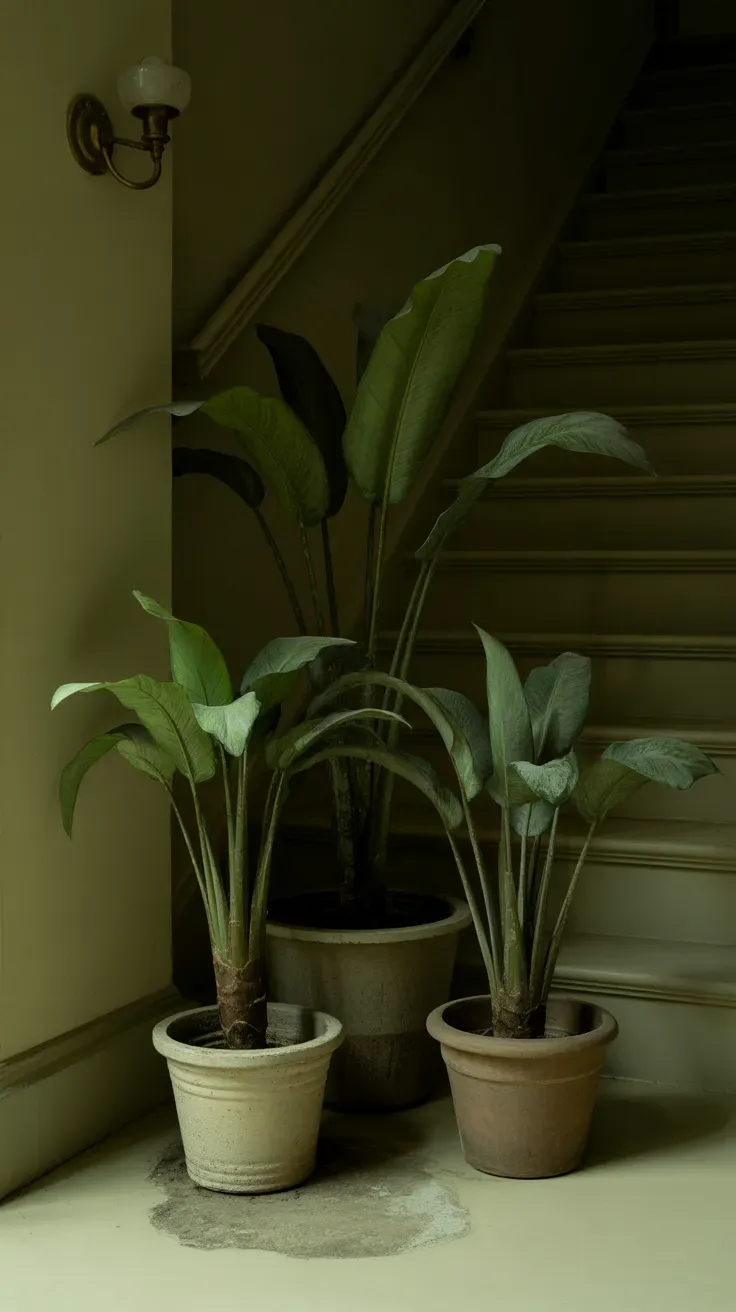
Grouping three cast iron plants together, rather than spacing single specimens down a staircase, creates a denser, more deliberate green presence in the single darkest corner of a stairwell where individual plants might otherwise look sparse.
They need genuinely low light and watering only every 2-3 weeks, and clustering them together also makes maintenance more efficient, since you’re checking and watering one grouped area rather than several individually scattered pots. Vary the pot heights slightly for visual interest despite using the same plant species throughout.
Internal link: grouping tough plants for dark corner impact External link: Almanac’s cast iron plant growing guide
13. Spider Plant Hanging Feature for Elevated Low-Light Greenery
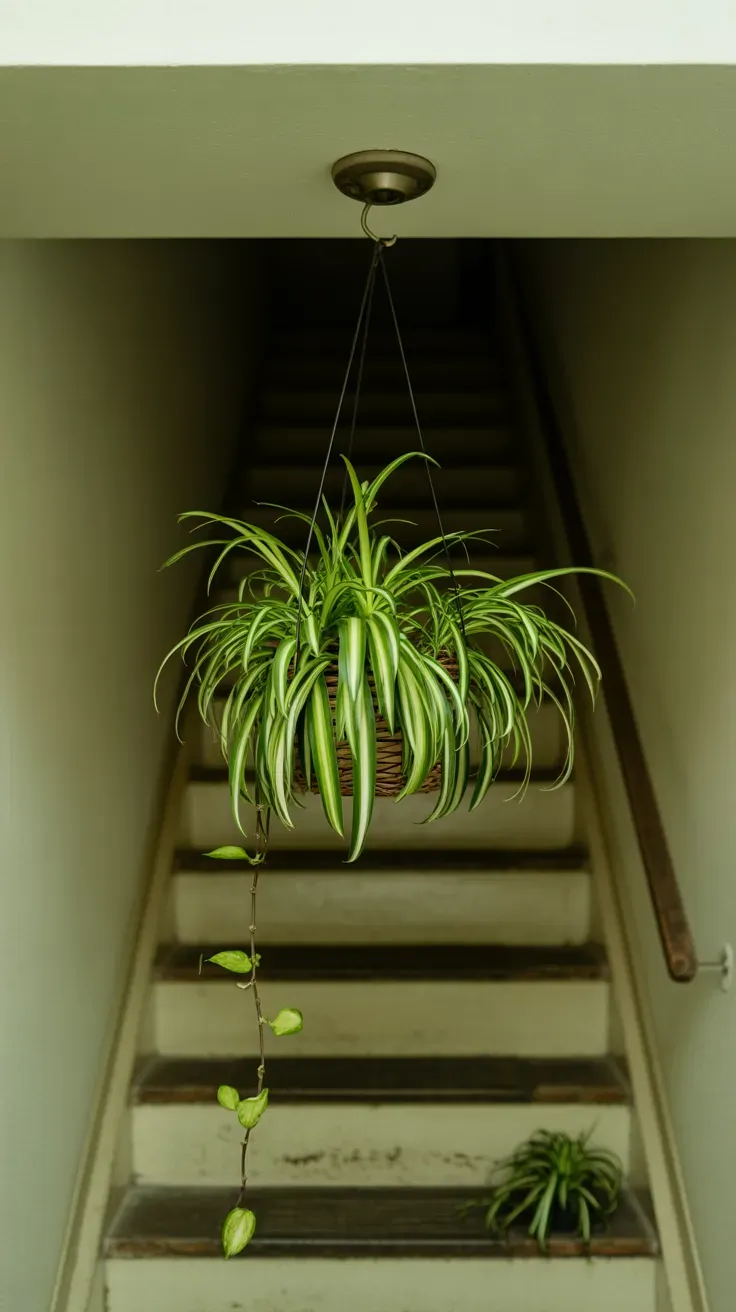
Spider plant tolerates low to medium light better than its reputation as a bright-room plant suggests, and hanging it uses the vertical space a dim stairwell often has more of than usable floor or shelf area.
It needs watering every 7-9 days and produces trailing plantlets even in moderate light, though growth and plantlet production slow noticeably compared to a brighter spot. Hang it where at least some ambient light reaches it, since even this relatively tolerant plant will decline in absolute darkness over time.
Internal link: hanging plants for stairwells with limited floor space External link: RHS growing guide for Chlorophytum comosum
14. Rabbit’s Foot Fern Landing for Furry Rhizome Texture
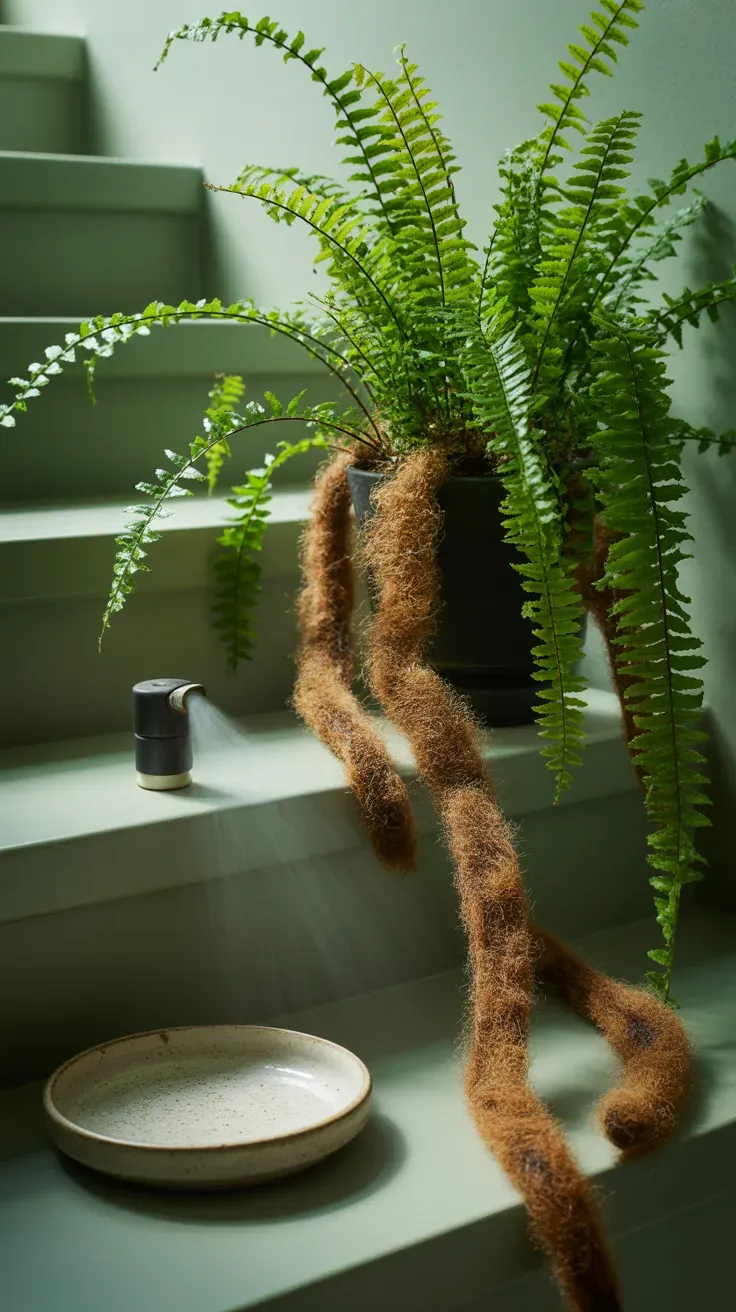
Rabbit’s foot fern brings genuinely unusual texture to a dim landing, its furry brown rhizomes creeping visibly over the pot’s rim, offering visual interest beyond the typical smooth-leaf plants that dominate low-light lists.
It needs medium indirect light (no direct sun) and consistently moist soil with moderate humidity, watering every 4-5 days. It’s more forgiving of average home humidity than maidenhair fern, making it a reasonable middle-ground choice for a dim spot that isn’t quite humid enough for the most delicate ferns.
Internal link: unusual textural ferns for statement low-light displays External link: SF Gate Home Guide’s rabbit’s foot fern care tips
15. Calathea Statement Corner for Patterned Drama in Dim Light
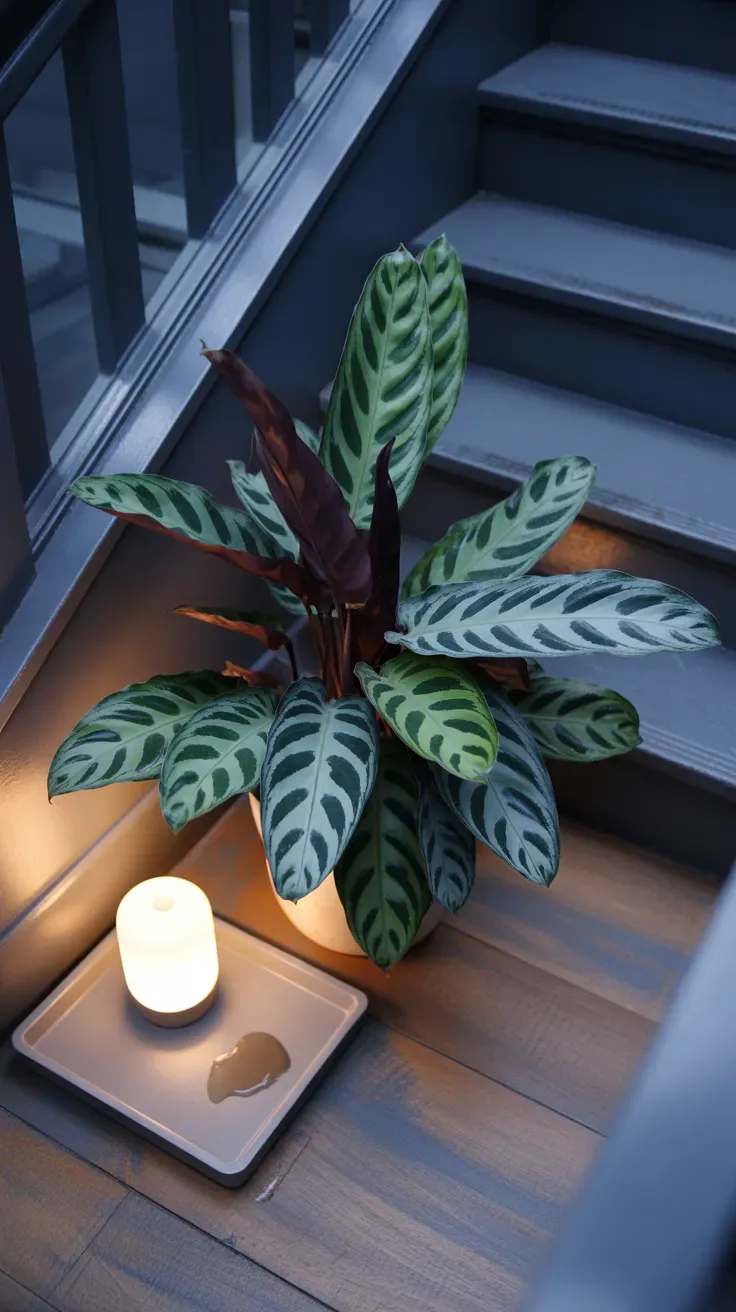
Calathea’s dramatically patterned leaves bring genuine visual drama to a dim corner without needing bloom color to do the visual work, making it one of the more striking choices for low light despite its reputation for being fussier than pothos or snake plant.
It needs medium indirect light (no direct sun, which fades the pattern) and consistently moist soil with higher humidity than most stairwells naturally offer. Mist regularly in dry conditions, and expect the leaves to fold upward in the evening, a normal behavior rather than a sign of distress.
Internal link: patterned foliage plants for dim statement corners External link: RHS growing guide for Calathea
16. ZZ Raven Dark-Leaf Accent for a Moodier Twist on a Classic
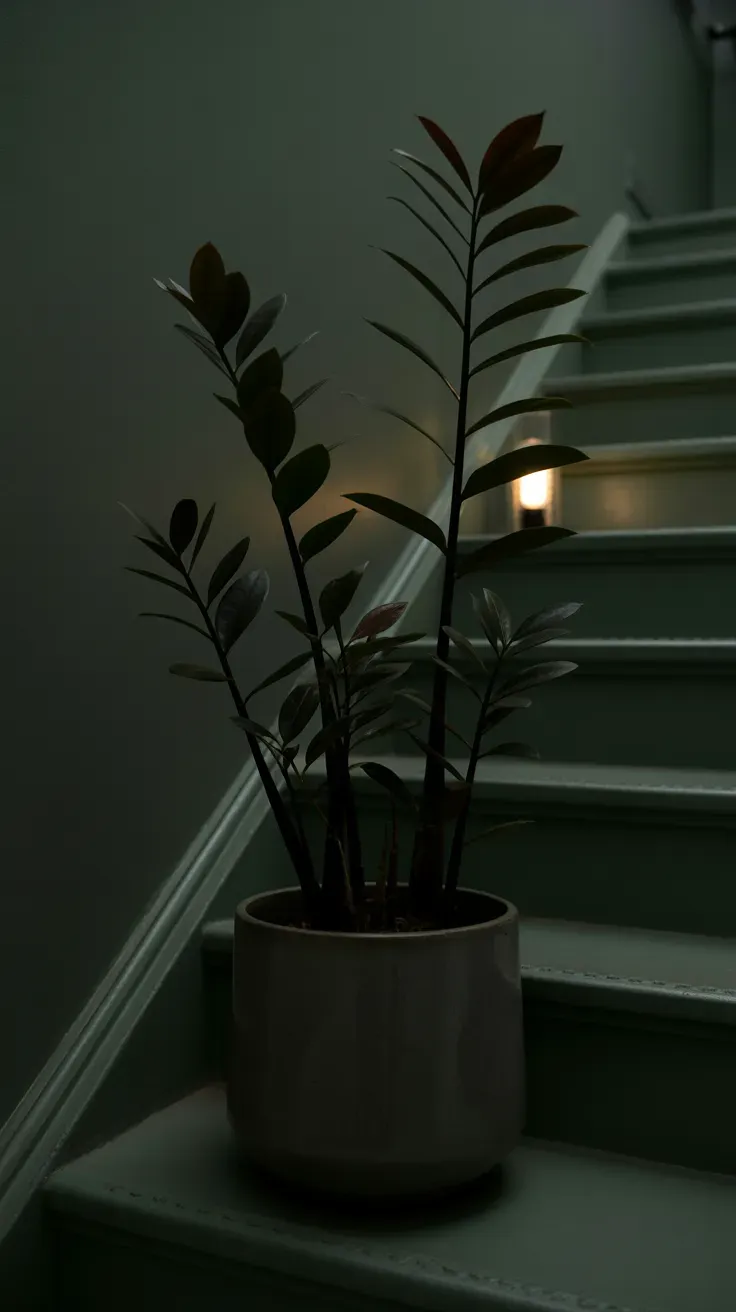
ZZ Raven shares its parent species’ remarkable low-light tolerance but emerges with dramatic near-black foliage, offering a moodier, more contemporary alternative to the standard glossy green ZZ plant for anyone wanting a darker aesthetic statement.
It tolerates the same very low light and watering schedule (every 2-3 weeks) as standard ZZ plant, with new leaves actually emerging lime green before darkening to near-black over several weeks, a genuinely striking process to watch. Pair it with a matte black pot for maximum dramatic contrast against a pale wall.
Pro Tip: Position ZZ Raven against a lighter-colored wall rather than a dark one — its near-black leaves actually disappear visually against dark paint, undermining the dramatic contrast that makes this variety worth choosing over standard ZZ plant.
Internal link: dark foliage plants for moody low-light corners External link: University of Florida Extension’s ZZ plant growing notes
17. Philodendron Brasil Rail Trail for Colorful Low-Light Variegation
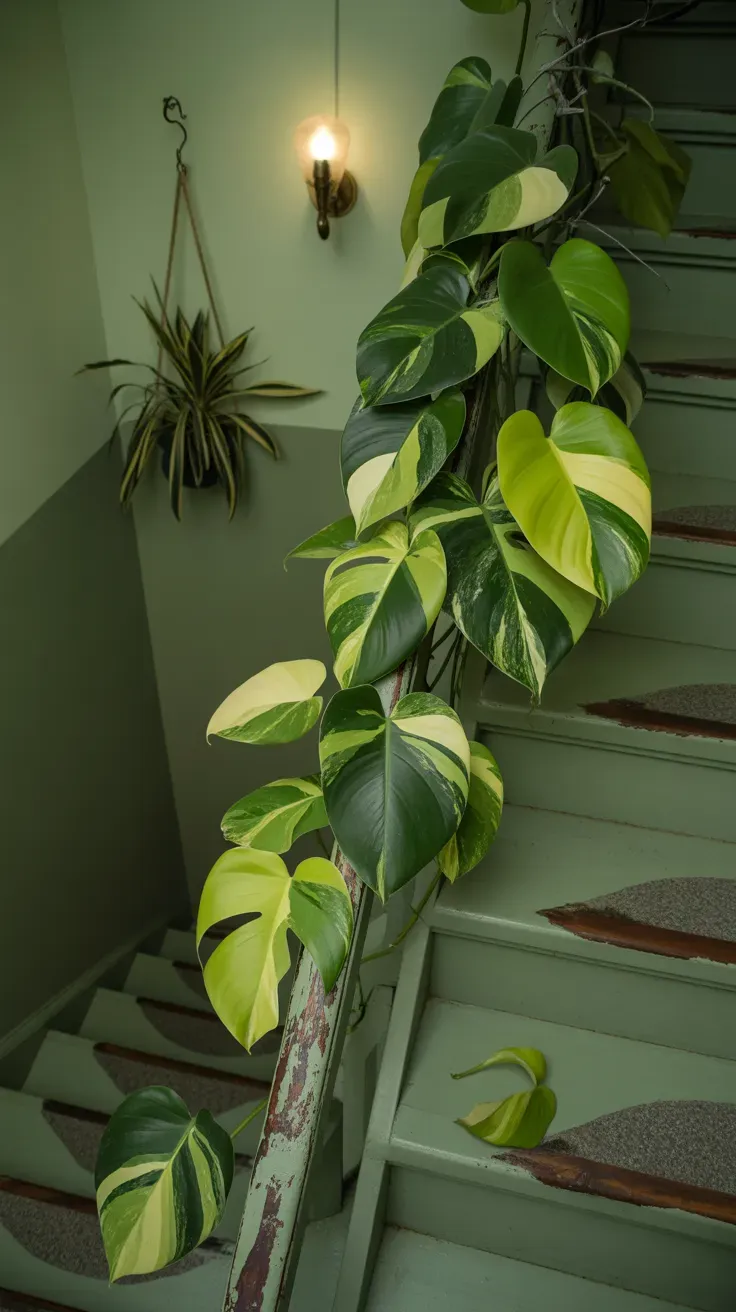
Philodendron ‘Brasil’ holds its lime-green and dark-green variegated stripe pattern better in low light than pothos manages, making it the better choice specifically when color variation matters more than absolute darkness tolerance.
It needs low to medium light and watering every 7-9 days, similar to heartleaf philodendron’s care needs, with the added benefit of more visual interest from its consistent striping pattern. Like other philodendrons, it’s genuinely forgiving of missed waterings and inconsistent low-light conditions.
Internal link: variegated trailing plants that hold color in low light External link: BHG’s philodendron ‘Brasil’ care guide
18. Artificial Skylight Tube Bed for a Structural Light Solution
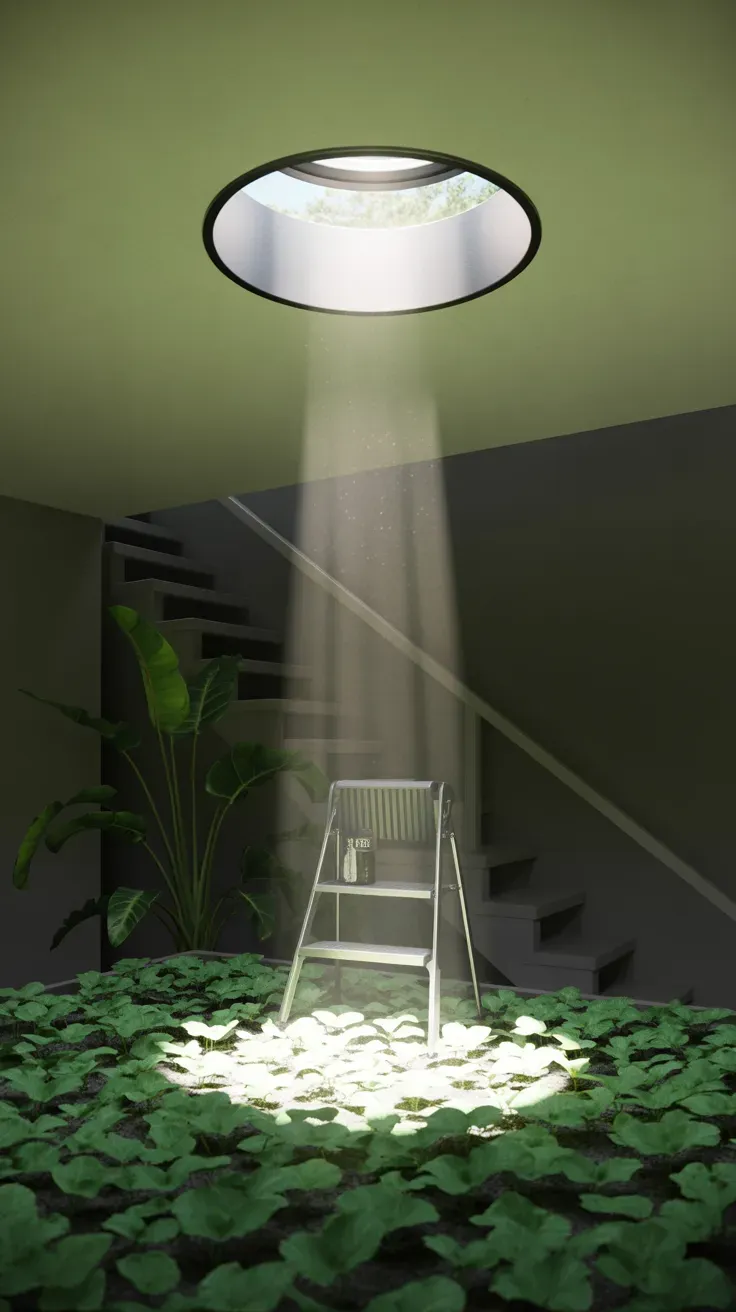
A sun tunnel or tubular skylight, professionally installed through the roof or upper floor, brings genuine natural daylight into an interior stairwell that has no windows at all, solving the light problem at its structural root rather than working around it.
This is a genuine home improvement project costing $300-800 installed, considerably more than any plant or grow light solution, but it opens up the full range of plants (including flowering species) that a windowless space otherwise couldn’t support. Position plants directly beneath the tunnel’s light pool, since the illuminated area is typically concentrated rather than room-wide.
Internal link: structural daylight solutions for windowless interior spaces External link: BHG’s guide to tubular skylight installation basics
This is the most involved idea on the list, but it’s the only one that turns a truly dark stairwell into genuinely bright growing space.
19. Moss Terrarium Step Accent for Low-Light Ground-Level Interest
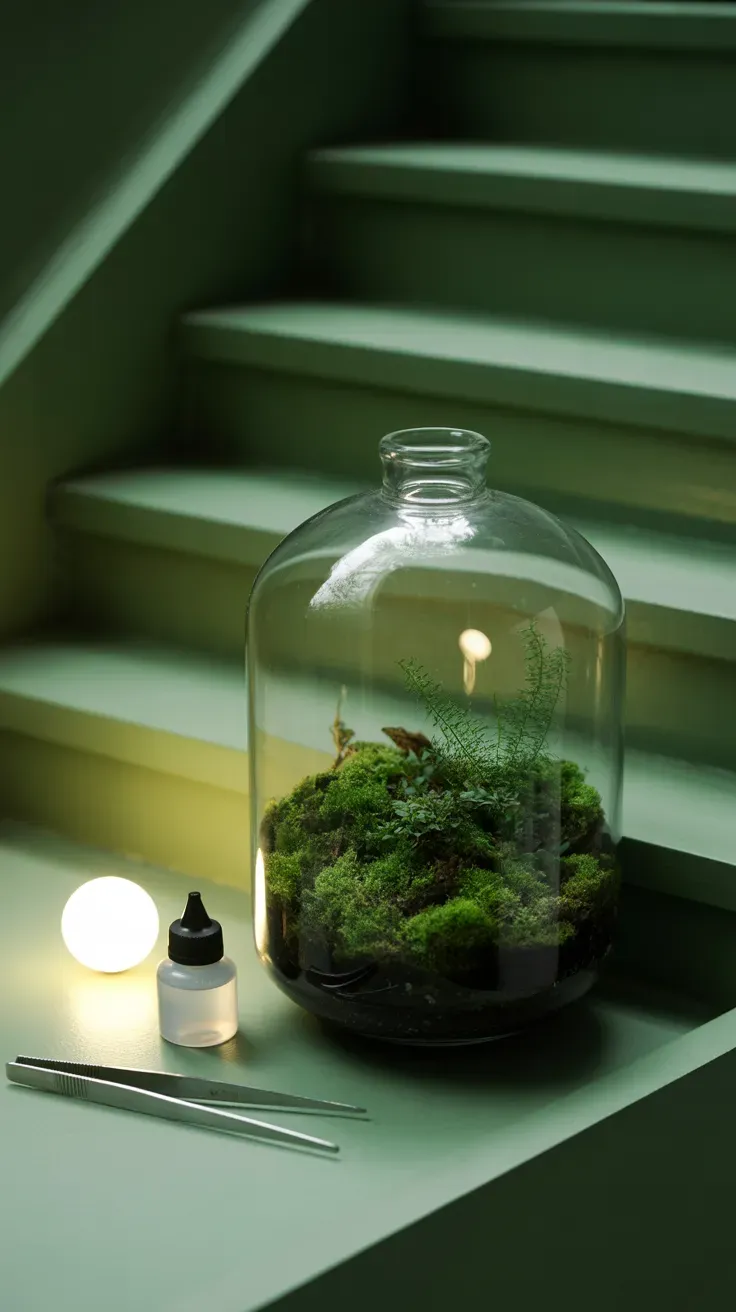
An enclosed glass terrarium creates and holds its own humid microclimate, allowing moss and small ferns to thrive on a single dim step even when the surrounding stairwell air is too dry and dark to support them as open plants.
Use small mosses and miniature ferns suited to a closed, humid environment, misting occasionally and needing only low ambient light since the enclosed glass concentrates what little light reaches it. This works as a single contained accent piece rather than a full planting solution, but it succeeds in genuinely low light where an open pot of the same plants would fail.
Internal link: terrarium plants for genuinely low-light enclosed spaces External link: Almanac’s guide to closed terrarium basics
20. Mirror-Bounced Light Corner for Maximizing What Little Light Exists
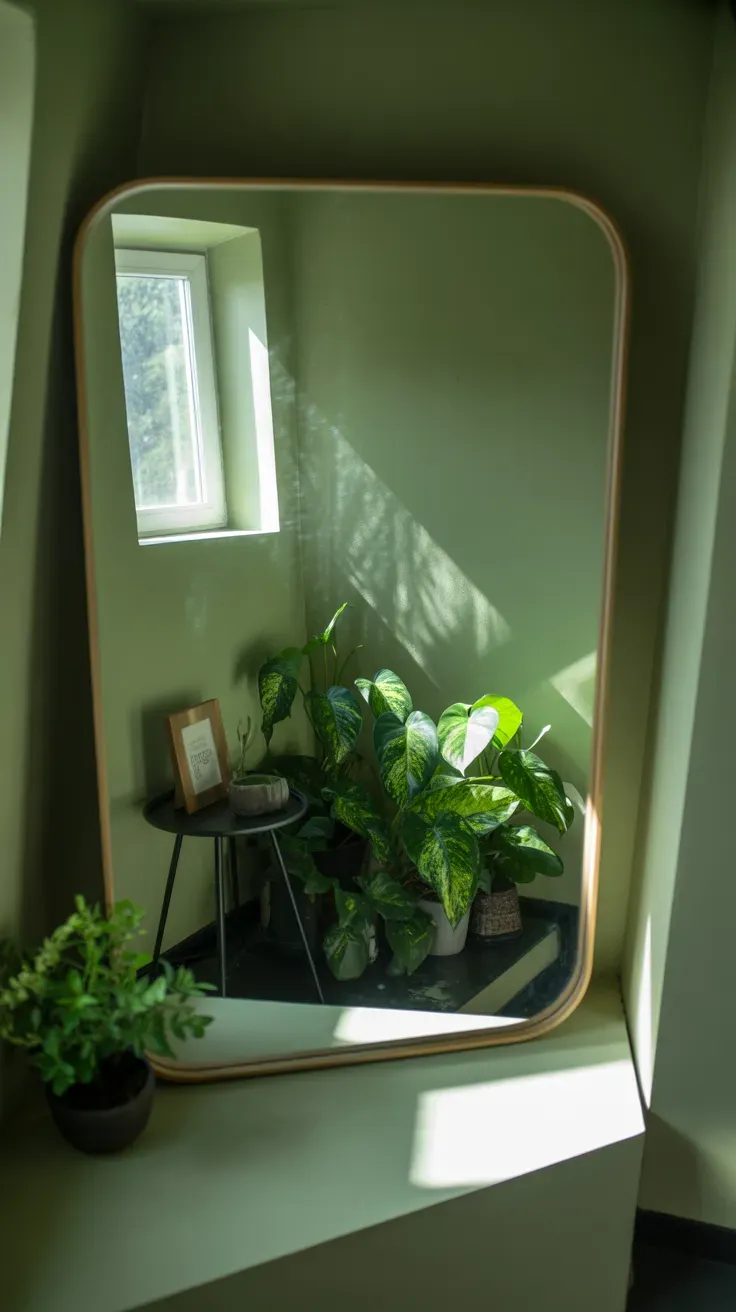
Positioning a large mirror to reflect whatever small amount of natural light exists (from a distant window, a skylight, or even a doorway) genuinely increases the usable light reaching plants in a dim corner, without any electrical or structural work required.
Mount a mirror directly opposite the closest light source, angled to bounce light toward your plant grouping rather than randomly around the room, and choose plants like pothos or philodendron that respond well to the modest light boost this technique provides. This won’t turn a windowless space into a bright one, but it can meaningfully improve a dim-but-not-dark stairwell’s plant-growing potential.
Pro Tip: Test the mirror’s placement over a few days before committing to a permanent mount — light angles shift throughout the day and across seasons, and a slightly different position often captures noticeably more usable light.
Internal link: maximizing natural light for low-light plant care External link: Gardeners’ World’s guide to light requirements for houseplants
Closing a dim staircase with this simple, no-cost technique can be the difference between plants that merely survive and ones that genuinely thrive.
Getting Started With Low-Light Staircase Gardens
The easiest first step is honestly assessing your stairwell’s actual light level, not what you assume it might be — hold a book at plant height and see if you can read it comfortably without artificial light, since that rough test separates “low light” from genuinely lightless space. The most common beginner mistake is choosing a plant based on appearance rather than confirmed low-light tolerance, then blaming watering or humidity when the real issue was insufficient light from the start.
For your first plant, get one ZZ plant or cast iron plant (the two most forgiving options on this list), a simple ceramic or plastic pot with drainage, and well-draining potting soil rather than a moisture-retentive mix suited to sunnier plants.
Realistically, expect low-light plants to grow slowly, often producing just a few new leaves over several months rather than the rapid growth a sunny-room plant might show, so patience matters more here than anywhere else on a houseplant journey.
Frequently Asked Questions
What plants survive in a completely dark stairwell with no windows?
No living plant survives indefinitely with zero light at all; even the most tolerant options like ZZ plant and cast iron plant need some ambient light, even indirect fluorescent or hallway lighting. For genuinely windowless spaces, a small supplemental LED grow light on a 10-12 hour timer is the realistic solution rather than searching for an impossibly tolerant plant.
How often should I water plants in a low-light staircase?
Low-light plants need significantly less frequent watering than sun-loving plants, typically every 2-4 weeks for the most tolerant species like ZZ plant and snake plant, since slower growth means slower water use. Overwatering, not underwatering, is the most common cause of low-light plant failure, so always check soil dryness before adding water regardless of a fixed schedule.
Can I grow flowering plants in a dark stairwell?
Generally no, since blooming requires more light energy than foliage growth alone, and most flowering plants decline or stop producing flowers entirely in genuinely low light. Peace lily is a rare exception that still blooms occasionally in low to medium light, though even it flowers more reliably with somewhat brighter conditions.
What’s the difference between low light and no light for houseplants?
Low light means dim but present ambient light, such as a north-facing window or a room lit only by reflected daylight from another space, while no light means a genuinely windowless interior space with no natural light source at all. Most “low-light tolerant” plants, including pothos and philodendron, still need the former; only ZZ plant and cast iron plant meaningfully approach true no-light tolerance, and even they benefit from some ambient light.
How do I know if my stairwell has enough light for any plants at all?
Try the shadow test: hold your hand about a foot above where you’d place a plant, and if it casts a distinct, defined shadow, there’s likely enough light for most low-light tolerant species. If no shadow forms at all, or the space requires artificial light to see clearly during the day, you’re likely dealing with genuinely insufficient natural light and should consider a grow light solution instead.
A Few Final Thoughts
Any combination of these 20 staircase garden ideas proves that a dark hallway or dim stairwell doesn’t have to stay permanently plant-free — the trick is matching genuine low-light tolerance to your space’s actual conditions rather than hoping a pretty plant will adapt. Start with the most forgiving options, ZZ plant and cast iron plant, before experimenting with anything more demanding, since success with the toughest species builds the confidence and light-reading skills needed for trickier choices later. If your space is truly windowless, don’t fight that reality with plant choice alone — a small grow light or reflected-light solution solves the actual problem more reliably than searching for a mythical plant that needs no light at all. Start with one plant in your dimmest corner, watch how it responds over a few weeks, and you’ll likely learn more about your home’s real light levels than any light meter could tell you.