
Between snack requests and shoe-tying emergencies, most parents don’t have bandwidth to research whether every plant near the front steps is safe for a toddler who puts everything in their mouth. I redesigned my sister’s entryway after her two-year-old took a curious bite of a lily leaf (harmless in that case, but a genuine scare), and the swap to confirmed non-toxic plants and sturdy, tip-resistant pots meant she stopped double-checking every time the kids ran past. This list covers 26 kid-safe staircase garden ideas built around genuinely non-toxic plants and containers that survive scooters, soccer balls, and everyday chaos. Each one comes with the specific safety details and durability notes that separate a display that lasts from one that becomes a hazard or a casualty within a week. Ready? Let’s explore all 26 of them.
Quick Answer: For toddlers and young kids, heavy, low, wide pots with non-toxic plants like spider plant or marigold resist tipping and survive rough contact best. Always verify any plant against the Poison Control or ASPCA toxic plant lists before bringing it home, since many popular staircase plants (foxglove, lily-of-the-valley, oleander) are genuinely dangerous if ingested.
Why Kid-Safe Staircase Gardens Are Worth Your Time
Building a staircase garden around genuine child safety means you can stop supervising every trip up and down the steps with one eye on the plants, which matters enormously for busy parents managing multiple things at once. In practice, choosing non-toxic plants and sturdy containers from the start eliminates the anxious research scramble that happens after a curious toddler has already taken a bite or a leaf.
The practical benefits extend past peace of mind. Sturdy, low, wide containers that resist tipping also tend to survive scooters, bikes, and general kid traffic better than delicate options, and many non-toxic plants happen to be some of the toughest, most forgiving choices for busy households without much time for careful maintenance. The lesser-known fact most parents miss: “non-toxic” doesn’t mean unlimited consumption is fine — even safe plants can cause mild stomach upset in large quantities, so keeping plants generally out of easy grabbing reach for the youngest kids still matters even with confirmed safe choices.
This approach is ideal for parents of toddlers and young children, households expecting frequent kid traffic near the entrance, and anyone who’s already had a minor plant-related scare and wants to redesign with real safety in mind.
At a Glance
- Marigold and spider plant are genuinely non-toxic and tolerate rough handling well.
- Heavy, low, wide pots resist tipping from bikes, scooters, and running kids far better than tall ones.
- Elevated or rail-mounted options keep more delicate plants out of toddler reach entirely.
- Always verify any plant against Poison Control’s database before bringing it home.
- Rounded-edge, unbreakable containers reduce injury risk if a child falls near the steps.
26 Kid-Safe Staircase Garden Ideas Compared
| Idea | Age Group | Toxicity | Container Sturdiness | Difficulty |
| Spider Plant Sturdy Pots | Toddlers & up | Non-toxic | Heavy ceramic | Easy |
| Marigold Border Row | All ages | Non-toxic | Ground bed | Easy |
| Sunflower Statement Pair | All ages | Non-toxic | Heavy ceramic | Easy |
| Herb Touch-and-Smell Trough | Toddlers & up | Non-toxic (most) | Heavy terracotta | Easy |
| Elevated Rail Planters | Toddlers & up | Non-toxic (varies) | Wall-mounted | Easy |
| Rubber Mulch Bed Border | All ages | N/A | Ground bed | Easy |
| Snapdragon Color Row | All ages | Non-toxic | Medium terracotta | Easy |
| Areca Palm Statement Pots | Toddlers & up | Non-toxic | Heavy ceramic | Easy |
| Zinnia Cutting Garden | All ages | Non-toxic | Ground bed | Easy |
| Round Rubber Planter Set | Toddlers & up | Varies | Unbreakable rubber | Easy |
| Boston Fern Shade Corner | Toddlers & up | Non-toxic | Heavy concrete | Easy |
| Strawberry Patch Steps | All ages | Edible/safe | Ground bed | Moderate |
| Weighted Concrete Cube Planters | Toddlers & up | Varies | Solid concrete | Easy |
| Basil and Thyme Kitchen Steps | Toddlers & up | Non-toxic | Medium terracotta | Easy |
| Chalkboard Plant Tag Garden | All ages | Educational | Ground bed | Easy |
| Cast Iron Plant Low-Light Corner | Toddlers & up | Non-toxic | Heavy ceramic | Very easy |
| Nasturtium Edible Climbing Vine | All ages | Edible/safe | Ground bed | Easy |
| Bird’s Nest Fern Cluster | Toddlers & up | Non-toxic | Heavy ceramic | Easy |
| Rounded River Rock Border | All ages | N/A | Ground bed | Easy |
| Petunia Weighted Window Boxes | Toddlers & up | Non-toxic | Heavy fiberglass | Easy |
| Sensory Lamb’s Ear Border | Toddlers & up | Non-toxic | Ground bed | Easy |
| Parlor Palm Landing Feature | Toddlers & up | Non-toxic | Heavy ceramic | Easy |
| Cherry Tomato Container Garden | School age & up | Edible/safe | Heavy ceramic | Moderate |
| Rope-Barrier Raised Bed | All ages | Varies | Solid wood | Moderate |
| Butterfly Garden Milkweed Bed | School age & up | Mild toxicity, low risk | Ground bed | Moderate |
| Kid-Height Watering Station | All ages | N/A | N/A | Easy |
1. Spider Plant Sturdy Pots for Nearly Indestructible Greenery
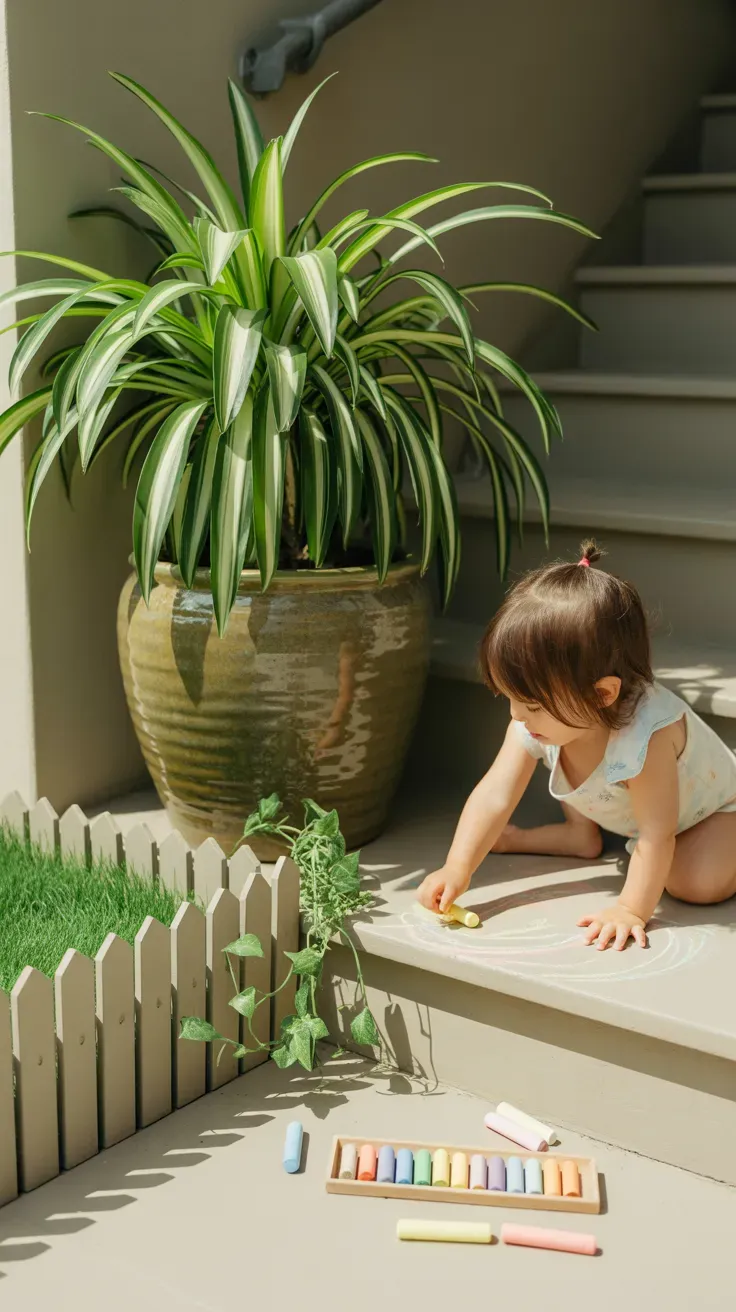
Spider plant (Chlorophytum comosum) is confirmed non-toxic to children according to Poison Control, and its tough, fibrous leaves tolerate the occasional grab, tug, or stray soccer ball better than most trailing plants.
Choose a heavy glazed ceramic pot, at least 12 inches wide, which resists tipping when a child brushes past or leans on it while playing. It needs bright indirect light and watering weekly, and its rapid growth means minor damage from kid contact typically regrows within a few weeks without lasting harm.
Pro Tip: Weigh down the pot with a layer of rocks in the bottom even if you’ve chosen ceramic — this lowers the center of gravity significantly and matters a lot with kids running, biking, or playing ball near the steps.
Internal link: best non-toxic plants for households with young kids External link: RHS growing guide for Chlorophytum comosum
This is the single easiest, toughest plant to build a kid-safe staircase around.
2. Marigold Border Row for Cheerful, Trample-Tolerant Color
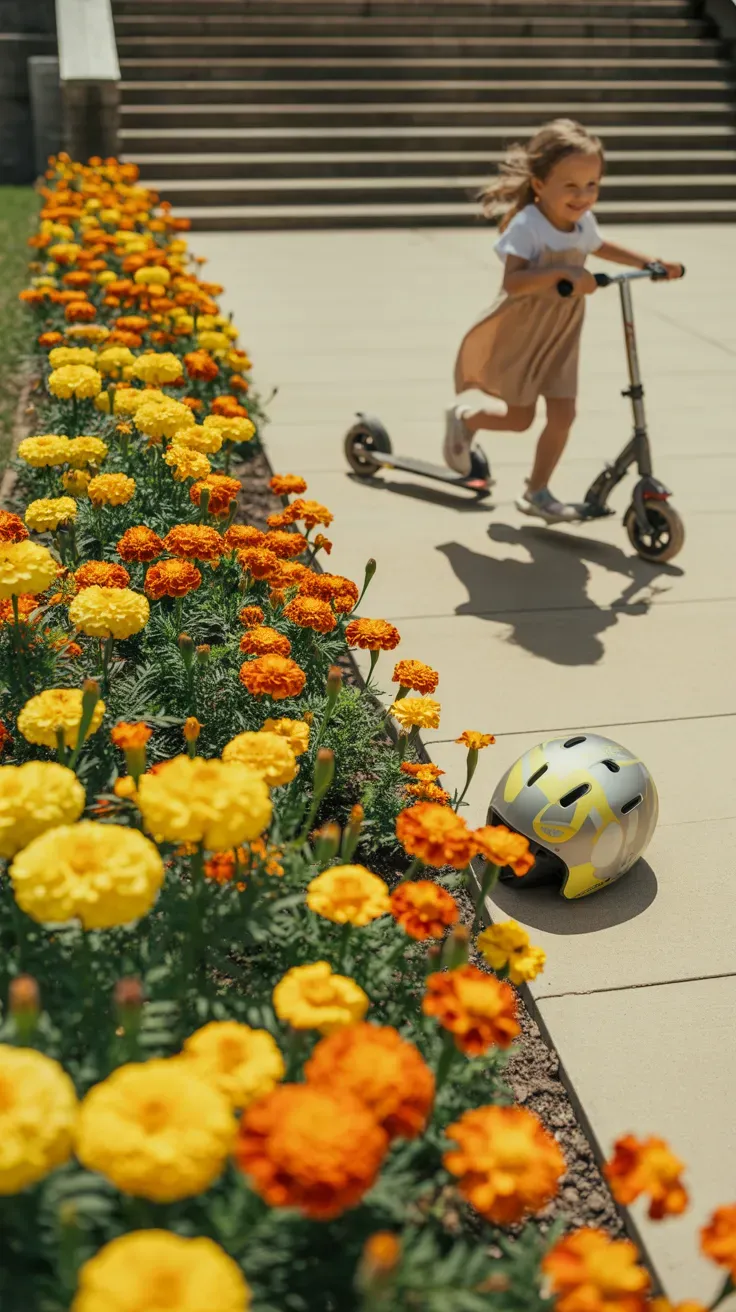
Marigolds are non-toxic and bring reliable, cheerful color to a ground-level border exactly where a running or biking kid is likely to brush against the planting occasionally.
They need full sun and tolerate average soil, deadheading weekly to maintain continuous bloom through the season. Their sturdy stems and relatively low growth habit (12-18 inches) mean they bounce back reasonably well from an occasional trample or scooter clip, unlike more delicate flowering annuals.
Internal link: durable flowering annuals for active family gardens External link: University of Florida Extension’s marigold growing notes
3. Sunflower Statement Pair for Bold, Worry-Free Height
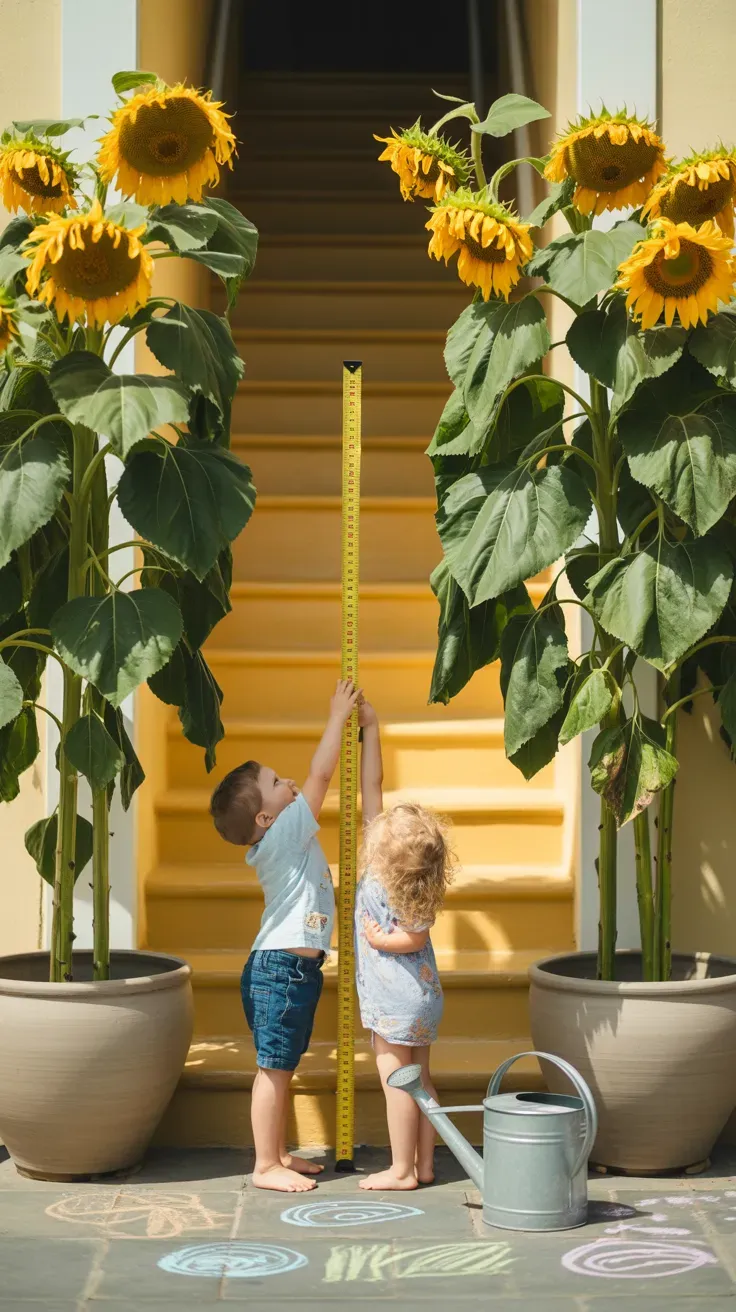
A matched pair of sunflowers flanking an entrance delivers genuine height and drama while remaining completely non-toxic, and their fast, visible growth makes them a favorite for kids to track and measure themselves against over a summer.
They need full sun and regular watering, roughly every 2-3 days in summer heat, in heavy ceramic pots that resist tipping from active kids brushing past. Their large, sturdy stalks and the fact that sunflower seeds themselves are edible make this one of the lowest-worry, most kid-engaging statement plantings on the entire list.
Internal link: engaging kids in the garden with fast-growing plants External link: Almanac’s sunflower growing guide
4. Herb Touch-and-Smell Trough for Sensory Play
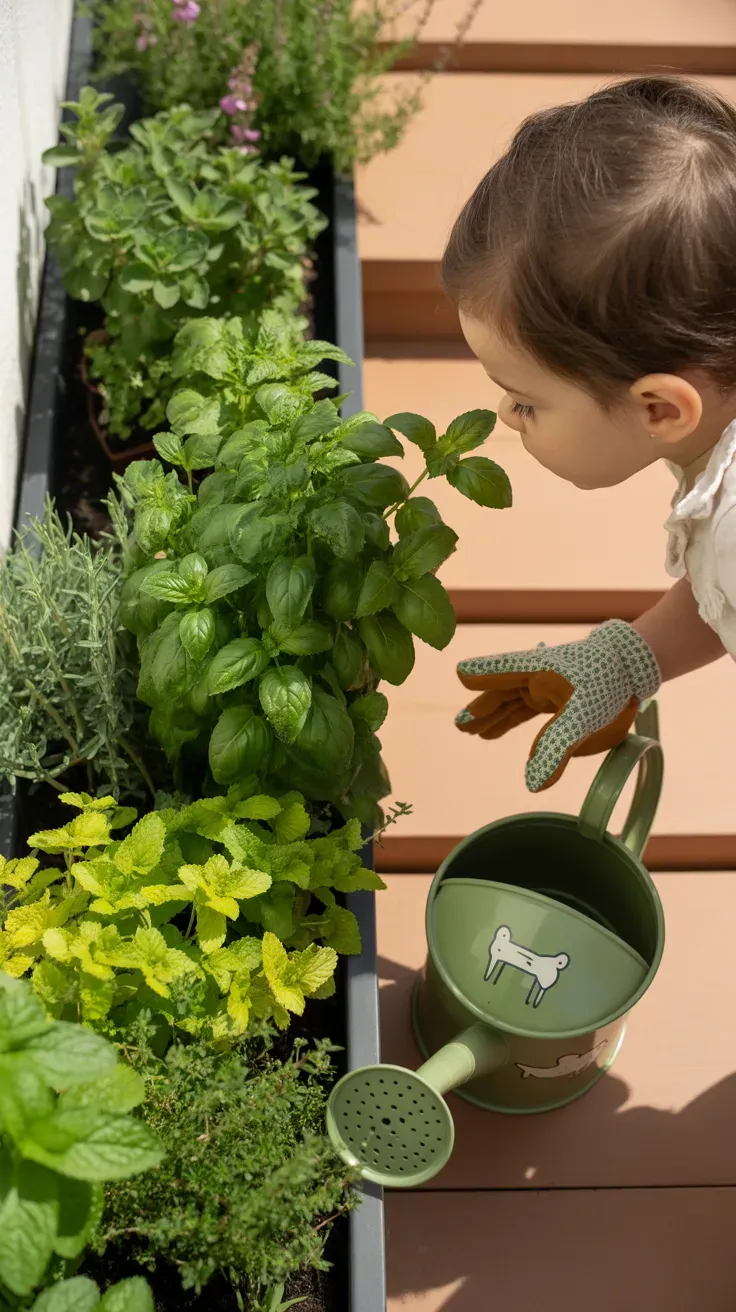
A low trough of aromatic, non-toxic herbs positioned at a height kids can easily reach turns a staircase into a sensory experience, encouraging safe touching and smelling rather than the forbidden-fruit curiosity that comes with plants kept strictly off-limits.
Choose basil, mint, and lemon balm, all non-toxic and pleasantly fragrant when brushed or lightly crushed, needing full sun and daily watering for basil specifically during peak summer heat. Position the trough at a genuinely low height, around 12-18 inches, so kids can interact without needing to climb or reach.
Internal link: sensory garden ideas for engaging young kids External link: Almanac’s guide to growing herbs in containers
5. Elevated Rail Planters for Delicate Plants Out of Toddler Reach
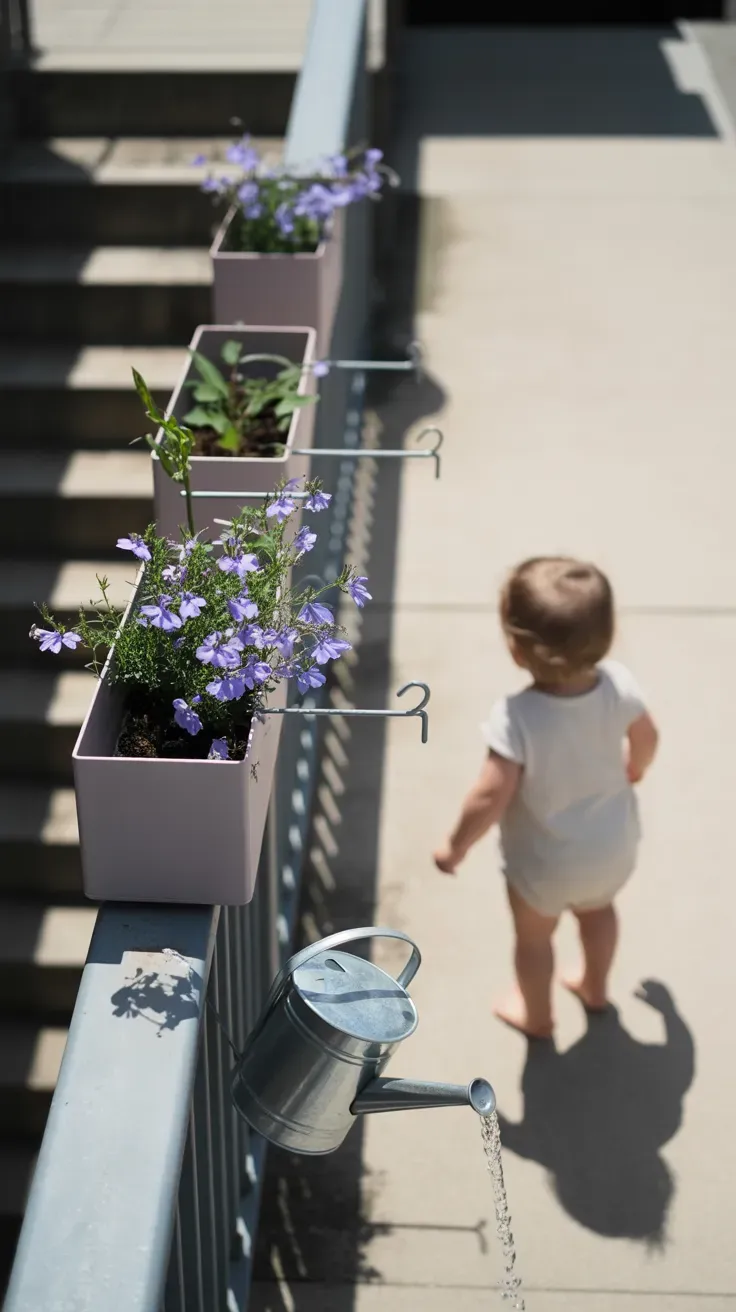
Mounting planters onto a railing well above a toddler’s reach lets parents include more delicate or borderline plants without worrying about grabby hands, since physical elevation solves the access problem regardless of the specific plant chosen.
Choose boxes rated for secure rail attachment, mounted at least 3-4 feet up, well above typical toddler reach even with a boost. It needs full sun for most flowering options and watering every 2-3 days, since these shallow rail boxes dry out faster than ground-level pots.
Pro Tip: Account for stacked reach, not just standing height — toddlers regularly climb onto steps, railings, or nearby furniture to extend their grab radius, so mount higher than seems strictly necessary.
Internal link: rail and railing-mounted container options for tight spaces External link: RHS guide to secure railing planter installation
6. Rubber Mulch Bed Border for Fall-Cushioning Safety
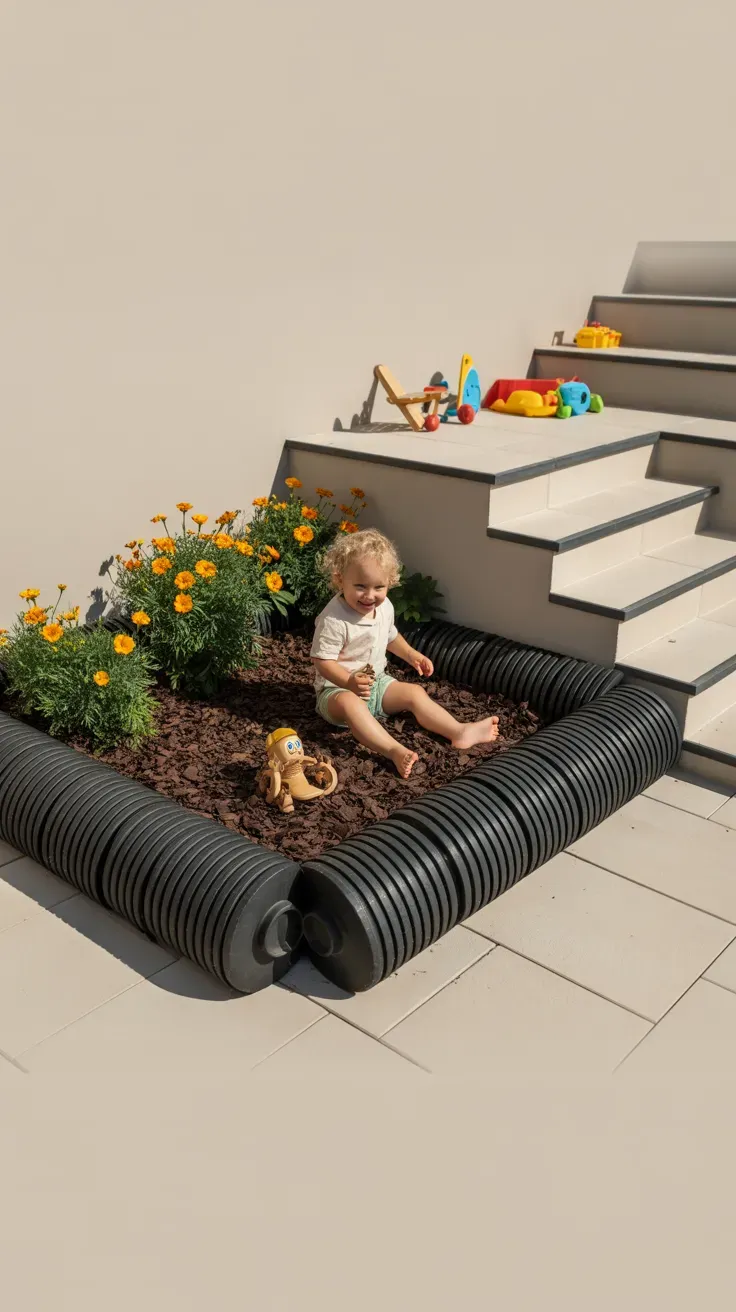
Rubber mulch, the same material used in many playground surfaces, provides genuine fall protection immediately at the base of a staircase, addressing the injury risk of a tumble rather than just the plant toxicity question.
Lay a 2-3 inch layer of rubber mulch around the border of any ground-level bed near the steps, planted with non-toxic marigolds or zinnias. This is essentially a safety feature rather than a planting choice, though it pairs well with any of the flowering options elsewhere on this list.
Internal link: safety-focused hardscaping for family gardens External link: BHG’s guide to safe ground cover materials near play areas
7. Snapdragon Color Row for Safe Cool-Season Interest
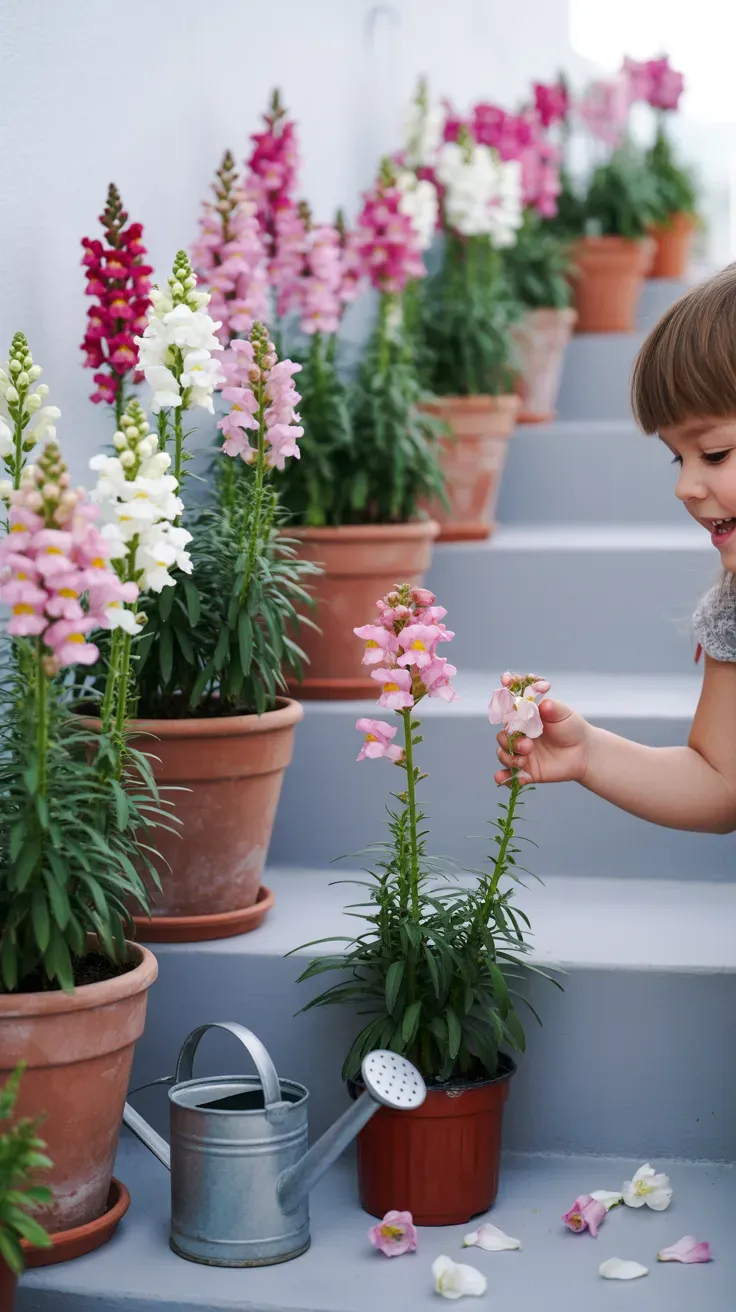
Snapdragons are non-toxic and offer a genuinely fun interactive feature kids love — gently squeezing the sides of a bloom makes the “mouth” open and close like a little puppet, turning a simple flower into an engaging activity.
They need full sun and consistent moisture, deadheading regularly to extend the bloom window. Their upright growth habit keeps most of the plant above typical grabbing height once mature, and the interactive bloom quality gives kids a sanctioned way to touch the plant without damaging it.
Internal link: interactive flowering plants that engage kids safely External link: BHG’s snapdragon growing and care guide
8. Areca Palm Statement Pots for Bold, Safe Greenery
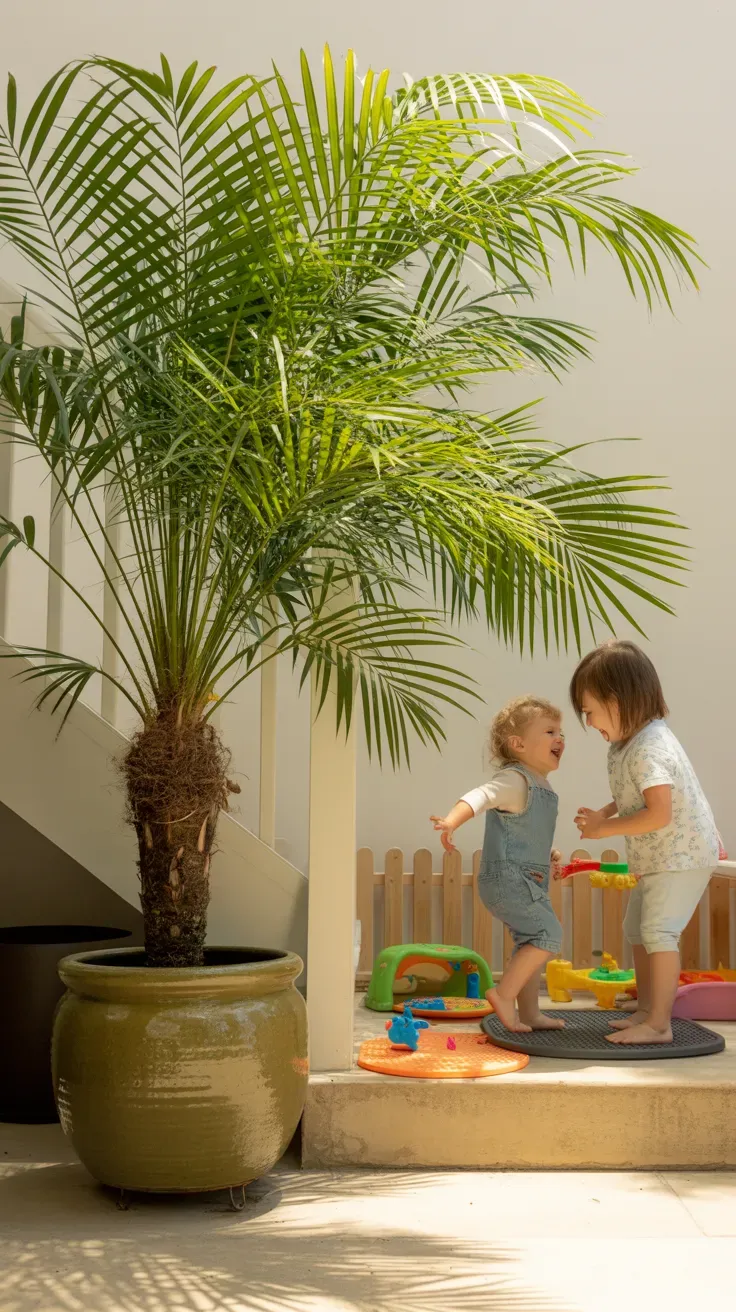
Areca palm (Dypsis lutescens) is genuinely non-toxic to children and its full, bushy form makes a bold statement without needing multiple smaller pots that are easier for an active kid to knock over during play.
Choose a heavy glazed ceramic pot, at least 14 inches wide, which resists tipping far better than lightweight plastic when kids run or play nearby. It needs bright indirect light and watering weekly, and its dense root system holds soil in place well even if a curious kid digs at the surface.
Internal link: best non-toxic large plants for family homes External link: Missouri Botanical Garden’s Dypsis lutescens profile
9. Zinnia Cutting Garden for Sturdy, Kid-Pickable Blooms
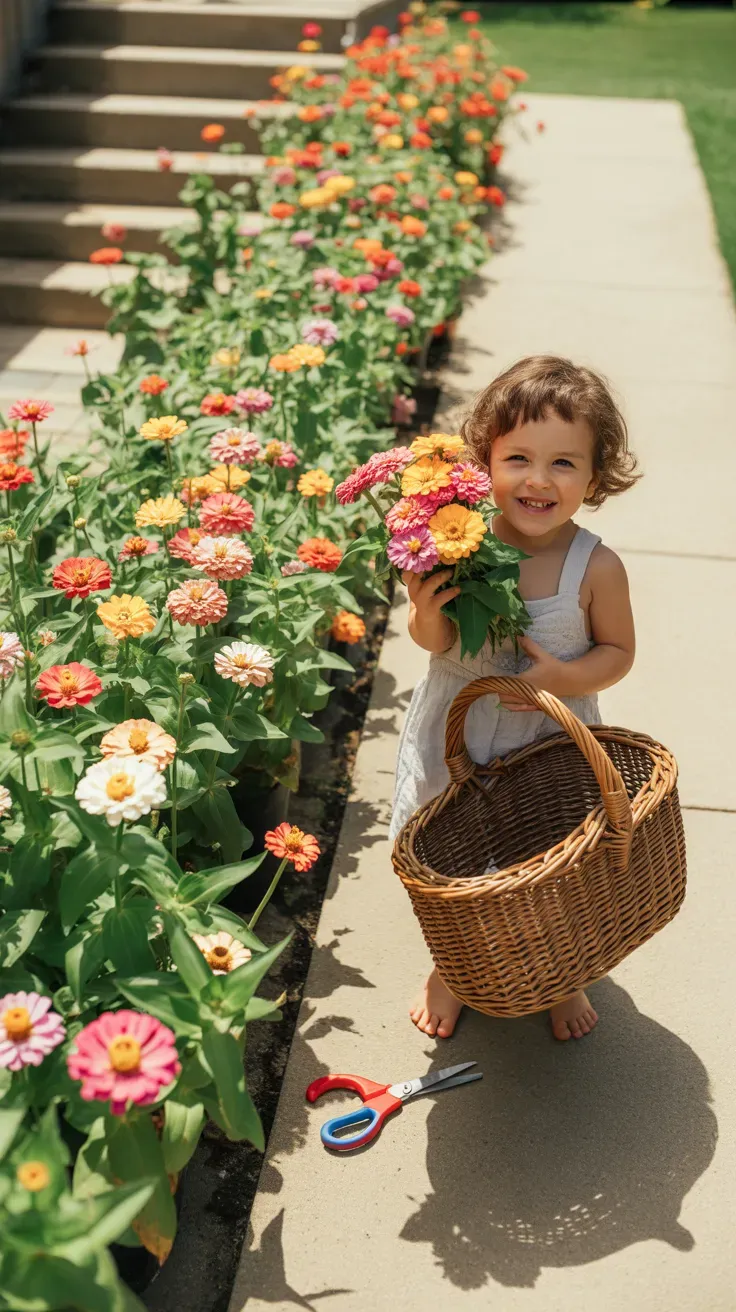
Zinnias are non-toxic, grow on genuinely sturdy stems that hold up to enthusiastic picking, and give kids a sanctioned, encouraged way to interact with the garden by cutting their own small bouquets.
They need full sun and regular watering, deadheading weekly to encourage continuous bloom through summer into fall, though letting kids “deadhead” by picking blooms for bouquets does the same job. Their fast growth from seed (blooming within 6-8 weeks) also means a section over-picked by an enthusiastic kid recovers relatively quickly.
Pro Tip: Give kids child-safe, blunt-tip scissors and show them to cut just above a leaf node — this small lesson in plant care becomes a genuinely engaging activity rather than just supervised destruction.
Internal link: sturdy cutting garden flowers for active family gardens External link: Almanac’s zinnia growing guide
10. Round Rubber Planter Set for Unbreakable, Injury-Resistant Containers
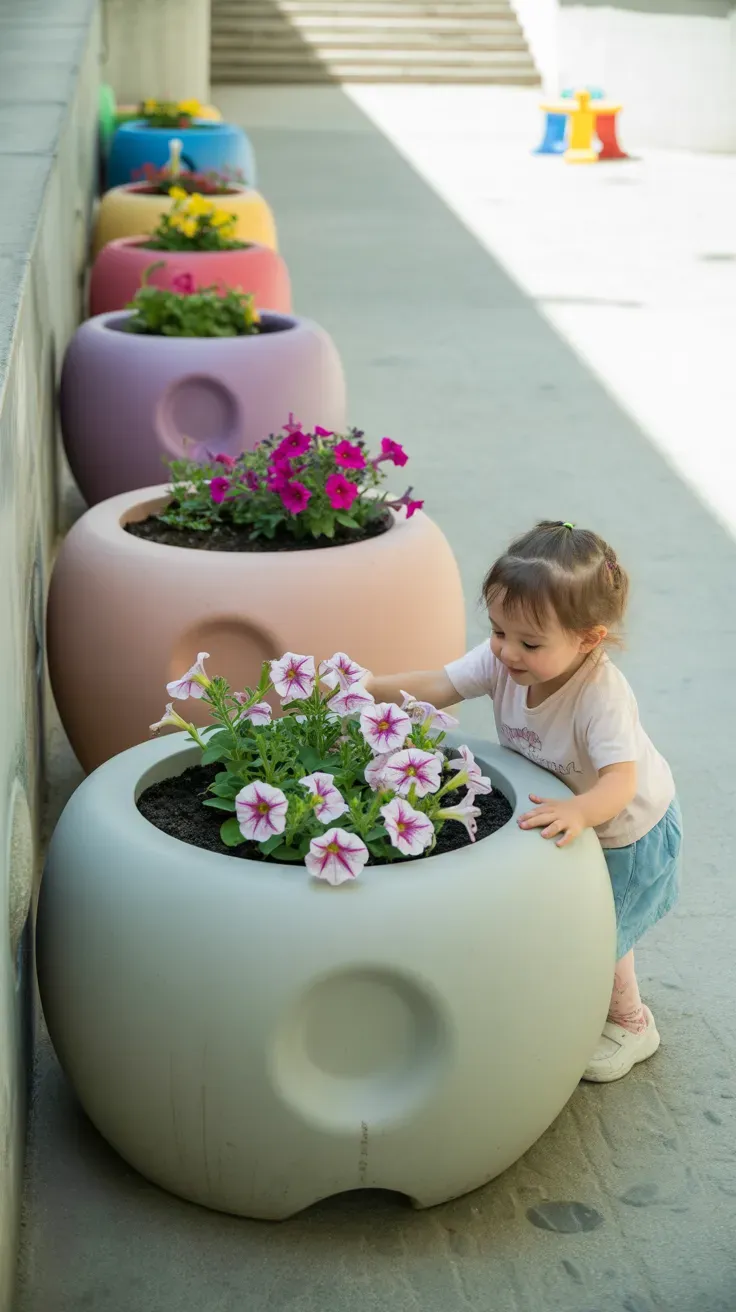
Rounded, soft-edged rubber or heavy-duty resin planters eliminate the sharp-edge and shatter risk that ceramic or ordinary plastic pots carry if a child falls against one during active play near the steps.
Choose planters specifically designed with rounded profiles and no sharp rim edges, filled with non-toxic petunias or marigolds, needing full sun and regular watering. These containers cost somewhat more than standard plastic pots but eliminate an entire category of injury risk that matters most in households with very active young kids.
Internal link: injury-resistant container materials for family gardens External link: University of Florida Extension’s petunia container growing notes
11. Boston Fern Shade Corner for a Lush, Chew-Tolerant Display
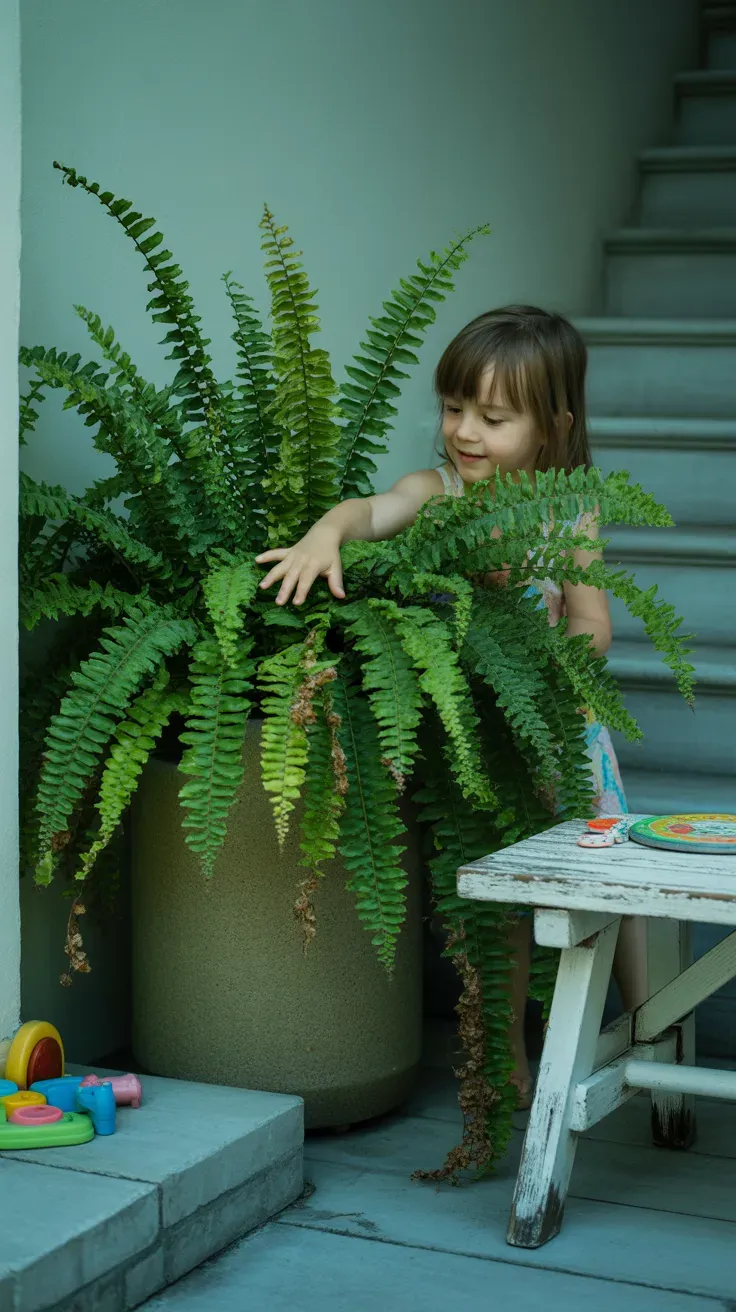
Boston fern is non-toxic and, unlike many delicate houseplants, tolerates occasional handling or brushing without permanent damage, since its dense fronds regrow quickly from the base even after some rough contact.
It needs indirect light and consistently moist soil, watering every 2-3 days in warm weather. Choose a heavy concrete pot to prevent tipping if a child leans or bumps against it during play, and don’t worry too much about occasional handling — the plant’s vigorous growth typically outpaces minor damage.
Internal link: best plants for shaded outdoor stairwells External link: Missouri Botanical Garden’s Boston fern growing profile
12. Strawberry Patch Steps for Edible, Engaging Ground Cover
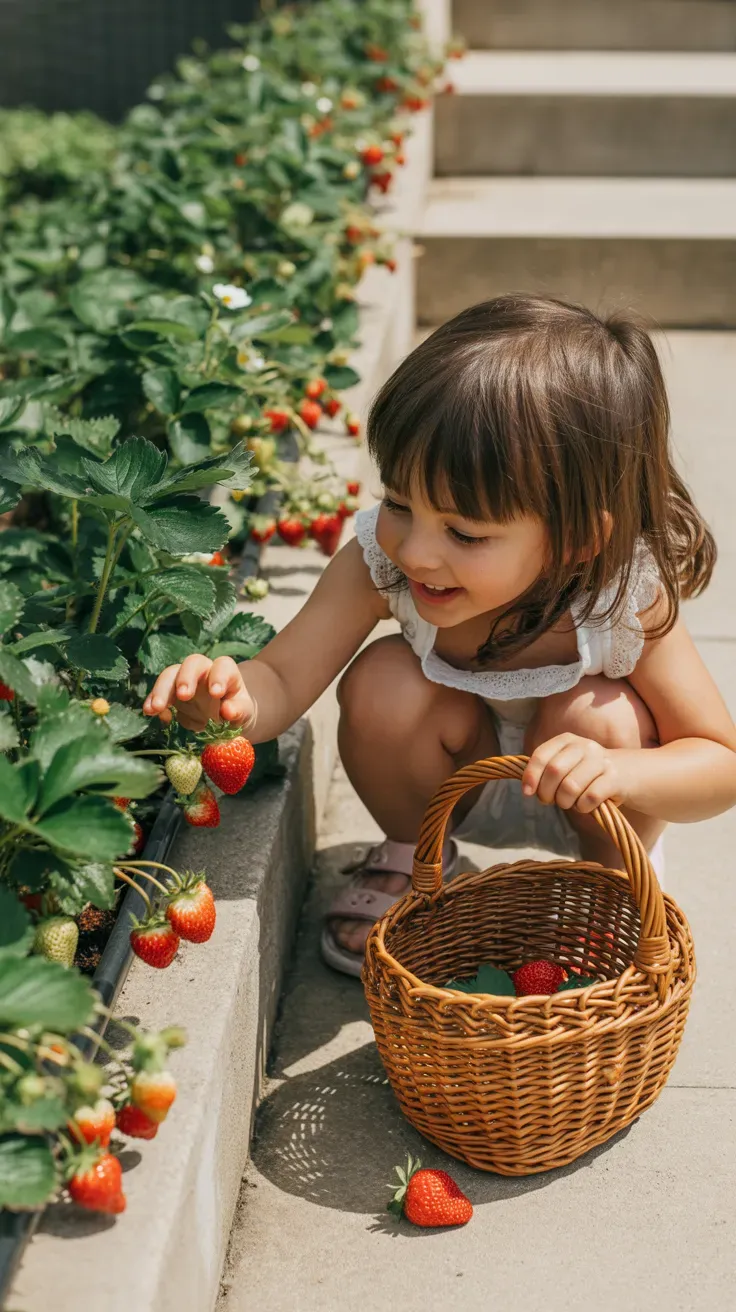
A strawberry patch along a sunny staircase edge gives kids a genuinely exciting reason to check the garden daily, and unlike ornamental plants, the entire point is encouraged picking and eating rather than careful hands-off admiration.
They need full sun and consistently moist, well-drained soil, watering every 2-3 days in summer heat. Choose everbearing varieties for fruit production spread across the season rather than one single flush, giving kids repeated harvest opportunities rather than a single early-summer window.
Pro Tip: Net the ripening berries loosely if birds are a problem in your area — losing the fruit to birds right before a child gets to pick it is a genuinely disappointing letdown worth avoiding with a simple, inexpensive garden net.
Internal link: growing edible plants that engage kids in the garden External link: Almanac’s strawberry growing guide for home gardens
13. Weighted Concrete Cube Planters for Maximum Tip Resistance
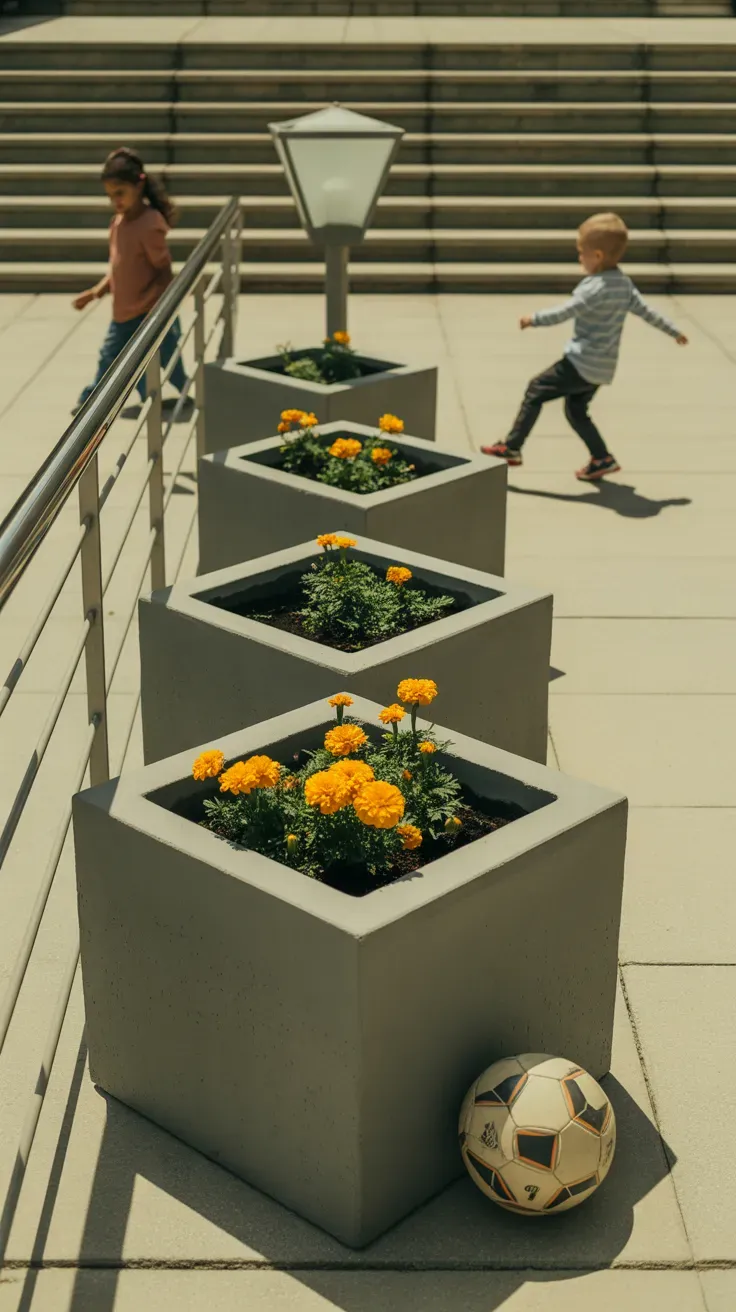
Solid concrete cubes bring genuine, near-total tip resistance to a staircase, their sheer weight preventing any realistic chance of a rolling ball, running kid, or bike collision knocking them over.
Choose cubes around 14-16 inches per side and plant with non-toxic marigolds or zinnias, needing full sun and regular watering. Concrete’s weight is specifically the point here — this is the container choice for households where active ball games or bike riding regularly happen right beside the staircase.
Internal link: maximum-stability container choices for active family yards External link: RHS guide to container material and stability
14. Basil and Thyme Kitchen Steps for Everyday Safe Use
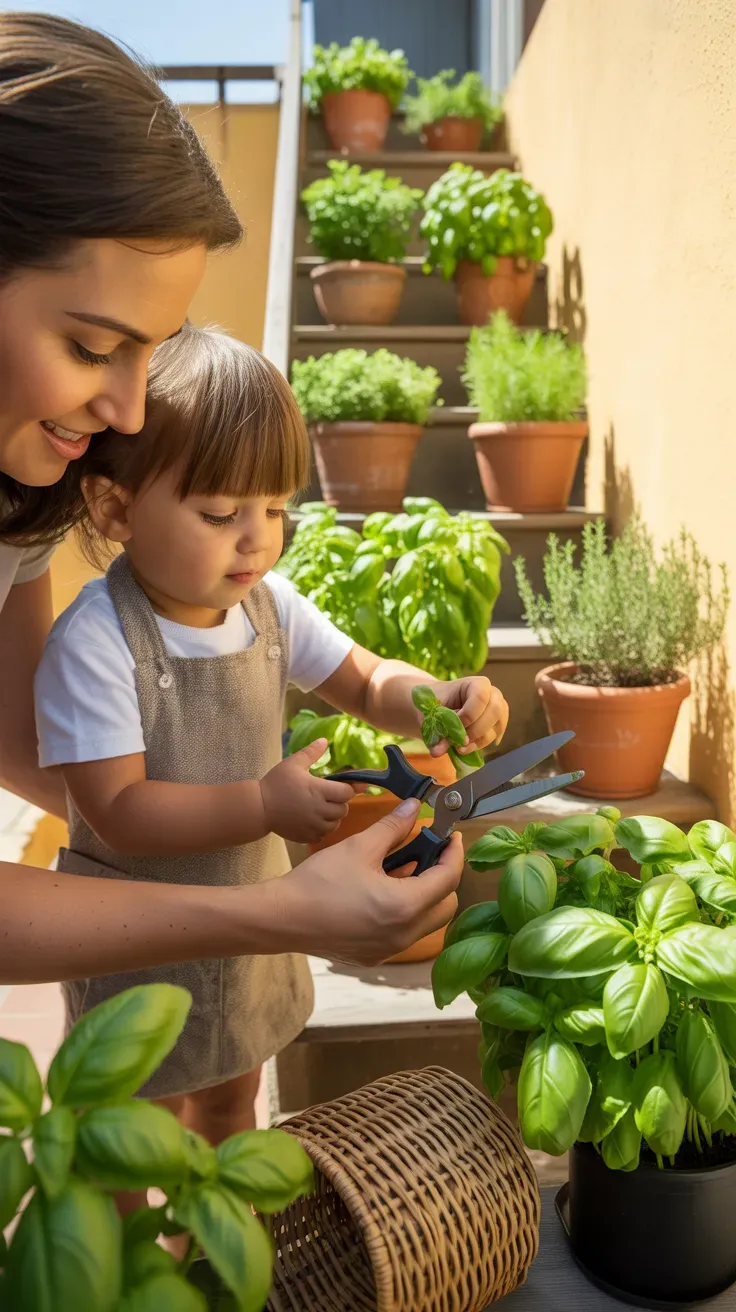
Basil and thyme are both confirmed non-toxic and useful in everyday cooking, making this kitchen-adjacent herb combination a practical way to involve kids in meal prep while keeping the plants themselves completely worry-free.
They need full sun and well-drained soil; basil needs watering almost daily in peak summer heat, while thyme prefers to dry out between waterings. Let kids help snip leaves for dinner under supervision, turning routine cooking into a small daily garden interaction rather than a separate, isolated activity.
Internal link: container herb gardens for small spaces External link: University of Florida Extension’s herb growing notes
15. Chalkboard Plant Tag Garden for Learning Through Labeling
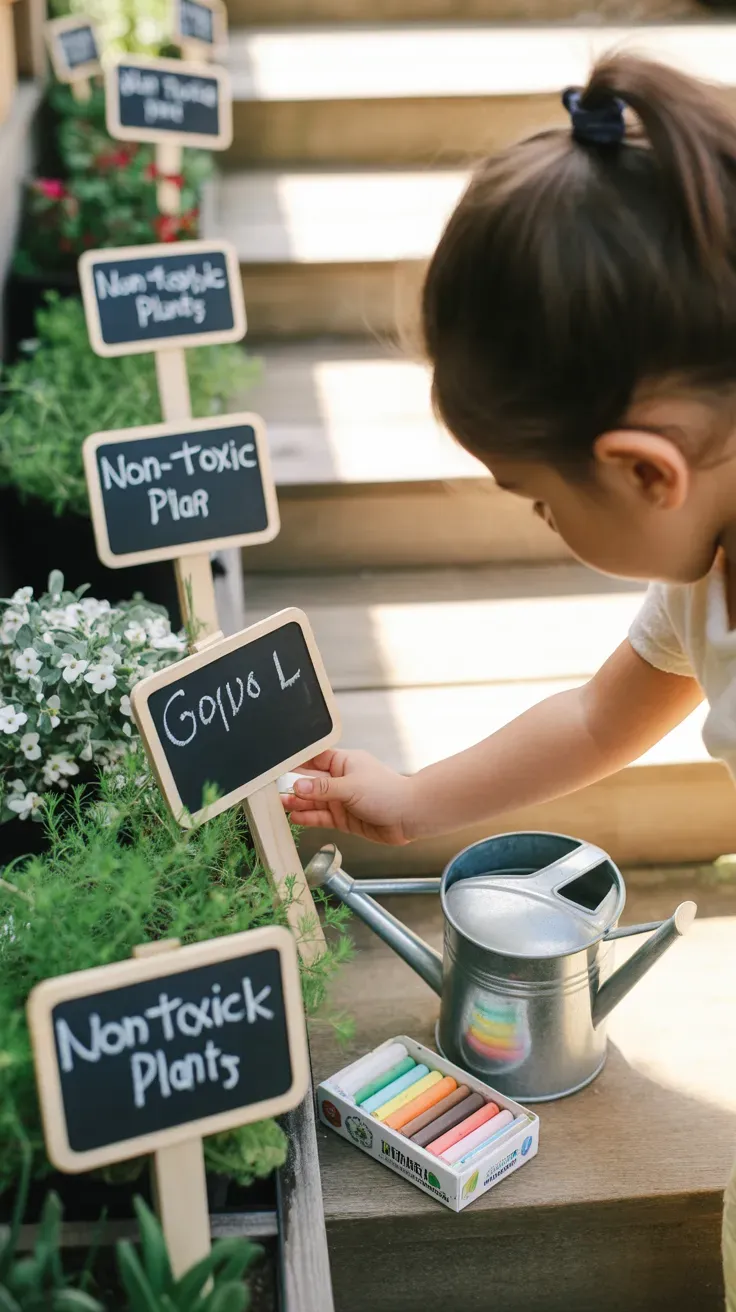
Small chalkboard tags let kids participate directly in the garden by labeling each plant themselves, turning a simple staircase planting into a hands-on learning opportunity about plant names and basic care.
Use any combination of non-toxic plants from this list, with a small chalkboard tag stake beside each one, needing whatever light and water each specific plant requires. Let kids re-letter the tags periodically as handwriting improves or plants get swapped seasonally, keeping the activity ongoing rather than a one-time task.
Internal link: educational garden activities for young kids External link: Almanac’s guide to gardening with children
16. Cast Iron Plant Low-Light Corner for the Most Forgiving Kid-Safe Option
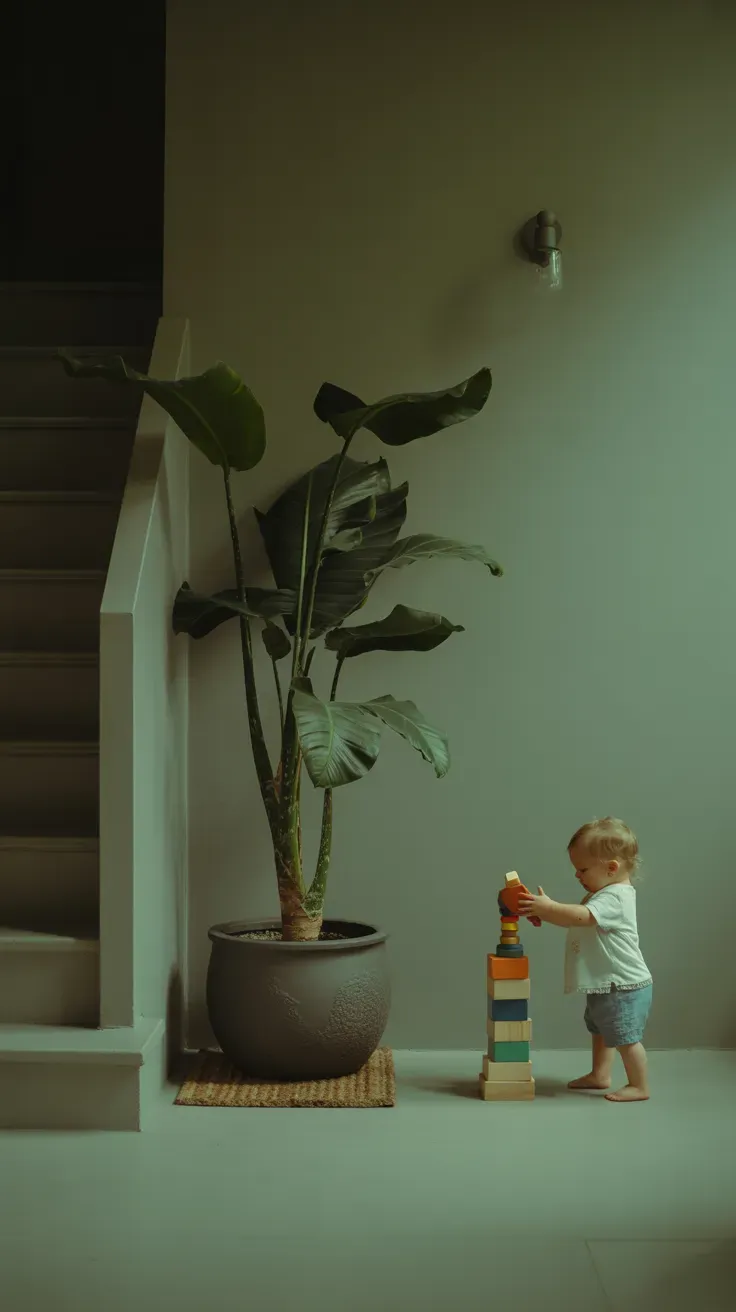
Cast iron plant (Aspidistra elatior) tolerates low light, irregular watering, and general household chaos better than almost any plant available, and it’s completely non-toxic, making it the most forgiving option for busy parents with genuinely limited maintenance time.
It tolerates low light down to genuinely dim corners and needs watering only every 2-3 weeks, making it ideal for a shaded staircase spot that also happens to be a favorite play area. Its tough, leathery leaves resist damage from casual kid contact far better than soft-leafed alternatives.
Internal link: low-light plants that survive neglect and busy households External link: Almanac’s cast iron plant growing guide
For the combination of genuine neglect-tolerance and kid safety, nothing else on this list is quite as forgiving for a busy parent’s schedule.
17. Nasturtium Edible Climbing Vine for Colorful, Snackable Growth
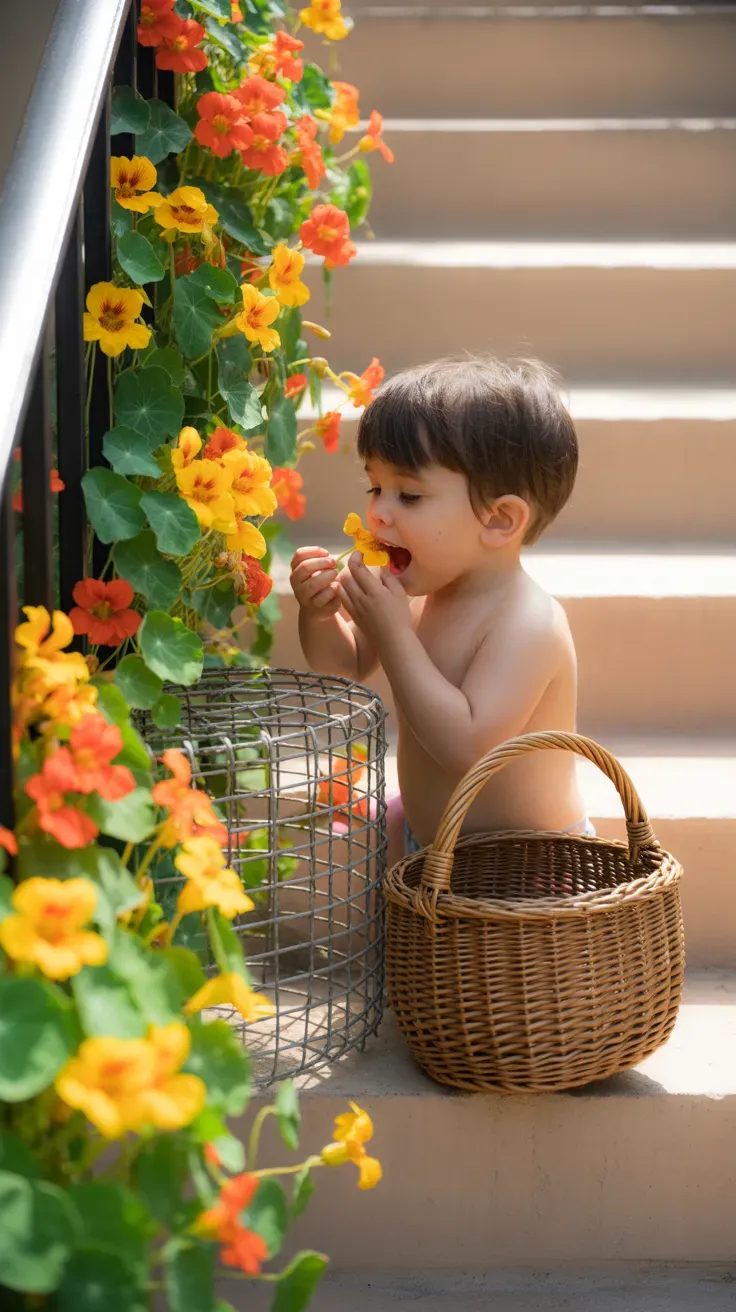
Nasturtium flowers and leaves are entirely edible with a mildly peppery flavor, giving kids a genuinely safe plant to taste directly from the vine, which satisfies natural curiosity in the safest way possible.
It needs full sun to part shade and regular watering, climbing a simple trellis or railing readily from seed within a single season. Growth is fast and forgiving, so occasional picking or handling by an enthusiastic kid barely dents the plant’s overall production through summer.
Pro Tip: Only harvest and taste nasturtium grown without pesticide or herbicide treatment — since kids may eat directly from the plant, treat this bed as you would any edible garden regarding chemical use.
Internal link: edible flowers safe for kids to taste in the garden External link: University of Florida Extension’s nasturtium growing notes
18. Bird’s Nest Fern Cluster for Sturdy, Non-Toxic Texture
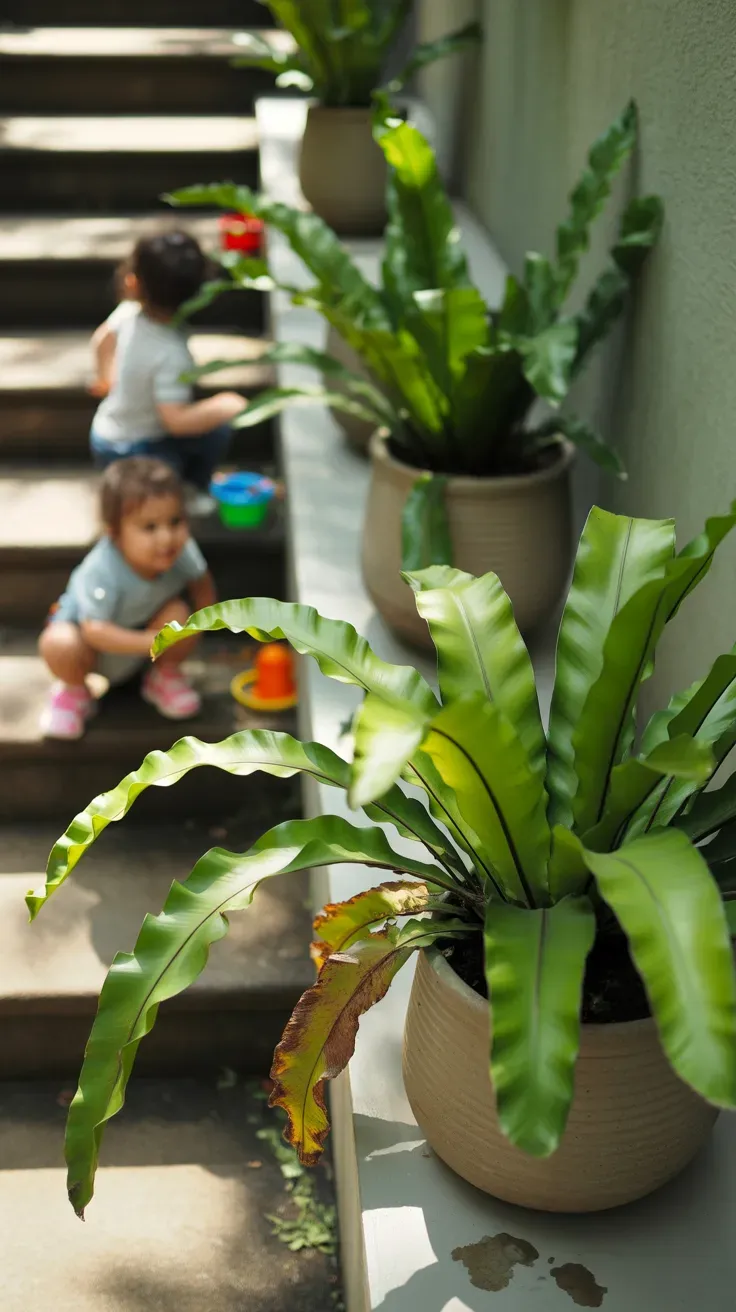
Bird’s nest fern’s wide, undivided fronds are notably sturdier than lacy fern varieties, holding up better to an occasional brush from a passing kid or a hide-and-seek game without shredding.
It needs medium indirect light and consistently moist soil with high humidity, ideally 50%+, watering every 5-7 days. It’s non-toxic, and its heavier ceramic pot requirement doubles as tip resistance for households with active kids running or playing near the staircase.
Internal link: sturdy non-toxic ferns for busy family households External link: Missouri Botanical Garden’s Asplenium nidus growing profile
19. Rounded River Rock Border for Fall-Softening Ground Texture
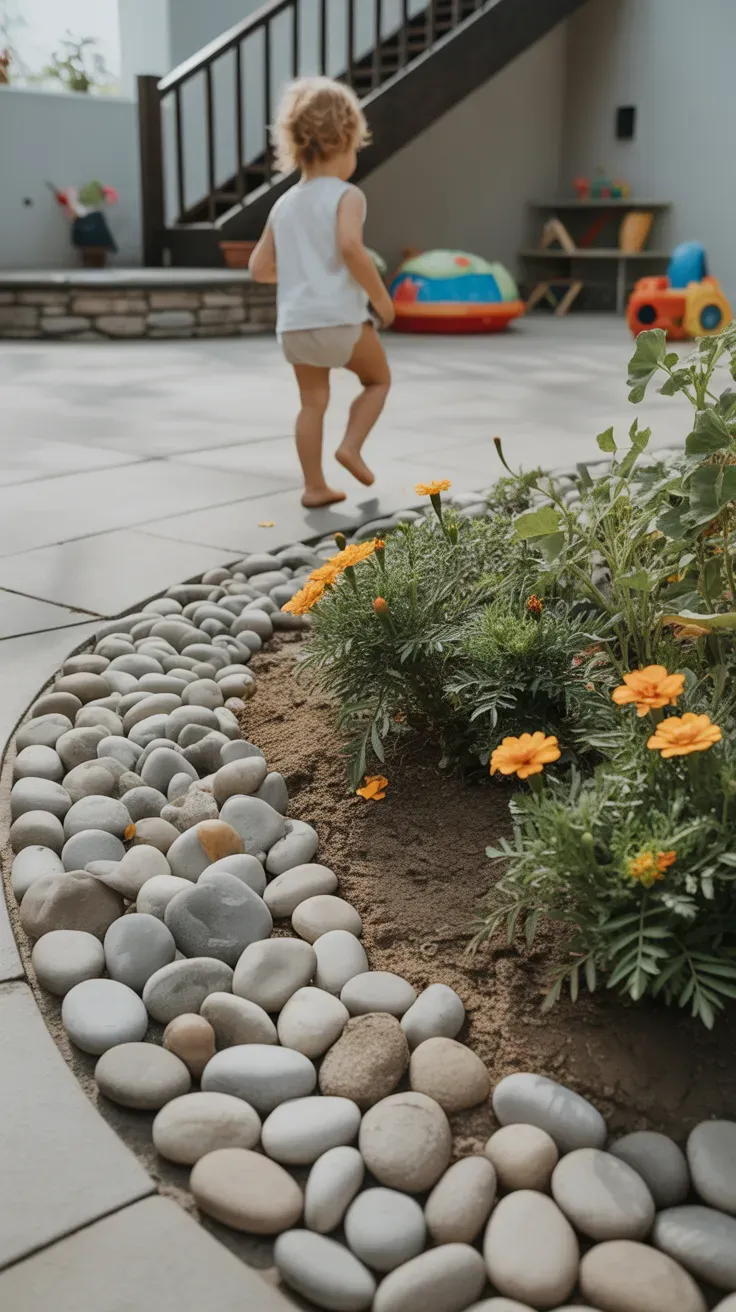
Smooth, rounded river rocks bordering a garden bed avoid the sharp edges of angular gravel or crushed stone, reducing scrape risk if a child falls or walks barefoot near the staircase’s base.
Lay a border of large, smooth river rocks (avoiding small ones that pose a choking hazard for very young kids) around any ground-level bed, planted with non-toxic marigolds or zinnias. This is primarily a safety and texture feature rather than a planting choice, and it pairs well with any of the flowering options elsewhere on this list.
Internal link: safe hardscaping materials for family garden borders External link: BHG’s guide to choosing safe ground cover materials
20. Petunia Weighted Window Boxes for Stable, Colorful Kid Safety
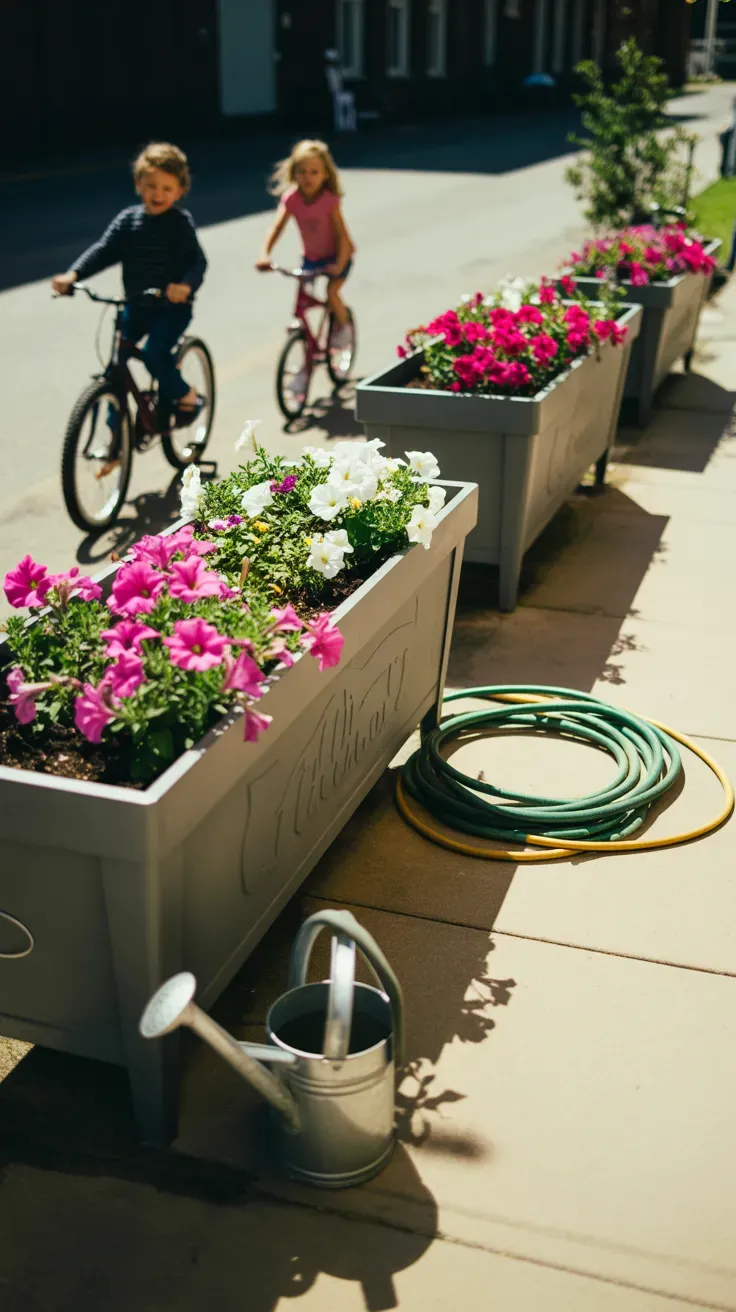
Heavy fiberglass window boxes, securely mounted and filled with non-toxic petunias, deliver reliable color while their weight and secure mounting prevent the tipping risk lighter containers would pose around active, bike-riding kids.
They need full sun and daily watering in hot weather, deadheading weekly or choosing self-cleaning Wave petunias to skip that step. Mount boxes with brackets rated well beyond the container’s wet weight, since a securely fastened box removes tipping risk regardless of how enthusiastically kids play nearby.
Internal link: self-cleaning annuals that skip the deadheading step External link: Penn State Extension’s petunia container growing guide
21. Sensory Lamb’s Ear Border for Soft, Touchable Texture
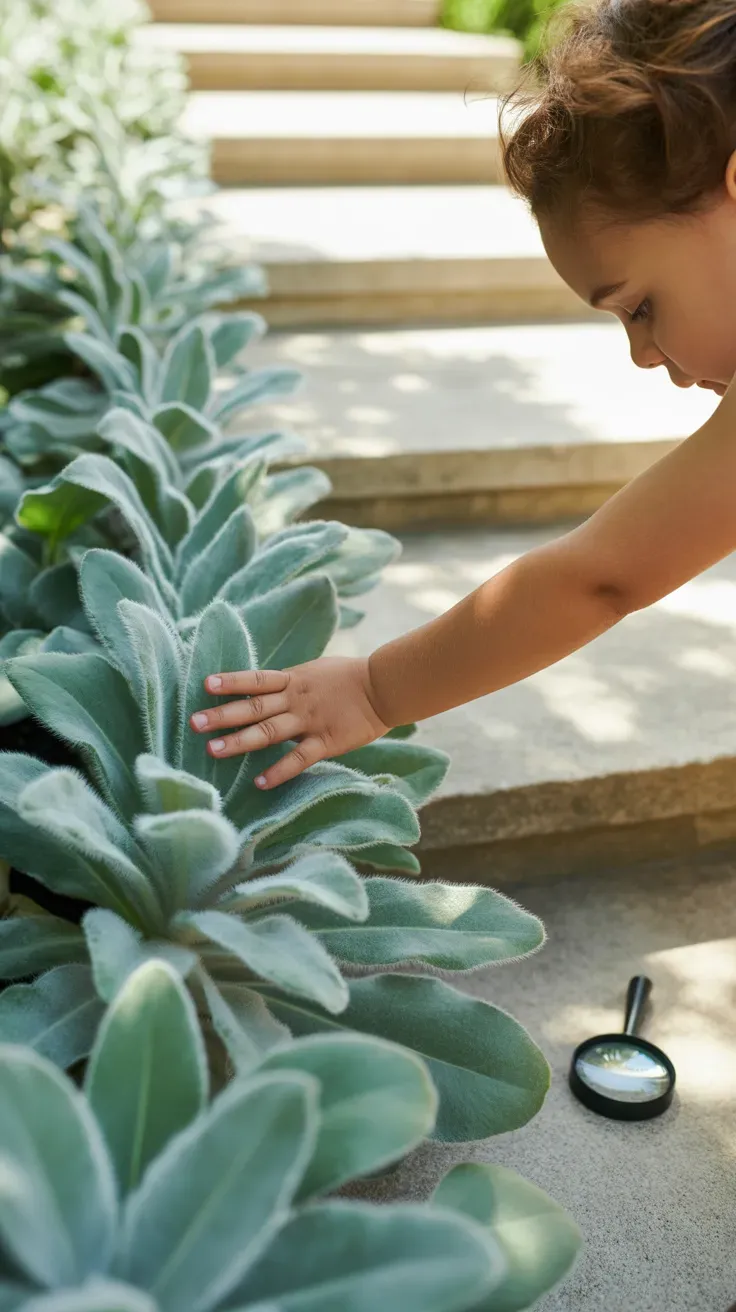
Lamb’s ear (Stachys byzantina) earns its name from its remarkably soft, fuzzy leaves, and it’s genuinely non-toxic, making it one of the best sensory plants for kids to touch and explore without any safety concern at all.
It needs full sun and well-drained soil, tolerating drought well once established and needing only occasional trimming to maintain a tidy border shape. Its low-growing habit keeps it within easy touching reach for kids of all ages, and its soft texture rarely gets old for repeated petting.
Internal link: sensory garden plants for engaging young kids External link: University of Florida Extension’s Stachys byzantina growing notes
22. Parlor Palm Landing Feature for Non-Toxic Tropical Height
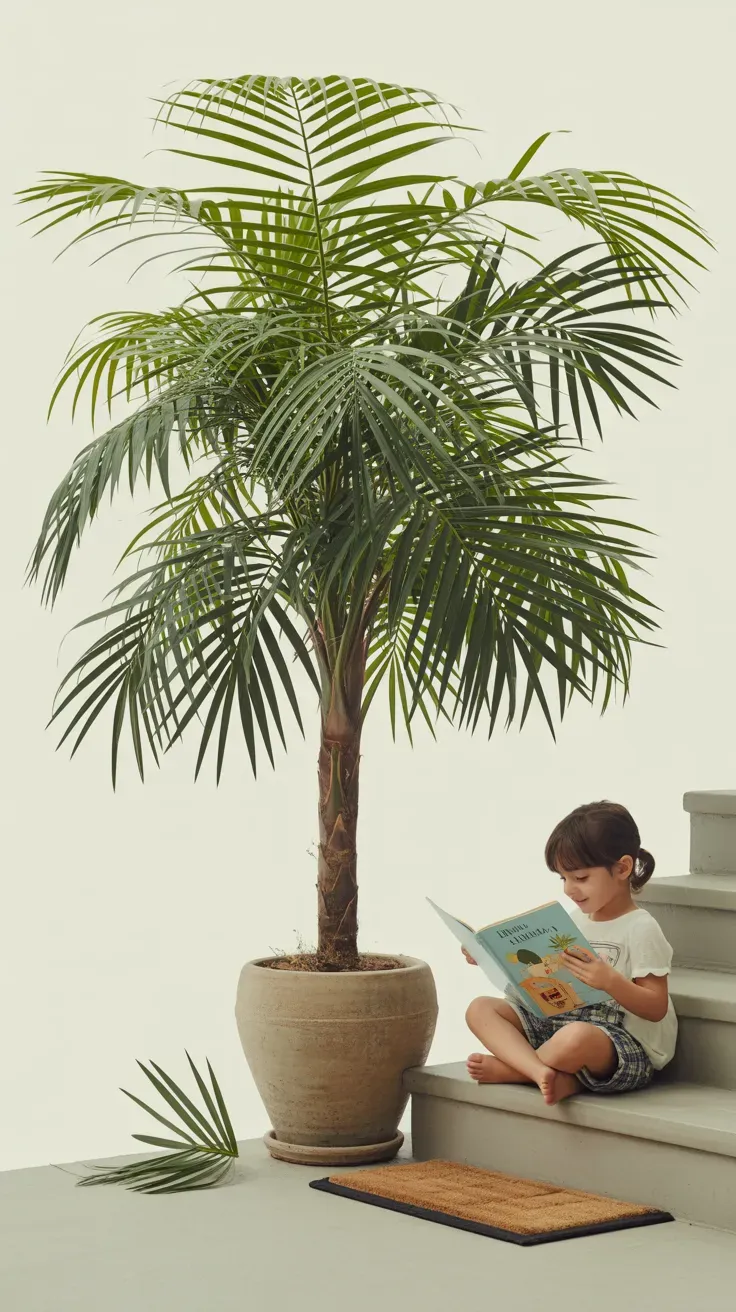
Parlor palm (Chamaedorea elegans) is non-toxic and stays compact enough for a landing feature without needing significant floor space, making it a calm, safe backdrop for a reading nook or quiet play spot.
It tolerates low to bright indirect light, making it flexible for landings with inconsistent sun exposure, and needs watering weekly, letting the top inch of soil dry between waterings. Its slow growth rate means minimal repotting and a stable root system that resists disruption from occasional kid interest.
Internal link: non-toxic palms for family-friendly indoor and outdoor spaces External link: University of Florida Extension’s parlor palm growing notes
23. Cherry Tomato Container Garden for Snackable Summer Harvest
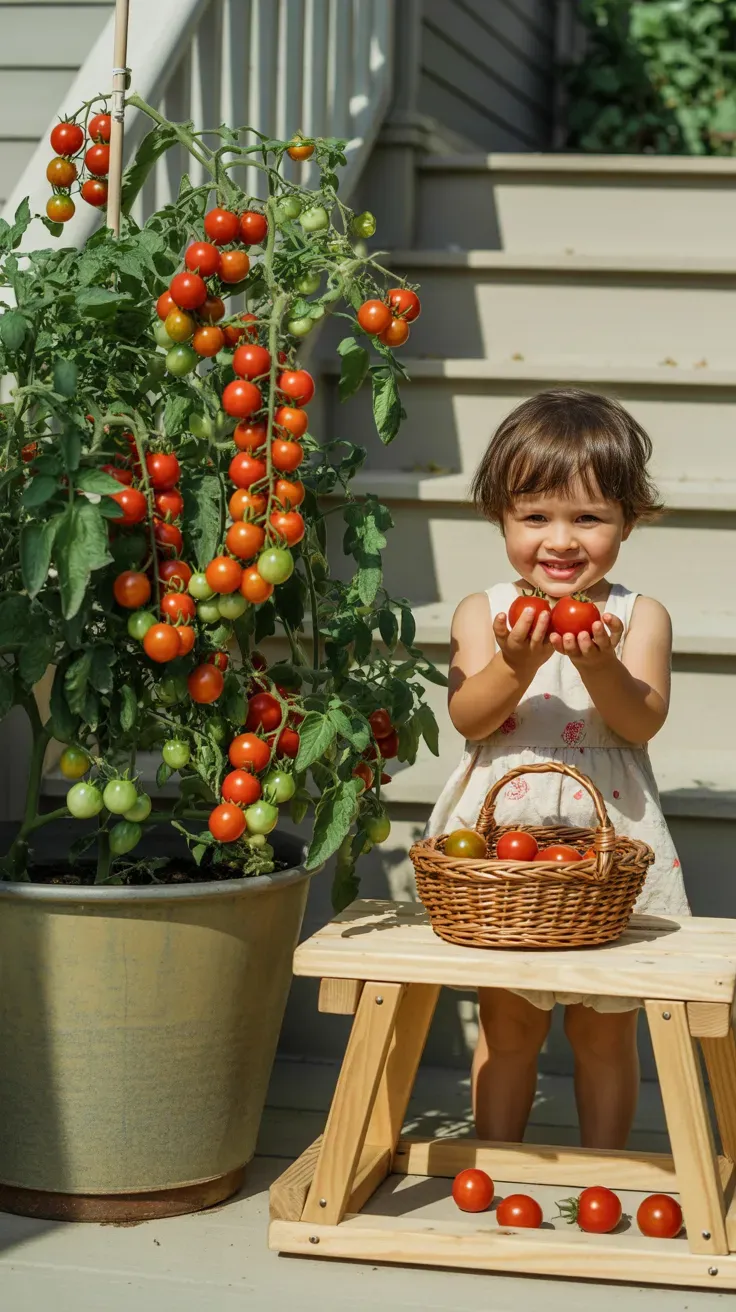
Cherry tomatoes give school-age kids a genuinely rewarding growing project, from planting through daily watching and eventually picking and eating fruit they grew themselves, which builds engagement a purely ornamental plant can’t match.
They need full sun (6+ hours) and consistent watering, roughly every 2-3 days in summer heat, staked or caged for support as the vine grows heavy with fruit. Choose a determinate, compact variety suited to container growing, and expect the first ripe fruit within 60-70 days of planting a starter plant.
Pro Tip: Let kids do the actual picking once tomatoes ripen — gently twisting a ripe cherry tomato off the vine is a simple, satisfying task that also teaches them to judge ripeness by color and slight give.
Internal link: growing edible plants that engage older kids External link: Almanac’s cherry tomato growing guide for containers
24. Rope-Barrier Raised Bed for Visual and Physical Separation
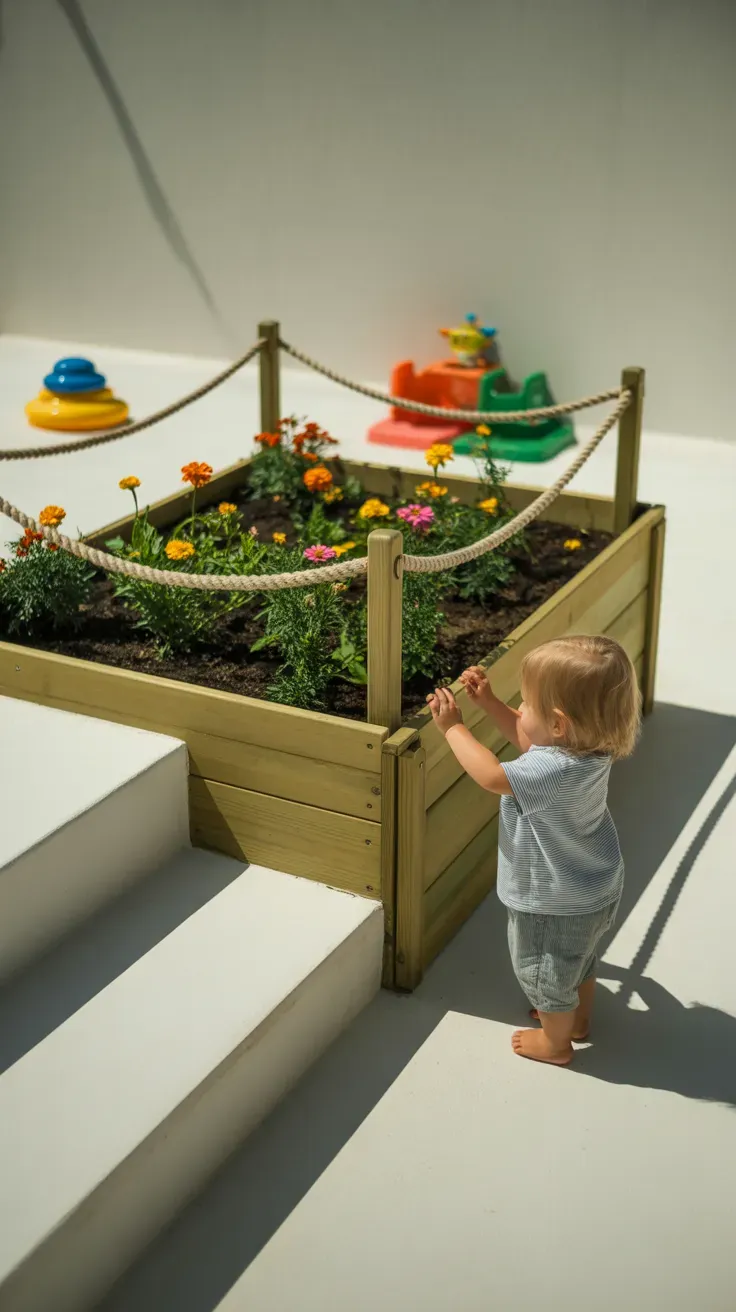
A simple rope barrier on low posts around a raised bed creates a clear, gentle visual boundary that teaches kids which areas are for looking versus playing, without needing a harsh fence or constant verbal reminders.
Build or buy a raised bed with a simple rope strung between short posts at the perimeter, and fill with non-toxic flowering annuals like marigold or zinnia. This works as much as a teaching tool as a physical barrier, helping even young kids learn garden boundaries through consistent visual cues.
Internal link: teaching kids garden boundaries through visual cues External link: BHG’s guide to building raised garden beds
25. Butterfly Garden Milkweed Bed for Nature Education
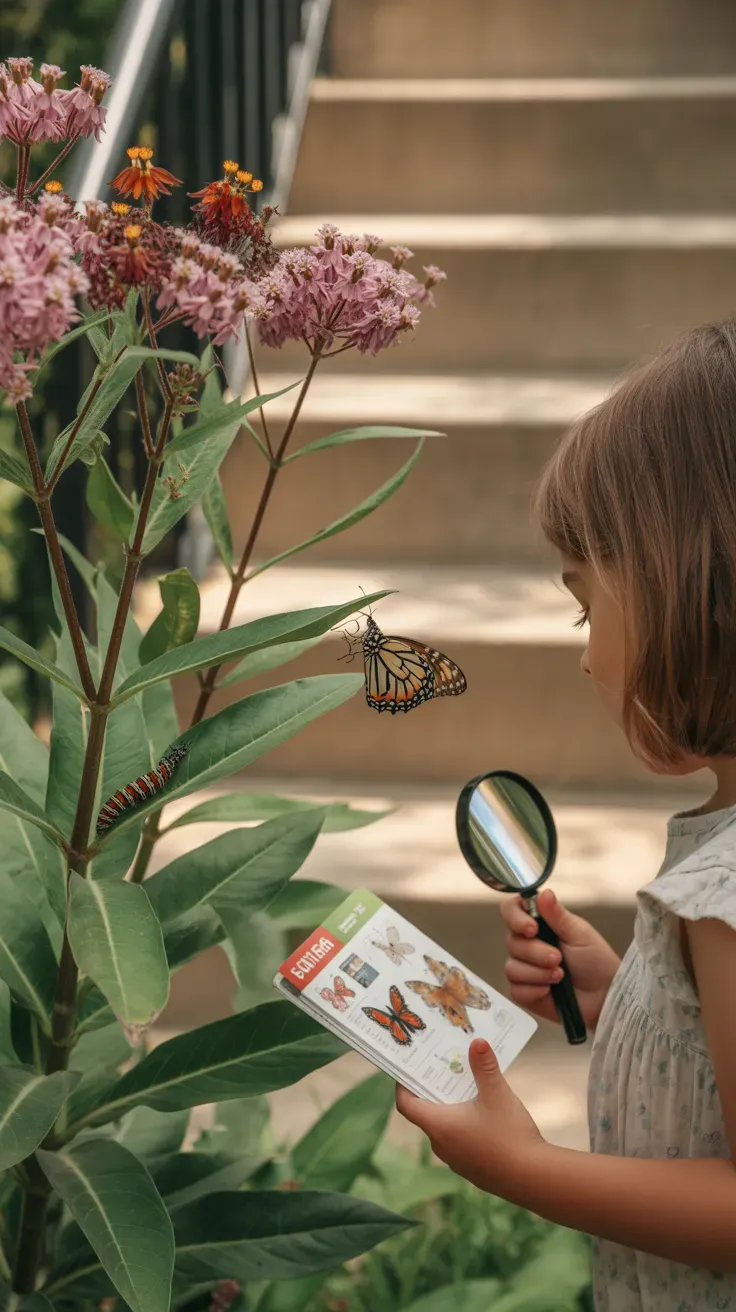
Milkweed attracts monarch butterflies specifically, and watching the full life cycle from caterpillar to chrysalis to butterfly on a plant right beside the staircase offers genuine, ongoing nature education for older kids.
It needs full sun and well-drained soil, tolerating drought well once established. Milkweed sap can mildly irritate skin or eyes in some people, so this works best supervised for younger kids, with the educational payoff (watching an actual monarch life cycle unfold) making it worth the modest extra caution for school-age children.
Internal link: native plants for butterfly and pollinator education External link: University of Florida Extension’s milkweed and monarch garden guide
Closing with a milkweed bed turns your staircase into a small daily nature classroom for any kid old enough to appreciate the wait.
26. Kid-Height Watering Station for Building Garden Responsibility
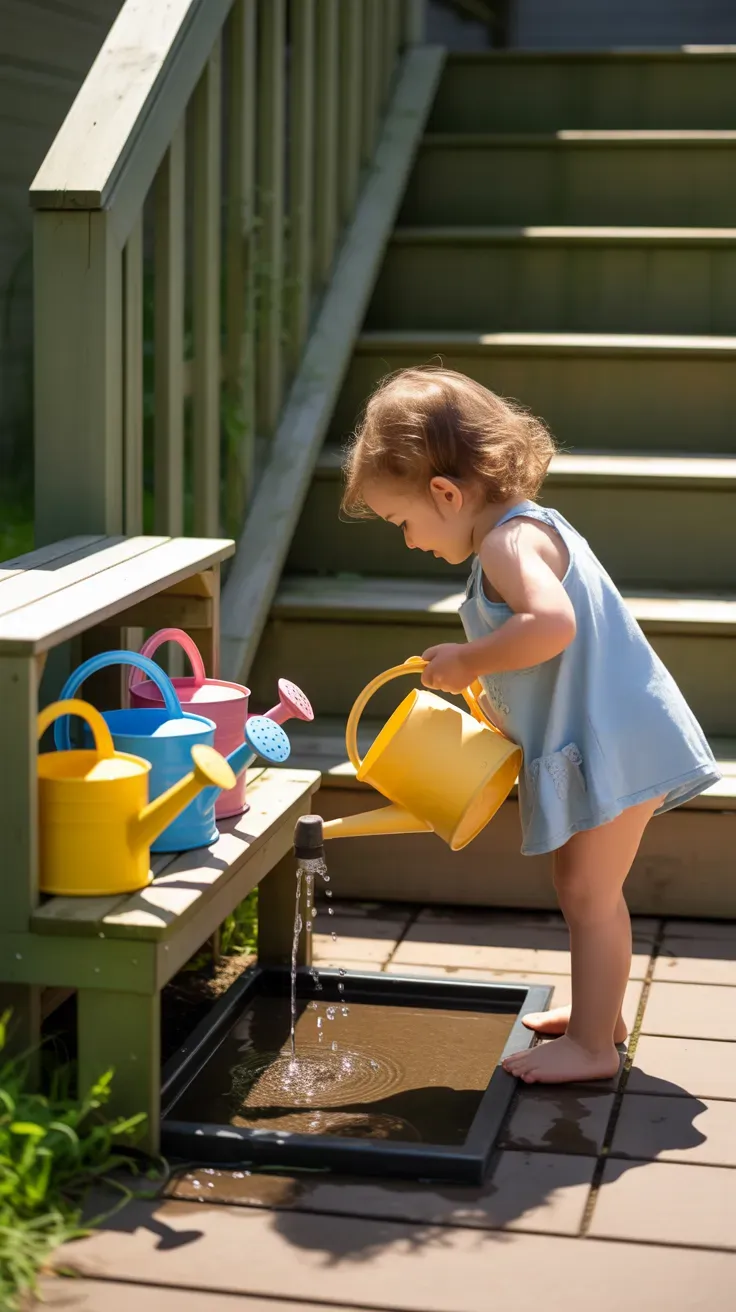
A dedicated, kid-height watering station, with small cans and an easily reachable water source, gives children a genuine, ongoing job in maintaining the staircase garden rather than only observing it passively.
Install a low shelf or hook at a height kids can reach independently, stocked with small, lightweight watering cans, and assign specific plants (like the sturdy marigolds or zinnias) as their responsibility. This works alongside any of the other ideas on this list, turning the whole staircase display into a shared family project rather than parent-only upkeep.
Pro Tip: Start with just one or two plants as a child’s dedicated responsibility rather than the whole display — a manageable task builds genuine follow-through, while an overwhelming one often gets abandoned within a week.
Internal link: building kids’ independence and responsibility through gardening External link: Almanac’s guide to gardening with children
Closing your staircase garden with a genuine kid job turns the whole space from something you maintain for your children into something you maintain together.
Getting Started With Kid-Safe Staircase Gardens
The easiest first step is checking every plant on your wish list against Poison Control’s or the ASPCA’s toxic plant database before buying anything, since several popular staircase plants (lily-of-the-valley, foxglove, oleander) are more dangerous than most parents assume. The most common beginner mistake is assuming a plant is safe because it’s commonly sold at family-friendly garden centers, when store labeling rarely reflects genuine toxicity data.
For your first purchase, get one confirmed non-toxic plant like marigold or spider plant, one heavy, low, wide container that resists tipping, and a bookmark of Poison Control’s plant list for quick reference before future purchases.
Realistically, expect to spend more time on safety research upfront than on the actual planting, but that research pays off in months or years of a staircase garden your kids can genuinely enjoy without constant supervision anxiety.
Frequently Asked Questions
How do I know if a plant is actually safe for my child?
Always check the specific plant against Poison Control’s database or the ASPCA’s toxic plant list by its Latin name, since common names can refer to multiple different plants with different toxicity levels. When in doubt, choose a plant with confirmed non-toxic status rather than assuming safety based on how a plant is marketed at a garden center.
What are the most reliably kid-safe plants for a staircase?
Marigold, spider plant, sunflower, and areca palm are among the most reliably non-toxic options confirmed safe for children. All four also tolerate occasional rough handling or accidental contact during active play without significant damage, making them practical as well as safe choices.
How can I stop tipping accidents on a staircase with active kids?
Heavy, low, wide containers made from concrete, weighted ceramic, or heavy fiberglass resist tipping far better than lightweight plastic, especially around running, biking, or ball-playing kids. Elevating more delicate plants via rail mounting also removes the tipping risk from ground-level traffic entirely.
What common staircase plants should I avoid with young children?
Foxglove, lily-of-the-valley, oleander, and castor bean are among the frequently used ornamental plants that carry genuine toxicity risk if ingested by a child. Always verify a specific plant against Poison Control’s database before planting, since many common choices carry more risk than their popularity or garden-center availability suggests.
Can my kids help take care of a staircase garden?
Yes, involving kids in genuinely manageable tasks like watering a designated plant, picking cutting-garden flowers, or labeling plants with chalkboard tags builds real engagement and responsibility. Start with one small, clearly defined job rather than the whole display, since a manageable task is far more likely to become a lasting habit.
A Few Final Thoughts
Any combination of these 26 kid-safe staircase garden ideas proves that raising active, curious kids doesn’t mean giving up on a genuinely beautiful entrance. The real key is combining verified non-toxic plants with container choices sturdy enough to survive actual kid behavior, not just plant labels that sound reassuring at the garden center. Double-check every addition against Poison Control’s database before it comes home, and lean on heavy, low, wide containers wherever active play happens near the steps. Start with one confirmed-safe plant in a container built to last, and you’ll likely find your staircase garden survives its first season of scooters, soccer balls, and curious little hands fully intact.