
Your bathroom is probably the last room you think to decorate for fall, and that’s exactly why it feels stale by October. A few dried stems, a warmer towel color, and one well-placed plant can turn a purely functional space into somewhere you actually want to linger with your coffee. I redid my own small bathroom three autumns ago on a weekend budget, and the eucalyptus-in-the-shower trick alone changed how the whole room smelled and felt. This list mixes botanical touches with textiles, lighting, and small styling swaps, so whether you rent or own, there’s something here you can do this weekend. Ready? Let’s explore all 25 of them.
Quick Answer: For the fastest fall refresh, hang a fresh eucalyptus bundle in your shower (it releases fragrance with steam and lasts 1-2 weeks), swap in a rust or cinnamon-toned bath mat, and add one low-light plant like a snake plant or pothos to the vanity corner. Under $60 total and done in an afternoon.
Why Fall Bathroom Decor Is Worth Your Time
A bathroom refresh doesn’t need a renovation budget or a weekend of tile work. Small, seasonal changes — a new textile, a bundle of dried grasses, a plant that tolerates low light and high humidity — do more for how a room feels than most people expect, especially in a room you visit multiple times a day.
The practical upside is real too. Humidity-loving plants like ferns and pothos genuinely benefit from bathroom steam, so you’re not just decorating, you’re giving a plant conditions it prefers. Dried botanicals like pampas grass and wheat stalks never need water at all, which makes them the lowest-maintenance decor option in the entire house.
A lesser-known fact: many “fall” bathroom plants, like snake plant and pothos, are chosen less for looks and more because they tolerate the temperature swings and low, indirect light common in windowless bathrooms.
This list is ideal for renters, small-space dwellers, and anyone who wants a cozier room without committing to a full remodel.
At a Glance
- Eucalyptus and pampas grass require zero water and last weeks in a humid bathroom.
- Snake plant and pothos are the two most forgiving plants for low-light, high-humidity bathrooms.
- Copper and amber-glass accents read “warm” instantly without repainting a single wall.
- Layered textiles (rugs, towels, a throw) cost the least and change the room the most.
- One wreath or garland on the door signals “seasonal” before a guest even steps inside.
Comparison Table
| Idea | Effort | Cost Range | Plant Involved? | Best For |
| Pampas Grass Vase | Low | $15-30 | No | Renters |
| Eucalyptus Shower Bundle | Low | $10-15 | Yes | Small baths |
| Moss Pumpkin Planter | Medium | $20-35 | Yes | DIY lovers |
| Maidenhair Fern Shelf | Medium | $25-40 | Yes | Humid baths |
| Cinnamon-Orange Garland | Medium | $15-25 | No | Mirror styling |
| Copper Fixtures + Jars | High | $60-150 | No | Full refresh |
| Macrame Pothos Hanger | Low | $20-35 | Yes | Corners |
| Chunky Knit Bath Mat | Low | $25-45 | No | Cold floors |
| Layered Vintage Rugs | Low | $30-60 | No | Texture lovers |
| Stoneware Soap Dispenser | Low | $18-28 | No | Vanity styling |
| Ladder Shelf + Towels | Medium | $40-70 | No | Storage need |
| Reindeer Moss Terrarium | Medium | $20-30 | Yes | No-water plants |
| Plaid Shower Curtain | Low | $25-45 | No | Bold statement |
| Beeswax Taper Candles | Low | $12-20 | No | Ambiance |
| Mushroom Trinket Dishes | Low | $10-18 | No | Small accents |
| Seagrass Storage Baskets | Low | $20-40 | No | Clutter fix |
| Autumn Leaf Wreath | Low | $15-30 | No | Door styling |
| Snake Plant Corner | Low | $15-25 | Yes | Low light |
| Clove-Cedar Diffuser | Low | $20-35 | No | Scent |
| Brass Botanical Mirror | High | $80-160 | No | Focal point |
| Faux Fur Tub Throw | Low | $20-35 | No | Clawfoot tubs |
| Dried Wheat in Crock | Low | $10-20 | No | Texture |
| Edison Bulb Sconces | High | $60-120 | No | Lighting mood |
| Air Plant Wood Tray | Low | $18-30 | Yes | No-soil plants |
| Layered Linen Towels | Low | $25-40 | No | Instant color |
1. Dried Pampas Grass in a Ribbed Ceramic Vase
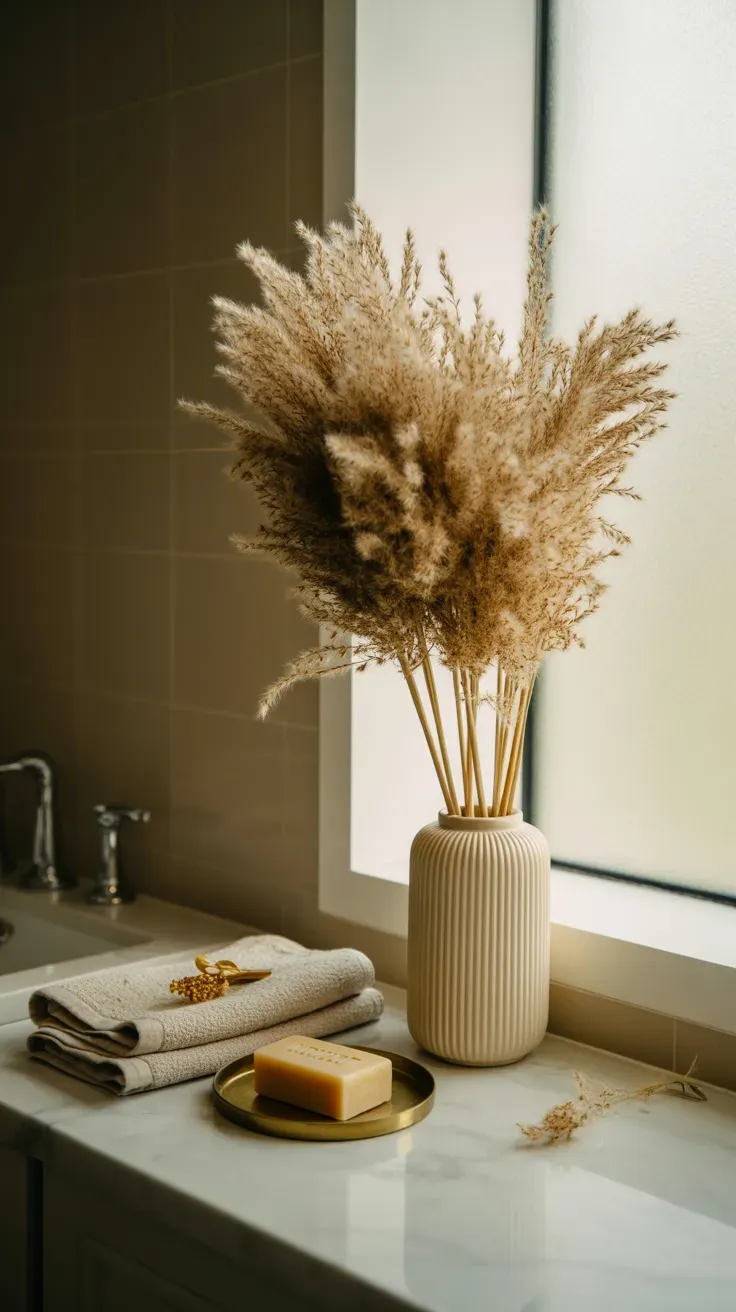
Pampas grass needs no water, no light requirements, and no maintenance, which makes it the easiest fall bathroom swap on this list.
Buy stems already dried (fresh-cut pampas sheds heavily indoors) and trim them to about 4 inches taller than your vase for good proportion. A ribbed ceramic or ribbed glass vase holds the stems upright without floral foam. The pro insight: keep pampas away from direct steam streams, since prolonged moisture makes the plumes go flat and gray within a season.
Pro Tip: Spray a light coat of unscented hairspray on the plumes once — it stops shedding without making them look stiff or fake.
For more on styling dried botanicals through the seasons, see our dried arrangement guide. For general drying and preservation technique, Gardeners’ World covers the basics.
A single vase of pampas does more for warmth than almost any other five-minute swap on this list.
2. Eucalyptus Shower Bundle for Natural Steam-Activated Fragrance
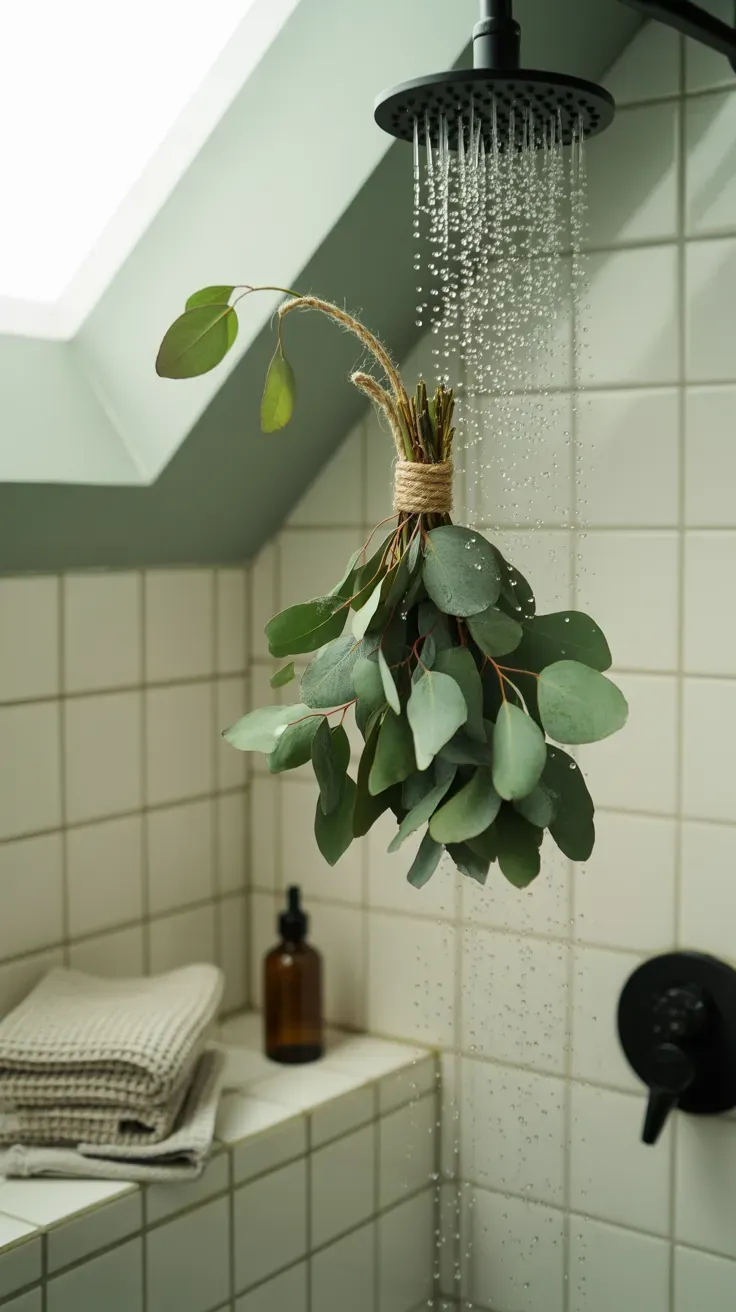
Hot shower steam activates the essential oils in eucalyptus leaves, releasing fragrance without a single diffuser or candle.
Buy a fresh-cut bundle (silver dollar or seeded eucalyptus both work) and tie it to the shower head with twine, keeping it just outside the direct water stream. It typically lasts one to two weeks before drying out, at which point it still looks decorative even brown-tinged. The pro insight: don’t let water hit the leaves directly, or they’ll mold within days instead of drying gracefully.
Pro Tip: Rotate the bundle a quarter-turn every few days so it dries evenly and doesn’t develop a flat, water-damaged side.
Learn which eucalyptus varieties last longest indoors in our shower plant guide. For sourcing and care specifics, The Sill’s plant care library is a solid reference.
It’s the single cheapest, highest-impact idea on this entire list.
3. Moss-Covered Pumpkin Planter on the Vanity
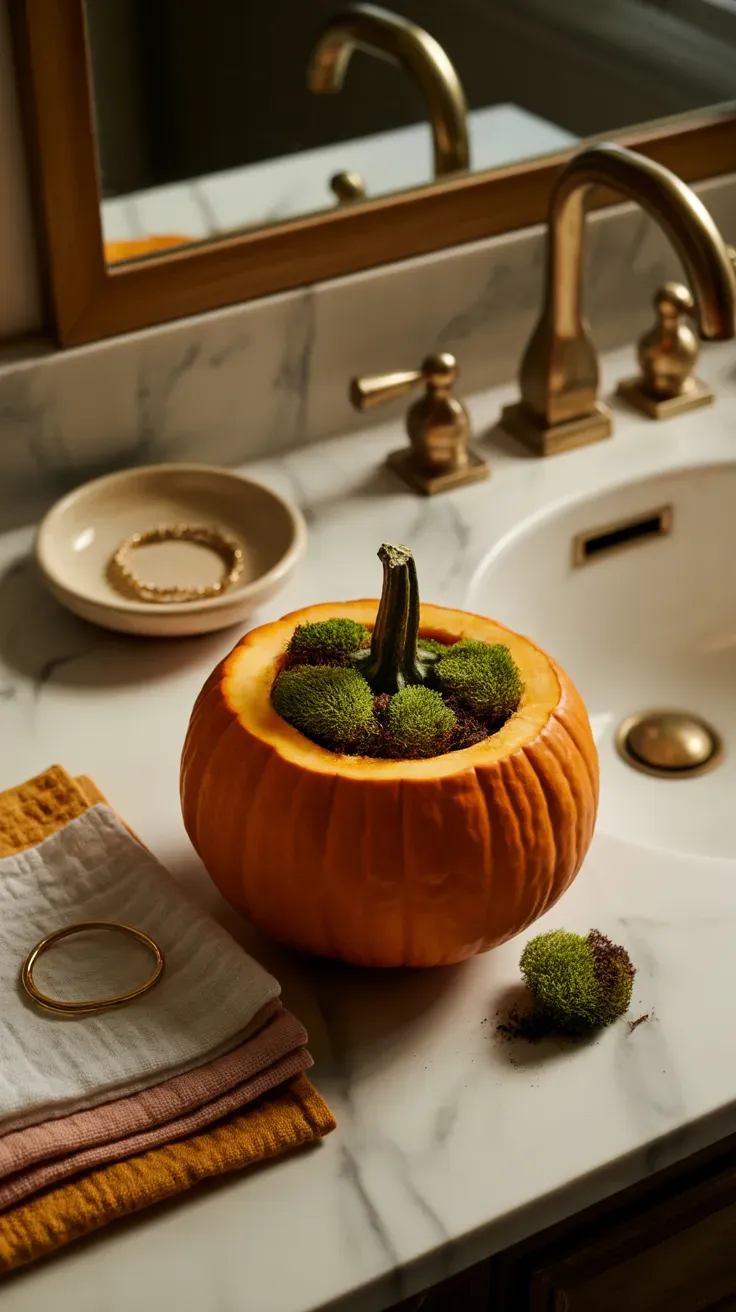
A hollowed pumpkin makes a genuinely striking one-season planter, and moss needs no soil or drainage hole to survive inside it.
Cut the top off a small sugar pumpkin, scoop it clean, and line the inside with sheet moss or preserved reindeer moss before pressing it into place. Because there’s no live root system, this arrangement needs zero watering and lasts as long as the pumpkin itself, typically four to six weeks indoors. The pro insight: a fresh pumpkin will eventually soften and collapse, so treat this as a temporary October display, not a permanent fixture.
- Fresh pumpkin version: Lasts 4-6 weeks, more dramatic color, needs eventual disposal.
- Faux pumpkin version: Lasts indefinitely, reusable yearly, slightly less authentic texture.
See our full seasonal planter ideas for more no-water container tricks. For pumpkin variety selection, the Almanac’s pumpkin growing guide is useful background.
It’s a fun, low-commitment project that costs less than a candle.
4. Maidenhair Fern on a Floating Bathroom Shelf
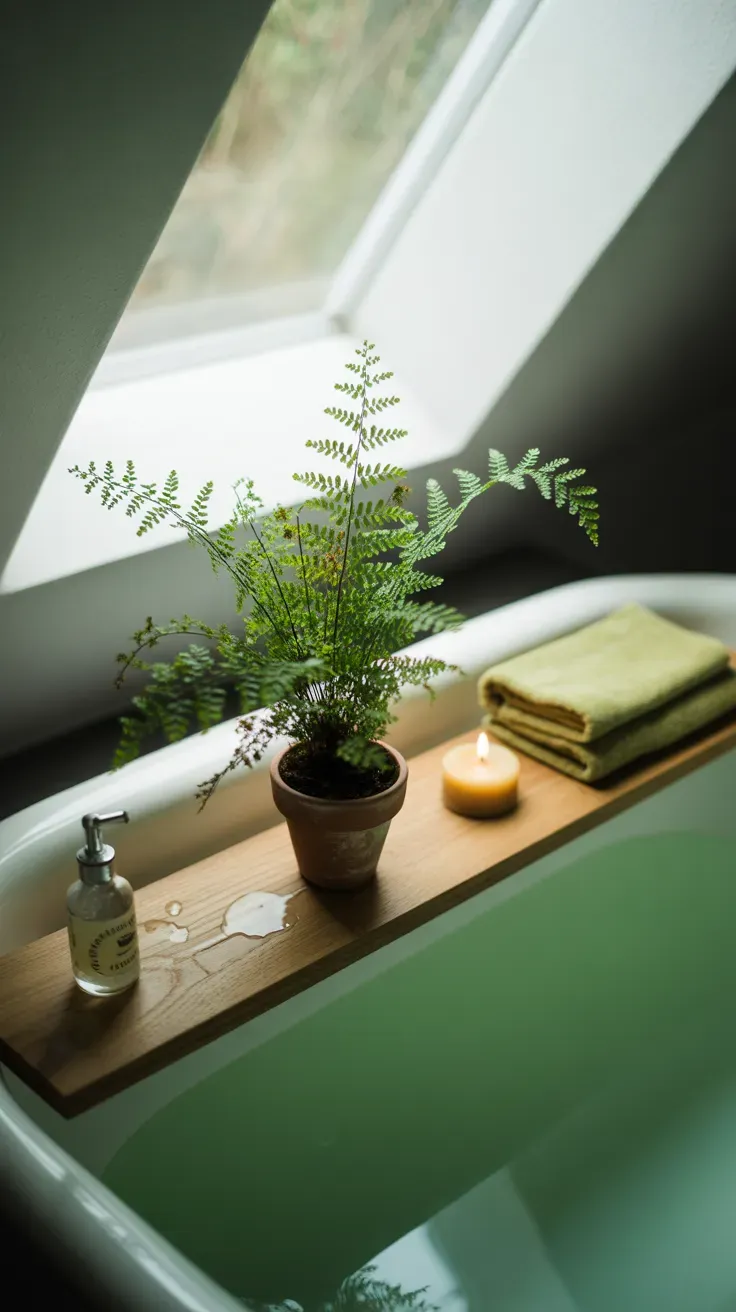
Maidenhair fern thrives on the humidity most bathrooms already produce, making it one of the few plants that genuinely prefers this room over any other.
It wants bright, indirect light (a frosted window is ideal) and consistently moist soil, so check it every two to three days rather than on a weekly schedule. Mist the fronds if your shower doesn’t run daily, since dry air browns the tips fast. The pro insight: I let mine dry out once over a long weekend and lost half the fronds within 48 hours; it bounced back, but it taught me this plant doesn’t forgive neglect the way pothos does.
Pro Tip: Set the pot on a pebble tray with water beneath it (not touching the roots) to add ambient humidity between showers.
Full care specifics live in our maidenhair fern care guide. For humidity requirements by species, Missouri Botanical Garden’s plant finder is a reliable cross-check.
It’s a beautiful but honest commitment — only add it if you’ll actually check on it midweek.
5. Cinnamon Stick and Dried Orange Garland Around the Mirror
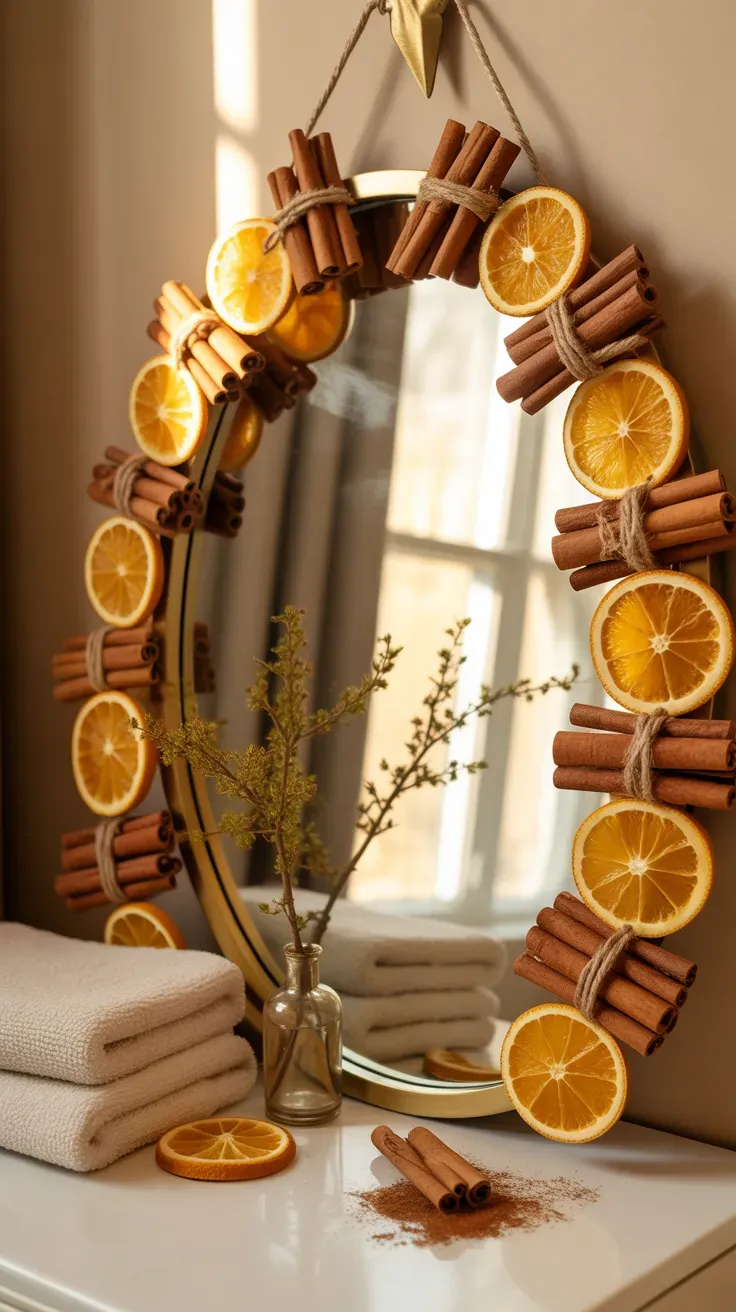
This garland costs almost nothing to make and fills the room with a faint spiced scent every time the bathroom warms up.
Slice oranges thin, dry them in a low oven (around 200°F for 2-3 hours) until leathery, then string them on twine alternating with whole cinnamon sticks tied at intervals. Drape it loosely around a mirror frame or towel hook rather than pulling it taut, so it catches light and casts a bit of shadow texture. The pro insight: oranges dried too quickly at high heat turn brittle and snap; low and slow is the only way to get that leathery, photogenic curl.
Browse more DIY dried garland projects for variations using apple slices and rosemary. For safe food-drying temperatures, Penn State Extension’s guide is worth a read.
It’s a genuinely fun weekend project, and the whole house smells like it while the oranges dry.
6. Copper Fixtures Paired with Amber Glass Jars
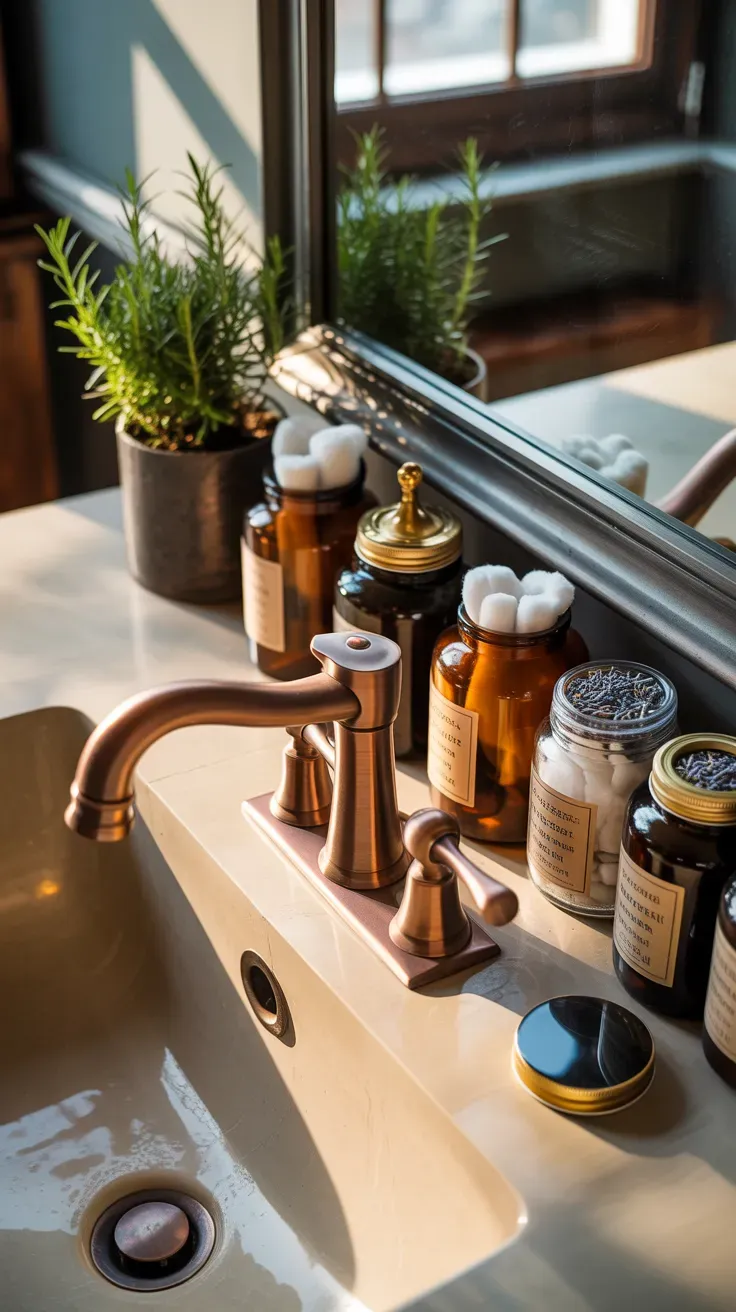
Copper reads warm under almost any light temperature, which is why it pairs so naturally with fall’s orange and rust palette without a single wall being repainted.
Swap just the faucet or a few drawer pulls if a full fixture change isn’t in budget, and group amber glass jars nearby to echo the copper tone in a cheaper material. The pro insight: mixing copper with cool-toned chrome elsewhere in the same room reads as unfinished, so commit to warm metals throughout, including towel bars and light fixtures, for it to feel intentional.
- Full commitment: Faucet, drawer pulls, and towel bar all copper — $150-250.
- Budget version: Amber jars and copper accessories only, keep existing chrome — $30-50.
See our warm-metal bathroom styling guide for more pairing ideas. For general color-and-material pairing principles, Better Homes & Gardens covers seasonal styling broadly.
It’s the highest-cost idea here, but also the one with the longest-lasting payoff.
7. Macrame Hanger with a Trailing Pothos
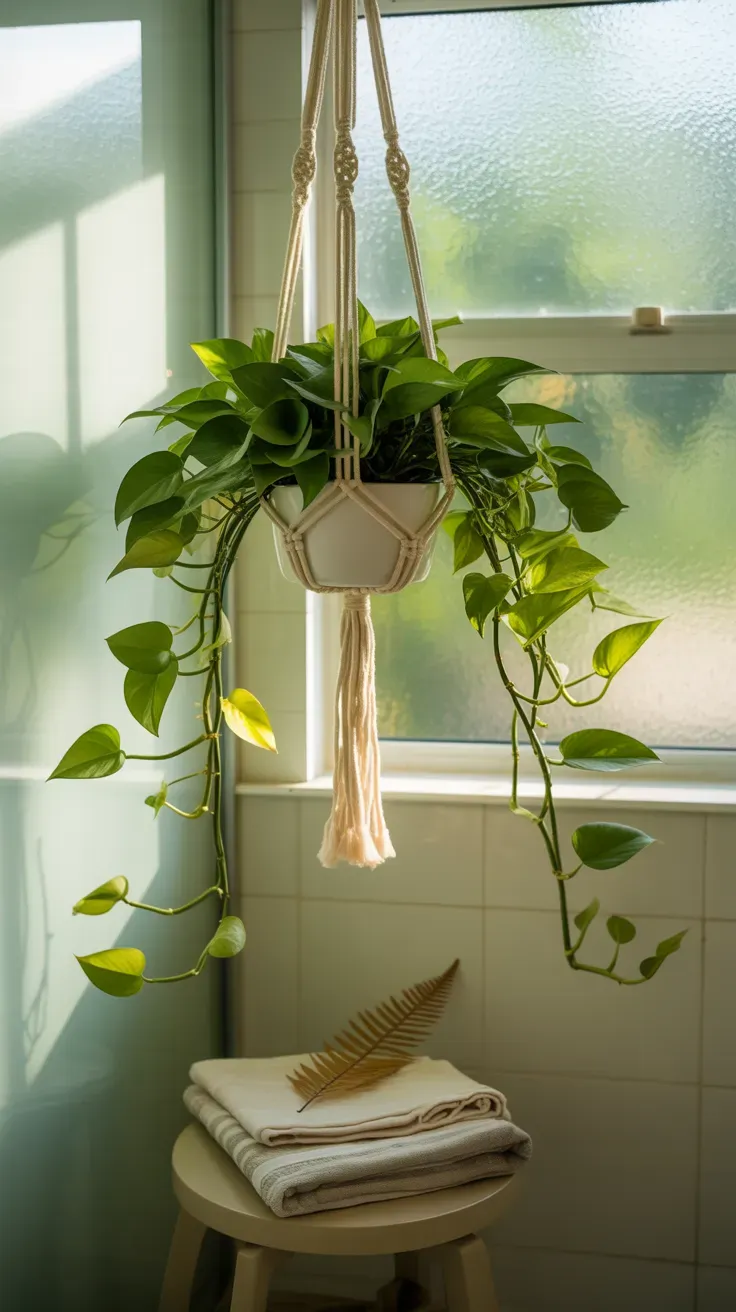
Pothos tolerates low light, inconsistent watering, and bathroom humidity swings better than almost any houseplant, which is exactly why it shows up in so many rental bathrooms.
Hang it where the trailing vines have room to grow, at least 18 inches of clearance below the pot, and water only when the top two inches of soil are dry, typically every 9-12 days in a humid bathroom. The pro insight: pothos left in low light will grow slower and lose variegation, going nearly solid green, which isn’t a problem unless you specifically wanted the marbled look.
Pro Tip: Wipe the leaves with a damp cloth monthly — bathroom humidity attracts dust that clings more than in drier rooms, and it blocks light absorption.
Our full pothos care guide covers propagation too. For toxicity notes if you have pets, check the ASPCA-referenced plant list via RHS.
It’s an easy plant that makes an empty corner feel finished within a single vine’s growth.
8. Chunky Knit Bath Mat in Rust and Cream
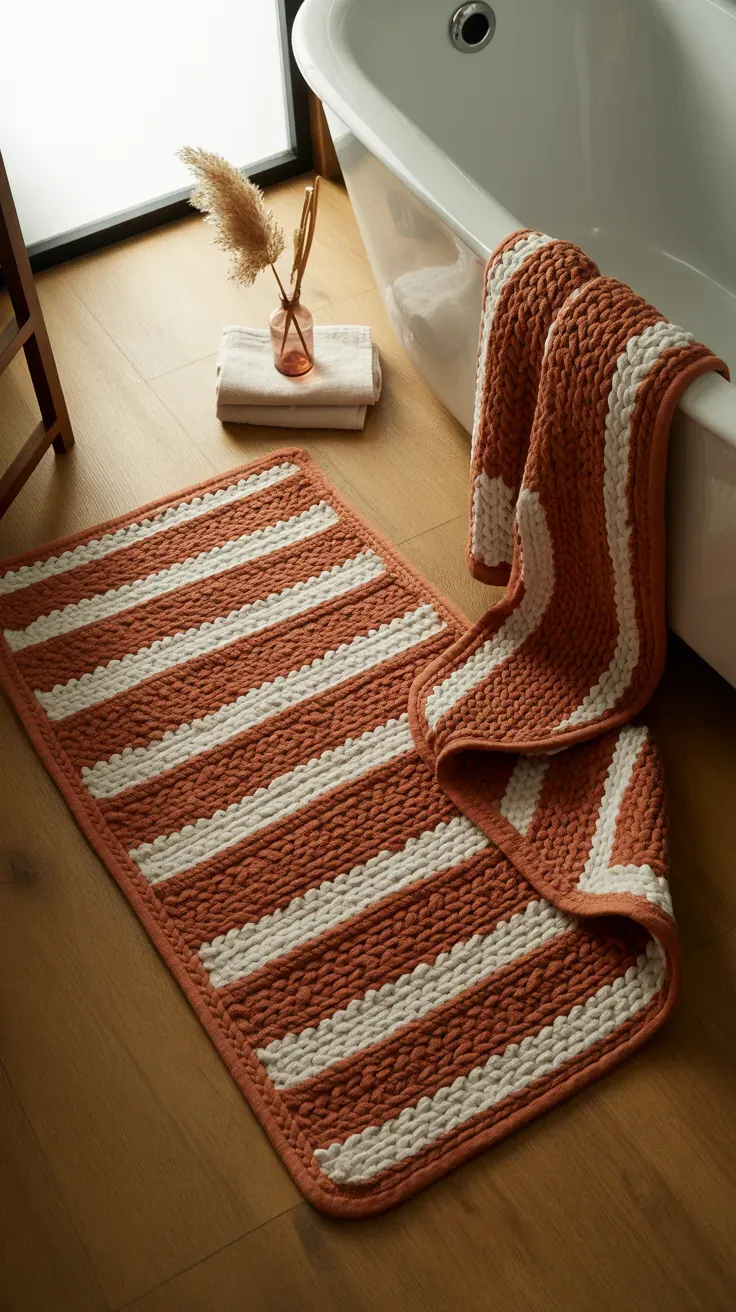
Cold tile floors are the first thing that makes a bathroom feel unwelcoming once fall temperatures drop, and a thick knit mat fixes that instantly.
Choose a chunky, low-pile knit over a flat cotton mat for real warmth underfoot, and pick rust, cinnamon, or deep olive to shift the room’s palette without touching a wall. The pro insight: chunky knits trap more moisture than flat mats, so they need a weekly shake-out and occasional air-dry outside, or they develop a faint musty smell within a month.
Pair it with our cozy textile layering ideas for more seasonal texture swaps. For fabric care in humid rooms, SFGate’s home guide has general maintenance advice.
It’s a five-minute swap that changes how the whole room feels underfoot every morning.
9. Layered Vintage Rugs for Texture
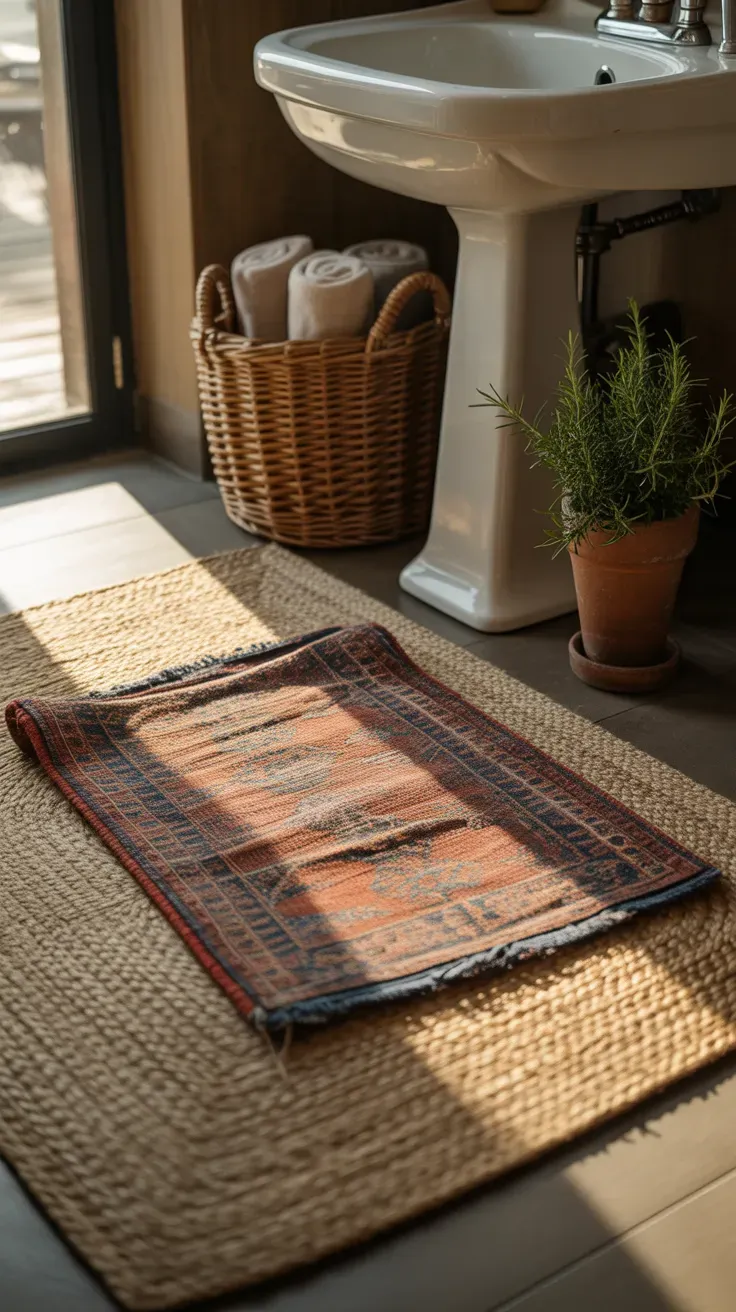
Layering two rugs of different textures adds visual depth that a single flat mat never achieves, and it’s a trick borrowed straight from living room styling.
Start with a larger jute or sisal rug as the base layer, then offset a smaller patterned vintage-style rug on top at a slight angle rather than perfectly centered. The pro insight: skip this in a genuinely small bathroom (under 40 square feet), where two rugs will make the floor feel cluttered instead of cozy; one well-chosen mat works better there.
- Small bathrooms: One textured mat only, skip layering entirely.
- Larger bathrooms: Jute base plus a smaller accent rug, offset for movement.
Read more in our small-space styling tricks roundup. For general rug-and-room-scale guidance, BHG’s gardening and home section touches on proportion principles that translate well indoors.
It’s a simple swap, but proportion matters more here than in any other idea on this list.
10. Stoneware Soap Dispenser in Matte Clay Glaze
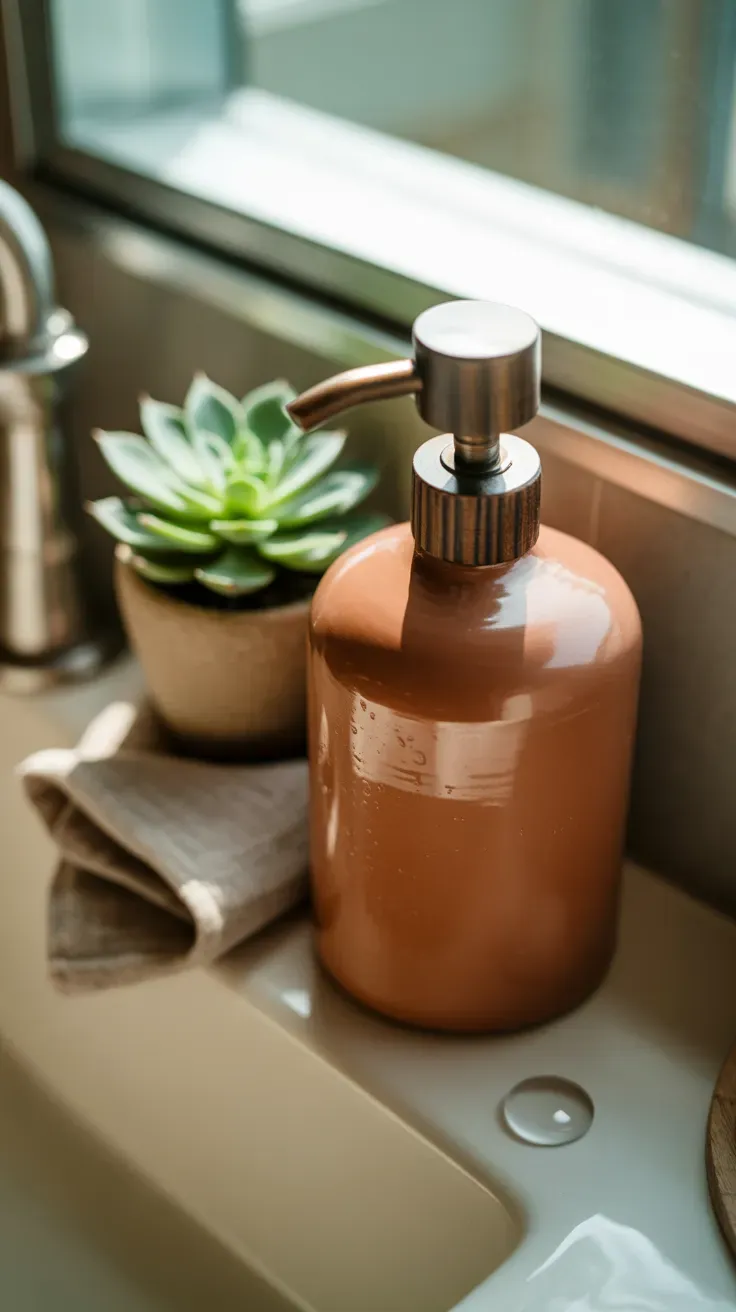
Swapping a plastic soap bottle for stoneware is one of the cheapest single changes that instantly reads as more intentional.
Look for a matte clay or speckled stoneware finish rather than glossy ceramic, since matte textures read warmer and more “fall” under any lighting. The pro insight: refill from a bulk soap jug rather than buying decorative dispensers pre-filled, since most pre-filled options use thin, runny soap that clogs the pump within weeks.
Pair it with a tiny succulent for a finished vanity vignette — see our tiny succulent styling ideas. For succulent light needs specifically, The Sill’s succulent care page is a solid quick reference.
It’s a small detail, but it’s the kind of thing guests actually notice and comment on.
11. Wooden Ladder Shelf Styled with Folded Waffle Towels
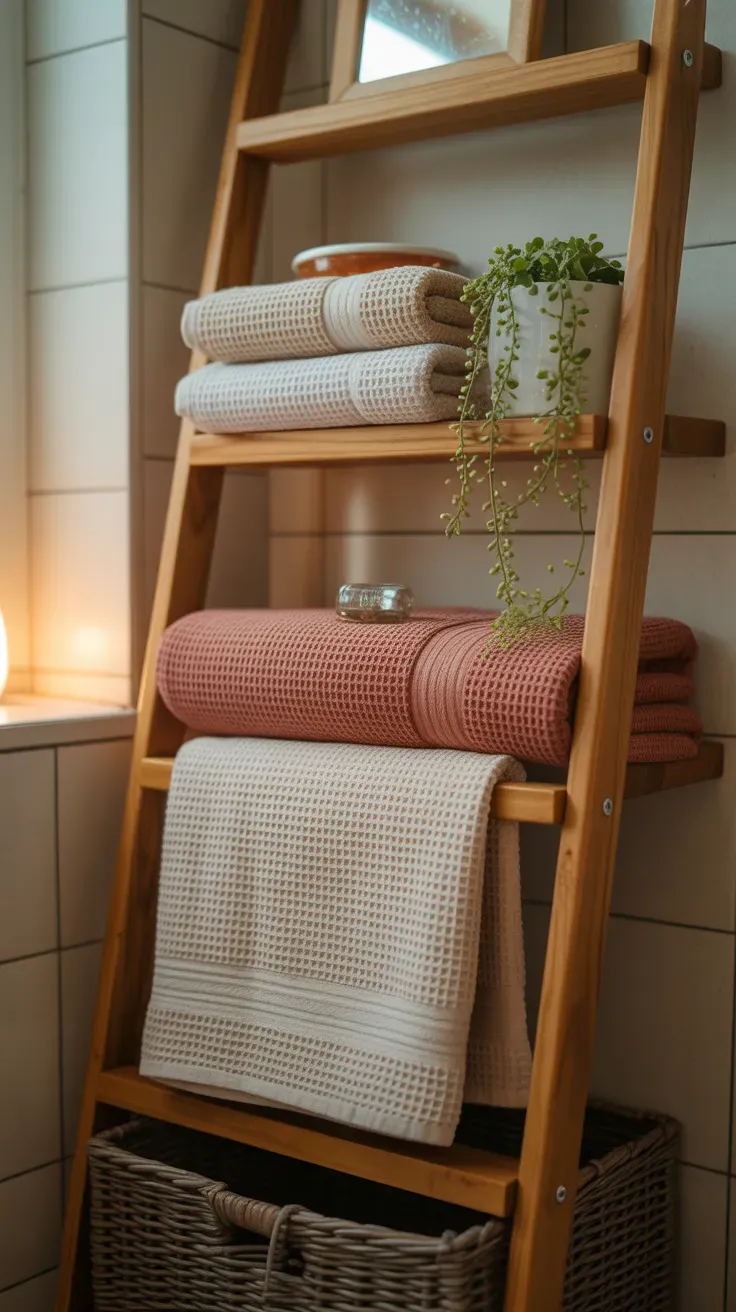
A ladder shelf solves storage and styling at once, giving folded towels a place to live that also looks deliberate rather than shoved in a cabinet.
Fold towels in thirds rather than rolling them for a cleaner, more architectural stack, and reserve the top rung for a small trailing plant like string of pearls, which tolerates the drier air higher up in the room, away from shower steam. The pro insight: overloading every rung makes the piece feel cluttered instead of styled; leave at least one rung with just a single object.
Pro Tip: Place the ladder against the wall opposite the shower, not beside it, so towels don’t absorb ambient steam and stay musty.
More storage-meets-styling ideas live in our bathroom shelf styling guide. For string of pearls’ specific water needs, Missouri Botanical Garden’s plant finder has good background.
It’s genuinely useful storage that doubles as the room’s best styling opportunity.
12. Mini Terrarium with Preserved Reindeer Moss
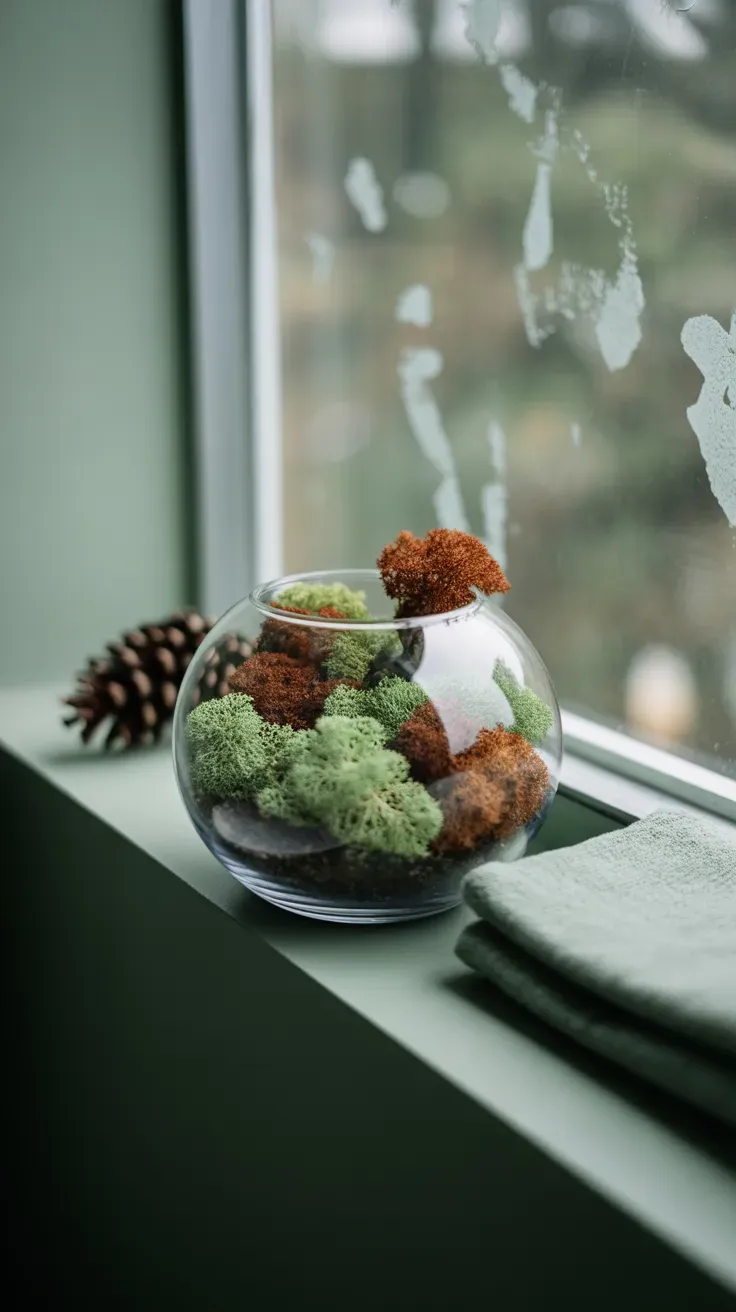
Preserved moss needs no light, no water, and no soil at all, making it the lowest-maintenance “plant” decor possible in a windowless bathroom.
Fill a small open glass terrarium (closed terrariums trap too much bathroom humidity and can mold preserved moss) with reindeer moss in a few different rust and sage tones for visual depth. The pro insight: preserved moss is treated with glycerin to stay soft, and direct sun will fade its color within a few months, so keep it away from strong afternoon light.
Read more about no-water decor plants for other options like preserved moss and lichen. For a primer on moss types generally, the RHS moss guide is a helpful reference even though it covers live moss.
It’s the closest thing to a “plant” you can put in a bathroom with zero natural light.
13. Plaid Shower Curtain in Burnt Orange and Forest Green
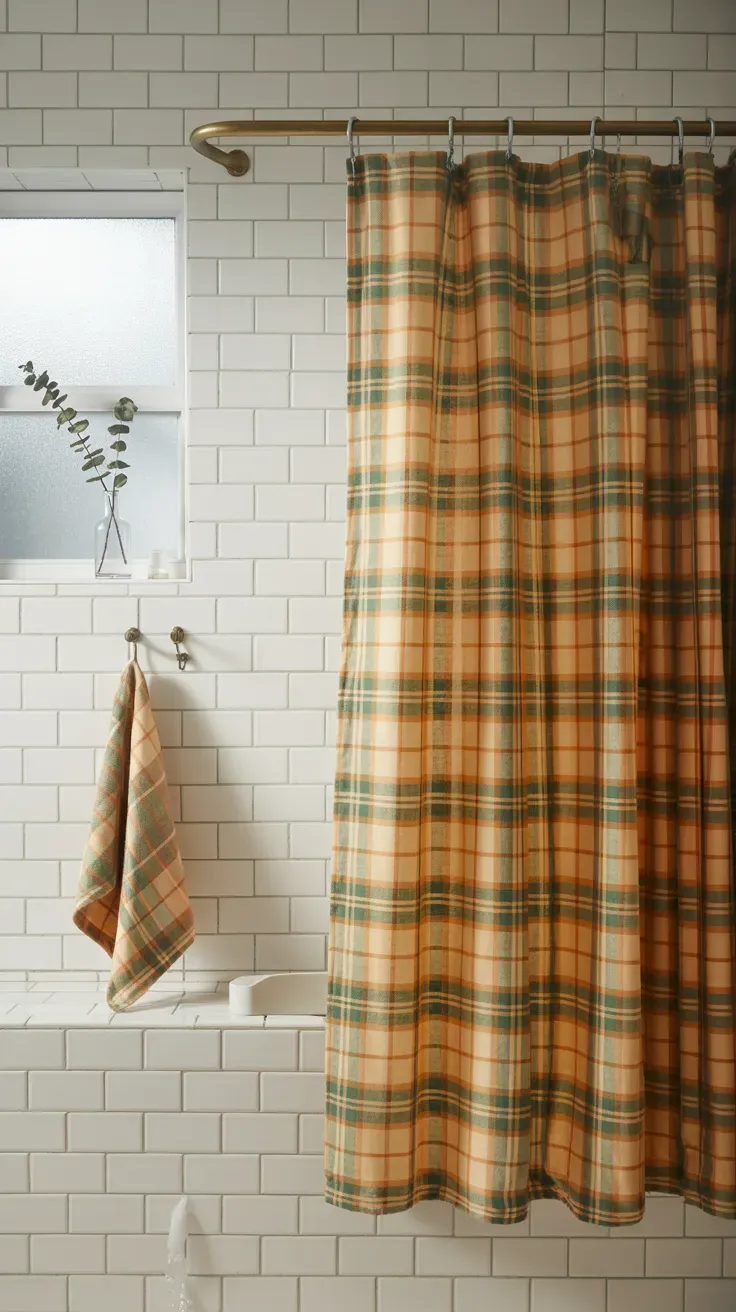
A patterned shower curtain covers more visual square footage than almost anything else in the room, so it’s the fastest way to shift the entire palette in one swap.
Choose a plaid or buffalo check in burnt orange, forest green, and cream rather than a busy multi-color print, since two or three tones read as intentional while five or more start to look chaotic in a small space. The pro insight: buy a fabric liner, not just a decorative outer curtain, or the pattern will look flat and lifeless without the layered depth a liner provides.
Browse more seasonal shower curtain pairings for color-matching tips. For general color-pairing theory, BHG’s design section offers useful cross-room guidance.
It’s a bold statement piece, and it’s the one idea here that instantly changes the room from across the hallway.
14. Beeswax Taper Candles in a Brass Holder
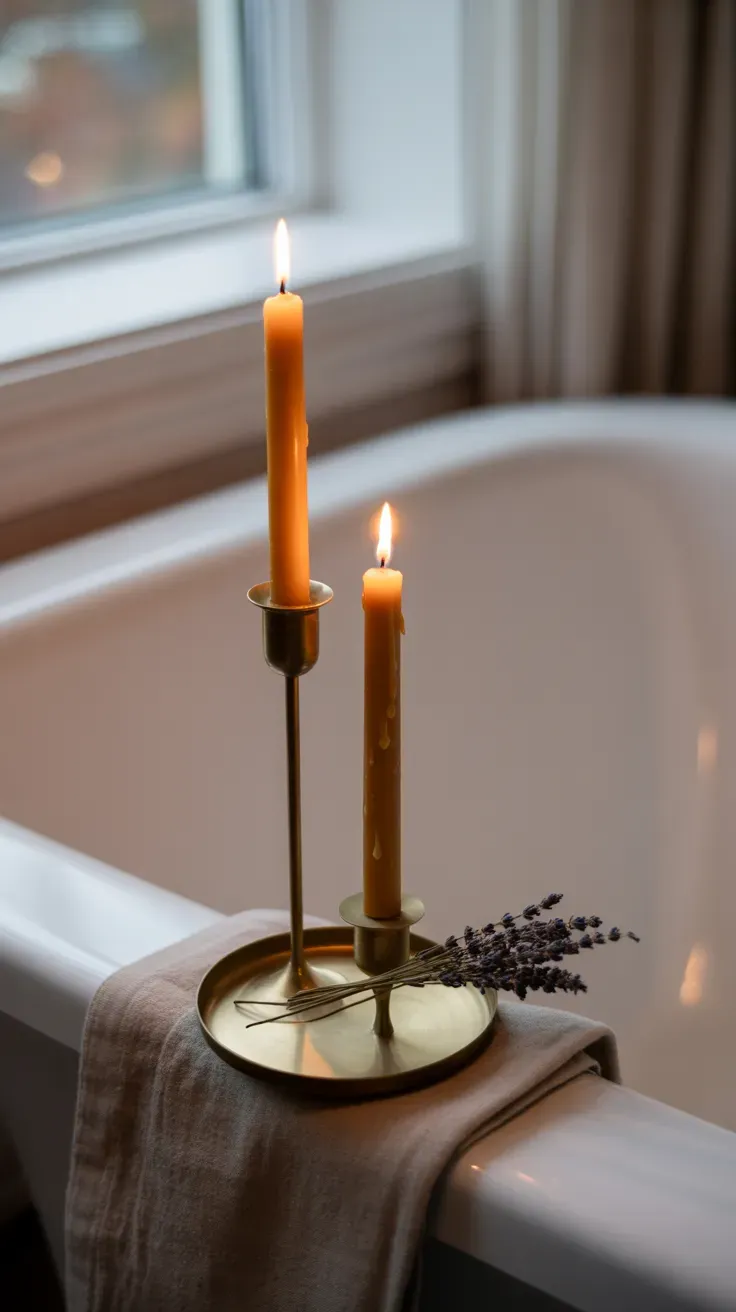
Beeswax burns with a warmer, honey-toned light than paraffin candles and carries a faint natural scent instead of an artificial fragrance layer.
Choose tapers over pillar candles for a bathroom specifically, since the tall, narrow shape throws better ambient light in a small room without taking up counter space. The pro insight: beeswax drips more than paraffin in a drafty bathroom, so keep candles away from an exhaust fan or a cracked window, or expect wax on your brass holder within one burn.
Pro Tip: Trim the wick to a quarter-inch before every burn — beeswax tapers smoke and drip far more with a long wick than paraffin does.
See our full candle and lighting styling guide for pairing scents by season. For beeswax sourcing and burn characteristics, Gardeners’ World’s seasonal features occasionally cover beekeeping-adjacent topics worth a browse.
It’s a small, inexpensive touch that does the most work after sunset.
15. Mushroom-Shaped Ceramic Trinket Dishes
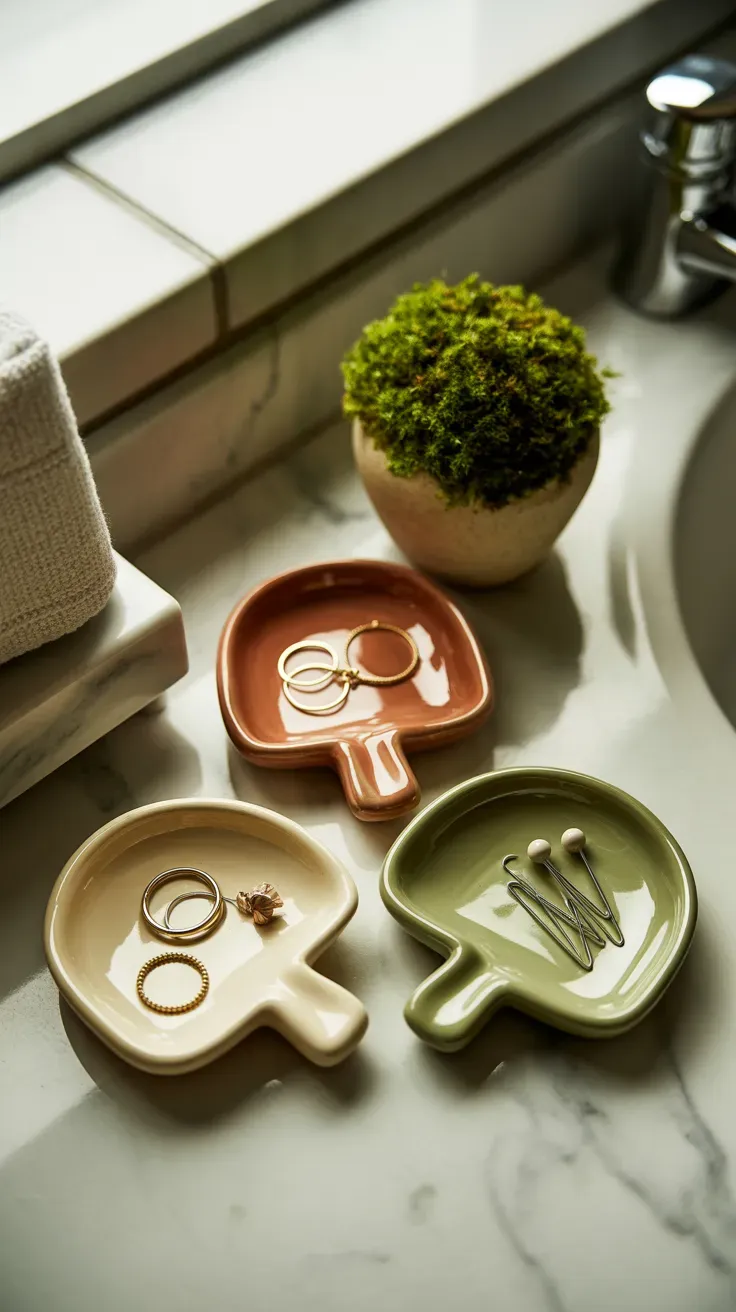
Small trinket dishes solve the real problem of rings and hairpins scattered across a counter, and a mushroom shape leans into fall without saying “Halloween.”
Cluster two or three in slightly different sizes rather than buying a matched set, since uneven groupings photograph and display better than uniform rows. The pro insight: unglazed ceramic bottoms will scratch marble counters over time, so check for a felt pad or a fully glazed base before buying.
- Matched set: Cleaner, more minimal look, less visual interest.
- Mismatched cluster: More texture and personality, better for maximalist styling.
More small-object styling ideas live in our bathroom vignette styling guide. For general ceramic care on stone counters, SFGate’s home guide has practical maintenance notes.
They’re a tiny detail, but they’re the kind of thing that makes a counter look styled instead of just tidy.
16. Woven Seagrass Storage Baskets
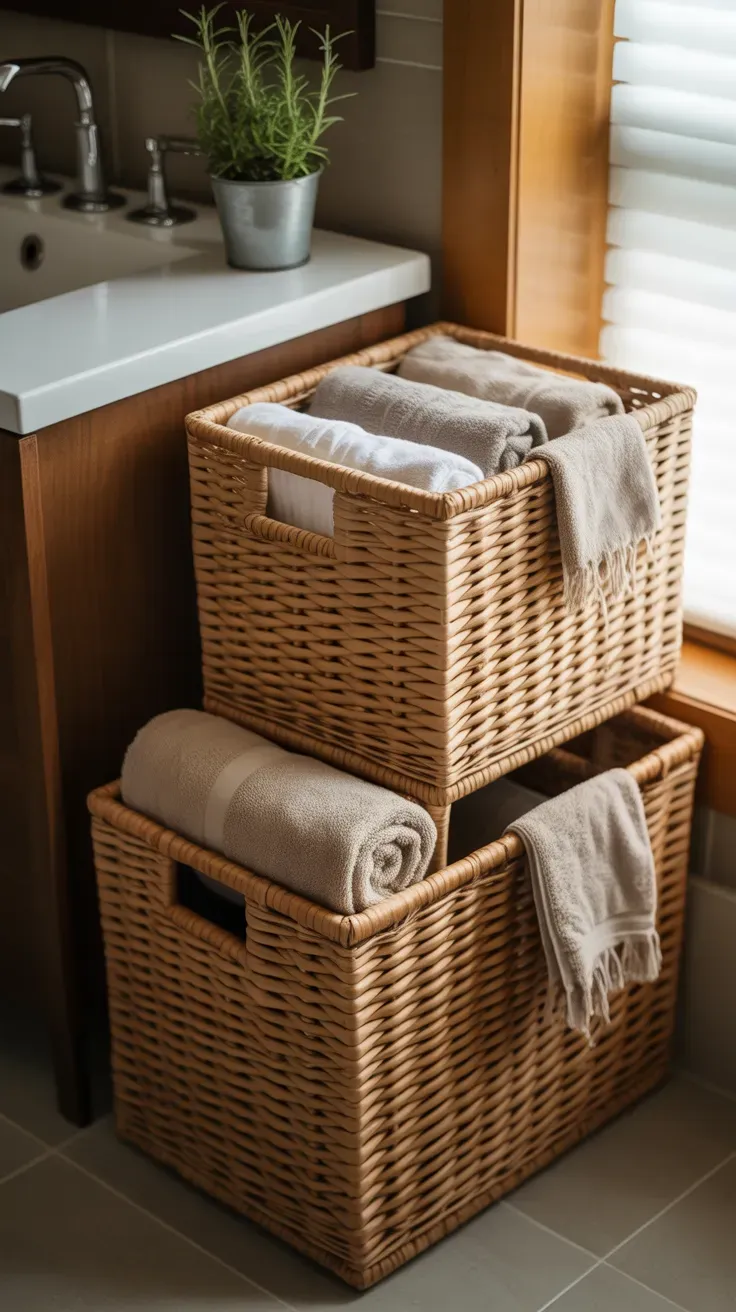
Woven baskets hide clutter while adding exactly the kind of natural texture that makes a fall room feel grounded rather than sterile.
Choose seagrass or water hyacinth weave over plastic bins, and size them to your actual storage needs, one larger basket for towels, one smaller for toiletries, rather than buying a matched trio you’ll never fully use. The pro insight: seagrass absorbs bathroom humidity over time and can develop a musty smell within a year in a poorly ventilated room, so an exhaust fan matters more than the basket material itself.
Read our natural material storage guide for more woven options by budget. For humidity and ventilation basics in small rooms, University of Florida Extension’s home guides cover general moisture management principles.
It’s practical storage first, and stylish second, which is exactly why it earns a permanent spot rather than a seasonal one.
17. Autumn Leaf Wreath on the Bathroom Door
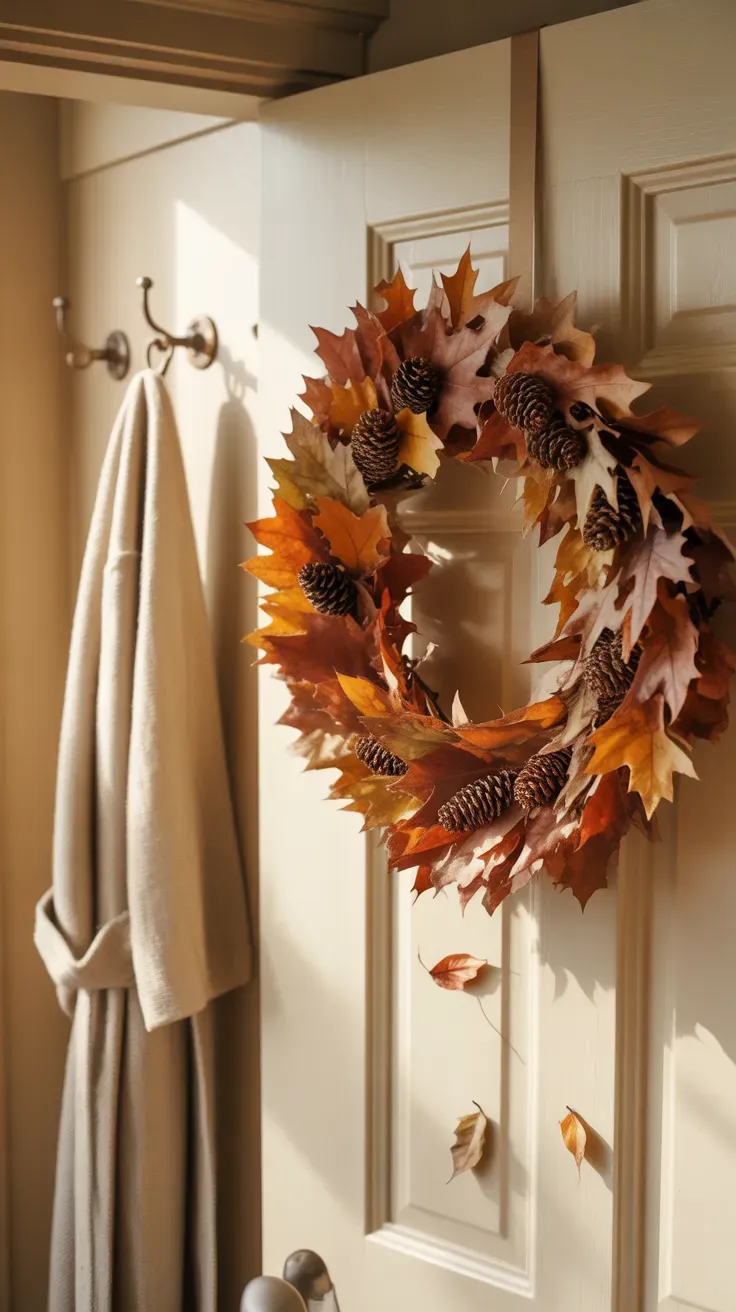
A wreath on the inside of the bathroom door signals “seasonal” the moment someone walks in, and it’s one of the few decor choices that works even in a bathroom with zero counter space.
Use a grapevine base and hot-glue dried leaves, small pinecones, and a few dried berries in clusters rather than spacing them evenly, since natural clustering reads more authentic than a uniform pattern. The pro insight: real dried leaves will crumble and shed within a season if handled roughly, so hang the wreath somewhere it won’t get brushed by a towel or robe daily.
Pro Tip: Spray the finished wreath with a matte sealant — it cuts leaf-shedding by more than half and doesn’t leave a shiny, artificial finish.
More DIY wreath ideas live in our seasonal wreath tutorial. For leaf-drying and pressing technique, the Almanac’s leaf preservation guide is a good reference.
It’s a genuinely fun craft project, and it’s the one idea here that costs almost nothing if you collect leaves yourself.
18. Snake Plant for Low-Light Bathroom Corners
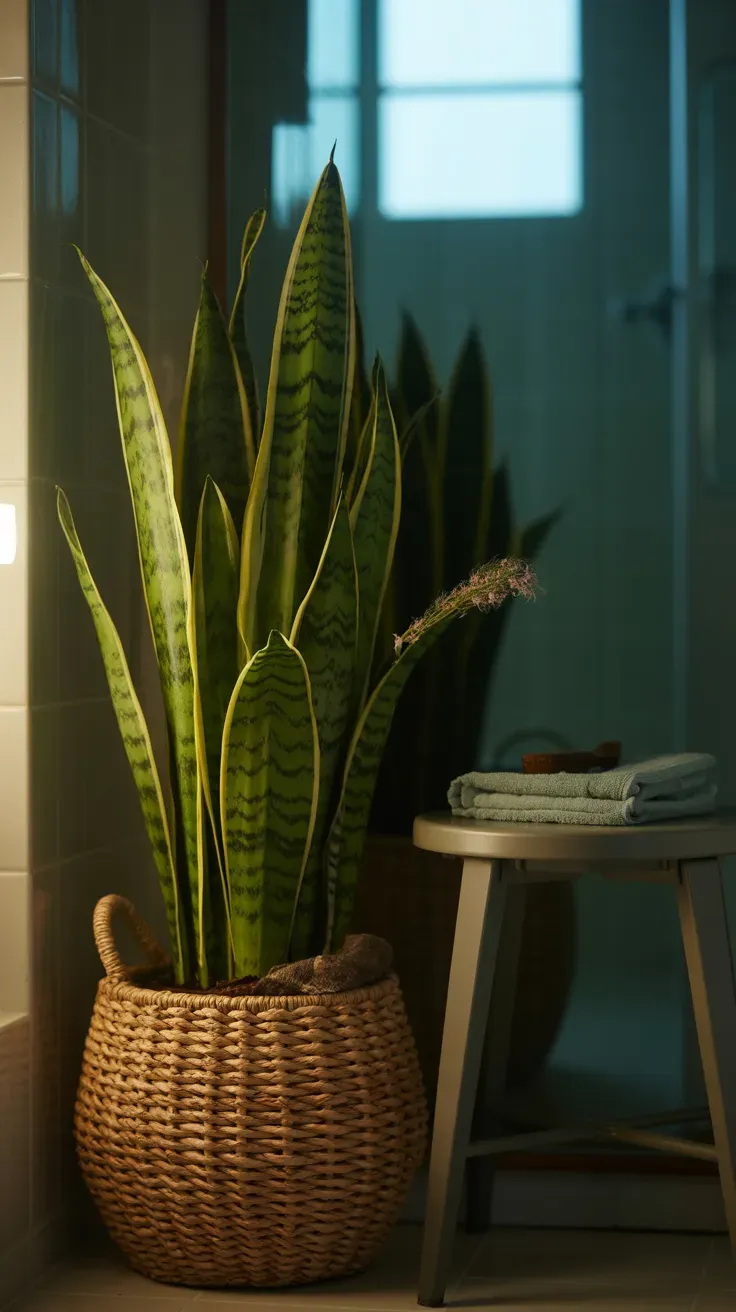
Snake plant tolerates the lowest light levels of almost any common houseplant, which makes it the one genuinely reliable option for a windowless or north-facing bathroom.
Water it only once every three to four weeks in a humid bathroom, since ambient moisture in the air means the soil stays workable far longer than in a dry living room. The pro insight: overwatering, not underwatering, is what actually kills snake plants in bathrooms, because owners assume the humid air means the plant needs more water when it needs less.
- Bright bathroom (window, indirect light): Water every 3 weeks.
- Dim bathroom (no window or artificial light only): Water every 5-6 weeks, rotate monthly toward any light source.
Full watering specifics live in our snake plant care guide. For light-tolerance research on sansevieria specifically, Missouri Botanical Garden’s plant finder entry is a solid source.
It’s the single most forgiving plant on this entire list, and the one I’d recommend to anyone nervous about killing a houseplant.
19. Diffuser Blend with Clove, Cedarwood, and Orange
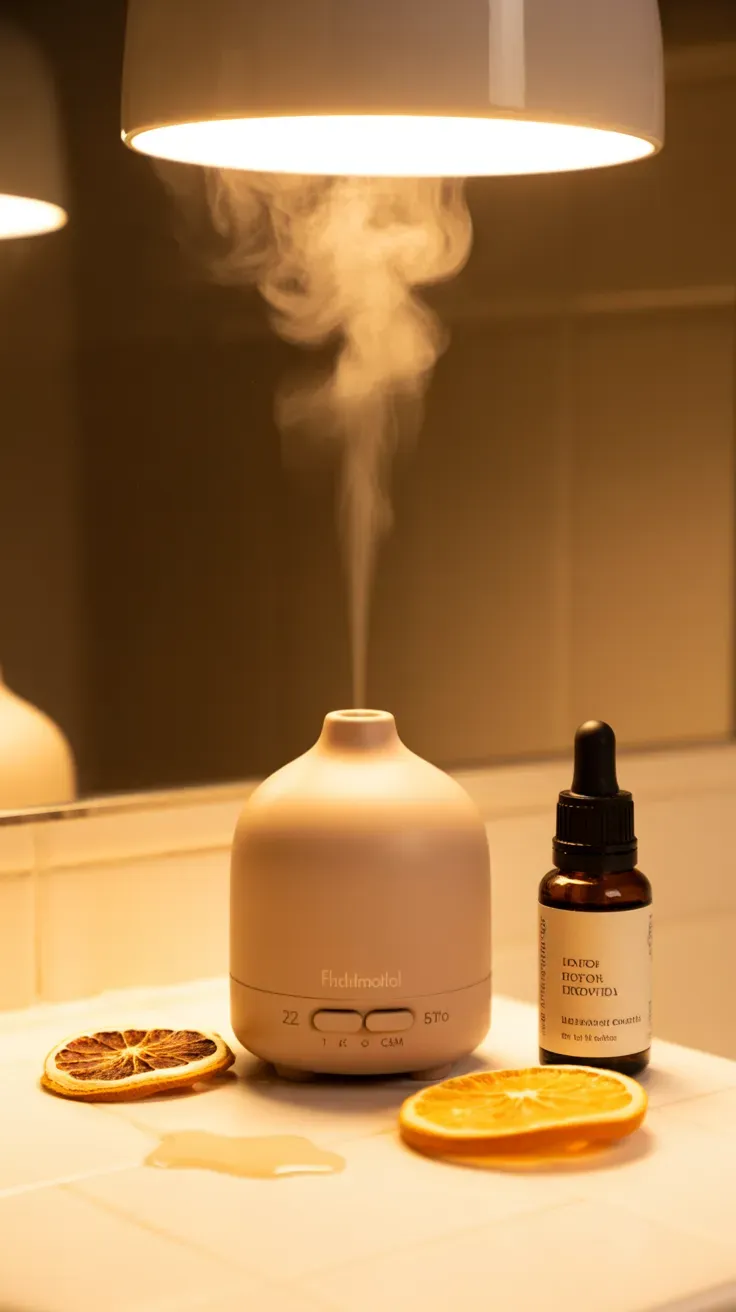
A specific fall scent blend does more to signal “season change” than almost any visual decor, since scent memory is instant and doesn’t require looking at anything.
Combine two drops of clove, three of cedarwood, and four of sweet orange oil per 100ml of water for a warm, spiced base without it reading as artificial pumpkin spice. The pro insight: clove oil in high concentration can irritate skin and eyes in a small, steamy bathroom, so keep the ratio light and run the diffuser only during use, not continuously.
Read more about seasonal essential oil blends for other combinations by room. For general essential oil safety guidance, University of Florida Extension publishes consumer safety resources worth checking.
It’s a small addition, but it’s the one idea here that changes how the room feels before you even turn on the light.
20. Vintage Brass Mirror with Botanical Etching
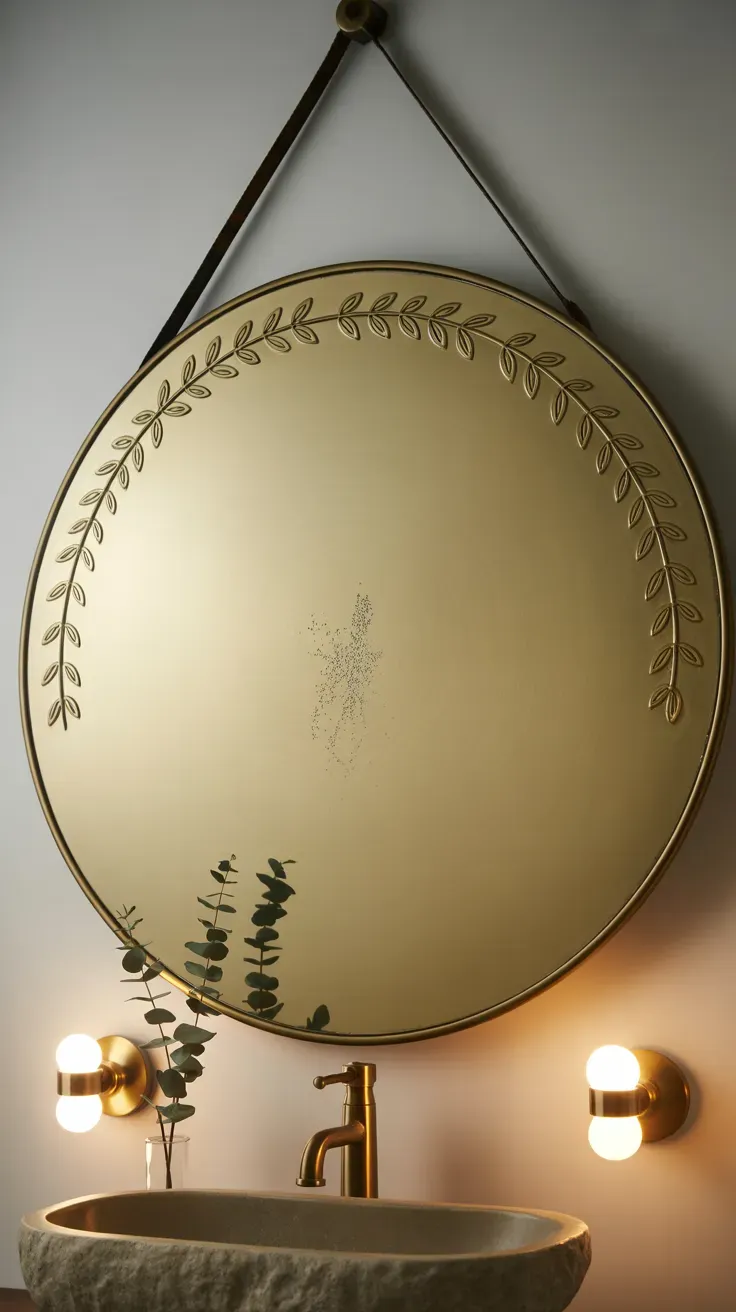
A statement mirror anchors the entire vanity wall, and a brass frame with botanical etching ties the metal tone directly back to the room’s plant styling.
Size the mirror to roughly two-thirds the width of your vanity for correct proportion, and pick an etched or hammered texture over a plain flat frame, since texture catches ambient light in a way flat brass doesn’t. The pro insight: unlacquered brass will patina and darken over months in a humid bathroom, which most people find adds character, but if you want to keep it bright, you’ll need to polish it every few weeks.
More focal-point styling ideas live in our statement mirror guide. For general proportion and scale advice in home styling, BHG’s design resources offer useful cross-room principles.
It’s the highest investment on this list, but also the piece that will outlast every seasonal swap around it.
21. Faux Fur Throw Draped Over a Clawfoot Tub
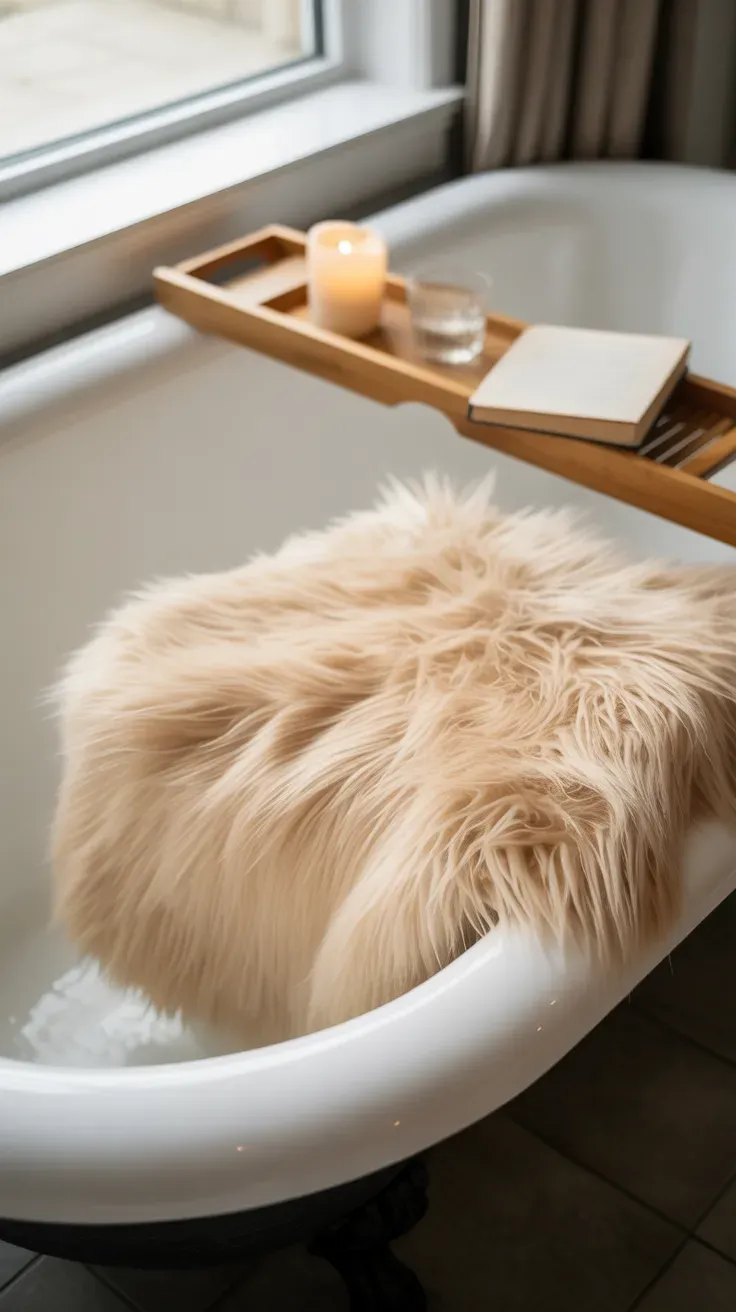
Draping a throw over a clawfoot tub’s edge adds softness to what’s usually the coldest, hardest surface in the room.
Choose faux fur or a heavy sherpa weave over a thin cotton throw, since thin fabric looks flat and slips off the curved enamel edge within a day. The pro insight: keep the throw folded and off the tub itself whenever you’re actually bathing, since faux fur absorbs splashed water fast and takes a full day to air-dry.
Pro Tip: Drape it asymmetrically, pooling slightly on the floor at one end, rather than centered and even — it reads far more intentional and less like a hotel display.
More cozy tub styling ideas live in our clawfoot tub styling guide. For general textile care in humid rooms, SFGate’s home guide has practical notes worth a skim.
It’s a purely visual touch, but it’s the detail most likely to make a guest ask where you got it.
22. Dried Wheat Stalks in a Stoneware Crock
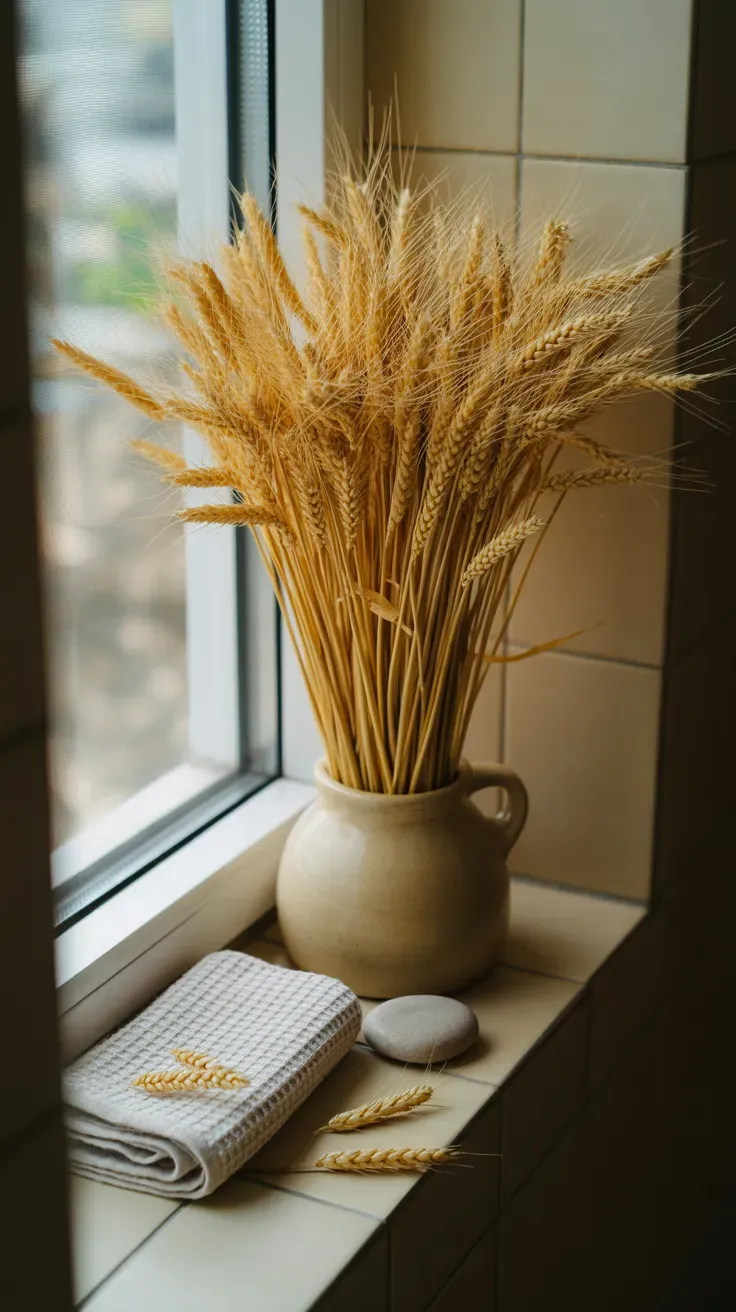
Dried wheat is one of the least expensive botanical accents available and needs literally no care once it’s cut and dried.
Trim stalks to a height about one and a half times the crock’s height for good proportion, and group them loosely rather than perfectly fanned, since a slightly asymmetrical bundle reads more natural. The pro insight: wheat husks shed steadily for the first week after purchase, so expect to sweep a little debris until it settles, and don’t panic that something’s wrong.
- Budget option: Wheat stalks alone in a plain crock, under $15 total.
- Upgraded option: Wheat mixed with a few dried bittersweet branches for color contrast, around $30.
More no-water botanical ideas live in our dried grain and grass styling guide. For general drying technique, Gardeners’ World’s flower-drying guide applies to stalks and grasses too.
It’s the cheapest botanical idea on this whole list, and one of the longest-lasting.
23. Warm-Toned LED Edison Bulb Sconces
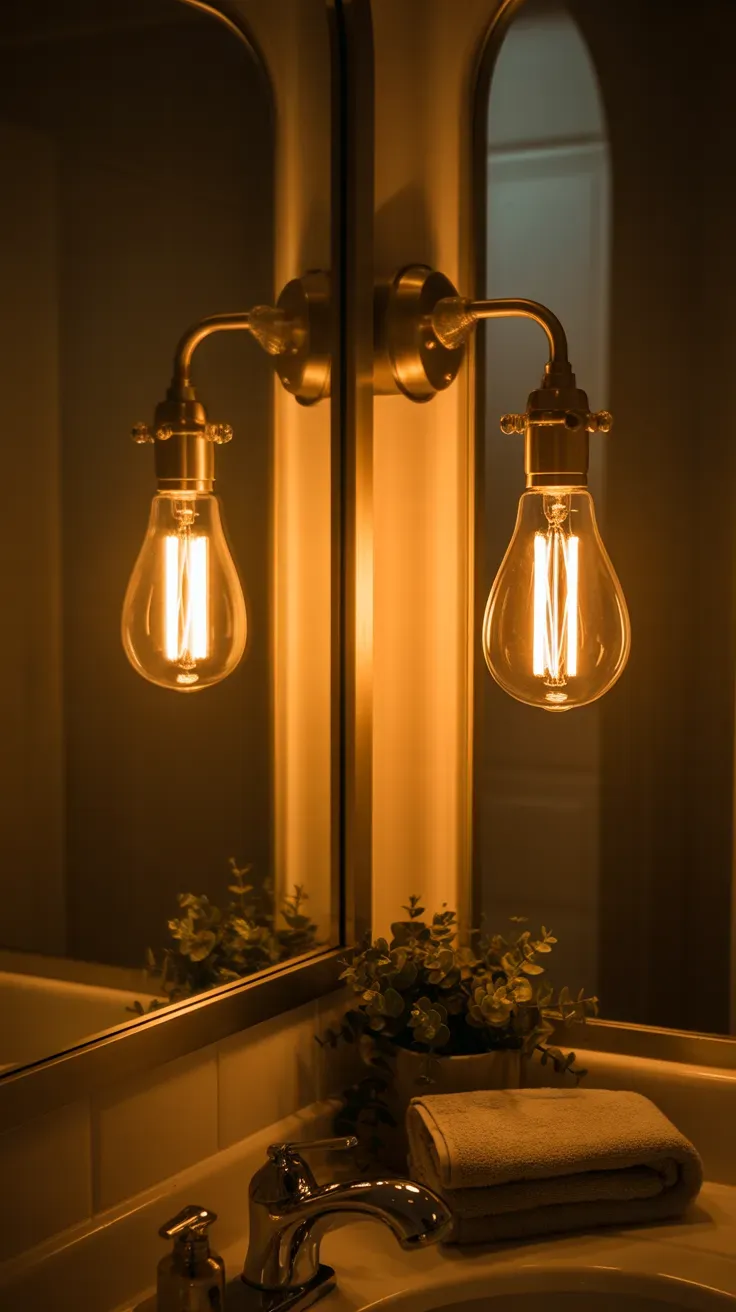
Swapping cool white bulbs for warm-toned Edison-style LEDs changes the entire mood of a bathroom without touching a single fixture beyond the bulb itself.
Look for a color temperature around 2200-2700K for that warm, amber glow, and confirm the bulb is rated for damp locations before installing it near a shower or tub. The pro insight: exposed-filament bulbs throw more ambient light sideways than downward, which is flattering for a room but genuinely worse for tasks like shaving or makeup, so keep one bright, cooler-toned bulb near the mirror specifically.
Read our warm lighting swaps guide for bulb recommendations by wattage. For damp-location electrical safety basics, Penn State Extension’s home safety resources are a reasonable starting point, though always confirm with a licensed electrician for wiring changes.
It’s a small hardware change with an outsized effect on how the whole room feels after dark.
24. Air Plant Display on a Reclaimed Wood Tray
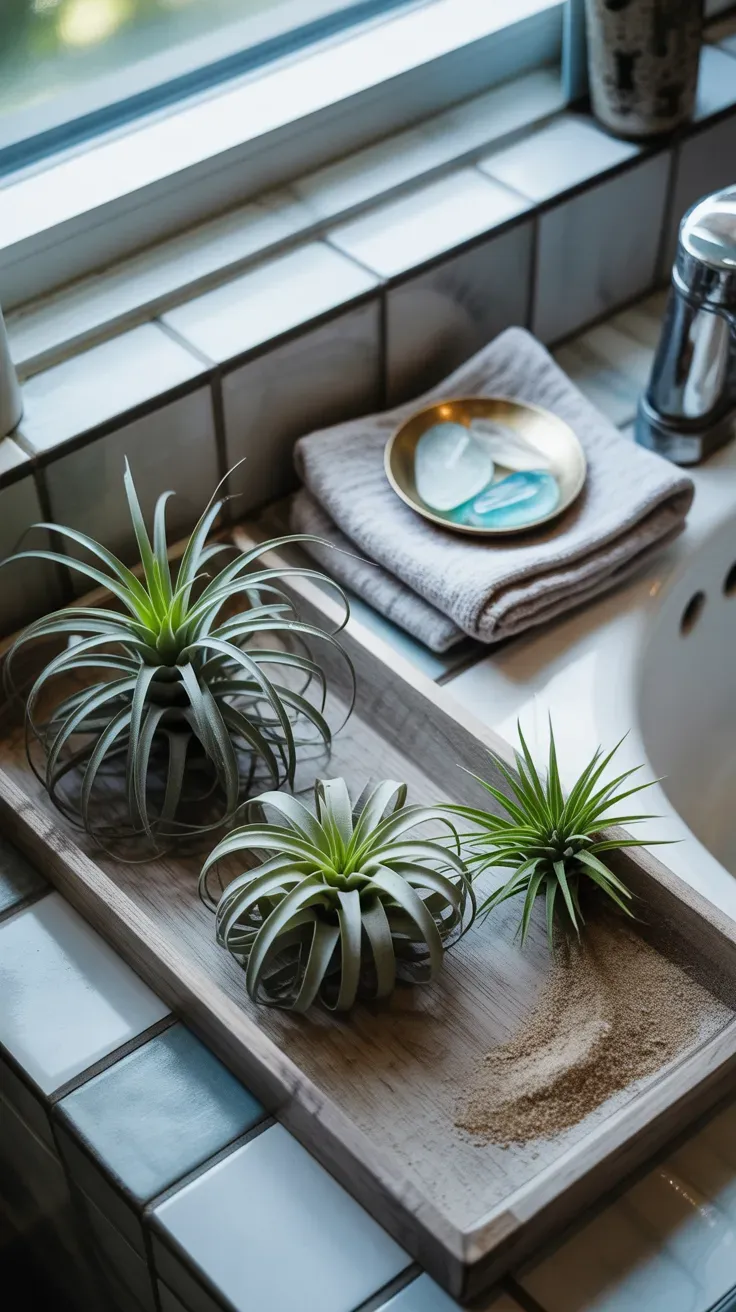
Air plants need no soil and no pot at all, which makes them the easiest genuine houseplant to style directly on any flat surface in the bathroom.
Mist them two to three times a week, or simply soak them in a bowl of water for twenty minutes every other week, since bathroom humidity alone usually isn’t quite enough to sustain them long-term. The pro insight: air plants left sitting in standing water rot at the base within days, so always shake them dry upside down after soaking before setting them back on display.
Pro Tip: Group odd numbers (three or five) at varying heights using small risers under the tray — even numbers in a flat row read static and less natural.
Full air plant watering schedules live in our air plant care guide. For species-specific humidity needs, The Sill’s care library covers tillandsia varieties in more depth.
They’re genuinely low-effort, and the wood tray gives them a defined “home” instead of looking randomly scattered.
25. Layered Linen Hand Towels in Harvest Hues
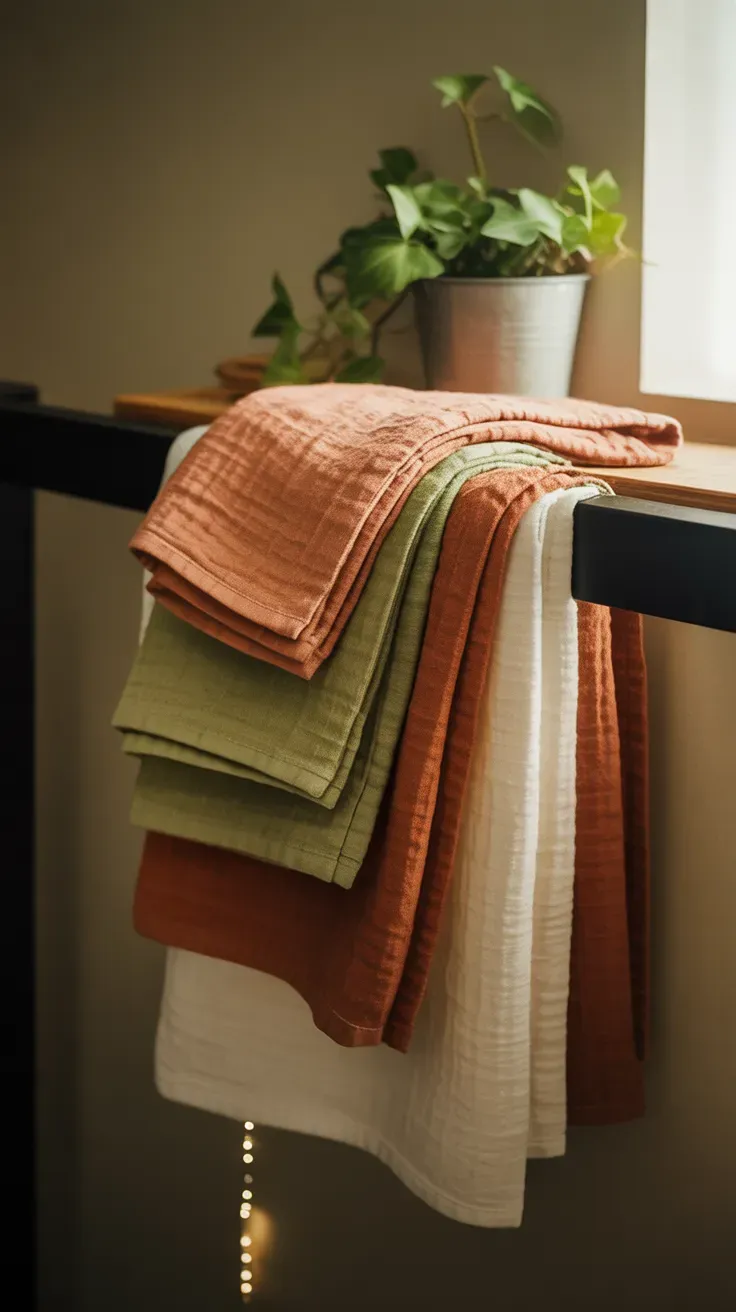
Towels are the cheapest, fastest color change in the entire room, and linen specifically holds a slightly rumpled, lived-in texture that fall styling leans into rather than fights.
Layer three towels of slightly different but complementary tones, rust, olive, and cream work well together, folded in thirds and hung with the top towel offset slightly for visual interest. The pro insight: linen towels absorb less on the first several washes than cotton, so don’t judge their performance until after the third or fourth wash cycle has softened the fibers.
Browse more seasonal towel color palettes for pairing ideas by room tone. For general linen fiber care, Gardeners’ World’s home features occasionally cover natural fiber maintenance worth a browse.
It’s the easiest, cheapest idea to start with if you only do one thing from this entire list today.
Getting Started With Fall Bathroom Decor
The easiest first step is the eucalyptus shower bundle or a pampas grass vase, since both cost under $30, take under ten minutes to set up, and need zero ongoing maintenance beyond letting them dry naturally.
The most common beginner mistake is trying to change everything at once, new curtain, new rug, new plant, new lighting, all in the same weekend, which usually ends up looking cluttered rather than cohesive. Pick one textile change and one botanical change to start, and live with it for a week before adding more.
For your first purchase, get one snake plant (nearly impossible to kill), one chunky knit bath mat in a warm tone, and a roll of jute twine for hanging dried botanicals as you add them. That combination alone covers texture, color, and a genuinely low-maintenance plant.
Realistically, expect the room to feel noticeably different within a single weekend, and fully “finished” within three to four weeks as dried botanicals settle into place and any new plants adjust to their spot.
Frequently Asked Questions
What plants actually survive in a bathroom with no window?
Snake plant and ZZ plant are the two most reliable choices for a windowless bathroom, since both tolerate very low or purely artificial light. Water snake plant every 5-6 weeks in these conditions, and rotate it monthly toward whatever light source exists, even a hallway door left open.
How do I make my bathroom smell like fall without candles?
A eucalyptus shower bundle activated by steam, or a reed diffuser with clove, cedarwood, and orange oil, both work without an open flame. Keep diffuser ratios light, around two drops of clove per 100ml of water, since concentrated clove oil can irritate skin in a small, steamy room.
What color palette works best for fall bathroom decor?
Rust, cinnamon, olive green, and warm cream form the most versatile fall bathroom palette, since they pair well with both white tile and warm wood tones. Introduce the palette through towels and a bath mat first, since textiles are the cheapest and easiest to swap seasonally.
Can I put real plants in a bathroom with a small window?
Yes, as long as the window gets at least a few hours of indirect light; pothos, maidenhair fern, and trailing string of pearls all do well in that condition. Avoid direct south-facing sun through glass, since it can scorch fern fronds specifically within a single afternoon.
How often should I refresh dried botanical decor?
Most dried arrangements, pampas grass, wheat stalks, dried orange garlands, last one full season, roughly three months, before fading or shedding too much to look intentional. Preserved moss lasts longer, typically six months to a year, if kept out of direct sunlight.
A Few Final Thoughts
A cozy fall bathroom doesn’t require a renovation, just a handful of the right swaps done with intention. Out of these 25 fall bathroom decor ideas, the ones that pair botanical touches, a trailing pothos, a eucalyptus bundle, a hollowed pumpkin planter, with warm textiles tend to have the longest staying power once the season shifts again. Start small, one plant and one textile change, and let the rest build over a few weekends rather than a single rushed afternoon. What actually works is choosing pieces you’ll want to keep looking at in January too, not just through Halloween. Pick one idea from this list today, and the rest of the room will start asking for its own update soon enough.