
There’s a particular kind of frustration that comes with pulling the same crabgrass out of the same paver joints every single weekend, only to watch it come right back within ten days. I learned the hard way that bare soil between stepping stones isn’t just an eyesore — it’s an open invitation for every windblown weed seed in the neighborhood. The fix isn’t more mulch or more herbicide; it’s covering that ground with something that actually wants to live there. Creeping garden path plants fill every crack, root densely enough to crowd out invaders, and can handle the occasional footstep without sulking. Ready? Let’s explore all 15 of them.
Quick Answer: For sunny paths that get regular foot traffic, creeping thyme and blue star creeper are the toughest, fastest-spreading choices. For shady, damp walkways, Irish moss and dwarf baby’s tears fill gaps without burning. If you want fragrance released with every step, plant Corsican mint or Roman chamomile.
Why Creeping Garden Path Plants Are Worth Your Time
A living path does something gravel and mulch never can: it actively competes with weeds for root space, light, and water, so there’s simply less room left for anything unwanted to germinate. Once a mat of thyme or moss knits together across a joint, most weed seeds that land on top can’t reach bare soil at all.
The practical payoff shows up fast. In my own side yard, a stretch of paver joints that needed weeding every ten days went nearly two months between touch-ups after I filled them with woolly thyme the following spring.
A lesser-known fact: many creeping path plants, particularly the thymes and chamomile, actually get denser and more weed-resistant the more they’re walked on, since light foot pressure encourages lateral spreading rather than upward growth.
This approach suits anyone with stepping-stone paths, gravel walkways, or gaps between patio pavers who’s tired of a hose-and-spray routine and wants a low-maintenance, genuinely attractive alternative that only needs an occasional trim.
At a Glance
- Creeping thyme tolerates full sun, drought, and regular footsteps better than almost anything on this list.
- Irish moss and Scotch moss need consistent moisture but reward you with a lush, cushiony texture underfoot.
- Corsican mint and Roman chamomile release a genuine scent every time you walk across them.
- Ajuga and creeping Jenny handle partial shade where thyme would thin out and die back.
- Dwarf mondo grass is the slowest to establish but the most resistant to heavy, repeated traffic.
Comparison Table
| Plant | Light Needs | Mature Height | Foot Traffic | Best For |
| Creeping Thyme | Full sun | 2-4 in | High | Sunny stepping-stone paths |
| Irish Moss | Part shade | 1-2 in | Moderate | Damp, cool climates |
| Scotch Moss | Part shade | 1-2 in | Moderate | Chartreuse color accent |
| Blue Star Creeper | Sun/part shade | 1-3 in | High | Between pavers, lawn substitute |
| Corsican Mint | Part shade | 0.5-1 in | Low-moderate | Fragrant shaded nooks |
| Dwarf Mondo Grass | Part shade | 2-3 in | High | Formal Japanese-style paths |
| Woolly Thyme | Full sun | 2-3 in | High | Dry, rocky soil |
| Elfin Thyme | Full sun | 1-2 in | High | Tiny paver gaps |
| Roman Chamomile | Full sun | 3-4 in | Moderate | Fragrant lawn alternative |
| Creeping Jenny | Part shade | 2-4 in | Low-moderate | Trailing over edges |
| Angelina Sedum | Full sun | 3-6 in | Low | Drought-prone borders |
| Ajuga (Bugleweed) | Part shade | 4-6 in | Moderate | Shady problem spots |
| Dwarf Baby’s Tears | Shade | 1-2 in | Low | Damp, shaded courtyards |
| Rupturewort | Full sun | 1 in | High | Ultra-flat gravel paths |
| Creeping Speedwell | Sun/part shade | 2-3 in | Moderate | Naturalized cottage paths |
1. Creeping Thyme for Sun-Baked Stepping Stones
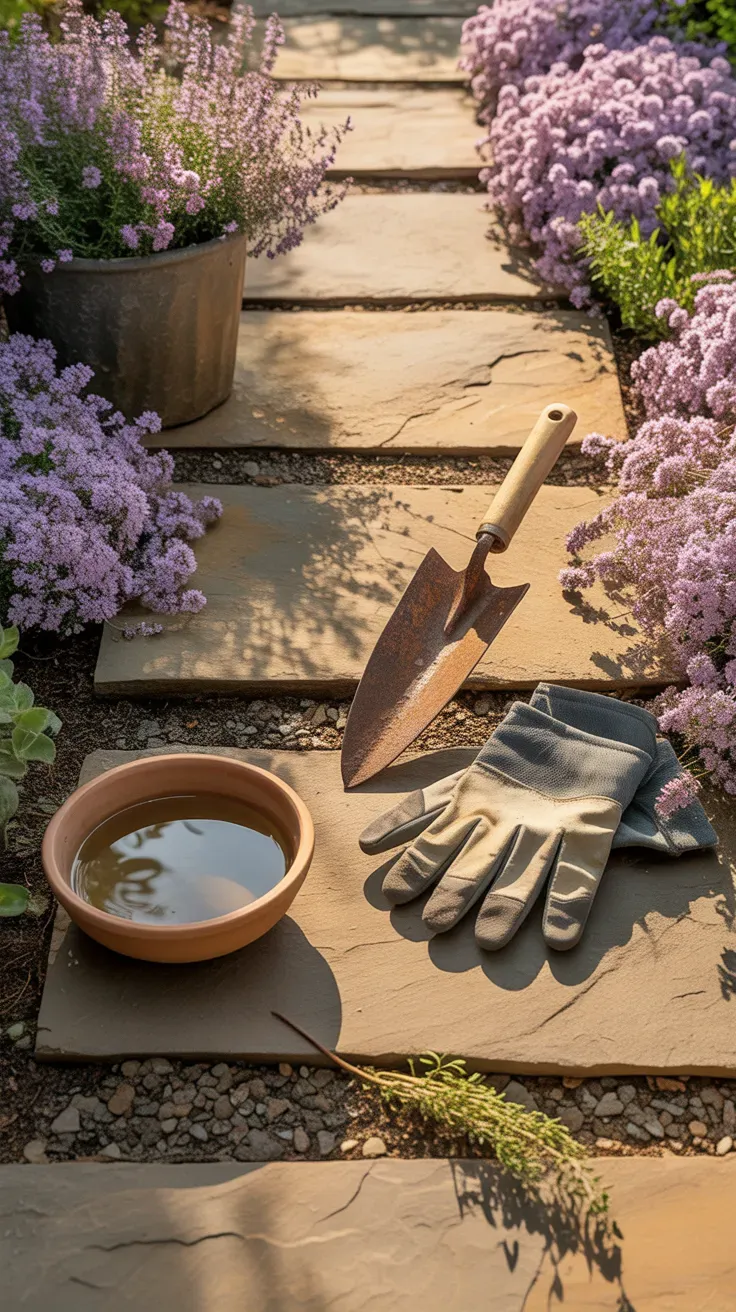
Creeping thyme (Thymus serpyllum) is the workhorse of any sunny path — it roots into the thinnest soil pocket and spreads into a dense, weed-blocking mat within a single season.
You’ll need full sun, at least six hours daily, and gritty, well-drained soil; thyme actively resents heavy clay and constant moisture. Water it in weekly until established, then let it dry between soakings — overwatering is the single fastest way to kill it. In my experience, the plants I babied with daily water rotted, while the ones I nearly ignored thrived.
Pro Tip: Shear thyme lightly after its early summer bloom fades — it triggers a flush of new lateral growth that closes any remaining gaps before autumn weeds get a foothold.
This one earns its reputation; give it sun and dry feet and it rarely disappoints. Learn more about designing a fragrant stone pathway and read the RHS guide on growing thyme successfully.
2. Irish Moss for Cool, Damp Shade Pockets

Irish moss (Sagina subulata) forms a springy, bright-green cushion that thrives exactly where thyme struggles — cool, consistently moist, partially shaded ground.
Plant plugs 6 inches apart in loamy soil enriched with compost, and keep the surface evenly damp, never soggy, especially through its first summer. Feed lightly with a diluted balanced fertilizer in spring. The pro insight here: Irish moss browns quickly in a hot dry spell, so it needs regular watering through any heat wave rather than the drought tolerance thyme offers.
- Best for: shaded, humid climates with regular rainfall
- Avoid if: your path gets more than five hours of direct afternoon sun
It’s forgiving once established, and there’s real satisfaction in walking barefoot across it. See our shade garden pathway ideas and the Missouri Botanical Garden’s Sagina subulata plant profile.
3. Scotch Moss for a Chartreuse Color Pop
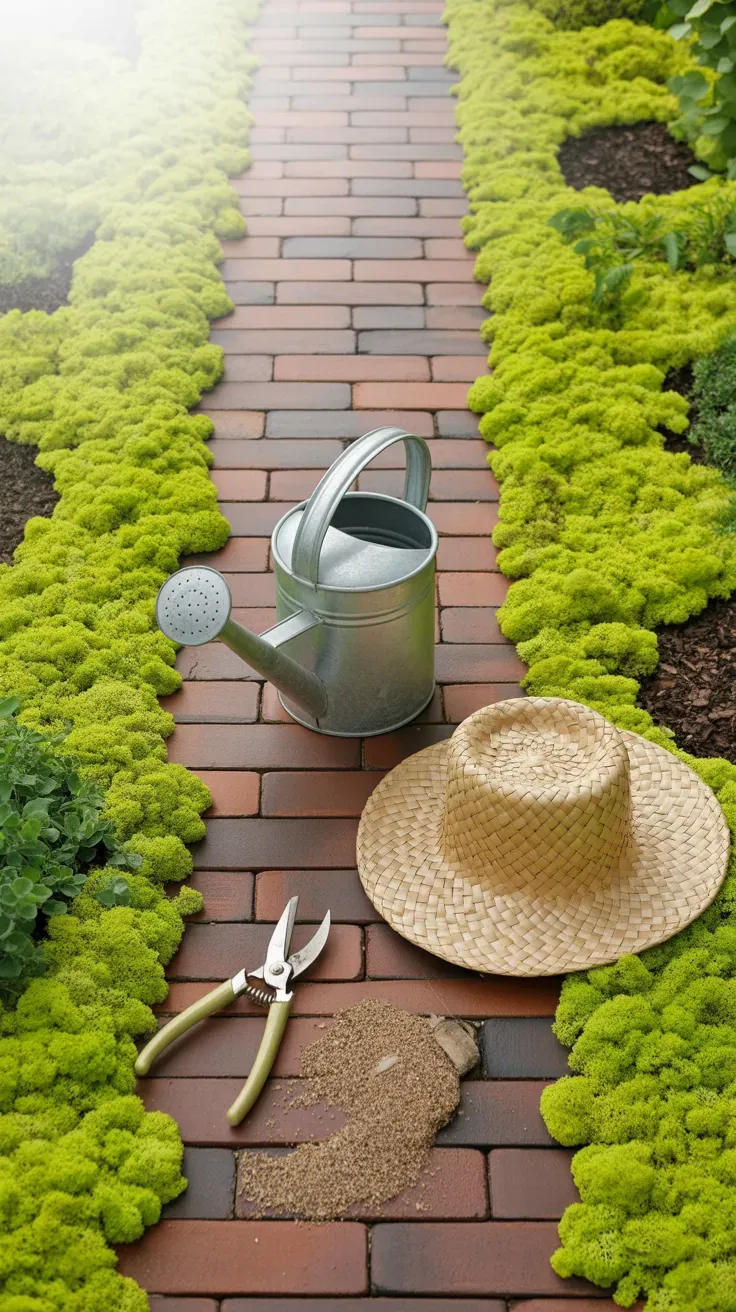
Scotch moss (Sagina subulata ‘Aurea’) is essentially Irish moss’s golden-green sibling, prized for the electric chartreuse color it holds even in partial shade.
Its care mirrors Irish moss almost exactly — moist, humus-rich soil and dappled light — but it’s slightly more sensitive to foot traffic, so it’s best reserved for path edges rather than the direct center of a heavily walked stone. Divide established clumps every other spring to keep the color vivid; older patches can fade toward green if left undisturbed too long.
Pro Tip: Plant Scotch moss next to darker foliage like black mondo grass — the color contrast makes a narrow path read as intentionally designed rather than accidental.
A small planting goes a long way toward brightening a dim corner. Browse color-contrast border planting ideas and Gardeners’ World’s notes on growing Sagina.
4. Blue Star Creeper for High-Traffic Paver Gaps

Blue star creeper (Isotoma fluviatilis) is one of the few ground covers genuinely built for daily foot traffic, bouncing back from footsteps within hours rather than days.
It handles full sun to light shade and adapts to average garden soil without much fuss, needing only weekly watering once established. Cover roughly one plant per square foot for full coverage within a year — buying fewer, smaller plugs to save money usually just means a longer wait and more weeds sneaking in during the gap. It self-seeds modestly, which is useful for filling new cracks but worth watching near garden beds.
Its resilience under repeated steps makes it one of the most practical choices on this whole list. Check out our patio paver planting guide and The Sill’s guide to outdoor ground covers.
5. Corsican Mint for a Fragrant Shaded Nook
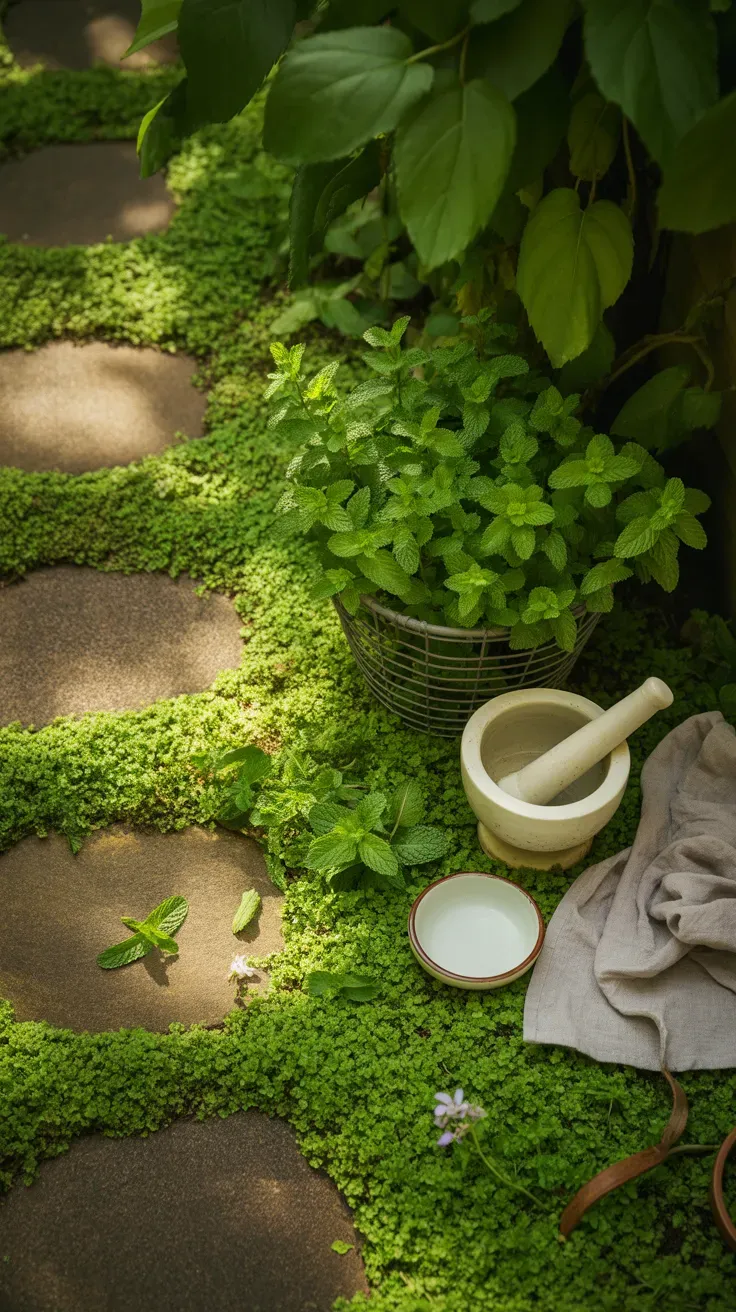
Corsican mint (Mentha requienii) is barely half an inch tall, but crush it underfoot and it releases a genuine minty scent that makes even a short shaded walkway feel like an event.
It wants consistently moist, rich soil in partial to full shade, and it’s notably tender — most gardeners in cooler climates treat it as an annual or protect it with mulch over winter. It spreads by creeping stems that root as they touch soil, so keep the area weed-free while it establishes, since it can’t yet out-compete anything vigorous.
- Works well with: stone or slate underfoot, where the mint fills narrow joints
- Struggles with: hot, dry summers or heavy clay soil
Plant it somewhere you’ll actually brush past it regularly — that’s when it earns its keep. See our scented garden path plants roundup and the Almanac’s mint growing guide.
6. Dwarf Mondo Grass for a Formal, Traffic-Tough Look

Dwarf mondo grass (Ophiopogon japonicus ‘Nanus’) looks almost like a miniature lawn, forming tidy, grass-like tufts that shrug off heavy repeated foot traffic once mature.
Give it part shade to full sun in temperate climates and well-drained, slightly acidic soil, watering deeply but infrequently. Its main drawback is patience: it spreads slowly by rhizomes, typically taking two to three years to fully knit together, so plan on hand-weeding those gaps in the meantime. Established plantings, though, are famously low-maintenance and rarely need dividing.
Pro Tip: Plant divisions in early spring rather than fall in cooler zones — mondo grass roots establish faster with a full growing season ahead of it before winter dormancy.
It rewards patience with one of the most polished, permanent-looking results on this list. Explore our formal garden path design ideas and Missouri Botanical Garden’s Ophiopogon plant finder entry.
7. Woolly Thyme for Dry, Rocky Soil
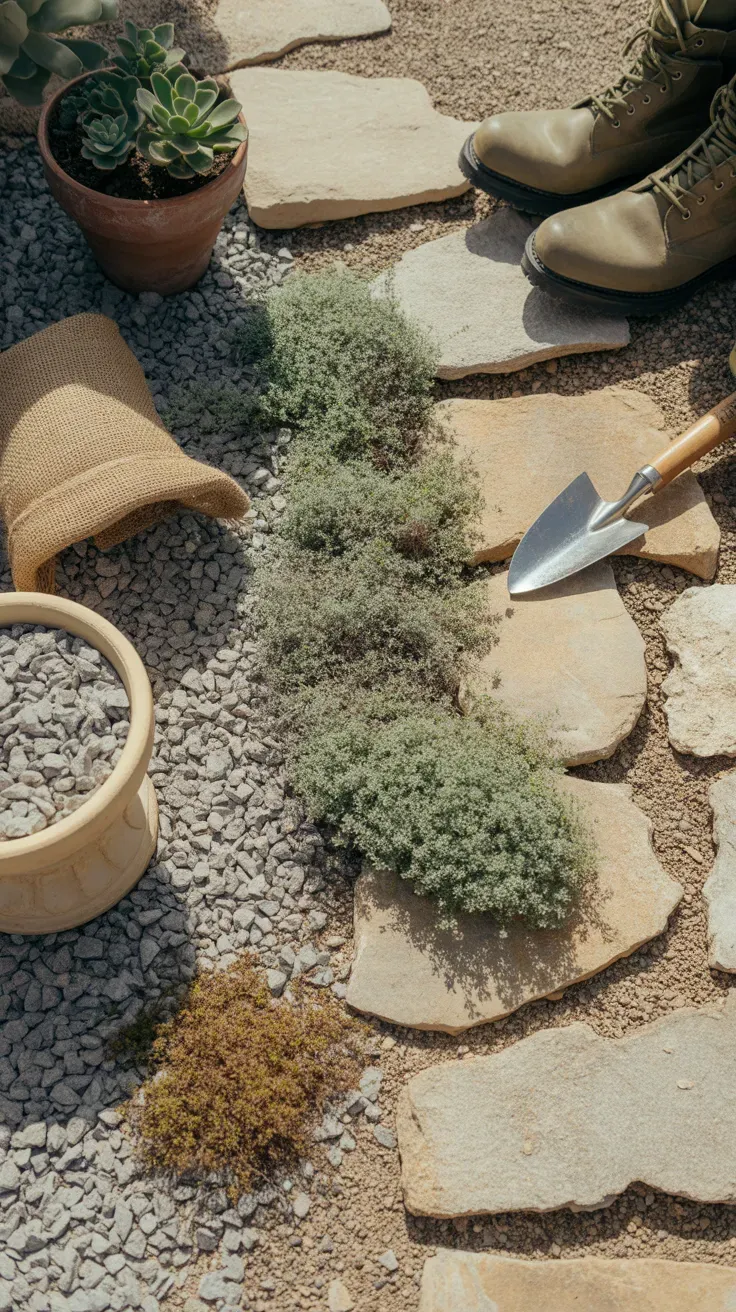
Woolly thyme (Thymus pseudolanuginosus) has fuzzy, silver-grey leaves built for exactly the conditions that rot most ground covers — bone-dry, rocky, nutrient-poor soil in blazing sun.
It needs at least six hours of direct sun and soil that drains almost instantly; if water pools even briefly after rain, the roots will suffocate. Skip fertilizer entirely, since rich soil actually makes it leggy and less weed-resistant. It doesn’t flower as showily as creeping thyme, but its texture alone makes a rocky path look intentional rather than neglected.
I planted mine along a gravel path that gets full western sun, and it’s the one section of my garden I’ve genuinely never had to weed twice in a season.
This is the plant to reach for when nothing else will grow in that impossible dry, rocky strip. Read about xeriscaping with ground covers and SFGate’s guide to drought-tolerant thyme varieties.
8. Elfin Thyme for Tiny, Tight Paver Joints
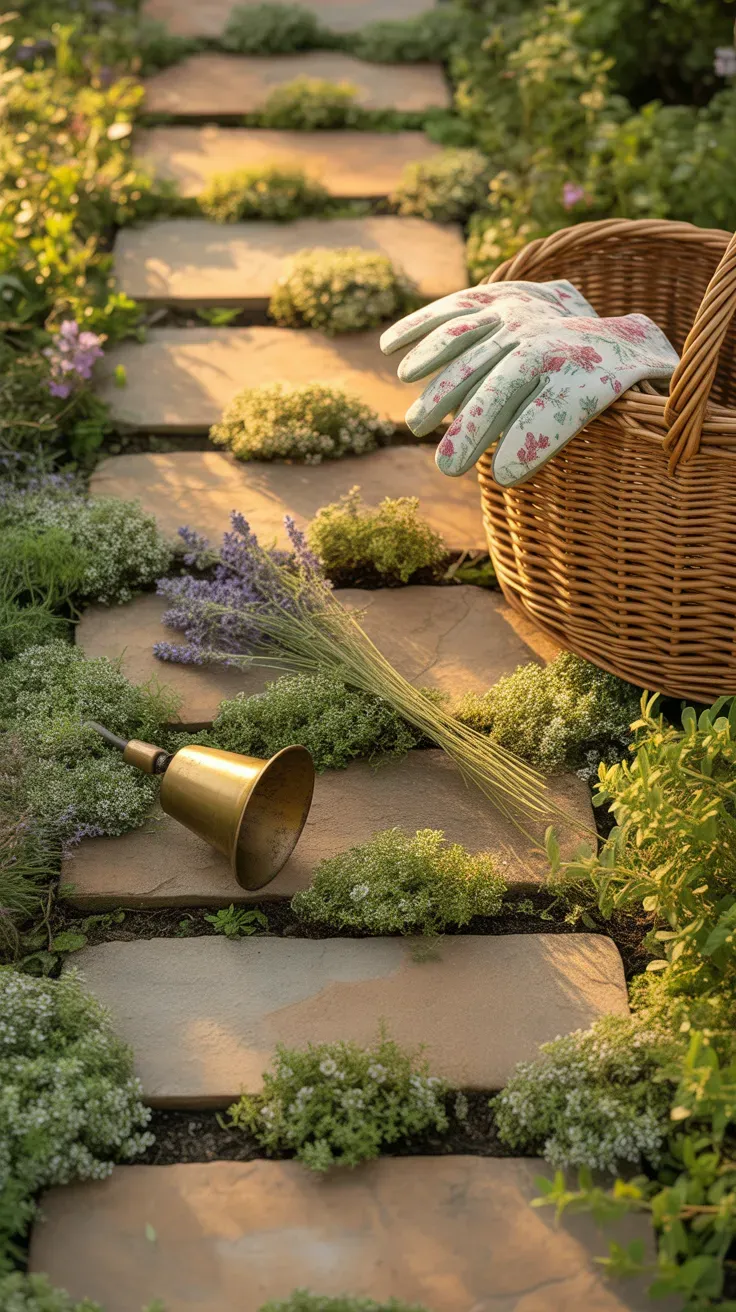
Elfin thyme (Thymus serpyllum ‘Elfin’) is the smallest true thyme cultivar available, growing barely an inch tall — ideal for the narrowest gaps between tightly fitted pavers where taller thyme would look overgrown.
It shares creeping thyme’s love of full sun and sharp drainage but grows noticeably slower and stays more compact, which makes it more expensive per square foot to establish but far less likely to need trimming. Water new plantings weekly for the first month, then taper off almost entirely.
- Choose elfin thyme if: your paver joints are under half an inch wide
- Choose standard creeping thyme if: you’re covering wider stretches of open soil
Its restraint is exactly what makes it useful in tight, formal spaces. See our tiny-gap paver planting tips and the RHS’s dwarf thyme cultivar notes.
9. Roman Chamomile for a Fragrant Lawn Alternative
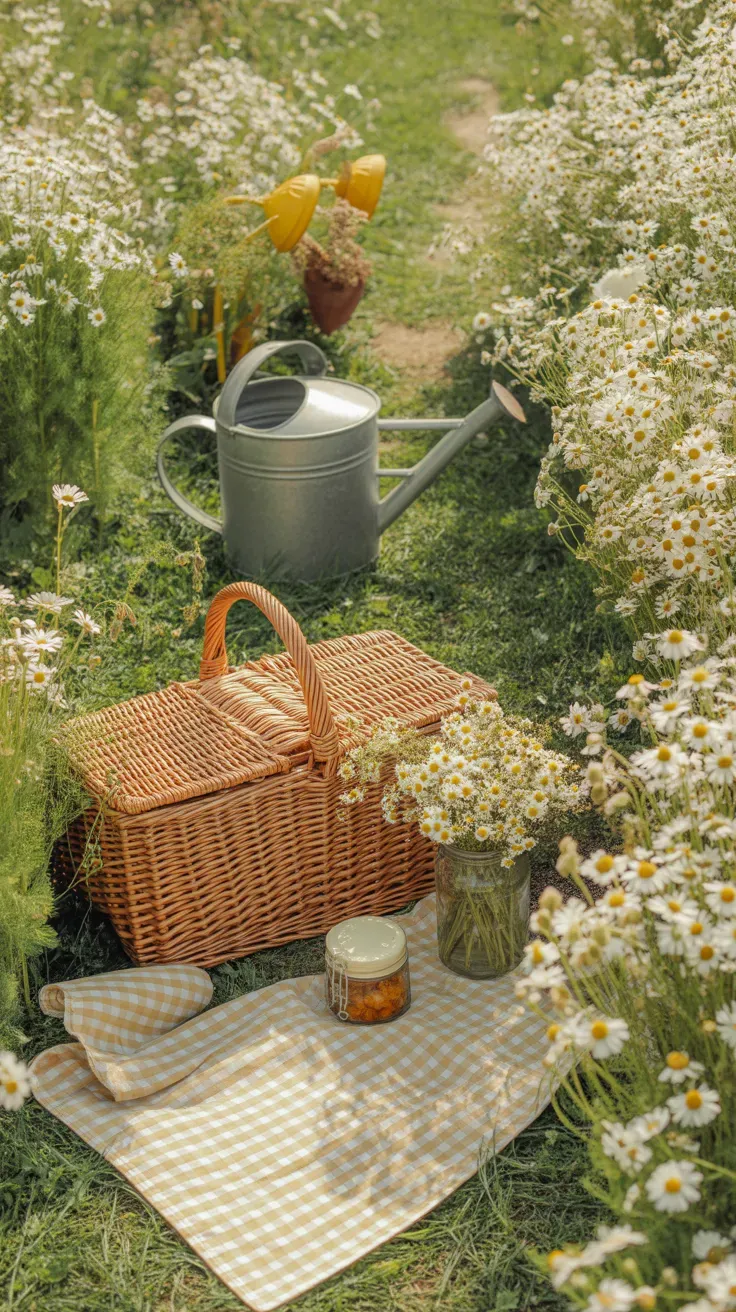
Roman chamomile (Chamaemelum nobile) is famous as a walkable, apple-scented lawn substitute, and it works just as well as a fragrant border along a sunny garden path.
Plant it in full sun with well-drained soil, watering moderately until roots establish, then relying mostly on rainfall. Mow or shear it two to three times a season if you want a tidy carpet look, or let it flower for a looser, meadow-style border — both approaches suppress weeds effectively once the mat thickens.
Pro Tip: Choose the non-flowering cultivar ‘Treneague’ if you want a purely walkable carpet, since it spreads faster and never sets the seed heads that make standard chamomile slightly bumpy underfoot.
Few plants make an ordinary walk to the mailbox feel this pleasant. Browse our fragrant lawn alternative guide and the University of Florida Extension’s chamomile growing notes.
10. Creeping Jenny for Trailing Over Path Edges
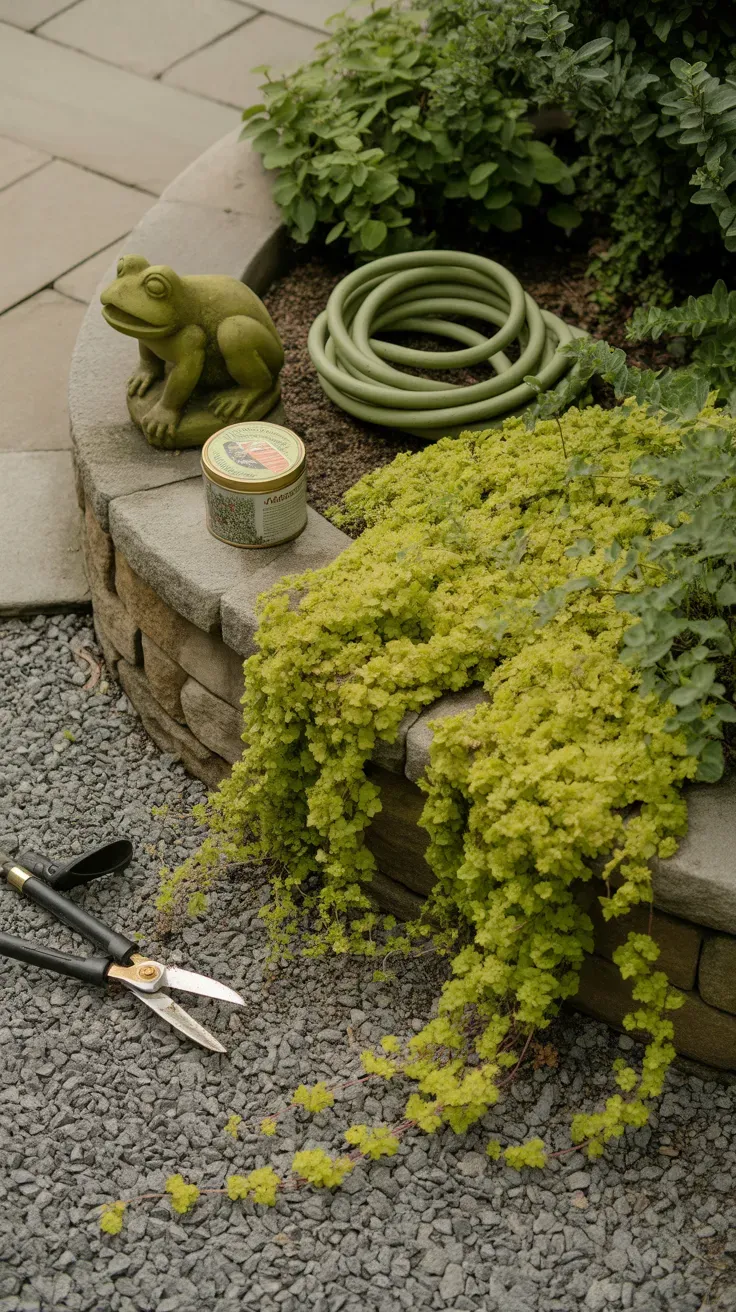
Creeping Jenny (Lysimachia nummularia ‘Aurea’) isn’t the toughest plant for direct foot traffic, but its cascading golden foliage makes it excellent for softening and weed-proofing the edges where a path meets a border.
It prefers partial shade with consistently moist soil — full sun in hot climates can scorch the golden variety back to green — and spreads quickly by rooting stems that press flat against damp ground, choking out weed seedlings as they go. It can become invasive in boggy areas, so keep it contained near beds rather than letting it roam into a lawn.
- Best for: shaded path borders, rain garden edges, container spillover
- Avoid: planting near ponds or wetlands where it can escape cultivation
Used along an edge rather than underfoot, it turns a plain path into something worth photographing. See our path-edge planting design ideas and Penn State Extension’s notes on Lysimachia.
11. Angelina Sedum for Drought-Prone Borders
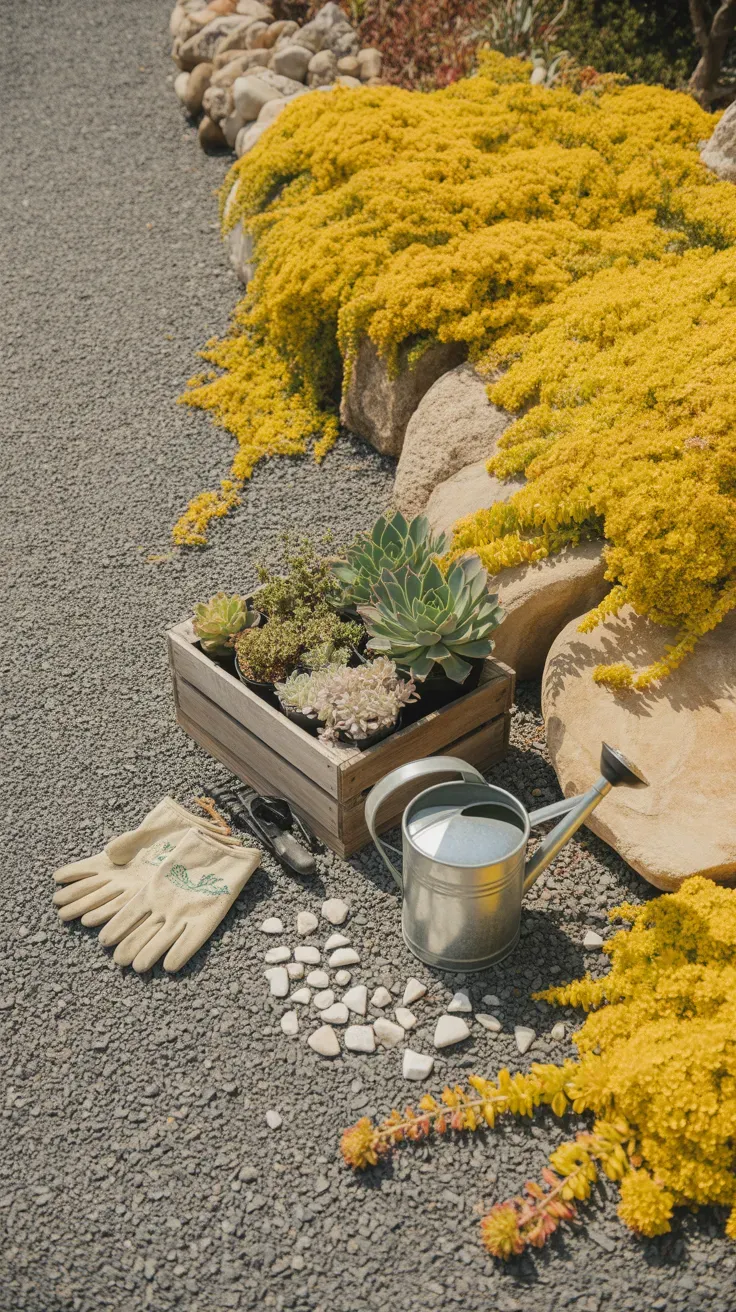
Angelina sedum (Sedum rupestre ‘Angelina’) is a succulent ground cover that thrives on neglect, storing water in its needle-like leaves and needing almost no irrigation once rooted.
It wants full sun and sharp drainage — gravelly or sandy soil is ideal, and it actually performs worse in rich garden loam. It’s not built for direct daily foot traffic, so it’s best used as a spilling border along path edges rather than in the walkway itself. Its foliage turns a striking amber-orange in cooler autumn weather, adding seasonal color most path plants can’t match.
I’ve gone three full weeks without watering mine during a dry August stretch and it never showed a wilt.
For a nearly maintenance-free border that still earns its visual keep, this is hard to beat. Check out our succulent border planting guide and Better Homes & Gardens’ sedum care guide.
12. Ajuga for Stubborn Shady Problem Spots
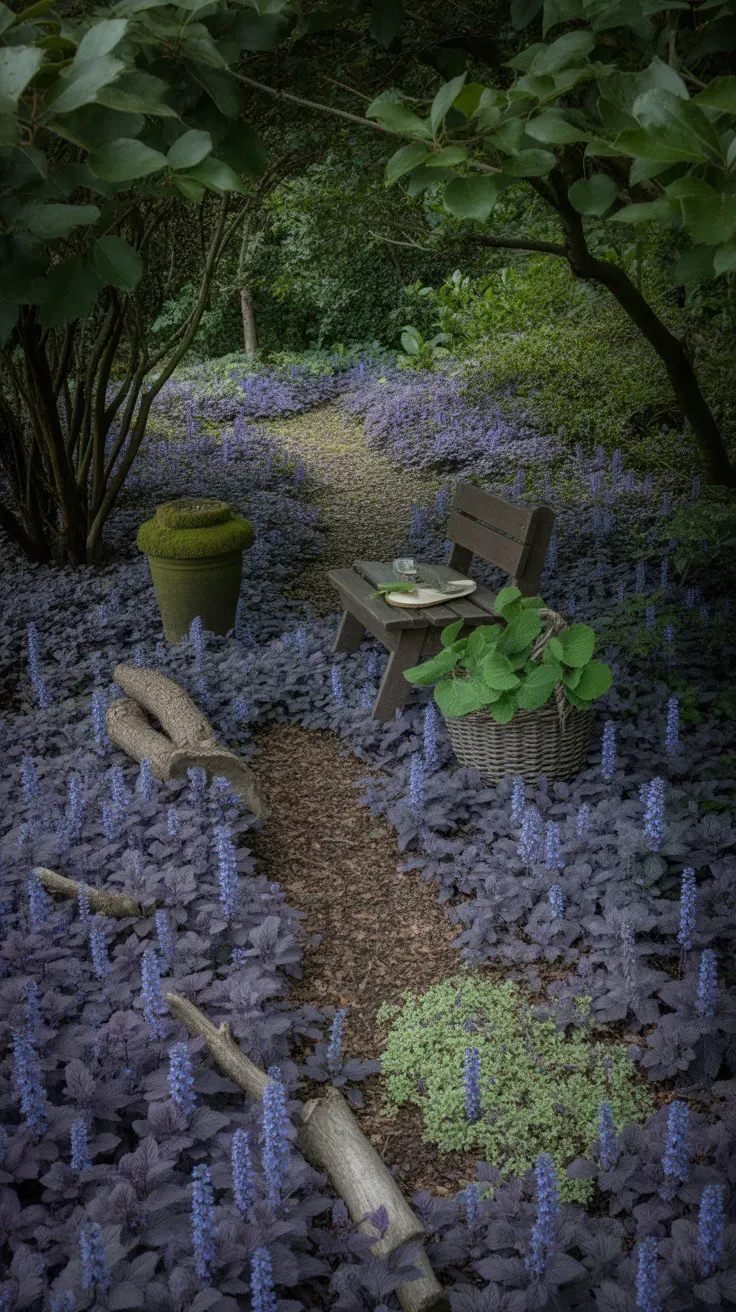
Ajuga (Ajuga reptans), also called bugleweed, is one of the few genuinely reliable ground covers for the deep-shade, root-choked spots under trees where almost nothing else will establish.
It tolerates poor soil and dry shade far better than most path plants, spreading by above-ground runners called stolons that root wherever they touch soil. Its deep purple-bronze foliage adds color to areas that would otherwise stay flat green, and short blue flower spikes appear in late spring. It can spread aggressively into nearby lawn areas, so edge it with a buried barrier if it borders turf grass.
Pro Tip: Divide overcrowded ajuga clumps every two to three years in early spring — crowded plantings become more prone to crown rot in humid climates.
It’s the plant I reach for whenever a client’s “nothing will grow here” spot turns out to be shade, not soil. Read our dry shade garden solutions guide and the Missouri Botanical Garden’s Ajuga reptans plant profile.
13. Dwarf Baby’s Tears for Damp, Shaded Courtyards
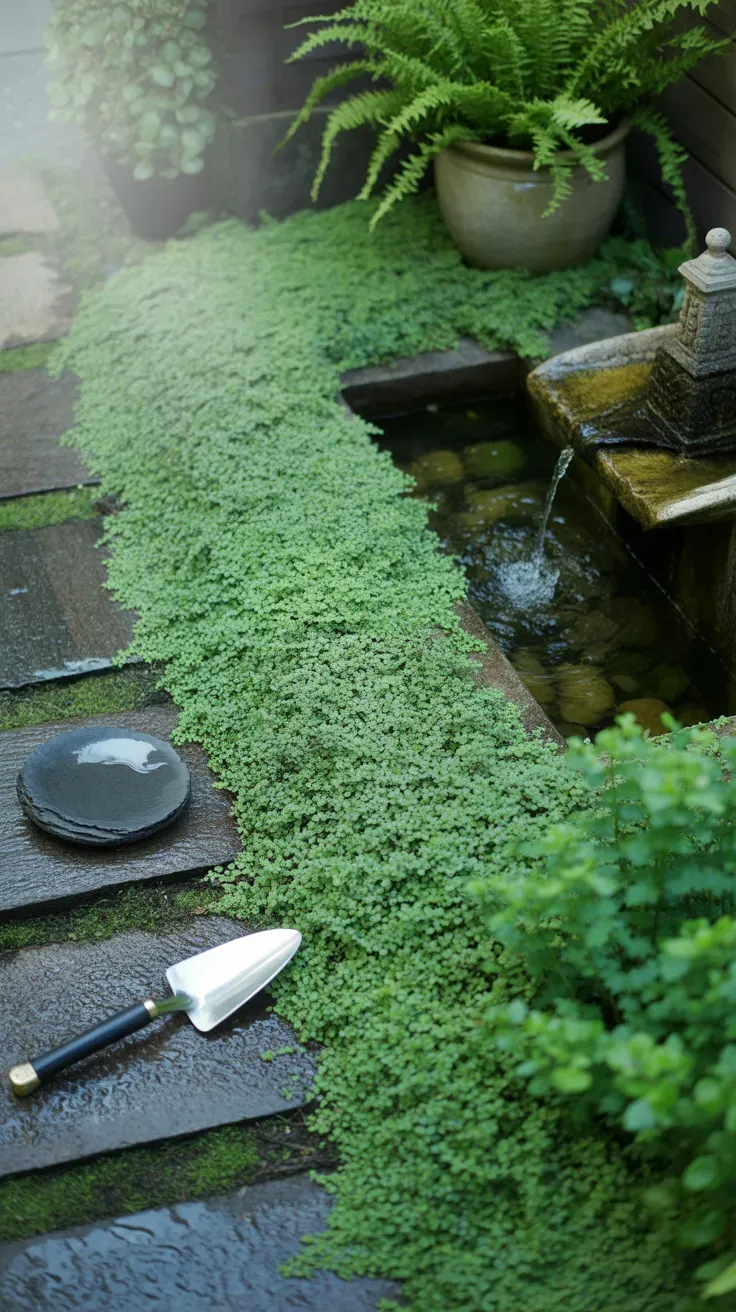
Dwarf baby’s tears (Soleirolia soleirolii) forms an almost moss-like blanket of tiny round leaves, and it’s one of the very few ground covers that genuinely prefers a damp, shaded courtyard over open sun.
Keep the soil consistently moist and rich in organic matter, and expect it to struggle or die back entirely below about 20°F (-6°C), so in colder zones it’s best treated as a warm-season filler or grown where a wall provides some winter protection. It roots wherever a stem touches soil, forming a dense mat within a single growing season under the right conditions.
- Ideal spots: near fountains, shaded courtyards, humid greenhouse-adjacent paths
- Not suitable for: exposed sunny paths or regions with hard winter freezes
In the right damp, shaded corner, it fills gaps faster than almost anything else on this list. See our courtyard garden design ideas and Gardeners’ World’s notes on Soleirolia care.
14. Green Carpet Rupturewort for Ultra-Flat Gravel Paths
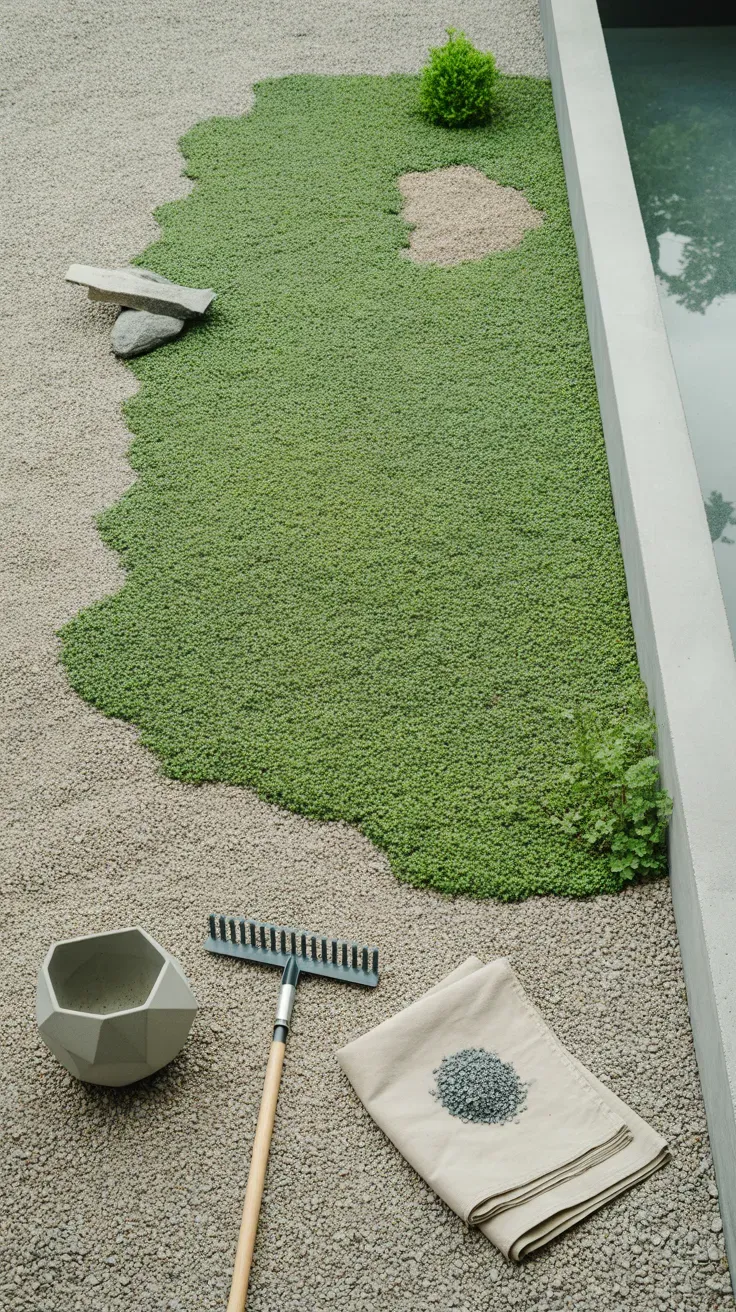
Rupturewort (Herniaria glabra), sold in some nurseries as green carpet, grows barely an inch tall and stays flat enough that it practically disappears into a gravel path while still doing the work of blocking weeds.
It needs full sun and tolerates poor, sandy, or gravelly soil far better than richer ground covers, requiring only occasional deep watering during extended dry spells. It’s slow to establish from small plugs, typically taking a full season to close gaps completely, so many gardeners overplant slightly denser than the label recommends to speed up coverage.
Pro Tip: Top-dress newly planted rupturewort with a thin layer of fine gravel rather than mulch — it mimics the plant’s natural rocky habitat and reduces rot in wetter climates.
Its low, unobtrusive habit makes it ideal for anyone who wants weed control without a visually busy path. Explore our minimalist gravel path planting guide and the Missouri Botanical Garden’s Herniaria glabra entry.
15. Creeping Speedwell for a Naturalized Cottage Path
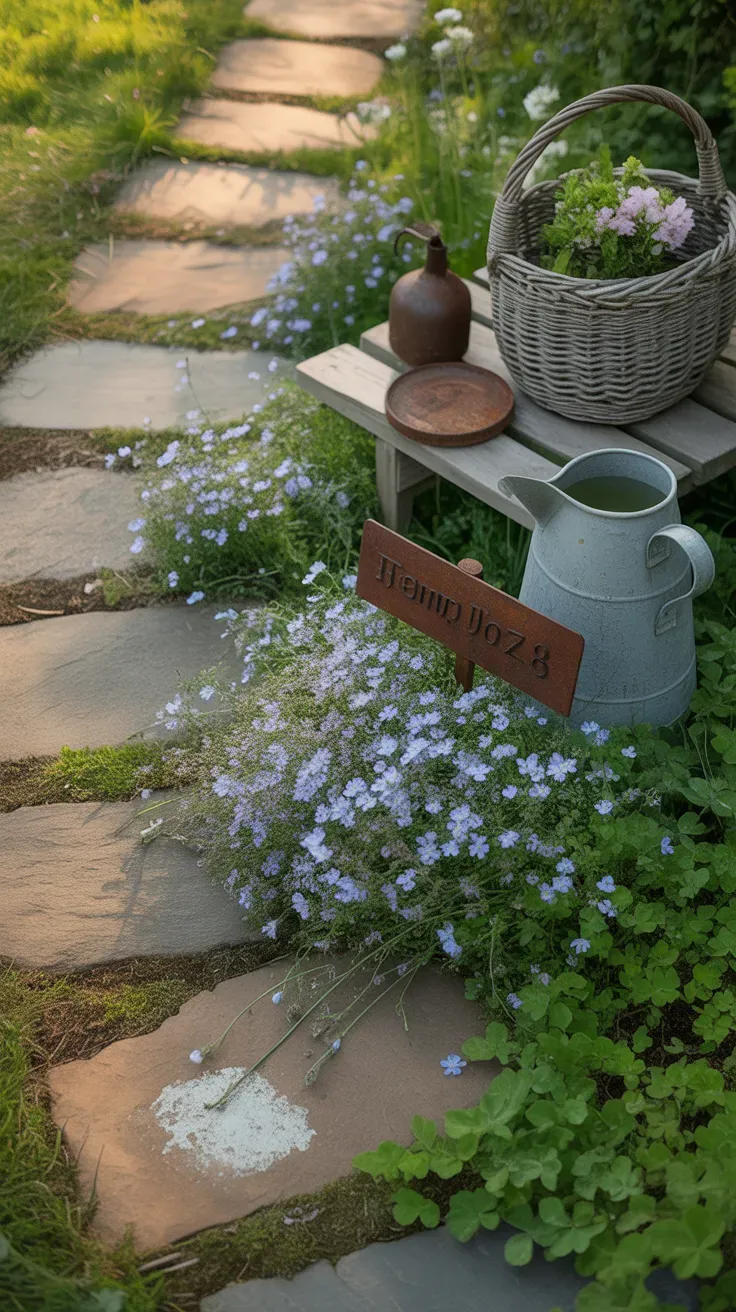
Creeping speedwell (Veronica repens) has a loose, naturalized habit that suits informal cottage paths better than the tidier thymes and mosses, spreading readily and covering itself in tiny blue flowers each spring.
It adapts to sun or partial shade and tolerates average garden soil, needing regular water only through its first season. It handles moderate foot traffic reasonably well, though it’s more prone to bare patches under heavy daily use than blue star creeper or thyme. Left unchecked near lawn edges it can wander further than intended, so a mowed or edged border helps keep it contained.
- Pairs well with: irregular flagstone, informal cottage borders, naturalized meadow paths
- Keep an eye on: spread near lawn boundaries, where it can cross over
For a path that looks like it grew in on its own rather than being planted, speedwell delivers exactly that charm. See our naturalized cottage path ideas and the RHS’s Veronica growing guide.
Getting Started With Creeping Garden Path Plants
The easiest first step is picking one short, manageable stretch of path — five or six paver joints, not the whole yard — and matching the plant to the actual light and moisture conditions there rather than what you wish were true. The most common beginner mistake is planting a full-sun lover like creeping thyme in a spot that only gets three hours of dappled light, then blaming the plant when it thins out.
Buy one nursery six-pack of your chosen ground cover, a bag of gritty planting mix if your soil is heavy, and a simple hand trowel — you genuinely don’t need more tools than that to start. Space plugs according to the tag, water them in well, and resist the urge to fertilize a new sun-loving planting; too much nitrogen encourages weak, floppy growth in most of these species.
Realistically, expect visible gap-filling within six to eight weeks for fast spreaders like blue star creeper, and a full growing season for slower plants like dwarf mondo grass or rupturewort. Weeding won’t stop entirely on day one, but it should drop off noticeably by the second month.
Frequently Asked Questions
What is the best creeping plant for between pavers?
Creeping thyme is generally the best all-around choice for paver gaps because it tolerates foot traffic, drought, and poor soil better than most alternatives. In tighter joints under half an inch wide, elfin thyme is a better fit since it stays more compact.
Do creeping ground covers actually stop weeds from growing?
Yes, a well-established ground cover mat blocks most weed seeds from reaching bare soil, cutting weeding time significantly once the plants knit together. Full coverage typically takes six weeks to one full growing season depending on the species.
What ground cover can handle the most foot traffic?
Blue star creeper and dwarf mondo grass tolerate the heaviest, most frequent foot traffic among path plants on this list. Both recover from footsteps within a day or two once fully established.
Can I plant creeping thyme in shade?
Creeping thyme performs poorly in shade and needs at least five to six hours of direct sun to stay dense and weed-resistant. For shaded paths, Irish moss or dwarf baby’s tears are far better choices.
How far apart should I space ground cover plugs along a path?
Most creeping path plants should be spaced 6 to 12 inches apart depending on species vigor, with faster spreaders like blue star creeper on the wider end. Tighter spacing fills gaps faster but costs more upfront in plant material.
A Few Final Thoughts
Fifteen plants is a lot of options, but the decision usually comes down to just two questions: how much sun does your path actually get, and how often will feet be crossing it? Get those two answers right, and any of these creeping garden path plants will do the rest of the work for you. What struck me most, watching my own paths transform over a couple of seasons, is how a single well-matched ground cover can turn a chore-generating strip of dirt into the prettiest part of the yard. Start with one short section, be patient through that first establishing season, and don’t be afraid to mix a couple of these together for texture. A weed-free, living pathway is closer than one more Saturday spent pulling crabgrass by hand.